
Still there 25 years later: The dispute about Macedonia’s name


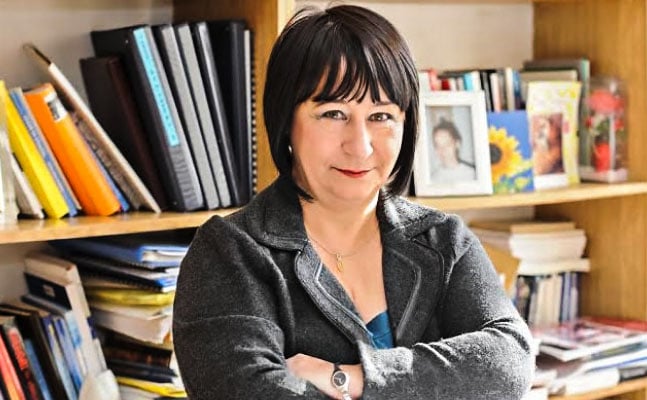
By Biljana Vankovska

Interview with Asahi Shimbun, Tokyo
 

• Do you support the idea of having the accord with Greece over the disputes on the country’s name? If yes/no, please tell us the reason.

It is hard to support an irrational dispute, only because one has a nationalistic idea that the name Macedonia implies irredentism. Apart from that, it is highly asymmetric dispute because Greece has nothing to gain or lose in substantial terms, while the Republic of Macedonia may lose not only its right on self-identification, identity but also to open a Pandora’s box of internal political and ethnic strife.

The dispute has never been only over the name of the state (although a state’s name is a part of its international legal identity). All proposals of Matthew Nimetz has been so-called “ a set of ideas”, containing a range of aspects that directly affect the name of the constituent nation, language, international codes, including the internet domain!

I do not support any change of the constitutional name, because the word “Republic” before “Macedonia” makes the whole difference in the world from the Greek administrative provinces as well as from Alexander’s Empire.
 

• What do you think is the main drive of the current Macedonian government to ease the tension with Greece?

All Macedonian governments have been aware that they are unable/incapable of delivering what the citizens need the most (wellbeing, development, progress, good quality of life, education, public health, etc.) – so the only thing that they could eventually achieve was NATO (and EU) membership on a false pretext that this is going to produce economic growth, foreign investments, and wellbeing.

The current government, in my opinion, owes to the international power-centers its gaining power, so they need to be cooperative even if it goes against the country’s national interests. Unfortunately, the name dispute has now grown into a geopolitical issue, and as such it is of high interest for the US to embrace Macedonia in NATO, at any cost, in order to complete its geopolitical map.
 

• If the two countries reached an accord, what should be done with all the monuments built during the Skopje 2014 project, especially the Warrior on Horse at Macedonian Square? Do you think people would support the removal of the monuments?

The removal of some monuments is a matter of legal, political but also financial estimation. In any case it is not a matter to be resolved on the international or bilateral ground. The whole project has been paid by the tax payers’ money, and it is up to them to decide which part of Skopje 2014 should stay or would be removed.

It is a bit naïve to believe that the though Greek foreign policy stand will soften because of the removal of the Warrior. It could be only a symbolical gesture made by the Macedonian government (at high cost, of course) but it won’t make any decisive influence on the dispute. The warrior and the rest of the Skopje 2014 project is a consequence and not a reason of the dispute.

As for the people, strangely enough, but the Warrior/Alexander as well as the monuments of his father and mother are one of the rare things that bring together Macedonian and Albanian people (they do not argue over Alexander because both sides believe that they may share a bit of the history by his father’s or mother’s side – Olympia was from today’s Epirus, a Greek region populated by Albanians).
 

• If the two countries reach an accord, I understand there would eventually be a referendum held. Do you think people of Macedonia will support the idea of changing the country’s name for the sake of a better relation with a neighboring country?

There has been high level of consensus among the Macedonians not to accept indecent proposal and to exchange their identity for money and/or security promised by NATO.

On the Albanian side, in opposite, the name is something that they would easily give up – because it has no real impact on their identity and ethnic/national interests. A possible referendum would not be constitutional, because there is no constitutional/legal ground for such a move.

Personally, I am against referendum on the name issue, because it will polarize the country, and may even destabilize it due to the lack of confidence in the institutions, electoral administration and the media propaganda.
 

• Do you see any alternative measures other than negotiating with the current Greek government to resolve the country name issue?

Paradoxically enough, the economic exchange, tourism, and other relations between the two states are quite good. It is pity that so much time has been wasted with no substantial confidence-building measures, and second-track diplomacy. The civil society, academia, sportsmen, journalists, intellectuals could have done much good if they were more engaged in building bridges.

Unfortunately, the dispute was given to nationalistic governments on both sides, and they mostly have profited from its existence.


• Could you describe what Macedonia has lost by having the trouble with Greece in this 25 years?

In addition to its economic losses during the unilateral embargo imposed by Greece, and the frustrating awaiting at NATO’s door, blockade on its way to EU negotiation process, Macedonia’s progress and democratic transition have suffered a lot.

This problem has become an apple of discord internally, and has served as a fertile ground for nationalism and inter-ethnic divisions. That is, the Albanians get impatient and blame the Macedonians that because of their stubbornness they are unable to join their Albanian brethren in NATO; and also this denial of Macedonian identity not only by Greece but also by Bulgaria gives ‘ammunition’ for Albanian nationalists’ claims that “you, Macedonians are artificial nation, invented by Tito, while we have deep historical roots from the antique Illyrians.”
 

• Considering the country’s path towards the NATO and EU membership, how do you see the U.S. involvement on the issue? How do you analyze on the intention of the regional players, including Russia?

The Republic of Macedonia’s path towards the NATO and EU is a paradoxical one. It reminds one of the plot in the famous Fitzgerald’s novel “The curious case of Benjamin Button”: the closer it gets, the more pressure it suffers on this painful issue!

Instead of bringing stability and progress, the NATO and EU integration process has transformed this issue into a European security problem. The Second Cold War is now about to turn it into a geopolitical issue, while the Republic of Macedonia and its people may become a collateral damage of greater powers’ games.


 

Related Posts

It’s produced by The China Academy in Shanghai and speaks for itself with no need for an introduction.
The issue of state sovereignty under international law and its inconsistencies and duplicities has become more complex than ever, especially after the outbreak of the Ukraine war and the “Ukrainization” of the Taiwan issue (even though Taiwan is not a sovereign state like Ukraine). However, the focus of this analysis is relatively modest: we examine a region of the Western Balkans in which the countries have already (more or less voluntarily) lost or given up their statehood and sovereignty. The concept of the so-called “Western Balkans” (WB) – comprising Serbia, Montenegro, Albania, Kosovo, North Macedonia, and Bosnia and Herzegovina – was concocted in the corridors of power in Brussels and Washington. This artificial sub-region, with its flexible geography and borders, lacks logical coherence. It effectively creates a buffer zone of weak states that are unlikely to ever meet the criteria for EU integration despite being offered European perspectives and hopes. However, these...
1. Israel: The policy’s background As a small country with a tiny population surrounded by large and hostile countries, Israel’s policy ever since its establishment has been to rely on some external forces, the British Empire at the beginning of its creation and later on the American superpower to protect herself. It has also involved the creation of a nuclear arsenal in contravention of the Non-Proliferation Treaty (the NPT) and by means of lies and deception, while being the most vociferous opponent of any other country in the Middle East to even have a peaceful nuclear programme for producing energy. Another aspect of this policy of self-preservation has been to divide and partition the neighbouring countries so that they would lose their advantage of larger size and greater population vis-à-vis Israel. As early as 1982, the Israeli scholar Oded Yinon authored an essay called “A Strategy for Israel in the...

Recent Articles

Below are TFF-related media mentions, comments, videos and social media posts published elsewhere but not on this homepage. We happen to catch and list only a fraction. Regarding video comments and debates, we recommend that you go to the TFF Video Channel on Substack where many of them are reproduced. Jan Oberg is a contributor to China Daily – 52 million daily clicks – and Global Times, CGTN and CCTV (the national television), China Investment, Xinhua News Agency and several others. Articles and videos on these media very often multiply into countless Chinese (and Western media) that re-post them from these main media. Thanks to The China Academy, his analyses, interviews and comments are frequently posted on YouTube channels such as Thinkers Forum and Wave Media. These videos are often re-posted on Bilibili (China’s YouTube), the China Content Center on TikTok, and on the Chinese edition of TikTok, Douyin.com. This means reaching hundreds of millions of viewers worldwide over a year. While there are too many to catch on all these...
Jan Oberg TFF director October 13, 2026 According to Alfred Nobel’s will, the Nobel Peace Prize shall be awarded: ”to the person who has done the most or best to advance fellowship among nations, the abolition or reduction of standing armies, and the establishment and promotion of peace congresses.” Further down, he also expresses how the prize for the “champions of peace” shall be decided: “that for champions of peace by a committee of five persons to be selected by the Norwegian Storting. Alfred Nobel’s will is remarkably short and clear. But few seem to have read it. Nobel did not say that the committee itself should consist of members of parliament. He entrusted the Storting with appointing five persons. In principle, it could have selected diplomats, mediators, peace researchers, conflict-resolution specialists, or other individuals with recognised expertise in matters of peace from around the world. Instead, the Storting gradually...
The Quest for Humane Survival Richard Falk Professor emeritus, Princeton UniversityTFF Associate since 1986October 12, 2026 After decades of teaching and writing about international law in academic frameworks that were not institutionally situated within law school environments—at Princeton and the University of California, Santa Barbara—I found myself most receptive to the TWAIL outlook. It has been especially illuminating in clarifying the extent to which international law evolved as a dialogical critique of Europe’s efforts to legitimize its colonial undertakings. In particular, TWAIL has exposed how international law has functioned to legalize the subjugation of Third World peoples, securing conditions for exploitative investment and trade relations, the coercive enforcement of public debts, and an ideology of cultural superiority. TWAIL’s exposure of these economic legacies of colonialism has influenced my understanding of the history and development of international law, broadly conceived, as an ideological project of the Western sub-system of the world...

TFF on Substack

Discover and subscribe to more peace materials on TFF Substack

Most Popular

Below are TFF-related media mentions, comments, videos and social media posts published elsewhere but not on this homepage. We happen to catch and list only a fraction. Regarding video comments and debates, we recommend that you go to the TFF Video Channel on Substack where many of them are reproduced. Jan Oberg is a contributor to China Daily – 52 million daily clicks – and Global Times, CGTN and CCTV (the national television), China Investment, Xinhua News Agency and several others. Articles and videos on these media very often multiply into countless Chinese (and Western media) that re-post them from these main media. Thanks to The China Academy, his analyses, interviews and comments are frequently posted on YouTube channels such as Thinkers Forum and Wave Media. These videos are often re-posted on Bilibili (China’s YouTube), the China Content Center on TikTok, and on the Chinese edition of TikTok, Douyin.com. This means reaching hundreds of millions of viewers worldwide over a year. While there are too many to catch on all these...
Jan Oberg TFF director October 13, 2026 According to Alfred Nobel’s will, the Nobel Peace Prize shall be awarded: ”to the person who has done the most or best to advance fellowship among nations, the abolition or reduction of standing armies, and the establishment and promotion of peace congresses.” Further down, he also expresses how the prize for the “champions of peace” shall be decided: “that for champions of peace by a committee of five persons to be selected by the Norwegian Storting. Alfred Nobel’s will is remarkably short and clear. But few seem to have read it. Nobel did not say that the committee itself should consist of members of parliament. He entrusted the Storting with appointing five persons. In principle, it could have selected diplomats, mediators, peace researchers, conflict-resolution specialists, or other individuals with recognised expertise in matters of peace from around the world. Instead, the Storting gradually...
The Quest for Humane Survival Richard Falk Professor emeritus, Princeton UniversityTFF Associate since 1986October 12, 2026 After decades of teaching and writing about international law in academic frameworks that were not institutionally situated within law school environments—at Princeton and the University of California, Santa Barbara—I found myself most receptive to the TWAIL outlook. It has been especially illuminating in clarifying the extent to which international law evolved as a dialogical critique of Europe’s efforts to legitimize its colonial undertakings. In particular, TWAIL has exposed how international law has functioned to legalize the subjugation of Third World peoples, securing conditions for exploitative investment and trade relations, the coercive enforcement of public debts, and an ideology of cultural superiority. TWAIL’s exposure of these economic legacies of colonialism has influenced my understanding of the history and development of international law, broadly conceived, as an ideological project of the Western sub-system of the world...
Read More
girl-5894831_1280
Below are TFF-related media mentions, comments, videos and social media posts published elsewhere but not on this homepage. We happen to catch and list only a fraction. Regarding video comments and debates, we recommend that you go to the TFF Video Channel on Substack where many of them are reproduced. Jan Oberg is a contributor to China Daily – 52 million daily clicks – and Global Times, CGTN and CCTV (the national television), China Investment, Xinhua News Agency and several others. Articles and videos on these media very often multiply into countless Chinese (and Western media) that re-post them from these main media. Thanks to The China Academy, his analyses, interviews and comments are frequently posted on YouTube channels such as Thinkers Forum and Wave Media. These videos are often re-posted on Bilibili (China’s YouTube), the China Content Center on TikTok, and on the Chinese edition of TikTok, Douyin.com. This means reaching hundreds of millions of viewers worldwide over a year. While there are too many to catch on all these...
Nobel-Prize-Plaque
Jan Oberg TFF director October 13, 2026 According to Alfred Nobel’s will, the Nobel Peace Prize shall be awarded: ”to the person who has done the most or best to advance fellowship among nations, the abolition or reduction of standing armies, and the establishment and promotion of peace congresses.” Further down, he also expresses how the prize for the “champions of peace” shall be decided: “that for champions of peace by a committee of five persons to be selected by the Norwegian Storting. Alfred Nobel’s will is remarkably short and clear. But few seem to have read it. Nobel did not say that the committee itself should consist of members of parliament. He entrusted the Storting with appointing five persons. In principle, it could have selected diplomats, mediators, peace researchers, conflict-resolution specialists, or other individuals with recognised expertise in matters of peace from around the world. Instead, the Storting gradually...
law-419057_1280
The Quest for Humane Survival Richard Falk Professor emeritus, Princeton UniversityTFF Associate since 1986October 12, 2026 After decades of teaching and writing about international law in academic frameworks that were not institutionally situated within law school environments—at Princeton and the University of California, Santa Barbara—I found myself most receptive to the TWAIL outlook. It has been especially illuminating in clarifying the extent to which international law evolved as a dialogical critique of Europe’s efforts to legitimize its colonial undertakings. In particular, TWAIL has exposed how international law has functioned to legalize the subjugation of Third World peoples, securing conditions for exploitative investment and trade relations, the coercive enforcement of public debts, and an ideology of cultural superiority. TWAIL’s exposure of these economic legacies of colonialism has influenced my understanding of the history and development of international law, broadly conceived, as an ideological project of the Western sub-system of the world...
images-2
Advocates of nuclear disarmament are regularly dismissed by the champions of nuclear deterrence as naïve and unrealistic, utopian or even irresponsible. Yet this ‘doctrine’ of deterrence, regarded by France as the ‘cornerstone’ of its national security, is based on quasi-religious beliefs, a theory that cannot be proven, risky gambles and fragile assumptions. So much so that one might legitimately ask which side the ‘Care Bears’ are on. Marc FinaudVice-President of Initiatives for Nuclear Disarmament (IDN) October 9, 2026 This article was originally published on Pressenza When it comes to these things being treated as religious concepts, look here. Idealists and realists It was Hubert Védrine, François Mitterrand’s former Foreign Minister, who repeatedly coined the phrase: ‘Europeans are a sort of Care Bears who don’t realise they’re living in Jurassic Park’. He applies this reference to the cartoon for well-behaved children not only to what he regards as weakness or idealism...
8824b09f-33a5-43f9-9fd0-550f28cda24d_1536x1024
What the West Borrowed from Asia and What It Left Behind Jan Krikke October 8, 2026 The article was originally published here In the late 1960s, the musical Hair announced that the Age of Aquarius was dawning. Its opening anthem promised a transformation of human consciousness: an era of peace, harmony and understanding. Half a century later, a familiar echo of that promise is a meditation app offered by your employer. You can find it in the same list of benefits as the pension plan and the gym discount. How did a spiritual revolution become an employee benefit? The answer lies in the history of the movement known as New Age: where it came from, what it borrowed from Asia, and why the meaning of what it borrowed changed in the process. Two definitions will help. New Age is a loose label for a wide range of spiritual practices and...
Screenshot 2026-10-04 210142
Small and different + among the 10% most active + 9,000 texts + 150 Associates + 60 000 a day — and a stubborn belief that peace is smarter and must be secured by peaceful means. In 2026, the Transnational Foundation for Peace and Future Research (TFF) turns 40. On Monday, October 5, 2026, a new TFF homepage will go live — a new gateway to more than 9,000 articles, analyses, research papers and other contributions produced over four decades of independent peace research. But this is not simply a new website. For four decades, TFF has worked from a simple conviction: peace is smarter than militarism and can be brought about by peaceful means. This is not merely an aspiration. It is the principle expressed in the UN Charter and the Gandhian tradition that has guided our work from the beginning. TFF is a research-based, independent and people-financed foundation....




