
The Narrative of Peace: What We Can Learn From the History of Peace Thought


By John Gittings

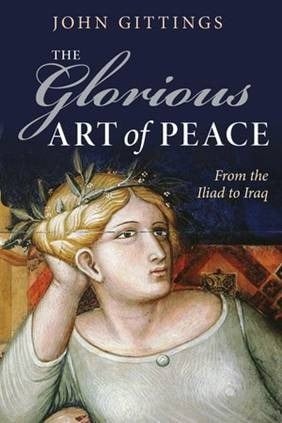
• “Although most people have always sought to live in peace, our perception of the past is over-dominated by a narrative that is obsessed with war”, argues John Gittings – long-standing ORG Adviser and Guardian Writer, in his latest book ‘The Glorious Art of Peace: From the Iliad to Iraq’, published this year by Oxford University Press.

August 2012

In this special article for ORG, based on his book, John Gittings demonstrates that we need to open our minds to an alternative view of history, which acknowledges the strength of the case for peace, as it has been argued from ancient times to the present day.

This rich record of peace thought and argument is not only of great historical interest: It highlights the need to understand that peace is essential for civilisation, and that we must find better ways to educate for peace, to develop more effective forms of negotiation, and to mobilise popular support to work for global peace.

War still has a much higher visibility than peace, in spite of the flourishing of peace studies over the last three to four decades, and many people are unaware that there is a science of peace which is every bit as complex and rich as the science of war. A survey of the shelves any large bookshop or library will illustrate the point: It is much easier to find Sunzi on the Art of War than the thoughts on peace of his Chinese contemporary Mengzi. Machiavelli’s militaristic counsel to The Prince is much more accessible than the pacific advice to another Prince of his Renaissance contemporary Erasmus. Clausewitz’s thoughts On War are more likely to be on the shelves than the reflections On Perpetual Peace by his fellow thinker of the Enlightenment Immanuel Kant. And for a round-up of thinking on peace and war, while the Oxford reader on War (Freedman, ed., 1994) is generally available, the Oxford reader on Approaches to Peace (Barash, ed., 2000), is much less so. Yet, over the last two millennia, there has been a powerful and multi-stranded narrative of peace, expressed in different forms and in different environments, challenging the more familiar dialogue of war. This trajectory of pacific thought is not just of scholarly interest but can still enrich our contemporary debate on how to fashion a more peaceful world. Here I shall trace it (briefly and selectively) from ancient China and Greece, through early Christian thought to the humanist thinkers of the Renaissance, onwards in an increasingly rich dialogue through the Enlightenment into the 19th century when peace became a campaigning issue and the modern peace movement can be said to have emerged. I shall then consider what lessons we can draw from this still under-explored wealth of peace thinking which may continue to be relevant today.


Via oxfordresearchgroup.org.uk

Our journey begins in China during the 4th-3rd century BC – the period of the Warring States which led to the first unification of China (221BC) – when we may listen in on a vigorous debate between scholar-advisers of the different Schools of thought (the so-called Hundred Schools) on the merits of peace and war. The “Legalists” valued military force above all else and claimed that aggression was the best form of defence. The Strategists provided the city-state rulers with strategic and tactical advice, most famously in Sunzi’s Art of War, which is still studied by military commanders this day. Powerful arguments in favour of peace were also made at the court by Confucian and Mohist scholars, though these are less familiar to us today. War is almost always a disaster, they told their rulers, and it inflicts grievous harm on the ordinary people who bear its brunt. In the words of the Confucian scholar Mengzi (Mencius):

In wars to win land, the dead fill the fields; in wars to seize cities, the dead fill their streets. This is what we mean by ‘teaching the earth how to eat human flesh.

– – – – –

Popular anti-war sentiment in the age of modern warfare from the 18th into the 19th century was often drowned out by the sound of drums and the display of scarlet uniforms as princely regimes sought to mobilise the populace for cannon fodder. However, with the spread of literacy and modern communications, the Napoleonic Wars initiated a new awareness of the real horrors of armed – and still mostly hand-to-hand – conflict. 19th century writers such as Stendhal (The Charterhouse of Parma), Thackeray (Vanity Fair), Zola (La Débâcle) and, most famously, Tolstoy in his War and Peace, presented an emphatically anti-heroic view of war. The mass media of the 19th century also began to report, though usually in a form biased in favour of the colonial powers, the popular resistance of many colonised peoples. The full extent of such resistance, which typically began with passive and non-violent disaffection but, when suppressed by violence, was likely to become violent in return, is still not sufficiently recognised. (Richard Gott’s Britain’s Empire: Resistance, repression and revolt, Verso, 2011, fills an important gap in this story). Gandhi is often credited with virtually inventing the concept of non-violent protest, yet it must have been practiced in many thousands of separate incidents in Europe, Africa and Asia for many centuries.

The popular voice for peace, as we are well aware, has become louder and clearer in the last hundred years although it still can be swayed by appeals to patriotism and chauvinism. Yet from ancient times onwards, peace thinkers have recognised that peace is, in the end, about serving the interests of the people, and that peace is more likely to be secured if the people can be rallied to its cause. Although we live today in very different times, the validity of this proposition is not diminished, and we have seen important (though unfortunately not yet sufficient) results from popular activism against war and nuclear weapons. I could conclude this article with a suitable quotation on the subject from one of the great peace advocates of the modern world, such as Jane Addams, Albert Einstein, Bertrand Russell, Joseph Rotblat, Alva Myrdal, Johan Galtung or Kenneth Boulding. Instead, I shall end with a lyric from a popular song of the mid-19th century, often sung in the music-halls of Britain. The singer is a young woman, saying farewell to her lover who is going off to the wars, and the last four lines of her ballad, widely quoted at the time by the advocates of peace, convey a simple and still important truth.

When glory leads the way, you’ll be madly rushing on,

Never thinking if they kill you that my happiness is gone.

If you win the day perhaps, a general you’ll be;

Though I’m proud to think of that, what will become of me!

Oh, if I were Queen of France—or, still better, Pope of Rome,

I would have no fighting men abroad—no weeping maids at home.

All the world should be at peace, or if kings must show their might,

Why, let them who make the quarrel be the only men to fight.

(‘Jeannette’s Song’, c .1848)


Read more…

Our publications are circulated free of charge for non-profit use, but please consider making a donation to ORG, if you are able to do so.

Copyright © Oxford Research Group 2017. Some rights reserved. This publication is licensed under a Creative Commons Attribution-NonCommercial-NoDerivs 3.0 Licence. For more information please visit.


 

Related Posts

Photo above: Carl Fredrik Reuterswärd’s Non-Violence outside UN Headquarters in New York. Kirill Levin, CC BY-NC-SA 2. Jan Oberg November 3, 2026 I am happy to be published in Horizons which is produced by the Center for International Relations and Sustainable Development, CIRSD, in Belgrade. My contribution brings out a radical re-thinking of what concepts such as defence, security, deterrence – and peace – may mean if we want to create a more peaceful world. It also summarises a few things I have been working with the last few decades. Please read it here Og her er den på dansk, takket være Johnny Baltzersens lynhurtige oversættelse
UNITE-tillid, DREAM-velstand og andre konstruktive komponenter Normally we publish articles in English here. But this is a translation of a very important TFF document that should reach as many as possible in Denmark since this country’s government has been one of the most hardline in Europe and, up till now at least, has refused to use diplomacy and, instead, spent tremendous sums on arming Ukraine with the express goal of defeating Russia. Thus this – unique – article is in Danish. Vi er Johnny Baltzersen og hans Fælles Sikkerhed – Fælles Fremtid på Substack overmåde taknemmelige for at have oversat og publiceret TFF’s 2025-portfølje for fredsidéer med henblik på Ukraines fremtid. Vi håber den nu kan nå mange flere danskere – som også vil sprede den og skabe debat – nu den danske regerings og folketingspartiernes politik på dette område siden 2022 står nu – forudsigeligt – ved vejs ende....
Jan Oberg TFF director October 28, 2026 Exactly one month has now passed since I published my criticism of the introduction to the special issue on Johan Galtung published by the Journal of Global Security Studies, JoGSS, and of Tor Egil Førland’s chapter about Galtung which serves as a preview to his forthcoming biography of Galtung to be published by PRIO. See the original on The Transnational here and the same article on TFF Substack with many general and critical comments and, in particular, the people who decided to withdraw from the biography project in protest. The special issue itself was extraordinary. It was devoted to the intellectual legacy of one of the founders of peace research and contained a number of strong assessments of his personality, scholarship, intellectual trajectory, and public role. Such assessments are, of course, entirely legitimate. No scholar is beyond criticism, and neither was Johan Galtung....

Recent Articles

Photo above: Carl Fredrik Reuterswärd’s Non-Violence outside UN Headquarters in New York. Kirill Levin, CC BY-NC-SA 2. Jan Oberg November 3, 2026 I am happy to be published in Horizons which is produced by the Center for International Relations and Sustainable Development, CIRSD, in Belgrade. My contribution brings out a radical re-thinking of what concepts such as defence, security, deterrence – and peace – may mean if we want to create a more peaceful world. It also summarises a few things I have been working with the last few decades. Please read it here Og her er den på dansk, takket være Johnny Baltzersens lynhurtige oversættelse
UNITE-tillid, DREAM-velstand og andre konstruktive komponenter Normally we publish articles in English here. But this is a translation of a very important TFF document that should reach as many as possible in Denmark since this country’s government has been one of the most hardline in Europe and, up till now at least, has refused to use diplomacy and, instead, spent tremendous sums on arming Ukraine with the express goal of defeating Russia. Thus this – unique – article is in Danish. Vi er Johnny Baltzersen og hans Fælles Sikkerhed – Fælles Fremtid på Substack overmåde taknemmelige for at have oversat og publiceret TFF’s 2025-portfølje for fredsidéer med henblik på Ukraines fremtid. Vi håber den nu kan nå mange flere danskere – som også vil sprede den og skabe debat – nu den danske regerings og folketingspartiernes politik på dette område siden 2022 står nu – forudsigeligt – ved vejs ende....
Jan Oberg TFF director October 28, 2026 Exactly one month has now passed since I published my criticism of the introduction to the special issue on Johan Galtung published by the Journal of Global Security Studies, JoGSS, and of Tor Egil Førland’s chapter about Galtung which serves as a preview to his forthcoming biography of Galtung to be published by PRIO. See the original on The Transnational here and the same article on TFF Substack with many general and critical comments and, in particular, the people who decided to withdraw from the biography project in protest. The special issue itself was extraordinary. It was devoted to the intellectual legacy of one of the founders of peace research and contained a number of strong assessments of his personality, scholarship, intellectual trajectory, and public role. Such assessments are, of course, entirely legitimate. No scholar is beyond criticism, and neither was Johan Galtung....

TFF on Substack

Discover and subscribe to more peace materials on TFF Substack

Most Popular

Photo above: Carl Fredrik Reuterswärd’s Non-Violence outside UN Headquarters in New York. Kirill Levin, CC BY-NC-SA 2. Jan Oberg November 3, 2026 I am happy to be published in Horizons which is produced by the Center for International Relations and Sustainable Development, CIRSD, in Belgrade. My contribution brings out a radical re-thinking of what concepts such as defence, security, deterrence – and peace – may mean if we want to create a more peaceful world. It also summarises a few things I have been working with the last few decades. Please read it here Og her er den på dansk, takket være Johnny Baltzersens lynhurtige oversættelse
UNITE-tillid, DREAM-velstand og andre konstruktive komponenter Normally we publish articles in English here. But this is a translation of a very important TFF document that should reach as many as possible in Denmark since this country’s government has been one of the most hardline in Europe and, up till now at least, has refused to use diplomacy and, instead, spent tremendous sums on arming Ukraine with the express goal of defeating Russia. Thus this – unique – article is in Danish. Vi er Johnny Baltzersen og hans Fælles Sikkerhed – Fælles Fremtid på Substack overmåde taknemmelige for at have oversat og publiceret TFF’s 2025-portfølje for fredsidéer med henblik på Ukraines fremtid. Vi håber den nu kan nå mange flere danskere – som også vil sprede den og skabe debat – nu den danske regerings og folketingspartiernes politik på dette område siden 2022 står nu – forudsigeligt – ved vejs ende....
Jan Oberg TFF director October 28, 2026 Exactly one month has now passed since I published my criticism of the introduction to the special issue on Johan Galtung published by the Journal of Global Security Studies, JoGSS, and of Tor Egil Førland’s chapter about Galtung which serves as a preview to his forthcoming biography of Galtung to be published by PRIO. See the original on The Transnational here and the same article on TFF Substack with many general and critical comments and, in particular, the people who decided to withdraw from the biography project in protest. The special issue itself was extraordinary. It was devoted to the intellectual legacy of one of the founders of peace research and contained a number of strong assessments of his personality, scholarship, intellectual trajectory, and public role. Such assessments are, of course, entirely legitimate. No scholar is beyond criticism, and neither was Johan Galtung....
Read More
knotted gun
Photo above: Carl Fredrik Reuterswärd’s Non-Violence outside UN Headquarters in New York. Kirill Levin, CC BY-NC-SA 2. Jan Oberg November 3, 2026 I am happy to be published in Horizons which is produced by the Center for International Relations and Sustainable Development, CIRSD, in Belgrade. My contribution brings out a radical re-thinking of what concepts such as defence, security, deterrence – and peace – may mean if we want to create a more peaceful world. It also summarises a few things I have been working with the last few decades. Please read it here Og her er den på dansk, takket være Johnny Baltzersens lynhurtige oversættelse
TFFPortfolioVign
UNITE-tillid, DREAM-velstand og andre konstruktive komponenter Normally we publish articles in English here. But this is a translation of a very important TFF document that should reach as many as possible in Denmark since this country’s government has been one of the most hardline in Europe and, up till now at least, has refused to use diplomacy and, instead, spent tremendous sums on arming Ukraine with the express goal of defeating Russia. Thus this – unique – article is in Danish. Vi er Johnny Baltzersen og hans Fælles Sikkerhed – Fælles Fremtid på Substack overmåde taknemmelige for at have oversat og publiceret TFF’s 2025-portfølje for fredsidéer med henblik på Ukraines fremtid. Vi håber den nu kan nå mange flere danskere – som også vil sprede den og skabe debat – nu den danske regerings og folketingspartiernes politik på dette område siden 2022 står nu – forudsigeligt – ved vejs ende....
JoGSS-Silent
Jan Oberg TFF director October 28, 2026 Exactly one month has now passed since I published my criticism of the introduction to the special issue on Johan Galtung published by the Journal of Global Security Studies, JoGSS, and of Tor Egil Førland’s chapter about Galtung which serves as a preview to his forthcoming biography of Galtung to be published by PRIO. See the original on The Transnational here and the same article on TFF Substack with many general and critical comments and, in particular, the people who decided to withdraw from the biography project in protest. The special issue itself was extraordinary. It was devoted to the intellectual legacy of one of the founders of peace research and contained a number of strong assessments of his personality, scholarship, intellectual trajectory, and public role. Such assessments are, of course, entirely legitimate. No scholar is beyond criticism, and neither was Johan Galtung....
Screenshot 2026-10-26 115647
An aspect of Iran’s culture and civilisation you’ve probably never heard about. Don’t be surprised if the US and Israel also try to bomb them. Jan ObergTFF director October 26, 2026 Today – under the “USraeli” threat of new “annihilating” bombings – opens the 7th International Conference on Peace and Conflict Resolution at Tehran’s University. As far as I can tell, this is the only permanent, advanced peace research institution in West Asia/the Middle East. Perhaps more countries in that region could be inspired? I mean, how many military “security” institutes and military academies do they have? Many peace research institutes and university departments have been established since the 1950s in the West. They are now all under attack; some have closed down, some have gone mainstream, yet others kept the name but do nothing to research peace and disseminate results or advice; instead, they cooperate with militarism’s platforms such...
Screenshot 2026-10-15 141837
Let’s discuss using AI to create peace – in contrast to boring geopolitics devoid of creative healing and visions. Jan Oberg TFF director October 15, 2026 I asked VEED to create a short video exemplifying how peace is preferable to war, then chose the lady as a template. Simple as that. In less than a minute, it produced this video, which any peace-loving person would appreciate. The only problem is that human intelligence (HI), at least the one that exists among Western decision-makers, isn’t half as moral or smart as AI. I have used AI to dialogue about peace and peace plans, creative conflict resolution and visions of a better future for humankind. It so happens that I am having more stimulating, intelligent, creative and moral discussions with AI than I could possibly have with any EU or NATO leader today. Yes, AI has very problematic and dangerous aspects; used...
girl-5894831_1280
Below are TFF-related media mentions, comments, videos and social media posts published elsewhere but not on this homepage. We happen to catch and list only a fraction. Regarding video comments and debates, we recommend that you go to the TFF Video Channel on Substack where many of them are reproduced. Jan Oberg is a contributor to China Daily – 52 million daily clicks – and Global Times, CGTN and CCTV (the national television), China Investment, Xinhua News Agency and several others. Articles and videos on these media very often multiply into countless Chinese (and Western media) that re-post them from these main media. Thanks to The China Academy, his analyses, interviews and comments are frequently posted on YouTube channels such as Thinkers Forum and Wave Media. These videos are often re-posted on Bilibili (China’s YouTube), the China Content Center on TikTok, and on the Chinese edition of TikTok, Douyin.com. This means reaching hundreds of millions of viewers worldwide over a year. While there are too many to catch on all these...



