PressInfo # 206, 30. december, 2004
Et nyt år i tsunamiens tegn
Tragedien er en advarsel til os alle. Menneskelig og miljømæssig sikkerhed må nu erstatte den rent militære. Vi har brug for nye prioriteringer og en global omsorgs-etik. Det er hvad globalisering fra nu af burde handle om. Vi må kunne lære at respektere at alt hænger sammen med alt andet – og slutte fred både med Moder Jord og med hinanden.

PressInfo # 206, 30:e december, 2004
Ett nytt år i tsunamin tecken
Tragedin är en varning till oss alla. Mänsklig och ekologisk säkerhet måste nu ersätta militär säkerhet. Vi behöver nya prioriteringar och en global omsorgs-etik. Det är vad globalisering borde handla om nu. Vi måste lära att respektera att allt hänger ihop med allt annat – och sluta fred med såväl Moder Jord som med varandra.

PressInfo # 206, December 30, 2004
New Year in the Sign of the Tsunami
It’s a tragedy and an early warning to us all. Human and environmental security must now substitute military security. We need new priorities and a global ethics of care, that is what globalisation ought to be about. We must learn to respect the interrelatedness of everything – and make peace both with Mother Nature and among ourselves.

PressInfo # 205, December 23, 2004
From patriarchal use of power to human security and democracy
With a focus on the worldwide male-dominated order of power, we seek to relate gender-based violence to the issue of human security and ideas about a new type of defence policy. And we challenge the questions usually raised also by the feminist movement.

PressInfo # 204, December 15, 2004
Beyond Violence and Hatred in Southern Thailand
The Queen’s speech on November 16 was a remarkable wake-up call for the whole Thai society about the seriousness of violence in Southern Thailand. Heeding Her Majesty’s admonitions from a nonviolence perspective, some concrete nonviolent alternatives, are proposed here. By TFF Associate Chaiwat Satha-Anand, Bangkok.

PressInfo # 203, December 10, 2004
Japan – Fredsnation eller krigsallieret? – Det kan ikke være både-og
Der er mange tegn på at Japan er slået ind på en militaristisk kurs. Dets tilstedeværelse i Irak behager kun USA og underminerer Japans egen sikkerhed og goodwill ude i verden. Vi må lære at holde et vågent øje med landet – og argumentere for de alternativer, det endnu kan vælge. Af Jan Øberg, TFF direktør.

PressInfo # 203, December 10, 2004
Japan – Peace Nation or War Ally. It can’t have it both ways
There are many signs that Japan is set on a militarist course and global role. It’s presence in Iraq serves only to to please the U.S. and undermines Japan’s own security and goodwill in the world. We must watch Japan carefully – and argue for all the alternatives it can still adopt.

PressInfo # 202, November 17, 2004
Mourning Margaret Hassan – Who and What Killed Her?
We mourn the loss of our friend Margaret. She was the victim of her direct murderers and of several others. She was the victim of the war system and the brutalisation of the human mind it invariably causes. A flame of humanism and hope for the Iraqi people and the rest of us has been extinguished.

PressInfo # 201, November 11, 2004
Four more Bush years: What exciting opportunities!
Dialectical thinking would tell that President Bush’s re-election is not only a problem but a great opportunity. Nine strategic arguments for optimism, hope and new ways of exploiting the situation constructively. And for learning the main lessons from the preceding four years: protesting is not enough!

PressInfo # 200, November 4, 2004
Why Bush won. Fear-ology and the lack of alternatives
About two major reasons for his re-election – and the need for solid re-thinking among those who fought for change.

PressInfo # 200, November 28, 2004
Varför Bush vann? Framkallad rädslag och brist på alternativ
Om två huvudorsaker till att han valdes igen – och om behovet av nytänkande hos dem som arbetar för förändring.

PressInfo # 200, November 4, 2004
Hvorfor Bush vandt? Frygt-ologi og manglende alternativer
Om to hovedårsager til hans genvalg – og behovet for nytænkning hos dem, der arbejdede for forandring.

PressInfo # 199, 14 september, 2004
En debat om moralen at gå i krig
Hvordan sover George Bush og Tony Blair godt om natten? De er begge mænd af religiøs overbevisning, og det kan jo ikke være let at slukke natlampen og vide, at man har givet ordre til at slagte flere uskyldige end der døde den 11. september 2001?

PressInfo # 199, August 18, 2004
Debating the morality of going to war
How does George W. Bush and Tony Blair get a good night’s sleep? They are men of a religious conviction and it cannot be easy to switch off the light knowing one has given the orders for a greater slaughter of innocents that happened at the World Trade Center on September 11th, 2001. Power reflects on McNamara and Gorbachev and reminds us of Vietnam.

PressInfo # 198, 17 juni, 2004
Hvad er der galt med Kerry’s udenrigs – og inderigspolitik?
Den fordærvelse som udstilledes for verden i Abu Ghraib-fængslet stiller John Kerry overfor en historisk udfordring: Han må tilbyde Amerika noget som er mere politisk attraktivt end en “bleget republikaner” der søger adgang til Det hvide Hus.

PressInfo # 198, June 17, 2004
What is Wrong with Kerry’s Foreign and Domestic Policy…So Far?
“Subtly positioning his candidacy but a micro-meter to the left of George W. Bush is not what America urgently needs (or wants) now…Our democracy deserves better if it deserves to survive!” A strong, personal analysis of the fundamental crisis of US democracy.

PressInfo # 197, 13 maj, 2004
Fredsskabelsen i Kosovo nærmer sig sin afslutning – af helt forudsigelige grunde
Der er både en langtidsbaggrund og nogle årsagsrødder bag det sammenbrud i fredsbevarelsen i Kosovo, som nærmer sig. Medier og politikere synes at glemme dem, fordi de blev bevidst overset i 1990erne og ikke passer ind i standardbilledet af konflikten. I denne analyse diskuterer TFFs direktør, som har været engageret i Kosovo siden 1991, nogle af de vigtigste af disse årsager. I forbifarten påeger han også, hvordan en påstået “anset” NGO, som International Crisis Group, virker som en partisk NÆRGO, en Nær-Governmental Organisation – en næsten-regeringsorganisation – og fortsætter med at udbyde perspektiver og forslag, som vil forværre situationen på Balkan.

PressInfo # 197, 13 maj, 2004
Fredsskapandet i Kosovo är på väg att upphöra – av förutsägbara skäl
Det finns en lång bakgrund och några grundorsaker bakom det allt mer framträdande misslyckandet i fredsmäklingen i Kosovo. Medier och politiker tenderar att glömma dem, eftersom de ignorerades under 90-talet och inte passar in i standardbilden av konflikten. I denna analys diskuteras några av de viktigaste av dessa orsaker av TFF:s direktör, som engagerat sig i Kosovo sedan 1991. I förbigående framhåller han också hur en påstått “prestigefylld” icke-statlig organisation (NGO) som International Crisis Group fungerar som en partisk Nära-Governmental Organisation (NÄGO) och fortsätter att ge perspektiv och förslag som gör saker och ting värre på Balkan.

PressInfo # 197, April 29, 2004
Peacemaking in Kosovo is Coming to an End – for Predictable Reasons
There is a long-term background and some root causes behind the emerging peace-keeping failure in Kosovo. They do not fit the standardised image of the conflict. TFF’s director who has been engaged in Kosovo since 1991 discusses some of the most important among those causes. In passing, he also points out how an allegedly “prestigious” NGO such as the International Crisis Group serves as a biased NEGO, a NEar-Governmental Organisation, and continues to offer perspectives and proposals that will make things worse in the Balkans.

PressInfo # 196, 21. april, 2004
Ikkesprednings-forhandlingerne: kernevåbenafrustning er nøglen til succes
Vi må stadig ikke glemme at forudsætningen for at standse spredningen af kernevåben til nye stater er at de eksisterende kernevåbenstater påbegynder en reel nedrustning, der leder til afrustnng. Først da føler andre at de ikke har brug for dem. Det er dét Ikkesprednings-aftalen fra 1970 siger. Det egentlige problem er eksistensen af disse våben, ikke deres spredning.

PressInfo # 196, 13:e maj, 2004
Icke-spridningsförhandlingen: kärnvapenavrustning är nyckeln till framgång
Det verkliga problemet är inte spridningen utan eksistensen av kärnvapen. Kärnvapenstaterna måste sluta sin dubbelmoraliska politik och ta sin del av ansvaret för Ickespridningsavtalet skall bli verklighet.

PressInfo # 196, April 19, 2004
The Non-Proliferation Bargain: Nuclear Disarmament is the Key to Success
The Non-Proliferation Treaty, which entered into force in 1970, is the centerpiece of international efforts to control the spread of nuclear weapons. At the heart of the treaty is a deal between those states that possess nuclear weapons and those that do not.

PressInfo # 195, marts 29, 2004
Den fortsatte omvendte etniske udrensning i Kosovo: for pinlig for det internationale samfund
Det internationella samfundet reaktion på begivenhederne i Kosovo/a er et yderst tilbageholdende understatement af dets pinlige katastrofe i provinsen. Reality-showet om Kosovo må nu checkes mod virkeligheden – også af medierne.

PressInfo # 195, mars 29, 2004
Fortsatt omvämd etnisk rensning i Kosovo: Alltför genant för världssamfundet
Det internationella samhällets reaktion på begivenheterne i Kosovo/a är en svag understatement av den pinsamma katastrofen. Reality-showen om Kosovo behöver nu kollas med verkligheten, också i medierna.

PressInfo # 195, March 29, 2004
The Continued Reverse Ethnic Cleansing in Kosovo: Too Embarrassing for the International Community
The international community’s political and media reaction is an evasive, subdued understatement of the embarrassing catastrophe. The Kosovo Reality Show needs a reality check now.

PressInfo # 194, January 28, 2004
Europe shouldn’t imitate the U.S. on the military front
Europe doesn’t figure much in the Democratic primaries any more than it does in the White House. Perhaps it is understandable why France, Germany and Belgium, and to some extent, Britain, are pushing hard for Europe to have its own defense identity.

PressInfo # 193, 15. januar, 2004
Giv freden i Burundi en chance
Den 12-13 januar 2004 blev der afholdt en donorkonferens for Burundi i Bryssel. Der er uendeligt meget på spil for de 7 millioner mennesker. “Gør en god gerning og beløn burundierne fordi de har vendt krigen ryggen og nu arbejder på freden. Giv dem den – lille – humanitære hjælp de behøver nu i 2004 og efterskænk al gæld. De – og andre – ville dermed se at fred betaler sig,” siger Jan Øberg efter sit andet besøg.

PressInfo # 193, January 12, 2004
Give Burundi’s Peace a Chance
A donors’ conference for Burundi is held in Brussels on January 12-13, 2004. This PressInfo offers a perspective on its urgency. “Do a good thing and reward the Burundians because they turned to peace, give them the needed humanitarian assistance and cancel their debt in full. That would be conflict-management, violence prevention and humanitarianism in one. And it would show others that peace pays,” says TFF director Jan Oberg after his second visit.

PressInfo # 193, 12 januari, 2004
Ge Burundis fred en chans
Den 12-13 januari 2004 pågår en donorkonferens för Burundi i Bryssel, arrangerad av Burundis och Belgiens regeringar och FN:s Utvecklingsprogram, UNDP. Jättemycket är på spel för 7 miljoner människor. “Låt oss belöna burundierna för att de vänt sig till freden, ge dem detta humanitära bistånd och avskriv skulden helt. Det skulle vara konflikthantering, förhindrande av våld och humanitära insatser i ett. Det skulle visa andra att fred betalar sig,” säger TFF:s chef Jan Öberg efter sitt andra besök i landet.
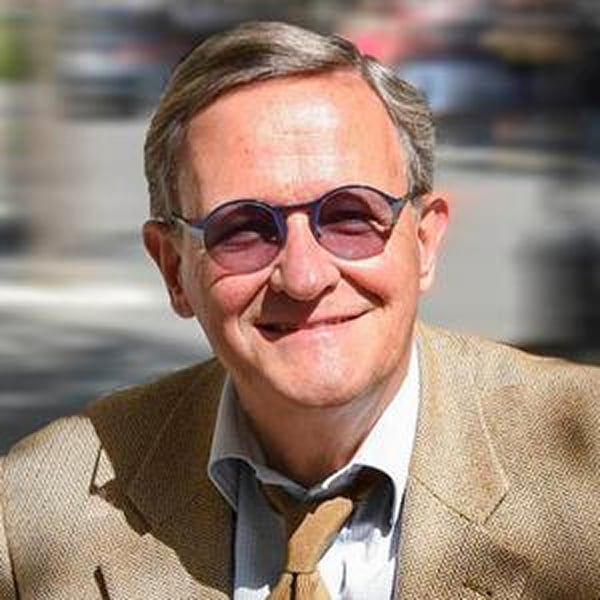

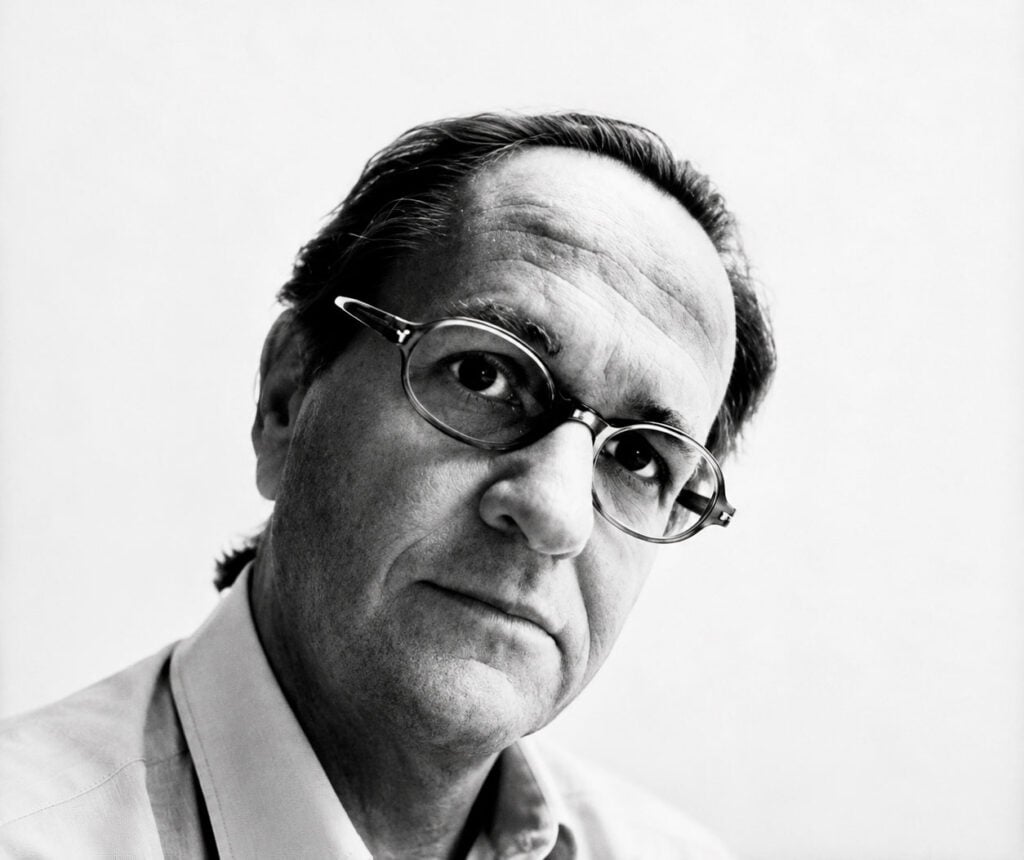
Peace & future researcher + ‌Art Photographer

Related Posts

The agreement is catastrophic both because of what it says and what it doesn’t mention. It reduces further the major asset of security policies: Freedom of action. Jan Oberg TFF director September 25, 2026 A couple of hours before the agreement was signed on September 22, 2026, I published the following 13 hypotheses about what it would most likely contain on TFF Substack (in English). I was wrong on only the first point. Contrary to what Trump had written on his Truth Social platform, it does not appear to come into force immediately. In fact, it turned out to be worse than even I had anticipated. After these hypotheses now come a number of reflections in light of what the agreement actually contains, and does not contain, as well as the way in which it has generally been presented by major media outlets and by the public-service broadcaster DR. My...
Below are TFF-related media mentions, comments, videos and social media posts published elsewhere but not on this homepage. We happen to catch and list only a fraction. Regarding video comments and debates, we recommend that you go to the TFF Video Channel on Substack where many of them are reproduced. Jan Oberg is a contributor to China Daily – 52 million daily clicks – and Global Times, CGTN and CCTV (the national television), China Investment, Xinhua News Agency and several others. Articles and videos on these media very often multiply into countless Chinese (and Western media) that re-post them from these main media. Thanks to The China Academy, his analyses, interviews and comments are frequently posted on YouTube channels such as Thinkers Forum and Wave Media. These videos are often re-posted on Bilibili (China’s YouTube), the China Content Center on TikTok, and on the Chinese edition of TikTok, Douyin.com. This means reaching hundreds of millions of viewers worldwide over a year. While there are too many to catch on all these...
Jan Oberg May 15, 2026 Go to this Fox News page and scroll the whole way down: President Donald Trump tells the world that his meeting with President Xi Jinping yielded a lot of very concrete political and economic results – of course, only where the Chinese side, according to him, agreed with him. He does not mention the Taiwan issue, but Secretary of State, Marco Rubio, says that it did not feature prominently in their talks and that the US policy on Taiwan has not changed. Then go to China Daily – or Global Times – and you will see that for the Chinese it is framework, principles, structure of cooperation etc. that matters – all embedded in the overall idea of “constructive bilateral relationship of strategic stability.” Nowhere is any concrete agreement or deal – all that Trump refers to – mentioned. At the general level, this gives you insights into the very different social...

Recent Articles

Tony Robinson October 4, 2026 Violence is easy to recognise when someone is being beaten, shot or killed. It becomes more difficult when nobody is holding a weapon. Poverty, discrimination, exploitation and repression can restrict a human life just as effectively, although they do so in very different ways and with very different consequences. Simply adding more categories to an ever-growing list of forms of violence does not really solve the problem. The more interesting question is what all these different situations have in common and why it makes sense to describe them using the same word. Human beings do not simply react to what happens around them. They remember the past, imagine things that do not yet exist, make plans and undertake projects. Workers organise because they imagine different working conditions; people migrate because they imagine another life somewhere else; social movements emerge because people refuse to accept the...
It’s a matter of principles, courage, vision and pulling together – while the militarist world is falling apart… Peter Langille October 3, 2026 “Here, then, is the problem which we present to you, stark and dreadful and inescapable: Shall we put an end to the human race; or shall mankind renounce war?”The Bertrand Russell—Albert Einstein Manifesto, July 9, 1955 ⁕ The forecast for what’s ahead is worrisome. The sharp rise in armed conflicts over the past three years is adding to what was already the highest level in over seventy years. Genocides, which should be prevented are supported. A shared climate emergency that jeopardises survival is ignored. Diverse polls now suggest that people are war-weary, worried and interested in a more effective United Nations. And, there are viable policy options for a more secure world! Yet governments are doubling-down, betting on more war and investing heavily. If current trends persist,...
Johan Galtung 1930-2024October 2015 Published here on October 3, 2026 Let us focus on Civilization for conflict analysis and remedies. Major forms of disorder use violence; war is state organized violence. The most belligerent states are the United States of America and Israel, both with civilization roots. National Evangelism, the US Protestant Christian civilization– more national than evangelical–justifies US warfare as exceptionalism of a people chosen by God, with a manifest destiny to run the world. Orthodox Judaism justifies Israeli warfare to conquer and expand from Nile to Euphrates as a religious right and duty to the Eternal One. The third most belligerent country, the UK, no longer believes it is God-chosen but chosen by the USA; not quite the same but something. But the root cause of global disorder lies in the Occident–with Islam–seeing itself as the single, universal civilization valid for all at all times, all others being...

TFF on Substack

Discover and subscribe to more peace materials on TFF Substack

Most Popular

Tony Robinson October 4, 2026 Violence is easy to recognise when someone is being beaten, shot or killed. It becomes more difficult when nobody is holding a weapon. Poverty, discrimination, exploitation and repression can restrict a human life just as effectively, although they do so in very different ways and with very different consequences. Simply adding more categories to an ever-growing list of forms of violence does not really solve the problem. The more interesting question is what all these different situations have in common and why it makes sense to describe them using the same word. Human beings do not simply react to what happens around them. They remember the past, imagine things that do not yet exist, make plans and undertake projects. Workers organise because they imagine different working conditions; people migrate because they imagine another life somewhere else; social movements emerge because people refuse to accept the...
It’s a matter of principles, courage, vision and pulling together – while the militarist world is falling apart… Peter Langille October 3, 2026 “Here, then, is the problem which we present to you, stark and dreadful and inescapable: Shall we put an end to the human race; or shall mankind renounce war?”The Bertrand Russell—Albert Einstein Manifesto, July 9, 1955 ⁕ The forecast for what’s ahead is worrisome. The sharp rise in armed conflicts over the past three years is adding to what was already the highest level in over seventy years. Genocides, which should be prevented are supported. A shared climate emergency that jeopardises survival is ignored. Diverse polls now suggest that people are war-weary, worried and interested in a more effective United Nations. And, there are viable policy options for a more secure world! Yet governments are doubling-down, betting on more war and investing heavily. If current trends persist,...
Johan Galtung 1930-2024October 2015 Published here on October 3, 2026 Let us focus on Civilization for conflict analysis and remedies. Major forms of disorder use violence; war is state organized violence. The most belligerent states are the United States of America and Israel, both with civilization roots. National Evangelism, the US Protestant Christian civilization– more national than evangelical–justifies US warfare as exceptionalism of a people chosen by God, with a manifest destiny to run the world. Orthodox Judaism justifies Israeli warfare to conquer and expand from Nile to Euphrates as a religious right and duty to the Eternal One. The third most belligerent country, the UK, no longer believes it is God-chosen but chosen by the USA; not quite the same but something. But the root cause of global disorder lies in the Occident–with Islam–seeing itself as the single, universal civilization valid for all at all times, all others being...
Read More
Living-Peace-Sign-Budapest-copy
Tony Robinson October 4, 2026 Violence is easy to recognise when someone is being beaten, shot or killed. It becomes more difficult when nobody is holding a weapon. Poverty, discrimination, exploitation and repression can restrict a human life just as effectively, although they do so in very different ways and with very different consequences. Simply adding more categories to an ever-growing list of forms of violence does not really solve the problem. The more interesting question is what all these different situations have in common and why it makes sense to describe them using the same word. Human beings do not simply react to what happens around them. They remember the past, imagine things that do not yet exist, make plans and undertake projects. Workers organise because they imagine different working conditions; people migrate because they imagine another life somewhere else; social movements emerge because people refuse to accept the...
b54a1f10-8c65-4f0b-9dd5-4abc0a7d04cc_2659x2659
It’s a matter of principles, courage, vision and pulling together – while the militarist world is falling apart… Peter Langille October 3, 2026 “Here, then, is the problem which we present to you, stark and dreadful and inescapable: Shall we put an end to the human race; or shall mankind renounce war?”The Bertrand Russell—Albert Einstein Manifesto, July 9, 1955 ⁕ The forecast for what’s ahead is worrisome. The sharp rise in armed conflicts over the past three years is adding to what was already the highest level in over seventy years. Genocides, which should be prevented are supported. A shared climate emergency that jeopardises survival is ignored. Diverse polls now suggest that people are war-weary, worried and interested in a more effective United Nations. And, there are viable policy options for a more secure world! Yet governments are doubling-down, betting on more war and investing heavily. If current trends persist,...
010
Johan Galtung 1930-2024October 2015 Published here on October 3, 2026 Let us focus on Civilization for conflict analysis and remedies. Major forms of disorder use violence; war is state organized violence. The most belligerent states are the United States of America and Israel, both with civilization roots. National Evangelism, the US Protestant Christian civilization– more national than evangelical–justifies US warfare as exceptionalism of a people chosen by God, with a manifest destiny to run the world. Orthodox Judaism justifies Israeli warfare to conquer and expand from Nile to Euphrates as a religious right and duty to the Eternal One. The third most belligerent country, the UK, no longer believes it is God-chosen but chosen by the USA; not quite the same but something. But the root cause of global disorder lies in the Occident–with Islam–seeing itself as the single, universal civilization valid for all at all times, all others being...
Screenshot 2026-10-02 011738
Jan ObergPhD, director, The Transnational Foundation for Peace and Future Research, TFFLund, Sweden October 2, 2026 This is my full original manuscript. The Chinese Academy of Social Science, CASS, makes two publications out if it. 1. China’s Five-year plan emphasized the capabilities of basic research and original innovation. It is regarded as the goal of the future social development, which, as required, should be significantly enhanced. Can you comment on the importance of original innovation in research and academic study? I believe it is easier to define “original innovation” in the natural sciences than in social sciences. The breaking points of what constitutes something new, or innovative, are not quite as sharp in the latter. But in both fields it is about opening up something that was closed, unseen, unexplored before – making manifest what was earlier latent. Innovations come in many forms and shapes – naming something that was not...
arctic-circle-map
The agreement is catastrophic both because of what it says and what it doesn’t mention. It reduces further the major asset of security policies: Freedom of action. Jan Oberg TFF director September 25, 2026 A couple of hours before the agreement was signed on September 22, 2026, I published the following 13 hypotheses about what it would most likely contain on TFF Substack (in English). I was wrong on only the first point. Contrary to what Trump had written on his Truth Social platform, it does not appear to come into force immediately. In fact, it turned out to be worse than even I had anticipated. After these hypotheses now come a number of reflections in light of what the agreement actually contains, and does not contain, as well as the way in which it has generally been presented by major media outlets and by the public-service broadcaster DR. My...
girl-5894831_1280
Below are TFF-related media mentions, comments, videos and social media posts published elsewhere but not on this homepage. We happen to catch and list only a fraction. Regarding video comments and debates, we recommend that you go to the TFF Video Channel on Substack where many of them are reproduced. Jan Oberg is a contributor to China Daily – 52 million daily clicks – and Global Times, CGTN and CCTV (the national television), China Investment, Xinhua News Agency and several others. Articles and videos on these media very often multiply into countless Chinese (and Western media) that re-post them from these main media. Thanks to The China Academy, his analyses, interviews and comments are frequently posted on YouTube channels such as Thinkers Forum and Wave Media. These videos are often re-posted on Bilibili (China’s YouTube), the China Content Center on TikTok, and on the Chinese edition of TikTok, Douyin.com. This means reaching hundreds of millions of viewers worldwide over a year. While there are too many to catch on all these...