
Albert G. Milbank Professor of International Law Emeritus, Princeton University;
Visiting Professor, UCSB, 2002-2004 and Chair, Board, Nuclear Age Peace Foundation.
Falk is the author, of The Great Terror War (2003) and Declining World Order (2004).
See other books by Richard Falk in “The 100 Best Books”

The depravities displayed to the world at Abu Ghraib prison pose an historic challenge to John Kerry: He needs to offer America something more politically attractive than ‘a pale Republican’ seeking entry to the White House. Subtly positioning his candidacy but a micro-meter to the left of George W. Bush is not what America urgently needs (or wants) now.

This is the most important presidential election of my lifetime: Unless we rid the country and the world of the Bush leadership, our future prospects are grim, and could include a slide toward global fascism abroad and the risk of a police state at home.

The precariousness of the situation is highlighted by the Bush unwillingness, even now, to acknowledge failure in Iraq, heightening the prospects for years more of bloodshed under the vapid label of ‘staying the course.’ To allow this defiant Bush posture to go unchallenged as the campaign unfolds is symbolically and substantively to embrace an approach that reeks of misguided opportunism.

It is misguided because it yields to the Republicans the high ground of meaning what they say and doing what they say, of appearing to have a conception of anti-terrorism that is coherent, if costly, and of being challenged, only trivially, at the outer margins of policy.

Ever since the end of the cold war, the Democratic Party has been afraid of its own core values, especially the party’s honorable identification with social justice and sophisticated internationalism, and has been avoiding the so-called L-word, revealing a shameful retreat from advocating big-ticket liberal programs in health, education, and welfare.

Bill Clinton, with his great political savvy, sensed the mood of the 1990s, as well as the insensitivity of Bush Sr. to the realities of domestic America, and so was able to prevail by moving rightwards of center. Unfortunately, as president, Clinton did not let these constituents down, working furiously for Republican/Wall Street priorities such as NAFTA, fiscal discipline and market-driven economic globalization, while backing down on health care and welfare. But, as the vicious GOP impeachment debacle illustrated, Clinton, despite all his efforts to co-opt the Republican agenda, never achieved credibility on the right, but did alienate (to various degrees) his base of support among liberals and progressives.

Then there was his would-be successor, Al Gore: Putting aside for the moment the issue of electoral fraud, the vice president went down to defeat following an even more callous electoral strategy, even sidelining Clinton in order to appease the family-values crowd who were apparently more appalled by the Lewinsky sideshow than by rampant homelessness and the rising number of Americans below the poverty line. Given the economic problems in America, the election should never have been even close if Gore had not demoralized so much of his base, a blunder that had the secondary effect of emboldening Ralph Nader and his supporters. The truth is that Nader’s negative impact on Democratic prospects is far less than the futile and demoralizing mainstream Democratic bid to win over citizens situated to the right of center. From the standpoint of both pragmatism and idealism, a truly principled Democratic campaign this time might make Nader redundant and in fact persuade him to drop out.

Of course, there are risks of taking a position rooted in opposition to the Iraq policy, but they are diminishing with each passing day. Moreover, by subscribing to the staying-the-course line, Kerry locks himself into a totally discredited policy that has undoubtedly and perversely strengthened the appeal of Al Qaeda’s message around the world, especially in Arab countries. Kerry, already ultra-sensitive about flip-flopping allegations, is understandably reticent about seeming to switch yet again on a major policy issue. For Iraq, he could, however, appear persuasive by treating Abu Ghraib and its related fallout as a wakeup call that alerted him to the reality of Iraq as the long-feared, nightmarish Vietnam Redux. And it would not be out of place to say that his earlier support of the Iraq policy was based on gross misrepresentations by the Bush White House and Pentagon, if not outright lies.

Kerry must be more than a warmed-over, slightly less right-wing Bush. The senator’s ‘plan’ – as it now stands – merely calls for an enlarged UN role. This not only resembles what the Bush people are themselves advocating, it tacitly accepts an approach that has failure written all over it. Why should the UN, so long rebuffed by the Bush administration, bother to step in at this stage? And, were it so foolish to jump in, why would not the Iraqi resistance view this new presence as no more than a continuation of the American occupation under different cover?

Indeed, what else can staying-the-course mean except finding a way to continue the foreign occupation, at least until a political solution for Iraq is found? This is incoherent advocacy at this stage: For the only plausible stabilization plan that might work, as prefigured in Falluja, is the re-Baathification of the governing process, and this would put Sunni leadership back in charge of the entire country. This ‘solution’ would likely trigger a civil war, unless it was to become as brutally authoritarian as its predecessor. Given these realities, therefore, the American goal of democracy in Iraq is an absurd paradox: Indeed, the more democratic the polity was allowed to become, the more anti-American (and anti-Israeli) it would undoubtedly turn out to be.

What’s worse, Kerry has already gone out of his way to express his unqualified support for Ariel Sharon’s policies – this implying an evident indifference to the Palestinian ordeal, and reinforcing anti-Americanism. Again, the ugly face of electoral opportunism is exhibited for all to see — and it may get worse, especially if Kerry decides to compete with Bush for support of the AIPAC (right wing pro-Israeli) lobbying crowd. The truth is that Sharon’s government, guilty of daily war crimes against the Palestinian people, is detested in much of the world. At the very least, Kerry might have coupled his support for the security of Israel with sincere expressions of anguish about the suffering of both peoples, and the need for a new vision of peace with security for both Israel and Palestine. I do not think it is too late for such a statement, and it would signal a willingness to put principle over short-sighted pragmatism.

Domestically, Kerry can no longer beat-around-the bush, so to speak: He must appeal to the variously dispossessed in America, not just to the middle classes. He should continuously remind Americans of Bush’s fiscal hypocrisy in handing huge tax cuts to the ultra-rich, while piling up a dangerously large deficit that threatens to pull down the world economy and burden future generations of Americans.

But a positive vision is more important than criticism at this stage. We need bold commitments to overhaul the health system so that it works for all Americans. And we need to restore educational opportunity both by lowering the economic obstacles to gaining quality education, especially at college levels, and of expanding the resources available to allow American education to recover its loss of ground to Europe and Asia in the sciences, math, and other fields. Is it not time to throw down the gauntlet of ‘compassionate liberalism’ as a direct challenge to the Bush campaign?

Domestically, too, a more humane and coherent approach, while underscoring the weaknesses of Bush policies, would offer a more hopeful vision. It should begin by repudiating the erosion of civil liberties at home promulgated by the Patriot Act and related legislation. It should also draw attention to the shocking failure of the Bush administration to support large appropriations to guard soft homeland targets in the United States, as well as stockpiles of weapons-grade uranium and plutonium in poorly protected Russian storage facilities. The dangers of dirty bombs and WMD have all along been much more severe in Russia and Pakistan than in any of ‘the axis of evil’ countries; the possibilities of diversion by theft or sake on the black market sales are high.

To help ‘denuclearize” the international atmosphere, the United States should desist altogether from its efforts to put weapons of mass destruction into space and turn away from developing new categories of nuclear weapons, including battlefield weapons openly intended according to recent Pentagon documents to be available for possible future wars. Fighting wars to prevent the acquisition of phantom nuclear weapons, as in Iraq, and supporting a crusade against nuclear proliferation seems at odds with our own weapons labs that are advocating new military roles for nuclear weapons — and even proposing the resumption of nuclear weapons testing in the near future.

A Democratic candidate that would move unreservedly in these directions is what these times demand. But I have a confession to make: The outcome of this election is so important that whatever Kerry does or doesn’t do, he will get my vote. Indeed, I have been urging friends not to listen to what he says, because it is so likely to be so awful as to undermine the morale needed to raise money and work for the registration of young and minority voters that will be required to defeat Bush.

But this degrading descent into the bowels of ‘lesser of evils’ politics has its dangers. It produces the sort of apathy that creates public space for the kind of rightist demagoguery that can descend into political extremism. The American people need more than ever a dose of Jeffersonian vigilance: The opposition to Bush should be based on principles that allow for essential public debate as to the real choices. I agree that the U.S. mass media too often fails to elevate citizen understanding, but a republic that is coaxed to sleep, during this historic election, by the appearance of consensus on the most vital issues of the day will be betrayed by a dishonorable opposition. Our democracy deserves better if it deserves to survive!

© TFF and the author 2004
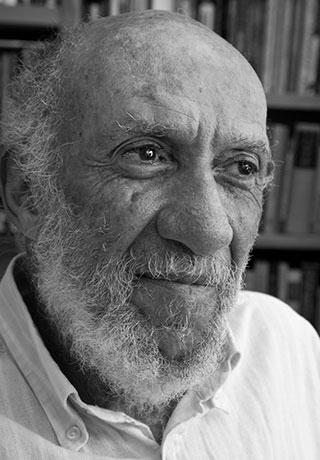
Professor Falk became an adviser to TFF when it was established in 1985.

Related Posts

The agreement is catastrophic both because of what it says and what it doesn’t mention. It reduces further the major asset of security policies: Freedom of action. Jan Oberg TFF director September 25, 2026 A couple of hours before the agreement was signed on September 22, 2026, I published the following 13 hypotheses about what it would most likely contain on TFF Substack (in English). I was wrong on only the first point. Contrary to what Trump had written on his Truth Social platform, it does not appear to come into force immediately. In fact, it turned out to be worse than even I had anticipated. After these hypotheses now come a number of reflections in light of what the agreement actually contains, and does not contain, as well as the way in which it has generally been presented by major media outlets and by the public-service broadcaster DR. My...
Below are TFF-related media mentions, comments, videos and social media posts published elsewhere but not on this homepage. We happen to catch and list only a fraction. Regarding video comments and debates, we recommend that you go to the TFF Video Channel on Substack where many of them are reproduced. Jan Oberg is a contributor to China Daily – 52 million daily clicks – and Global Times, CGTN and CCTV (the national television), China Investment, Xinhua News Agency and several others. Articles and videos on these media very often multiply into countless Chinese (and Western media) that re-post them from these main media. Thanks to The China Academy, his analyses, interviews and comments are frequently posted on YouTube channels such as Thinkers Forum and Wave Media. These videos are often re-posted on Bilibili (China’s YouTube), the China Content Center on TikTok, and on the Chinese edition of TikTok, Douyin.com. This means reaching hundreds of millions of viewers worldwide over a year. While there are too many to catch on all these...
Jan Oberg May 15, 2026 Go to this Fox News page and scroll the whole way down: President Donald Trump tells the world that his meeting with President Xi Jinping yielded a lot of very concrete political and economic results – of course, only where the Chinese side, according to him, agreed with him. He does not mention the Taiwan issue, but Secretary of State, Marco Rubio, says that it did not feature prominently in their talks and that the US policy on Taiwan has not changed. Then go to China Daily – or Global Times – and you will see that for the Chinese it is framework, principles, structure of cooperation etc. that matters – all embedded in the overall idea of “constructive bilateral relationship of strategic stability.” Nowhere is any concrete agreement or deal – all that Trump refers to – mentioned. At the general level, this gives you insights into the very different social...

Recent Articles

Tony Robinson October 4, 2026 Violence is easy to recognise when someone is being beaten, shot or killed. It becomes more difficult when nobody is holding a weapon. Poverty, discrimination, exploitation and repression can restrict a human life just as effectively, although they do so in very different ways and with very different consequences. Simply adding more categories to an ever-growing list of forms of violence does not really solve the problem. The more interesting question is what all these different situations have in common and why it makes sense to describe them using the same word. Human beings do not simply react to what happens around them. They remember the past, imagine things that do not yet exist, make plans and undertake projects. Workers organise because they imagine different working conditions; people migrate because they imagine another life somewhere else; social movements emerge because people refuse to accept the...
It’s a matter of principles, courage, vision and pulling together – while the militarist world is falling apart… Peter Langille October 3, 2026 “Here, then, is the problem which we present to you, stark and dreadful and inescapable: Shall we put an end to the human race; or shall mankind renounce war?”The Bertrand Russell—Albert Einstein Manifesto, July 9, 1955 ⁕ The forecast for what’s ahead is worrisome. The sharp rise in armed conflicts over the past three years is adding to what was already the highest level in over seventy years. Genocides, which should be prevented are supported. A shared climate emergency that jeopardises survival is ignored. Diverse polls now suggest that people are war-weary, worried and interested in a more effective United Nations. And, there are viable policy options for a more secure world! Yet governments are doubling-down, betting on more war and investing heavily. If current trends persist,...
Johan Galtung 1930-2024October 2015 Published here on October 3, 2026 Let us focus on Civilization for conflict analysis and remedies. Major forms of disorder use violence; war is state organized violence. The most belligerent states are the United States of America and Israel, both with civilization roots. National Evangelism, the US Protestant Christian civilization– more national than evangelical–justifies US warfare as exceptionalism of a people chosen by God, with a manifest destiny to run the world. Orthodox Judaism justifies Israeli warfare to conquer and expand from Nile to Euphrates as a religious right and duty to the Eternal One. The third most belligerent country, the UK, no longer believes it is God-chosen but chosen by the USA; not quite the same but something. But the root cause of global disorder lies in the Occident–with Islam–seeing itself as the single, universal civilization valid for all at all times, all others being...

TFF on Substack

Discover and subscribe to more peace materials on TFF Substack

Most Popular

Tony Robinson October 4, 2026 Violence is easy to recognise when someone is being beaten, shot or killed. It becomes more difficult when nobody is holding a weapon. Poverty, discrimination, exploitation and repression can restrict a human life just as effectively, although they do so in very different ways and with very different consequences. Simply adding more categories to an ever-growing list of forms of violence does not really solve the problem. The more interesting question is what all these different situations have in common and why it makes sense to describe them using the same word. Human beings do not simply react to what happens around them. They remember the past, imagine things that do not yet exist, make plans and undertake projects. Workers organise because they imagine different working conditions; people migrate because they imagine another life somewhere else; social movements emerge because people refuse to accept the...
It’s a matter of principles, courage, vision and pulling together – while the militarist world is falling apart… Peter Langille October 3, 2026 “Here, then, is the problem which we present to you, stark and dreadful and inescapable: Shall we put an end to the human race; or shall mankind renounce war?”The Bertrand Russell—Albert Einstein Manifesto, July 9, 1955 ⁕ The forecast for what’s ahead is worrisome. The sharp rise in armed conflicts over the past three years is adding to what was already the highest level in over seventy years. Genocides, which should be prevented are supported. A shared climate emergency that jeopardises survival is ignored. Diverse polls now suggest that people are war-weary, worried and interested in a more effective United Nations. And, there are viable policy options for a more secure world! Yet governments are doubling-down, betting on more war and investing heavily. If current trends persist,...
Johan Galtung 1930-2024October 2015 Published here on October 3, 2026 Let us focus on Civilization for conflict analysis and remedies. Major forms of disorder use violence; war is state organized violence. The most belligerent states are the United States of America and Israel, both with civilization roots. National Evangelism, the US Protestant Christian civilization– more national than evangelical–justifies US warfare as exceptionalism of a people chosen by God, with a manifest destiny to run the world. Orthodox Judaism justifies Israeli warfare to conquer and expand from Nile to Euphrates as a religious right and duty to the Eternal One. The third most belligerent country, the UK, no longer believes it is God-chosen but chosen by the USA; not quite the same but something. But the root cause of global disorder lies in the Occident–with Islam–seeing itself as the single, universal civilization valid for all at all times, all others being...
Read More
Living-Peace-Sign-Budapest-copy
Tony Robinson October 4, 2026 Violence is easy to recognise when someone is being beaten, shot or killed. It becomes more difficult when nobody is holding a weapon. Poverty, discrimination, exploitation and repression can restrict a human life just as effectively, although they do so in very different ways and with very different consequences. Simply adding more categories to an ever-growing list of forms of violence does not really solve the problem. The more interesting question is what all these different situations have in common and why it makes sense to describe them using the same word. Human beings do not simply react to what happens around them. They remember the past, imagine things that do not yet exist, make plans and undertake projects. Workers organise because they imagine different working conditions; people migrate because they imagine another life somewhere else; social movements emerge because people refuse to accept the...
b54a1f10-8c65-4f0b-9dd5-4abc0a7d04cc_2659x2659
It’s a matter of principles, courage, vision and pulling together – while the militarist world is falling apart… Peter Langille October 3, 2026 “Here, then, is the problem which we present to you, stark and dreadful and inescapable: Shall we put an end to the human race; or shall mankind renounce war?”The Bertrand Russell—Albert Einstein Manifesto, July 9, 1955 ⁕ The forecast for what’s ahead is worrisome. The sharp rise in armed conflicts over the past three years is adding to what was already the highest level in over seventy years. Genocides, which should be prevented are supported. A shared climate emergency that jeopardises survival is ignored. Diverse polls now suggest that people are war-weary, worried and interested in a more effective United Nations. And, there are viable policy options for a more secure world! Yet governments are doubling-down, betting on more war and investing heavily. If current trends persist,...
010
Johan Galtung 1930-2024October 2015 Published here on October 3, 2026 Let us focus on Civilization for conflict analysis and remedies. Major forms of disorder use violence; war is state organized violence. The most belligerent states are the United States of America and Israel, both with civilization roots. National Evangelism, the US Protestant Christian civilization– more national than evangelical–justifies US warfare as exceptionalism of a people chosen by God, with a manifest destiny to run the world. Orthodox Judaism justifies Israeli warfare to conquer and expand from Nile to Euphrates as a religious right and duty to the Eternal One. The third most belligerent country, the UK, no longer believes it is God-chosen but chosen by the USA; not quite the same but something. But the root cause of global disorder lies in the Occident–with Islam–seeing itself as the single, universal civilization valid for all at all times, all others being...
Screenshot 2026-10-02 011738
Jan ObergPhD, director, The Transnational Foundation for Peace and Future Research, TFFLund, Sweden October 2, 2026 This is my full original manuscript. The Chinese Academy of Social Science, CASS, makes two publications out if it. 1. China’s Five-year plan emphasized the capabilities of basic research and original innovation. It is regarded as the goal of the future social development, which, as required, should be significantly enhanced. Can you comment on the importance of original innovation in research and academic study? I believe it is easier to define “original innovation” in the natural sciences than in social sciences. The breaking points of what constitutes something new, or innovative, are not quite as sharp in the latter. But in both fields it is about opening up something that was closed, unseen, unexplored before – making manifest what was earlier latent. Innovations come in many forms and shapes – naming something that was not...
arctic-circle-map
The agreement is catastrophic both because of what it says and what it doesn’t mention. It reduces further the major asset of security policies: Freedom of action. Jan Oberg TFF director September 25, 2026 A couple of hours before the agreement was signed on September 22, 2026, I published the following 13 hypotheses about what it would most likely contain on TFF Substack (in English). I was wrong on only the first point. Contrary to what Trump had written on his Truth Social platform, it does not appear to come into force immediately. In fact, it turned out to be worse than even I had anticipated. After these hypotheses now come a number of reflections in light of what the agreement actually contains, and does not contain, as well as the way in which it has generally been presented by major media outlets and by the public-service broadcaster DR. My...
girl-5894831_1280
Below are TFF-related media mentions, comments, videos and social media posts published elsewhere but not on this homepage. We happen to catch and list only a fraction. Regarding video comments and debates, we recommend that you go to the TFF Video Channel on Substack where many of them are reproduced. Jan Oberg is a contributor to China Daily – 52 million daily clicks – and Global Times, CGTN and CCTV (the national television), China Investment, Xinhua News Agency and several others. Articles and videos on these media very often multiply into countless Chinese (and Western media) that re-post them from these main media. Thanks to The China Academy, his analyses, interviews and comments are frequently posted on YouTube channels such as Thinkers Forum and Wave Media. These videos are often re-posted on Bilibili (China’s YouTube), the China Content Center on TikTok, and on the Chinese edition of TikTok, Douyin.com. This means reaching hundreds of millions of viewers worldwide over a year. While there are too many to catch on all these...





