World Order – Futures

Category

Year

Author / Contributor

Region

Sort by

Showing 1-10 of 127 stories

Mnogopoljarnost
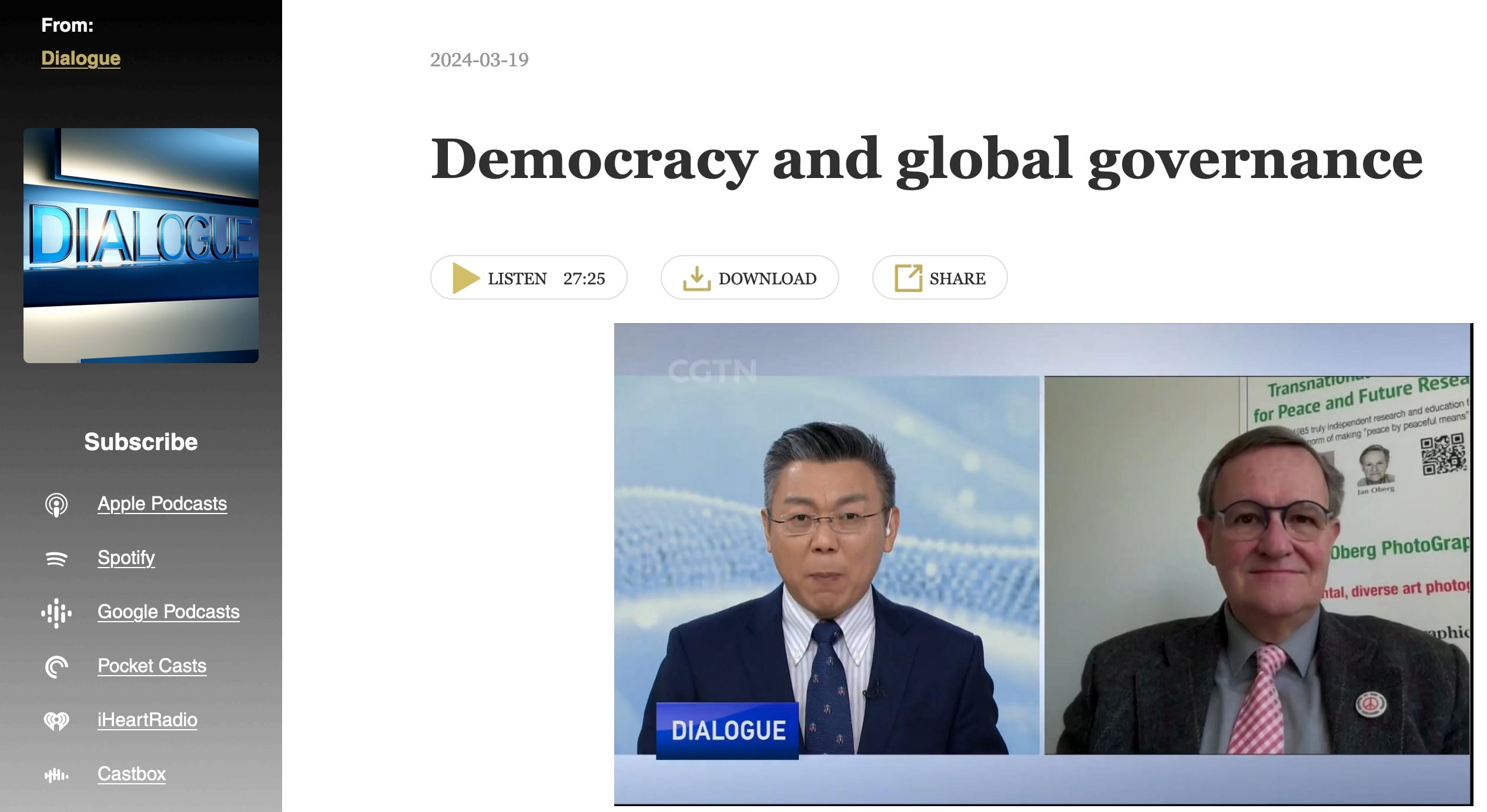
通过联合国改革实现全球民主治理: 面向未来的多极世界 Jan Oberg January 8, 2025 Last year, I was asked by the prestigious “China Investment” Magazine in Beijing to write a longer analysis of my own choice. It would become the cover story in the first 2025 issue. While I have written several things before (a) for China Investment, it was the first time that I could freely choose. I feel honoured by the trust in extended by the editorial board. Since China relies heavily on long-range thinking and visions, I thought it would be interesting to write something within the field of future research—which I explain in the introduction to the analysis—about how I could envisage a future world with global governance and a reformed United Nations. I think it is urgently necessary to focus much less on the past and focus much more on the future. No one can drive to a goal by only looking...
102e6a_91933646263c76535124e6a355c92b37_srz_3028_2042_85_22_0.50_1.20_0
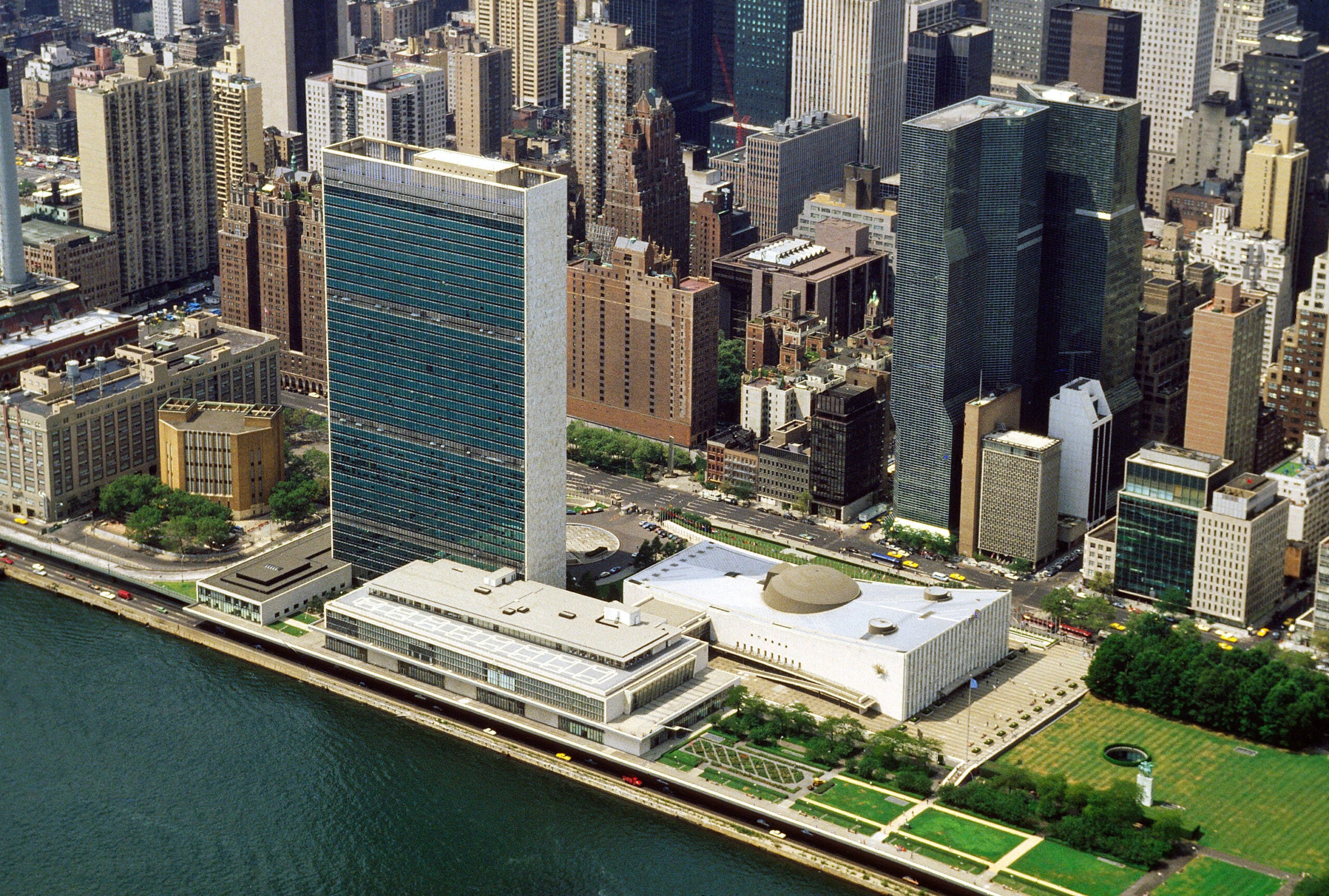
Contemporary reports of the birth of the United Nations in June 1945 in San Francisco warmly welcomed the news of its establishment and congratulated the United States for conceiving and delivering the new international organisation. President Truman’s remarks at the closing ceremony – “what a great day this can be in history” – were widely shared. There were enormous expectations that, in contrast to the discredited League of Nations, there was now a strong institution that would keep the peace and promote international cooperation. The momentum of San Francisco was maintained in the later months of 1945 in London where with the new Labour government and decisive leadership from the Foreign Office, the necessary practical measures were taken very quickly to put in place the principal organs, especially the Security Council, the General Assembly and the secretariat. A major deficiency of the Charter – the absence of provisions on human...
What-is-the-Multipolar-World-vs-Old-Unipolar_cover
. He first tells why he was in Belgrade during the bombing and then explains how that bombing was a turning point towards the new multipolar – and better – world we are now approaching. First Beoforum’s version on YouTube. Then you can always find it on TFF’s Vimeo Channel – because we boycott Goggle-owned YouTube as much as we can.
cti
Jan Oberg April 8, 2024 This 7-minute video was shot by The China Academy in January 2024, posted on Wave Media on YouTube and then picked up by Taiwan’s CTi News and the Chinese Global Times magazine. This means a very large audience. Here is the link to see the many comments it created. I’m simply trying, in the shortest possible manner, to summarise what is happening these years from a macrohistorical perspective. If you think this way of thinking is interesting, why not reward TFF for bringing you fresh, different perspectives and always with a touch of a better future and a more peaceful world? It’s fast, simple and safe. Just hit this Big Red Button
mohamed-nohassi-Predictions_1400
Photo – Mohamed Nohassi on Unsplash Jan Oberg December 30, 2023 ”It is difficult to make predictions, particularly about the future.”Unknown but wise person’s statement. I do not pretend my predictions below are scientific or based on a sophisticated social science methodology. They are merely intuitive and hypothetical and based on some of my accumulated knowledge and experience about international affairs over more than four decades. You may say they grow out of a Wright Mills-like sociological – and peace research – imagination. I regret I can’t mobilise more optimism at this point in world history. I hope, therefore, that many of these predictions will turn out to be wrong. But keep or archive them. Time will tell. (1) The war on Gaza will continue, probably for months or years, and the worldwide anger directed at Israel will increase exponentially. Israel will be more and more isolated and attacked in...
MopsMore4_1000_100dpi
“Mops And More” © Jan Oberg 2023 Jan Oberg October 20, 2023 I assume that most readers here know me as a peace and conflict researcher and as co-founder and director of the Transnational Foundation for Peace and Future Research, TFF. However, since 2009, I’ve also worked as an art photographer, done projects, and arranged almost 30 exhibitions in my studio here in Lund, Sweden. See more on Oberg PhotoGraphics. I grew up with contemporary art; it’s always been an essential, joyful interest of mine. And in 2002-2003, I found out that I could reach people not only with texts but also with images. Back then, I went on fact-finding in Iraq and interviewed some 160 people at all levels and also took photos with an early digital low-resolution camera – of people, cafées, nature, streets, children, cultural places, museums and… life in general, nothing special. It was merely snapshots...

GettyImages-1554490717
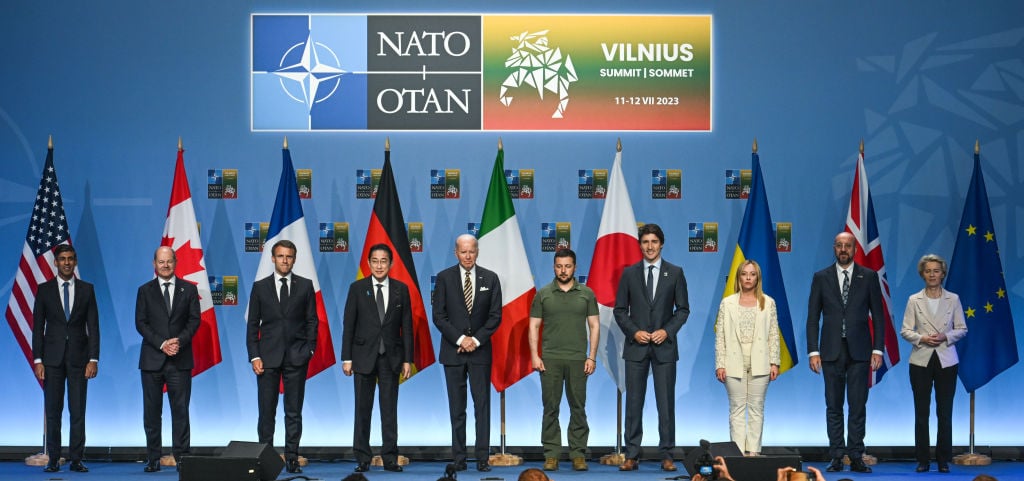
US lawmakers say the alliance’s movement into Asia is “inevitable.” It’s actually a completely avoidable, completely bad idea. Branko Marcetic September 15, 2023 A little over a century ago, rising inter-imperial tensions coupled with a complicated, evidence board–like set of alliances pulled Europe into the most disastrous, pointless war the world had ever seen up to then, World War I. Today, a ’roided-up version of that scenario is looming, as US-China relations deteriorate and the NATO alliance begins to dip several toes in Asia, nearly six thousand miles away from its headquarters in Brussels. Originally published at Jacobin on July 29, 2023 This isn’t an exaggeration. Asked recently at a joint appearance on Meet the Press whether NATO’s expansion into Asia was “inevitable,” Senators Tammy Duckworth (an Illinois Democrat) and Dan Sullivan (an Alaska Republican) answered yes. “Oh, I think it is,” said Sullivan. “I agree with my friend,” said Duckworth. They had good...
pszh1ddtu2881
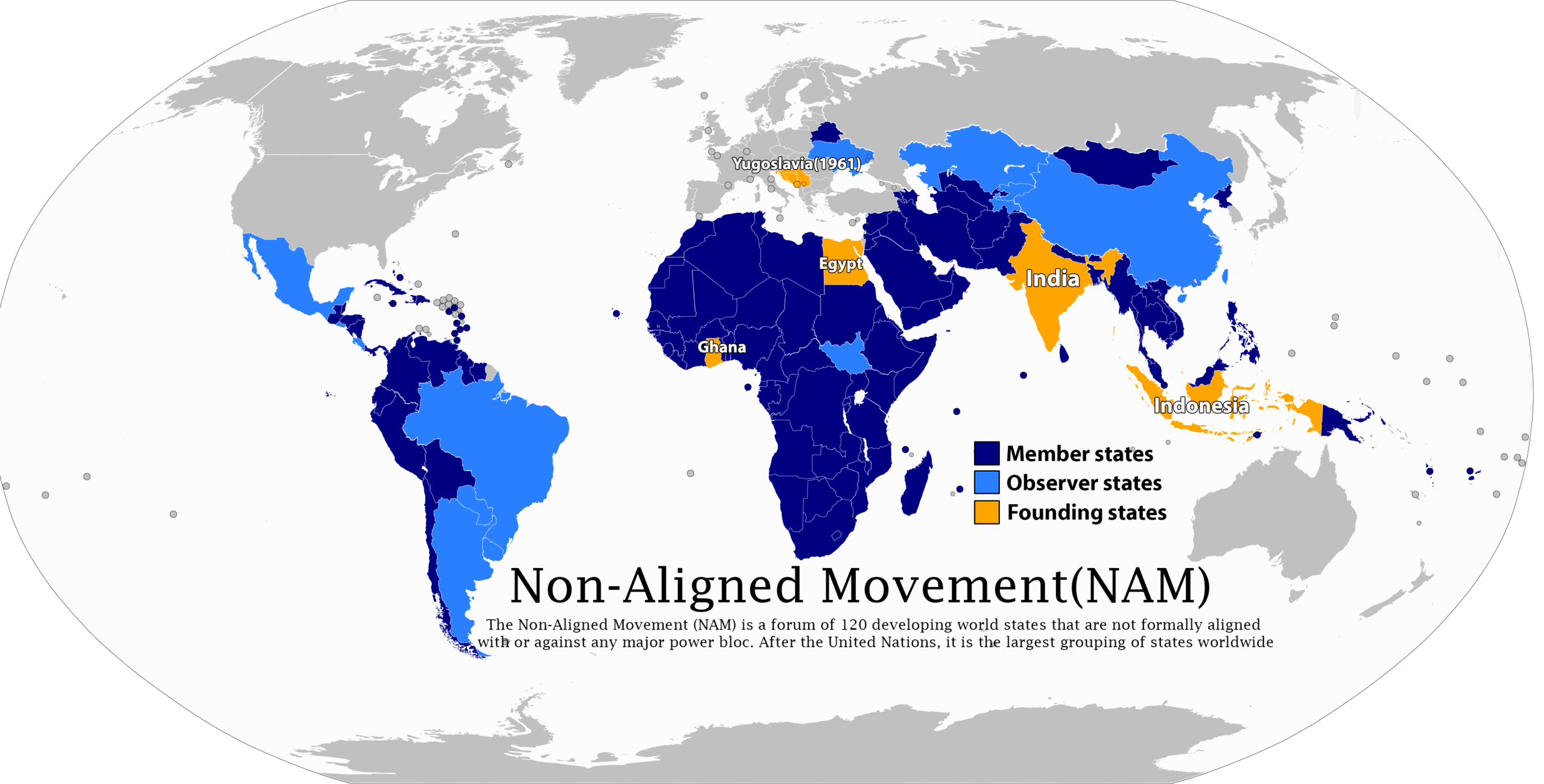
J. Natasha Gooneratne* August 10, 2023 This article explores the discourse of the Ukraine crisis from the perspective of the Non-Aligned Movement (NAM), recalling some of the movement’s focal pillars that find their roots in the cultural and historical makeup of its member states. It looks at recent efforts of NAM members within the context of peace talks and bilateral relations and further presents a reflection on why NAM members are better equipped to create progressive conditions within that space. Lastly, it explores why such efforts are often misconstrued by Western governments and media. A few weeks ago, 7 African leaders (heads of state of South Africa, Senegal, Zambia, Comoros and Egypt, alongside top officials from the Republic of Congo and Uganda) travelled to Russia and Ukraine, in what can thus far be described as the largest collective push toward brokering even a semblance of peace talks in over 16...
ChinaGlobe-kopia
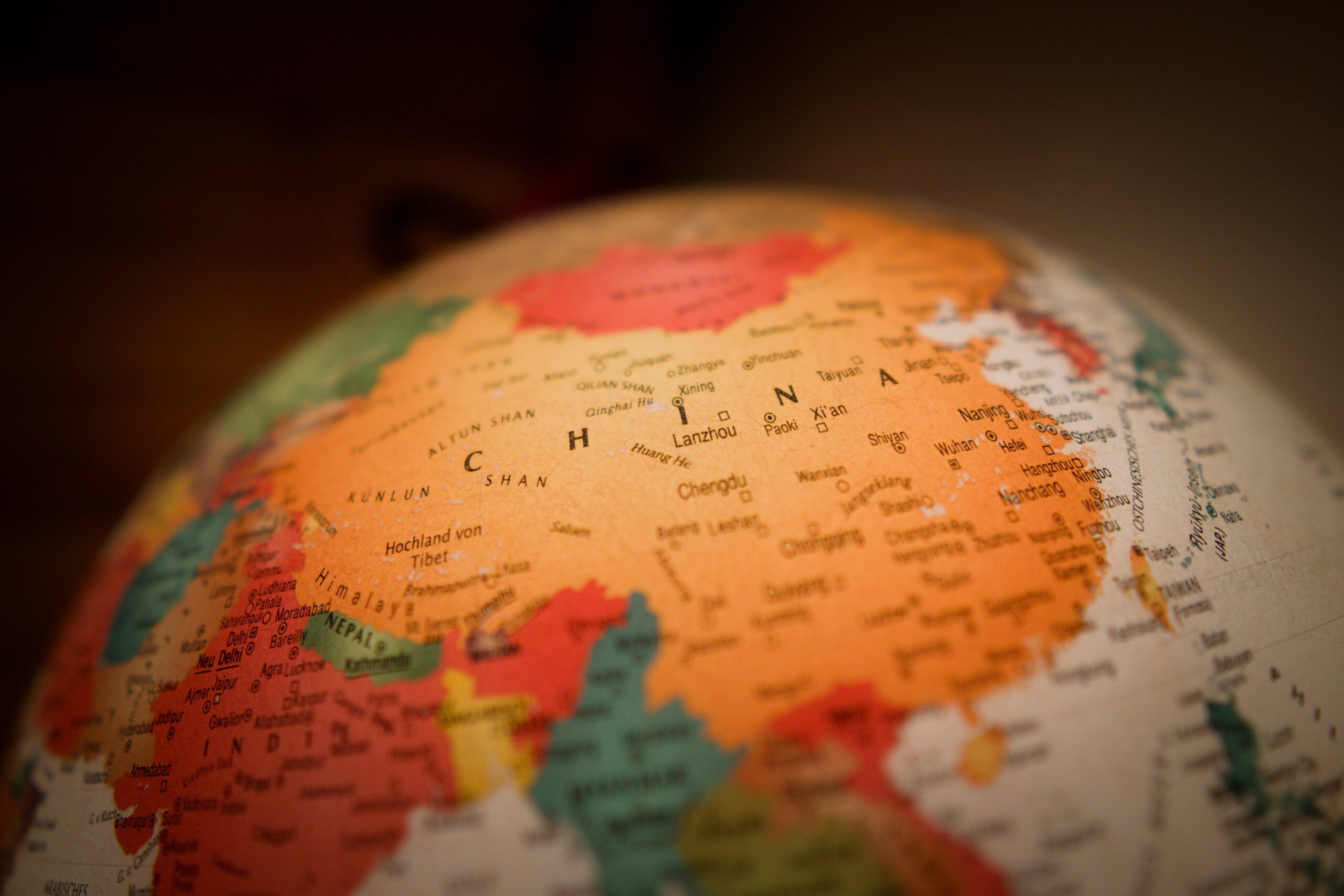
In the 17th century, Ming China represented roughly one-third of global output, and Mughal India a little less. Together the two countries accounted for more than half of the world’s output, with a corresponding size of populations (as a proportion of the total global population). By the 1950s, Mao China was a mere 5 per cent of global GDP. India only 1 per cent. Today, after several decades of exceptional economic progress, particularly in China, there is now a historic rise of the Global South. The two behemoths – China and India, and others in the South – are now reclaiming their historic economic weight in the world.  The 2013 UNDP Human Development Report documented this rise of the Global South presenting evidence that China, India, and Brazil were collectively in the process of exceeding western developed countries in terms of trade and global output. China is now the largest...
64c7938b2030274377054be5
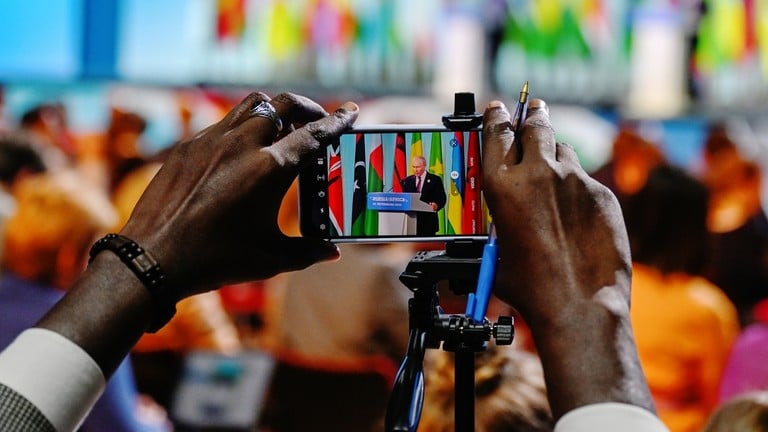
The choice of St. Petersburg to host the Russia-Africa Summit 2023 was no accident. It was a symbolic move. Dmitry Trenin is a research professor at the Higher School of Economics and a lead research fellow at the Institute of World Economy and International Relations. He is also a member of the Russian International Affairs Council. Intro This piece was published on July 31, 2023, by RT – formerly Russia Today, blocked by most Western countries – and we bring it here because we believe it is essential to know how Russia’s leading intellectuals look upon things and because we believe it is deeply wrong of the West to practise censorship while preaching freedom of expression and having signed human rights declarations to the effect that every human being has a right to freely seek information and shape her og his opinion about the world. Also, RT upholds at least as...
64a415e8e3e1f.image_
M. K. Bhadrakumar July 6, 2023 To be out of sync with the contemporary life anywhere at anytime becomes indeed a despairing situation. That was the tragic predicament of the Austrian writer of the inter-war period, Stefan Zweig, who once wrote, “One must be convinced to convince, to have enthusiasm to stimulate the others” — alluding to the rising tide of fascism in Europe in the twenties and thirties which culminated in World War 2.  Zweig couldn’t reconcile his inner contradiction, which ultimately drove him to take his life in faraway Brazil,  barely escaping the Nazi hunt of the Jewish bourgeoisie in Vienna to which his wealthy family belonged, after handing over to the publisher his great memoirs The World of Yesterday, which is regarded even today as a most evocative book on the Habsburg Empire.  Zweig’s tragedy should not be India’s destiny, as it runs away from the complexities...
Categories

Year

Author / Contributor

Region