
The great transition: Non-alignment and the rise of the global south

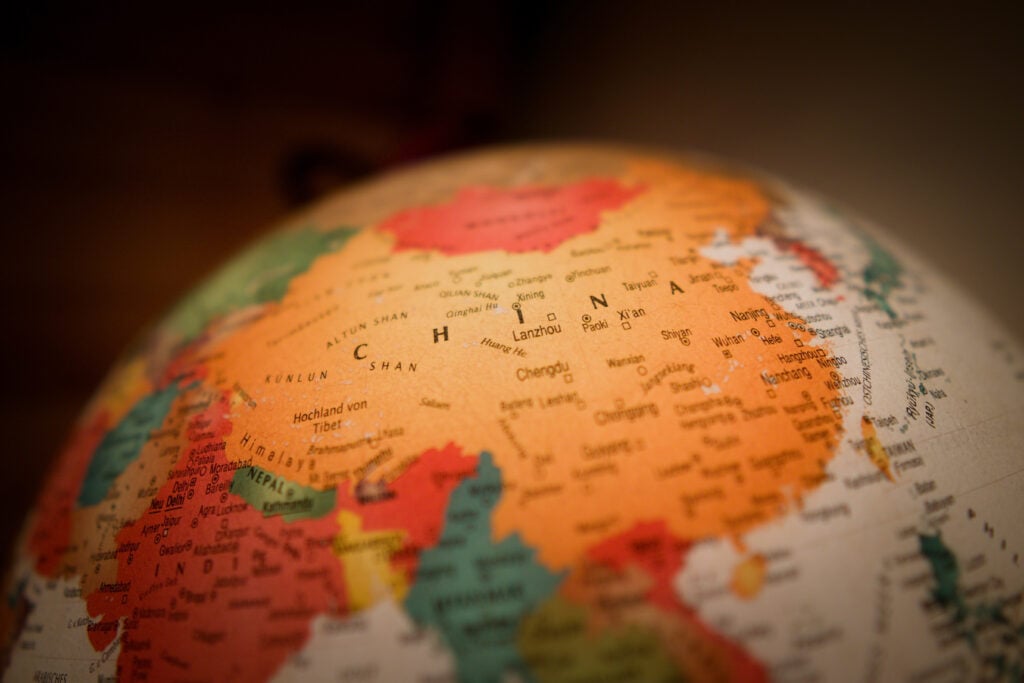
In the 17th century, Ming China represented roughly one-third of global output, and Mughal India a little less. Together the two countries accounted for more than half of the world’s output, with a corresponding size of populations (as a proportion of the total global population). By the 1950s, Mao China was a mere 5 per cent of global GDP. India only 1 per cent.

Today, after several decades of exceptional economic progress, particularly in China, there is now a historic rise of the Global South. The two behemoths – China and India, and others in the South – are now reclaiming their historic economic weight in the world. 

The 2013 UNDP Human Development Report documented this rise of the Global South presenting evidence that China, India, and Brazil were collectively in the process of exceeding western developed countries in terms of trade and global output. China is now the largest economy in the world, calculated in PPP terms. 

The sheer speed and scale of this rise is unmatched. The economic take-off in China and India began with about 1 billion people in each country and doubled output per capita in less than 20 years-an economic force affecting a larger population than the industrial revolution.

The middle class, in particular, is growing rapidly as well in size, income and expectations. Between 1990 and 2010, the South’s share of the global middle class expanded from 26 % to 58 %. By not in too distant 2030, more than 80% of the world’s middle class is projected to be residing in the South and to account for 70 per cent of total consumption expenditure.  

The Report called for greater voice and representation by the South in international institutions to reflect this changing context and to consider new ones that facilitate regional integration and South-South relationships. It recognized that these steps were essential to reduce stress on global systems of governance and allow for peaceful management of this historic change. 

Trade and investment patterns are in flux as well. Today, for instance, China is the largest trade and investment partner in almost all countries in Africa. Equally, China has supplanted Western countries as the largest trading partner in many Latin American countries. And, is now the largest trade partner with Saudi Arabia. 

Inevitably this profound global shift has large repercussions for the ways nations conduct their business and people relations with each other.  

A popular way of looking at great power rivalry and its consequences owes much to contemporary interpretations based on Thuycidides, an Athenian historian, who examined the fifth-century BC war between Sparta and Athens. That analysis led to the term Thuycidides Trap, which describes an apparent tendency towards war when an emerging power threatens to displace an existing great power. 

War, however, is not inevitable. As Chinese President Xi Jinping himself noted in his visit to Seattle in 2015, “There is no such thing as the so-called Thucydides Trap in the world. But should major countries time and again make the mistakes of strategic miscalculation, they might cause such traps for themselves”. 

Objective shifts in national output nonetheless set the context. An influential review by the Atlantic Monthly (2015) pointed out that in 12 of the 16 past cases, when a rising power confronted a ruling power, it resulted in open hostility. 

The current rise of the Global South is even more challenging since the rapid shift in the relative power of an emergent group is taking place in a short period of time, in a matter of decades rather than centuries. There is, however, an important caveat. Whereas the rise of new powers may set the conditions for war, it is fear and miscalculation that sets the stage for actual conflict.

And, it is the latter concern that we must focus on. Paul Kennedy in his influential book on The Rise and Fall of the Great Powers, presciently noted that ‘the only threat to the real interests of the United States can come from a failure to adjust sensibly to the newer world order’. 

As Kennedy himself observed, military power follows economic power. So, the question remains: is conflict inevitable? How perilous is this period with the rise of China and other countries in the Global South?

Several factors are decidedly different, though, in today’s contemporary context: 

a.   The existence of global institutions such as the United Nations committed to a peaceful world, and though the record is mixed in terms of their efforts to promote peace, the fact remains that there are many intergovernmental and civil society coalitions allied around the world for that purpose.

b.   Despite the many contemporary challenges, there remains an ongoing commitment to multilateralism. Post World War II, the growth of multilateral agreements has created a dense framework of rules and norms for the conduct of relations and global discourse.

c.    The pressing nature and acuity of planetary challenges such as climate change that only be resolved collectively. Our survival as a human society, perhaps even of our species itself, depends on that cooperation. 

Whereas it’s tempting to see the Global South as an emerging single bloc, there is much diversity among nation-states in the South and their national interests. The rise of the Global South has created greater policy space for countries, particularly developing countries, to pursue their own interests and reenergize multilateralism.  

Even in Latin America, a region historically aligned with the US, a recent article (Jorge Heine et al, 2022) argued for ‘active non-alignment’ as a guiding principle for nations in the region, given the expansion of policy space due to the growth in trade and investment between China and the region. China is now the top trading partner of Brazil, Chile, Peru and Uruguay. Added to this dynamic is the rise of progressive governments in Mexico, Columbia and Brazil.  

The non-alignment movement of the 1950s and 1960s rose out of a desire by newly independent countries (apart from Yugoslavia) to focus on their own economic and social progress and not get pulled into competing blocs of the US and the Soviet Union. 

Respect for borders and creating the conditions for peace are the cornerstone of the United Nations. The global response to the Ukraine crisis reinforced this basic principle, as highlighted by the voting at the UN General Assembly. Where differences arose rested on the measures adopted to sanction Russia and a desire for stronger efforts to stop the fighting and resolve the Ukrainian crisis.

On the eve of the first year anniversary of Russia’s invasion, the UN resolution passed 141 to 7 with 32 abstentions – mainly by countries in Africa, Asia, Latin America and the Middle East. They included China, India and South Africa. A similar UN resolution was adopted by the United Nations in March 2022. 

The Ukraine crisis has had the effect of clarifying the need for more purposeful principles to govern the conduct of relations among nations, in a time of great change and churn, so that shifts in power and influence can be peacefully managed and that global efforts are directed towards the sustainability of life and economy around the world.  

What should these principles consist of?  

One.

Recommit ourselves to the guiding principles of the United Nations and multilateralism more generally, by actively supporting the aspirations for equity and justice of ‘we the peoples’.  That recommitment, however, has to be based on a critical reflection about why basic UN principles have been breached in the past and how best membership at large and UN institutions, in particular, should internalize lessons learnt from the fallout of UN Security Council decisions, for instance, relating to Iraq and Libya, and the inability of the UN, despite many efforts, to resolve protracted crises like Syria.  

Lack of progress in the basic UN purpose of promoting peace and preventing conflict has dented the authority and prestige of the United Nations. In the end, global and regional institutions can only function well if and when their members, especially the larger, more dominant ones, commit their full energy and resources to support the objectives of those institutions.

The principal aim remains to save succeeding generations from the ‘scourge of war’, to promote social progress and better standards of living in greater freedom, and aim for a better balance between man and nature. 

Two.

Pursue ‘active non-alignment’ in the conduct of relations among nations. The term refers to a foreign policy approach in which countries, especially those from the Global South, refuse to take sides between the great powers and focus on their own interests. An approach characterized by The Economist as ‘how to survive a superpower split’.  

In the past, this position was connected with a desire by countries to address development challenges. Today this approach can provide clarity of purpose in pursuing international relations.  Furthermore, pursuing such an objective is now possible in a world where policy space has been extended with the rise of the Global South. Take the case of the Gulf countries.

A recent CNN broadcast by Fareed Zakaria highlighted this shift in their perspectives towards international relations. Zakaria noted, in particular, the large strategic shift by Saudi Arabia in making peace with its neighbours, and in simultaneously pursuing close economic ties with China and Russia and close security interests with the US. 

For a more peaceful world, we need to move away from strategic relations conducted between ‘blocs of influence’. The term ‘active non-alignment’ captures well the underlying principle of all of us sharing the same planet and breathing the same air. 

Three.  

Broaden the frame of reference in the conduct of relations between nations. Traditionally, foreign policy priorities are set by national governments. In the current setting of great change and an interconnected world, national priorities can no longer be adequately or easily settled by ‘government-to-government’ interactions alone.

They require consultations with international bodies, civil society and close bilateral partners leading up to a national consensus.  Such priorities have to be driven by two key thoughts: putting peoples’ welfare first (not just people within national boundaries but also regional and global) and by taking a longer-term perspective towards peace and prosperity, as also collectively agreed in the 2030 SDGs agenda. 

Four. 

Go global by focusing on the regional. Many of the current challenges are regional in nature.  We need to look at stronger cooperation mechanisms and institutions, including regional financial bodies, to reduce overall stress on country systems and de-risk global challenges and contagion.  

Multilateralism could be much advanced by stronger global links with existing regional bodies such as ECOWAS and ASEAN.  Reform of the UN, especially the Security Council, could be guided by the desire to embed incentives for regional responsibility and peaceful cooperation.

New members of the Council could be tasked with the added idea of how best to represent the interests of their region or sub-region. And, how well they bring along their regional community could influence their longevity on the Council.  

Five.  

Deepen legitimacy and representativeness. At the recent G-7 meeting in Japan, the UN Secretary-General underlined that the time has come to fix the Bretton Wood system and reform the UN Security Council. He called for urgent reform to correct the systemic and unjust bias in the global economic and financial system.

The UN Secretary-General strongly felt that the financial system created at Bretton Woods had simply ‘failed in its core function as a global safety net’ in the face of the economic shocks from the Covid crisis and the Russian invasion of Ukraine. 

The key global institutions today – the Bretton Woods agencies and the UN system – were created in 1945 by the victors following the end of the Second World War. They reflected the power arrangements of that period. After all, the UN Charter was signed in June 1945 by 50 countries (Poland joined a few months later, becoming the 51st founding member).

Today there are 193 countries in the UN. Global transitions require thoughtful, planned adjustments in global economics as well. Some have argued that fixing the economy will fix politics. The reverse can be argued as well. The pushback on globalization, for instance, occurred mostly because the inequitable economic model pursued left many poor countries and large segments of people in both developed and developing countries in a perilous state.

Necessary changes need not be short-changed by outmoded thinking in a global world. Keynes famously mentioned that ‘practical men who believe themselves to be quite exempt from any intellectual influence are usually the slaves of some defunct economist’.  

The world is in a profound transition with the rise of the Global South. The future does not have to become a zero-sum contest. The rising south needs better representation in global financial institutions. But more than that, new and more effective regional institutions have to be created to promote prosperity and prevent crises from one part of the world affecting others.  

In the end, there is an urgent need for reforms to address a rapidly changing world. Arriving at a ‘fit for purpose’ global architecture is now much overdue. The United Nations, and multilateralism more generally, could play a critical role in advancing these necessary reforms.  

……………………

Bibliography

Graham Allison, The Thucydides Trap: Are the US and China Headed for War, Atlantic Monthly, September 24, 2015 

Carlos Fortin, Jorge Heine and Carlos Ominami, European War and Global Pandemic, The Renewed Validity of Active Non-Alignment, Global Policy, 2022 

Paul Kennedy, The Rise and Fall of the Great Powers, 1987 

UNDP Human Development Report, 2013, The Rise of the South: Human Progress in a Diverse World.  
Related Posts

Johan Galtung 1930-2024October 2015 Published here on October 3, 2026 Let us focus on Civilization for conflict analysis and remedies. Major forms of disorder use violence; war is state organized violence. The most belligerent states are the United States of America and Israel, both with civilization roots. National Evangelism, the US Protestant Christian civilization– more national than evangelical–justifies US warfare as exceptionalism of a people chosen by God, with a manifest destiny to run the world. Orthodox Judaism justifies Israeli warfare to conquer and expand from Nile to Euphrates as a religious right and duty to the Eternal One. The third most belligerent country, the UK, no longer believes it is God-chosen but chosen by the USA; not quite the same but something. But the root cause of global disorder lies in the Occident–with Islam–seeing itself as the single, universal civilization valid for all at all times, all others being...
Jan Oberg May 15, 2026 Go to this Fox News page and scroll the whole way down: President Donald Trump tells the world that his meeting with President Xi Jinping yielded a lot of very concrete political and economic results – of course, only where the Chinese side, according to him, agreed with him. He does not mention the Taiwan issue, but Secretary of State, Marco Rubio, says that it did not feature prominently in their talks and that the US policy on Taiwan has not changed. Then go to China Daily – or Global Times – and you will see that for the Chinese it is framework, principles, structure of cooperation etc. that matters – all embedded in the overall idea of “constructive bilateral relationship of strategic stability.” Nowhere is any concrete agreement or deal – all that Trump refers to – mentioned. At the general level, this gives you insights into the very different social...
Jan Oberg, TFF director April 9, 2026 I was recently invited to have a good, long talk about the world – and, of course, about peace too – with Boris Malagurski on his Weight of Chains Channel on YouTube. It was a real joy and seems to have been greatly appreciated by the viewers too. Mr Malagurski and I shall of course be grateful if you share this conversation in your circles – of course, only if you like what you see and hear 😉☮️ And remember that this one – like hundreds of others with TFF Associates – can be enjoyed at our TFF Video Collection.

Recent Articles

Tony Robinson October 4, 2026 Violence is easy to recognise when someone is being beaten, shot or killed. It becomes more difficult when nobody is holding a weapon. Poverty, discrimination, exploitation and repression can restrict a human life just as effectively, although they do so in very different ways and with very different consequences. Simply adding more categories to an ever-growing list of forms of violence does not really solve the problem. The more interesting question is what all these different situations have in common and why it makes sense to describe them using the same word. Human beings do not simply react to what happens around them. They remember the past, imagine things that do not yet exist, make plans and undertake projects. Workers organise because they imagine different working conditions; people migrate because they imagine another life somewhere else; social movements emerge because people refuse to accept the...
It’s a matter of principles, courage, vision and pulling together – while the militarist world is falling apart… Peter Langille October 3, 2026 “Here, then, is the problem which we present to you, stark and dreadful and inescapable: Shall we put an end to the human race; or shall mankind renounce war?”The Bertrand Russell—Albert Einstein Manifesto, July 9, 1955 ⁕ The forecast for what’s ahead is worrisome. The sharp rise in armed conflicts over the past three years is adding to what was already the highest level in over seventy years. Genocides, which should be prevented are supported. A shared climate emergency that jeopardises survival is ignored. Diverse polls now suggest that people are war-weary, worried and interested in a more effective United Nations. And, there are viable policy options for a more secure world! Yet governments are doubling-down, betting on more war and investing heavily. If current trends persist,...
Johan Galtung 1930-2024October 2015 Published here on October 3, 2026 Let us focus on Civilization for conflict analysis and remedies. Major forms of disorder use violence; war is state organized violence. The most belligerent states are the United States of America and Israel, both with civilization roots. National Evangelism, the US Protestant Christian civilization– more national than evangelical–justifies US warfare as exceptionalism of a people chosen by God, with a manifest destiny to run the world. Orthodox Judaism justifies Israeli warfare to conquer and expand from Nile to Euphrates as a religious right and duty to the Eternal One. The third most belligerent country, the UK, no longer believes it is God-chosen but chosen by the USA; not quite the same but something. But the root cause of global disorder lies in the Occident–with Islam–seeing itself as the single, universal civilization valid for all at all times, all others being...

TFF on Substack

Discover and subscribe to more peace materials on TFF Substack

Most Popular

Tony Robinson October 4, 2026 Violence is easy to recognise when someone is being beaten, shot or killed. It becomes more difficult when nobody is holding a weapon. Poverty, discrimination, exploitation and repression can restrict a human life just as effectively, although they do so in very different ways and with very different consequences. Simply adding more categories to an ever-growing list of forms of violence does not really solve the problem. The more interesting question is what all these different situations have in common and why it makes sense to describe them using the same word. Human beings do not simply react to what happens around them. They remember the past, imagine things that do not yet exist, make plans and undertake projects. Workers organise because they imagine different working conditions; people migrate because they imagine another life somewhere else; social movements emerge because people refuse to accept the...
It’s a matter of principles, courage, vision and pulling together – while the militarist world is falling apart… Peter Langille October 3, 2026 “Here, then, is the problem which we present to you, stark and dreadful and inescapable: Shall we put an end to the human race; or shall mankind renounce war?”The Bertrand Russell—Albert Einstein Manifesto, July 9, 1955 ⁕ The forecast for what’s ahead is worrisome. The sharp rise in armed conflicts over the past three years is adding to what was already the highest level in over seventy years. Genocides, which should be prevented are supported. A shared climate emergency that jeopardises survival is ignored. Diverse polls now suggest that people are war-weary, worried and interested in a more effective United Nations. And, there are viable policy options for a more secure world! Yet governments are doubling-down, betting on more war and investing heavily. If current trends persist,...
Johan Galtung 1930-2024October 2015 Published here on October 3, 2026 Let us focus on Civilization for conflict analysis and remedies. Major forms of disorder use violence; war is state organized violence. The most belligerent states are the United States of America and Israel, both with civilization roots. National Evangelism, the US Protestant Christian civilization– more national than evangelical–justifies US warfare as exceptionalism of a people chosen by God, with a manifest destiny to run the world. Orthodox Judaism justifies Israeli warfare to conquer and expand from Nile to Euphrates as a religious right and duty to the Eternal One. The third most belligerent country, the UK, no longer believes it is God-chosen but chosen by the USA; not quite the same but something. But the root cause of global disorder lies in the Occident–with Islam–seeing itself as the single, universal civilization valid for all at all times, all others being...
Read More
Living-Peace-Sign-Budapest-copy
Tony Robinson October 4, 2026 Violence is easy to recognise when someone is being beaten, shot or killed. It becomes more difficult when nobody is holding a weapon. Poverty, discrimination, exploitation and repression can restrict a human life just as effectively, although they do so in very different ways and with very different consequences. Simply adding more categories to an ever-growing list of forms of violence does not really solve the problem. The more interesting question is what all these different situations have in common and why it makes sense to describe them using the same word. Human beings do not simply react to what happens around them. They remember the past, imagine things that do not yet exist, make plans and undertake projects. Workers organise because they imagine different working conditions; people migrate because they imagine another life somewhere else; social movements emerge because people refuse to accept the...
b54a1f10-8c65-4f0b-9dd5-4abc0a7d04cc_2659x2659
It’s a matter of principles, courage, vision and pulling together – while the militarist world is falling apart… Peter Langille October 3, 2026 “Here, then, is the problem which we present to you, stark and dreadful and inescapable: Shall we put an end to the human race; or shall mankind renounce war?”The Bertrand Russell—Albert Einstein Manifesto, July 9, 1955 ⁕ The forecast for what’s ahead is worrisome. The sharp rise in armed conflicts over the past three years is adding to what was already the highest level in over seventy years. Genocides, which should be prevented are supported. A shared climate emergency that jeopardises survival is ignored. Diverse polls now suggest that people are war-weary, worried and interested in a more effective United Nations. And, there are viable policy options for a more secure world! Yet governments are doubling-down, betting on more war and investing heavily. If current trends persist,...
010
Johan Galtung 1930-2024October 2015 Published here on October 3, 2026 Let us focus on Civilization for conflict analysis and remedies. Major forms of disorder use violence; war is state organized violence. The most belligerent states are the United States of America and Israel, both with civilization roots. National Evangelism, the US Protestant Christian civilization– more national than evangelical–justifies US warfare as exceptionalism of a people chosen by God, with a manifest destiny to run the world. Orthodox Judaism justifies Israeli warfare to conquer and expand from Nile to Euphrates as a religious right and duty to the Eternal One. The third most belligerent country, the UK, no longer believes it is God-chosen but chosen by the USA; not quite the same but something. But the root cause of global disorder lies in the Occident–with Islam–seeing itself as the single, universal civilization valid for all at all times, all others being...
Screenshot 2026-10-02 011738
Jan ObergPhD, director, The Transnational Foundation for Peace and Future Research, TFFLund, Sweden October 2, 2026 This is my full original manuscript. The Chinese Academy of Social Science, CASS, makes two publications out if it. 1. China’s Five-year plan emphasized the capabilities of basic research and original innovation. It is regarded as the goal of the future social development, which, as required, should be significantly enhanced. Can you comment on the importance of original innovation in research and academic study? I believe it is easier to define “original innovation” in the natural sciences than in social sciences. The breaking points of what constitutes something new, or innovative, are not quite as sharp in the latter. But in both fields it is about opening up something that was closed, unseen, unexplored before – making manifest what was earlier latent. Innovations come in many forms and shapes – naming something that was not...
arctic-circle-map
The agreement is catastrophic both because of what it says and what it doesn’t mention. It reduces further the major asset of security policies: Freedom of action. Jan Oberg TFF director September 25, 2026 A couple of hours before the agreement was signed on September 22, 2026, I published the following 13 hypotheses about what it would most likely contain on TFF Substack (in English). I was wrong on only the first point. Contrary to what Trump had written on his Truth Social platform, it does not appear to come into force immediately. In fact, it turned out to be worse than even I had anticipated. After these hypotheses now come a number of reflections in light of what the agreement actually contains, and does not contain, as well as the way in which it has generally been presented by major media outlets and by the public-service broadcaster DR. My...
girl-5894831_1280
Below are TFF-related media mentions, comments, videos and social media posts published elsewhere but not on this homepage. We happen to catch and list only a fraction. Regarding video comments and debates, we recommend that you go to the TFF Video Channel on Substack where many of them are reproduced. Jan Oberg is a contributor to China Daily – 52 million daily clicks – and Global Times, CGTN and CCTV (the national television), China Investment, Xinhua News Agency and several others. Articles and videos on these media very often multiply into countless Chinese (and Western media) that re-post them from these main media. Thanks to The China Academy, his analyses, interviews and comments are frequently posted on YouTube channels such as Thinkers Forum and Wave Media. These videos are often re-posted on Bilibili (China’s YouTube), the China Content Center on TikTok, and on the Chinese edition of TikTok, Douyin.com. This means reaching hundreds of millions of viewers worldwide over a year. While there are too many to catch on all these...





