World Order – Futures

Category

Year

Author / Contributor

Region

Sort by

Showing 1-10 of 127 stories

cropped-120302-asylum-seekers
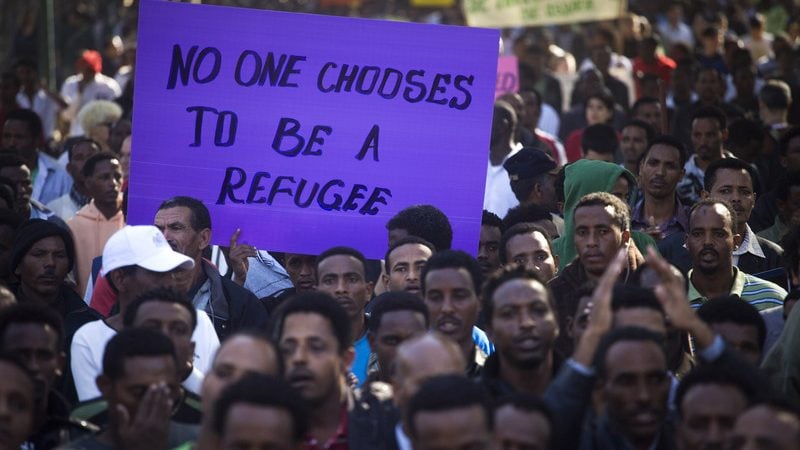
Somebody once said that courage is when you do something today you wouldn’t dare doing yesterday. That is why I decided to express my opinion whereas normally I would choose – wisely – to restrain my lips. Have you ever had an opportunity to speak with your friends about migrants and mass immigration? Especially with your international friends living in different parts of the world and changing their residence like migrating birds? How do you explain your views if they differ from the usual, dominating or politically correct one? Or, how do you actually explain that you are against immigration without risking being categorized as a racist? During my latest visit to Switzerland, while conversing with a friend about many topics including politics, somehow we started discussing immigration. My friend’s opinion was that Swiss people may seem cold and distant, but in reality they are very open-minded and friendly to...
f9ab5ce2-7d30-11e9-8126-9d0e63452fe9_image_hires_053908
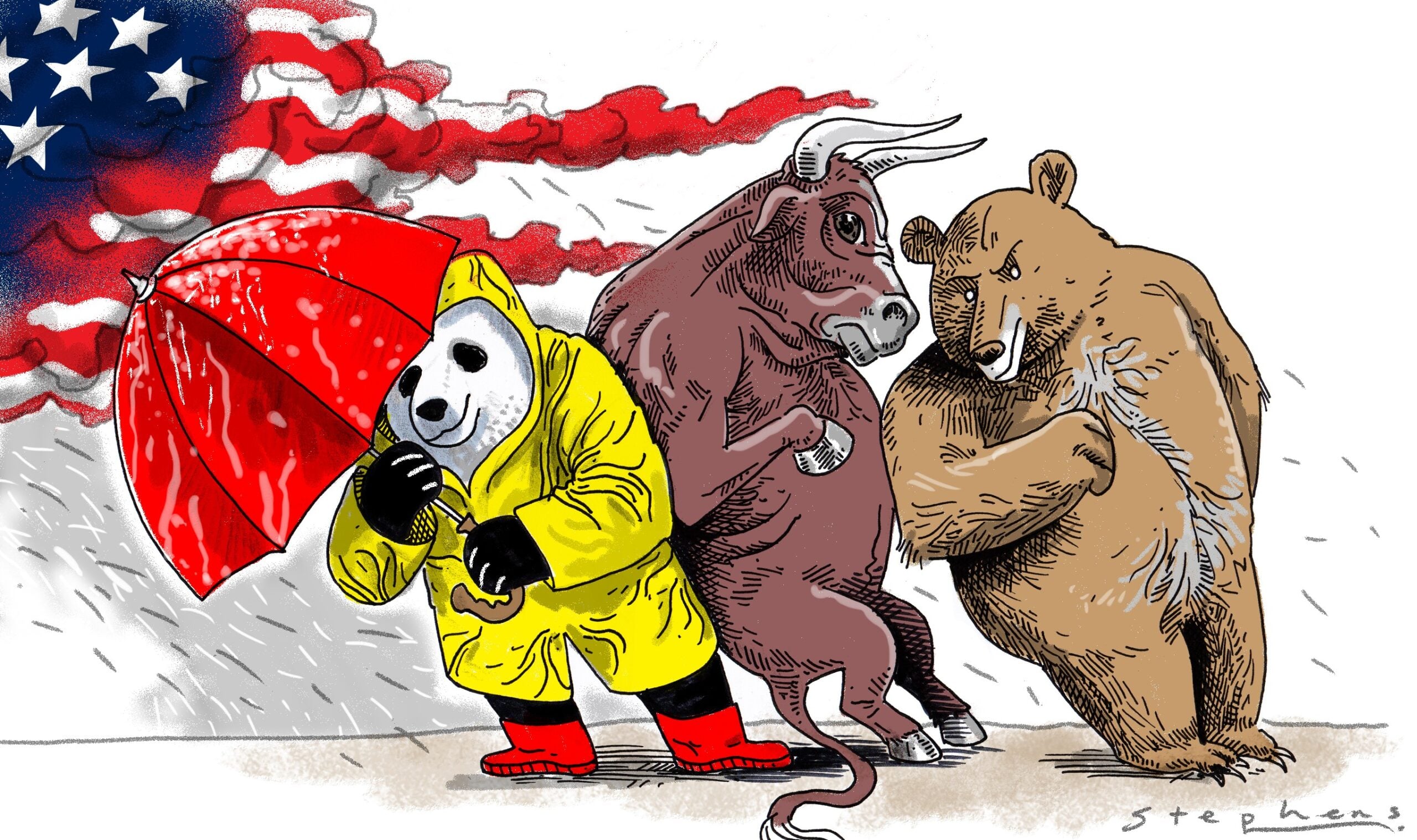
Illustration by Craig Stephens, South China Morning Post By Christopher Black July 26th 2019 On June 4th the Chinese government issued a travel alert for Chinese tourists thinking of visiting the United States, a day after it issued a similar advisory to Chinese students thinking of studying in the US over concerns for their safety and security. Chinese in the US are reporting harassment and interrogations by US immigration authorities and many now have the impression they are not welcome in the US. Originally posted on Global Research on June 10, 2019 here The Global Times, speaking on behalf of the government stated, “The Chinese people find it difficult to accept the fact that they are being taken as thieves. The US boasts too much superiority and has been indulged by the world. Due to its short history, it lacks understanding of and respect for the rules of countries and laws...
Imagen-thumbnail-The-Transnational
Immediate action is needed to save the future The central problem which the world faces in its attempts to avoid catastrophic climate change is a contrast of time scales. In order to save human civilization and the biosphere from the most disastrous effects of climate change, we need to act immediately. But it is difficult to mobilize public opinion behind urgently needed action because the most severe effects of global warming belong to the long-term future. However, the Intergovernmental Panel on Climate Change, in their October 2018 report, used strong enough language to wake up at least part of the public: the children whose future is at stake. Here is an excerpt from a speech which 16-year-old Swedish climate activist Greta Thunberg made at the Davos Economic Forum in January 2019: “Our house is on fire. I am here to say our house is on fire. According to the IPCC...
war_1-America
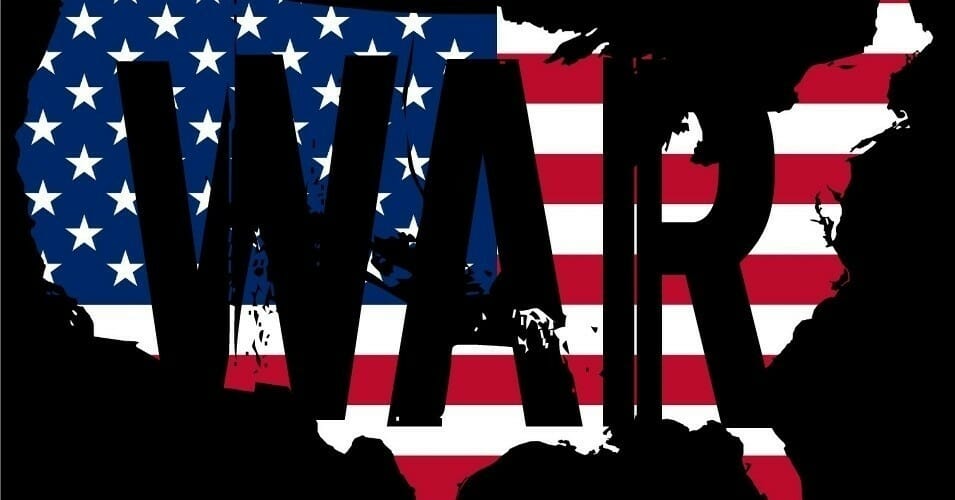
Former president says peaceful China ‘ahead of us in almost every way’. By Brett Wilkins May 13, 2019 The only US president to complete his term without war, military attack or occupation has called the United States “the most warlike nation in the history of the world.” During his regular Sunday school lesson at Maranatha Baptist Church in his hometown of Plains, Georgia, Jimmy Carter revealed that he had recently spoken with President Donald Trump about China. Carter, 94, said Trump was worried about China’s growing economy and expressed concern that “China is getting ahead of us.” Originally published at commondreams.org Carter, who normalized diplomatic relations between Washington and Beijing in 1979, said he told Trump that much of China’s success was due to its peaceful foreign policy. Carter then referred to the US as “the most warlike nation in the history of the world,” a result, he said, of...
johangaltung
There is much diversity.  Let us praise that mega aspect of our world as multipolar, passive but peaceful, coexistence of civilizations: Anglo-American; Latin American-Caribbean; Islamic; African pre-, post-colonial; European from Ireland to Russia Far East; West Asian Islamic; with Israel Jewish; Iran Persian; South Asian, SAARC, Hindu and Islamic with India; Southeast Asian, ASEAN, Buddhist, Christian, multi-cultural; Northeast Asian daoist-shinto with China and Japan; Asian-Pacific, multi-cultural, with Maoris, Aborigines, Polynesians, Micronesians, Melanesians from one rim to the other. 14 civilizations.  Others stop counting at 8, 10.  Around that. What a wonderful, diverse, polyphonic world!  Not monophonic US or European all over, as they both have wanted and maybe still want. It should be celebrated as part of a formula for endurance and duration. The other side of this is symbiosis.  Man-woman diversity is fine; the other part is man-woman symbiosis – that is probably celebrated in half of world literature?...

SilkRoadMapOKS_big_Improved
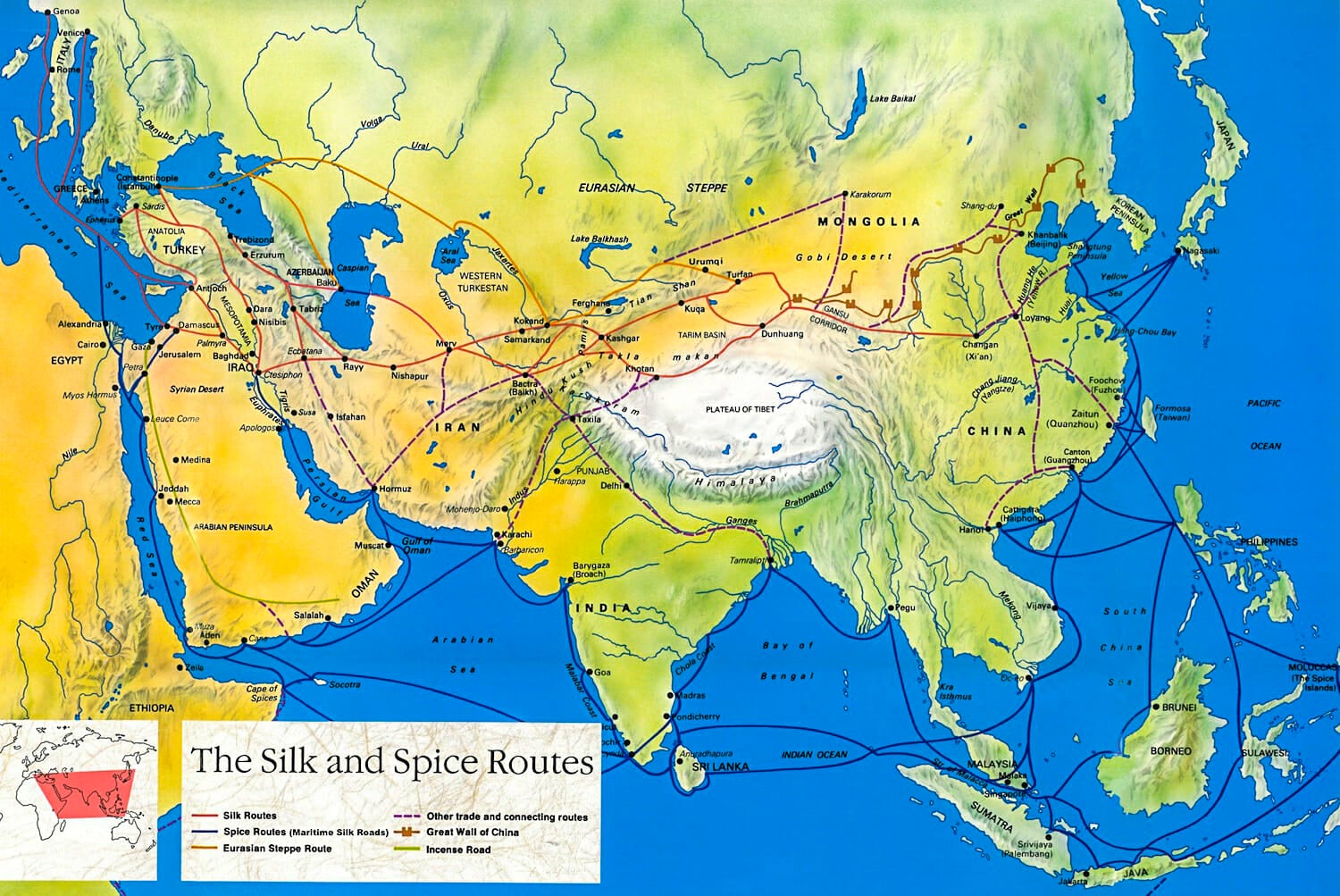
By Gordon M. Hahn April 26, 2019 Three almost uninterrupted centuries of Russian self-comparison, self-assessment, self-identification with the West and ever deeper involvement in the intra-Western geopolitical and imperial competition have come to an end. Harsh lessons Russians have drawn from its three centuries of intimate interaction with the West — its Occidental Era — were reinforced by the post-Cold War failure to create a ‘common European home’ from Vancouver to Vladivostok, leading to the conclusion that Russia had betrayed the meaning of its national seal – the double-headed eagle looking both west and east. Although Russia still references the West as a competitor as well as standard in some respects, Vladimir Putin’s Russia now rejects the post-modernist West and its neo-imperial civilizational, indeed, ‘civilizationalist’ ambitions in Russia’s neighborhood. Instead of seeking to be part of the West or defeat the Western geopolitical paradigm, it seeks along with China and,...
ChatGPT Image 9 jun 2026, 11_11_33
By 1914 Europeans ruled 84% of the globe. How did they do it? Eleven hundred years ago Europe was a backwater. There were no grand cities, apart from Muslim Cordoba in Spain, and the remnants of Rome and Athens. The Middle East, India and China were further ahead. It was the Arabs who kept alive the teachings of the Ancient Greeks’ knowledge of science, medicine, architecture and philosophy. We now have two schools of thought. Two years ago came Professor Philip Hoffman of Caltech University with his book “Why Did Europe Conquer The World?” He argued that Europe’s pace of innovation was driven by a peculiar form of military competition which he called a “tournament” – the sort of competition that under the right conditions can drive contestants to exert enormous efforts in the hope of earning a prize. Europe, unlike the Ottoman Empire and China, was a very un-unified...
usa_china_trade_war_210718
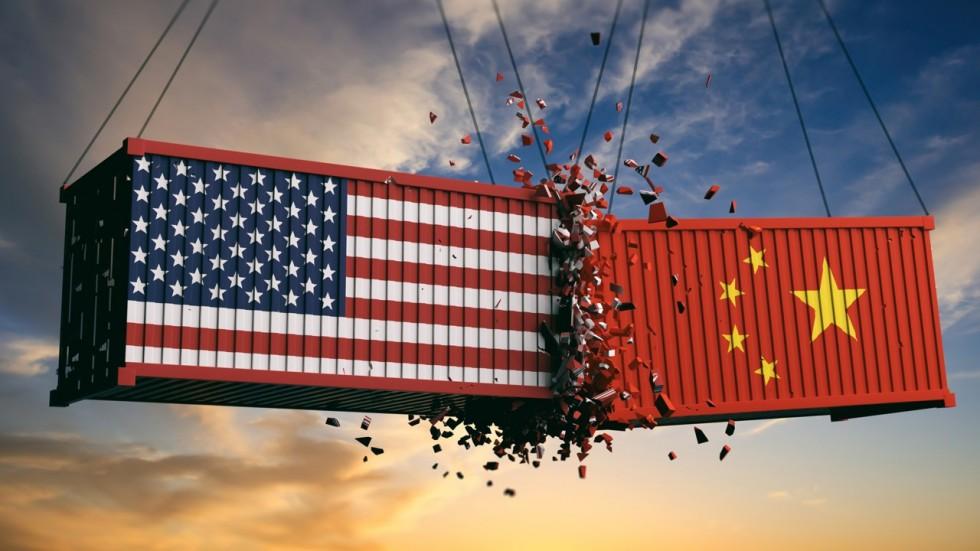
By Michael T. Klare February 26, 2019 In his highly acclaimed 2017 book, Destined for War, Harvard professor Graham Allison assessed the likelihood that the United States and China would one day find themselves at war. Comparing the U.S.-Chinese relationship to great-power rivalries all the way back to the Peloponnesian War of the fifth century BC, he concluded that the future risk of a conflagration was substantial. Like much current analysis of U.S.-Chinese relations, however, he missed a crucial point: for all intents and purposes, the United States and China are already at war with one another. Originally published at juancole.com Even if their present slow-burn conflict may not produce the immediate devastation of a conventional hot war, its long-term consequences could prove no less dire. To suggest this means reassessing our understanding of what constitutes war. From Allison’s perspective (and that of so many others in Washington and elsewhere),...
71de2133-5ae9-45ef-80a0-c1b5d0bb5ec0
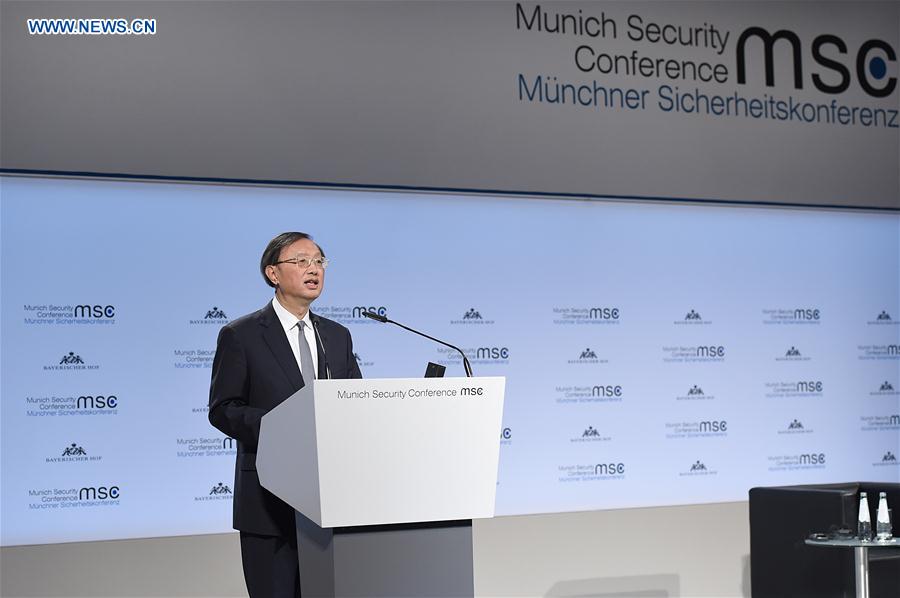
“Working for a Community with a Shared Future for Mankind by Promoting International Cooperation and Multilateralism” By Yang Jiechi February 18, 2019 MUNICH, Germany, Feb. 16 (Xinhua) – Yang Jiechi, a member of the Political Bureau of the Communist Party of China (CPC) Central Committee, Director of the Office of the Central Commission for Foreign Affairs, delivered China’s keynote speech on February 16, 2019 at the 55th Munich Security Conference. Italics added by The Transnational for pedagogical, easier-read reasons. This is the English translated version of the speech reprinted from China Org. cn here: Mr. Wolfgang Ischinger, Chairman of the Munich Security Conference, Ladies and Gentlemen, It is my great pleasure to join you at this year’s Munich Security Conference (MSC). As a global forum on security policy, the MSC provides an important platform for people around the world to express views and share insights on major issues concerning world...
China-Jan-Oberg
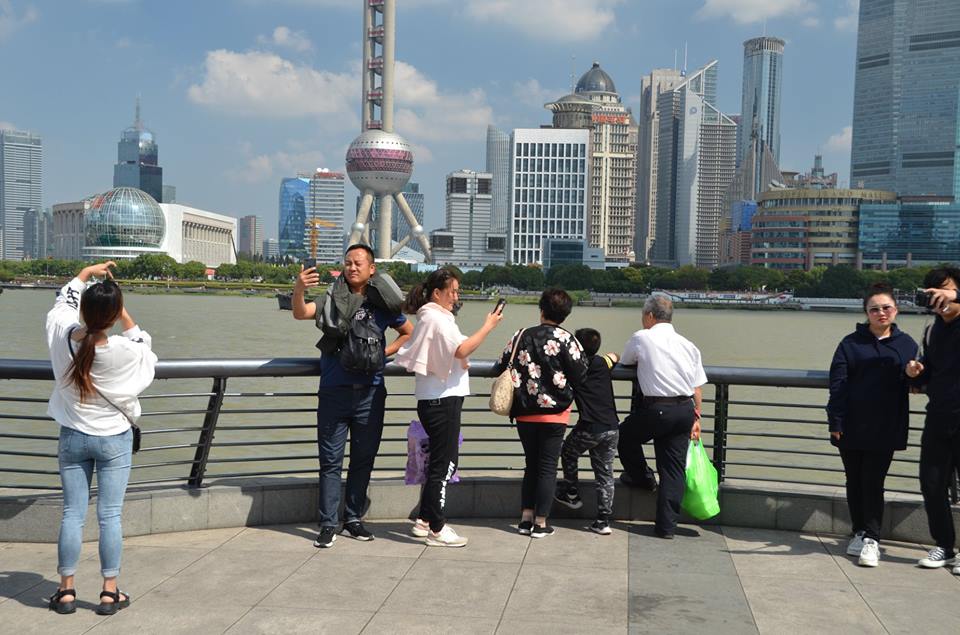
Photo from Shanghai by Jan Oberg 2018   By Cecily Liu in London from China Daily October 22, 2018 Esteemed author says nation’s development model can be a blueprint for emerging economies China’s rapid growth since the reform and opening-up process began in 1978 has not only been an economic miracle for the nation, but it has also offered a new development model for other emerging economies, said Martin Jacques, author of the global bestseller When China Rules the World. In doing so, China has proved the inaccuracy of the previous consensus that the Western model of development was the only path to success. Effectively, Jacques said, China has inspired other emerging countries to explore development paths that are suitable for their own situations. Originally published by chinadaily.com “The achievements of China’s reform and opening-up are very simple: one, the transformation of China; two, the transformation of the world,” said...
Hassan-Rouhani-of-Iran-Vladimir-Putin-of-Russia-and-Recep-Tayyip-Erdogan-of-Turkey-
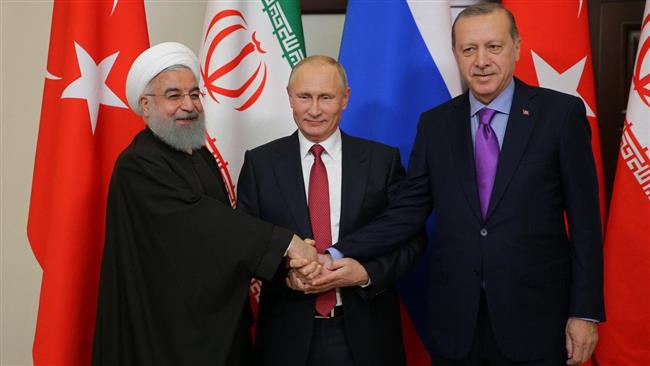
Photo: Hassan Rouhani of Iran, Vladimir Putin of Russia, and Recep Tayyip Erdogan of Turkey   September 12, 2018 By Seyed Hossein Mousavian* As the military phase of the Syrian conflict reaches its final stages, the leaders of Russia, Iran, and Turkey met in Tehran on September 9 and reiterated in a joint statement that a political solution to the Syrian conflict requires inclusive, free, and fair elections with the participation of all eligible Syrians under appropriate UN supervision. They further reaffirmed their determination to cooperate to eliminate the Islamic State, the Nusra Front, al-Qaeda, and associated groups in Syria. When the civil war in Syria began in 2011, the U.S.-led bloc and its regional allies, including Saudi Arabia, devoted their resources to removing Syrian President Bashar al-Assad. However, as the result of Iranian-Russian cooperation to buttress the Assad’s government, they failed to achieve their goals. The addition to this...
18932770_401
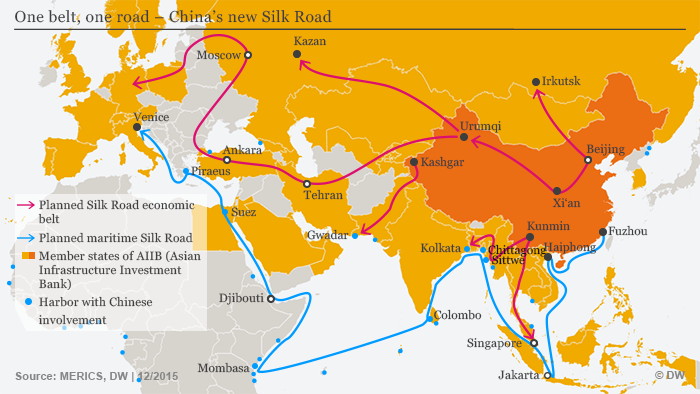
The Belt and Road Initiative has turned 5 years. On September 7, 2013, at the Nazarbayev University in Astana, Kazakhstan, President Xi Jinping of China launched the Belt and Road Initiative (BRI). This initiative – which has attracted a lot of attention from all over the world – was launched to “promote the economic prosperity of the countries, strengthen mutual learning between different civilizations and promoting world peace and development.” The historical roots, of course, is the ancient Silk Road from China through Eurasia to Europe and Africa. At the time of the mentioned speech, 60+ countries were on the list. Now, 5 years later and as the initiative gains momentum, there are more than 100 countries involved in various ways and roles. And the “Silk Roads” now points in all directions, including Australia, New Zealand, Japan, even the USA. The BRI has become a global force – a civilian...
Categories

Year

Author / Contributor

Region