World future

Category

Year

Author / Contributor

Region

Sort by

Showing 1-10 of 193 stories

Ben_Ferencz-copy
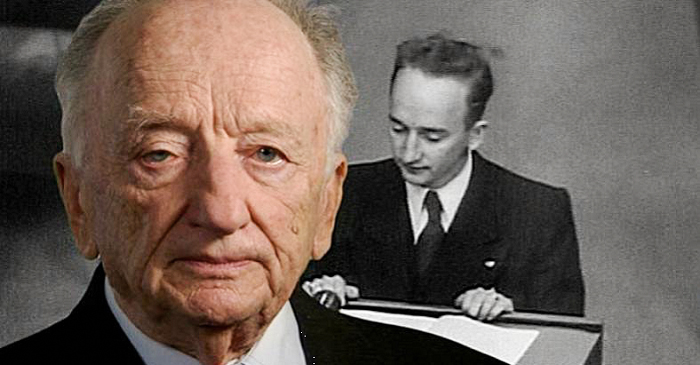
  This is literally a unique experience of extraordinary educational value: Listen to 98-year old Ben Ferencz sharing his crystal clear perception of the human stupidity of war – all wars – and how he sees the situation of humanity. He remains a realist, he says, with more optimism than pessimism. Listen to him telling about his truly amazing, unique life as a lawyer devoted to the common good of humanity and to securing justice but also human care for victims as well as perpetrators. He is the last surviving Nuremberg Tribunal prosecutor and has thought more than probably anyone about the psychology and politics of evil. Ferencz is a staunch believer in abolishing wars as such and, of course, in nuclear weapons abolition. He challenges the entire Military-Industrial-Media-Academic Complex, MIMAC, and argues that there is only one winner in wars: Death. If you are a teacher, get your students...
silkpeaceartroadlogo_800_TFFtoo
. This exciting opportunity stimulated the development of a bigger idea that combines Oberg’s work for peace and art photography with a focus on the Chinese-initiated Silk Belt and Road Initiative, the largest and most visionary in today’s world in terms of linking people and cultures into cooperation rather than confrontation. In various ways the project – with the Road as metaphor – stretches from Shanghai over Myanmar, Kazakhstan, Georgia, Iran and Syria to Venice and seeks to promote cooperation and peace in the process. It’s a joint project between Oberg PhotoGraphics and TFF. The “Silk PeaceArt Road” project is made public at this very early development stage where only little funding is secured to encourage you to share co-operative ideas, share contacts you may have in China and along the Silk Road or to potential partners, artists, sponsors, art institutions, etc.   Summary in 7 elements 1. To stay...
Screenshot
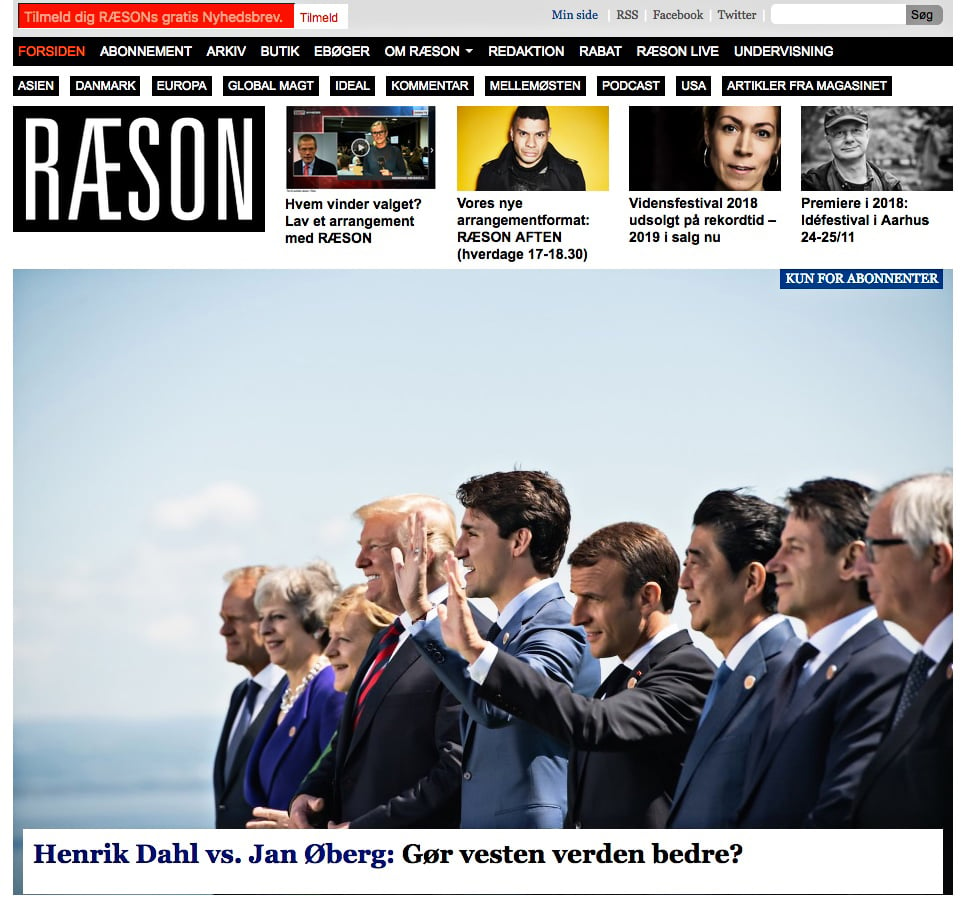
  Af Henrik Dahl & Jan Øberg 27. juni 2018 17 år efter 11. september og USA’s invasion af Afghanistan spørger Ræson: Gør vesten verden bedre? Chefredaktionen skriver: På en række områder har præsident Trump udfordret den traditionelle opfattelse af USA’s globale rolle, og givet sine allierede – herunder EU-landene – lejlighed til at overveje hvor langt de fælles interesser rækker. I Mellemøsten har Iran, Saudi-Arabien og Rusland de seneste år indtaget nye roller. I Asien bliver Kina stadig stærkere. En række iagttagere har de seneste år – med eller uden beklagelse – erklæret, at vestens mulighed for at sætte dagsordenen er ved at brænde endegyldigt ud. I en række artikler rejser RÆSON disse temaer over for eksperter, politikere og meningsdannere, herunder fredsforsker Jan Øberg og medlem af Folketinget, sociolog Henrik Dahl. I denne email-duel – “To meninger mødes” – skriver de på skift, fire indlæg hver. Artiklen er på...
JFK
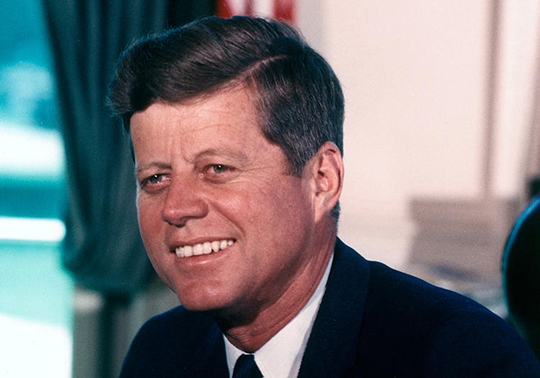
  By Patricia Hynes Co-author: Frances Crowe June 4, 2018 Greenfield, MA (Informed Comment) – Fifty-five years ago on June 10, 1963, President John F. Kennedy delivered a commencement address at American University that, in fewer than 30 minutes, turned traditional national security policy on its head. Kennedy proclaimed that world peace is “the most important topic on earth….not merely peace for Americans but peace for all men and women – not merely peace in our time but peace for all time.” His speech was hailed by then Soviet Union premier Nikita Khrushchev as “the greatest speech by any American President since Roosevelt.” Originally published at Informed Comment by Juan Cole here   Eight months earlier, both men had faced the terrifying possibility of nuclear holocaust in a showdown between the United States and the Soviet Union, remembered to history as the Cuban Missile Crisis. Shaken but emboldened by it,...
brain-evolution-information-explosion-sanjoy-sanyal-5-638
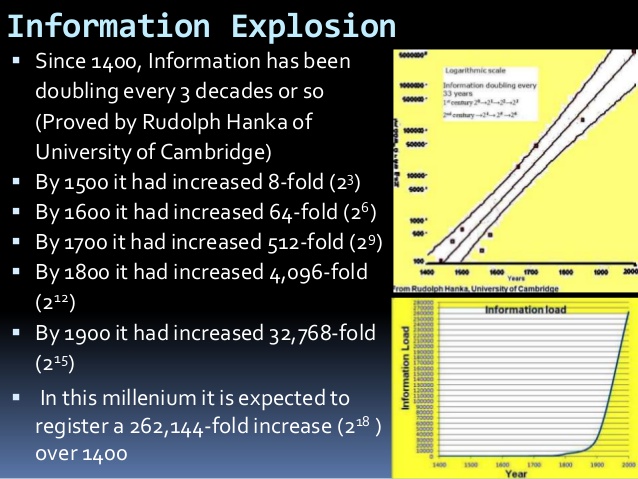
I would like to announce the publication of my new book entitled “The Information Explosion”. This book discusses the role of information in evolution, and especially in the evolution of human culture. Articles and book chapters that I have previously written on this subject are incorporated in the text in modified forms, but more than half of the material is new. The book may be freely downloaded and circulated from this link. Reformed teaching of history Human nature has two sides: It has a dark side, to which nationalism and militarism appeal; but our species also has a genius for cooperation, which we can see in the growth of culture. Our modern civilization has been built up by means of a worldwide exchange of ideas and inventions. It is built on the achievements of many ancient cultures. China, Japan, India, Mesopotamia, Egypt, Greece, the Islamic world, Christian Europe, and the...

KimandMoon
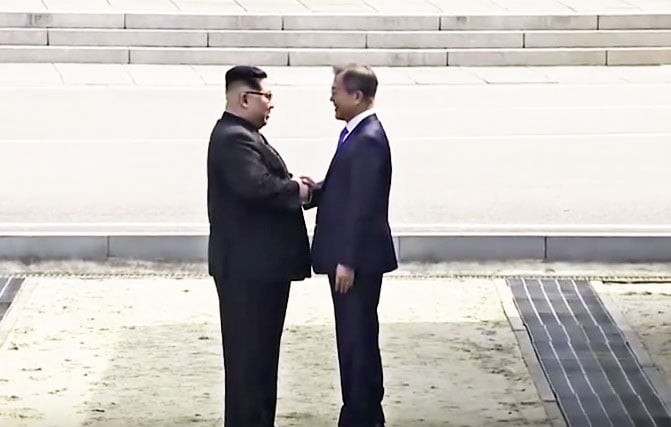
Please watch the video below carefully. You’ll see what could – could, and most likely will – become a piece of world peace history. Note the body language of the two leaders – warm smiles and long handshakes. In spite of being one and the same nation, they meet at the hardest border in the world. Why is it so? Because everybody else around – the US, Japan, Russia, China – to varying degrees want them to be divided and feel threatened by their possible unification. And yes, a unified Korea would be a formidable economic power but a huge, dangerous conflict would be gone, the US could withdraw, Japan would get a chance to reconciliate in substantive terms. What is most amazing in this clip is that Kim first steps over the border line into the South. Then – seemingly surprising Moon – invites Moon to step into the...
od960_logo@2x
By Edmund Fawcett Originally published by Open Democracy on April 7, 2018 here on   Unlike the hard right I have not conjured up an imaginary Other, but identified a genuine adversary in a struggle over democratic liberalism that is already engaged.   28 March 2018, Germany, Berlin: Olaf Scholz, Federal Minister of Finance (SPD), and German Chancellor Angela Merkel (CDU) attend a cabinet meeting at the Federal Chancellery. Gregor Fischer/Press Association. All rights reserved. To fix the topic, recall 18 months of recent electoral shocks, in reverse order. Last autumn in Germany’s national elections, the Alternative für Deutschland broke out from the fringes and won 94 seats in the federal parliament, a seventh of the total. Not since the early 1950s has Germany’s hard right won national representation and never in such strength. A year ago, Marine Le Pen at the head of the National Front advanced to the...
image_7d7e64cc
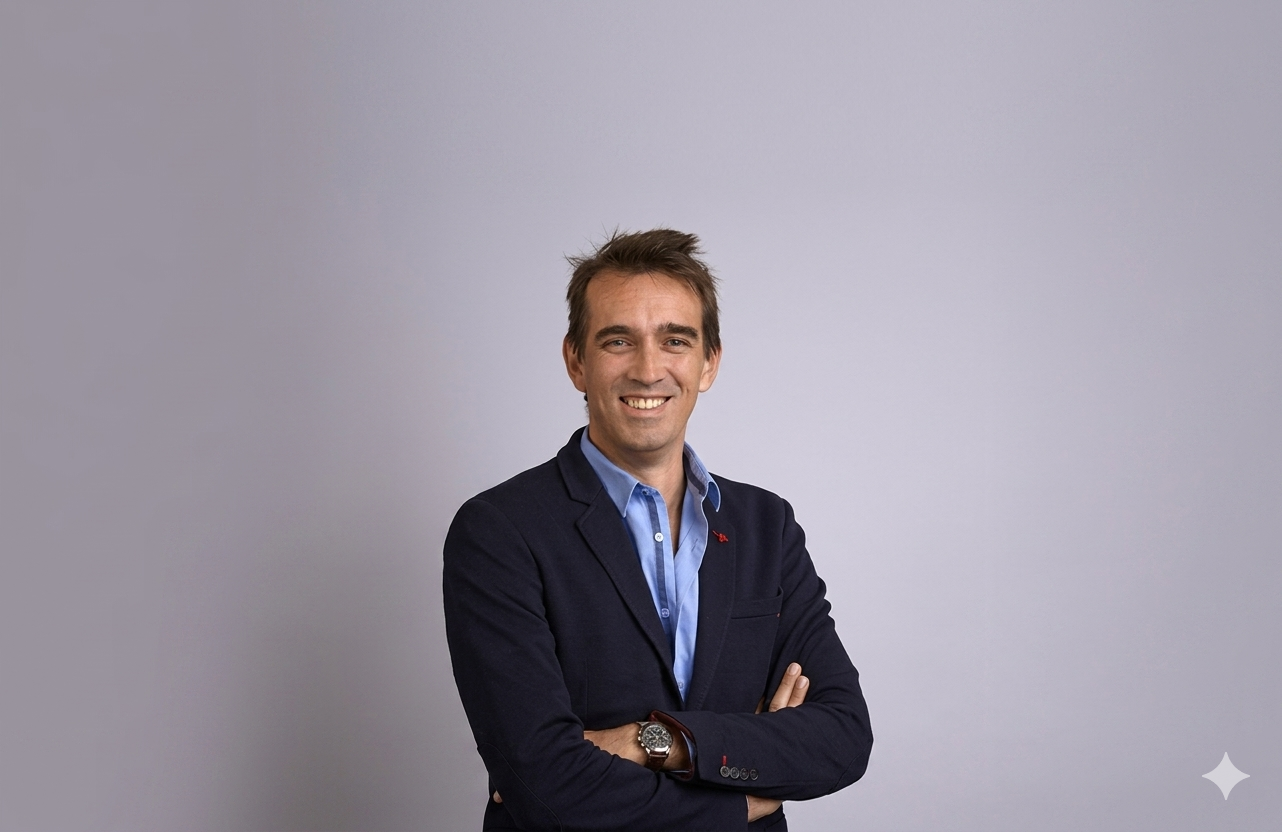
  By Peter Frankopan April 15, 2018 British historian Peter Frankopan, author of the bestseller “The Silk Roads: A New History of the World” paints an unexpected portrait of our Western civilization and the way we perceive our position in the world: old Europe is convinced to be the best, most prosperous and safest region. Europeans think that they have a good position in the actual world, absolutely denying the new world order that is currently happening. On YouTube here The power is shifting from West to East. Until today, the world history was a western-centered enterprise – based on the belief that everyone should be like us, or at least should want to be. According to Frankopan, the West has completely alienated itself from the rest of the world. Old Europe is on the decline and the economic prosperity in Asia, Africa and South America is over. We have...
RichardFalk
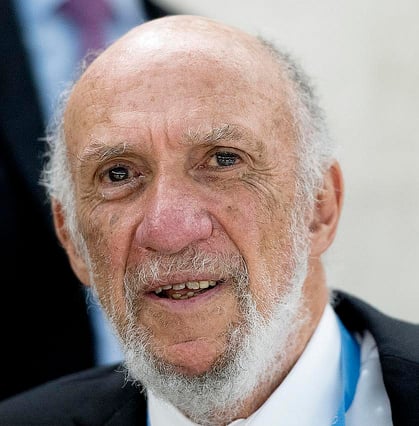
As demagogic leaders with popular approval or at least acquiescence dominate the political process of several important ‘democratic’ states questions need to be asked about the core or indispensable content of democracy. Other states seek the imprimatur of ‘democracy’ but limit drastically the choices open to the citizenry or proclaim themselves ‘a Jewish state’ or ‘an Islamic Republic,’ and are more accurately regarded as an ‘technocracy or ‘theocracy.’ The legitimating impact of being a democracy should be based on something more objective than the language of self-identification, that is, claiming that we are a democracy because we describe our governing arrangements as a democracy, nothing more, nothing less. Procedural and Republican Democracy The idea of ‘free elections’ is certainly a prerequisite. It is not possible to think of a political system as democratic if it does not allow its citizens to choose without fear or interference among a wide range of candidates...
surveillance
  In the U.S., carrying out military interventions abroad has undermined freedom at home   By Christopher J. Coyne and Abigail R. Hall   Originally published by Stanford University Press blog here The Cambridge Analytica/Facebook scandal continues to be front-page news. According to current reports Cambridge Analytica obtained private Facebook data, which it used to send pro-Trump material to targeted Facebook users. These reports have been met with outrage in Washington, D.C. The Federal Trade Commission has opened an investigation and U.S. senators have called for Mark Zuckerberg, the Facebook CEO, to testify in front of Congress. Calls by Congress for increased oversight to prevent private companies from surveilling people are extremely ironic given that they themselves recently renewed a section of the 2008 Foreign Intelligence Surveillance Act which allows for the warrantless surveillance of Americans. Issues regarding the appropriate use of government surveillance are also at the center of...
longform-original-6525-1518215990-10
  By Charlie Warzel In mid-2016, Aviv Ovadya realized there was something fundamentally wrong with the internet — so wrong that he abandoned his work and sounded an alarm. A few weeks before the 2016 election, he presented his concerns to technologists in San Francisco’s Bay Area and warned of an impending crisis of misinformation in a presentation he titled “Infocalypse.” The web and the information ecosystem that had developed around it was wildly unhealthy, Ovadya argued. The incentives that governed its biggest platforms were calibrated to reward information that was often misleading and polarizing, or both. Platforms like Facebook, Twitter, and Google prioritized clicks, shares, ads, and money over quality of information, and Ovadya couldn’t shake the feeling that it was all building toward something bad — a kind of critical threshold of addictive and toxic misinformation. The presentation was largely ignored by employees from the Big Tech platforms...
против-всех-e1518695833363
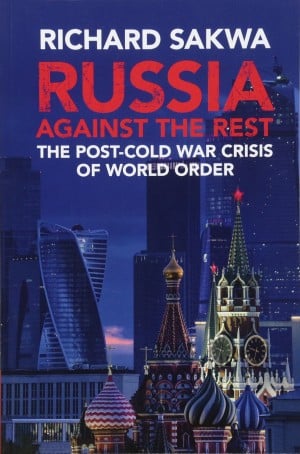
    Rethinking Russia sat down with University of Kent’s Professor Richard Sakwa to discuss his new book Russia Against The Rest, its relations with the West, its role in a new world order as well as its greatest challenges in 2018. Originally published on February 15,2018 at Rethinking Russia here   University of Kent’s Professor Richard Sakwa believes that there will be the intensification of an anti-Russian policy in the West in the future. He also writes about it in his new book Russia Against The Rest: The Post-Cold War Crisis of World Order that was released in October 2017. Rethinking Russia sat down with him to discuss the book, Russia’s role in a new global order as well as its greatest challenge in 2018.   Rethinking Russia: How could you explain the title of your book “Russia Against The Rest”? Richard Sakwa: The point is to stress the...
Categories

Year

Author / Contributor

Region