Will Democracy Survive? How? Whether? Hard Questions in Dark Times

As demagogic leaders with popular approval or at least acquiescence dominate the political process of several important ‘democratic’ states questions need to be asked about the core or indispensable content of democracy. Other states seek the imprimatur of ‘democracy’ but limit drastically the choices open to the citizenry or proclaim themselves ‘a Jewish state’ or ‘an Islamic Republic,’ and are more accurately regarded as an ‘technocracy or ‘theocracy.’ The legitimating impact of being a democracy should be based on something more objective than the language of self-identification, that is, claiming that we are a democracy because we describe our governing arrangements as a democracy, nothing more, nothing less.

Procedural and Republican Democracy

The idea of ‘free elections’ is certainly a prerequisite. It is not possible to think of a political system as democratic if it does not allow its citizens to choose without fear or interference among a wide range of candidates of their choice whether the process is filtered through political parties or primaries or otherwise.

What qualifies as a free election can be debated endlessly, but it seems enough to suggest that candidates representing significant divergent societal viewpoints compete for support, and that votes are counted honestly. A state should not necessarily lose its democratic credentials if it disqualifies candidates and parties that deny basic human rights to segments of the citizenry or espouse fascist agendas, or if rights are somewhat abridged during periods of national emergency as during wartime.

This dimension of democratic governance can be discussed in relation to specific instances by reference to the acceptable limits on the practice of procedural democracy.

Such a form of government is sensitive to the dangers of abuses and corruptions of power, invoking ‘checks and balances’ and ‘separation of powers’ as institutional bulwarks of restraint on ‘the tyranny of the mob’ or the predatory behavior of the tyrant, and can be better identified as republican democracy.

In the contemporary world, due to technology and government ‘secrets’ the constitutional constraints on war-making by leaders even if present, tend to be increasingly inoperative.

Without democratic accountability in the war/peace agenda democracies lose legitimacy, especially considering the risks and dangers of the nuclear age.

It may be that only the elimination of nuclear weapons from the arsenals of all countries can restore a semblance of substantive reality to a procedural or republican understanding of democracy.

In its liberal versions, democracy in its republican form almost always includes a guaranty and judicial protection of civil and political rights, especially freedom of expression and the right of assembly, but not necessarily, and likely not at all, social and economic rights.

In this sense, the tensions between neoliberal versions of capitalism and political democracy are of paramount importance in many societies widely regarded as ‘democratic.’

Normative Democracy

To achieve an inclusive political order a substantive commitment to deal with social and economic basic rights is essential, although infrequently acknowledged, which raises questions about the compatibility of real democracy with contemporary forms of capitalism.

The protection of social and economic rights are necessary so as to satisfy the material needs of all people under sovereign control, especially with respect to food, health, shelter, education, environmental protection, responsibility to future generations.

Yet a market-driven ethos is not challenged in principle by large-scale homelessness or extreme poverty so long as the gates of opportunity are available to all. This dimension of democratic governance is rarely realized, and is best considered by reference to values-driven, inclusive, and normative democracy.

A society also should be protected against war-prone leadership that defies transparency by relying on claims of secrecy and national security.

Somewhere in between selecting leaders, upholding rights, and ensuring a minimal standard of living that entrenches human dignity and enables a humane society are considerations of internal and external security.

Meeting the threats from within and without while avoiding hysteria, paranoia, and different forms of suppression is a fundamental responsibility of every legitimate state, including those that claim a democratic pedigree.

There is no satisfactory label, but since a state unable to protect sovereign rights and political order loses the respect and lacks the discipline of its citizenry, the security dimension can be associated with effective democracy, as without political order and a capability to address external threats and internal order, no form of governance can avoid chaos and foreign penetration, although assessments of this kind involve subjective appreciations of capabilities and political will.

There are increasing critiques of democratic states as having weakened the bonds between what citizens seek and what the government does.

In the United States, for instance, special interests inflate pharmaceutical products to astronomical heights, insulate gun control from public opinion to absurd degrees, and allow corporations and banks to contribute unlimited amounts to (mis)shape political campaigns.

Markets are further distorted by corruption of various kinds that undermine the capabilities of government to serve the people. This dimension of democratic governance can be considered under the rubric of responsive democracy. Without a high degree of responsiveness on central policy issues, a governing process will steadily lose legitimacy, especially if seen as deferring to special interests.

Majoritarian Democracy

There is, increasingly evident, political systems where free elections occur, demagogues participate, often prevailing in recent elections, and a majority of the citizenry is either submissive or supportive.

In this kind of atmosphere toxic, win/lose polarizations develop, with extremist and paranoid rhetoric justifying suppression and demonization of undocumented immigrants, refugees, and even asylum seekers, walls are proposed and built, borders are militarized, and exclusionary ideas of political community gain traction in the marketplace of ideas.

One result is that the values, views, and security of those vulnerable or opposed are ignored, condemned. Genuine news is dismissed as fake news, and vice versa, creating fact-free political leadership.

This kind of political order can be termed majoritarian democracy.

It tends to rest its claims on passion and a perversion of Rousseau’s ‘general will’ rather than reason and evidence, and is contemptuous of limits on the exercise of state power on behalf of the nation, especially if directed against foreign or domestic ‘enemies.’

As a result of the rise of such forms of governance, the rule of law has weakened, and especially, respect for international law and the authority of the United Nations while deference to the ruler increases, coupled by claims of indefinite tenure atop the political pyramid, ratified by periodic votes of approval.

Such leaders as Putin, Xi, Trump, Erdoğan, Modi, Abe manifest the trend, treat ‘citizens’ as if ‘subjects’ thereby blurring the distinction between democracy and monarchy when it comes to state/society relations.

Aspirational Democracy

In opposition, are more humanistic concerns that focus attention on the protection of human rights, especially of those who are vulnerable and poor.

The idea of ‘democracy to come’ as depicted by the deceased French philosopher, Jacques Derrida, and recently developed further by Fred Dallmayr is being taken more seriously. This idea centers on the belief that democracy in all its manifestations, even at its best, remains an unfinished project with unfulfilled normative potential.

It represents a call to work toward an inclusive democracy based on the serious implementation of ‘the spirit of equality’ (Dallmayr) the goal of humane governance as associated with Montesquieu.

Such a political order goes beyond upholding the rule of law by seeking to promote justice within and without of sovereign borders. Such a democratic political order would now subordinate, as necessary, national interests to human and global interests in relation to climate change, nuclear weaponry, migration, disease control, peace and security, and the regulation of the world economy. No such democracy has so far existed, but as a goal and ideal this political possibility can be identified as aspirational democracy.

Concluding Comments

These different forms of democracy overlap, and are matters of degree, but do call attention to various and variable features of political life that rest on the shared proposition that ‘the people’ should be regarded as the source of political authority and legitimacy.

Yet such a mandate for democracy as flowing upwards from the people, superseding God-given authority figures anointed by ritual and reinforced by claims of a monarchical or divine aura of absolutism, is in many societies again being scrutinized.

Many informed and concerned persons are asking whether democracy is any longer the least bad system of governance, yet seem at a loss to propose an alternative.

In this setting, the question posed for many of us is whether democracy, as now practiced and constituted, can be revitalized by legitimating reforms. As engaged citizens we must accept this challenge in forms sensitive to the particularities of time, place, challenge, and opportunities.

Because of globalization in its manifest forms, it is no longer tenable to confine the ambitions of democracy to national spaces.

Global democracy has become, is becoming, a matter of ultimate concern.

Issues raised concern transparency, accountability, participation, and responsiveness of global policy processes, and of course, how the global is to be linked with the regional and national so as to pursue the goal of global humane governance: equitable, stable, sustainable, peaceful, compassionate, and above all, mindfulness.

These concerns will be left for contemplation, and discussion on another day.
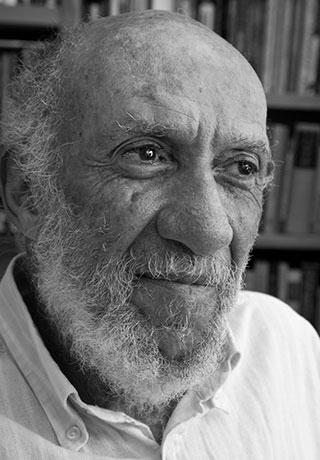
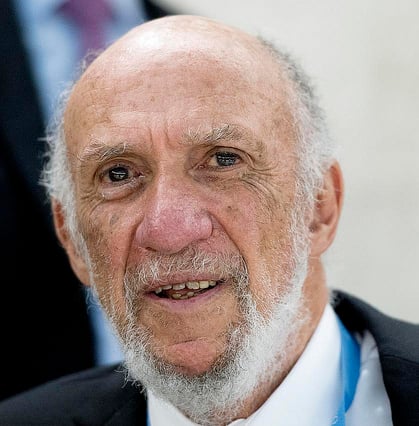
Professor Falk became an adviser to TFF when it was established in 1985.

One Response

  1. Thanks for the article and thoughts. For me I think, that the basic problem in all this is ownership. Because that’s the main reason for struggles and wars. The tendency that power and wealth is owned by a few people, and them to be international (supranational ) is bad. I think countries must be countries. And people to select within their own borders. And trade etc with each other on fair ground. We do not need an international leadership. And, finally, all religion must be taken out of politics.

Related Posts

Johan Galtung 1930-2024October 2015 Published here on October 3, 2026 Let us focus on Civilization for conflict analysis and remedies. Major forms of disorder use violence; war is state organized violence. The most belligerent states are the United States of America and Israel, both with civilization roots. National Evangelism, the US Protestant Christian civilization– more national than evangelical–justifies US warfare as exceptionalism of a people chosen by God, with a manifest destiny to run the world. Orthodox Judaism justifies Israeli warfare to conquer and expand from Nile to Euphrates as a religious right and duty to the Eternal One. The third most belligerent country, the UK, no longer believes it is God-chosen but chosen by the USA; not quite the same but something. But the root cause of global disorder lies in the Occident–with Islam–seeing itself as the single, universal civilization valid for all at all times, all others being...
Jan ObergPhD, director, The Transnational Foundation for Peace and Future Research, TFFLund, Sweden October 2, 2026 This is my full original manuscript. The Chinese Academy of Social Science, CASS, makes two publications out if it. 1. China’s Five-year plan emphasized the capabilities of basic research and original innovation. It is regarded as the goal of the future social development, which, as required, should be significantly enhanced. Can you comment on the importance of original innovation in research and academic study? I believe it is easier to define “original innovation” in the natural sciences than in social sciences. The breaking points of what constitutes something new, or innovative, are not quite as sharp in the latter. But in both fields it is about opening up something that was closed, unseen, unexplored before – making manifest what was earlier latent. Innovations come in many forms and shapes – naming something that was not...
The agreement is catastrophic both because of what it says and what it doesn’t mention. It reduces further the major asset of security policies: Freedom of action. Jan Oberg TFF director September 25, 2026 A couple of hours before the agreement was signed on September 22, 2026, I published the following 13 hypotheses about what it would most likely contain on TFF Substack (in English). I was wrong on only the first point. Contrary to what Trump had written on his Truth Social platform, it does not appear to come into force immediately. In fact, it turned out to be worse than even I had anticipated. After these hypotheses now come a number of reflections in light of what the agreement actually contains, and does not contain, as well as the way in which it has generally been presented by major media outlets and by the public-service broadcaster DR. My...

Recent Articles

Tony Robinson October 4, 2026 Violence is easy to recognise when someone is being beaten, shot or killed. It becomes more difficult when nobody is holding a weapon. Poverty, discrimination, exploitation and repression can restrict a human life just as effectively, although they do so in very different ways and with very different consequences. Simply adding more categories to an ever-growing list of forms of violence does not really solve the problem. The more interesting question is what all these different situations have in common and why it makes sense to describe them using the same word. Human beings do not simply react to what happens around them. They remember the past, imagine things that do not yet exist, make plans and undertake projects. Workers organise because they imagine different working conditions; people migrate because they imagine another life somewhere else; social movements emerge because people refuse to accept the...
It’s a matter of principles, courage, vision and pulling together – while the militarist world is falling apart… Peter Langille October 3, 2026 “Here, then, is the problem which we present to you, stark and dreadful and inescapable: Shall we put an end to the human race; or shall mankind renounce war?”The Bertrand Russell—Albert Einstein Manifesto, July 9, 1955 ⁕ The forecast for what’s ahead is worrisome. The sharp rise in armed conflicts over the past three years is adding to what was already the highest level in over seventy years. Genocides, which should be prevented are supported. A shared climate emergency that jeopardises survival is ignored. Diverse polls now suggest that people are war-weary, worried and interested in a more effective United Nations. And, there are viable policy options for a more secure world! Yet governments are doubling-down, betting on more war and investing heavily. If current trends persist,...
Johan Galtung 1930-2024October 2015 Published here on October 3, 2026 Let us focus on Civilization for conflict analysis and remedies. Major forms of disorder use violence; war is state organized violence. The most belligerent states are the United States of America and Israel, both with civilization roots. National Evangelism, the US Protestant Christian civilization– more national than evangelical–justifies US warfare as exceptionalism of a people chosen by God, with a manifest destiny to run the world. Orthodox Judaism justifies Israeli warfare to conquer and expand from Nile to Euphrates as a religious right and duty to the Eternal One. The third most belligerent country, the UK, no longer believes it is God-chosen but chosen by the USA; not quite the same but something. But the root cause of global disorder lies in the Occident–with Islam–seeing itself as the single, universal civilization valid for all at all times, all others being...

TFF on Substack

Discover and subscribe to more peace materials on TFF Substack

Most Popular

Tony Robinson October 4, 2026 Violence is easy to recognise when someone is being beaten, shot or killed. It becomes more difficult when nobody is holding a weapon. Poverty, discrimination, exploitation and repression can restrict a human life just as effectively, although they do so in very different ways and with very different consequences. Simply adding more categories to an ever-growing list of forms of violence does not really solve the problem. The more interesting question is what all these different situations have in common and why it makes sense to describe them using the same word. Human beings do not simply react to what happens around them. They remember the past, imagine things that do not yet exist, make plans and undertake projects. Workers organise because they imagine different working conditions; people migrate because they imagine another life somewhere else; social movements emerge because people refuse to accept the...
It’s a matter of principles, courage, vision and pulling together – while the militarist world is falling apart… Peter Langille October 3, 2026 “Here, then, is the problem which we present to you, stark and dreadful and inescapable: Shall we put an end to the human race; or shall mankind renounce war?”The Bertrand Russell—Albert Einstein Manifesto, July 9, 1955 ⁕ The forecast for what’s ahead is worrisome. The sharp rise in armed conflicts over the past three years is adding to what was already the highest level in over seventy years. Genocides, which should be prevented are supported. A shared climate emergency that jeopardises survival is ignored. Diverse polls now suggest that people are war-weary, worried and interested in a more effective United Nations. And, there are viable policy options for a more secure world! Yet governments are doubling-down, betting on more war and investing heavily. If current trends persist,...
Johan Galtung 1930-2024October 2015 Published here on October 3, 2026 Let us focus on Civilization for conflict analysis and remedies. Major forms of disorder use violence; war is state organized violence. The most belligerent states are the United States of America and Israel, both with civilization roots. National Evangelism, the US Protestant Christian civilization– more national than evangelical–justifies US warfare as exceptionalism of a people chosen by God, with a manifest destiny to run the world. Orthodox Judaism justifies Israeli warfare to conquer and expand from Nile to Euphrates as a religious right and duty to the Eternal One. The third most belligerent country, the UK, no longer believes it is God-chosen but chosen by the USA; not quite the same but something. But the root cause of global disorder lies in the Occident–with Islam–seeing itself as the single, universal civilization valid for all at all times, all others being...
Read More
Living-Peace-Sign-Budapest-copy
Tony Robinson October 4, 2026 Violence is easy to recognise when someone is being beaten, shot or killed. It becomes more difficult when nobody is holding a weapon. Poverty, discrimination, exploitation and repression can restrict a human life just as effectively, although they do so in very different ways and with very different consequences. Simply adding more categories to an ever-growing list of forms of violence does not really solve the problem. The more interesting question is what all these different situations have in common and why it makes sense to describe them using the same word. Human beings do not simply react to what happens around them. They remember the past, imagine things that do not yet exist, make plans and undertake projects. Workers organise because they imagine different working conditions; people migrate because they imagine another life somewhere else; social movements emerge because people refuse to accept the...
b54a1f10-8c65-4f0b-9dd5-4abc0a7d04cc_2659x2659
It’s a matter of principles, courage, vision and pulling together – while the militarist world is falling apart… Peter Langille October 3, 2026 “Here, then, is the problem which we present to you, stark and dreadful and inescapable: Shall we put an end to the human race; or shall mankind renounce war?”The Bertrand Russell—Albert Einstein Manifesto, July 9, 1955 ⁕ The forecast for what’s ahead is worrisome. The sharp rise in armed conflicts over the past three years is adding to what was already the highest level in over seventy years. Genocides, which should be prevented are supported. A shared climate emergency that jeopardises survival is ignored. Diverse polls now suggest that people are war-weary, worried and interested in a more effective United Nations. And, there are viable policy options for a more secure world! Yet governments are doubling-down, betting on more war and investing heavily. If current trends persist,...
010
Johan Galtung 1930-2024October 2015 Published here on October 3, 2026 Let us focus on Civilization for conflict analysis and remedies. Major forms of disorder use violence; war is state organized violence. The most belligerent states are the United States of America and Israel, both with civilization roots. National Evangelism, the US Protestant Christian civilization– more national than evangelical–justifies US warfare as exceptionalism of a people chosen by God, with a manifest destiny to run the world. Orthodox Judaism justifies Israeli warfare to conquer and expand from Nile to Euphrates as a religious right and duty to the Eternal One. The third most belligerent country, the UK, no longer believes it is God-chosen but chosen by the USA; not quite the same but something. But the root cause of global disorder lies in the Occident–with Islam–seeing itself as the single, universal civilization valid for all at all times, all others being...
Screenshot 2026-10-02 011738
Jan ObergPhD, director, The Transnational Foundation for Peace and Future Research, TFFLund, Sweden October 2, 2026 This is my full original manuscript. The Chinese Academy of Social Science, CASS, makes two publications out if it. 1. China’s Five-year plan emphasized the capabilities of basic research and original innovation. It is regarded as the goal of the future social development, which, as required, should be significantly enhanced. Can you comment on the importance of original innovation in research and academic study? I believe it is easier to define “original innovation” in the natural sciences than in social sciences. The breaking points of what constitutes something new, or innovative, are not quite as sharp in the latter. But in both fields it is about opening up something that was closed, unseen, unexplored before – making manifest what was earlier latent. Innovations come in many forms and shapes – naming something that was not...
arctic-circle-map
The agreement is catastrophic both because of what it says and what it doesn’t mention. It reduces further the major asset of security policies: Freedom of action. Jan Oberg TFF director September 25, 2026 A couple of hours before the agreement was signed on September 22, 2026, I published the following 13 hypotheses about what it would most likely contain on TFF Substack (in English). I was wrong on only the first point. Contrary to what Trump had written on his Truth Social platform, it does not appear to come into force immediately. In fact, it turned out to be worse than even I had anticipated. After these hypotheses now come a number of reflections in light of what the agreement actually contains, and does not contain, as well as the way in which it has generally been presented by major media outlets and by the public-service broadcaster DR. My...
girl-5894831_1280
Below are TFF-related media mentions, comments, videos and social media posts published elsewhere but not on this homepage. We happen to catch and list only a fraction. Regarding video comments and debates, we recommend that you go to the TFF Video Channel on Substack where many of them are reproduced. Jan Oberg is a contributor to China Daily – 52 million daily clicks – and Global Times, CGTN and CCTV (the national television), China Investment, Xinhua News Agency and several others. Articles and videos on these media very often multiply into countless Chinese (and Western media) that re-post them from these main media. Thanks to The China Academy, his analyses, interviews and comments are frequently posted on YouTube channels such as Thinkers Forum and Wave Media. These videos are often re-posted on Bilibili (China’s YouTube), the China Content Center on TikTok, and on the Chinese edition of TikTok, Douyin.com. This means reaching hundreds of millions of viewers worldwide over a year. While there are too many to catch on all these...