War

Category

Year

Author / Contributor

Region

Sort by

Showing 1-10 of 96 stories

mosul2_2.jpg
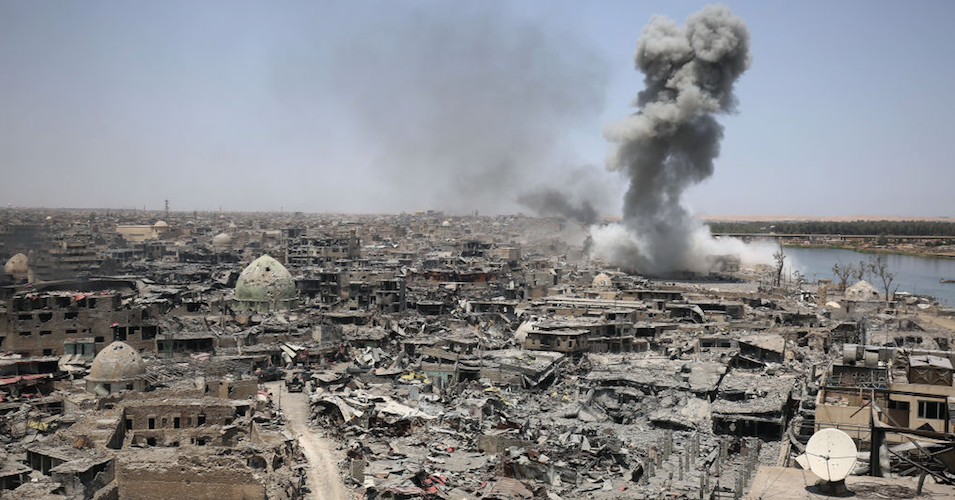
U.S. bombs and bullets have claimed at least hundreds of thousands of civilian lives this century. Here, a U.S. airstrike against Islamic State militants in densely-populated Mosul, Iraq on July 9, 2017 is shown. (Photo: Ahmad Al-Rubaye/AFP/Getty Images) March 29, 2021 Medea Benjamin, Nicolas J.S. Davies Unbeknownst to many Americans, the U.S. military and its allies are engaged in bombing and killing people in other countries on a daily basis.  On February 25th, President Biden ordered U.S. air forces to drop seven 500-pound bombs on Iraqi forces in Syria, reportedly killing 22 people. The U.S. airstrike has predictably failed to halt rocket attacks on deeply unpopular U.S. bases in Iraq, which the Iraqi National Assembly passed a resolution to close over a year ago.  The Western media reported the U.S. airstrike as an isolated and exceptional incident, and there has been significant blowback from the U.S. public, Congress and the world community, condemning the strikes...
Increased Security Remains Around Capitol Hill In Washington, DC
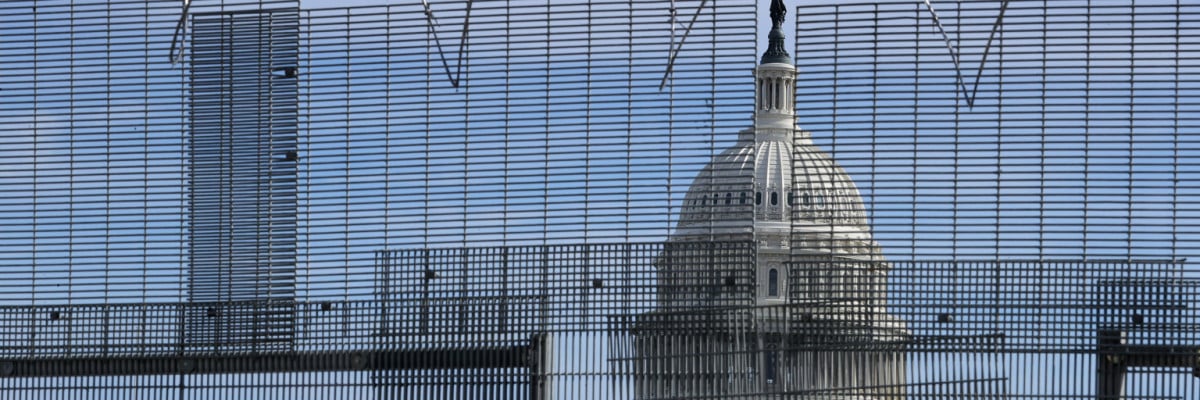
It’s no coincidence that, after years of fighting abroad, the United States is beset with paranoia, loss of trust, and increasingly bitter divisions Stephen M. Walt March 16, 2021 “Fortress America” is a derogatory term that usually refers to extreme forms of isolationism. Last week, however, CNN anchor Fareed Zakaria gave the idea a new and equally disturbing twist. In a thought-provoking column in the Washington Post, Zakaria described how excessive concerns for security are making the United States more “imperial” in appearance than the old colonial empires, with embassies, public buildings, and even the U.S. Capitol itself surrounded by barricades, moats, or fortifications. Instead of presenting a welcoming visage to the outside world and to the American people, one that conveys confidence, strength, and openness, America’s public face appears uncertain, vulnerable, fearful, and distant. Originally published at Eurasia News Online According to Zakaria, such concerns have also encouraged an excessive regard for secrecy,...

coronavirus
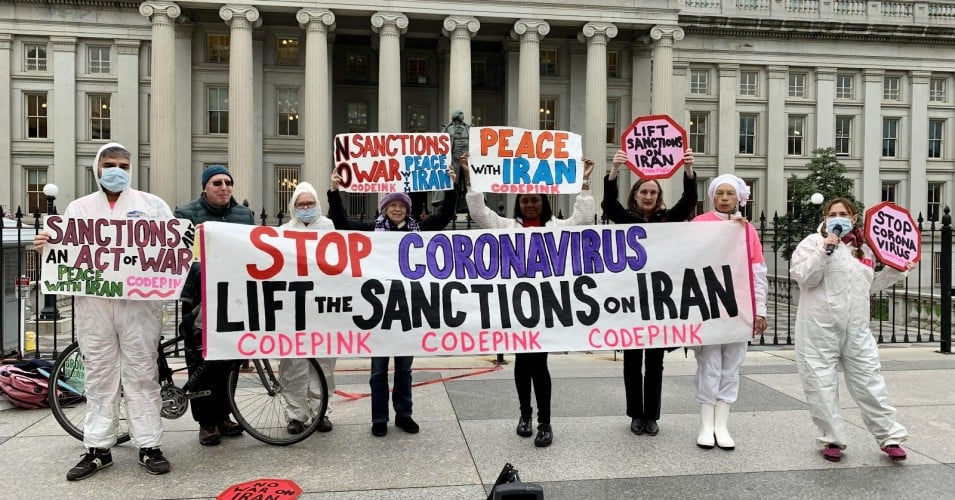
Negar Mortazavi and Sina Toossi February 25, 2020 Iranians’ stories reflect the devastating human costs of US economic sanctions that are often ignored by Washington’s foreign policy elite Originally posted on Global Research on December 8th, 2020 “My young cousin passed away last week,” an Iranian Twitter user recently lamented. “She needed medication for her cancer that doctors said can’t be found.” The tweet tragically went on: “Maybe she’d be alongside her little daughter now if she had this medicine and not under a pile of cold dirt.” These heartbreaking words are from journalist Katayoon Lamezadeh, one of thousands of Iranians who have taken to social media to speak of how sanctions have upended their lives. Their stories reflect the devastating human costs of US economic sanctions that are often ignored by Washington’s foreign policy elite and largely unknown to the American public. The assassination of Iranian scientist Mohsen Fakhrizadeh is the latest in a long-running pressure...
echo-grid-BefmnpXPZ80-unsplash
Dr. Gary G. Kohls February 9, 2021 A half-century ago, The New York Times accused Martin Luther King Jr. of “slander” for decrying the Vietnam War and The Washington Post detected “unsupported fantasies” in his speech, recalled more favourably by Gary G. Kohls. Originally published on Jan. 19, 2014; slightly edited for the time element. Originally posted on Consortium News on January 19, 2021 Martin Luther King Jr.’s Riverside Church speech was titled “Beyond Vietnam: A Time to Break Silence.” It was delivered exactly one year before his April 4, 1968 assassination in Memphis. In the speech, King declared, “A nation that continues year after year to spend more money on military defense than on programs of social uplift is approaching spiritual death.” The people who heard that speech recognized it as one of the most powerful speeches ever given articulating the immorality of the Vietnam War and its destructive impact...
Albert_Gyorgy-Emptiness
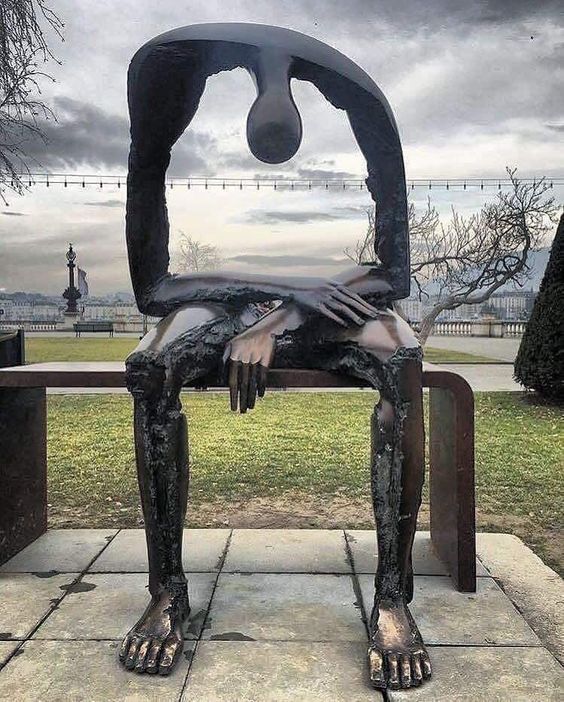
Albert Györgi’s sculpture, “Emptiness,” at Lake Geneva TFF Associate In war, there are no unwounded soldiers. —José Narosky War is hell, and today more than ever. Although high-tech weapons make it a videogame for some, those same weapons make it unbelievably destructive for everyone else. Whatever valor was once associated with hand-to-hand combat has long since disappeared due to gunpowder, and the massive slaughters of the twentieth century have made it increasingly difficult to romanticize the death and misery war causes. Nonetheless it continues and we have learned, if not to accept it, to take it for granted. Obviously, not everyone loathes it. The U.S. economy would collapse without the obscene amount spent on the military-industrial complex, now well over $600 billion a year according to some calculations. It’s hard to rationalize such a sum without a war once in a while. That’s why the end of the Cold War...
britishempire1886
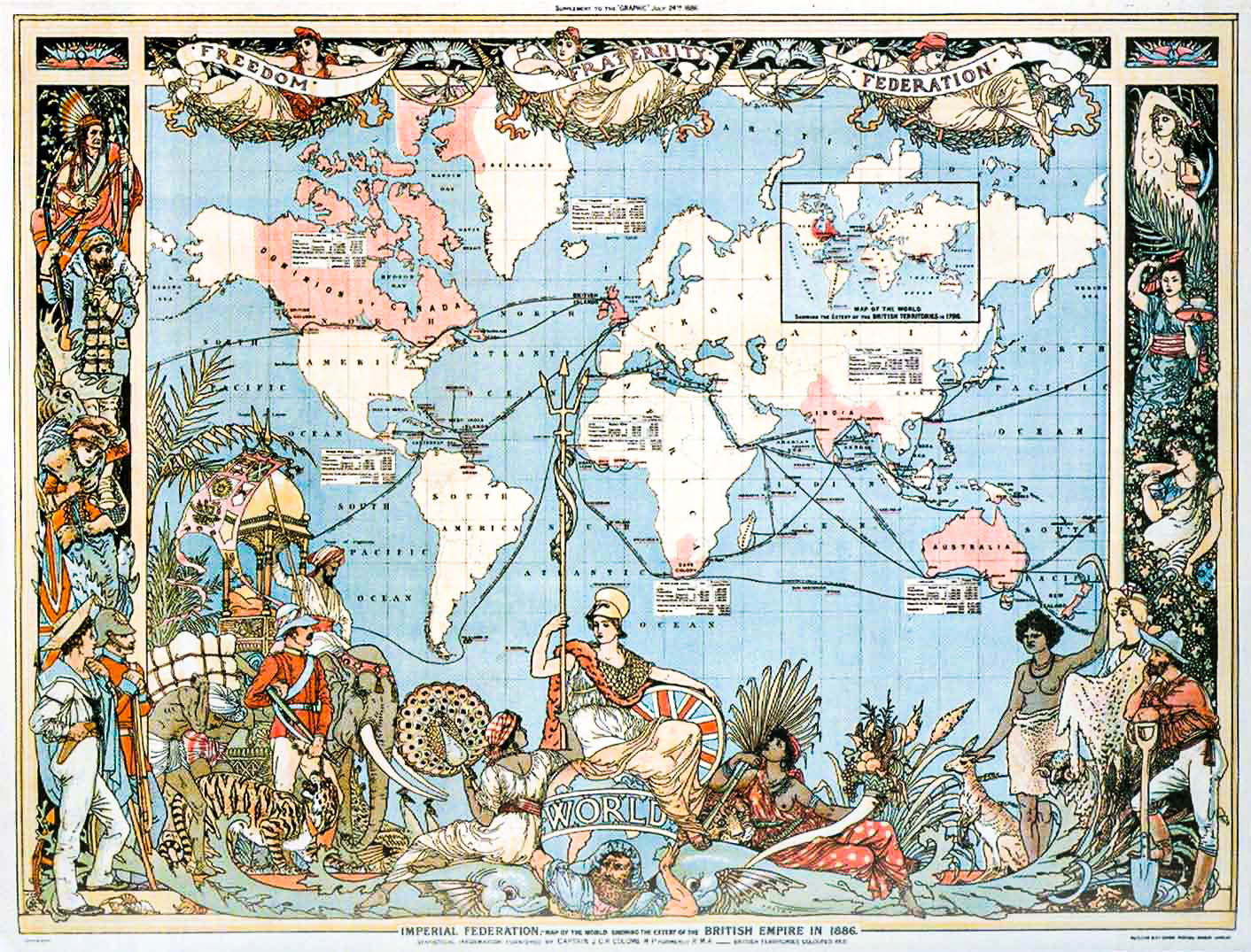
The British Empire in 1886 Britain leaves the EU on December 31, 2020. We mark this historical event by looking at its global, imperial military footprint and the mind-boggling waste of scarce resources its prime minister is proud of standing behind in times that are already extremely hard for the citizens. A few nostalgic types still believe that the Union Jack continues to flutter to sighs and reverence over outposts of the world, from the tropics to the desert. They would be right, if only to a point. Britain, it turns out, has a rather expansive global reach when it comes to bases, military installations and testing sites. While not having the obese heft and lumbering brawn of the United States, it makes a good go of it. Globally, the UK military has a presence in 145 sites in 42 countries. Originally posted by Off Guardian on November 29, 2020 Such figures...
22902
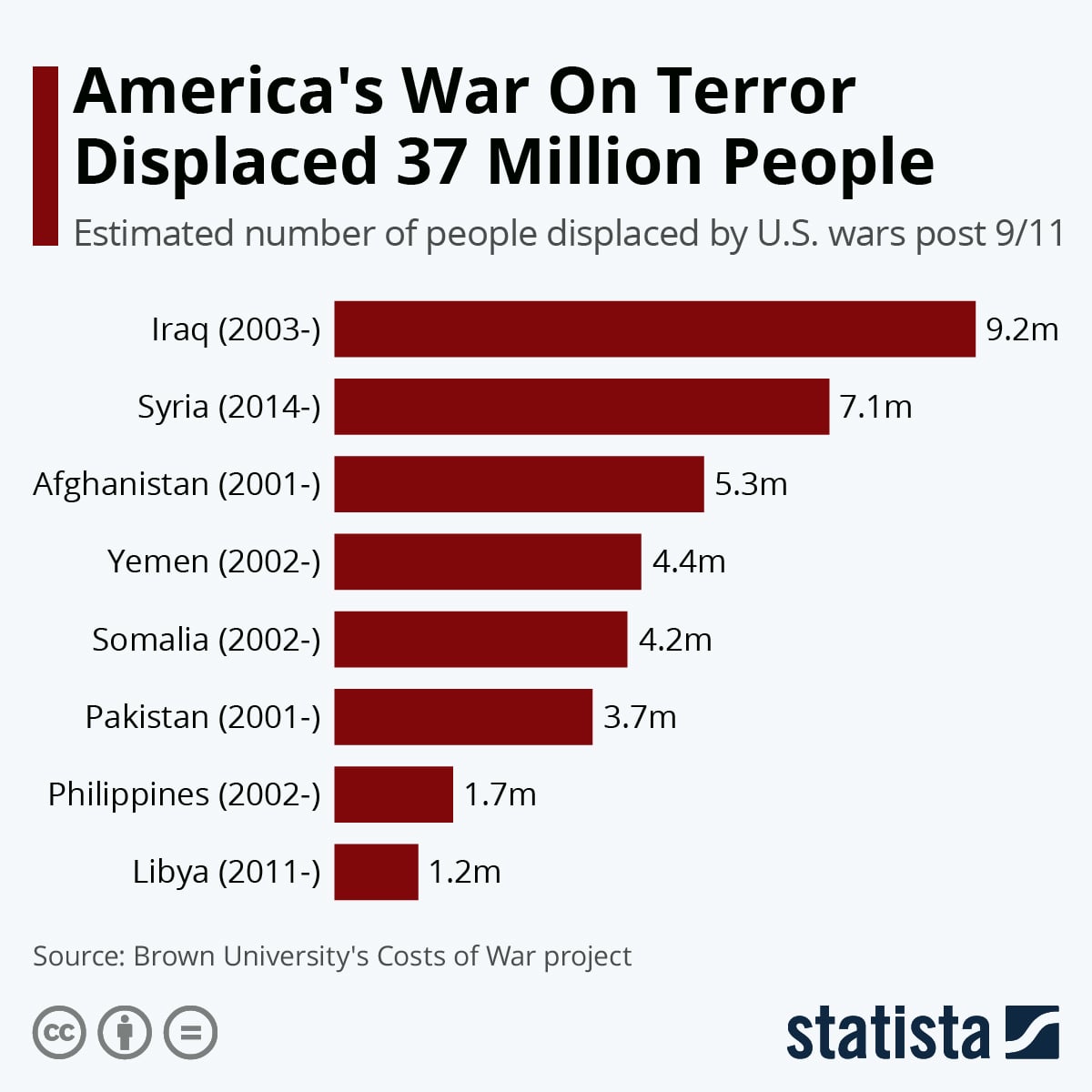
Here’s why we used the numbers we did — and what they can and can’t tell us. David Vine December 5th, 2020 Over the last week, considerable debate arose around a calculation I helped produce showing that the wars the U.S. government has fought since the attacks of September 11, 2001, have forced at least 37 million people — and perhaps as many as 59 million — to flee their homes. Originally published by Foreign Policy In Focus, FPIF, on September 23, 2020 As a co-author of the underlying report, produced for Brown University’s Costs of War Project, I was encouraged by the attention in the media — which ranged from the New York Times to Fox News — because it has generated interest in the millions of people displaced by the U.S. “global war on terror.” My American University co-authors and I note that no one inside or outside the U.S. government has previously calculated how many people these...
Eutopia_15_PhSh-kopia
“Eutopia 15” Abstract photograph 2015 © Jan Oberg David R. LoyTFF Associate October 21, 2020 “Hell is truth seen too late.” (Anonymous) Why would a small group of people want to crash hijacked airplanes into skyscrapers, killing thousands and terrorizing millions? Perhaps only religion can provide the motivation and collective support for such heinous deeds (occasionally including our dominant secular God, the modern nation-state). Does this mean that religious terrorism can be dismissed as just another example of religious fanaticism? Or is there a “logic” to fundamentalist terrorism, which makes it a regrettable but nonetheless understandable reaction to modernity? Mark Juergensmeyer and Karen Armstrong have shown that religious fundamentalism is not a return to premodern ways of being religious. Jewish, Christian and Islamic fundamentalisms are all recent developments reacting to what is perceived – to a large extent correctly, I shall argue – as the failure of secular modernity. Such...
osama-750_1439889739_725x725
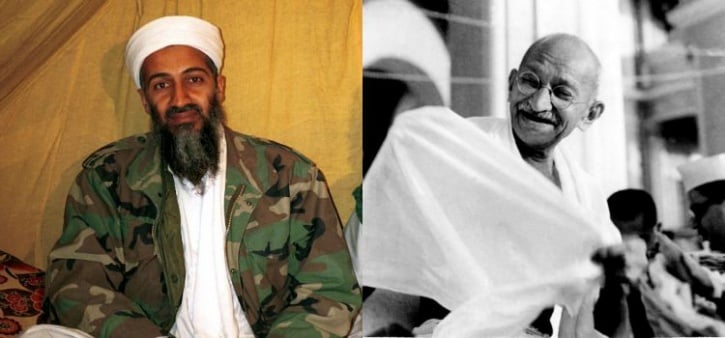
By Bhikhu Parekh November 5, 2020 If he were alive today, how might Mahatma Gandhi, the greatest apostle of non-violence, challenge Osama Bin Laden’s worldview? Bhikhu Parekh is Vice-President of The Gandhi Foundation, a professor of political philosophy, a Labour peer, and the author of three books on Gandhi. This article first appeared in Prospect Magazine in April 2004. Originally published at Gandhifoundation.org Bhikhu Parekh’s preface Like millions around the world, I found the atrocities of 9/11 abhorrent and utterly condemn such acts of terror. Despite the war against terror, we continue to see more horrors such as that in Madrid. What drives the bombers? How do they live with their deeds? Is there no alternative to the cycle of violence? No one is better qualified to advise on this than Mahatma Gandhi, the great apostle of non-violence. My imaginary exchange between him and Bin Laden tries to do two things: to comprehend...
68241
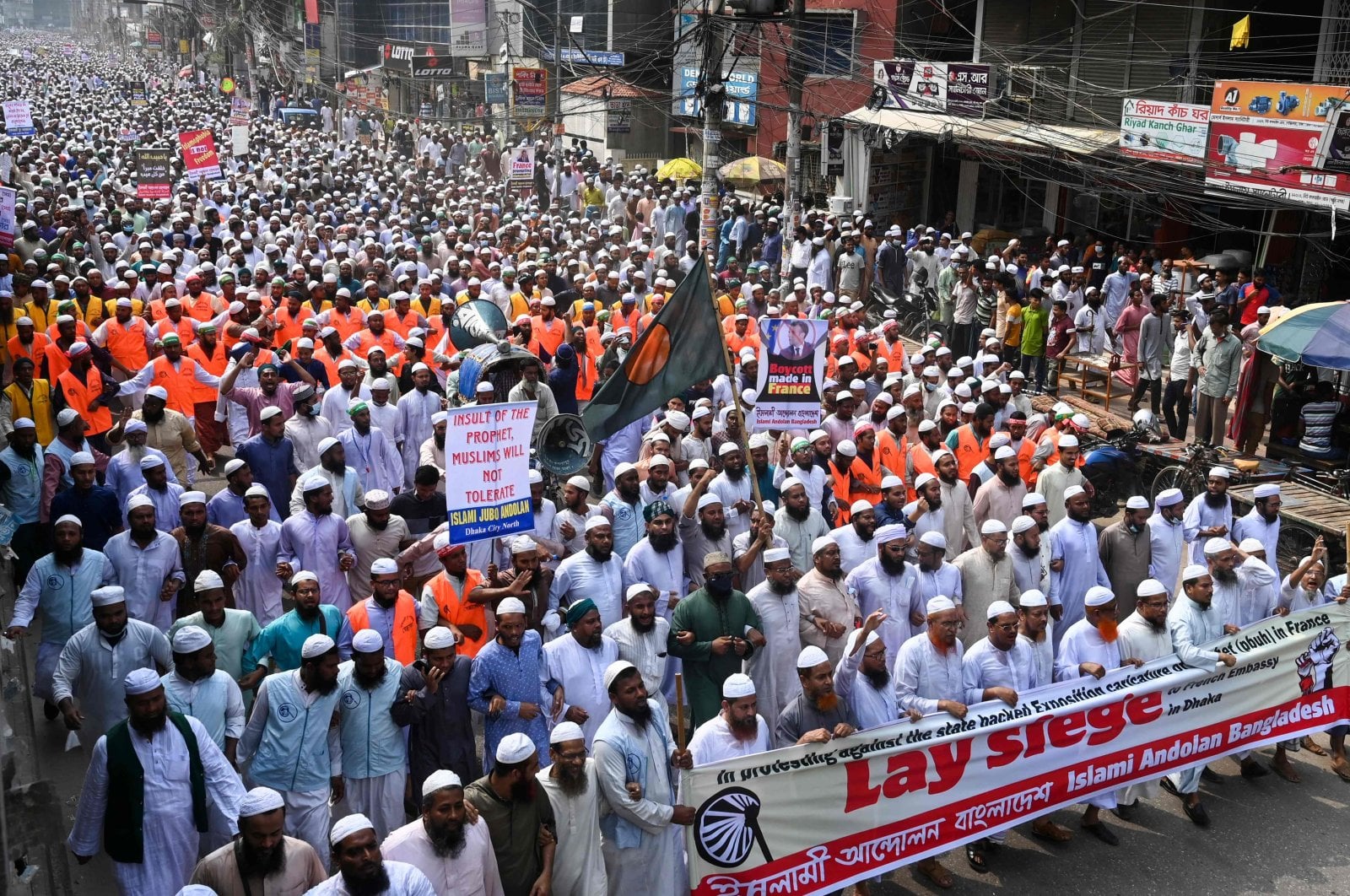
Steven Sahiounie November 09, 2020 29 Oct 2020 – The beheading of a teacher in France elicited inflammatory remarks from President Emmanuel Macron, which in turn has been met with an Arab boycott of French goods and outrage by the Muslim world. Macron is accusing Muslims of separatism and is introducing a new bill to crack down on this sin against French values. Originally posted on Transcend Media Service (TMS) on November 2nd, 2020 here Arab boycott of French products Hashtags in English and French, such as #boycottfrenchproducts, as well as in Arabic are trending on Twitter and other social media following a call to boycott French products across the Muslim world, in response to an “anti-Islam” attitude displayed following the murder of a French teacher. In Qatar, major supermarket chains started removing French products from their shelves, while the Al Meera company said in a press release October 23, “We affirm, as a national company, that we operate with a vision...
Coll_Aleppo_2_TextInserts_1000_100dpi-kopia
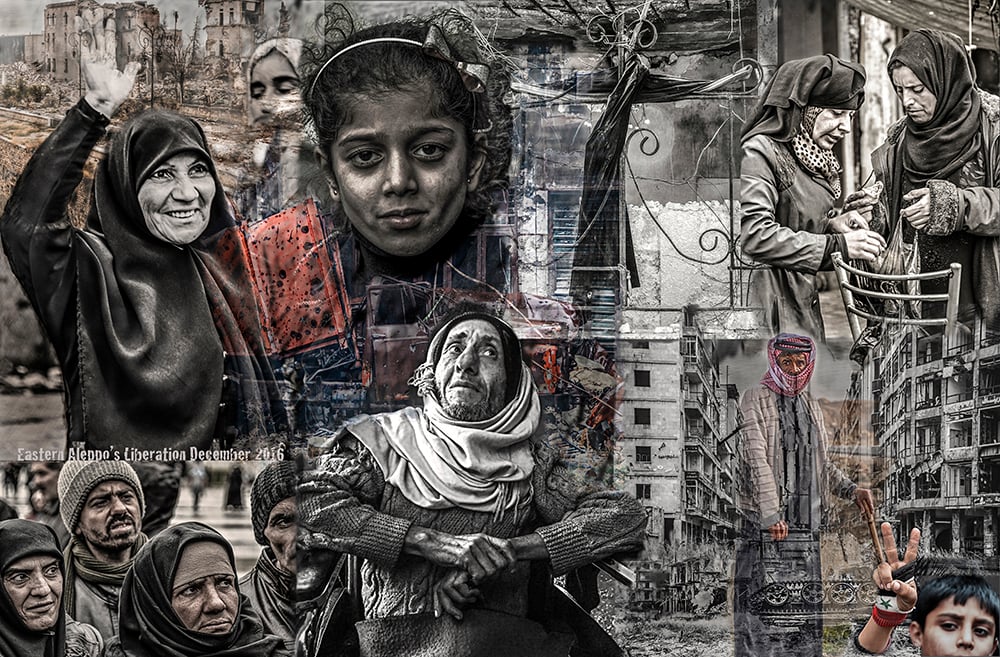
Photo: The Liberation of Aleppo December 2016 Collage © Jan Oberg Ben Norton October 26, 2020 Western government-funded intelligence cutouts trained Syrian opposition leaders, planted stories in media outlets from BBC to Al Jazeera, and ran a cadre of journalists. A trove of leaked documents exposes the propaganda network. Originally published on The Grayzone, September 23rd, 2020 Update (September 29, 2020): A few days after this article was published, the authenticity of these leaked materials was indirectly confirmed by the British government, which reported that hundreds of Foreign Office documents detailing its Syria propaganda operations were hacked in an alleged cyber attack. Leaked documents show how UK government contractors developed an advanced infrastructure of propaganda to stimulate support in the West for Syria’s political and armed opposition. Virtually every aspect of the Syrian opposition was cultivated and marketed by Western government-backed public relations firms, from their political narratives to their branding, from...
Kienholz-war_memorial-kopia-2
/08/28/new-associate-gordon-dumoulin/”>Gordon Dumoulin September 11, 2020 19 years after the horrific September 11 ! We must never forget innocent individual victims of war and other violence. But there is more to the day of September 11 and what has been the consequence of the US response to it. On 9/11, 1906, the nonviolent movement led by Gandhi was born in South Africa — TFF Associate Chaiwat Satha-Anand wrote about it on The Transnational 15 years ago. On 9/11, 1973, the coup d’etat in Chile took place with heavy US involvement, leading to the death of President Salvador Allende and the Pinochet dictatorship. And on 9/11, 2001, targets in New York and Washington representing the economic, military and political power of the US Empire were hit, killing almost 3000 people (around 12% non-US citizens). The US response was to initiate — with the attack on Afghanistan on “10/7” — the Global War...
Categories

Year

Author / Contributor

Region