US Empire/West Decline

Category

Year

Author / Contributor

Region

Sort by

Showing 1-10 of 272 stories

51908525944_fb330e7c03_k
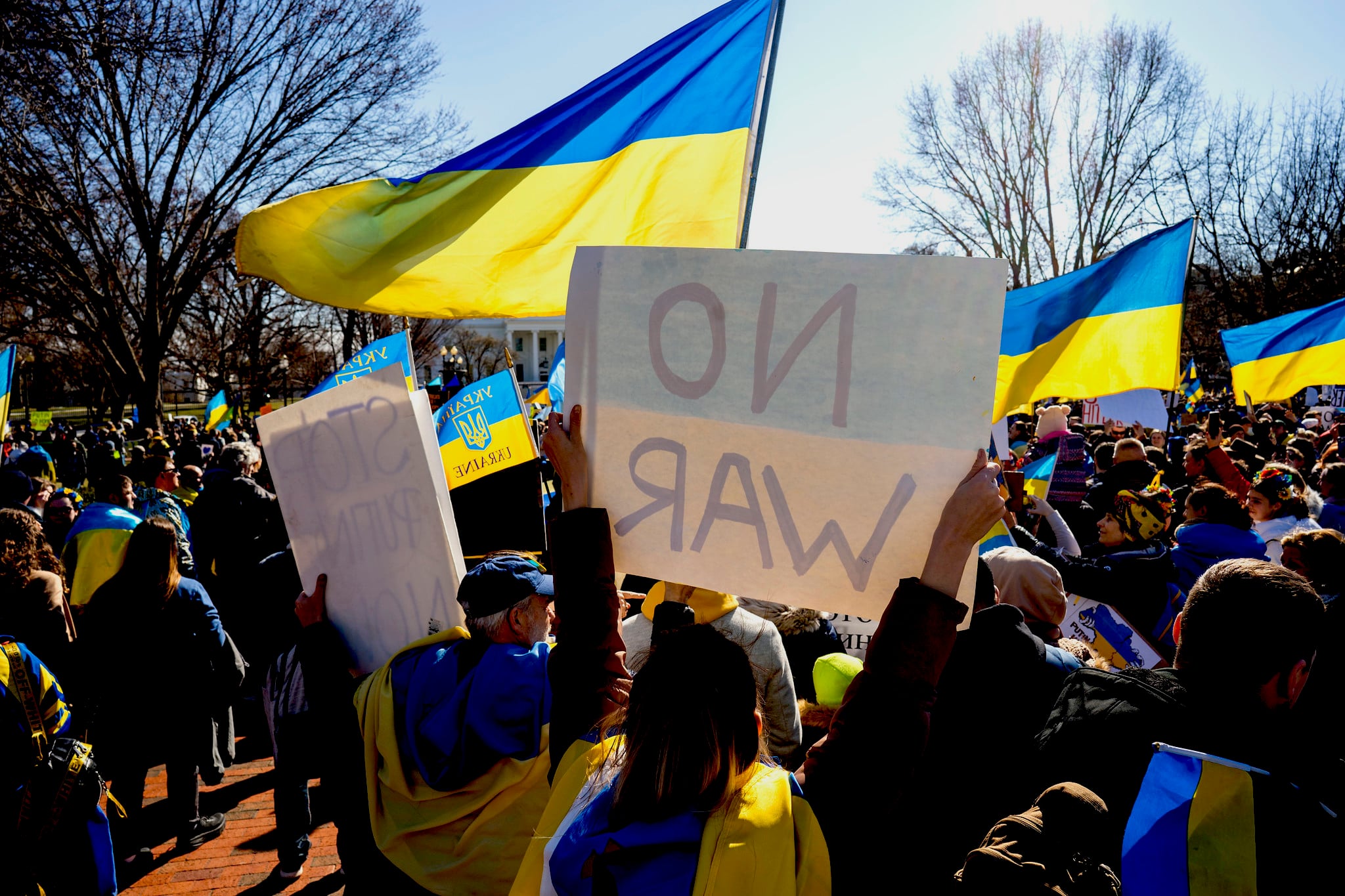
Peter Cronau – Declassified Australia January 11, 2023 An Australian university has unearthed millions of Tweets by fake accounts pushing disinformation on the Ukraine war, Peter Cronau reports. The sample size dwarfs other studies of covert propaganda about the war on social media.  Originally published at Consortium News on November 6, 2022 A team of researchers at the University of Adelaide have found that as many as 80 percent of tweets about the 2022 Russia-Ukraine invasion in its early weeks were part of a covert propaganda campaign originating from automated fake “bot” accounts. An anti-Russia propaganda campaign originating from a “bot army” of phony automated Twitter accounts flooded the internet at the start of the war. The research shows that of the more than 5 million tweets studied, 90.2 percent (both bot and non-bot) came from accounts that were pro-Ukraine, with fewer than 7 percent of the accounts being classed as pro-Russian. The university researchers...
CaseDeWest
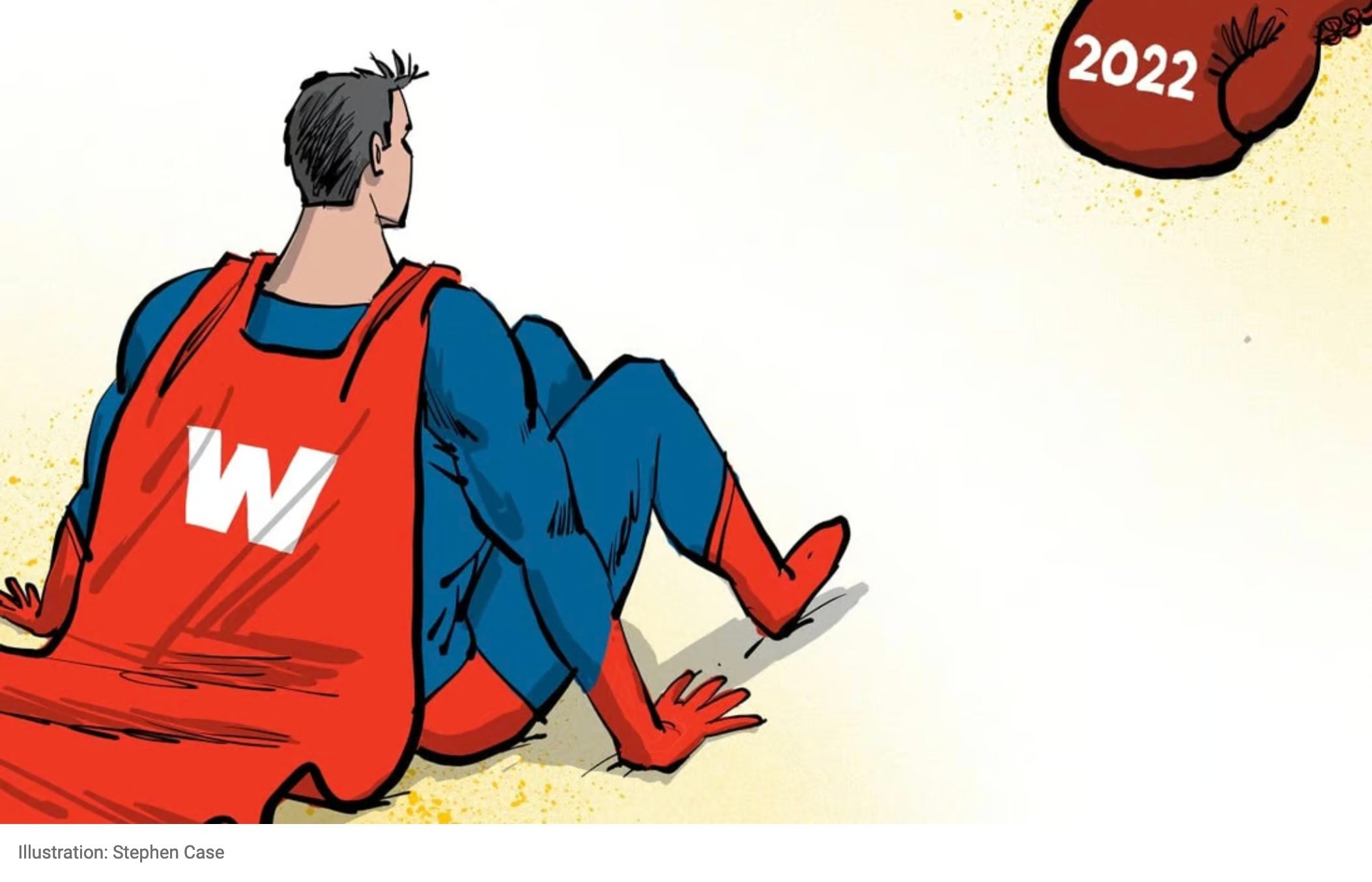
• From China’s socialist path to Latin America’s left turn and Asean’s neutral stance, more countries are quietly but firmly spurning the Western world order • Instead, they seek to favour national interests, a more democratic form of international politics and mutual respect Wang Wen January 6, 2023 The global significance of 2022 has been grossly underestimated. Its importance to world history far exceeds that of 2001, when the September 11 attacks occurred, and 2008, when the global financial crisis broke out. Instead, 2022 may be comparable to 1991, when the Cold War ended. If there’s a keyword, it’s “de-Westernisation”. This is not just about Russia’s radical attempt, through the use of military power, to try to break the US-dominated international order. It is also about the unprecedented rising up of non-Western countries against the established order in search of a more independent stance. China, after the successful convening of...

11808bedfbc247968a45a0935d8b3343
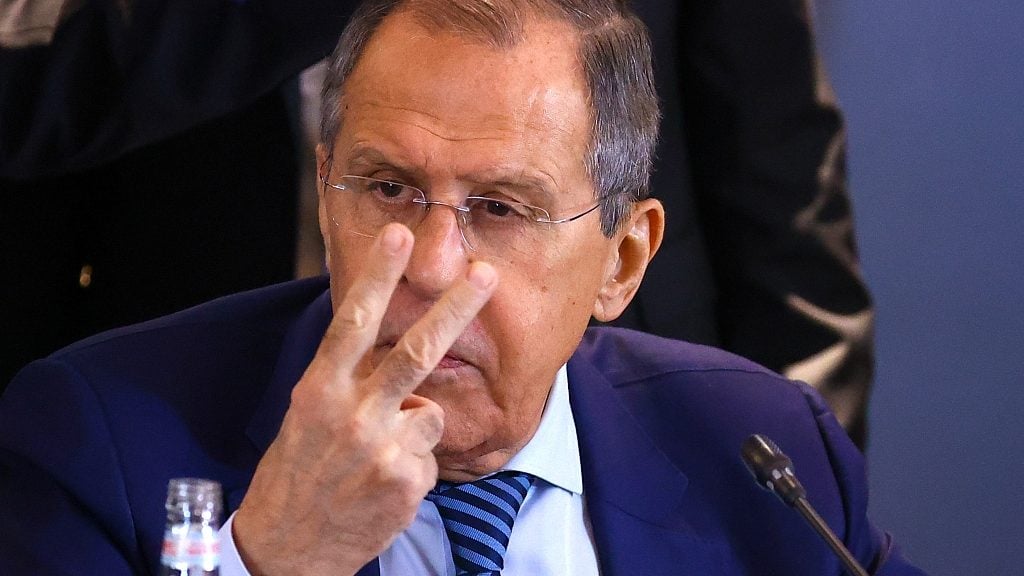
Russian Foreign Minister Sergey Lavrov attending a meeting in Yerevan, Armenia, November 23, 2022. /CFP Glenn Diesen January 3, 2022 The 29th Ministerial Council of the Organization for Security and Cooperation in Europe (OSCE) took place from December 1-2 in Poland. Established in 1994 to develop a common peace in an inclusive Europe, the OSCE has become the largest regional security organization in the world, which includes the U.S. on its western edge and Russia on its eastern. Therefore it could have played a key role in restoring peace amid the Ukraine conflict. However, the peace initiative was abandoned in favour of a hegemonic project facilitated by NATO expansionism. The war in Ukraine and the decline of the OSCE are both symptoms of the collapsing pan-European security order. Originally published at CGTN, December 1, 2022 A common Europe versus continued bloc politics In 1989, then Soviet Union leader Mikhail Sergeyevich Gorbachev...
decline-and-fall-of-the-american-empire
Paul Krugman June 19, 2018 – published here on December 15, 2022 Committing atrocities at the border, attacking the domestic rule of law, insulting democratic leaders while praising thugs and breaking up trade agreements are all about turning our back on the ideals that made us different from other powerful nations. The U.S. government is, as a matter of policy, ripping children from the arms of their parents and putting them in fenced enclosures (which officials insist aren’t cages, oh no). The U.S. president is demanding that law enforcement stop investigating his associates and go after his political enemies instead. He has been insulting democratic allies while praising murderous dictators. And a global trade war seems increasingly likely. What do these stories have in common? Obviously, they’re all tied to the character of the man occupying the White House, surely the worst person ever to hold his position. But there’s...
51415684771_e14c390bea_k
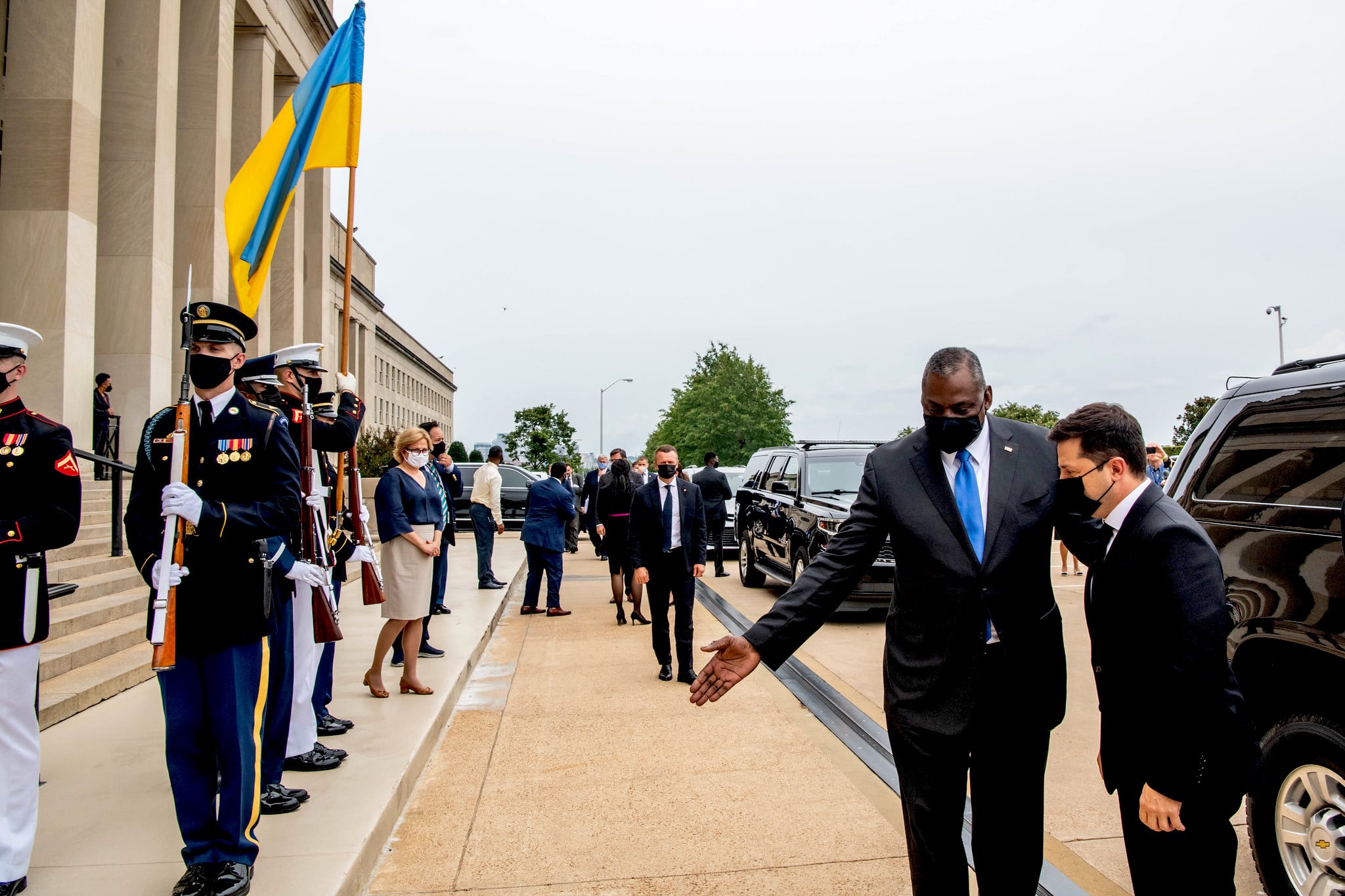
U.S. Secretary of Defense Lloyd Austin welcoming Ukraine President Volodymyr Zelensky to a meeting at the Pentagon, Aug. 31, 2021. (DoD, Jack Sanders) In addition to advancing longstanding U.S. geo-strategic aims, it seems the proxy war in Ukraine is also being used to sharpen the imperial war machine’s claws for a looming hot war with China and/or Russia. Caitlin Johnstone December 5, 2022 Listen to a reading of this article. A surprisingly frank article in The New York Times, “Western Allies Look to Ukraine as a Testing Ground for Weapons” describes how the imperial war machine is capitalising on the U.S. proxy war to test its weapons for future use. “Ukraine has become a testing ground for state-of-the-art weapons and information systems, and new ways to use them, that Western political officials and military commanders predict could shape warfare for generations to come,” writes Lara Jakes. Jakes says “new advances in technology and...
Screen-Shot-2022-10-19-at-8.50.34-AM-1-797x630-1
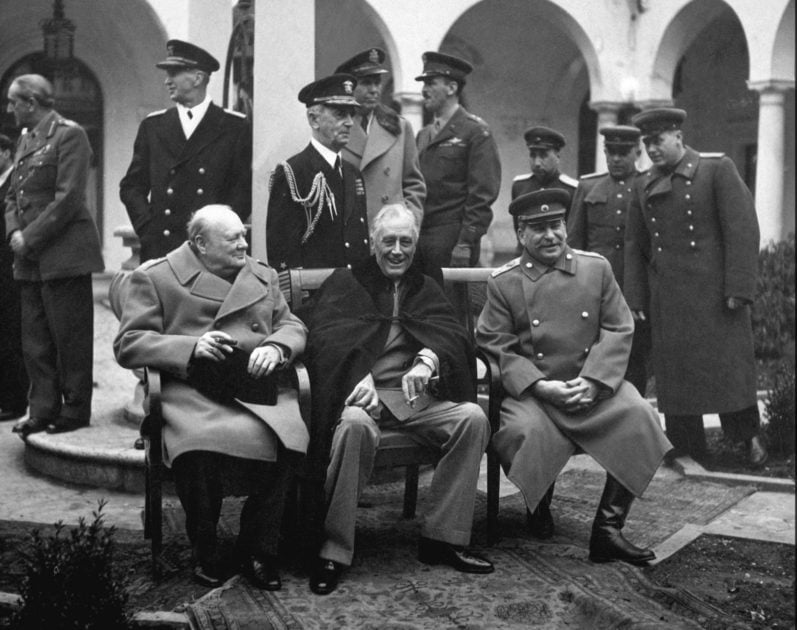
Churchill, Roosevelt and Stalin at Yalta, February 1945. Photo: US Army. Richard Falk – TFF Associate November 23, 2022 Disdaining Diplomacy, Seeking Victory Ever since the Ukraine War started on February 24, 2022, the NATO response, mainly articulated and materially implemented by the U.S., has been to pour vast quantities of oil on the flames of conflict, taunting Russian and its leader, increasing the scale of violence, the magnitude of human suffering, and dangerously increasing the risk of a disastrous outcome. Not only did Washington mobilize the world to denounce Russia’s ‘aggression’, but supplied a steady stream of advanced weaponry in great quantities to the Ukrainians to resist the Russian attack and even mount counterattacks. The U.S. did all it could at the UN and elsewhere to build a punitive coalition hostile to Russia but coupled this with a variety of sanctions and the demonization of Putin as a notorious...
24eba9f5-a986-4dd2-8318-bf816771f739_1080x565
Caitlin Johnstone November 15, 2022 Listen to a reading of this article here So it turns out the US intelligence cartel has been working intimately with online platforms to regulate the “cognitive infrastructure” of the population. This is according to a new investigative report by The Intercept, based on documents obtained through leaks and an ongoing lawsuit, on the “retooling” of the Department of Homeland Security from an agency focused on counterterrorism to one increasingly focused on fighting “misinformation, disinformation, and malinformation” online. Originally published in Caitlin Johnstone’s newsletter on November 1, 2022 While the DHS’s hotly controversial “Disinformation Governance Board” was shut down in response to public outcry, the Intercept report reveals what authors Lee Fang and Ken Klippenstein describe as “an expansive effort by the agency to influence tech platforms” in order to “curb speech it considers dangerous”: According to a draft copy of DHS’s Quadrennial Homeland Security Review,...
us-military-interventions
Tufts University November 11, 2022 The United States (US) ‘‘spends roughly as much on defense as the rest of the world put together…and remains the only country able to project military power globally.’’[1] With its extensive defense budget and capabilities, the US remains a military leader in contemporary international politics – but can this military advantage ever become a long-run disadvantage for our foreign policy? According to our data, the US has undertaken over 500 international military interventions since 1776, with nearly 60% undertaken between 1950 and 2017. What’s more, over one-third of these missions occurred after 1999.[2]  With the end of the Cold War era, we would expect the US to decrease its military interventions abroad, assuming lower threats and interests at stake. But these patterns reveal the opposite – the US has increased its military involvements abroad. Originally posted on Tufts University’s homepage here Perhaps as we exclusively...
dfab3518-3669-4c5f-b5c4-22dad684042a_1080x565
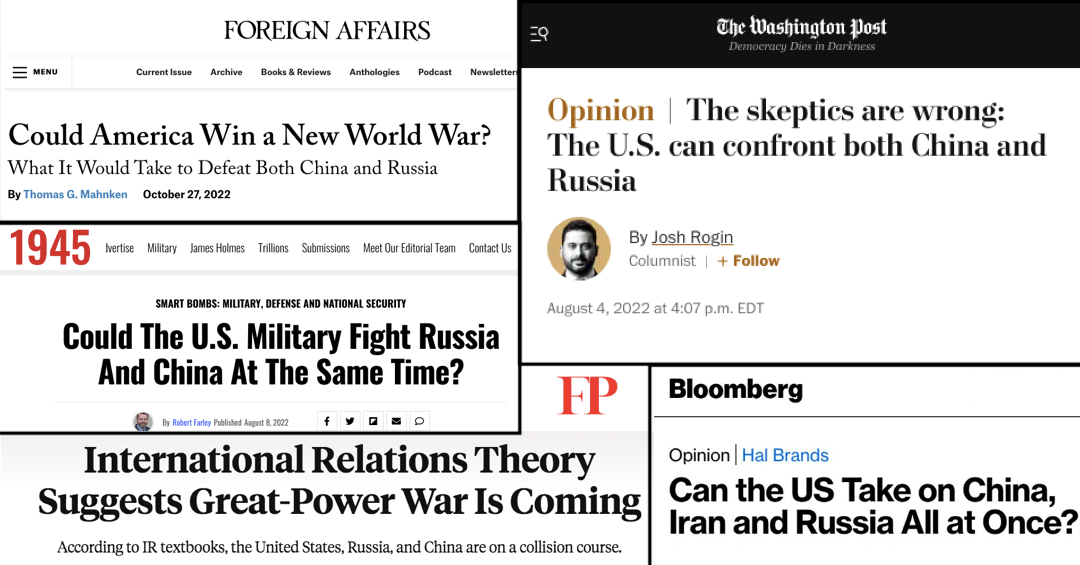
Caitlin Johnstone November 9, 2022 Listen to a reading of this article Mainstream punditry in the latter half of 2022 is rife with op-eds arguing that the US needs to vastly increase military spending because a world war is about to erupt, and they always frame it as though this would be something that happens to the US, as though its own actions would have nothing to do with it. As though it would not be the direct result of the US-centralized empire continually accelerating towards that horrific event while refusing every possible diplomatic off-ramp due to its inability to relinquish its goal of total unipolar planetary domination. Originally published in Caitlin Johnstone’s newsletter on October 28, 2022 The latest example of this trend is an article titled “Could America Win a New World War? — What It Would Take to Defeat Both China and Russia” published by Foreign Affairs, a magazine that...
Skaermbillede-2022-10-24-142005
Trust among Chinese citizens in their government is a record 91 percent, the highest seen in a decade. The result is even more striking compared to the U.S., where trust in government is at 39 percent. By Deborah Lehr October 24, 2022 Fraught U.S.-China relations will continue entering 2022. This year, leaders of both countries will be focused on domestic politics, the ongoing pandemic and uneven economic recoveries — challenges that have further added to existing bilateral tensions. Originally published at Edelman on January 18, 2022 It is an important political year in both countries. U.S. President Joe Biden is facing midterm elections with the Republicans likely to gain seats in the House and potentially the Senate, complicating his administration’s ability to implement its policy agenda. By contrast, China’s Xi Jinping is on the verge of assuming a third term as President and is strongly positioned to ensure that his...
Skaermbillede-2022-10-17-150124
By Connor Echols October 17, 2022 A recent piece in Foreign Affairs revealed that Kyiv and Moscow may have had a tentative deal to end the war all the way back in April. Russia and Ukraine may have agreed on a tentative deal to end the war in April, according to a recent piece in Foreign Affairs. “Russian and Ukrainian negotiators appeared to have tentatively agreed on the outlines of a negotiated interim settlement,” wrote Fiona Hill and Angela Stent. “Russia would withdraw to its position on February 23, when it controlled part of the Donbas region and all of Crimea, and in exchange, Ukraine would promise not to seek NATO membership and instead receive security guarantees from a number of countries.” Originally published at Responsible Statecraft on September 2, 2022 The news highlights the impact of former British Prime Minister Boris Johnson’s efforts to stop negotiations, as journalist Branko Marcetic noted on Twitter....
Skaermbillede-2022-10-11-133023
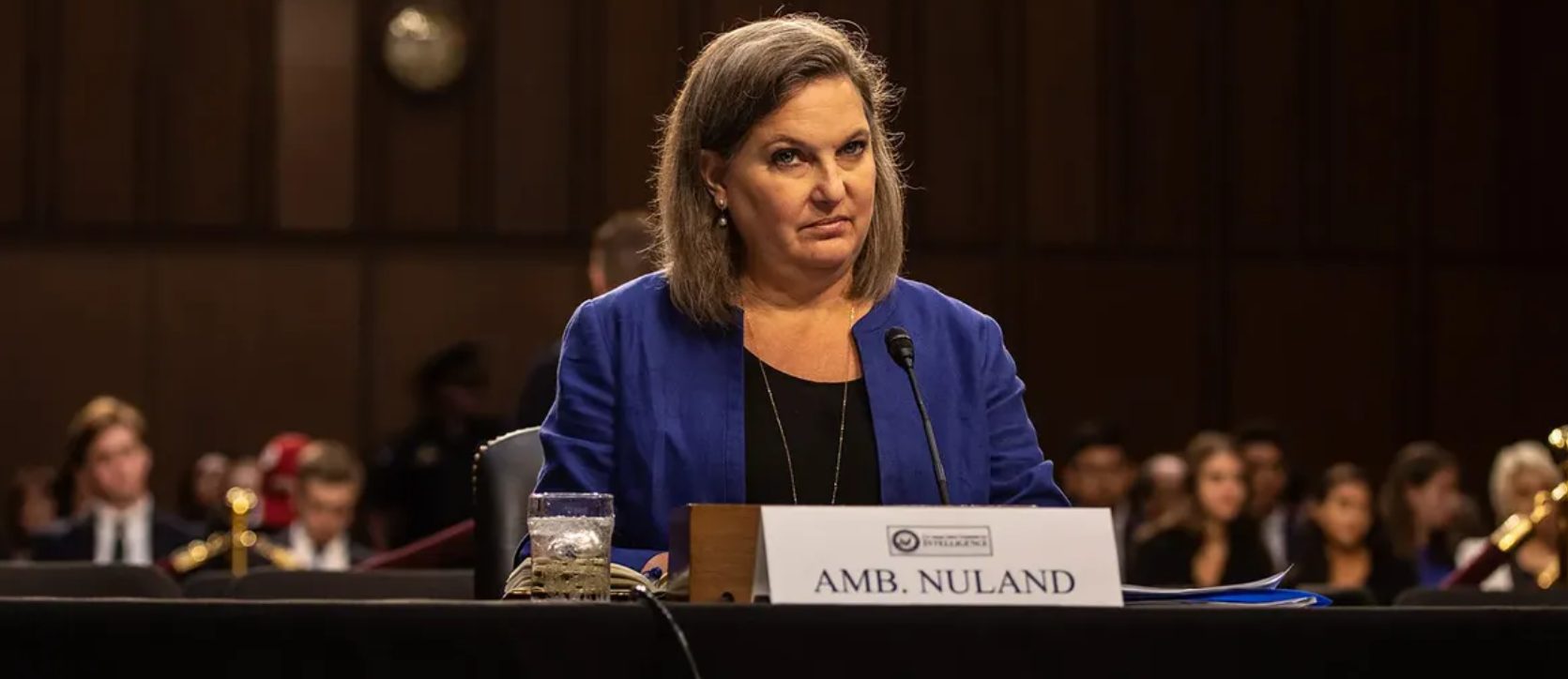
Former US Assistant Secretary of State for European and Eurasian Affairs Victoria Nuland testifies during a hearing on Policy Response to Russian Interference in the 2016 US Elections before the Senate Intelligence Committee at Capitol Hill in Washington, USA on June 20, 2018. (Yasin Ozturk/Anadolu Agency/Getty Images) A Cold War true believer who sabotaged Obama’s foreign policy, Nuland is a huge risk at the State Department Medea Benjamin – Nicolas J.S. Davies – Marcy Winograd October 13, 2022 Who is Victoria Nuland? Most Americans have never heard of her, because the U.S. corporate media’s foreign policy coverage is a wasteland. Most Americans have no idea that President-elect Biden’s pick for deputy secretary of state for political affairs is stuck in the quicksand of 1950s U.S.-Russia Cold War politics and dreams of continued NATO expansion, an arms race on steroids and further encirclement of Russia.  Nor do they know that from 2003...
Categories

Year

Author / Contributor

Region