Terrorism

Category

Year

Author / Contributor

Region

Sort by

Showing 1-10 of 210 stories

Tapi-pipeline-1024x768-1
Pepe Escobar August 24, 2021 At one point last week, the price of a barrel of crude oil — which had risen as high as $147 last July and, with the global economic meltdown, hit a low of $32 in 2009 — rebounded above $51. Prices at the local gas pump are expected to rise as well in the coming weeks. However, given a worldwide falloff in oil use, these price jumps may not hold for long. Still, cheap or not, oil and natural gas (as well as coal) are what drives global civilization, and that’s clearly not going to change any time soon. Originally posted on Tom Dispatch on March 24, 2009 That, in turn, means the major powers are going to be no less eager to secure key energy reserves and control the flow of energy in bust times as they were in boom times, which is where Pepe Escobar comes in. In a...
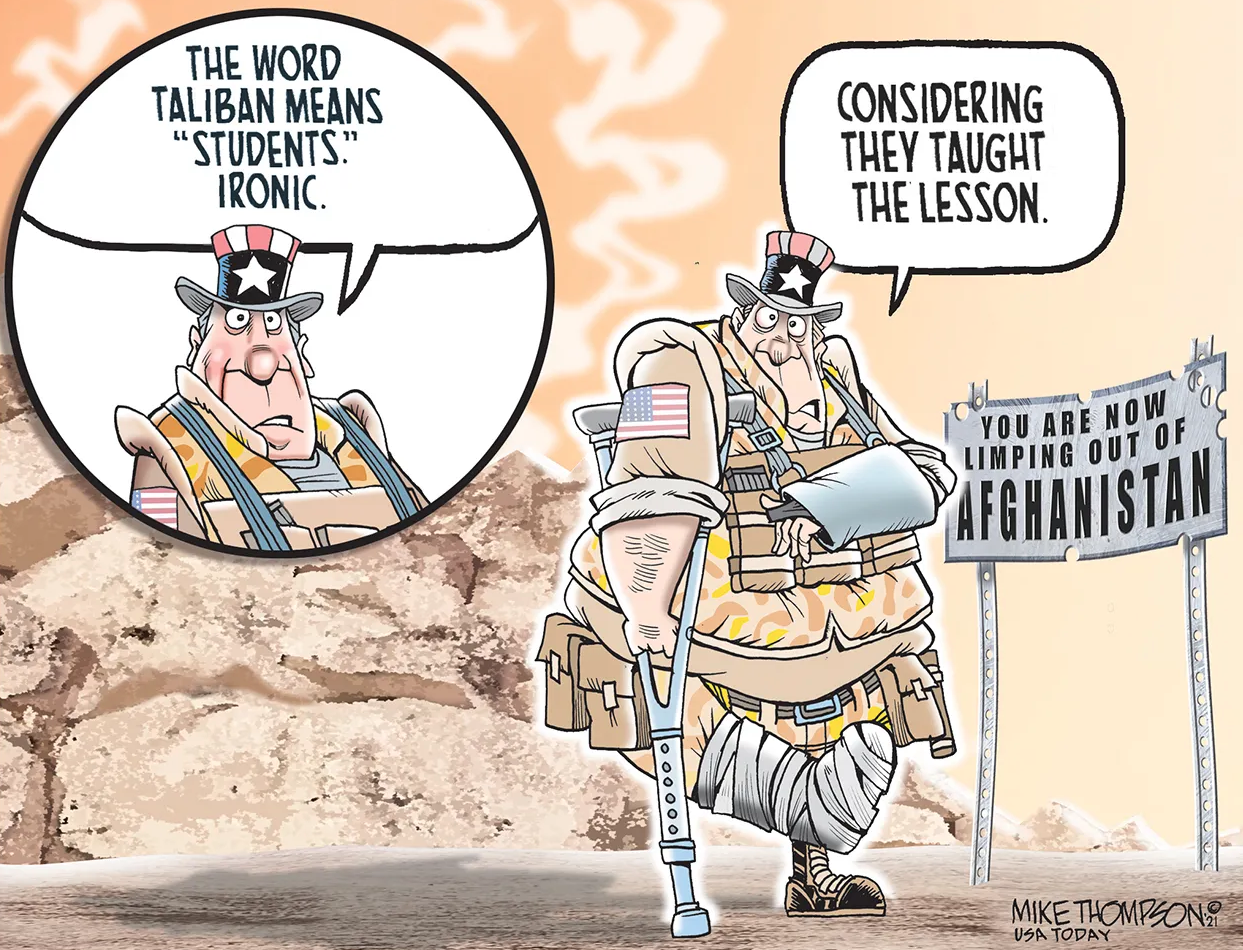
TaliTeaching
, in Washington and New York, everybody talked about who could have done it, how they did it and with what means. The only thing never brought to the fore was: WHY would somebody want to do something like 9/11 to the United States of America? By not asking the Why question, the US could stand as the innocent victim of cataclysmic violence. It would not have to do any soul searching and therefore no change of its global militarist policy. 9/11 was not a response to US foreign policy – but it needed a response. The world felt sympathy for the American suffering – much more so than for the suffering and deaths in other countries around the world. The fact is that the 9/11 attack targeted the US’ global finance-capital (World Trade Center), its global military (Pentagon) and its political (White House, however not hit) centres – not...
microphone
Gordon Hahn on Guadalajara Geopolitics Institute August 10, 2021  Professor Gordon Hahn is interviewed by Hrvoje Morić of Geopolitics & Empire Gordon Hahn discusses what he calls the New East-West Cold War or Russia-West Tinderbox, which can potentially escalate into a WWIII scenario. He examines the key drivers between the Russia-West divide which is primarily EU/NATO expansion (e.g. Belarus, Ukraine, Donbass), a situation that will continue to fester and could explode at any moment unless it is resolved. He comments on China’s rise as a global hegemon and believes Russia and China will make Afghan inroads as the U.S. withdraws and the Taliban likely come to power. Finally, he looks at the “authoritarian-ization” or “Putin-ization” of America, where neo-liberals, leftists, and big tech have melded with the military-industrial-complex and oligarchic globalists who are pushing the U.S. toward a one-party state. Beyond that, these forces are pushing for some form of...
Aggression-1024x533-1
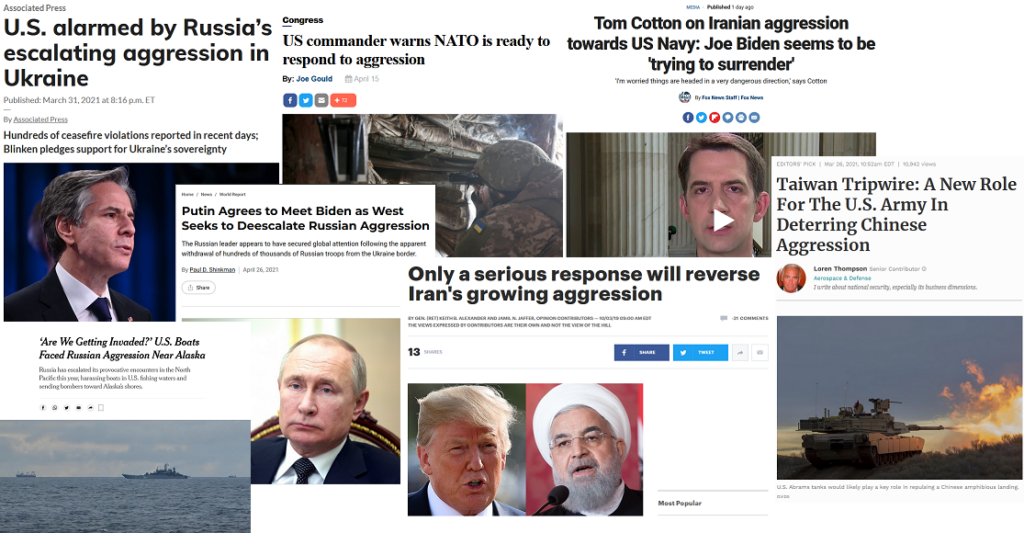
Alan Macleod May 17, 2021 Aggression, in international politics, is commonly defined as the use of armed force against another sovereign state, not justified by self-defense or international authority. Any state being described as aggressive in foreign or international reporting, therefore, is almost by definition in the wrong. Originally posted on FAIR.org, April 30, 2021 It’s a word that seems easy to apply to the United States, which launched 81 foreign interventions between 1946 and 2000 alone. In the 21st century, the United States has attacked, invaded or occupied the sovereign states of Afghanistan, Iraq, Libya, Syria, Pakistan, Yemen and Somalia. Despite the US record, Western corporate media overwhelmingly reserve the word “aggression” for official enemy nations—whether or not it’s warranted. In contrast, US behavior is almost never categorized as aggressive, thereby giving readers a misleading picture of the world. Perhaps the most notable internationally aggressive act in recent memory...
peace-force
William Astore May 6, 2021 Introduction to the article Once upon a time, the Europeans had the copyright on naming lengthy wars: the Hundred Years’ War, the Eighty Years’ War, the Thirty Years’ War. I suspect, however, that it’s past time for the U.S. to enter that competition. After all, soon after we arrive at September 11, 2021, barring a genuine surprise, this country will have been fighting its twenty-first-century wars unsuccessfully for two decades. In other words, the conflict launched as the Global War on Terror in the days after the 9/11 attacks (the one that then-Secretary of Defense Donald Rumsfeld imagined targeting terror networks in up to 60 countries) has never either faintly succeeded or ended. It’s only spread to ever newer realms of death and disaster in distant lands (while bouncing back on this country in ever stranger ways), even as trillions and trillions of taxpayer dollars went down the drain. Shouldn’t the increasingly riven citizens of...
FreeComposition_1_1200_100dpi
En kritisk analys av en rapport från Newlines Institute och Raoul Wallenberg Center Gordon Dumoulin, Jan Oberg och Thore Vestby Transnationella Stiftelsen för Freds- och Framtidsforskning, TFF, Lund, Sverige TFF@transnational.org • The Transnational • Ph +46 (0) 738 525200 Översättning av engelska utgåvan: Rolf Nilsson Den 5. maj, 2021 Den 8 mars 2021 publicerade Newlines Institute for Strategy and Policy i Washington en rapport, The Uyghur Genocide: An Examination of China’s Breaches of the 1948 Genocide Convention i samarbete med Raoul Wallenberg Centre for Human Rights i Montreal. Den säger att ”Denna rapport är den första oberoende experttillämpningen av folkmordskonventionen från 1948 för den pågående behandlingen av uigurerna i Kina. Det genomfördes av Newlines Institute for Strategy and Policy, i samarbete med Raoul Wallenberg Center for Human Rights, som svar på framväxande redogörelser för allvarliga och systematiska grymheter i Xinjiang-provinsen, särskilt riktade mot uigurerna, en etnisk minoritet, för att fastställa...
tug-of-war-created-division-fake-debate-1920x900-1
Photo credit: off-guardian.org Edward Curtin April 22 2021 The Incompetent, Negligent, Mishandling, Miscalculating Elite Blunderers You’ve heard of them, no doubt, the U.S. rulers who can’t rule too well and are always getting surprised by events or fed bad advice by their underlings.  Their “mistakes” are always well intentioned. They stumble into wars through faulty intelligence.  They drop the ball because of bureaucratic mix-ups. They miscalculate the perfidy of the elites whom allegedly they oppose while ushering them into the national coffers out of necessity since they are too big to fail.  They never see the storm coming, even as they create it.  Their incompetence is the retort to all those nut cases who conjure up conspiracy theories to explain their actions or lack thereof.  They are innocent.  Always innocent. Originally published by off-guardian.org They and their media mouthpieces offer Americans, who are most eager to accept, what Lutheran pastor and...
Ablinken
Edward Lozansky April 8th, 2021 Apology and humanitarian help are a better start In his recent speech outlining the new U.S. foreign policy vision Secretary of State Antony J. Blinken made a really sensational statement: “We will not promote democracy through costly military interventions or by attempting to overthrow authoritarian regimes by force. We have tried these tactics in the past. However well intentioned, they haven’t worked.”  Originally posted on US-Russia.org’s website on March 15th, 2021 After hearing this from someone who not only enthusiastically supported the wars in Iraq, Libya, Syria and Ukraine, I had to reread his speech a couple of times to make sure that I wasn’t hallucinating.  Some skeptics, after seeing in this speech the usual lines about “renewing America’s strength” and that only the United States can “lead” the world, shrugged off Mr. Blinken’s disavowing many decades of U.S. forceful changes of unsuitable foreign regimes.  For...
mosul2_2.jpg
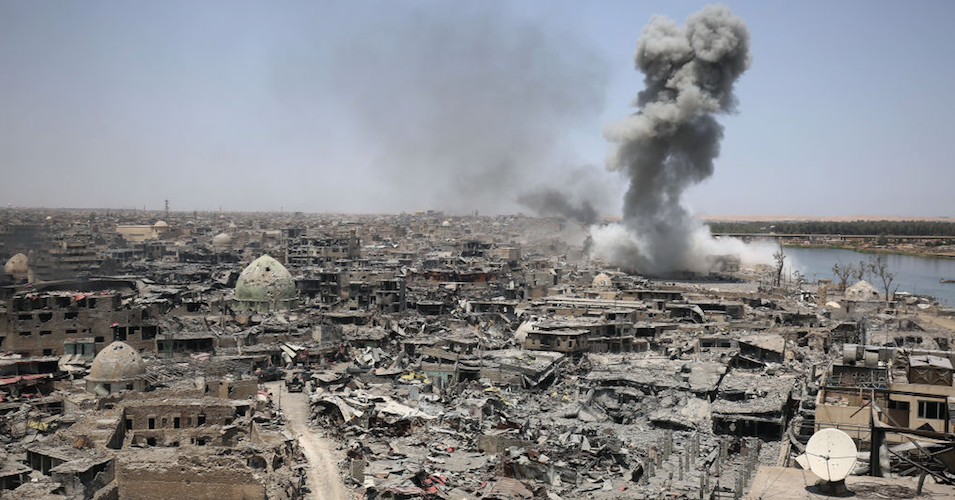
U.S. bombs and bullets have claimed at least hundreds of thousands of civilian lives this century. Here, a U.S. airstrike against Islamic State militants in densely-populated Mosul, Iraq on July 9, 2017 is shown. (Photo: Ahmad Al-Rubaye/AFP/Getty Images) March 29, 2021 Medea Benjamin, Nicolas J.S. Davies Unbeknownst to many Americans, the U.S. military and its allies are engaged in bombing and killing people in other countries on a daily basis.  On February 25th, President Biden ordered U.S. air forces to drop seven 500-pound bombs on Iraqi forces in Syria, reportedly killing 22 people. The U.S. airstrike has predictably failed to halt rocket attacks on deeply unpopular U.S. bases in Iraq, which the Iraqi National Assembly passed a resolution to close over a year ago.  The Western media reported the U.S. airstrike as an isolated and exceptional incident, and there has been significant blowback from the U.S. public, Congress and the world community, condemning the strikes...
Increased Security Remains Around Capitol Hill In Washington, DC
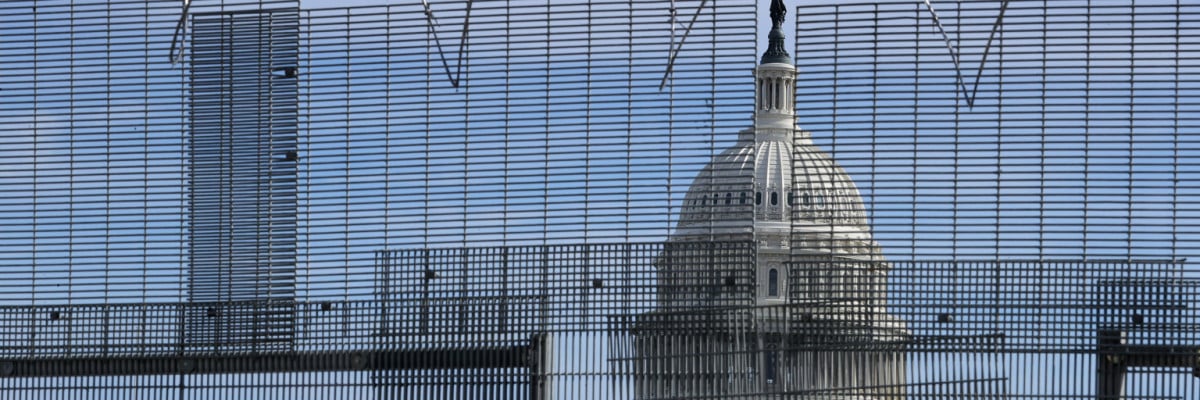
It’s no coincidence that, after years of fighting abroad, the United States is beset with paranoia, loss of trust, and increasingly bitter divisions Stephen M. Walt March 16, 2021 “Fortress America” is a derogatory term that usually refers to extreme forms of isolationism. Last week, however, CNN anchor Fareed Zakaria gave the idea a new and equally disturbing twist. In a thought-provoking column in the Washington Post, Zakaria described how excessive concerns for security are making the United States more “imperial” in appearance than the old colonial empires, with embassies, public buildings, and even the U.S. Capitol itself surrounded by barricades, moats, or fortifications. Instead of presenting a welcoming visage to the outside world and to the American people, one that conveys confidence, strength, and openness, America’s public face appears uncertain, vulnerable, fearful, and distant. Originally published at Eurasia News Online According to Zakaria, such concerns have also encouraged an excessive regard for secrecy,...

coronavirus
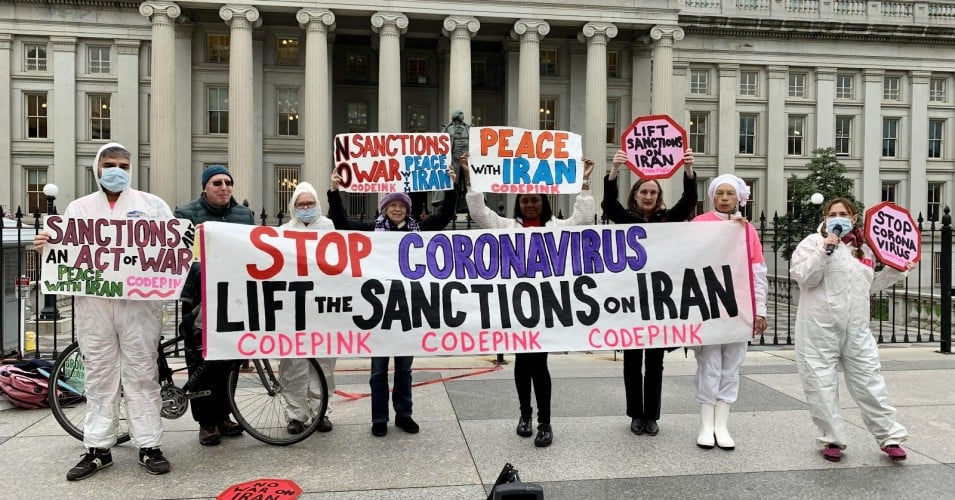
Negar Mortazavi and Sina Toossi February 25, 2020 Iranians’ stories reflect the devastating human costs of US economic sanctions that are often ignored by Washington’s foreign policy elite Originally posted on Global Research on December 8th, 2020 “My young cousin passed away last week,” an Iranian Twitter user recently lamented. “She needed medication for her cancer that doctors said can’t be found.” The tweet tragically went on: “Maybe she’d be alongside her little daughter now if she had this medicine and not under a pile of cold dirt.” These heartbreaking words are from journalist Katayoon Lamezadeh, one of thousands of Iranians who have taken to social media to speak of how sanctions have upended their lives. Their stories reflect the devastating human costs of US economic sanctions that are often ignored by Washington’s foreign policy elite and largely unknown to the American public. The assassination of Iranian scientist Mohsen Fakhrizadeh is the latest in a long-running pressure...
echo-grid-BefmnpXPZ80-unsplash
Dr. Gary G. Kohls February 9, 2021 A half-century ago, The New York Times accused Martin Luther King Jr. of “slander” for decrying the Vietnam War and The Washington Post detected “unsupported fantasies” in his speech, recalled more favourably by Gary G. Kohls. Originally published on Jan. 19, 2014; slightly edited for the time element. Originally posted on Consortium News on January 19, 2021 Martin Luther King Jr.’s Riverside Church speech was titled “Beyond Vietnam: A Time to Break Silence.” It was delivered exactly one year before his April 4, 1968 assassination in Memphis. In the speech, King declared, “A nation that continues year after year to spend more money on military defense than on programs of social uplift is approaching spiritual death.” The people who heard that speech recognized it as one of the most powerful speeches ever given articulating the immorality of the Vietnam War and its destructive impact...
Categories

Year

Author / Contributor

Region