

August 24, 2021
At one point last week, the price of a barrel of crude oil — which had risen as high as $147 last July and, with the global economic meltdown, hit a low of $32 in 2009 — rebounded above $51. Prices at the local gas pump are expected to rise as well in the coming weeks. However, given a worldwide falloff in oil use, these price jumps may not hold for long. Still, cheap or not, oil and natural gas (as well as coal) are what drives global civilization, and that’s clearly not going to change any time soon.
Originally posted on Tom Dispatch on March 24, 2009
That, in turn, means the major powers are going to be no less eager to secure key energy reserves and control the flow of energy in bust times as they were in boom times, which is where Pepe Escobar comes in. In a long, typically vigorous essay just published in book form, “Obama Does Globalistan,” he refers to his earlier book Globalistan as a “warped geopolitical travel book.” That makes him a wonderfully “warped geopolitical traveler.” In fact, he regularly circumnavigates the globe from Central Asia and the Middle East to Latin America, even sometimes landing in Washington, writing pyrotechnically for an online publication on which I have long been completely hooked, Asia Times.
Knowing his proclivity for following energy flows the way normal tourists might follow the sun, I asked him if he might offer TomDispatch readers periodic “postcards” from the energy heartlands of the planet and what he calls the Tower of Babel of “nations, mercenary peoples, terrorists, dictatorships, tribes, nomad mafias, and religious outfits” that are in conflict upon them. This is the first of his postcards. More will follow. – Tom
Liquid War
Postcard from Pipelineistan
By Pepe Escobar
What happens on the immense battlefield for the control of Eurasia will provide the ultimate plot line in the tumultuous rush towards a new, polycentric world order, also known as the New Great Game.
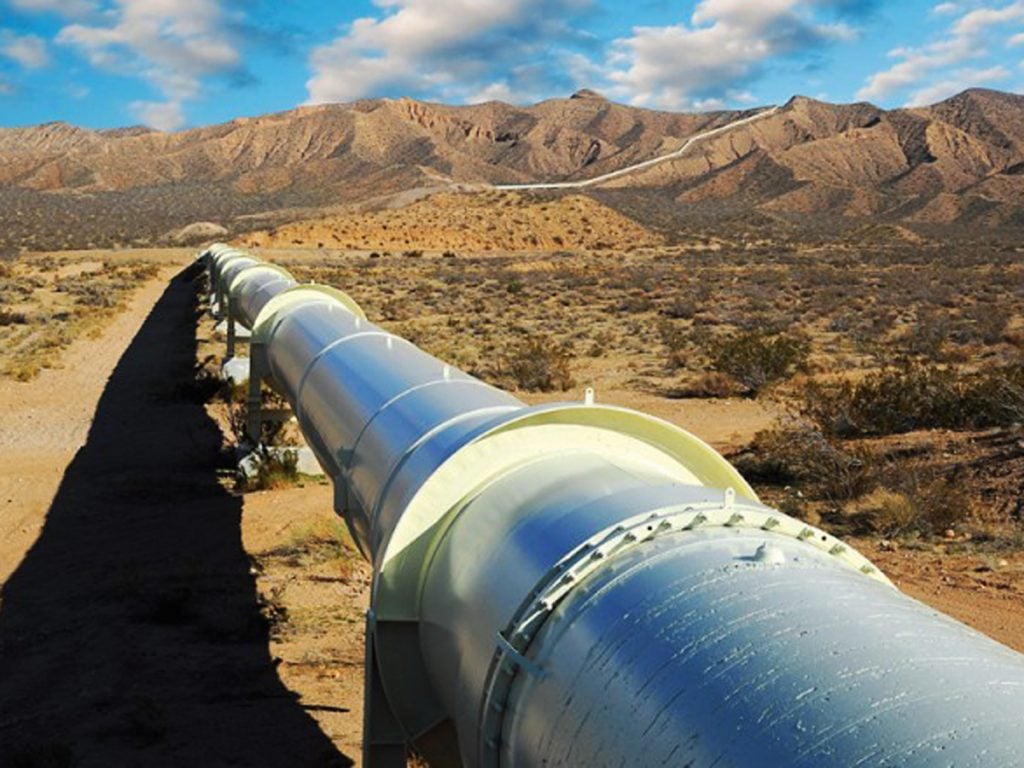
Our good ol’ friend the nonsensical “Global War on Terror,” which the Pentagon has slyly rebranded “the Long War,” sports a far more important, if half-hidden, twin — a global energy war. I like to think of it as the Liquid War, because its bloodstream is the pipelines that crisscross the potential imperial battlefields of the planet. Put another way, if its crucial embattled frontier these days is the Caspian Basin, the whole of Eurasia is its chessboard. Think of it, geographically, as Pipelineistan.
All geopolitical junkies need a fix. Since the second half of the 1990s, I’ve been hooked on pipelines. I’ve crossed the Caspian in an Azeri cargo ship just to follow the $4 billion Baku-Tblisi-Ceyhan pipeline, better known in this chess game by its acronym, BTC, through the Caucasus. (Oh, by the way, the map of Pipelineistan is chicken-scratched with acronyms, so get used to them!)
I’ve also trekked various of the overlapping modern Silk Roads, or perhaps Silk Pipelines, of possible future energy flows from Shanghai to Istanbul, annotating my own DIY routes for LNG (liquefied natural gas). I used to avidly follow the adventures of that once-but-not-future Sun-King of Central Asia, the now deceased Turkmenbashi or “leader of the Turkmen,” Saparmurat Niyazov, head of the immensely gas-rich Republic of Turkmenistan, as if he were a Conradian hero.
In Almaty, the former capital of Kazakhstan (before it was moved to Astana, in the middle of the middle of nowhere) the locals were puzzled when I expressed an overwhelming urge to drive to that country’s oil boomtown Aktau. (“Why? There’s nothing there.”) Entering the Space Odyssey-style map room at the Russian energy giant Gazprom’s headquarters in Moscow — which digitally details every single pipeline in Eurasia — or the National Iranian Oil Company (NIOC)’s corporate HQ in Tehran, with its neat rows of female experts in full chador, was my equivalent of entering Aladdin’s cave. And never reading the words “Afghanistan” and “oil” in the same sentence is still a source of endless amusement for me.
Last year, oil cost a king’s ransom. This year (2009, editor’s note), it’s relatively cheap. But don’t be fooled. Price isn’t the point here. Like it or not, energy is still what everyone who’s anyone wants to get their hands on. So consider this dispatch just the first installment in a long, long tale of some of the moves that have been, or will be, made in the maddeningly complex New Great Game, which goes on unceasingly, no matter what else muscles into the headlines this week.
Forget the mainstream media’s obsession with al-Qaeda, Osama “dead or alive” bin Laden, the Taliban — neo, light or classic — or that “war on terror,” whatever name it goes by. These are diversions compared to the high-stakes, hardcore geopolitical game that follows what flows along the pipelines of the planet.
Who said Pipelineistan couldn’t be fun?
Calling Dr. Zbig
In his 1997 magnum opus The Grand Chessboard, Zbigniew Brzezinski — realpolitik practitioner extraordinaire and former national security advisor to Jimmy Carter, the president who launched the U.S. on its modern energy wars — laid out in some detail just how to hang on to American “global primacy.” Later, his master plan would be duly copied by that lethal bunch of Dr. No’s congregated at Bill Kristol’s Project for a New American Century (PNAC, in case you’d forgotten the acronym since its website and its followers went down).
For Dr. Zbig, who, like me, gets his fix from Eurasia — from, that is, thinking big — it all boils down to fostering the emergence of just the right set of “strategically compatible partners” for Washington in places where energy flows are strongest. This, as he so politely put it back then, should be done to shape “a more cooperative trans-Eurasian security system.”
By now, Dr. Zbig — among whose fans is evidently President Barack Obama — must have noticed that the Eurasian train which was to deliver the energy goods has been slightly derailed. The Asian part of Eurasia, it seems, begs to differ.
Global financial crisis or not, oil and natural gas are the long-term keys to an inexorable transfer of economic power from the West to Asia. Those who control Pipelineistan — and despite all the dreaming and planning that’s gone on there, it’s unlikely to be Washington — will have the upper hand in whatever’s to come, and there’s not a terrorist in the world, or even a long war, that can change that.
Energy expert Michael Klare has been instrumental in identifying the key vectors in the wild, ongoing global scramble for power over Pipelineistan. These range from the increasing scarcity (and difficulty of reaching) primary energy supplies to “the painfully slow development of energy alternatives.” Though you may not have noticed, the first skirmishes in Pipelineistan’s Liquid War are already on, and even in the worst of economic times, the risk mounts constantly, given the relentless competition between the West and Asia, be it in the Middle East, in the Caspian theater, or in African oil-rich states like Angola, Nigeria and Sudan.
In these early skirmishes of the twenty-first century, China reacted swiftly indeed. Even before the attacks of 9/11, its leaders were formulating a response to what they saw as the reptilian encroachment of the West on the oil and gas lands of Central Asia, especially in the Caspian Sea region. To be specific, in June 2001, its leaders joined with Russia’s to form the Shanghai Cooperation Organization. It’s known as the SCO and that’s an acronym you should memorize. It’s going to be around for a while.
Back then, the SCO’s junior members were, tellingly enough, the Stans, the energy-rich former SSRs of the Soviet Union — Kyrgyzstan, Uzbekistan, Kazakhstan, and Tajikistan — which the Clinton administration and then the new Bush administration, run by those former energy men, had been eyeing covetously. The organization was to be a multi-layered economic and military regional cooperation society that, as both the Chinese and the Russians saw it, would function as a kind of security blanket around the upper rim of Afghanistan.
Iran is, of course, a crucial energy node of West Asia and that country’s leaders, too, would prove no slouches when it came to the New Great Game. It needs at least $200 billion in foreign investment to truly modernize its fabulous oil and gas reserves — and thus sell much more to the West than U.S.-imposed sanctions now allow.
No wonder Iran soon became a target in Washington. No wonder an air assault on that country remains the ultimate wet dream of assorted Likudniks as well as Dick (“Angler”) Cheney and his neocon chamberlains and comrades-in-arms. As seen by the elite from Tehran and Delhi to Beijing and Moscow, such a U.S. attack, now likely off the radar screen until at least 2012, would be a war not only against Russia and China, but against the whole project of Asian integration that the SCO is coming to represent.

Global BRIC-a-brac
Meanwhile, as the Obama administration tries to sort out its Iranian, Afghan, and Central Asian policies, Beijing continues to dream of a secure, fast-flowing, energy version of the old Silk Road, extending from the Caspian Basin (the energy-rich Stans plus Iran and Russia) to the Xinjiang Province, its Far West.
The SCO has expanded its aims and scope since 2001. Today, Iran, India, and Pakistan enjoy “observer status” in an organization that increasingly aims to control and protect not just regional energy supplies, but Pipelineistan in every direction. This is, of course, the role the Washington ruling elite would like NATO to play across Eurasia. Given that Russia and China expect the SCO to play a similar role across Asia, clashes of various sorts are inevitable.
Ask any relevant expert at the Chinese Academy of Social Sciences in Beijing and he will tell you that the SCO should be understood as a historically unique alliance of five non-Western civilizations — Russian, Chinese, Muslim, Hindu, and Buddhist — and, because of that, capable of evolving into the basis for a collective security system in Eurasia. That’s a thought sure to discomfort classic inside-the-Beltway global strategists like Dr. Zbig and President George H. W. Bush’s national security advisor Brent Scowcroft.
According to the view from Beijing, the rising world order of the twenty-first century will be significantly determined by a quadrangle of BRIC countries — for those of you by now collecting Great Game acronyms, that stands for Brazil, Russia, India, and China — plus the future Islamic triangle of Iran, Saudi Arabia, and Turkey. Add in a unified South America, no longer in thrall to Washington, and you have a global SCO-plus. On the drawing boards, at least, it’s a high octane dream.
The key to any of this is a continuing Sino-Russian entente cordiale.
Already in 1999, watching NATO and the United States aggressively expand into the distant Balkans, Beijing identified this new game for what it was: a developing energy war. And at stake were the oil and natural gas reserves of what Americans would soon be calling the “arc of instability,” a vast span of lands extending from North Africa to the Chinese border. No less important would be the routes pipelines would take in bringing the energy buried in those lands to the West. Where they would be built, the countries they would cross, would determine much in the world to come. And this was where the empire of U.S. military bases (think, for instance, Camp Bondsteel in Kosovo) met Pipelineistan (represented, way back in 1999, by the AMBO pipeline).
AMBO, short for Albanian Macedonian Bulgarian Oil Corporation, an entity registered in the U.S., is building a $1.1 billion pipeline, aka “the Trans-Balkan,” slated to be finished by 2011. It will bring Caspian oil to the West without taking it through either Russia or Iran. As a pipeline, AMBO fit well into a geopolitical strategy of creating a U.S.-controlled energy-security grid that was first developed by President Bill Clinton’s Energy Secretary Bill Richardson and later by Vice President Dick Cheney.
Behind the idea of that “grid” lay a go-for-broke militarization of an energy corridor that would stretch from the Caspian Sea in Central Asia through a series of now independent former SSRs of the Soviet Union to Turkey, and from there into the Balkans (thence on to Europe). It was meant to sabotage the larger energy plans of both Russia and Iran. AMBO itself would bring oil from the Caspian basin to a terminal in the former SSR of Georgia in the Caucasus, and then transport it by tanker through the Black Sea to the Bulgarian port of Burgas, where another pipeline would connect to Macedonia and then to the Albanian port of Vlora.
As for Camp Bondsteel, it was the “enduring” military base that Washington gained from the wars for the remains of Yugoslavia. It would be the largest overseas base the U.S. had built since the Vietnam War. Halliburton’s subsidiary Kellogg Brown & Root (KBR) would, with the Army Corps of Engineers, put it up on 400 hectares of farmland near the Macedonian border in southern Kosovo. Think of it as a user-friendly, five-star version of Guantanamo with perks for those stationed there that included Thai massage and loads of junk food. Bondsteel is the Balkan equivalent of a giant immobile aircraft carrier, capable of exercising surveillance not only over the Balkans but also over Turkey and the Black Sea region (considered in the neocon-speak of the Bush years “the new interface” between the “Euro-Atlantic community” and the “Greater Middle East”).
How could Russia, China, and Iran not interpret the war in Kosovo, then the invasion of Afghanistan (where Washington had previously tried to pair with the Taliban and encourage the building of another of those avoid-Iran, avoid-Russia pipelines), followed by the invasion of Iraq (that country of vast oil reserves), and finally the recent clash in Georgia (that crucial energy transportation junction) as straightforward wars for Pipelineistan? Though seldom imagined this way in our mainstream media, the Russian and Chinese leaderships saw a stark “continuity” of policy stretching from Bill Clinton’s humanitarian imperialism to Bush’s Global War on Terror. Blowback, as then Russian President Vladimir Putin himself warned publicly, was inevitable — but that’s another magic-carpet story, another cave to enter another time.
Rainy Night in Georgia
If you want to understand Washington’s version of Pipelineistan, you have to start with Mafia-ridden Georgia. Though its army was crushed in its recent war with Russia, Georgia remains crucial to Washington’s energy policy in what, by now, has become a genuine arc of instability — in part because of a continuing obsession with cutting Iran out of the energy flow.
It was around the Baku-Tblisi-Ceyhan (BTC) pipeline, as I pointed out in my book Globalistan in 2007, that American policy congealed. Zbig Brzezinski himself flew into Baku in 1995 as an “energy consultant,” less than four years after Azerbaijan became independent, and sold the idea to the Azerbaijani elite. The BTC was to run from the Sangachal Terminal, half-an-hour south of Baku, across neighboring Georgia to the Marine Terminal in the Turkish port of Ceyhan on the Mediterranean. Now operational, that 1,767-kilometer-long, 44-meter-wide steel serpent straddles no less than six war zones, ongoing or potential: Nagorno-Karabakh (an Armenian enclave in Azerbaijan), Chechnya and Dagestan (both embattled regions of Russia), South Ossetia and Abkhazia (on which the 2008 Russia-Georgia war pivoted), and Turkish Kurdistan.
From a purely economic point of view, the BTC made no sense. A “BTK” pipeline, running from Baku through Tehran to Iran’s Kharg Island, could have been built for, relatively speaking, next to nothing — and it would have had the added advantage of bypassing both mafia-corroded Georgia and wobbly Kurdish-populated Eastern Anatolia. That would have been the really cheap way to bring Caspian oil and gas to Europe.
The New Great Game ensured that that was not to be, and much followed from that decision. Even though Moscow never planned to occupy Georgia long-term in its 2008 war, or take over the BTC pipeline that now runs through its territory, Alfa Bank oil and gas analyst Konstantin Batunin pointed out the obvious: by briefly cutting off the BTC oil flow, Russian troops made it all too clear to global investors that Georgia wasn’t a reliable energy transit country. In other words, the Russians made a mockery of Zbig’s world.
For its part, Azerbaijan was, until recently, the real success story in the U.S. version of Pipelineistan. Advised by Zbig, Bill Clinton literally “stole” Baku from Russia’s “near abroad” by promoting the BTC and the wealth that would flow from it. Now, however, with the message of the Russia-Georgia War sinking in, Baku is again allowing itself to be seduced by Russia. To top it off, Azerbaijan President Ilham Aliyev can’t stand Georgia’s brash President Mikhail Saakashvili. That’s hardly surprising. After all, Saakashvili’s rash military moves caused Azerbaijan to lose at least $500 million when the BTC was shut down during the war.
Russia’s energy seduction blitzkrieg is focused like a laser on Central Asia as well. (We’ll talk about it more in the next Pipelineistan installment.) It revolves around offering to buy Kazakh, Uzbek, and Turkmen gas at European prices instead of previous, much lower Russian prices. The Russians, in fact, have offered the same deal to the Azeris: so now, Baku is negotiating a deal involving more capacity for the Baku-Novorossiysk pipeline, which makes its way to the Russian borders of the Black Sea, while considering pumping less oil for the BTC.
President Obama needs to understand the dire implications of this. Less Azeri oil on the BTC — its full capacity is 1 million barrels a day, mostly shipped to Europe — means the pipeline may go broke, which is exactly what Russia wants.
In Central Asia, some of the biggest stakes revolve around the monster Kashagan oil field in “snow leopard” Kazakhstan, the absolute jewel in the Caspian crown with reserves of as many as 9 billion barrels. As usual in Pipelineistan, it all comes down to which routes will deliver Kashagan’s oil to the world after production starts in 2013. This spells, of course, Liquid War. Wily Kazakh President Nursultan Nazarbayev would like to use the Russian-controlled Caspian Pipeline Consortium (CPC) to pump Kashagan crude to the Black Sea.
In this case, the Kazakhs hold all the cards. How oil will flow from Kashagan will decide whether the BTC — once hyped by Washington as the ultimate Western escape route from dependence on Persian Gulf oil — lives or dies.
Welcome, then, to Pipelineistan! Whether we like it or not, in good times and bad, it’s a reasonable bet that we’re all going to be Pipeline tourists. So, go with the flow. Learn the crucial acronyms, keep an eye out for what happens to all those U.S. bases across the oil heartlands of the planet, watch where the pipelines are being built, and do your best to keep tabs on the next set of monster Chinese energy deals and fabulous coups by Russia’s Gazprom.
And, while you’re at it, consider this just the first postcard sent off from our tour of Pipelineistan. We’ll be back (to slightly adapt a quote from the Terminator). Think of this as a door opening onto a future in which what flows where and to whom may turn out to be the most important question on the planet.
If you appreciate this kind of enlightened public education material, relevant to peace-making – please help TFF to publish more like this. We are entirely people-financed and therefore truly independent and trustworthy
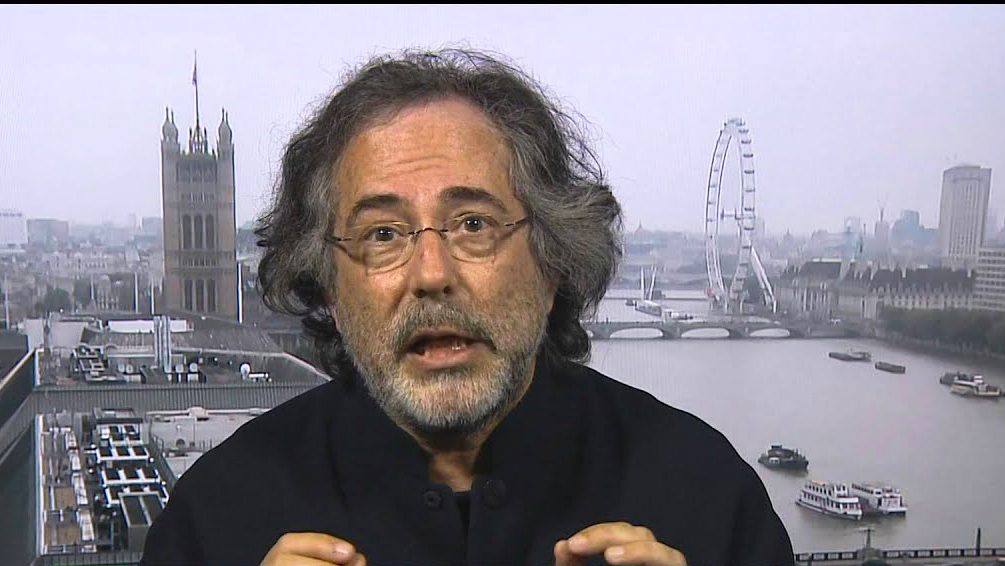
Pepe Escobar is the roving correspondent for Asia Times and an analyst for the Real News. This article draws from his new book, Obama does Globalistan. He may be reached at pepeasia@yahoo.com.





