Peace – Reconciliation

Category

Year

Author / Contributor

Region

Sort by

Showing 1-10 of 25 stories

kennedy_sotu1-P
By Dr. Lawrence Wittner June 5, 2019 In late April, the highly-respected Stockholm International Peace Research Institute reported that, in 2018, world military expenditures rose to a record $1.82 trillion. The biggest military spender by far was the United States, which increased its military budget by nearly 5 percent to $649 billion (36 percent of the global total). But most other nations also joined the race for bigger and better ways to destroy one another through war. Originally publishes on Counterpunch.org on May 29th, 2019 here This situation represents a double tragedy. First, in a world bristling with weapons of vast destructive power, it threatens the annihilation of the human race. Second, as vast resources are poured into war and preparations for it, a host of other problems―poverty, environmental catastrophe, access to education and healthcare, and more―fail to be adequately addressed. But these circumstances can be changed, as shown by...
image001
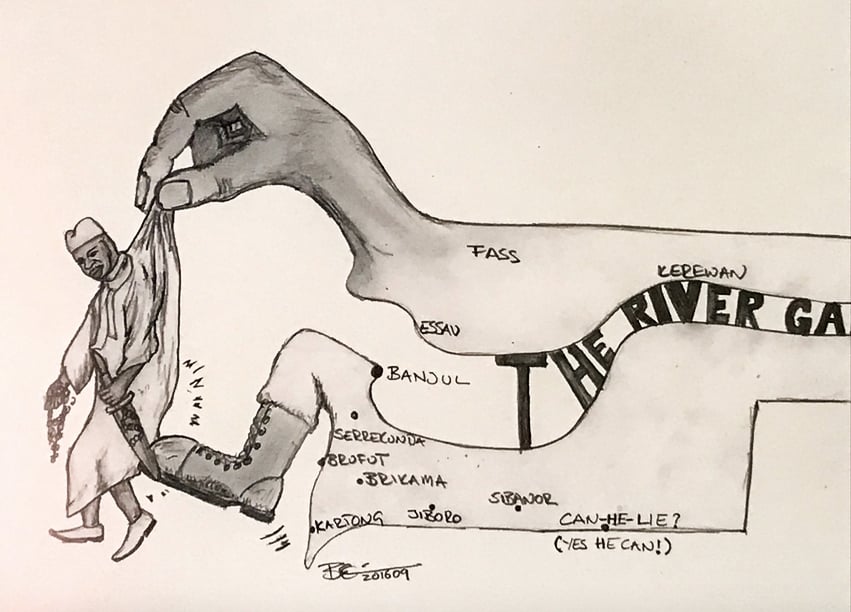
Gambia – or properly The Gambia – a small country in West Africa with about 2 million inhabitants, was peaceful since its internal independent rule was established in 1963. There were good relations with its only neighbour, Senegal. For a long time there was no military force in the country. One could then expect that there would be no militant coups, as in so many other African countries. However, in 1981 a “Revolutionary Council” took power. The revolutionaries were soon ousted by troops from Senegal who reinstated the president.  Now obviously Gambia needed an army “to establish stability” and an army was established. The outcome was that in 1994 a group of soldiers, led by lieutenant Yahya Jammeh, took power. He became the leader of the country, and was elected and re-elected president in 1996, 2001, 2006 and 2011. At least in the early years of his reign, he was...
Ina_portrait_1_800_cropped-kopia-300x270
September 21, 2018 – Peace Day  “Home To Gaia” – An illustrated storybook about finding peace and love inside to share it outside – Age 3 and up Can we work for peace in the world when being conflict-ridden inside? Are we collectively responsible for the conflicts and violence in the world? These are questions and conversations we’ve had many times with professionals in the peacebuilding field. Going for both/and as well as the link between inner and outer realities is a good start when we become aware that everything we are, think and act upon influences our whole environment and the collective consciousness. Political peace is not just about envisioning with the heart but also about putting forward reasonable possibilities to actually create harmony inside out. Fair chances to co-create together wonderful visions for all humankind may appear when we are secure about our own worthiness to be loved...
UriAvnery
    By Uri Avnery 2 Jun 2018 I loved Gaza. That is a play on words. The Biblical Song of Songs says that love is strong as death. Strong in Hebrew is Aza. Aza is also the Hebrew name of Gaza. I have spent many happy hours in Gaza. I had many friends there. From the leftist Dr. Haidar Abd al-Shafi to the Islamist Mahmoud al-Zahar, who is now the foreign minister of Hamas. I was there when Yasser Arafat, the son of a Gazan family, came home. They put me in the first row of the reception at the Rafah border, and that evening he received me at the hotel on the Gaza sea shore, seating me next to him on the stage during a press conference. I met with a friendly attitude everywhere in the Gaza Strip, in the refugee camps and in the streets of Gaza...
KimandMoon
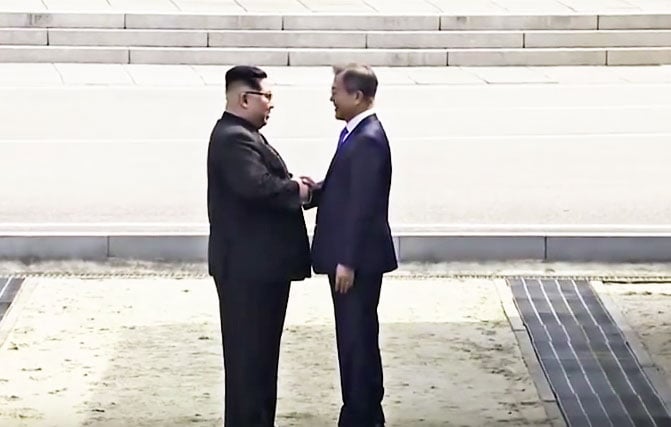
Please watch the video below carefully. You’ll see what could – could, and most likely will – become a piece of world peace history. Note the body language of the two leaders – warm smiles and long handshakes. In spite of being one and the same nation, they meet at the hardest border in the world. Why is it so? Because everybody else around – the US, Japan, Russia, China – to varying degrees want them to be divided and feel threatened by their possible unification. And yes, a unified Korea would be a formidable economic power but a huge, dangerous conflict would be gone, the US could withdraw, Japan would get a chance to reconciliate in substantive terms. What is most amazing in this clip is that Kim first steps over the border line into the South. Then – seemingly surprising Moon – invites Moon to step into the...
Ina_portrait_1_800_cropped-kopia-300x270
Ina Curic became a TFF Associate in April 2006, TFF’s project coordinator in Burundi in May 2007 and a member of the foundation’s Board in March 2008. After years of service, she left the Board to develop her career as author and publisher but, in December 2018, she again joined the Board. Romanian-born Ina Curic is a trained sociologist, with an M.A. in Gender Studies from Babes-Bolyai University, Romania and an M.A. in Peace and Conflict Studies from the European Peace University, Austria. She has a solid background in peace and conflict research, gender studies and NGO management and more than fifteen years work experience with national civil society and international organizations in different countries. Since 1999, Ina has provided numerous national and international training programmes and workshops on different topics related to organizational development, project management, peace, conflict and gender and youth work-related issues in various settings.  Her field...
1
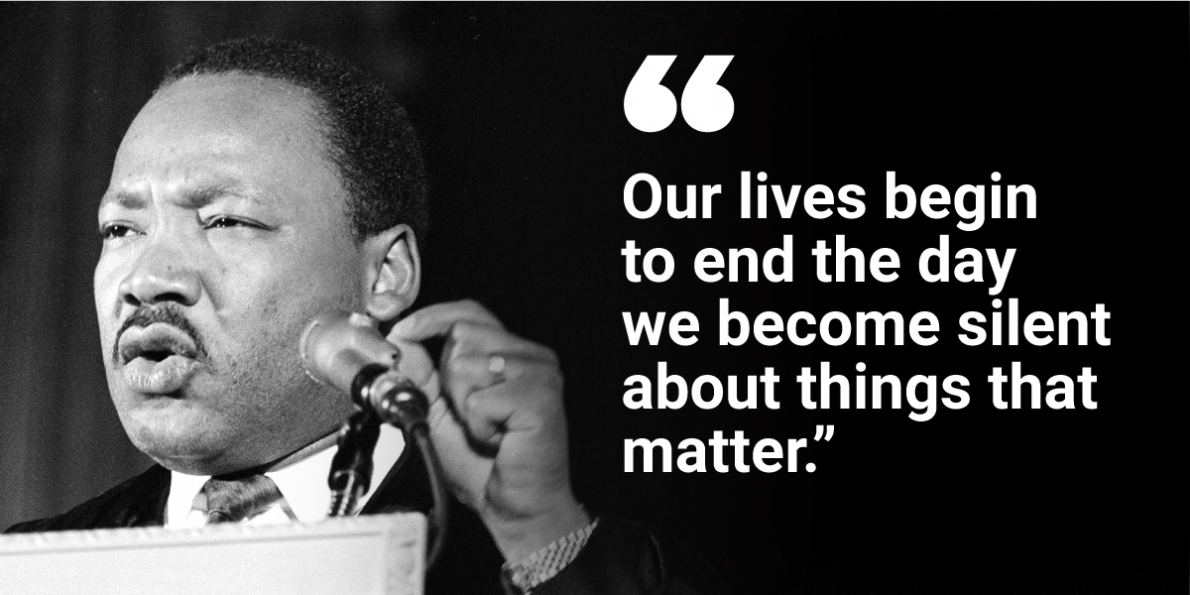
We should carefully reflect on Martin Luther King’s  message to the World. MLK understood the relationship between America’s war agenda and social justice and civil rights in America. “No one who has any concern for the integrity and life of America today can ignore the present war [Vietnam]”. One cannot be a civil rights leader without taking a stance against U.S. led wars. In the words of Martin Luther King: “Silence is Betrayal”. Today with war hawks in the White House and the U.S. State department, America is leading a military adventure which in the real sense of the word threatens the future of humanity. But this is not a talking point on network TV. Nor is it a concern of the “antiwar” movement. Meanwhile, the media is “killing the truth” either through distortion or omission. Today we commemorate the passing of Martin Luther King who was assassinated in a...
1481541228836
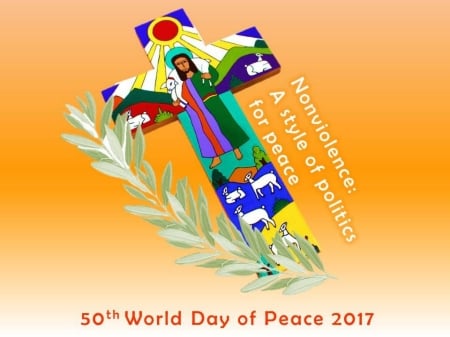
Pope Franciskus’ Message for the 50th World Day of Peace   1. At the beginning of this New Year, I offer heartfelt wishes of peace to the world’s peoples and nations, to heads of state and government, and to religious, civic and community leaders. I wish peace to every man, woman and child, and I pray that the image and likeness of God in each person will enable us to acknowledge one another as sacred gifts endowed with immense dignity. Especially in situations of conflict, let us respect this, our “deepest dignity”,[1] and make active nonviolence our way of life. This is the fiftieth Message for the World Day of Peace. In the first, Blessed Pope Paul VI addressed all peoples, not simply Catholics, with utter clarity. “Peace is the only true direction of human progress – and not the tensions caused by ambitious nationalisms, nor conquests by violence, nor repressions...
MLK
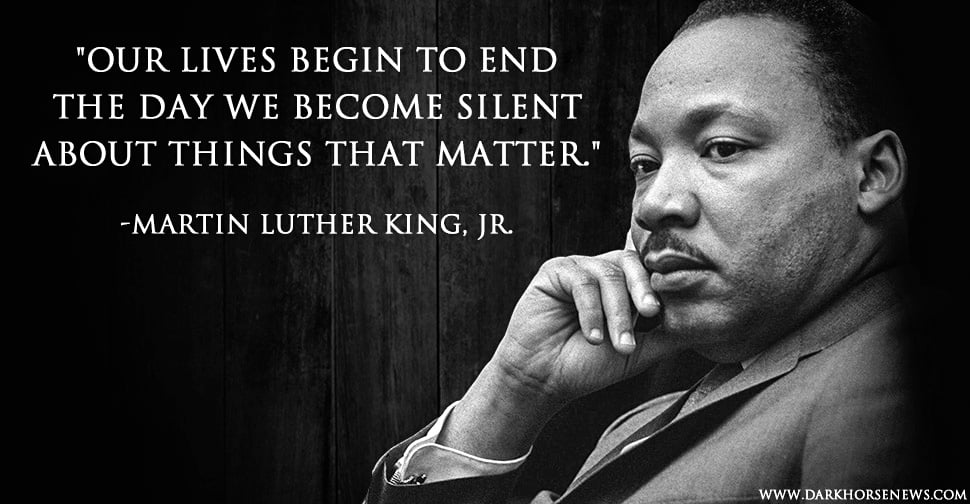
  By Rev. John Dear 15 Jan 2018 • It was early 1968.  Since the previous spring Martin Luther King, Jr. had been pursuing a course that for many was unthinkable.  He had deliberately connected the dots between the  movement  for civil rights and the struggle to end the war in Vietnam, and had paid the price. Originally published by Transcend Media Service here He was roundly criticized by the Johnson administration and the media, as well as people in his own movement. From the right he was attacked for having the gall to question US foreign policy.  From the left he was lambasted for losing focus and not keeping his eyes on the prize. He even got it from a childhood friend who stopped by the house one afternoon to vent. “Why are you speaking out against the Vietnam War?” he carped. King put aside his customary oratory. “When I speak about nonviolence,” he patiently explained, “I mean nonviolent all the way.” As David Garrow’s classic biography of King, Bearing the Cross, reports, he went on to say: “Never could I...
RichardFalk
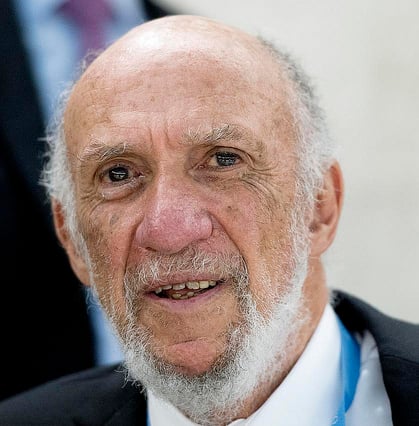
  By Richard Falk This post is a modified version of an article published in Middle East Eye on Jan. 1, 2018. It contends that the proper priority for genuine advocates of peace between Israelis and Palestinians should be centered around apartheid rather than be devoted to reviving an Oslo style ‘peace process’ (always a sham) or proclaiming the goal of an independent and sovereign Palestine as attainable without first dismantling the apartheid structures that subjugate the Palestinian people as a whole so as to maintain the Zionist insistence on Israel as the state of the Jewish people (rather than providing a homeland within a normal and legitimate state based on ethnic and religious equality, human rights, and secular principles.   Originally published on the “Global Justice in the 21st Century” blog   Despite all appearances to the contrary, those in the West who do not want to join the premature...
Evelin_Lindner_2017
New book by Evelin Lindner • Humankind has reached a boiling point. Violence, hatred, and terror have become deeply entangled with honor, heroism, glory, loyalty, and love. Over the past five percent of modern human history on planet Earth, roughly the past ten millennia, human activity has reached a crescendo of rapid and ruthless competition for domination, a fight for power over people and the planet, where “might” has become “right.” Within this context, a dangerous culture of honor has evolved, in which destruction is mercilessly merged with love: “It is my duty, if I love my people, to heroically destroy our enemies and secure all resources for us,” underwritten by an ominous motto: “If you want peace, prepare for war.” Humanity has haphazardly constructed an entire world-system on top of this merger, holding the whole world hostage through never-ending cycles of domination and humiliation. The consequence, today, is the...

Imagen-thumbnail-The-Transnational
  By Rabbi Michael Lerner • In case you who missed it, here’s Rabbi Lerner’s talk at Muhammed Ali’s funeral. If it inspires you, please read below for how to be an ally with Rabbi Lerner to help build the world he describes. To read the transcript of his speech, click here. Wondering why Rabbi Lerner got invited and how to respond to the handful of naysayers who have been upset by Lerner’s powerful message? Please read below. Muhammad Ali had known Rabbi Lerner as a friend and ally in the 1960s and early 1970s when both were indicted by the U.S. government for their roles in opposing the war in Vietnam. He then wrote Rabbi Lerner to praise his book with Cornel West Jews and Blacks: Let the Healing Begin. Approximately seven years ago, he decided to invite Rabbi Lerner to represent the American Jewish community at his memorial service. Rabbi Lerner...
Categories

Year

Author / Contributor

Region