
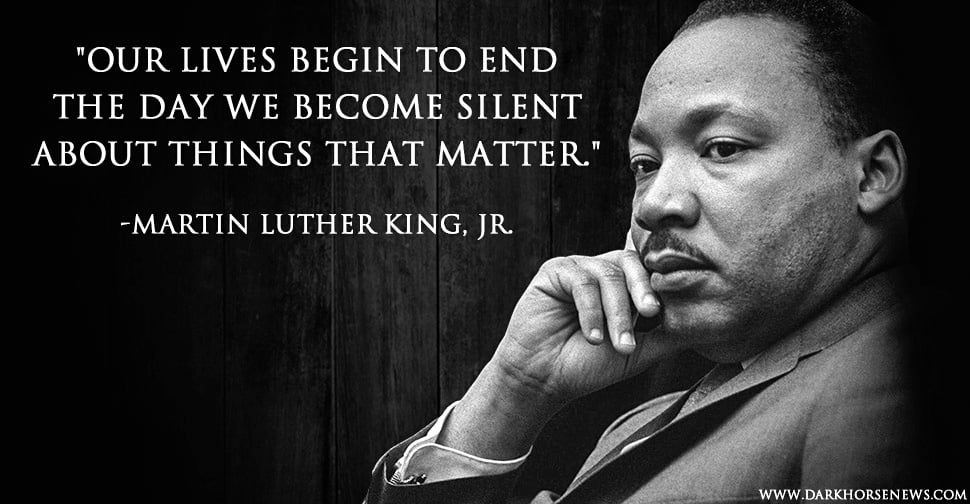
MLK: The Year of “Nonviolence or Non-Existence”


By Rev. John Dear

15 Jan 2018

• It was early 1968.  Since the previous spring Martin Luther King, Jr. had been pursuing a course that for many was unthinkable.  He had deliberately connected the dots between the  movement  for civil rights and the struggle to end the war in Vietnam, and had paid the price.

Originally published by Transcend Media Service here

He was roundly criticized by the Johnson administration and the media, as well as people in his own movement. From the right he was attacked for having the gall to question US foreign policy.  From the left he was lambasted for losing focus and not keeping his eyes on the prize.

He even got it from a childhood friend who stopped by the house one afternoon to vent.

“Why are you speaking out against the Vietnam War?” he carped.

King put aside his customary oratory. “When I speak about nonviolence,” he patiently explained, “I mean nonviolent all the way.”

As David Garrow’s classic biography of King, Bearing the Cross, reports, he went on to say:

“Never could I advocate nonviolence in this country and not advocate nonviolence for the whole world.  That’s my philosophy. I don’t believe in death and killing on any side, no matter who’s heading it up – whether it be America or any other country. Nonviolence is my stand and I’ll die for that stand.”

A few months later King was dead, but not before making one last, indelible declaration of  the  existential importance of nonviolence.

Standing before the jammed crowd at the Mason Temple in Memphis the night before his death, King linked his life wisdom with a pithy and resounding appraisal of our global predicament: “The choice before us is no longer violence or nonviolence,” he said. “It’s nonviolence or non-existence.”

This April (2018) marks the 50th anniversary of King’s assassination – and of King’s clear warning.  This is a moment not simply for remembering a great leader cut down in his prime but also  for seriously  contemplating the acute clarity of his assessment and what it means for us today.

Sadly, in the same way that warnings of climate change have mostly been dismissed for decades, Dr. King’s stark framing of the pivotal choice before us – nonviolence or nonexistence – was steadfastly ignored over the past half-century as the United States lurched from another seven years of the Vietnam War to decades of war in Central America, Iraq, Afghanistan, and many other places, even as the violence of racial injustice, economic inequality, environmental destruction, nuclear proliferation, gun deaths, armed drones, and many other forms of violence spiraled out of control.  Indeed, over these decades we have consistently opted for violence even as we have shunned the word “nonviolence,” as if it were the most dangerous word in the English language.


Now, 50 years on, King’s words take on more weight with each passing hour.
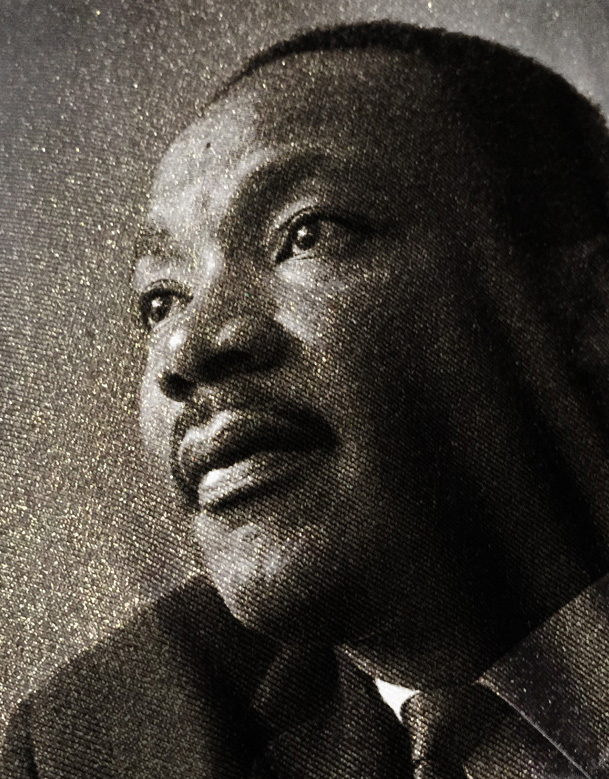
Fifty years after the watershed year of 1968, we are at another watershed, and Dr. King has put the fundamental choice before us. This is the Year of “Nonviolence or Nonexistence.”

Like his childhood friend, all of us must learn his wisdom of active nonviolence and rise to the occasion as Dr. King did and choose active nonviolence if we are to not to go over the brink.

Kingian nonviolence calls for active, universal love toward all human beings, all creatures, and all creation, that refuses to kill or be silent in the face of killing. It is a way of life, a spiritual path, and a political methodology toward peaceful conflict resolution and global justice.

It means striving to be nonviolent to ourselves and to those around us, trying to be nonviolent toward all the creatures and the environment, and doing our part to build up the global grassroots movements of active nonviolence for a new culture of justice, equality, and peace.


“A culture of nonviolence is not an impossible dream,” Pope Francis said recently, following up on his 2017 World Day of Peace message, “Nonviolence – A New Style of Politics,” the first statement on nonviolence in the history of the Catholic Church.

But our culture of violence begs to differ.  “No, Pope Francis,” it says, “a culture of nonviolence is an impossible dream. No, Dr. King, there is no choice; non-existence is inevitable.” Deep down, that’s what we think, isn’t it? That’s what the culture of violence, the voice of despair, tells us.

If we give in to such despair, then our fate is sealed.

But this need not be how things turn out.

The ironic good news is that never before have so many nonviolent movements existed in this country and around the globe.  The world is on the march for the nonviolent option, and we, too, can opt for active, creative and powerful nonviolence – and not for the trajectory of nonexistence – by joining them in this critical year.  It’s our most important choice ever.

In 2018, may we, like Martin Luther King, Jr., “mean nonviolent all the way.”
Originally published by Transcend Media Service here

Related Posts

A Message from Jan Oberg November 6, 2026 Over the past fifty years, I have devoted roughly 175,000 hours to research and public education for a more peaceful world: thinking, researching, writing, organising, publishing, debating, maintaining websites, corresponding, reaching out, leading a foundation, work in conflict and war zones, professorships, teaching courses and giving public lectures and doing media work. In short, ten hours a day, seven days a week, for half a century. The focus was on international political peace – analysing and trying to stop wars, address underlying conflicts and making alternative peace plans – at the desk and on the ground. Important as that has been and remains, it is only one kind of peace and it is now in a tragic militarist state compared with what it could have been.  Lately, however, I have found myself thinking about a concept from economics as well as everyday...
Photo above: Carl Fredrik Reuterswärd’s Non-Violence outside UN Headquarters in New York. Kirill Levin, CC BY-NC-SA 2. Jan Oberg November 3, 2026 I am happy to be published in Horizons which is produced by the Center for International Relations and Sustainable Development, CIRSD, in Belgrade. My contribution brings out a radical re-thinking of what concepts such as defence, security, deterrence – and peace – may mean if we want to create a more peaceful world. It also summarises a few things I have been working with the last few decades. Please read it here Og her er den på dansk, takket være Johnny Baltzersens lynhurtige oversættelse
UNITE-tillid, DREAM-velstand og andre konstruktive komponenter Normally we publish articles in English here. But this is a translation of a very important TFF document that should reach as many as possible in Denmark since this country’s government has been one of the most hardline in Europe and, up till now at least, has refused to use diplomacy and, instead, spent tremendous sums on arming Ukraine with the express goal of defeating Russia. Thus this – unique – article is in Danish. Vi er Johnny Baltzersen og hans Fælles Sikkerhed – Fælles Fremtid på Substack overmåde taknemmelige for at have oversat og publiceret TFF’s 2025-portfølje for fredsidéer med henblik på Ukraines fremtid. Vi håber den nu kan nå mange flere danskere – som også vil sprede den og skabe debat – nu den danske regerings og folketingspartiernes politik på dette område siden 2022 står nu – forudsigeligt – ved vejs ende....

Recent Articles

A Message from Jan Oberg November 6, 2026 Over the past fifty years, I have devoted roughly 175,000 hours to research and public education for a more peaceful world: thinking, researching, writing, organising, publishing, debating, maintaining websites, corresponding, reaching out, leading a foundation, work in conflict and war zones, professorships, teaching courses and giving public lectures and doing media work. In short, ten hours a day, seven days a week, for half a century. The focus was on international political peace – analysing and trying to stop wars, address underlying conflicts and making alternative peace plans – at the desk and on the ground. Important as that has been and remains, it is only one kind of peace and it is now in a tragic militarist state compared with what it could have been.  Lately, however, I have found myself thinking about a concept from economics as well as everyday...
Photo above: Carl Fredrik Reuterswärd’s Non-Violence outside UN Headquarters in New York. Kirill Levin, CC BY-NC-SA 2. Jan Oberg November 3, 2026 I am happy to be published in Horizons which is produced by the Center for International Relations and Sustainable Development, CIRSD, in Belgrade. My contribution brings out a radical re-thinking of what concepts such as defence, security, deterrence – and peace – may mean if we want to create a more peaceful world. It also summarises a few things I have been working with the last few decades. Please read it here Og her er den på dansk, takket være Johnny Baltzersens lynhurtige oversættelse
UNITE-tillid, DREAM-velstand og andre konstruktive komponenter Normally we publish articles in English here. But this is a translation of a very important TFF document that should reach as many as possible in Denmark since this country’s government has been one of the most hardline in Europe and, up till now at least, has refused to use diplomacy and, instead, spent tremendous sums on arming Ukraine with the express goal of defeating Russia. Thus this – unique – article is in Danish. Vi er Johnny Baltzersen og hans Fælles Sikkerhed – Fælles Fremtid på Substack overmåde taknemmelige for at have oversat og publiceret TFF’s 2025-portfølje for fredsidéer med henblik på Ukraines fremtid. Vi håber den nu kan nå mange flere danskere – som også vil sprede den og skabe debat – nu den danske regerings og folketingspartiernes politik på dette område siden 2022 står nu – forudsigeligt – ved vejs ende....

TFF on Substack

Discover and subscribe to more peace materials on TFF Substack

Most Popular

A Message from Jan Oberg November 6, 2026 Over the past fifty years, I have devoted roughly 175,000 hours to research and public education for a more peaceful world: thinking, researching, writing, organising, publishing, debating, maintaining websites, corresponding, reaching out, leading a foundation, work in conflict and war zones, professorships, teaching courses and giving public lectures and doing media work. In short, ten hours a day, seven days a week, for half a century. The focus was on international political peace – analysing and trying to stop wars, address underlying conflicts and making alternative peace plans – at the desk and on the ground. Important as that has been and remains, it is only one kind of peace and it is now in a tragic militarist state compared with what it could have been.  Lately, however, I have found myself thinking about a concept from economics as well as everyday...
Photo above: Carl Fredrik Reuterswärd’s Non-Violence outside UN Headquarters in New York. Kirill Levin, CC BY-NC-SA 2. Jan Oberg November 3, 2026 I am happy to be published in Horizons which is produced by the Center for International Relations and Sustainable Development, CIRSD, in Belgrade. My contribution brings out a radical re-thinking of what concepts such as defence, security, deterrence – and peace – may mean if we want to create a more peaceful world. It also summarises a few things I have been working with the last few decades. Please read it here Og her er den på dansk, takket være Johnny Baltzersens lynhurtige oversættelse
UNITE-tillid, DREAM-velstand og andre konstruktive komponenter Normally we publish articles in English here. But this is a translation of a very important TFF document that should reach as many as possible in Denmark since this country’s government has been one of the most hardline in Europe and, up till now at least, has refused to use diplomacy and, instead, spent tremendous sums on arming Ukraine with the express goal of defeating Russia. Thus this – unique – article is in Danish. Vi er Johnny Baltzersen og hans Fælles Sikkerhed – Fælles Fremtid på Substack overmåde taknemmelige for at have oversat og publiceret TFF’s 2025-portfølje for fredsidéer med henblik på Ukraines fremtid. Vi håber den nu kan nå mange flere danskere – som også vil sprede den og skabe debat – nu den danske regerings og folketingspartiernes politik på dette område siden 2022 står nu – forudsigeligt – ved vejs ende....
Read More
AbstractVision_2017_#1_800 (kopia)
A Message from Jan Oberg November 6, 2026 Over the past fifty years, I have devoted roughly 175,000 hours to research and public education for a more peaceful world: thinking, researching, writing, organising, publishing, debating, maintaining websites, corresponding, reaching out, leading a foundation, work in conflict and war zones, professorships, teaching courses and giving public lectures and doing media work. In short, ten hours a day, seven days a week, for half a century. The focus was on international political peace – analysing and trying to stop wars, address underlying conflicts and making alternative peace plans – at the desk and on the ground. Important as that has been and remains, it is only one kind of peace and it is now in a tragic militarist state compared with what it could have been.  Lately, however, I have found myself thinking about a concept from economics as well as everyday...
knotted gun
Photo above: Carl Fredrik Reuterswärd’s Non-Violence outside UN Headquarters in New York. Kirill Levin, CC BY-NC-SA 2. Jan Oberg November 3, 2026 I am happy to be published in Horizons which is produced by the Center for International Relations and Sustainable Development, CIRSD, in Belgrade. My contribution brings out a radical re-thinking of what concepts such as defence, security, deterrence – and peace – may mean if we want to create a more peaceful world. It also summarises a few things I have been working with the last few decades. Please read it here Og her er den på dansk, takket være Johnny Baltzersens lynhurtige oversættelse
TFFPortfolioVign
UNITE-tillid, DREAM-velstand og andre konstruktive komponenter Normally we publish articles in English here. But this is a translation of a very important TFF document that should reach as many as possible in Denmark since this country’s government has been one of the most hardline in Europe and, up till now at least, has refused to use diplomacy and, instead, spent tremendous sums on arming Ukraine with the express goal of defeating Russia. Thus this – unique – article is in Danish. Vi er Johnny Baltzersen og hans Fælles Sikkerhed – Fælles Fremtid på Substack overmåde taknemmelige for at have oversat og publiceret TFF’s 2025-portfølje for fredsidéer med henblik på Ukraines fremtid. Vi håber den nu kan nå mange flere danskere – som også vil sprede den og skabe debat – nu den danske regerings og folketingspartiernes politik på dette område siden 2022 står nu – forudsigeligt – ved vejs ende....
JoGSS-Silent
Jan Oberg TFF director October 28, 2026 Exactly one month has now passed since I published my criticism of the introduction to the special issue on Johan Galtung published by the Journal of Global Security Studies, JoGSS, and of Tor Egil Førland’s chapter about Galtung which serves as a preview to his forthcoming biography of Galtung to be published by PRIO. See the original on The Transnational here and the same article on TFF Substack with many general and critical comments and, in particular, the people who decided to withdraw from the biography project in protest. The special issue itself was extraordinary. It was devoted to the intellectual legacy of one of the founders of peace research and contained a number of strong assessments of his personality, scholarship, intellectual trajectory, and public role. Such assessments are, of course, entirely legitimate. No scholar is beyond criticism, and neither was Johan Galtung....
Screenshot 2026-10-26 115647
An aspect of Iran’s culture and civilisation you’ve probably never heard about. Don’t be surprised if the US and Israel also try to bomb them. Jan ObergTFF director October 26, 2026 Today – under the “USraeli” threat of new “annihilating” bombings – opens the 7th International Conference on Peace and Conflict Resolution at Tehran’s University. As far as I can tell, this is the only permanent, advanced peace research institution in West Asia/the Middle East. Perhaps more countries in that region could be inspired? I mean, how many military “security” institutes and military academies do they have? Many peace research institutes and university departments have been established since the 1950s in the West. They are now all under attack; some have closed down, some have gone mainstream, yet others kept the name but do nothing to research peace and disseminate results or advice; instead, they cooperate with militarism’s platforms such...
Screenshot 2026-10-15 141837
Let’s discuss using AI to create peace – in contrast to boring geopolitics devoid of creative healing and visions. Jan Oberg TFF director October 15, 2026 I asked VEED to create a short video exemplifying how peace is preferable to war, then chose the lady as a template. Simple as that. In less than a minute, it produced this video, which any peace-loving person would appreciate. The only problem is that human intelligence (HI), at least the one that exists among Western decision-makers, isn’t half as moral or smart as AI. I have used AI to dialogue about peace and peace plans, creative conflict resolution and visions of a better future for humankind. It so happens that I am having more stimulating, intelligent, creative and moral discussions with AI than I could possibly have with any EU or NATO leader today. Yes, AI has very problematic and dangerous aspects; used...




