
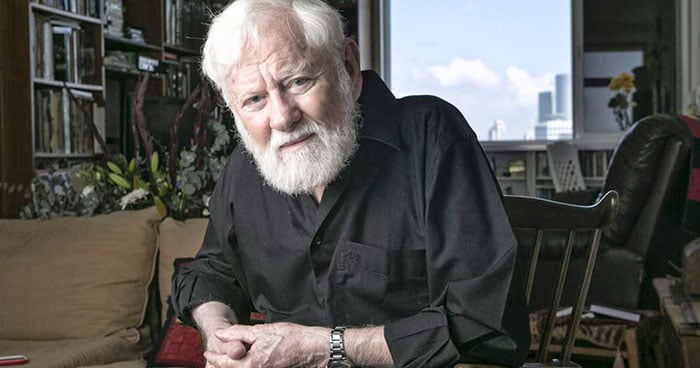
By Uri Avnery

2 Jun 2018

I loved Gaza. That is a play on words. The Biblical Song of Songs says that love is strong as death. Strong in Hebrew is Aza. Aza is also the Hebrew name of Gaza.

I have spent many happy hours in Gaza. I had many friends there. From the leftist Dr. Haidar Abd al-Shafi to the Islamist Mahmoud al-Zahar, who is now the foreign minister of Hamas.

I was there when Yasser Arafat, the son of a Gazan family, came home. They put me in the first row of the reception at the Rafah border, and that evening he received me at the hotel on the Gaza sea shore, seating me next to him on the stage during a press conference.

I met with a friendly attitude everywhere in the Gaza Strip, in the refugee camps and in the streets of Gaza City. Everywhere we talked about peace and about the place of Gaza in the future State of Palestine.

• •


Good, but what about Hamas, the terrible arch-terrorist organization?

In the early 1990s, Prime Minister Yitzhak Rabin exiled 415 prominent Islamists from Gaza to Lebanon. The Lebanese did not let them in, so the exiles vegetated for a year in the open air on the border.

We protested against the expulsion and put up a tent camp opposite the Prime Minister’s office in Jerusalem. We stayed there for 45 days and nights, including some days in snow. In the camp were Jews and Arabs, including Israeli Arab Islamists. We spent the long days and nights in political discussions. What about? About peace, of course.

The Islamists were nice people, and treated my wife, Rachel, with utmost civility.

When the exiles were finally allowed home, a reception was held for them in the largest hall in Gaza. I was invited, together with a group of companions. I was asked to speak (in Hebrew, of course) and after that I was invited to a banquet.

I am recounting all this in order to describe the atmosphere at that time. In everything I said, I stressed that I was an Israeli patriot. I advocated peace between two states. Before the first Intifada (which started on December 9, 1987), Gaza was not a place of dark hatred. Far from it.

Masses of laborers crossed the checkpoints every morning in order to work in Israel, and so did the merchants who sold their wares in Israel, or crossed Israel on the way to Jordan, or got their merchandise through Israeli harbors.

• •


So how did we succeed – we, the State of Israel – in turning Gaza into what it is today?

In the summer of 2005 the then Prime Minister, Ariel Sharon, decided to cut all ties with the Gaza Strip. “Arik”, a soldier in his heart, decided that the costs of occupying the strip were higher than the benefits. He pulled the army and the settlers out and turned the strip over – to whom? To nobody.

Why to nobody? Why not to the PLO, which was already the recognized Palestinian authority? Why not within the framework of an agreement? Because Arik hated the Palestinians, the PLO and Arafat. He did not want to have anything to do with them. So he just left the strip.

But nature abhors a vacuum. A Palestinian authority came into being in Gaza. Democratic elections were held, and Hamas won in all of Palestine. Hamas is a religious-nationalist party which originally was furthered by the Israeli secret service (Shin Bet) in order to undermine the PLO. When the PLO did not accept the election results, Hamas in Gaza took power by force. Thus the present situation came into being.

• •


During all this time we still had a positive option.

The Gaza Strip could have turned into a blooming island. Optimists spoke about a “Second Singapore”. They spoke about a Gaza harbor, with due inspection of incoming goods either in Gaza or in a neutral port abroad. A Gaza airport, with appropriate security inspection, was built and used and then destroyed by Israel.

And what did the Israeli government do? The very opposite, of course.

The government subjected the Gaza Strip to a stringent blockade. All connections between the strip and the outside world were cut. Provisions could come only through Israel. Israel increased or decreased the import of essential necessities at its whim. The affair of the Turkish ship Mavi Marmara, which was bloodily stormed near the Gaza shore, emphasized the total isolation.

The Gaza population has now reached about two million. Most of them are refugees from Israel, who were driven out during the 1948 war. I cannot say that I am innocent – my army unit fought in the south of Palestine. I saw what was happening. I wrote about it.

• •


The blockade created a vicious circle. Hamas and the smaller (and more extreme) organizations carried out acts of resistance (or “terror”). As a reaction, the Israeli government intensified the blockade. The Gazans answered with more violence. The blockade became worse. And so on, up to and including this week.

What about the southern border of the strip? Rather bizarrely, Egypt cooperates with the Israeli blockade. And not only because of the mutual sympathy between the Egyptian military dictator, Abd al-Fatah al-Sisi, and the Israeli rulers.

There is also a political reason: The Sisi regime hates the Muslim Brothers, its banned internal opposition, which is considered the parent organization of Hamas.

The PLO regime in the West Bank also cooperates with the Israeli blockade against Hamas, which is its main competitor within the Palestinian political framework.

Thus the Gaza Strip remains almost completely isolated, without friends. Except some idealists around the world, who are much too weak to make a difference. And, of course, Hezbollah and Iran.

• •


Now there prevails a kind of balance.

The Gazan organizations carry out violent acts, which do no real damage to the State of Israel. The Israeli army does not have the appetite to occupy the strip again. And then the Palestinians discovered a new weapon: non-violent resistance.

Many years ago an Arab-American activist, a pupil of Martin Luther King, came to Palestine to preach this method. He found no takers and returned to the US. Then, at the beginning of the second Intifada, the Palestinians tried this method. The Israeli army reacted with live fire.

The world saw a picture of a little boy shot while in the arms of his father. The army denied responsibility, as it always does. Non-violent resistance died with the boy. The Intifada demanded many victims.

Truth is that the Israeli army has no answer to non-violent resistance.

In such a campaign, all the cards are in the hands of the Palestinians. World public opinion condemns Israel and praises the Palestinians. Therefore, the army’s reaction is to open fire, in order to induce the Palestinians to start violent actions. With these the army knows how to deal.

Non-violent resistance is a very difficult method. It demands enormous willpower, strict self-control and moral superiority. Such qualities are to be found in Indian culture, which gave birth to a Gandhi, and within the black American community of Martin Luther King.

There is no such tradition in the Muslim world.

Therefore it is doubly astonishing that the demonstrators on the Gaza border are now finding this power in their hearts.

The events of Black Monday, May 14, surprised the world. Masses of unarmed human beings, men, women and children, braved the Israeli sharpshooters. They did not draw weapons. They did not “storm the fence”, a lie spread by the huge Israeli propaganda apparatus.

They stood exposed to the sharpshooters and were killed.

The Israeli army is convinced that the inhabitants of Gaza will not stand the test, that they will return to useless violence. Last Tuesday it seemed as if this assessment was right. One of the Gaza organizations carried out a “revenge action”, launching more then a hundred mortar shells into Israel without causing any real damage.

That was a useless gesture. Violent action has no chance whatsoever to hurt Israel. It only supplies ammunition to Israeli propaganda.

When one thinks about non-violent struggle, one should remember Amritsar. That is the name of an Indian town where in April 1919 soldiers under British command opened murderous fire for 10 consecutive minutes on Indian non-violent protesters, killing at least 379 and wounding about 1200.

The name of the commander, Colonel Reginald Dyer, entered history, for eternal shame. British public opinion was shocked. Many historians believe that this was the beginning of the end of British rule in India.

“Black Monday” on the Gaza border reminds one of this episode.

• •


How will this end?

Hamas has offered a Hudna for 40 years. A Hudna is a sacred armistice, which no Muslim is allowed to break.

I have already mentioned the Crusaders, who stayed in Palestine for almost 200 years (more than us, at this moment). They agreed to or entered into several Hudnas with the hostile Muslim states around them. The Arabs kept them strictly.

The question is: Is the Israeli government able to accept a Hudna?

After inciting the masses of their followers and filling them with mortal hatred against the people of Gaza in general and Hamas in particular, would it dare to agree?

When the inhabitants of the Gaza Strip are choked, lacking medicines, lacking enough food, lacking pure water, lacking electricity, will our government not fall into the trap of illusion and believe that now Hamas will collapse?

That will not happen, of course. As we sang in our youth: “No people withdraws from the trenches of their life!”

As the Jews themselves proved for centuries, there is no limit to what a people can endure when its very existence is at stake.

That’s what history tells us.

• •


My heart is with the people of Gaza.

I desire to ask their forgiveness, in my name and in the name of Israel, my country.

I am longing for the day when everything will change, the day when a wiser government will agree to a Hudna, open the border and let the people of Gaza return to the world.

Now, too, I love Gaza, with the love that the Bible says is as strong as death.



Related Posts

A Message from Jan Oberg November 6, 2026 Over the past fifty years, I have devoted roughly 175,000 hours to research and public education for a more peaceful world: thinking, researching, writing, organising, publishing, debating, maintaining websites, corresponding, reaching out, leading a foundation, work in conflict and war zones, professorships, teaching courses and giving public lectures and doing media work. In short, ten hours a day, seven days a week, for half a century. The focus was on international political peace – analysing and trying to stop wars, address underlying conflicts and making alternative peace plans – at the desk and on the ground. Important as that has been and remains, it is only one kind of peace and it is now in a tragic militarist state compared with what it could have been.  Lately, however, I have found myself thinking about a concept from economics as well as everyday...
Photo above: Carl Fredrik Reuterswärd’s Non-Violence outside UN Headquarters in New York. Kirill Levin, CC BY-NC-SA 2. Jan Oberg November 3, 2026 I am happy to be published in Horizons which is produced by the Center for International Relations and Sustainable Development, CIRSD, in Belgrade. My contribution brings out a radical re-thinking of what concepts such as defence, security, deterrence – and peace – may mean if we want to create a more peaceful world. It also summarises a few things I have been working with the last few decades. Please read it here Og her er den på dansk, takket være Johnny Baltzersens lynhurtige oversættelse
UNITE-tillid, DREAM-velstand og andre konstruktive komponenter Normally we publish articles in English here. But this is a translation of a very important TFF document that should reach as many as possible in Denmark since this country’s government has been one of the most hardline in Europe and, up till now at least, has refused to use diplomacy and, instead, spent tremendous sums on arming Ukraine with the express goal of defeating Russia. Thus this – unique – article is in Danish. Vi er Johnny Baltzersen og hans Fælles Sikkerhed – Fælles Fremtid på Substack overmåde taknemmelige for at have oversat og publiceret TFF’s 2025-portfølje for fredsidéer med henblik på Ukraines fremtid. Vi håber den nu kan nå mange flere danskere – som også vil sprede den og skabe debat – nu den danske regerings og folketingspartiernes politik på dette område siden 2022 står nu – forudsigeligt – ved vejs ende....

Recent Articles

A Message from Jan Oberg November 6, 2026 Over the past fifty years, I have devoted roughly 175,000 hours to research and public education for a more peaceful world: thinking, researching, writing, organising, publishing, debating, maintaining websites, corresponding, reaching out, leading a foundation, work in conflict and war zones, professorships, teaching courses and giving public lectures and doing media work. In short, ten hours a day, seven days a week, for half a century. The focus was on international political peace – analysing and trying to stop wars, address underlying conflicts and making alternative peace plans – at the desk and on the ground. Important as that has been and remains, it is only one kind of peace and it is now in a tragic militarist state compared with what it could have been.  Lately, however, I have found myself thinking about a concept from economics as well as everyday...
Photo above: Carl Fredrik Reuterswärd’s Non-Violence outside UN Headquarters in New York. Kirill Levin, CC BY-NC-SA 2. Jan Oberg November 3, 2026 I am happy to be published in Horizons which is produced by the Center for International Relations and Sustainable Development, CIRSD, in Belgrade. My contribution brings out a radical re-thinking of what concepts such as defence, security, deterrence – and peace – may mean if we want to create a more peaceful world. It also summarises a few things I have been working with the last few decades. Please read it here Og her er den på dansk, takket være Johnny Baltzersens lynhurtige oversættelse
UNITE-tillid, DREAM-velstand og andre konstruktive komponenter Normally we publish articles in English here. But this is a translation of a very important TFF document that should reach as many as possible in Denmark since this country’s government has been one of the most hardline in Europe and, up till now at least, has refused to use diplomacy and, instead, spent tremendous sums on arming Ukraine with the express goal of defeating Russia. Thus this – unique – article is in Danish. Vi er Johnny Baltzersen og hans Fælles Sikkerhed – Fælles Fremtid på Substack overmåde taknemmelige for at have oversat og publiceret TFF’s 2025-portfølje for fredsidéer med henblik på Ukraines fremtid. Vi håber den nu kan nå mange flere danskere – som også vil sprede den og skabe debat – nu den danske regerings og folketingspartiernes politik på dette område siden 2022 står nu – forudsigeligt – ved vejs ende....

TFF on Substack

Discover and subscribe to more peace materials on TFF Substack

Most Popular

A Message from Jan Oberg November 6, 2026 Over the past fifty years, I have devoted roughly 175,000 hours to research and public education for a more peaceful world: thinking, researching, writing, organising, publishing, debating, maintaining websites, corresponding, reaching out, leading a foundation, work in conflict and war zones, professorships, teaching courses and giving public lectures and doing media work. In short, ten hours a day, seven days a week, for half a century. The focus was on international political peace – analysing and trying to stop wars, address underlying conflicts and making alternative peace plans – at the desk and on the ground. Important as that has been and remains, it is only one kind of peace and it is now in a tragic militarist state compared with what it could have been.  Lately, however, I have found myself thinking about a concept from economics as well as everyday...
Photo above: Carl Fredrik Reuterswärd’s Non-Violence outside UN Headquarters in New York. Kirill Levin, CC BY-NC-SA 2. Jan Oberg November 3, 2026 I am happy to be published in Horizons which is produced by the Center for International Relations and Sustainable Development, CIRSD, in Belgrade. My contribution brings out a radical re-thinking of what concepts such as defence, security, deterrence – and peace – may mean if we want to create a more peaceful world. It also summarises a few things I have been working with the last few decades. Please read it here Og her er den på dansk, takket være Johnny Baltzersens lynhurtige oversættelse
UNITE-tillid, DREAM-velstand og andre konstruktive komponenter Normally we publish articles in English here. But this is a translation of a very important TFF document that should reach as many as possible in Denmark since this country’s government has been one of the most hardline in Europe and, up till now at least, has refused to use diplomacy and, instead, spent tremendous sums on arming Ukraine with the express goal of defeating Russia. Thus this – unique – article is in Danish. Vi er Johnny Baltzersen og hans Fælles Sikkerhed – Fælles Fremtid på Substack overmåde taknemmelige for at have oversat og publiceret TFF’s 2025-portfølje for fredsidéer med henblik på Ukraines fremtid. Vi håber den nu kan nå mange flere danskere – som også vil sprede den og skabe debat – nu den danske regerings og folketingspartiernes politik på dette område siden 2022 står nu – forudsigeligt – ved vejs ende....
Read More
AbstractVision_2017_#1_800 (kopia)
A Message from Jan Oberg November 6, 2026 Over the past fifty years, I have devoted roughly 175,000 hours to research and public education for a more peaceful world: thinking, researching, writing, organising, publishing, debating, maintaining websites, corresponding, reaching out, leading a foundation, work in conflict and war zones, professorships, teaching courses and giving public lectures and doing media work. In short, ten hours a day, seven days a week, for half a century. The focus was on international political peace – analysing and trying to stop wars, address underlying conflicts and making alternative peace plans – at the desk and on the ground. Important as that has been and remains, it is only one kind of peace and it is now in a tragic militarist state compared with what it could have been.  Lately, however, I have found myself thinking about a concept from economics as well as everyday...
knotted gun
Photo above: Carl Fredrik Reuterswärd’s Non-Violence outside UN Headquarters in New York. Kirill Levin, CC BY-NC-SA 2. Jan Oberg November 3, 2026 I am happy to be published in Horizons which is produced by the Center for International Relations and Sustainable Development, CIRSD, in Belgrade. My contribution brings out a radical re-thinking of what concepts such as defence, security, deterrence – and peace – may mean if we want to create a more peaceful world. It also summarises a few things I have been working with the last few decades. Please read it here Og her er den på dansk, takket være Johnny Baltzersens lynhurtige oversættelse
TFFPortfolioVign
UNITE-tillid, DREAM-velstand og andre konstruktive komponenter Normally we publish articles in English here. But this is a translation of a very important TFF document that should reach as many as possible in Denmark since this country’s government has been one of the most hardline in Europe and, up till now at least, has refused to use diplomacy and, instead, spent tremendous sums on arming Ukraine with the express goal of defeating Russia. Thus this – unique – article is in Danish. Vi er Johnny Baltzersen og hans Fælles Sikkerhed – Fælles Fremtid på Substack overmåde taknemmelige for at have oversat og publiceret TFF’s 2025-portfølje for fredsidéer med henblik på Ukraines fremtid. Vi håber den nu kan nå mange flere danskere – som også vil sprede den og skabe debat – nu den danske regerings og folketingspartiernes politik på dette område siden 2022 står nu – forudsigeligt – ved vejs ende....
JoGSS-Silent
Jan Oberg TFF director October 28, 2026 Exactly one month has now passed since I published my criticism of the introduction to the special issue on Johan Galtung published by the Journal of Global Security Studies, JoGSS, and of Tor Egil Førland’s chapter about Galtung which serves as a preview to his forthcoming biography of Galtung to be published by PRIO. See the original on The Transnational here and the same article on TFF Substack with many general and critical comments and, in particular, the people who decided to withdraw from the biography project in protest. The special issue itself was extraordinary. It was devoted to the intellectual legacy of one of the founders of peace research and contained a number of strong assessments of his personality, scholarship, intellectual trajectory, and public role. Such assessments are, of course, entirely legitimate. No scholar is beyond criticism, and neither was Johan Galtung....
Screenshot 2026-10-26 115647
An aspect of Iran’s culture and civilisation you’ve probably never heard about. Don’t be surprised if the US and Israel also try to bomb them. Jan ObergTFF director October 26, 2026 Today – under the “USraeli” threat of new “annihilating” bombings – opens the 7th International Conference on Peace and Conflict Resolution at Tehran’s University. As far as I can tell, this is the only permanent, advanced peace research institution in West Asia/the Middle East. Perhaps more countries in that region could be inspired? I mean, how many military “security” institutes and military academies do they have? Many peace research institutes and university departments have been established since the 1950s in the West. They are now all under attack; some have closed down, some have gone mainstream, yet others kept the name but do nothing to research peace and disseminate results or advice; instead, they cooperate with militarism’s platforms such...
Screenshot 2026-10-15 141837
Let’s discuss using AI to create peace – in contrast to boring geopolitics devoid of creative healing and visions. Jan Oberg TFF director October 15, 2026 I asked VEED to create a short video exemplifying how peace is preferable to war, then chose the lady as a template. Simple as that. In less than a minute, it produced this video, which any peace-loving person would appreciate. The only problem is that human intelligence (HI), at least the one that exists among Western decision-makers, isn’t half as moral or smart as AI. I have used AI to dialogue about peace and peace plans, creative conflict resolution and visions of a better future for humankind. It so happens that I am having more stimulating, intelligent, creative and moral discussions with AI than I could possibly have with any EU or NATO leader today. Yes, AI has very problematic and dangerous aspects; used...




