Nato

Category

Year

Author / Contributor

Region

Sort by

Showing 1-10 of 189 stories

LoudAnd
By Jan Oberg • Interview on “Loud & Clear” of Radio Sputnik, New York, January 22, 2018   Other posts about this issue Jan Oberg, The 2018 US National Defence Stratgey In Plain Words: Tragi-Comic! Defence News  
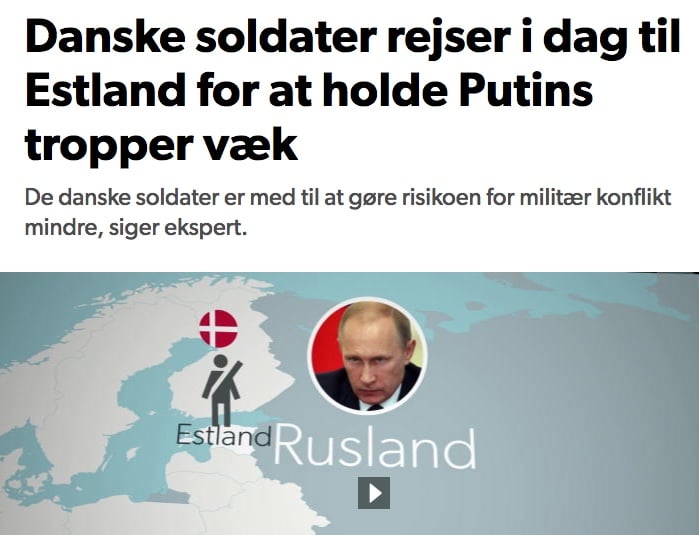
Screenshot
Af Jan Øberg • Danmark sendte den 10. januar 2018, 200 soldater til Estland som en del af NATOs indsatser vis-a-vis Rusland. På DR.dk mener man at det bør gives den journalistiske behanding, man kan se her under overskriften: Danske soldater rejser i dag til Estland for at holde Putins tropper væk Givet dette har jeg fundet at der var grund til at skrive en indsigelse til journalisten bag teksten, Sune Gudmann Christiani. Om hans – militære – baggrund kan man læse på Linkedin her. Det fremgår at han også har en flerårig baggrund på Forsvarsakademiet hvor hans – eneste – udvalgte militære ekspert også har sin gang. Jeg skrev derfor samme dag til ham. Og afventer nu svar.   Kære Sune Gudmann Christiani Din artikel i dag om danske soldaters udstationering i Estland lader en del tilbage at ønske – fra såvel et sagligt som journalistisk perspektiv. Forhåndsstationering er...
EUdefmin
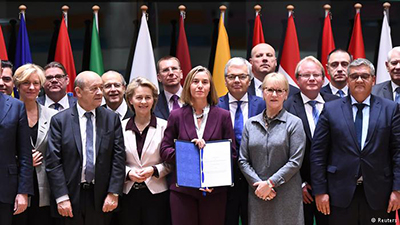
By the European Union • The majority of EU nations have committed to a joint defense cooperation, focusing on military operations and investments. Europe is looking to cement unity, especially since Brexit and the election of Donald Trump. From Deutsche Welle – the whole article here Defense and foreign ministers from 23 European Union countries signed up to a plan to establish the Permanent Structured Cooperation (PESCO), which will allow countries to cooperate more closely on security operations and building up military capability. EU foreign policy chief Federica Mogherini described the signing of PESCO as a “historic moment in European defense.” The decision to launch PESCO indicates Europe’s move towards self-sufficiency in defense matters instead of relying solely on NATO. The EU, however, also stressed that PESCO is complimentary to NATO, in which 22 of the EU’s 28 countries are members. NATO Secretary General Jens Stoltenberg welcomed the launch, saying that...
Imagen-thumbnail-The-Transnational-1
• “Free elections and free markets” represent “the single sustainable model for national success”. So declared the US National Security Strategy published by the Administration of George W Bush in 2002. It’s a document better known for the novelty of its proposed variation on the traditional UN provision for the legal use of force: the concept of pre-emptive self-defence. You don’t have to join many dots to infer that countries which deviate from this path of righteousness risk being regarded as security threats, and, the document continues: “As a matter of common sense and self-defense, America will act against such emerging threats before they are fully formed”. Is it heresy against free-market fundamentalism that has put one regime after another in the firing line, in the period since? Even before Bush took office, the US and allies went to war over Kosovo, in ‘Operation Allied Force’, the bombing of Yugoslavia...
lenin_300
• Published in Bulletin of Peace Proposals 3-1990, pp 287-298 and on TFF’s homepage at the same time   1. Four hypotheses The West has lost a close enemy, the Soviet Union and Eastern Europe. Which reactions can be discerned and what psycho-political emotions are they indicative of? How did the West cope with the first years of this new post-Cold War situation? Can we mourn the death of an enemy, can we heal ourselves after the loss? How does one learn to live a new life without a close enemy? Has the West done what it ought to do for itself and for the former enemy? “The West” of course is a term hanging loose. We employ it in this article as meaning interchangeably “NATO, the Western hemisphere, the United States and Western Europe and a few cases, Western or Occidental culture”. The first hypothesis of this essay is...
33b1c0ef5b802f0eb18a9f1bd16ce786
  By Manlio Dinucci • Not a single nuclear power has agreed to sign the new Treaty banning nuclear weapons. We all appreciate that unilateral disarmament would be a genuine concern for such states. However, Nato, which violates the NPT (the treaty aiming at containing the proliferation of nuclear arms) every day, has gone much further. Last week, it issued a declaration stating (para 7) that atomic bombs are a factor contributing to peace; and there is no way it would contemplate relinquishing these arms, if other states retained them. Furthermore, the wording of the final paragraph is a pre-emptive strike, aimed at destroying the potential of the new Treaty from slipping into the class of treaties that create norms for inter-state relations. On 20 September, the day after President Trump presents a scenario of nuclear war in the United Nations, threatening to “totally destroy North Korea”, the “Treaty on...
nego
  By ICAN • In a document from October 17, the United States warned other NATO members that efforts to negotiate a treaty prohibiting nuclear weapons or to delegitimise nuclear deterrence “are fundamentally at odds with NATO’s basic policies on deterrence”. In the letter, the US government strongly urges allies and partners to vote no to the resolution, and “not to merely abstain.” and continues to argue that “if negotiations do commence, we ask allies and partners to refrain from joining them.” Via icanw.org Despite claiming that a ban treaty without the nuclear armed states would be meaningless, the US letter outline what they believe would be clear military implications of a ban treaty and for NATO. The document shows that the United States believe a treaty prohibiting nuclear weapons, even without the participation of nuclear-armed states, would indeed have a significant impact. The document was circulated the week before governments...
4_1
Via gwu.edu Washington D.C., December 12, 2017 – U.S. Secretary of State James Baker’s famous “not one inch eastward” assurance about NATO expansion in his meeting with Soviet leader Mikhail Gorbachev on February 9, 1990, was part of a cascade of assurances about Soviet security given by Western leaders to Gorbachev and other Soviet officials throughout the process of German unification in 1990 and on into 1991, according to declassified U.S., Soviet, German, British and French documents posted today by the National Security Archive at George Washington University ( http://nsarchive.gwu.edu). The documents show that multiple national leaders were considering and rejecting Central and Eastern European membership in NATO as of early 1990 and through 1991, that discussions of NATO in the context of German unification negotiations in 1990 were not at all narrowly limited to the status of East German territory, and that subsequent Soviet and Russian complaints about being...
4_1
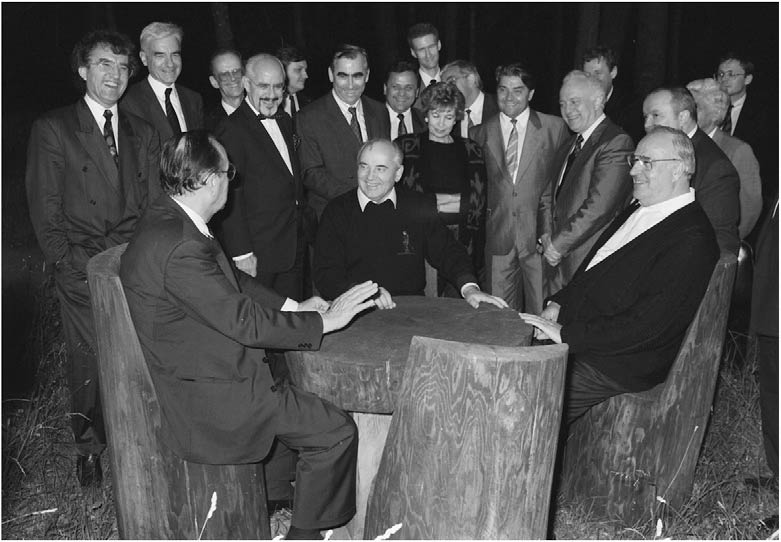
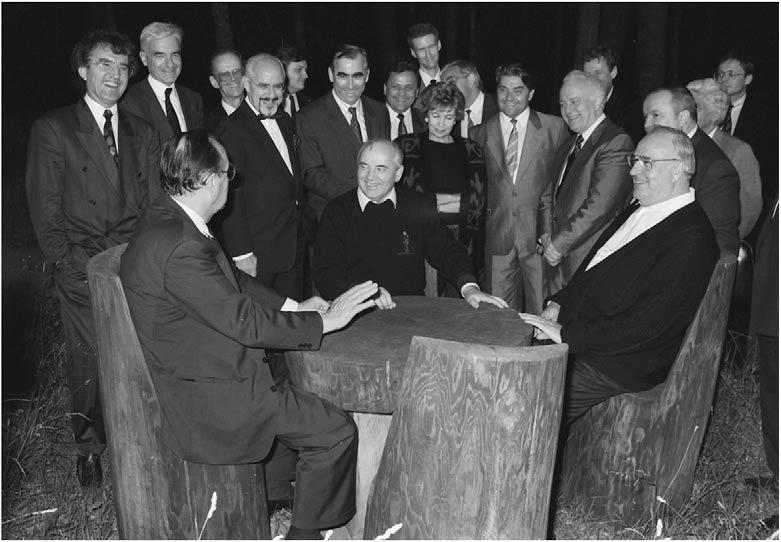
Michail Gorbachev discussing German unification with Hans-Dietrich Genscher and Helmut Kohl in Russia, July 15, 1990. Photo: Bundesbildstelle / Presseund Informationsamt der Bundesregierung. By Svetlana Savranskaya and Tom Blanton January 7, 2022 Declassified documents show security assurances against NATO expansion to Soviet leaders from Baker, Bush, Genscher, Kohl, Gates, Mitterrand, Thatcher, Hurd, Major, and Woerner. Slavic Studies Panel Addresses “Who Promised What to Whom on NATO Expansion?” Washington D.C., December 12, 2017 – U.S. Secretary of State James Baker’s famous “not one inch eastward” assurance about NATO expansion in his meeting with Soviet leader Mikhail Gorbachev on February 9, 1990, was part of a cascade of assurances about Soviet security given by Western leaders to Gorbachev and other Soviet officials throughout the process of German unification in 1990 and on into 1991, according to declassified U.S., Soviet, German, British and French documents posted today by the National Security Archive at George Washington...

ObergPhoto2cmB-W-3
Sedan mitten av 1980-talet har Sverige rört sig i riktning mot EU och USA. SAP har kommit att också stå för den Stora Anpassningens Politik. Samarbete över gränser om problem som kräver gemensamma lösningar är bra och nödvändigt. “Samarbete” kan betyda att olika parter var och en bidrar med sina individuella förutsättningar och resultatet blir det möjligas konst. Det kan också innebära att mindre deltagare utplånar sin individualitet och underordnar sig den eller de största makthavarna. I första fallet blir samarbetet lika med enighet i mångfald &endash; en rörelse i riktning av internationell demokrati och global-ism. I det senare innebär samarbete enhet i enfald, en autoritär utveckling och global-isering under den starkare. Sverige gick in i EU ungefär samtidigt med utvecklingen av en gemensam EU utrikes- och säkerhetspolitik. Neutraliteten, nedrustnings- och fredsengagemanget avtog. Hänsyn till Europas stormakter ersatte lojalitet med Norden. Vi gick över till NATO:s “partnerskap för fred,” som...
Imagen-thumbnail-The-Transnational-1
By JANE PERLEZThe New York Times June 11, 1999 COLOGNE, Germany — Although the political future of Kosovo is left vague in the settlement that ended the war, American and NATO officials say they envision an international protectorate that will in theory be part of Yugoslavia but that may well, after a few years, become independent. As refugees return and society is rebuilt, a senior NATO official said Thursday, Kosovo will become virtually “walled off” from Yugoslavia. People living in Kosovo would not serve in the Yugoslav Army or pay taxes to Yugoslavia; a new police force and judiciary would have to be created without Serbian influence; the currency would probably be either the German mark or the American dollar, and trade would turn south and west toward Albania, Macedonia and Montenegro instead of north toward Serbia. None of these points are spelled out in the settlement that President Slobodan...
ObergPhoto2cmB-W-3
12. Jacanje autoritarizma na ZapaduPogledajte rubriku Pisma uredniku bilo kojih uticajnihzapadnih dnevnih novina, pogledajte debate koje se vode nateleviziji, obratite paznju na pitanja koja postavljajunovinari. Surfajte po internetu, listajte web-sajtove,servere i grupe za diskusiju i jedna ce vam stvar postatiocigledno jasna: obicni gradjani na Zapadu postaju svesumnjicaviji. Polako uvidjaju sve siri i siri jaz izmedjunovosti koje dobijaju od NATO-a i Stejt Departmenta i onihdrugih agencija. Mnogi jednostavno osecaju da bombardovatineduzne civile nikako ne moze biti ispravno; zdrav razum namtakodje govori da se tako nece uspostaviti poverenje izmedjuAlbanaca i Srba – ili ako hocete izmedju bilo koje dvesukobljene strane. To je u suprotnosti sa svim sto uopsteznamo o psihologiji ljudi. Sto god ovo bude duze trajalo,sve veci zamah ce dobijati protesti javnosti. Gradjani NATOzemalja pocinju da se pitaju: ako se na ovako vaznom poljumogla dogoditi greska, zar se skrivene greske mozda nenalaze i u drugim vaznim problemima danasnjice;globalizaciji, demokratizaciji koje se...
Categories

Year

Author / Contributor

Region