Middle East conflict formation

Category

Year

Author / Contributor

Region

Sort by

Showing 1-10 of 118 stories

FHTT
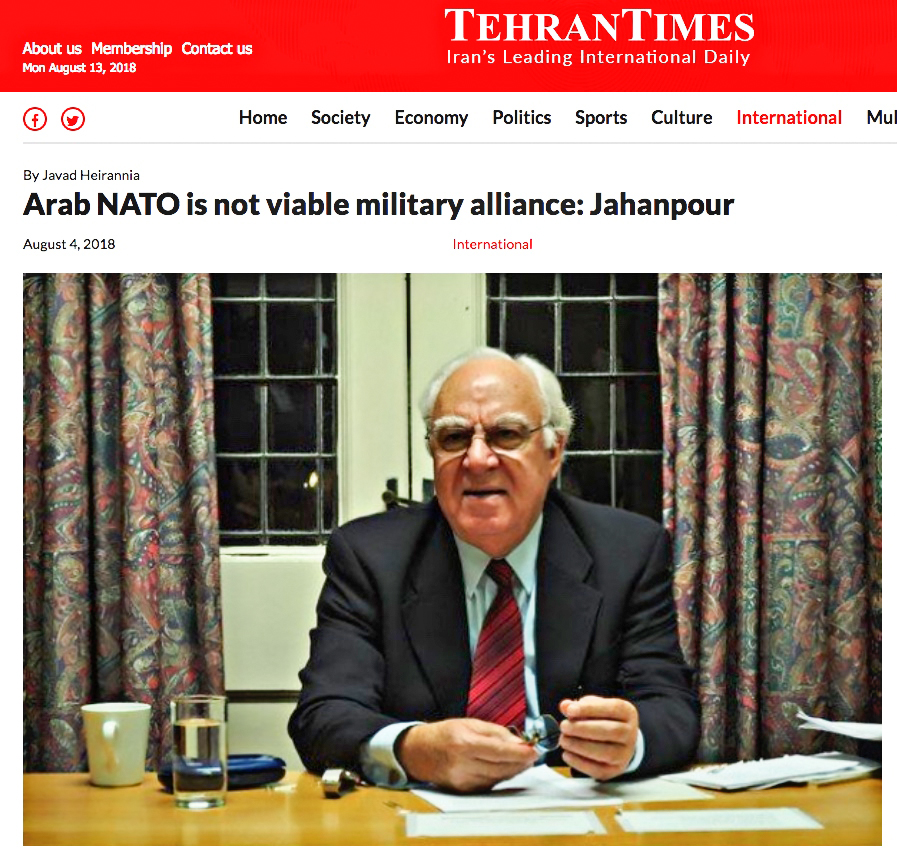
By Farhang Jahanpour, TFF Board member August 13, 2018   In an interview with Tehran Times, professor Farhang Jahanpour, part-time tutor on Middle Eastern affairs in the Department of Continuing Education, University of Oxford, and a member of Kellogg College says that he does not believe that Arab NATO is “a viable military alliance.” Former Senior Research Scholar at Harvard adds that “Many earlier U.S. attempts to develop a formal alliance with Arab monarchies have failed and, at the moment, there is even less unity among various PGCC members than ever before.” Professor Jahanpour suggests that President Trump should be invited to Iran to see the destruction wrought on her people thanks to Saddam Hussein’s Western-supported invasion of Iran and then he should visit all the other places the US has helped destroy and meet the victims there. Following is the full text of the interview which was published by...
39818586_7
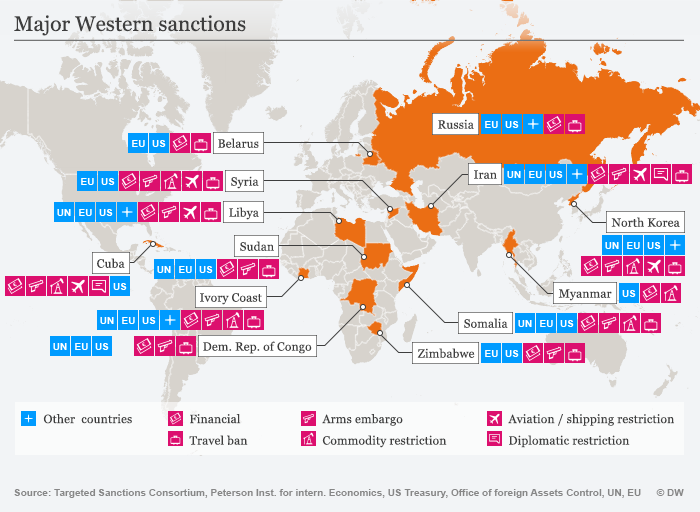
Donald Trump’s efforts to block Iran’s oil exports are intended to harm Iran, but his policy also harms the US and the rest of the world.   By Soraya Sepahpour-Ulrich July 2, 2018 • It is as clear as day that President Trump is obsessed with regime change in Iran. What is not made clear is the full extent of the damage his gambit will cause to Americans and American interests. Without cause or justification, Mr. Trump pulled out of the Joint Comprehensive Plan Of Action (JCPOA), striking a hard blow to America’s European allies—and its own credibility. Moreover, he threatened European countries with secondary sanctions should they continue to trade with Iran. Originally published by Foreign Policy Journal on July 2, 2018 To top it all, in his latest move, he has called for all Iranian oil exports to be cut off by November. Or in practical terms, he...
Screenshot
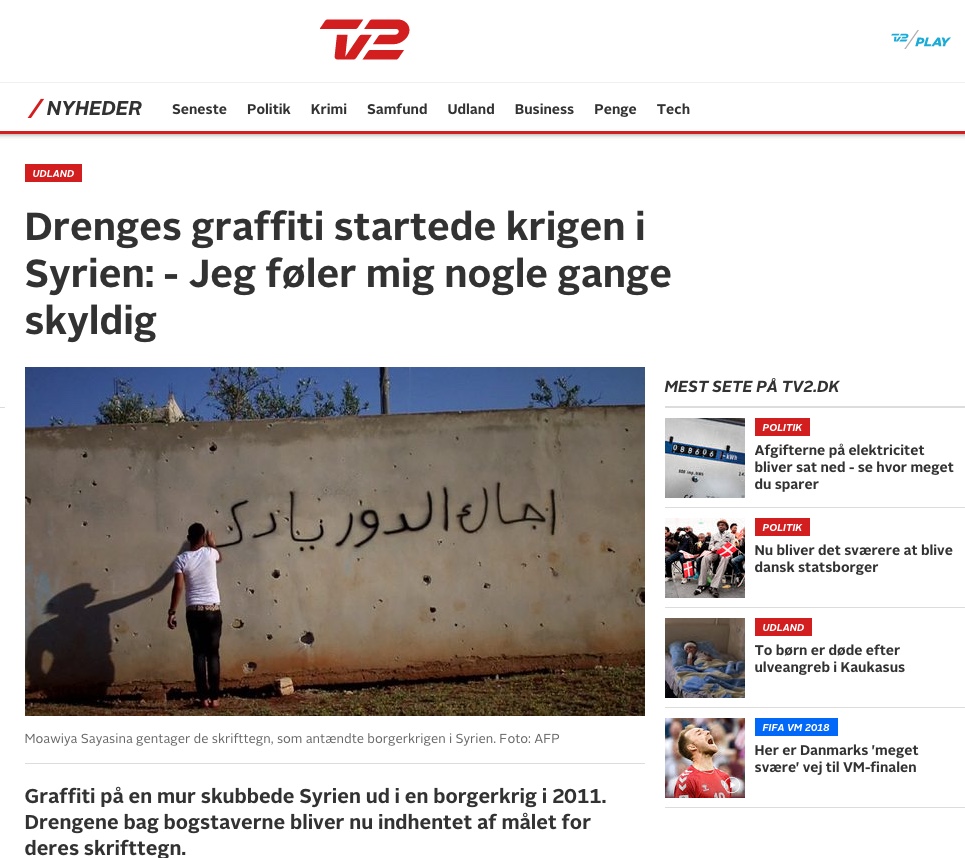
  Af Jan Øberg Det er mere end 7 år siden volden brød ud i Syrien, i Daraa. Det er det, TV2 vil fortælle os om hér. Og tidligere har fortalt hér. Skønt de mange år har man desværre ikke lært den lektie, der er så enkel: At volden kun er symptom på underliggende konflikter. At det det handler om ikke er volden/krigshandlingerne – men det der har fået volden til at bryde ud. At man kun kan komme frem til en fredelige fremtid hvis man forstår hvad konflikterne handler om. At medier, der kun fokuserer på volden men ikke kerer sig det mindste om årsagerne til den, gør volden meget mere “naturlig” og “uundgåelig.” I det aktuelle tilfælde stiller TV2 sig helt klart på de unge mænds side, der med våben i hånd bekæmper deres egen regering. De fremstilles som helt, der har startet krigen og – ja, hvordan...
UriAvnery
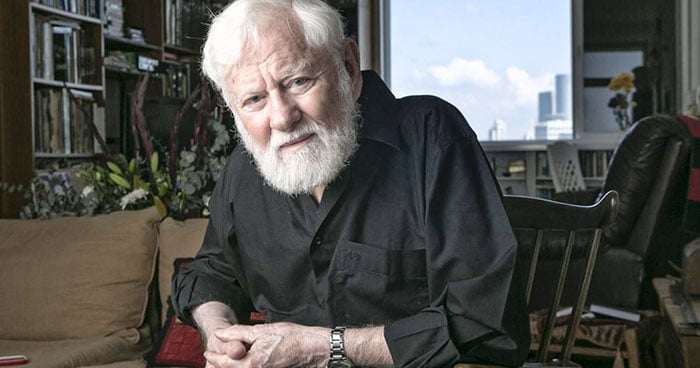
    By Uri Avnery 2 Jun 2018 I loved Gaza. That is a play on words. The Biblical Song of Songs says that love is strong as death. Strong in Hebrew is Aza. Aza is also the Hebrew name of Gaza. I have spent many happy hours in Gaza. I had many friends there. From the leftist Dr. Haidar Abd al-Shafi to the Islamist Mahmoud al-Zahar, who is now the foreign minister of Hamas. I was there when Yasser Arafat, the son of a Gazan family, came home. They put me in the first row of the reception at the Rafah border, and that evening he received me at the hotel on the Gaza sea shore, seating me next to him on the stage during a press conference. I met with a friendly attitude everywhere in the Gaza Strip, in the refugee camps and in the streets of Gaza...
alalam_635740300385614847_25f_4x3-990x557
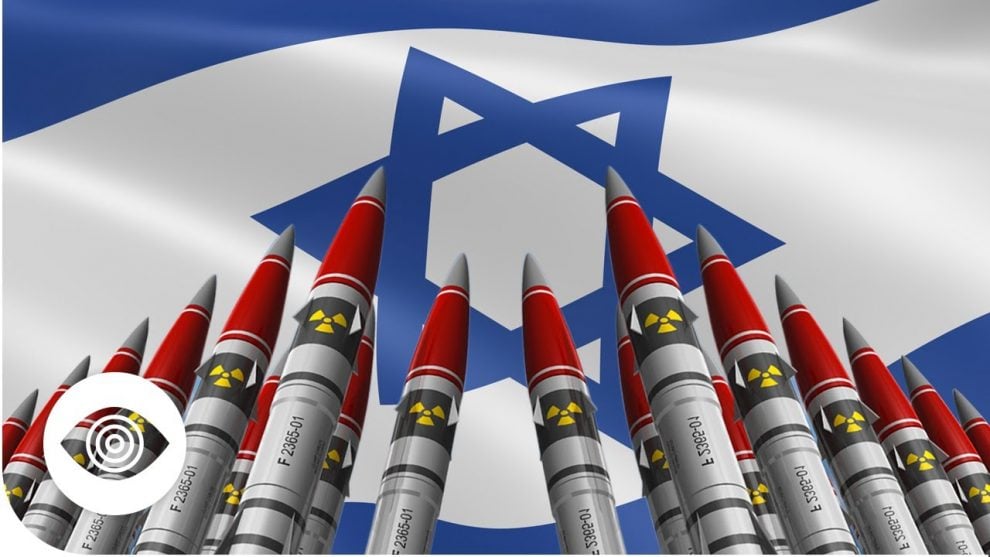
By John Buell May 7, 2018 Recently there was an extraordinary moment on corporate TV. Late last month CNN’s Chris Cuomo asked Israel Prime Minister Benjamin Netanyahu: “Does Israel have nuclear capabilities and nuclear weapons, yes or no?” Netanyahu responded evasively, claiming: “we’ve always been the first to say we wouldn’t introduce it so we haven’t introduced it.” After Cuomo continued to press for a “yes or no answer,” Netanyahu said, “That’s as good an answer as you’re going to get.” As The Intercept’s Glenn Greenwald noted in response to the exchange between Cuomo and Netanyahu, “Kudos to @ChrisCuomo for pressing Netanyahu on that little uncomfortable fact that is typically ignored: the only country in the Middle East with a proven, clandestine nuclear weapons stockpile is . . . Israel. And the rogue state refuses to join the NPT.” Originally published by Informed Comment on May 7, 2018, here While...
JOSyria
  , speaks with Russia Today and points out why this type of behaviour is totally unacceptable: It violates international law, undermines the UN and brings Syria, the region and the world further and further from peace. The people behind it and their media and other supporters must be perceived as either conflict- and peace illiterate or advocates of criminal activity. Both of which are tragic and making already dark times darker. We must say stop and argue: Peace first – The Secure the peace. In addition, contrary to the Western/NATO belief this is self-destructive and self-isolating. The international so-called community is, for the large majority, not behind this type of policy.
Logo2018-Green-1
Lund, Sweden – April 14, 2018 Statement by Associates of TFF – The Transnational Foundation for Peace and Future Research Summary The US-British-French attack is a clear and indisputable case of aggression according to international law, and to the UN Charter in particular. And it lacks, like many unilateral wars before it, a UN Security Council mandate. It comes as a consequence of interventionist impulses and militarism and lacks every element of a comprehensive conflict analysis, or diagnosis. Even if one assumes that the government and president of Syria are the main/only culprits and the worst violaters of human rights on earth, the way that the Syrian conflict has been handled by Western governments over the past seven years has been outrageously wrong and counterproductive. It’s been deliberate conflict-mismanagement combined with peace-prevention. Conspicuously, this aggression on Syria takes place before there is a shred of evidence of what chemical weapons...
GarethPorter-e1540558470864
  By Gareth Porter Published on Apr 3, 2014     National Summit to Reassess the U.S.-Israel “Special Relationship” Presentation at the National Summit to Reassess the U.S.-Israel “Special Relationship” on March 7, 2014 at the National Press Club. Gareth Porter is an independent investigative journalist and historian who specializes in U.S. national security policy. He writes regularly for IPS and has also published investigative articles on Salon.com, the Nation, the American Prospect, Truthout and The Raw Story. His blogs have been published on Huffington Post, Firedoglake, Counterpunch and many other websites. Porter was Saigon bureau chief of Dispatch News Service International in 1971 and later reported on trips to Southeast Asia for The Guardian, Asian Wall Street Journal and Pacific News Service. He is the author of four books on the Vietnam War and the political system of Vietnam. His most recent book is Manufactured Crisis: The Untold Story...
richard-falk-cropped-internal
The Middle East is Heating Up Again: Richard Falk is interviewed by C.J. Polychroniou Intro This is a somewhat modified text of an interview of two weeks ago conducted by the Greek journalist and author, C.J Polychroniou. Since then several developments have occurred, none more significant than the Return Home Land Day demonstrations of March 30, 2018. The original interview appeared in several online publications. The format is altered to make somewhat more reader friendly.   CJP: Richard, let’s start with Donald Trump’s decision to officially recognize Jerusalem as Israel’s capital and to move the US embassy there by May of this year. First, is this legal from the standpoint of international law, and, second, what are likely to be the long-term effects of the US recognition of Jerusalem as Israel’s capital on the region as a whole? Richard Falk: There is no question, Chronis, that Trump’s Jerusalem policy relating to...
ChatGPT Image 9 jun 2026, 11_11_33
  Like it not we find that we’re having to get used to the paradoxes, contradictions and confusions of the Trump era. None is more apparent than his attack on the landmark Iran de-nuclearisation agreement, fashioned by the Obama Administration and the Iranian government. President Donald Trump wants to unwind it, even though it has the 100% support of the UN Security Council which in an unanimous vote enshrined the agreement in international law. At the same time he is trying to lure the North Koreans into a de-nuclearization policy, at the least into a nuclear freeze to stop it developing its rocket science any further, so that it’s incapable of hitting the US with a nuclear-tipped missile. But, given Iran, why should the North Koreans go along with such a deal? Why should it make such a deal when it knows there is a chance that the US might...
johangaltung
* Today marks the 15th Anniversary of the US invasion of Iraq. Neither solid analyses, moral reasoning and decent argument nor history’s probably largest pre-war, anti-war demonstrations worldwide had any discernible impact on the Bush and Blair Administrations’ decision to go to war and do so on a false pretext. Neither could major allies like France and Germany by their opposition to the war on Iraq persuade Washington and London to first try a peaceful resolution in accordance with the UN Charter provisions. TFF was deeply engaged in preventing this war – also by being on the ground in Iraq – and wants to a) document the research we did and how we argued back then and b) contribute to this tragedy never being forgotten. We also want to place our analyses and debate articles at the disposal – in one place – of the students, researchers, concerned citizens and...
FM_Javad_Zarif_Araghchi_in_airplane
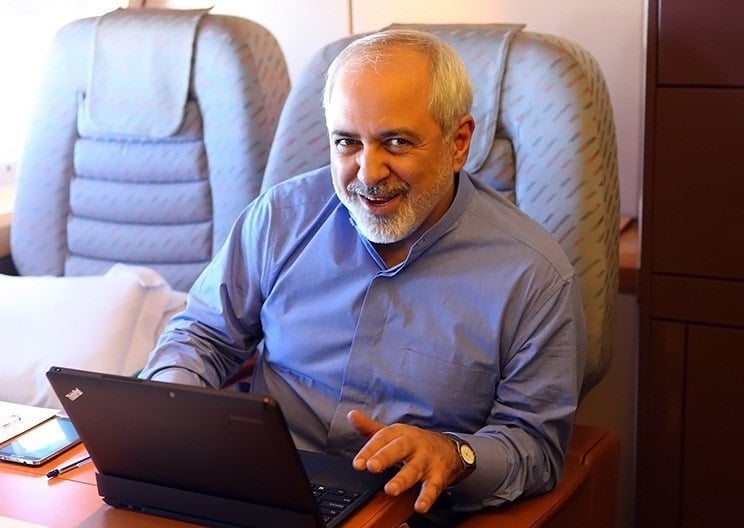
By Shahed Ghoreishi March 5, 2018 At the Munich Security Conference in February, Iranian Foreign Minister Javad Zarif repeated his administration’s proposal to engage Iran’s Persian Gulf neighbors with the goal of creating a Persian Gulf Security Agreement. Originally published by Lobe Log here. According to Zarif, the talks for such an agreement would be “founded on dialogue, common principles, and confidence building measures” with the goal of avoiding “turmoil or potentially far worse.” Deputy Foreign Minister Abbas Araghchi referenced his boss’ plan during a visit to the British think tank Chatham House the following week, repeating the goal of a Helsinki-inspired non-aggression pact that would first begin with confidence-building measures in tourism, pollution, and drug trafficking. Of course, this proposal is largely aimed at Saudi Arabia. This type of plan, if ideally pursued by all parties, would echo the hope President Obama had during his administration. In what later...

Categories

Year

Author / Contributor

Region