Human rights and justice

Category

Year

Author / Contributor

Region

Sort by

Showing 1-10 of 497 stories

cover_sanctions_0
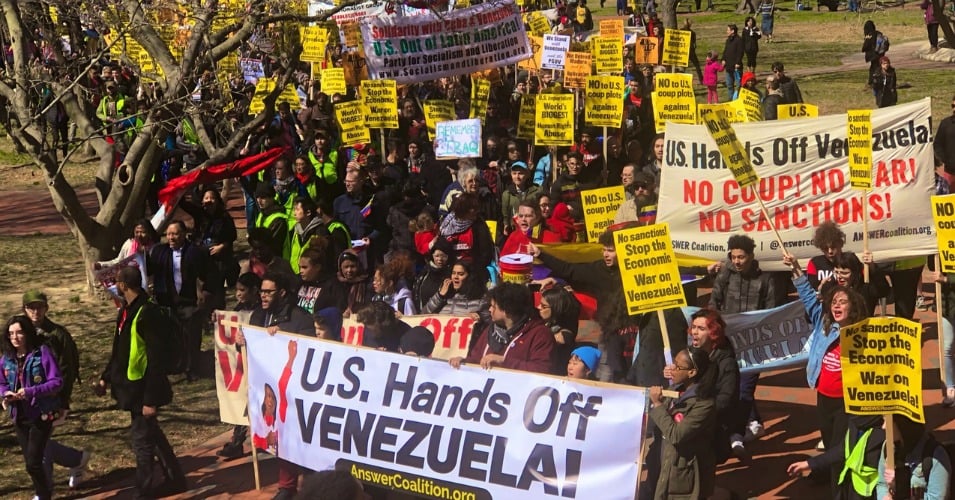
By Kevin Zeese and Margaret Flowers February 10, 2020 The US is currently attacking one-third of the planet’s population with 8,000 economic sanctions, ongoing acts of war against 39 nations. “Their intent is to shrink the economy and cause chronic shortages and hyperinflation while ensuring a lack of access to finance to pay for essentials.” Originally posted in the Black Agenda Report, January 15, 2020 The United States is relying more heavily on illegal unilateral coercive measures (also known as economic sanctions) in place of war or as part of its build-up to war. In fact, economic sanctions are an act of war that kills tens of thousands of people each year through financial strangulation. An economic blockade places a country under siege. A recent example is the increase in economic measures being imposed against Iran, which many viewed as more acceptable than a military attack. In response to Iran...
solemanii
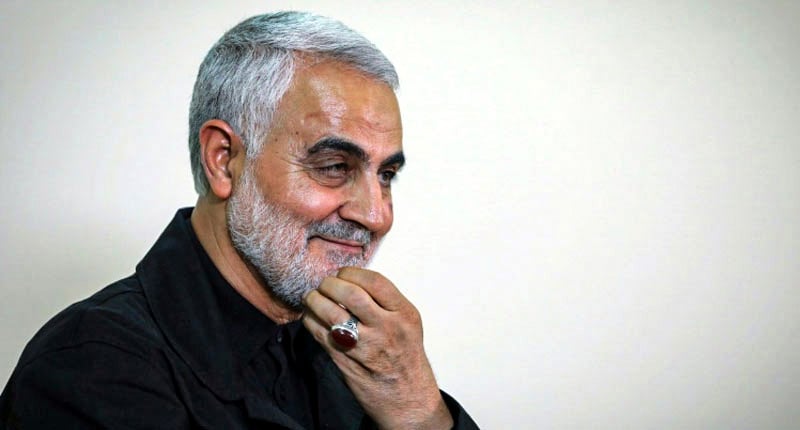
By Craig Murray January 31, 2020 In one of the series of blatant lies the USA has told to justify the assassination of Soleimani, Mike Pompeo said that Soleimani was killed because he was planning “imminent attacks” on US citizens. It is a careful choice of word. Pompeo is specifically referring to the Bethlehem Doctrine of Pre-Emptive Self Defence. Originally posted on Craig Murray’s personal blog on January 4, 2020, here Developed by Daniel Bethlehem when Legal Adviser to first Netanyahu’s government and then Blair’s, the Bethlehem Doctrine is that states have a right of “pre-emptive self-defence” against “imminent” attack. That is something most people, and most international law experts and judges, would accept. Including me. What very few people, and almost no international lawyers, accept is the key to the Bethlehem Doctrine – that here “Imminent” – the word used so carefully by Pompeo – does not need to have its normal...
death
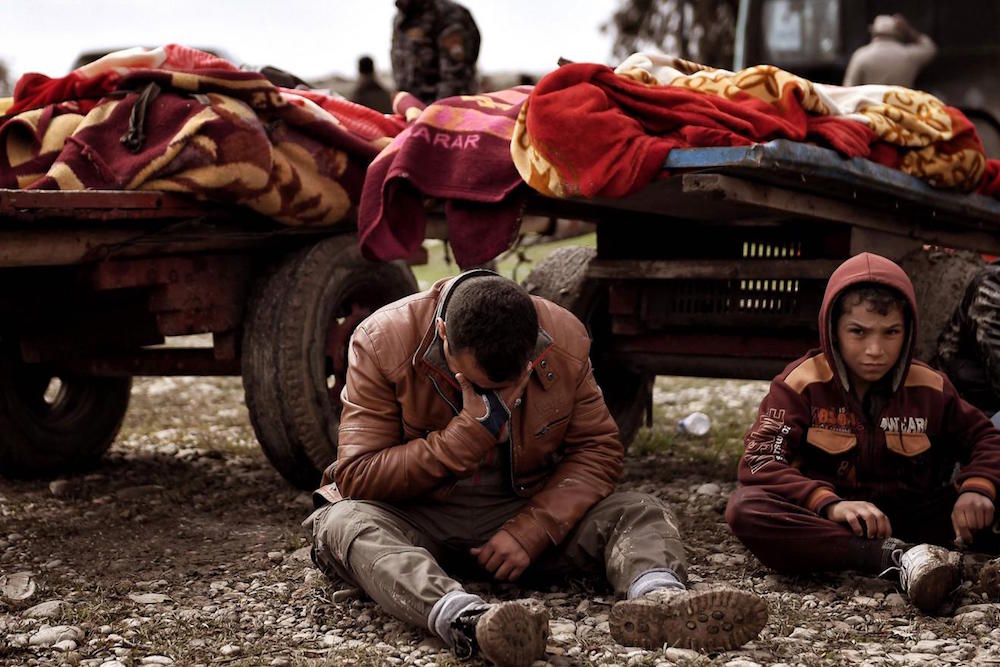
By Nicolas J.S. Davies January 27, 2020 The numbers of casualties of U.S. wars since Sept. 11, 2001, have largely gone uncounted, but coming to terms with the true scale of the crimes committed remains an urgent moral, political and legal imperative, argues Nicolas J.S. Davies, in part two of his series. Originally posted on Consortium News April 3, 2018 here Part One here In the first part of this series, I estimated that about 2.4 million Iraqis have been killed as a result of the illegal invasion of their country by the United States and the United Kingdom in 2003. I turn now to Afghan and Pakistani deaths in the ongoing 2001 U.S. intervention in Afghanistan. In part three, I will examine U.S.-caused war deaths in Libya, Somalia, Syria and Yemen.  According to Ret. U.S. General Tommy Franks, who led the war against the Taliban in Afghanistan in reaction to 9/11, the U.S. government...

mafiaUS
VideoAnother video from the event where the author gave this talk Like perhaps most people who visit Los Angeles, I consider it my duty to offer a brilliant new idea for a film script. My idea is in the genre of science-fiction mafia, a genre that I think has not been sufficiently exploited. In this film, the protagonist wakes up to the fact that without knowing it, he has somehow joined the mafia. I expect people to be able to relate to the story because I believe that this entire country either has become aware or needs to become aware that it has joined the mafia. How do major U.S. newspapers and television news programs refer to the murder of an Iranian general? Never with the word murder. Often with words like “deal with” or “take out.” Trump had to deal with him. You could read an article like that,...
1-sgnDEjgU7f4-cv0V9d2DIg
If you appreciated this conversation with a leading TFF expert Farhang Jahanpour is a retired professor from the University of Isfahan and former part-time tutor at the University of Oxford, former TFF Board member and now TFF Associate. The Nuclear Non-Proliferation Treaty (NPT) that takes center stage in this conversation can be read here.
death
By Nicolas J. S. Davies* January 17, 2020 How many people have been killed in America’s post-9/11 wars? I have been researching and writing about that question since soon after the U.S. launched these wars, which it has tried to justify as a response to terrorist crimes that killed 2,996 people in the U.S. on September 11th, 2001. Originally posted on Consortium News, January 15, 2020, here But no crime, however horrific, can justify wars on countries and people who were not responsible for the crime committed, as former Nuremberg prosecutor Ben Ferencz patiently explained to NPR at the time. “The Iraq Death Toll 15 Years After the U.S. Invasion” which I co-wrote with Medea Benjamin, estimates the death toll in Iraq as accurately and as honestly as we can in March 2018.  Our estimate is that about 2.4 million people have probably been killed in Iraq as a result of the historic act of aggression committed by the U.S. and U.K. in...
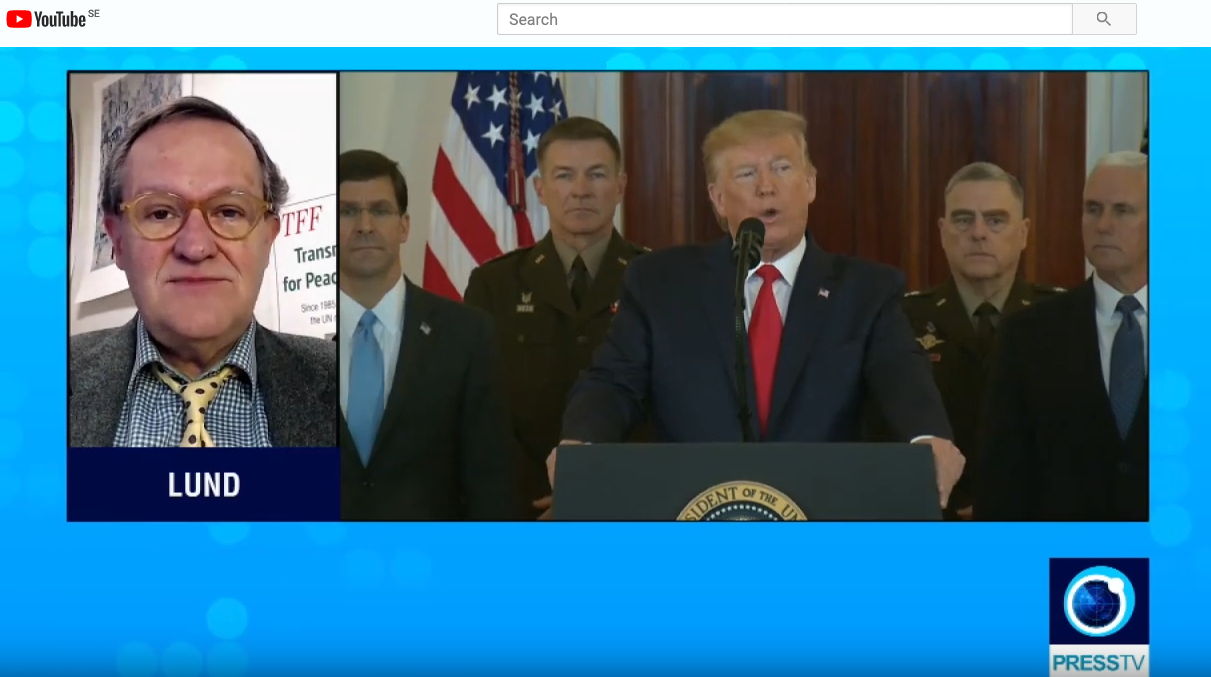
PressTV
European allies of the U-S have turned down a request by the American President to leave the 2015 nuclear deal with Iran (JCPOA). France says it remains committed to the Iran deal, and will continue to work with other parties. Britain has pledged to remain committed too. Prime Minister Boris Johnson reaffirmed London’s support, in a phone call with Iran’s president Hassan Rouhani. US president Donald Trump called on France, Germany, Britain and other signatories to leave the Iran deal and negotiate a new accord. Trump withdrew the US from the agreement in May 2018 and reinstated even harder sanctions on the innocent people of Iran. Editor’s noteUnfortunately, a couple of days after this video was posted and accessible, Google which owns YouTube decided to close down PressTV’s account. Today, January 21, we tried again at no avail. It’s blatant censorship, allegedly explained by Google as a way to adhere...
marchreturn
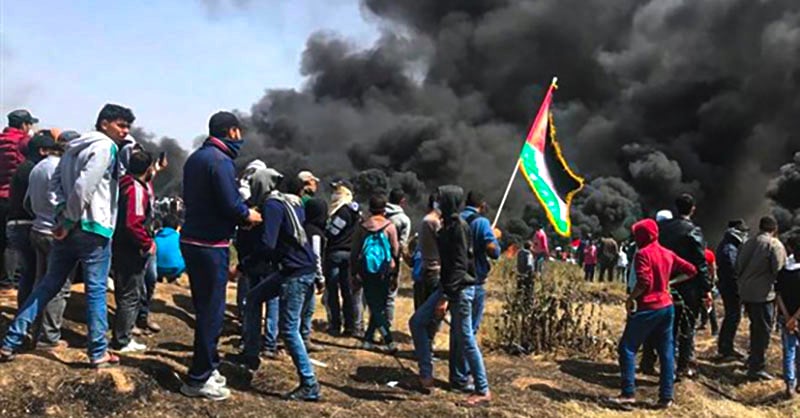
Preliminary Notes This post devoted to health and human rights in Gaza. It is based on a video presentation some weeks ago to a conference on this theme held in Gaza. It makes no effort to update by reference to the latest cycle of violence sparked by the targeted assassination of Baha Abu-Ata, an Islamic Jihad military commander, on November 12. I feel strongly about the issues raised by this post not only because I have witnessed living conditions in Gaza and have friends in Gaza who have endured hardship and injustice for so long without losing their warmth or even their hope. My contacts with Gaza and Gazans over the course of many years has been at once inspirational and deeply dispiriting, a deep insight into the deficiencies of the human condition coupled with an uplifting glimpse at the spiritual courage of those so severely victimized. Reflecting on the...
Picture1
The Future of Human Rights: Regressive Trends and Restorative Prospects Points of Departure Reviewing the global situation, the then UN High Commissioner for Human Rights, Zaed Raad Al Hussein of Jordan, opened a 2018 conference devoted to the 25th anniversary of the 1993 UN Conference on Human Rights and Development held in Vienna, on a decidedly pessimistic note. Instead of doing the usual on such occasions, that is, celebrating the progress made since the earlier event, Prince Zaed emphasized the disturbing evidence of regression with respect to a broad range of issues bearing on the protection of human rights embedded in international treaty instruments as evidenced by the practice of states. He insisted that without fundamental changes in patterns of governance by sovereign states and in the operation of the world economy it would be naïve to expect an improved international atmosphere for human rights. Originally posted on Richard Falk’s blog...
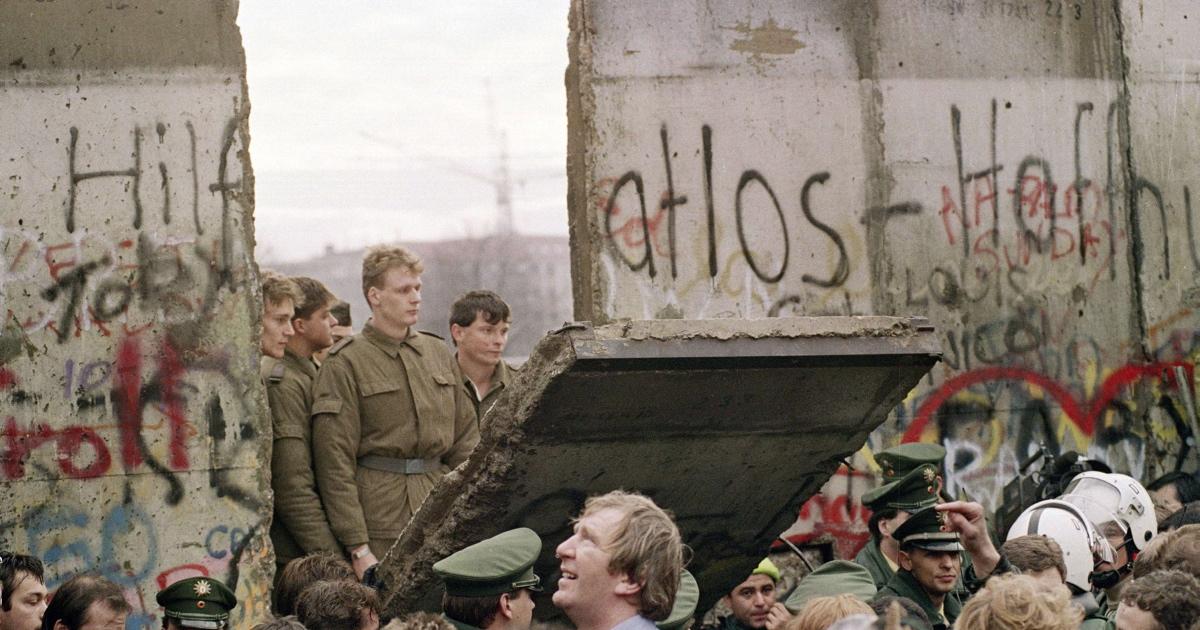
berlin-wall-fall
Photo: Gerard Malie/AFP/Ritzau Scanpix Posing the Question Such a question seems little more than a provocation until the effects of the interval between the fall of the Berlin Wall and the present are critically examined in relation to their principal effects. On closer inspection, I am not quite prepared, although almost so, to say that the peoples of the world lost ground as a result of the collapse of the Soviet Union and emergence of the United States as the so-called ‘sole surviving superpower.’ Generally, it was rather automatically assumed almost never challenged, that the outcome of the Cold War was a victory for liberal values, including human rights, political democracy, economic growth, and certainly world peace. There was the added popular view that since democracies supposedly do not go to war against each other, and if Communism was discredited on both ideological and materialist grounds, then democracy would spread...
DSC05514c
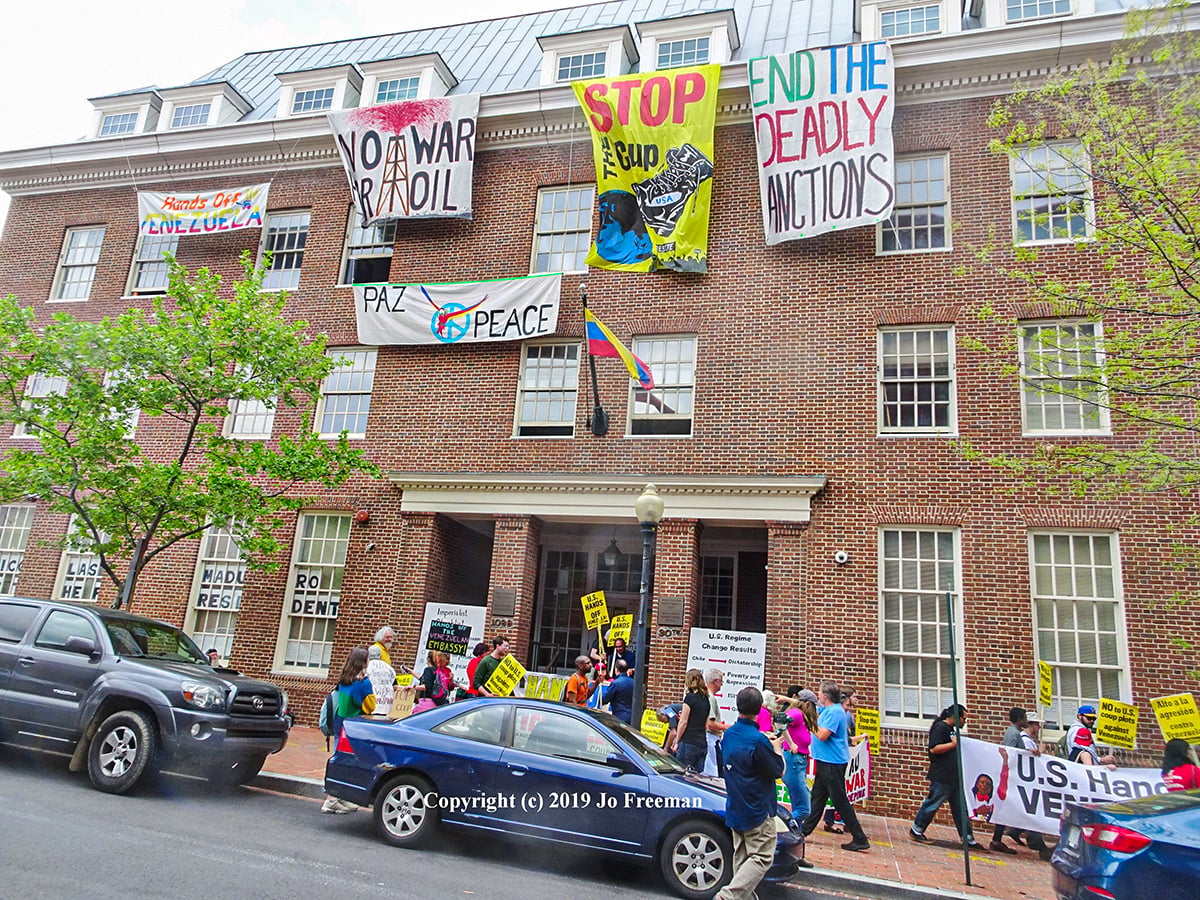
By Joe Emersberger November 6, 2019 Grayzone editor Max Blumenthal, a prominent journalistic critic of US policy toward Venezuela,  was arrested by DC police on Friday, October 25, in connection with a protest at the Venezuelan embassy, and held incommunicado. But if you rely on corporate media, or even leading “press freedom” groups, you haven’t heard about this troubling encroachment on freedom of the press. Originally posted on Fair.org on October 30, 2019 here Blumenthal is a bestselling author whose work has appeared in such publications as the New York Times, CJR, The Nation and Salon. DC police arrested him at his home on a five-month-old arrest warrant, charging him with simple assault for his attempt to deliver food to the besieged Venezuelan embassy; he was held for two days, and for the first 36 hours was not allowed to speak with a lawyer. (In an interview with FAIR, Blumenthal noted that keeping arrestees—generally poor and African-American—from speaking...
US-sanctions
Prefatory Note: The post below is a slightly modified version of an interview published in The Nation on September 25th, following the September 14th attack on Saudi oil facilities. It follows a pattern with respect to Iran of accusations, denials, and public uncertainties. This combination of elements, given the leadership in Washington and Tehran, one blustering, the other inflexible, can easily produce an unintended stumble into war. A second shorter interview is appended, conducted prior to the attacks by an Iranian journalist, M.J. Hassani of Tasnim News Agency. It illustrates the seeming rigidity of Iran’s Supreme Guide, considered as having the final word on government policy, exceeding that of the elected leadership. Originally posted on Richard Falk’s personal blog on October 1, 2019, here Daniel Falcone Introduction to the Interview: After accusations of Iranian drone attacks on Saudi oil facilities, Iranian officials and authorities indicated that “full-fledged war” with the United States could...
Categories

Year

Author / Contributor

Region