Human rights and justice

Category

Year

Author / Contributor

Region

Sort by

Showing 1-10 of 497 stories

GretaT
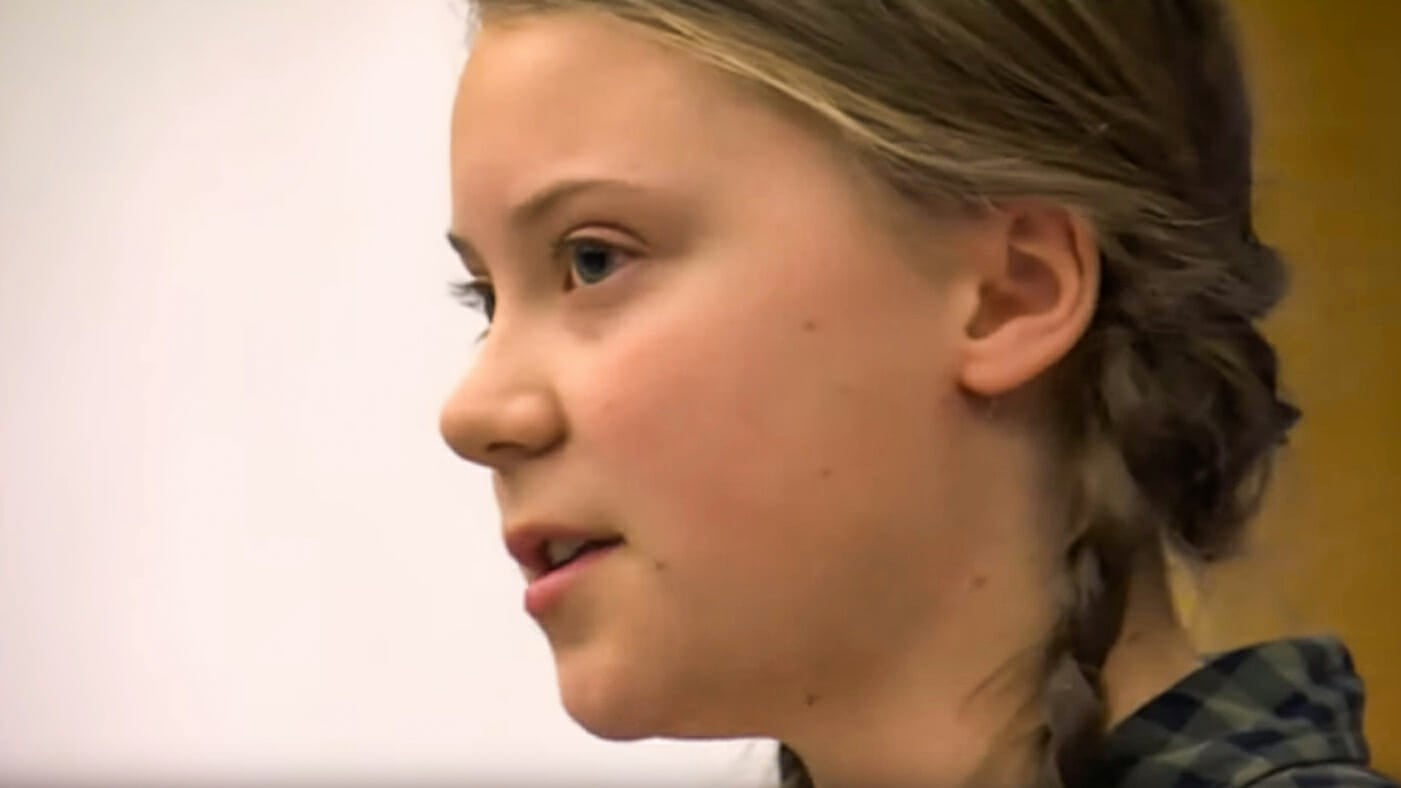
The amazing person and phenomenon called Greta Thunberg can be looked at from many perspectives. What connects them all is the energies of hope. Thus, for instance, her own personal story and what drives her so passionately – and scientifically – at the age of only 16. Or, how she is challenging the entire global establishment as a youth leader not allowed to vote herself but demanding that decision-makers take into account the millions and millions she speaks for as well as the yet unborn generations. That’s a non-contractual, non-reciprocal way of thinking foreign to Western culture’s “I do something for you if/when you do something for me”. And you can’t ask something in return from the yet unborn. Or, how the role she plays now makes visible and catapults a fundamentally moral criticism into the political discourse where it hasn’t existed, I would say, for decades. Or, how her...
whistle-gavel
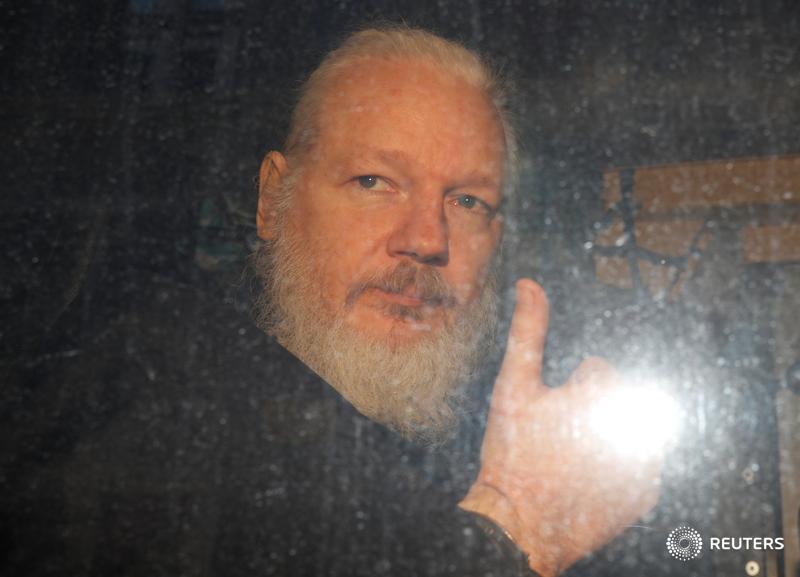
I suppose it is of interest that Donald Trump and Hillary Clinton have found something to agree about – the criminal indictment of Julian Assange.  Trump is acutely vulnerable to the exposure of truth and Clinton blames her electoral defeat in 2016 partly on what WikiLeaks disclosed about her improper use of a government computer to send private emails. Such are the perverse ways of the deeply unjust. The liberal media is not happy with this indictment, although it also wants to distance itself from justifications for Assange’s claims of journalistic privilege, viewing him as a lone wolf with rogue traits. There are solemn assessments evaluating the narrowly framed government indictment charging cyber-crime, that is, publishing illicitly obtained classified documents from a digital source, apparently an apolitical everyday occurrence for government employees. What is apparently at legal issue is deciding whether or not Assange should be protected by reference to...
D330EBzXsAAJpWh
Nobel Laureate and TFF Associate Mairead Maguire requests UK Home Office permission to visit her friend Julian Assange whom this year she has nominated for the Nobel Peace Prize ‘I want to visit Julian to see he is receiving medical care and to let him know that there are many people around the world who admire him and are grateful for his courage in trying to stop the wars and end the suffering of others’ Thursday 11th April, will go down in history as a dark day for the Rights of humanity, when Julian Assange, a brave and good man, was arrested, by British Metropolitan Police, forcibly removed without prior warning, in a style befitting of a war criminal, from the Ecuadorian Embassy, and bundled into a police van. It is a sad time when the UK Government at the behest of the United States Government, arrested Julian Assange, a...
Gandhi-Democracy-kopia
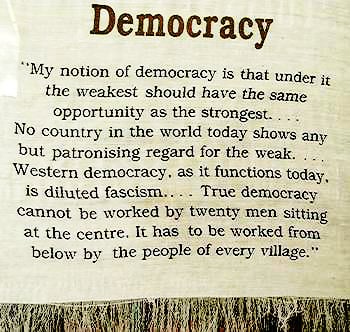
M. K. Gandhi on democracy The jaws of power “The jaws of power are always open to devour, and her arm is always stretched out, if possible, to destroy the freedom of thinking, speaking, and writing.” John Adams, (1735-1826) According to the Nuremberg Principles, the citizens of a country have aresponsibility for the crimes that their governments commit. But to preventthese crimes, the people need to have some knowledge of what is going on. Indeed, democracy cannot function at all without this knowledge, What are we to think when governments make every effort to keep their actions secret from their own citizens? We can only conclude that although they may call themselves democracies, such governments are in fact oligarchies or dictatorships. At the end of World War I, it was realized that secret treaties had been responsible for its outbreak, and an effort was made to ensure that diplomacy would...
ChatGPT Image 9 jun 2026, 11_11_33
The International Criminal Court (ICC) which prosecutes crimes against humanity is under attack again by the Trump Administration for pursuing Americans. Bill Clinton and Barack Obama supported it. George W. Bush tried to close it down but then decided to cooperate with it. Donald Trump is against it and encouraged John Bolton, his National Security Advisor, to publically savage it earlier this month. To be published in May is a first-rate book on the CIA, its paramilitary armies, operators and assassins. The book is still under wraps so I can’t break the embargo by telling you its title and author. All I can say is that it’s meat for the ICC. The CIA crosses the moral lines all the time: Surprise your target, torture or kill your enemy, vanish without a trace. Then deny it. That was and is its intent – as described in riveting, well-researched detail. The whole book...
image001
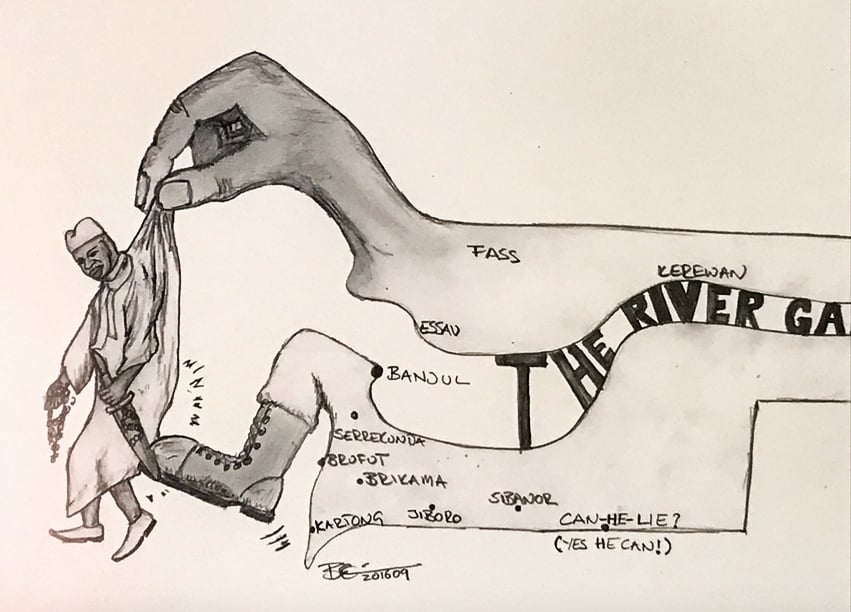
Gambia – or properly The Gambia – a small country in West Africa with about 2 million inhabitants, was peaceful since its internal independent rule was established in 1963. There were good relations with its only neighbour, Senegal. For a long time there was no military force in the country. One could then expect that there would be no militant coups, as in so many other African countries. However, in 1981 a “Revolutionary Council” took power. The revolutionaries were soon ousted by troops from Senegal who reinstated the president.  Now obviously Gambia needed an army “to establish stability” and an army was established. The outcome was that in 1994 a group of soldiers, led by lieutenant Yahya Jammeh, took power. He became the leader of the country, and was elected and re-elected president in 1996, 2001, 2006 and 2011. At least in the early years of his reign, he was...
ChatGPT Image 9 jun 2026, 11_11_33
The long war is almost over in Syria. Tyranny has won. Violence has won. Most have suffered, many unspeakably. For too long all sides were stalemated by each others’ brutality. Now the government of Bashar Al-Assad has come out on top, aided by Russia and Iran. What to do next? EU member states held their third annual Conference on Supporting the Future of Syria and the Region. It’s time for some radical re-thinking. Well-wishing for good things like the persecution of war crimes is whistling in the wind, at least for now. We are facing a fait accompli and renewed realization that the outside world does not have much leverage, apart from Russia and Iran, and even their influence is circumscribed. Yet, understandably, EU countries insist that in return for helping to re-build Syria the government must commit itself to a human rights agenda – the freeing of political prisoners,...
IMG_7593_1000_72
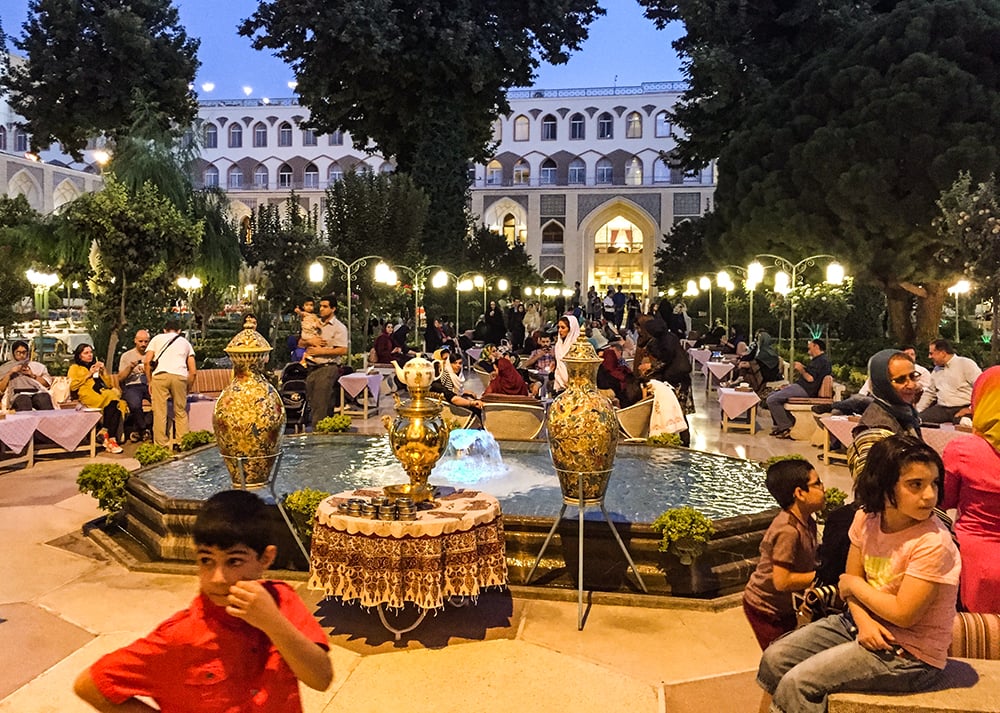
A conversation with Iran’s foreign minister, Javad Zarif The Western mainstream press hasn’t done much to enlighten their audiences to the plain fact that there is more than one side to a conflict between at least two. The Transnational is happy to make available some other views, particularly since Iran is the David and the West the Goliath and since omission is more effective in propaganda terms than fake. Iran’s views, its history, its reasons to do what it does and see the world as it does is woefully under-represented in the said press. So is leading media’s criticism of US policies vis-a-vis Iran. They systematically take the side of the strong, the bully and the war-threatening side of the conflict. If the Munich Security Conference has no other merits, it does offer an opportunity to hear many voices and here them from their own representatives and not through Western...
3943
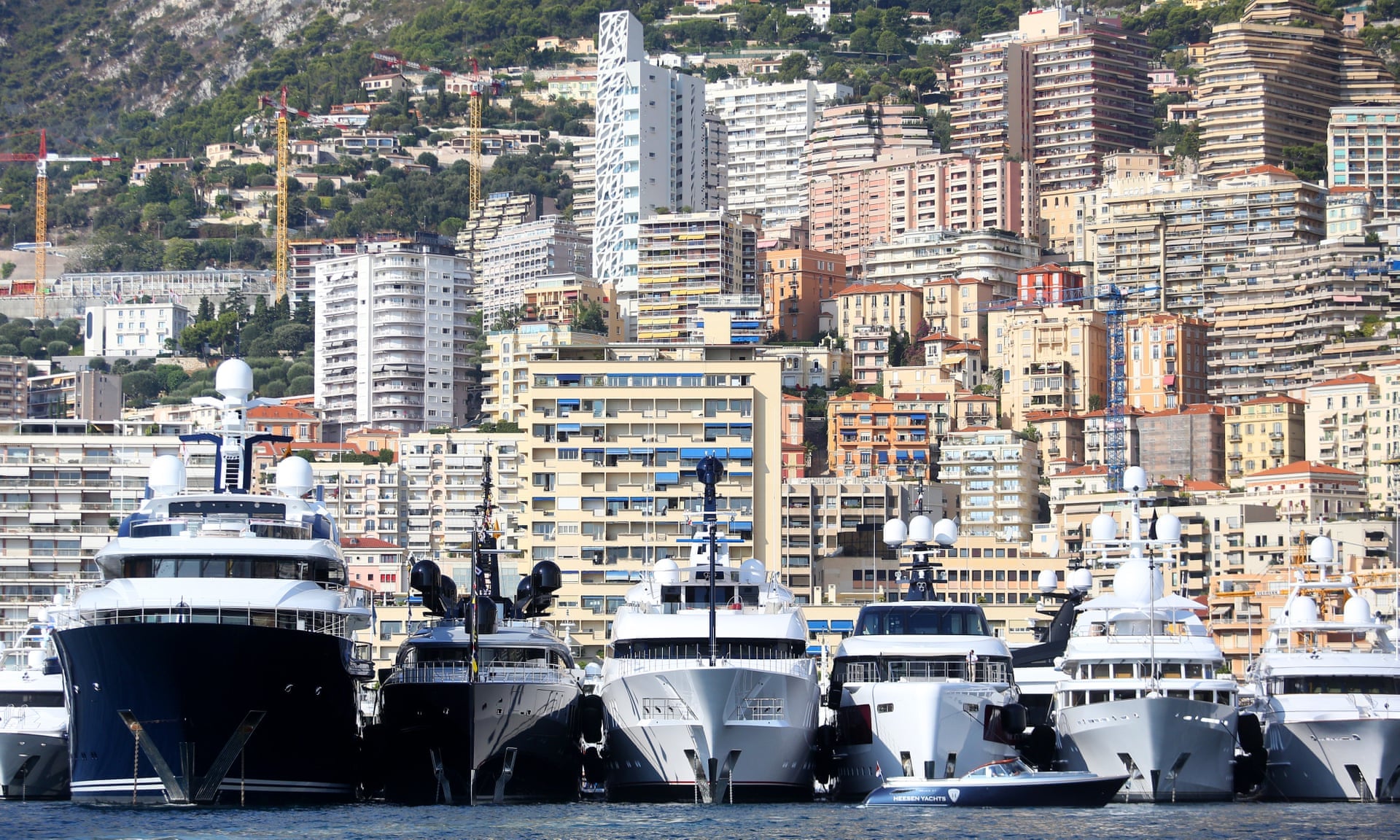
Photograph: Bloomberg via Getty Images The world’s 26 richest people now own as much as poorest 50%. It creates huge problems, misery and conflicts. And it is caused by the West’s version of capitalism and is neither sustainable nor morally defensible, says Jan Oberg. By Oxfam  21 January 2019 Billionaire fortunes increased by 12 percent last year – or $2.5 billion a day – while the 3.8 billion people who make up the poorest half of humanity saw their wealth decline by 11 percent, reveals a new report from Oxfam today. The report is being launched as political and business leaders gather for the World Economic Forum in Davos, Switzerland. ‘Public Good or Private Wealth’ shows the growing gap between rich and poor is undermining the fight against poverty, damaging our economies and fuelling public anger across the globe.  It reveals how governments are exacerbating inequality by underfunding public services, such as healthcare and...
human-rights-day
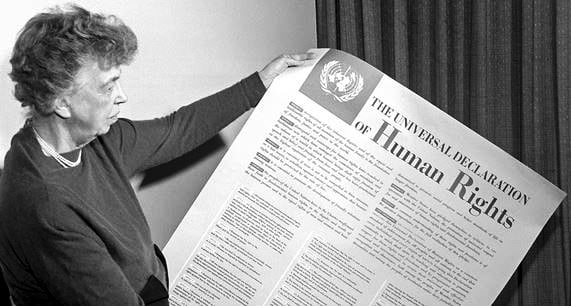
Today the Universal Declaration of Human Rights turns 70. All reason to celebrate. Without the norms embedded in this extremely important document, humankind would be much worse off. Because normativity is important even though it is only words. It enables us to make those who violate human rights accountable. And that is, in general terms, an extremely important aspect of the UN and its Charter. So too the norm expressed in its Article 1 – that peace shall be established by peaceful means and only when all such means have been tried an found in vain, can the UN member states take to violent means. As a last resort. That said, the only two problems I have with the human rights philosophy and concept are: One could also formulate it this way: Human beings have duties vis-a-vis those whose rights are not embedded in any declaration, i.e. other living creatures,...
ChatGPT Image 9 jun 2026, 11_11_33
  Finally, finally, the over-long, ten year trials of the leaders of the murderous Khmer Rouge leadership of Cambodia, are over. The two defendants, Nuon Chea, and Khieu Samphan, were each given a life sentence at the end of the first trial in August 2015 for crimes against humanity. Now last week they were convicted of genocide. Of the other three that were tried, one, the ex-foreign minister, Ieng Sary died in 2013, one, Ieng Thirith, the wife of Ieng Sary, was too ill with Alzheimer’s to appear and one, Kaing Guek Eav (“Duch”), voluntarily confessed three years ago and was sent to jail for 35 years. In the twentieth century, two massacres of hundreds of thousands people compete for second place after Hitler’s extermination of the Jews, Poles, homosexuals and gypsies. One is Cambodia and the other is Rwanda. But Cambodia, where the deaths were between a million and...

Namnlost
By Jan Oberg It’s high time for EU and NATO allies to develop a different policy on Iran. It must not only disagree diplomatically with the unethical and international law-violating U.S. primary and secondary sanctions. It must represent an alternative that clearly isolates the U.S. But do we see any signs that they are able to? Do these countries actually have more political action permission and capacity – not to speak of intellectual capacity to think independently – than had, say, the Warsaw Pact countries vis-a-vis the Soviet Union at the time? TFF director Jan Oberg on Iran’s PressTV, November 14, 2018:
Categories

Year

Author / Contributor

Region