China and Silk

Category

Year

Author / Contributor

Region

Sort by

Showing 1-10 of 181 stories

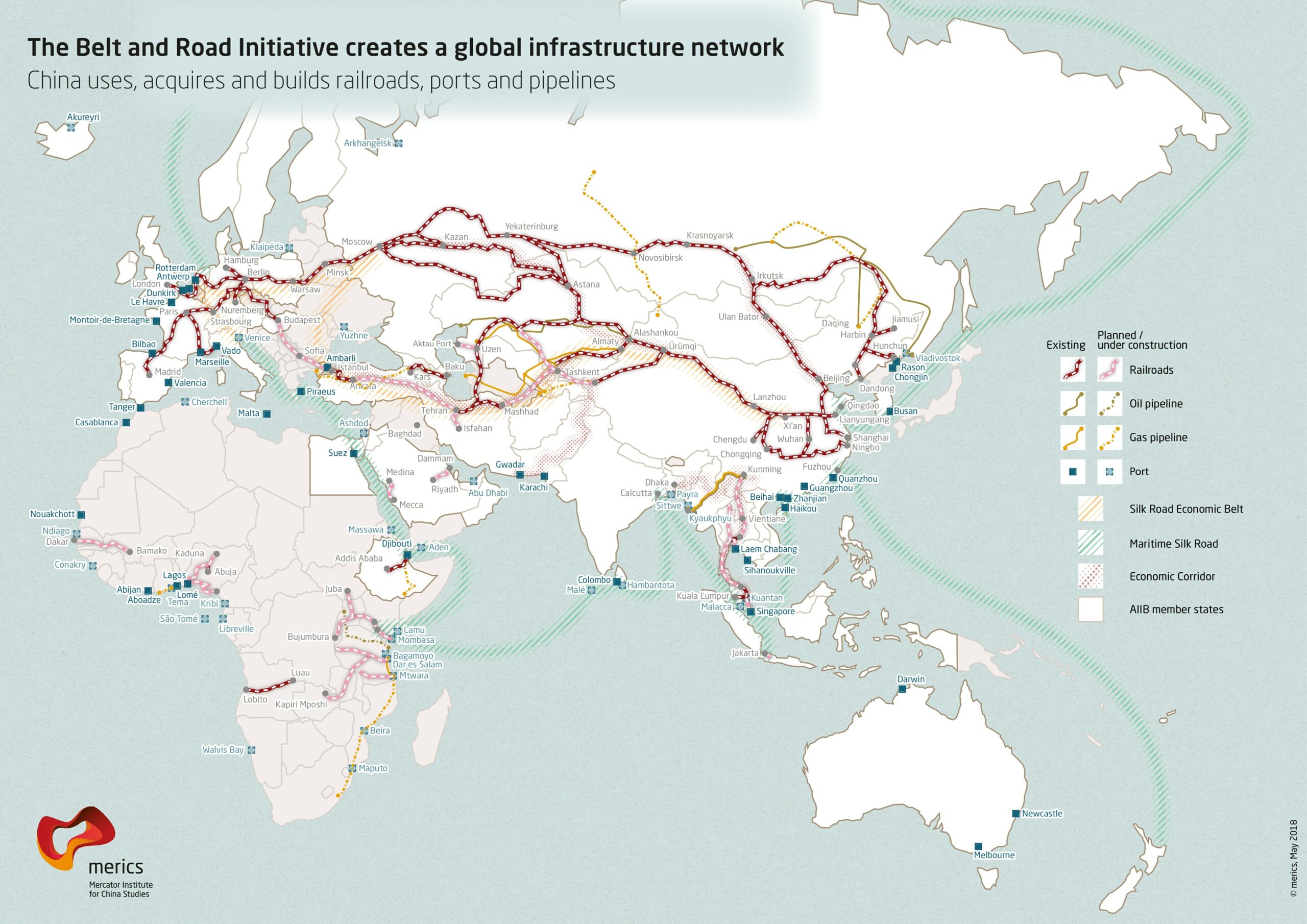
MERICS_Silk_Road_v8
By Chandra Muzaffar May 16th, 2019 The Belt Road Initiative (BRI) also known as the One Belt One Road (OBOR) project could well emerge as the obor (the flame in Indonesian or Malay) that will blaze the trail in the evolution of a new epoch in history. Chinese President Xi Jinping must have sensed its historical significance when he announced OBOR in 2013. Essentially an infrastructure development endeavor it seeks to initiate and support the construction of roads, railways, ports and bridges in at least 65 other countries spanning four continents. With a commitment of over 900 billion US dollars, OBOR is the biggest infrastructure development project ever undertaken in the history of our planet. Originally posted on Transcend Media Service on May 1st, 2019 here It is more than infrastructure in the conventional sense. The China-Pakistan Economic Corridor  (CPEC) for instance which connects China’s Xinjiang province with Gwadar port in Pakistan’s...
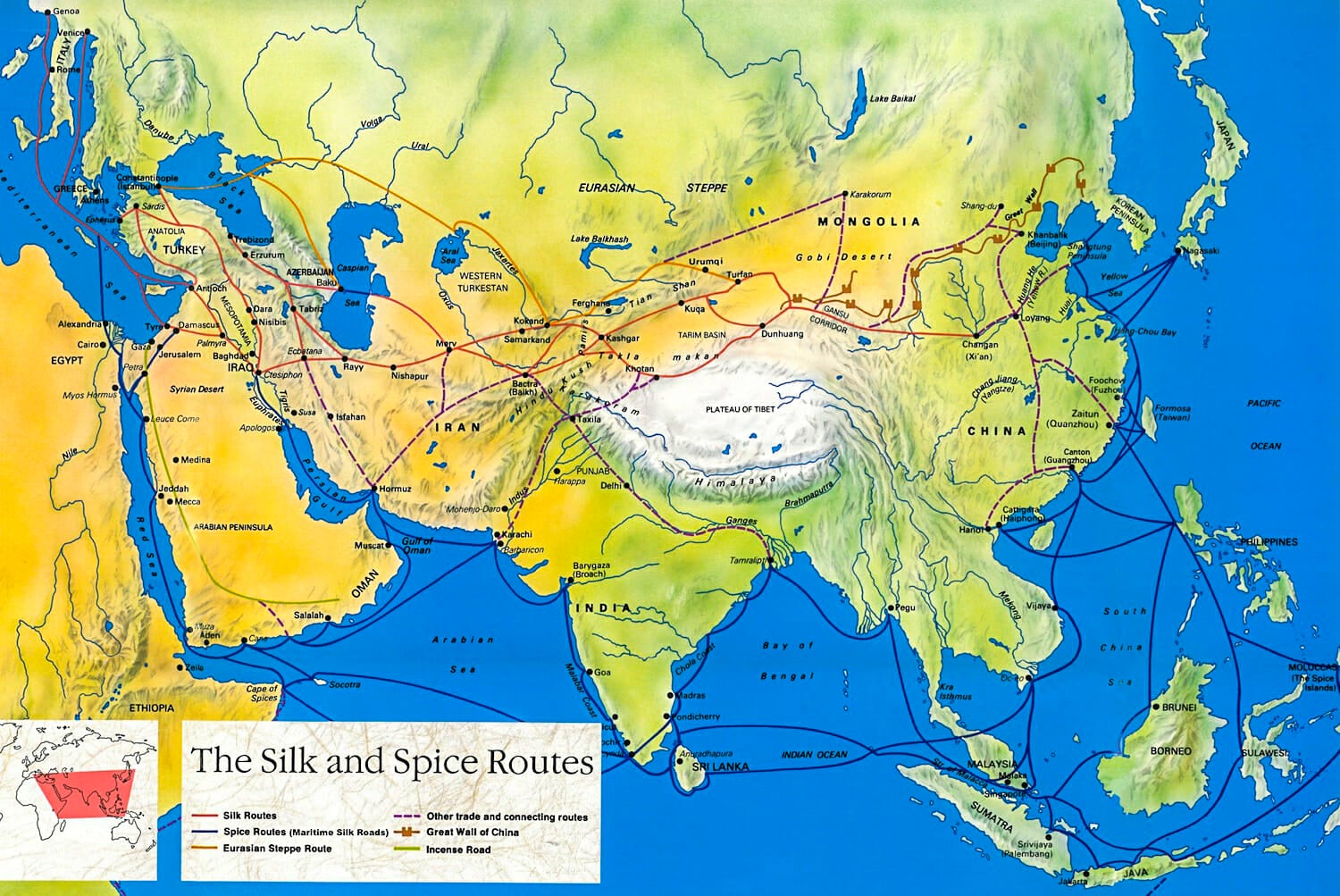
SilkRoadMapOKS_big_Improved
By Gordon M. Hahn April 26, 2019 Three almost uninterrupted centuries of Russian self-comparison, self-assessment, self-identification with the West and ever deeper involvement in the intra-Western geopolitical and imperial competition have come to an end. Harsh lessons Russians have drawn from its three centuries of intimate interaction with the West — its Occidental Era — were reinforced by the post-Cold War failure to create a ‘common European home’ from Vancouver to Vladivostok, leading to the conclusion that Russia had betrayed the meaning of its national seal – the double-headed eagle looking both west and east. Although Russia still references the West as a competitor as well as standard in some respects, Vladimir Putin’s Russia now rejects the post-modernist West and its neo-imperial civilizational, indeed, ‘civilizationalist’ ambitions in Russia’s neighborhood. Instead of seeking to be part of the West or defeat the Western geopolitical paradigm, it seeks along with China and,...
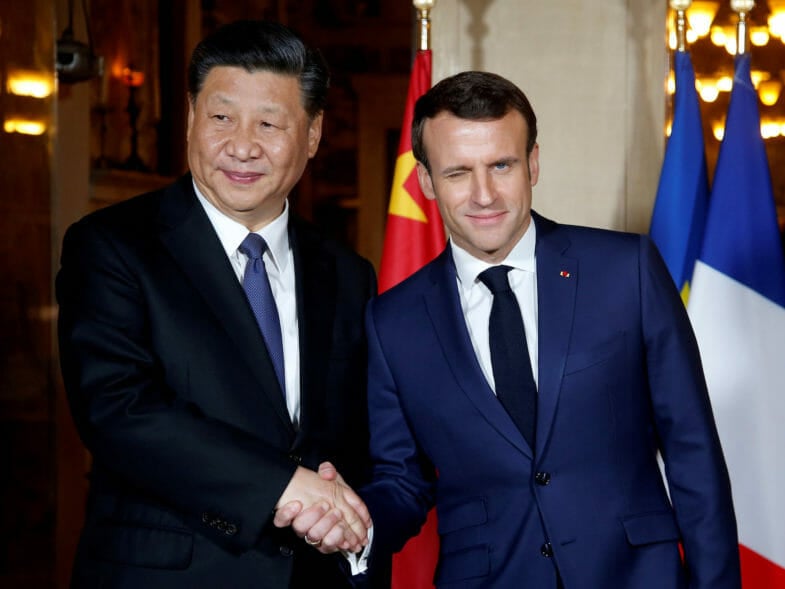
macron-xi-jinping-785x589
Slowly but surely, the EU is shifting its priorities to the East By Pepe Escobar April 18, 2019 Let’s start with the essential background for the meeting in Paris on Tuesday between Chinese President Xi Jinping and three EU heavyweights – French President Emmanuel Macron, German Chancellor Angela Merkel and President of the European Commission (EC) Jean-Claude Juncker. As imperfect as these figures may be, economic growth for the past 10 years after the 2008 financial crisis – which was a made in the West phenomenon – do tell an enlightening story. China’s growth: 139%. India’s growth: 96%. The US’ growth: 34%. EU growth: a negative2%. Originally posted in Asia Times on March 27, 2019 here French mainstream media, controlled by a rarified group of oligarchs, spun a risible narrative that Macron “imposed” this four-way meeting on Xi to press on him the new EC strategy aiming to “clarify” Chinese ambiguity...
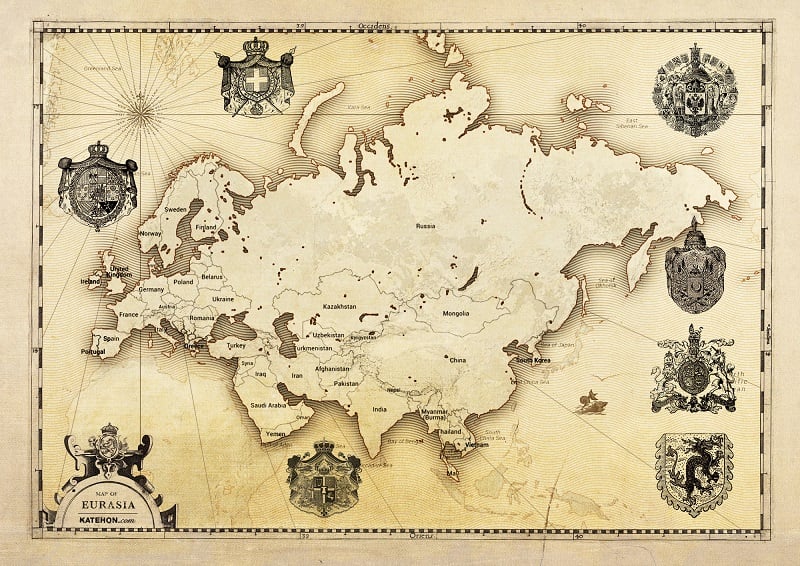
eurasia-
By Pepe Escobar April 16, 2019 Russia is keen to push economic integration with parts of Asia and this fits in with China’s Belt and Road Initiative The concept of Greater Eurasia has been discussed at the highest levels of Russian academia and policy-making for some time. This week the policy was presented at the Council of Ministers and looks set to be enshrined, without fanfare, as the main guideline of Russian foreign policy for the foreseeable future. President Putin is unconditionally engaged to make it a success. Already at the St Petersburg International Economic Forum in 2016, Putin referred to an emerging “Eurasian partnership”. Originally published at eurasia-news-online.com I was privileged over the past week to engage in excellent discussions in Moscow with some of the top Russian analysts and policymakers involved in advancing Greater Eurasia. Three particularly stand out: Yaroslav Lissovolik, program director of the Valdai Discussion Club...
kishore-mahbubani
Have you ever thought of why virtually everything you hear in the West about China is negative and judgemental? And that it builds exclusively on Western criteria, values and perspectives – and not on an attempt to understand China on its own, as different from the West? Here is a Singaporean diplomat, expert in philosophy and international affairs who, in about 4 minutes, explains it in a delightfully succinct, pedagogical way. His name is Kishore Mahbubani and here is his homepage.
ShanghaiPanoPeople_1000_100dpi
Photo © Jan Öberg Av Karl Wang 28:e mars 2019 Denna artikel är skriven av Karl Wang, pensionerad, tidigare ingenjör inom IT&T. Wang är bosatt i Kina. Den tillför ny information och ger en annan bedömning än en del andra artiklar. Den publicerades först på den av Anders Romelsjö redigerade bloggen Global Politics som du kan läsa mer om här. Karl Wang har delat upp sin framställning i följande avsnitt: Vad är ett imperium? Exempel på imperier Hur kom det sig att det blev så i Kina? Dagens Kina Internationellt Kina idag Läs hela artikeln här och observera också de många synpunkter, som den givit upphov till. Det är principiellt viktigt att lära om Kina och diskutera olika tolkningar och perspektiv.
ThoreVestby
By Thore Vestby March 27, 2019 To gather national strength, just create an enemy. In Europe, the Americans are doing this daily on many levels, from small businesses to countries and the continent itself. It is apparent from the media coverage last year that China has been designated “the great danger”. The United States is devoting huge resources to discrediting China in Europe. It is mobilising its political and diplomatic corps to get the world, especially Western nations, to believe that if Chinese economic progress continues, the world might collapse. The strategy seems to be to spread insecurity, suspicion and falsehoods, and to threaten misery if countries fail to follow the US. Originally published by The South China Morning Star on March 26, 2019 Washington has threatened retaliation if the EU limits US involvement in pan-continental military projects. It has warned Turkey not to purchase S-400 rockets from Russia. It...
usa_china_trade_war_210718
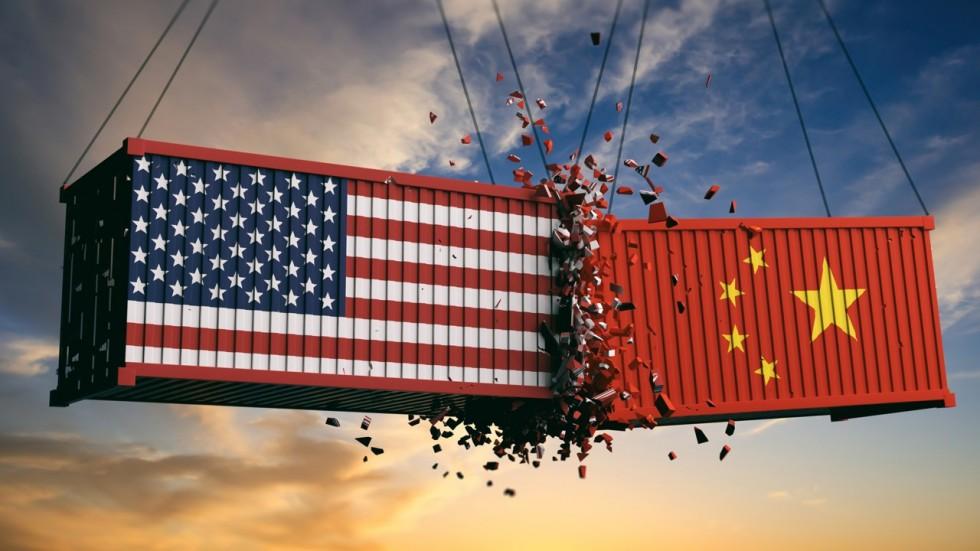
By Michael T. Klare February 26, 2019 In his highly acclaimed 2017 book, Destined for War, Harvard professor Graham Allison assessed the likelihood that the United States and China would one day find themselves at war. Comparing the U.S.-Chinese relationship to great-power rivalries all the way back to the Peloponnesian War of the fifth century BC, he concluded that the future risk of a conflagration was substantial. Like much current analysis of U.S.-Chinese relations, however, he missed a crucial point: for all intents and purposes, the United States and China are already at war with one another. Originally published at juancole.com Even if their present slow-burn conflict may not produce the immediate devastation of a conventional hot war, its long-term consequences could prove no less dire. To suggest this means reassessing our understanding of what constitutes war. From Allison’s perspective (and that of so many others in Washington and elsewhere),...
China_CyclistTienananmen1_1000_150dpi
By Pía Figueroa February 26, 2018 I recently returned from my first trip to China and I am still thinking about everything I saw, which undoubtedly made me realize – once again – how much distortion comes from the press, manipulated by Western interests, on a daily basis. We construct our picture of the world on the basis of information given to us by the news and we blindly believe their interpretation of the facts from their point of view.   These are narratives are at the service of the economic and geopolitical positioning of the major European and North American powers, which take for granted that the world is the way it is and built from there. Originally posted on December 22, 2018, by Pressenza International News Agency here But have we ever been told, for example, how 740 million people, according to official figures, have been able to...
us-china-relations
By Chas Freeman, Jr. February 20, 2019 Remarks to the St. Petersburg Conference on World Affairs Ambassador Chas W. Freeman, Jr. (USFS, Ret.)Senior Fellow, Watson Institute for International and Public Affairs, Brown University St. Petersburg, Florida, 12 February 2019 I’m here at your kind invitation to discuss China, how bad our relations with it may get, and how the contest we’ve initiated with China is likely to play out.  Let me take a minute or two to set the context for this discussion. The context Five hundred years ago this month, Hernán Cortés began the European annihilation of the Mayan, Aztec, and other indigenous civilizations in the Western Hemisphere.  Six months later, in August 1519, Magellan [Fernão de Magalhães] launched his circumnavigation of the globe.  For five centuries thereafter, a series of Western powers – Portugal, Spain, Holland, Great Britain, France, Germany, Russia, and, finally, the United States – overturned...

71de2133-5ae9-45ef-80a0-c1b5d0bb5ec0
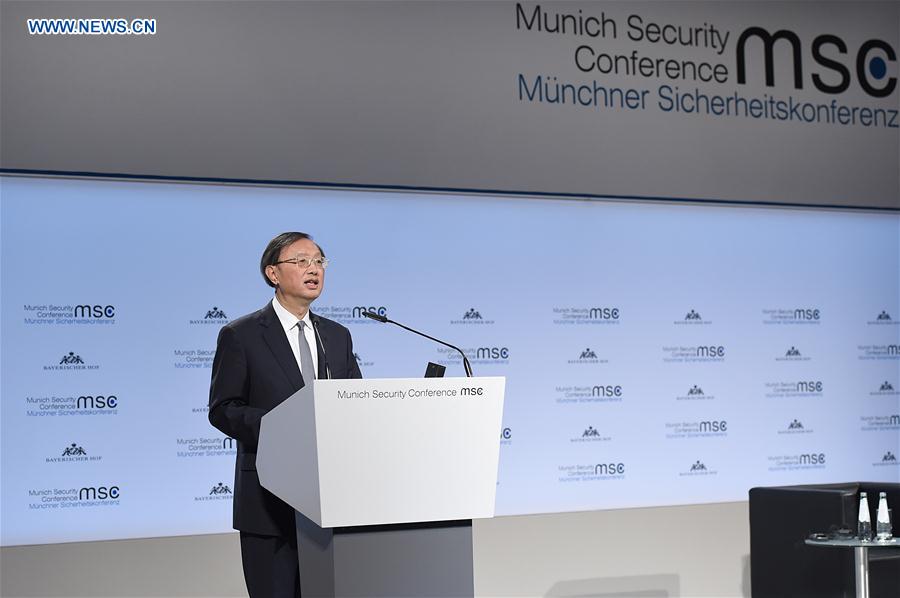
“Working for a Community with a Shared Future for Mankind by Promoting International Cooperation and Multilateralism” By Yang Jiechi February 18, 2019 MUNICH, Germany, Feb. 16 (Xinhua) – Yang Jiechi, a member of the Political Bureau of the Communist Party of China (CPC) Central Committee, Director of the Office of the Central Commission for Foreign Affairs, delivered China’s keynote speech on February 16, 2019 at the 55th Munich Security Conference. Italics added by The Transnational for pedagogical, easier-read reasons. This is the English translated version of the speech reprinted from China Org. cn here: Mr. Wolfgang Ischinger, Chairman of the Munich Security Conference, Ladies and Gentlemen, It is my great pleasure to join you at this year’s Munich Security Conference (MSC). As a global forum on security policy, the MSC provides an important platform for people around the world to express views and share insights on major issues concerning world...
us-china-relations
The Ironies of a Successful U.S. China Policy Remarks to the National Committee for U.S.-China Relations   By Ambassador Chas W. Freeman, Jr. (USFS, Ret.)    Senior Fellow, Watson Institute for International and Public Affairs, Brown University New York, December 18, 2018 Three days ago, we celebrated the fortieth anniversary of Jimmy Carter’s and Deng Xiaoping’s politically courageous decision to normalize relations between the United States and the People’s Republic of China.  I have been involved in our relations with China in one way or another for fifty years.  Thinking about how China and the world as well as U.S. relations with both have changed over that period, I am struck by many ironies.  Originally published on Freeman’s blog here The United States sought to change China’s geopolitical position, not China’s socioeconomic system.  Yet our opening to China informed and enabled major changes in its domestic political economy.  When Washington first reached...
Categories

Year

Author / Contributor

Region