
Slowly but surely, the EU is shifting its priorities to the East

By Pepe Escobar

April 18, 2019

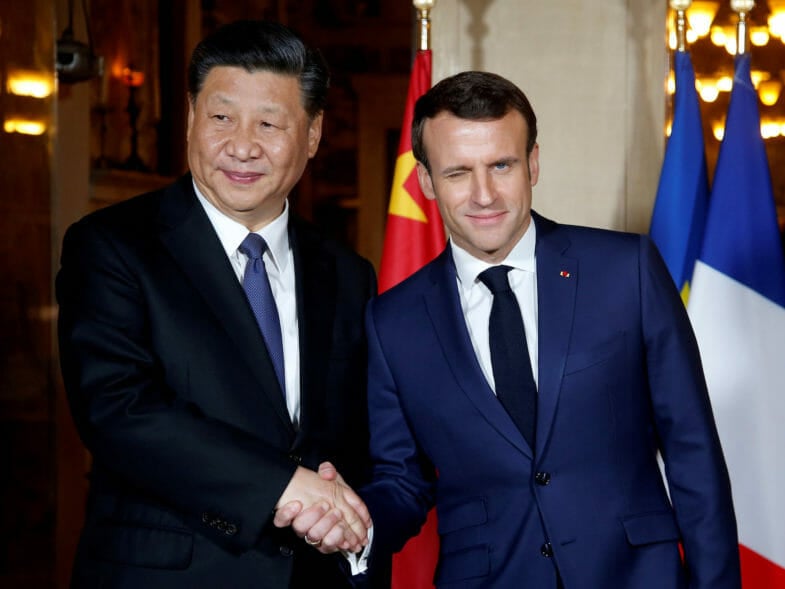
Let’s start with the essential background for the meeting in Paris on Tuesday between Chinese President Xi Jinping and three EU heavyweights – French President Emmanuel Macron, German Chancellor Angela Merkel and President of the European Commission (EC) Jean-Claude Juncker.

As imperfect as these figures may be, economic growth for the past 10 years after the 2008 financial crisis – which was a made in the West phenomenon – do tell an enlightening story.

China’s growth: 139%. India’s growth: 96%. The US’ growth: 34%. EU growth: a negative2%.

Originally posted in Asia Times on March 27, 2019 here

French mainstream media, controlled by a rarified group of oligarchs, spun a risible narrative that Macron “imposed” this four-way meeting on Xi to press on him the new EC strategy aiming to “clarify” Chinese ambiguity in relation to the New Silk Roads, or Belt and Road Initiative (BRI).

As I previously reported, the EC now brands China a “systemic rival,” and seems to have realized that Beijing is an “economic competitor in search of technological leadership.” And that may translate as a threat to European values and norms.

Xi had just come from Rome – where the populist, eurosceptic Lega, Five Stars coalition government became the first G7 nation to sign a partnership with the BRI, igniting massive sparks of Atlanticist fear.

So in the end, what did we get from Chancellor Angela Merkel as the EU faced a process French elites describe as Sino-globalization?

We had realpolitik. Merkel stressed the BRI was an “important” project: “We, as Europeans, want to play an active part and that must lead to certain reciprocity and we are still wrangling over that a bit.” She added: “We are seeing the project as a good visualization of interaction, interrelation and interdependence.”

Merkel was essentially relaying the position of German business elites – as a trade powerhouse, the future of Germany lies in turbo-charging business with Asia, especially China.

So, instead of demonizing Rome, in practice Berlin will eventually embark on the same path. After all, Duisburg, in the Ruhr valley, is already the de facto top BRI terminal in northern Europe.

Xi and his EU partners did not fail to emphasize multilateralism. There could not be a more glaring contrast to the Trump administration’s narrative that China is a threat and the BRI is all about Chinese “vanity.” Juncker even tried to defuse the “systemic” tension: “We understand that China does not like the expression ‘rivals,’ but it is a compliment describing our shared ambitions.”

Add to it that Xi also felt the need to remind the EU leadership of the obvious. China will continue to “open up,” as it managed in only 40 years to accomplish what Europe did over the course of the entire industrial revolution.

New Silk Air, anyone?

On the – embattled – Macron front, more than New Silk Roads a de facto New Silk Air seems to be in effect.

No one – apart from Boeing – argues about a 30 billion Euro-plus Chinese order to buy 300 Airbuses. And that’s only the beginning. The fact that Beijing will use Airbus technology to enhance its aviation prowess under the framework of Made in China 2025 is another matter entirely.

So Paris may not have turned, like Rome, into an official partner to the New Silk Roads – at least not yet. But the promises are quite telling – on three fronts.

1) The emphasis on multilateralism – “strong and efficient.” That’s not exactly Trumpian rhetoric.

2) Common action with Beijing on climate change and biodiversity.

3) An economic-trade partnership that respects mutual interests. That is, in fact, New Silk Roads-BRI official policy since the beginning, in 2013.

So when we compare the different strategies by Rome and Paris, Xi has, in fact, come out with a win-win.
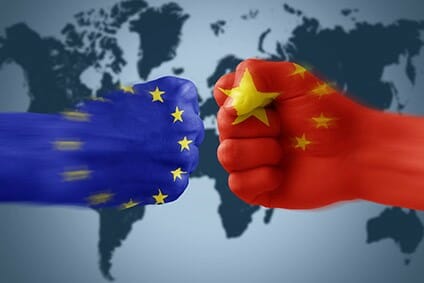
Merkel, predictably, was careful to hedge to the hilt: “The triangle between EU, China and US is very important. Without the US, we will not be able to have multilateralism.”

At the same time, she stressed, the US-China trade war was “hitting our German economy.”

As for Team Macron, with the leader obsessed with posing as the savior of the EU ahead of the European Parliament elections in May, they could not help but go after the administration in Rome.

According to a Macron acolyte: “There is this bad European habit to have 28 different policies, with countries competing against each other to attract investment. We need to speak with a common voice if we want to exist. We have the same approach on the 5G issue: avoiding 28 different decisions.”

The 5G Monaco Grand Prix

Which brings us to the case of Monaco, not exactly a shabby prize – and duly visited by Xi, who was received, literally, as royalty.

The principality is absolutely avid to gobble up the fast-growing Chinese luxury tourism market. And that explains why Monaco has already signed a deal with Huawei to be the first country to be entirely covered by 5G before the end of 2019.

Paris, by the way, has not ruled out using Huawei equipment. And as a cherry on the cake, guess which city Huawei chose to globally unveil its spectacular new P30 series of smartphones? Paris.

Make no mistake, for Beijing, in terms of trade and economic relations, Berlin is way more relevant than Paris. But these big three – Berlin, Paris and Rome – all have major roles to play.

The New Silk Roads being re-connected to Italy after half a millennium will accelerate Euro-Asia integration, and even, in the long run, more influence for both the Eurasia Economic Union (EAEU) and the Shanghai Cooperation Organization (SCO).

EU businesses, if not political Eurocrats, are starting to realize that Europe cannot afford to become a battlefield in Cold War 2.0 between the US and Russia, cannot afford to become a hostage of Washington tearing up international law – see, for instance, the destruction of the Iran nuclear deal and recognizing the occupied Golan Heights as part of Israel – and cannot afford to become a victim of Washington’s trade whims.

It’s no wonder that slowly but surely, the EU is shifting its priorities to the East – including to its “systemic rival.”

Pepe Escobar is a Brazilian journalist who has written for Asia Times for many years, covering events throughout Asia and the Middle East. He has also been an analyst for RT and Sputnik News, and previously worked for Al Jazeera.

One Response

  1. Despite intense open and secret pressure by the Trump administration and to its great annoyance, it seems that the British government has also decided to allow Huawei to take part in G5 British project.

Related Posts

This is the third appeal from TFF. The first and the second here. On August 22, 2025, the UN officially declared famine in Gaza. The world’s top authority on food security called for help and said starvation will spread further within the Strip unless fighting stops and much more aid is allowed in. More than half a million people in the Gaza Strip are facing catastrophic hunger conditions, while more than a million more are in a food emergency phase, the report states. This man-made catastrophic famine could have been prevented by a steady flow of humanitarian aid into the enclave, relief chief Tom Fletcher pointed out. “Yet food stacks up at borders because of systematic obstruction by Israel,” Mr. Fletcher said. “It is a famine within a few 100 meters of food in a fertile land.” The UN’s top aid official underscored that the famine in Gaza is “caused by cruelty, justified...
Farhang Jahanpour TFF Associate and former Board member September 8, 2025 On 28 August 2025, France, Germany, and the United Kingdom (the EU Troika) decided to trigger the so-called “snapback mechanism” and reimpose stringent sanctions on Iran after 30 days for its alleged violation of the terms of the Iran nuclear deal, known as the Joint Comprehensive Plan of Action (JCPOA), if Iran did not give in to their demands within 30 days. In the lawless world in which we are living at the moment, discussing the principles of international law is futile and irrelevant. We have reverted to the age of imperial dictatorship and big power dominance. This state of affairs is dangerous for the whole world, especially the Global South, which is at the mercy of the dictates of the superpowers. However, a return to the rivalry between powerful empires outside the scope of international law, which led...
Professor Zhang Weiwei is a highly respected Chinese intellectual and professor at Fudan University in Shanghai. He is the director of its China Institute and also runs a series of conversations with many different people around the world. Here is what came out of their meetings there and in Skopje, Macedonia in October 2024: & As you can see, also at the end of the second one, we both enjoy win-win exchanges like these about world order issues. Zhang Weiwei is known for using videos and social media to reach a large audience in China and worldwide. We suggest you see many more of Zhang Weiwei’s conversations – like recently with Professor Jeffrey Sachs – on the Thinkers’ Forum on YouTube. PSTFF posts hundreds of videos, its own and those of others, in our Video Collections on TFF Substack – including those that appear on YouTube. However, TFF has been cancelled by Google-owned...

Recent Articles

Tony Robinson October 4, 2026 Violence is easy to recognise when someone is being beaten, shot or killed. It becomes more difficult when nobody is holding a weapon. Poverty, discrimination, exploitation and repression can restrict a human life just as effectively, although they do so in very different ways and with very different consequences. Simply adding more categories to an ever-growing list of forms of violence does not really solve the problem. The more interesting question is what all these different situations have in common and why it makes sense to describe them using the same word. Human beings do not simply react to what happens around them. They remember the past, imagine things that do not yet exist, make plans and undertake projects. Workers organise because they imagine different working conditions; people migrate because they imagine another life somewhere else; social movements emerge because people refuse to accept the...
It’s a matter of principles, courage, vision and pulling together – while the militarist world is falling apart… Peter Langille October 3, 2026 “Here, then, is the problem which we present to you, stark and dreadful and inescapable: Shall we put an end to the human race; or shall mankind renounce war?”The Bertrand Russell—Albert Einstein Manifesto, July 9, 1955 ⁕ The forecast for what’s ahead is worrisome. The sharp rise in armed conflicts over the past three years is adding to what was already the highest level in over seventy years. Genocides, which should be prevented are supported. A shared climate emergency that jeopardises survival is ignored. Diverse polls now suggest that people are war-weary, worried and interested in a more effective United Nations. And, there are viable policy options for a more secure world! Yet governments are doubling-down, betting on more war and investing heavily. If current trends persist,...
Johan Galtung 1930-2024October 2015 Published here on October 3, 2026 Let us focus on Civilization for conflict analysis and remedies. Major forms of disorder use violence; war is state organized violence. The most belligerent states are the United States of America and Israel, both with civilization roots. National Evangelism, the US Protestant Christian civilization– more national than evangelical–justifies US warfare as exceptionalism of a people chosen by God, with a manifest destiny to run the world. Orthodox Judaism justifies Israeli warfare to conquer and expand from Nile to Euphrates as a religious right and duty to the Eternal One. The third most belligerent country, the UK, no longer believes it is God-chosen but chosen by the USA; not quite the same but something. But the root cause of global disorder lies in the Occident–with Islam–seeing itself as the single, universal civilization valid for all at all times, all others being...

TFF on Substack

Discover and subscribe to more peace materials on TFF Substack

Most Popular

Tony Robinson October 4, 2026 Violence is easy to recognise when someone is being beaten, shot or killed. It becomes more difficult when nobody is holding a weapon. Poverty, discrimination, exploitation and repression can restrict a human life just as effectively, although they do so in very different ways and with very different consequences. Simply adding more categories to an ever-growing list of forms of violence does not really solve the problem. The more interesting question is what all these different situations have in common and why it makes sense to describe them using the same word. Human beings do not simply react to what happens around them. They remember the past, imagine things that do not yet exist, make plans and undertake projects. Workers organise because they imagine different working conditions; people migrate because they imagine another life somewhere else; social movements emerge because people refuse to accept the...
It’s a matter of principles, courage, vision and pulling together – while the militarist world is falling apart… Peter Langille October 3, 2026 “Here, then, is the problem which we present to you, stark and dreadful and inescapable: Shall we put an end to the human race; or shall mankind renounce war?”The Bertrand Russell—Albert Einstein Manifesto, July 9, 1955 ⁕ The forecast for what’s ahead is worrisome. The sharp rise in armed conflicts over the past three years is adding to what was already the highest level in over seventy years. Genocides, which should be prevented are supported. A shared climate emergency that jeopardises survival is ignored. Diverse polls now suggest that people are war-weary, worried and interested in a more effective United Nations. And, there are viable policy options for a more secure world! Yet governments are doubling-down, betting on more war and investing heavily. If current trends persist,...
Johan Galtung 1930-2024October 2015 Published here on October 3, 2026 Let us focus on Civilization for conflict analysis and remedies. Major forms of disorder use violence; war is state organized violence. The most belligerent states are the United States of America and Israel, both with civilization roots. National Evangelism, the US Protestant Christian civilization– more national than evangelical–justifies US warfare as exceptionalism of a people chosen by God, with a manifest destiny to run the world. Orthodox Judaism justifies Israeli warfare to conquer and expand from Nile to Euphrates as a religious right and duty to the Eternal One. The third most belligerent country, the UK, no longer believes it is God-chosen but chosen by the USA; not quite the same but something. But the root cause of global disorder lies in the Occident–with Islam–seeing itself as the single, universal civilization valid for all at all times, all others being...
Read More
Living-Peace-Sign-Budapest-copy
Tony Robinson October 4, 2026 Violence is easy to recognise when someone is being beaten, shot or killed. It becomes more difficult when nobody is holding a weapon. Poverty, discrimination, exploitation and repression can restrict a human life just as effectively, although they do so in very different ways and with very different consequences. Simply adding more categories to an ever-growing list of forms of violence does not really solve the problem. The more interesting question is what all these different situations have in common and why it makes sense to describe them using the same word. Human beings do not simply react to what happens around them. They remember the past, imagine things that do not yet exist, make plans and undertake projects. Workers organise because they imagine different working conditions; people migrate because they imagine another life somewhere else; social movements emerge because people refuse to accept the...
b54a1f10-8c65-4f0b-9dd5-4abc0a7d04cc_2659x2659
It’s a matter of principles, courage, vision and pulling together – while the militarist world is falling apart… Peter Langille October 3, 2026 “Here, then, is the problem which we present to you, stark and dreadful and inescapable: Shall we put an end to the human race; or shall mankind renounce war?”The Bertrand Russell—Albert Einstein Manifesto, July 9, 1955 ⁕ The forecast for what’s ahead is worrisome. The sharp rise in armed conflicts over the past three years is adding to what was already the highest level in over seventy years. Genocides, which should be prevented are supported. A shared climate emergency that jeopardises survival is ignored. Diverse polls now suggest that people are war-weary, worried and interested in a more effective United Nations. And, there are viable policy options for a more secure world! Yet governments are doubling-down, betting on more war and investing heavily. If current trends persist,...
010
Johan Galtung 1930-2024October 2015 Published here on October 3, 2026 Let us focus on Civilization for conflict analysis and remedies. Major forms of disorder use violence; war is state organized violence. The most belligerent states are the United States of America and Israel, both with civilization roots. National Evangelism, the US Protestant Christian civilization– more national than evangelical–justifies US warfare as exceptionalism of a people chosen by God, with a manifest destiny to run the world. Orthodox Judaism justifies Israeli warfare to conquer and expand from Nile to Euphrates as a religious right and duty to the Eternal One. The third most belligerent country, the UK, no longer believes it is God-chosen but chosen by the USA; not quite the same but something. But the root cause of global disorder lies in the Occident–with Islam–seeing itself as the single, universal civilization valid for all at all times, all others being...
Screenshot 2026-10-02 011738
Jan ObergPhD, director, The Transnational Foundation for Peace and Future Research, TFFLund, Sweden October 2, 2026 This is my full original manuscript. The Chinese Academy of Social Science, CASS, makes two publications out if it. 1. China’s Five-year plan emphasized the capabilities of basic research and original innovation. It is regarded as the goal of the future social development, which, as required, should be significantly enhanced. Can you comment on the importance of original innovation in research and academic study? I believe it is easier to define “original innovation” in the natural sciences than in social sciences. The breaking points of what constitutes something new, or innovative, are not quite as sharp in the latter. But in both fields it is about opening up something that was closed, unseen, unexplored before – making manifest what was earlier latent. Innovations come in many forms and shapes – naming something that was not...
arctic-circle-map
The agreement is catastrophic both because of what it says and what it doesn’t mention. It reduces further the major asset of security policies: Freedom of action. Jan Oberg TFF director September 25, 2026 A couple of hours before the agreement was signed on September 22, 2026, I published the following 13 hypotheses about what it would most likely contain on TFF Substack (in English). I was wrong on only the first point. Contrary to what Trump had written on his Truth Social platform, it does not appear to come into force immediately. In fact, it turned out to be worse than even I had anticipated. After these hypotheses now come a number of reflections in light of what the agreement actually contains, and does not contain, as well as the way in which it has generally been presented by major media outlets and by the public-service broadcaster DR. My...
girl-5894831_1280
Below are TFF-related media mentions, comments, videos and social media posts published elsewhere but not on this homepage. We happen to catch and list only a fraction. Regarding video comments and debates, we recommend that you go to the TFF Video Channel on Substack where many of them are reproduced. Jan Oberg is a contributor to China Daily – 52 million daily clicks – and Global Times, CGTN and CCTV (the national television), China Investment, Xinhua News Agency and several others. Articles and videos on these media very often multiply into countless Chinese (and Western media) that re-post them from these main media. Thanks to The China Academy, his analyses, interviews and comments are frequently posted on YouTube channels such as Thinkers Forum and Wave Media. These videos are often re-posted on Bilibili (China’s YouTube), the China Content Center on TikTok, and on the Chinese edition of TikTok, Douyin.com. This means reaching hundreds of millions of viewers worldwide over a year. While there are too many to catch on all these...




