China’s Belt and Road Initiative: Towards a Just World?

By Chandra Muzaffar

May 16th, 2019

The Belt Road Initiative (BRI) also known as the One Belt One Road (OBOR) project could well emerge as the obor (the flame in Indonesian or Malay) that will blaze the trail in the evolution of a new epoch in history.

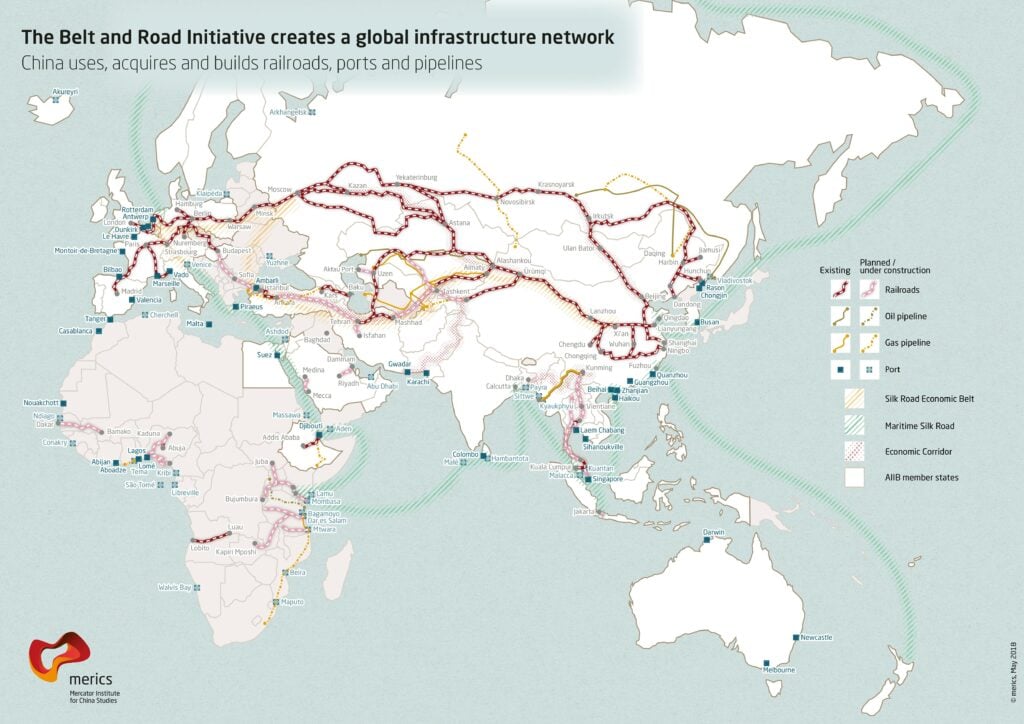
Chinese President Xi Jinping must have sensed its historical significance when he announced OBOR in 2013. Essentially an infrastructure development endeavor it seeks to initiate and support the construction of roads, railways, ports and bridges in at least 65 other countries spanning four continents. With a commitment of over 900 billion US dollars, OBOR is the biggest infrastructure development project ever undertaken in the history of our planet.

Originally posted on Transcend Media Service on May 1st, 2019 here

It is more than infrastructure in the conventional sense. The China-Pakistan Economic Corridor  (CPEC) for instance which connects China’s Xinjiang province with Gwadar port in Pakistan’s Balochistan province will strengthen Pakistan’s energy sector, contribute to economic growth and reduce its severe trade deficit. The CPEC will also enhance cooperation between the two countries in agriculture.  There are other projects in other countries that will impact positively upon education and health care.

There is no doubt at all that OBOR will also facilitate the interaction of cultures and communities across national boundaries. This may lead to better understanding and appreciation of cultural and religious diversity. Greater respect for the differences and similarities that distinguish religions and cultures could help create an atmosphere that conduces towards social harmony.

If OBOR paves the way for positive interaction between different ethnicities and nationalities it would be replicating one of the outstanding achievements of the ancient Silk Route which was the inspiration for OBOR.

Ideas and beliefs flowed along the Silk Route which connected East Asia and Southeast Asia with West Asia and East Africa to Southern Europe from about 130 BC until perhaps the middle of the 15th century.  It is significant that it was through the Silk Route that Buddhism, Christianity and Islam spread at different times in history.

It was “the cauldron where language groups competed, where Indo-European, Semitic and Sino-Tibetan tongues wagged alongside those speaking Altaic, Turkic and Caucasian.”

Places of worship and libraries dotted the region “connecting Constantinople to Damascus, Isfahan, Samarkand, Kabul and Kashgar.”

First Wave of Globalization

These fabulous cities were not only centres of culture and learning but also hubs of thriving commercial enterprise. Silk was an important element in the trade that connected the sprawling network of links which was why a German geologist in the 19th century gave it the name the “Silk Roads”.  Precious stones and metals, paper and artwork, leather and hides, grains and spices, fruits and vegetables were all part of the trade and commerce that brought China and India close to Persia and Rome and vice versa.  

The variety of goods and commodities available and the lands and nations that produced them endowed the Silk Route with an unprecedented global character. It was truly humankind’s first wave of globalization.

Second Wave of Globalization

A variety of factors brought the wave to an end, among them Christopher Columbus’s expedition to the Americas and Vasco da Gama’s journey around the southern tip of Africa and on to India at the end of the 15th century, both of which opened up new sea routes for Europe’s ascending maritime powers.

Columbus in relation to the Americas and da Gama in relation to India and Asia heralded the rise of European colonialism which over the next four centuries embarked upon the conquest of land, the subjugation of people and the usurpation of natural resources that ushered in a pattern of power, control and dominance centering around Europe and later, the United States of America.

Indeed, western colonialism as it expressed itself in almost every sphere of life laid the basis for a new form of globalization which has perpetuated itself beyond the end of formal colonial rule. It is what one would call ‘hegemonic globalization’. 

Hegemonic globalization has resulted in the dissemination of ideas and methods in economics and finance, politics and administration, education and science which by and large emanate from the centers of power in the West.

It has shaped a world in which the interests and agendas of the dominant West supersede everything else. This is why the second wave of globalization is perceived as unjust and inimical to the well-being of the majority of the world’s citizens.

Third Wave of Globalization

As globalization’s third wave, OBOR is opposed to hegemony. The Chinese leadership sees relationships among OBOR states as a partnership. It has no intention of imposing its will upon any other state. This was put to the test in the East Coast Rail Link (ECRL) issue which saw Malaysia objecting to various terms of the agreement forged between a Chinese company and the previous Malaysian government  that were clearly detrimental to the nation’s interests. After strenuous negotiations, the agreement was revised extensively for the good of both parties.

It is not just China’s willingness to consider the interests of a partner state that facilitated a solution to the ECRL issue. The partner state should also be free of those vested interests that impede a just solution.

It is important to observe that even in other collaborative efforts in which China has played a leading role such as the Asia Infrastructure Investment Bank (AIIB), the Brazil, Russia, India, China and South Africa (BRICS) network and the Shanghai Cooperation Organization (SCO), China has adopted a collegial approach.

Given its record, China should now elevate the principle of partnership in OBOR to a higher level by establishing an international panel consisting of seven to ten OBOR states that would be given the task of monitoring and evaluating the implementation of OBOR projects and activities.  The proposed panel would of course work closely with the Chinese authorities.

It could also help ensure that OBOR is corruption-free which is the wish that Xi expressed at the recently concluded Belt and Road Forum for International Cooperation in Beijing. There will be other challenges facing OBOR in the years ahead. But the governments that are committed to the project should remain steadfast in their determination to achieve its goals.

For apart from the economic and cultural benefits that OBOR will bring to the human family which we have noted, OBOR is the best hope we have for evolving a just and equitable world which is not dominated by a few.

Only in such a world will human dignity flourish. This is perhaps the most compelling reason why the citizens of the world should strive with all their energy to keep the flame alive.
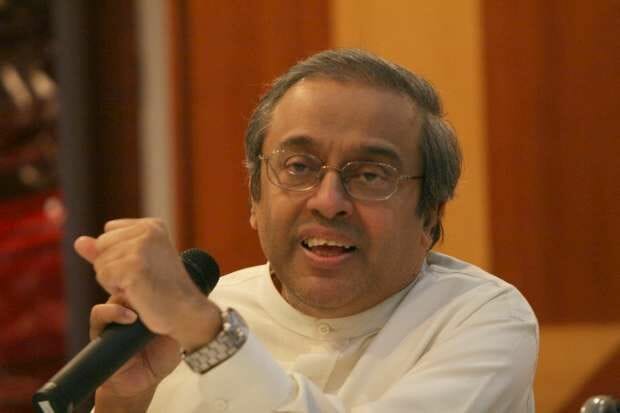

Dr. Chandra Muzaffar is a member of the TRANSCEND Network for Peace, Development and Environment, and president of the International Movement for a Just World (JUST). He is the author of the e-book ‘Whither WANA?-Reflections on the Arab Uprisings,’ which is accessible through the JUST website, www.just-international.org.

Related Posts

Jan Oberg February 19, 2026 What a thrill to be interviewed by former British diplomat Ian Proud! Don’t waste a minute: acquaint yourself with him here on his homepage, which he elegantly calls “Proud Diplomat.” Notice also his book, A Misfit In Moscow. Ian is, of course, also on Substack, where he calls himself The Peace Monger, and recently he set up his own PeaceMonger Channel on YouTube. For once, I was not interviewed as if I were a military geopolitical expert, where I normally have to twist the whole thing in the direction of peace. No, we both had a focus on peace – why it has been disappeared by research, politics and the media, but also what can be done to shape a more peaceful future for us all. One idea we came up with was that of connecting people through citizens diplomacy – in an era where...
By Jan ObergTFF co-founder and director February 11, 2026 PART 3 — ECONOMICS, TRADE & FINANCIAL SOVEREIGNTY A. Trade Measures & Market Signaling Economic pressure can be applied instantly and scaled without violence. Immediate Measures (within a week) Government boycott US goods and services  A very powerful signal which over time will be felt. Targeted tariffs on selected U.S. goods Symbolic but high-visibility sectors send a clear message. Suspend trade facilitation talks A peaceful pause that signals deep concern. Freeze U.S. participation in public procurement – military procurement in particular A nonviolent way to reduce influence. Competition law review of U.S. corporations A legal tool to scrutinise market dominance. Longer-Term Measures EU–Asia–Africa trade corridors Reducing reliance on U.S. markets. European supply chains for critical minerals Strategic autonomy in resource access. European Strategic Trade Authority Monitoring coercive practices globally. Euro-denominated commodity markets Weakening the dollar’s pricing monopoly. The EU must resume contacts and negotiations with Russia, focusing on energy cooperation To...
Professor Zhang Weiwei is a highly respected Chinese intellectual and professor at Fudan University in Shanghai. He is the director of its China Institute and also runs a series of conversations with many different people around the world. Here is what came out of their meetings there and in Skopje, Macedonia in October 2024: & As you can see, also at the end of the second one, we both enjoy win-win exchanges like these about world order issues. Zhang Weiwei is known for using videos and social media to reach a large audience in China and worldwide. We suggest you see many more of Zhang Weiwei’s conversations – like recently with Professor Jeffrey Sachs – on the Thinkers’ Forum on YouTube. PSTFF posts hundreds of videos, its own and those of others, in our Video Collections on TFF Substack – including those that appear on YouTube. However, TFF has been cancelled by Google-owned...

Recent Articles

Tony Robinson October 4, 2026 Violence is easy to recognise when someone is being beaten, shot or killed. It becomes more difficult when nobody is holding a weapon. Poverty, discrimination, exploitation and repression can restrict a human life just as effectively, although they do so in very different ways and with very different consequences. Simply adding more categories to an ever-growing list of forms of violence does not really solve the problem. The more interesting question is what all these different situations have in common and why it makes sense to describe them using the same word. Human beings do not simply react to what happens around them. They remember the past, imagine things that do not yet exist, make plans and undertake projects. Workers organise because they imagine different working conditions; people migrate because they imagine another life somewhere else; social movements emerge because people refuse to accept the...
It’s a matter of principles, courage, vision and pulling together – while the militarist world is falling apart… Peter Langille October 3, 2026 “Here, then, is the problem which we present to you, stark and dreadful and inescapable: Shall we put an end to the human race; or shall mankind renounce war?”The Bertrand Russell—Albert Einstein Manifesto, July 9, 1955 ⁕ The forecast for what’s ahead is worrisome. The sharp rise in armed conflicts over the past three years is adding to what was already the highest level in over seventy years. Genocides, which should be prevented are supported. A shared climate emergency that jeopardises survival is ignored. Diverse polls now suggest that people are war-weary, worried and interested in a more effective United Nations. And, there are viable policy options for a more secure world! Yet governments are doubling-down, betting on more war and investing heavily. If current trends persist,...
Johan Galtung 1930-2024October 2015 Published here on October 3, 2026 Let us focus on Civilization for conflict analysis and remedies. Major forms of disorder use violence; war is state organized violence. The most belligerent states are the United States of America and Israel, both with civilization roots. National Evangelism, the US Protestant Christian civilization– more national than evangelical–justifies US warfare as exceptionalism of a people chosen by God, with a manifest destiny to run the world. Orthodox Judaism justifies Israeli warfare to conquer and expand from Nile to Euphrates as a religious right and duty to the Eternal One. The third most belligerent country, the UK, no longer believes it is God-chosen but chosen by the USA; not quite the same but something. But the root cause of global disorder lies in the Occident–with Islam–seeing itself as the single, universal civilization valid for all at all times, all others being...

TFF on Substack

Discover and subscribe to more peace materials on TFF Substack

Most Popular

Tony Robinson October 4, 2026 Violence is easy to recognise when someone is being beaten, shot or killed. It becomes more difficult when nobody is holding a weapon. Poverty, discrimination, exploitation and repression can restrict a human life just as effectively, although they do so in very different ways and with very different consequences. Simply adding more categories to an ever-growing list of forms of violence does not really solve the problem. The more interesting question is what all these different situations have in common and why it makes sense to describe them using the same word. Human beings do not simply react to what happens around them. They remember the past, imagine things that do not yet exist, make plans and undertake projects. Workers organise because they imagine different working conditions; people migrate because they imagine another life somewhere else; social movements emerge because people refuse to accept the...
It’s a matter of principles, courage, vision and pulling together – while the militarist world is falling apart… Peter Langille October 3, 2026 “Here, then, is the problem which we present to you, stark and dreadful and inescapable: Shall we put an end to the human race; or shall mankind renounce war?”The Bertrand Russell—Albert Einstein Manifesto, July 9, 1955 ⁕ The forecast for what’s ahead is worrisome. The sharp rise in armed conflicts over the past three years is adding to what was already the highest level in over seventy years. Genocides, which should be prevented are supported. A shared climate emergency that jeopardises survival is ignored. Diverse polls now suggest that people are war-weary, worried and interested in a more effective United Nations. And, there are viable policy options for a more secure world! Yet governments are doubling-down, betting on more war and investing heavily. If current trends persist,...
Johan Galtung 1930-2024October 2015 Published here on October 3, 2026 Let us focus on Civilization for conflict analysis and remedies. Major forms of disorder use violence; war is state organized violence. The most belligerent states are the United States of America and Israel, both with civilization roots. National Evangelism, the US Protestant Christian civilization– more national than evangelical–justifies US warfare as exceptionalism of a people chosen by God, with a manifest destiny to run the world. Orthodox Judaism justifies Israeli warfare to conquer and expand from Nile to Euphrates as a religious right and duty to the Eternal One. The third most belligerent country, the UK, no longer believes it is God-chosen but chosen by the USA; not quite the same but something. But the root cause of global disorder lies in the Occident–with Islam–seeing itself as the single, universal civilization valid for all at all times, all others being...
Read More
Living-Peace-Sign-Budapest-copy
Tony Robinson October 4, 2026 Violence is easy to recognise when someone is being beaten, shot or killed. It becomes more difficult when nobody is holding a weapon. Poverty, discrimination, exploitation and repression can restrict a human life just as effectively, although they do so in very different ways and with very different consequences. Simply adding more categories to an ever-growing list of forms of violence does not really solve the problem. The more interesting question is what all these different situations have in common and why it makes sense to describe them using the same word. Human beings do not simply react to what happens around them. They remember the past, imagine things that do not yet exist, make plans and undertake projects. Workers organise because they imagine different working conditions; people migrate because they imagine another life somewhere else; social movements emerge because people refuse to accept the...
b54a1f10-8c65-4f0b-9dd5-4abc0a7d04cc_2659x2659
It’s a matter of principles, courage, vision and pulling together – while the militarist world is falling apart… Peter Langille October 3, 2026 “Here, then, is the problem which we present to you, stark and dreadful and inescapable: Shall we put an end to the human race; or shall mankind renounce war?”The Bertrand Russell—Albert Einstein Manifesto, July 9, 1955 ⁕ The forecast for what’s ahead is worrisome. The sharp rise in armed conflicts over the past three years is adding to what was already the highest level in over seventy years. Genocides, which should be prevented are supported. A shared climate emergency that jeopardises survival is ignored. Diverse polls now suggest that people are war-weary, worried and interested in a more effective United Nations. And, there are viable policy options for a more secure world! Yet governments are doubling-down, betting on more war and investing heavily. If current trends persist,...
010
Johan Galtung 1930-2024October 2015 Published here on October 3, 2026 Let us focus on Civilization for conflict analysis and remedies. Major forms of disorder use violence; war is state organized violence. The most belligerent states are the United States of America and Israel, both with civilization roots. National Evangelism, the US Protestant Christian civilization– more national than evangelical–justifies US warfare as exceptionalism of a people chosen by God, with a manifest destiny to run the world. Orthodox Judaism justifies Israeli warfare to conquer and expand from Nile to Euphrates as a religious right and duty to the Eternal One. The third most belligerent country, the UK, no longer believes it is God-chosen but chosen by the USA; not quite the same but something. But the root cause of global disorder lies in the Occident–with Islam–seeing itself as the single, universal civilization valid for all at all times, all others being...
Screenshot 2026-10-02 011738
Jan ObergPhD, director, The Transnational Foundation for Peace and Future Research, TFFLund, Sweden October 2, 2026 This is my full original manuscript. The Chinese Academy of Social Science, CASS, makes two publications out if it. 1. China’s Five-year plan emphasized the capabilities of basic research and original innovation. It is regarded as the goal of the future social development, which, as required, should be significantly enhanced. Can you comment on the importance of original innovation in research and academic study? I believe it is easier to define “original innovation” in the natural sciences than in social sciences. The breaking points of what constitutes something new, or innovative, are not quite as sharp in the latter. But in both fields it is about opening up something that was closed, unseen, unexplored before – making manifest what was earlier latent. Innovations come in many forms and shapes – naming something that was not...
arctic-circle-map
The agreement is catastrophic both because of what it says and what it doesn’t mention. It reduces further the major asset of security policies: Freedom of action. Jan Oberg TFF director September 25, 2026 A couple of hours before the agreement was signed on September 22, 2026, I published the following 13 hypotheses about what it would most likely contain on TFF Substack (in English). I was wrong on only the first point. Contrary to what Trump had written on his Truth Social platform, it does not appear to come into force immediately. In fact, it turned out to be worse than even I had anticipated. After these hypotheses now come a number of reflections in light of what the agreement actually contains, and does not contain, as well as the way in which it has generally been presented by major media outlets and by the public-service broadcaster DR. My...
girl-5894831_1280
Below are TFF-related media mentions, comments, videos and social media posts published elsewhere but not on this homepage. We happen to catch and list only a fraction. Regarding video comments and debates, we recommend that you go to the TFF Video Channel on Substack where many of them are reproduced. Jan Oberg is a contributor to China Daily – 52 million daily clicks – and Global Times, CGTN and CCTV (the national television), China Investment, Xinhua News Agency and several others. Articles and videos on these media very often multiply into countless Chinese (and Western media) that re-post them from these main media. Thanks to The China Academy, his analyses, interviews and comments are frequently posted on YouTube channels such as Thinkers Forum and Wave Media. These videos are often re-posted on Bilibili (China’s YouTube), the China Content Center on TikTok, and on the Chinese edition of TikTok, Douyin.com. This means reaching hundreds of millions of viewers worldwide over a year. While there are too many to catch on all these...