
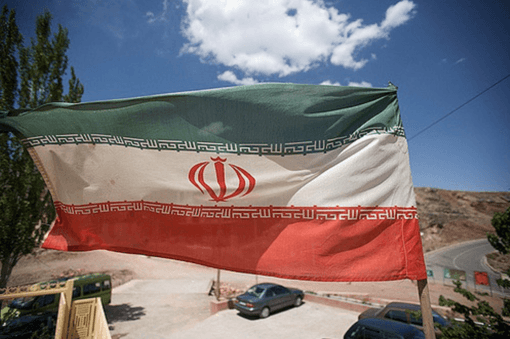
Trump’s Sinister Plan to Kill the Iranian “Nukes” Deal

By Mike Whitney

January 16, 2018


The Trump administration has settled on a plan for sabotaging the Iranian Nuclear deal that does not explicitly violate the terms of the agreement. Trump will continue to suspend sanctions, as is required under the terms of the deal, but at the same time, he will warn that if the agreement isn’t changed to meet his specific demands,  he will terminate it unilaterally.

“If at any time I judge that such an agreement is not within reach, I will withdraw from the deal immediately,” Trump said.

We can expect Trump to continue to issue these same threats in the months ahead as it helps to maximize the uncertainty as to whether the agreement will survive or not. As a businessman and investor,  Trump  knows that uncertainly is nearly as effective as sanctions when it comes to dampening foreign investment in the country’s businesses and resource development.

Originally published at CounterPunch here

Corporations and private investors are not going to commit significant capital to long-term projects if they think that the rug could be pulled out from under them at any time. They need certainty just like they need security.  By renewing his threat to withdraw from the deal every 120 days, Trump hopes to negate any benefits that Iran might enjoy by complying with the terms of the nuclear deal.

The sanctions will have been lifted, but the impact of Trump’s meddling will stifle foreign investment preventing the strong economic rebound that Iranian leaders had anticipated.

Trump also announced that the United States will impose new sanctions on “14 individuals and entities” over alleged human rights abuses to anti-government protestors during the recent demonstrations which took place in cities across Iran. The Iranian Foreign Ministry has denounced the sanctions as a clear violation of the nuclear agreement which forbids any changes to the terms of the deal. Here’s part of the FM’s statement:

“The Islamic Republic of Iran stresses clearly that it will take no measures beyond its commitments under the Joint Comprehensive Plan of Action and will accept no changes to this agreement now or in the future and will not allow that the JCPOA be linked to any other issue.”

Taken together, the Trump strategy is clever two-pronged approach that shrinks capital investment in the country (thereby strangling the economy) while increasing the incitements that are intended to cause the government to overreact and (possibly) scuttle the agreement. Trump’s goal is to trick Iran into terminating the deal because it would be too costly for the US to end its commitment unilaterally.

The only reason Iran agreed to comply with the onerous requirements of the nuke’s deal was to end the sanctions that had crippled the Iranian economy.  Iran agreed “to reduce uranium enrichment activity drastically, dispose of its enriched uranium stocks and modify a heavy water facility so it could not produce material suitable for a nuclear bomb.” (BBC) Iran was also forced to accept “the toughest and most technologically advanced inspections regime ever put in place to prevent a country from developing an atomic bomb.”  In other words, Iran had to make huge concessions that no other signatory of the Nuclear Nonproliferation Treaty (NPT) ever had to make to stop the decades-long economic war the US had been waging on it. Trump’s strategy will undoubtedly erase many of the potential economic benefits Iran would have realized had the US honored the spirit and letter of the agreement.

Here are a few excerpts from recent articles that highlight Washington’s off-the-radar efforts to damage Iran’s fragile economy. Here’s a clip from a recent post at Press TV:

“The administration of US President Donald Trump is considering blocking planned sales of hundreds of passenger planes by two aerospace giants, Boeing and Airbus, to Iranian airlines, a report says.

Citing US officials, The Wall Street Journal reported on Friday that Trump’s team is expected to present him with options that include banning sales, imposing stringent conditions that could halt any aircraft deliveries, or slow-walking approvals.” (Press TV)

(NOTE: “The JCPOA explicitly allows US companies to sell civilian airliners to Iranian firms. The sales were a key incentive for Iran to sign onto the deal because Tehran is eager to replenish its civilian airliner fleet, which has been decimated by decades of sanctions.”)

Here’s more from The National Interest:

“The United States is criticized for deterring companies and investors from entering the Iranian market. Iran believes that while the legal and political foundations of sanctions have been removed, the United States has fully kept the primary sanctions in force, preventing the practical removal of the secondary sanctions that were to be lifted.” (“America Still Has Iran Sanctions—And They’re Hurting the Nuclear Deal”, The National Interest)

As we said before, the lifting of sanctions has not produced the economic benefits that Iran’s leaders had expected. Much of this has to do with the slow return of investors due to the  unwillingness of the U.S. Treasury Department’s Office of Foreign Assets Control (OFAC) to provide assurances that the nuclear agreement won’t be suddenly rescinded.  Here’s more from an article at Quartz:

“Most international financial transactions are done with U.S. dollars, requiring the transactions to be cleared through the U.S. banking system. Since the primary sanctions remain in force, Iran is barred from using U.S. Dollars, making it more difficult to trade with other countries. Additionally, Iran has experienced problems in obtaining its funds in U.S. dollars from other banks….

Foreign companies are also still restricted from trading with more than 200 Iranian entities sanctioned by the United States for non-nuclear reasons. Some firms also fear the possibility of “snapback” sanctions if Iran violates the deal, or policy changes under the next US president…

Citing remaining financial restrictions, Supreme Leader Ayatollah Ali Khamenei accused the United States of not fulfilling its pledges under the nuclear deal. “In Western countries and places which are under U.S. influence, our banking transactions and the repatriation of our funds from their banks face problems … because (banks) fear the Americans,” he said in March.” (“A year on, Iran’s nuclear deal is helping its economy, but not as much as some hoped”, Quartz)

Finally, there’s this from an article at Reuters titled “A year after nuclear deal, sanctions still hurt Iran”:

“While the deal lifted EU and UN sanctions on Iran’s banking and energy sector, unilateral U.S. sanctions on the Iranian economy remain. These sanctions forbid U.S. citizens and companies from conducting most forms of business with Iran, but companies outside the United States are affected as well. …

Without foreign direct investment and international banks willing to underwrite projects in Iran, the fruits of the nuclear deal will elude the Iranian public. Banking and finance are the arteries of global commerce and investment. U.S. Secretary of State John Kerry has tried to offer assurances that the United States will not interfere with legitimate commerce between Iran and the rest of the world, but his pledges ring hollow. European banks remain skittish. Over the past decade, BNP Paribas, HSBC, and Deutsche Bank have paid billions of dollars in fines for Iran-related activity.

From Iran’s perspective, unless the United States takes more concrete steps to make European banks feel confident about engaging in commerce with Iran, the Iranian people will begin to view the nuclear deal as one-sided.” (Reuters)

So, while Iran has faithfully kept up its end of the bargain (Regular inspections have confirmed that they are in compliance), Washington never has. The US has made every effort to undermine the deal by covertly discouraging foreign investment that would improve living standards for ordinary working people in Iran.

Like his predecessors, Trump has tried to justify his hostility towards Iran in terms of his fear that Iran is secretly developing nuclear weapons. But Trump knows it’s all baloney. Iran has no interest in building nuclear weapons and never has. Take a look at this excerpt from an interview with investigative journalist Gareth Porter* that was published by Harpers.

“In Manufactured Crisis, I show that the claim of an Iranian nuclear-weapons program has been based on false history and falsified records. The description of the Iranian nuclear program presented in official documents, in commentaries by think-tank “experts,” and in the media bears no resemblance to the essential historical facts……

Ayatollah Khomeini forbade the use of such weapons, on the ground that both the possession and use of weapons of mass destruction are illicit under Islamic jurisprudence…. Shia jurisprudence is a fundamental constraint on Iranian policy toward weapons of mass destruction. It also makes credible the claim that Iran is forbidden by a fatwa from Supreme Leader Ali Khamenei from possessing nuclear weapons….

The evidence adduced to prove that Iran secretly worked on nuclear weapons represents an even more serious falsification of intelligence than we saw in the run-up to the war in Iraq….

CIA brass apparently went so far as to suppress WMD intelligence obtained by one of its best covert agents in the Middle East because it didn’t fit the conclusion they knew George W. Bush’s administration wanted. I reveal for the first time in the book that a former undercover operative who brought a lawsuit against CIA leadership in 2004 claimed that a highly respected source in Iran had told him in 2001 that Iran had no intention of “weaponizing” its nuclear program. The CIA apparently never informed the White House of that information, and refused to circulate it within the intelligence community….

With Iraq, there was at least dissent over issues like its alleged illegal importation of aluminum tubes, which reflected debates within the intelligence community. Coverage of Iran, on the other hand, has been virtually unanimous in reporting the official line without the slightest indication of curiosity about whether it might be false or misleading.” (“Manufactured Crisis: The Untold Story of the Iran Nuclear Scare”, Harper’s Magazine)

In a report for the Council on Foreign Relations titled “Putting Iran’s Nuclear Program in Context”, Micah Zenko is even more blunt:

“It is essential to recognize that Iran does not currently have a nuclear weapons program, nor does it possess a nuclear weapon. On February 26, James Clapper, the director of national intelligence, told the Senate Armed Services Committee that Ayatollah Khomenei, the supreme leader of Iran, ended his country’s nuclear weapons program in 2003 and “as far as we know, he’s not made the decision to go for a nuclear weapon.”

Unfortunately, there is so much disinformation in the media on this point, that we must repeat this critical fact over and over again. Iran has no nuclear weapons, no nuclear weapons programs, and has never diverted nuclear fuel to anything other than “approved” energy-related activity.

So why has the United States continued to hector, harass, threaten and bully Iran if the country poses no threat to its neighbors or to US national security?

Iran’s vast resources– natural gas and oil– which are situated at the heart of the strategically-critical Middle East, make it an irresistible target for imperial exploitation.  Washington needs to keep its hand on the oil spigot to ensure that vital resources continue to be denominated in the world’s reserve currency, the dollar, and recycled into US debt.  Washington also needs oil to control the growth of thriving but energy-dependent economies in Asia that are rapidly gaining on the US and challenging its grip on global power. Seen in this light,   Iran’s fictitious “nukes program” is just a pretext for Washington to continue its asymmetrical war on Iran’s economy. The goal of course is regime change and a strengthening of Washington’s geopolitical power through the control of crucial resources.

It’s important to note that Israel has joined Trump in his jihad against Iran. On December 12,  US and Israeli national security advisers, H. R. McMaster and Meir Ben-Shabbat, concluded secret talks at the White House on dealing with Iran and signed “far-reaching joint memorandum of understanding providing for full cooperation.” Ostensibly, the strategy will focus on “Iran’s nuclear drive, its missile programs”, and the activities of its military abroad. In reality, however, Trump has aligned US policy with Israel’s openly belligerent approach which regards Tehran as a sworn adversary that must be defeated in order for Israel to become the dominant power in the Middle East, the regional hegemon. Check out this blurb from Business Insider:

“Quoting the Israeli officials, Channel 10 said that the meeting confirmed that the US and Israel “see eye to eye on the trends and processes in the region,” and have now reached agreement on the strategy and policy required to deal with them.” (“The US and Israel reportedly signed a secret pact to take on Iran”, Business Insider)

Washington and Tel Aviv’s policy towards Iran is now identical which means that the probability of a confrontation is bound to increase.

It’s beginning to look like Trump’s promise of a  “non interventionist foreign policy” was just another empty campaign slogan.

Originally published at CounterPunch here
More articles by


MIKE WHITNEY lives in Washington state. He is a contributor to Hopeless: Barack Obama and the Politics of Illusion (AK Press). Hopeless is also available in a Kindle edition. He can be reached at fergiewhitney@msn.com.

Photo by Nick Taylor | CC BY 2.0

* Gareth Porter is also a TFF Associate.

One Response

  1. Many experts have explained the facts. The IAEA has repeatedly confirmed that it inspects all Iranian nuclear sites and that Iran is in full compliance with its obligations. Yet, those who wish to distort the facts continue with their hysterical statements and the demonisation of Iran. The penultimate paragraph in this article says it all. Washington and Tel Aviv’s policy towards Iran is now identical which means that the probability of a confrontation is bound to increase. Israel has long been pushing for a war against Iran based on lies, and now with Trump in power it sees the opportunity to implement its vile wishes.

Related Posts

A friendly quarrel while we agree that the US sanctions are a weapon of mass destruction and kill more people than wars do. And that we must talk much more about sanctions than we have so far. Jan Oberg, TFF director March 16, 2026 John Mearsheimer recently stated that U.S. sanctions murdered around 38 million people between 1971 and 2021 – see the video below. It is a dramatic figure, and it has spread quickly because it captures, in one sentence, the enormous human cost of modern sanctions. I share his concern about the destructive effects of economic coercion. But the specific number he cites — and the way he attributes it — deserves a friendly academic clarification. The figure comes from a 2023 Lancet Global Health article estimating the mortality effects of unilateral U.S. and EU sanctions over the past half‑century. This is the first point where Mearsheimer’s shorthand diverges from the text: the study...
PART 2 — Diplomacy, Law and Nonviolent Power By Jan ObergTFF co-founder and director January 26, 2026 This is the second of four TFF-created idea portfolios designed to curb the global reach of the United States and, in both the short and long term, help catalyse a worldwide nonviolent resistance to what many observers describe as the Trump administration’s uniquely confrontational, destructive and world-threatening policies. These portfolios outline what governments and citizens across the world can do through dynamic diplomacy, creative initiatives, and strictly nonviolent means. They are typical TFF works in that we do not only tell what the problem is and how bad it will go – as 90+% of all commentators, experts and scholars do – we tell what we think can be done, inviting you to think of what you think you can do. It seems painfully clear to me that the current political dynamics in Washington increasingly resemble the most dangerous...
PART 1 — Media, Culture and Information Sovereignty By Jan ObergTFF co-founder and director January 20, 2026 This is the first of four TFF-created idea portfolios designed to curb the global reach of the United States and, in both the short and long term, help catalyse a worldwide nonviolent resistance to what many observers describe as the Trump administration’s uniquely confrontational, destructive and world-threatening policies. These portfolios outline what governments and citizens across the world can do through dynamic diplomacy, creative initiatives, and strictly nonviolent means. They are typical TFF works in that we do not only tell what the problem is and how bad it will go – as 90+% of all commentators, experts and scholars do – we tell what we think can be done, inviting you to think of what you think you can do. It seems painfully clear to me that the current political dynamics in Washington increasingly resemble the most...

Recent Articles

Tony Robinson October 4, 2026 Violence is easy to recognise when someone is being beaten, shot or killed. It becomes more difficult when nobody is holding a weapon. Poverty, discrimination, exploitation and repression can restrict a human life just as effectively, although they do so in very different ways and with very different consequences. Simply adding more categories to an ever-growing list of forms of violence does not really solve the problem. The more interesting question is what all these different situations have in common and why it makes sense to describe them using the same word. Human beings do not simply react to what happens around them. They remember the past, imagine things that do not yet exist, make plans and undertake projects. Workers organise because they imagine different working conditions; people migrate because they imagine another life somewhere else; social movements emerge because people refuse to accept the...
It’s a matter of principles, courage, vision and pulling together – while the militarist world is falling apart… Peter Langille October 3, 2026 “Here, then, is the problem which we present to you, stark and dreadful and inescapable: Shall we put an end to the human race; or shall mankind renounce war?”The Bertrand Russell—Albert Einstein Manifesto, July 9, 1955 ⁕ The forecast for what’s ahead is worrisome. The sharp rise in armed conflicts over the past three years is adding to what was already the highest level in over seventy years. Genocides, which should be prevented are supported. A shared climate emergency that jeopardises survival is ignored. Diverse polls now suggest that people are war-weary, worried and interested in a more effective United Nations. And, there are viable policy options for a more secure world! Yet governments are doubling-down, betting on more war and investing heavily. If current trends persist,...
Johan Galtung 1930-2024October 2015 Published here on October 3, 2026 Let us focus on Civilization for conflict analysis and remedies. Major forms of disorder use violence; war is state organized violence. The most belligerent states are the United States of America and Israel, both with civilization roots. National Evangelism, the US Protestant Christian civilization– more national than evangelical–justifies US warfare as exceptionalism of a people chosen by God, with a manifest destiny to run the world. Orthodox Judaism justifies Israeli warfare to conquer and expand from Nile to Euphrates as a religious right and duty to the Eternal One. The third most belligerent country, the UK, no longer believes it is God-chosen but chosen by the USA; not quite the same but something. But the root cause of global disorder lies in the Occident–with Islam–seeing itself as the single, universal civilization valid for all at all times, all others being...

TFF on Substack

Discover and subscribe to more peace materials on TFF Substack

Most Popular

Tony Robinson October 4, 2026 Violence is easy to recognise when someone is being beaten, shot or killed. It becomes more difficult when nobody is holding a weapon. Poverty, discrimination, exploitation and repression can restrict a human life just as effectively, although they do so in very different ways and with very different consequences. Simply adding more categories to an ever-growing list of forms of violence does not really solve the problem. The more interesting question is what all these different situations have in common and why it makes sense to describe them using the same word. Human beings do not simply react to what happens around them. They remember the past, imagine things that do not yet exist, make plans and undertake projects. Workers organise because they imagine different working conditions; people migrate because they imagine another life somewhere else; social movements emerge because people refuse to accept the...
It’s a matter of principles, courage, vision and pulling together – while the militarist world is falling apart… Peter Langille October 3, 2026 “Here, then, is the problem which we present to you, stark and dreadful and inescapable: Shall we put an end to the human race; or shall mankind renounce war?”The Bertrand Russell—Albert Einstein Manifesto, July 9, 1955 ⁕ The forecast for what’s ahead is worrisome. The sharp rise in armed conflicts over the past three years is adding to what was already the highest level in over seventy years. Genocides, which should be prevented are supported. A shared climate emergency that jeopardises survival is ignored. Diverse polls now suggest that people are war-weary, worried and interested in a more effective United Nations. And, there are viable policy options for a more secure world! Yet governments are doubling-down, betting on more war and investing heavily. If current trends persist,...
Johan Galtung 1930-2024October 2015 Published here on October 3, 2026 Let us focus on Civilization for conflict analysis and remedies. Major forms of disorder use violence; war is state organized violence. The most belligerent states are the United States of America and Israel, both with civilization roots. National Evangelism, the US Protestant Christian civilization– more national than evangelical–justifies US warfare as exceptionalism of a people chosen by God, with a manifest destiny to run the world. Orthodox Judaism justifies Israeli warfare to conquer and expand from Nile to Euphrates as a religious right and duty to the Eternal One. The third most belligerent country, the UK, no longer believes it is God-chosen but chosen by the USA; not quite the same but something. But the root cause of global disorder lies in the Occident–with Islam–seeing itself as the single, universal civilization valid for all at all times, all others being...
Read More
Living-Peace-Sign-Budapest-copy
Tony Robinson October 4, 2026 Violence is easy to recognise when someone is being beaten, shot or killed. It becomes more difficult when nobody is holding a weapon. Poverty, discrimination, exploitation and repression can restrict a human life just as effectively, although they do so in very different ways and with very different consequences. Simply adding more categories to an ever-growing list of forms of violence does not really solve the problem. The more interesting question is what all these different situations have in common and why it makes sense to describe them using the same word. Human beings do not simply react to what happens around them. They remember the past, imagine things that do not yet exist, make plans and undertake projects. Workers organise because they imagine different working conditions; people migrate because they imagine another life somewhere else; social movements emerge because people refuse to accept the...
b54a1f10-8c65-4f0b-9dd5-4abc0a7d04cc_2659x2659
It’s a matter of principles, courage, vision and pulling together – while the militarist world is falling apart… Peter Langille October 3, 2026 “Here, then, is the problem which we present to you, stark and dreadful and inescapable: Shall we put an end to the human race; or shall mankind renounce war?”The Bertrand Russell—Albert Einstein Manifesto, July 9, 1955 ⁕ The forecast for what’s ahead is worrisome. The sharp rise in armed conflicts over the past three years is adding to what was already the highest level in over seventy years. Genocides, which should be prevented are supported. A shared climate emergency that jeopardises survival is ignored. Diverse polls now suggest that people are war-weary, worried and interested in a more effective United Nations. And, there are viable policy options for a more secure world! Yet governments are doubling-down, betting on more war and investing heavily. If current trends persist,...
010
Johan Galtung 1930-2024October 2015 Published here on October 3, 2026 Let us focus on Civilization for conflict analysis and remedies. Major forms of disorder use violence; war is state organized violence. The most belligerent states are the United States of America and Israel, both with civilization roots. National Evangelism, the US Protestant Christian civilization– more national than evangelical–justifies US warfare as exceptionalism of a people chosen by God, with a manifest destiny to run the world. Orthodox Judaism justifies Israeli warfare to conquer and expand from Nile to Euphrates as a religious right and duty to the Eternal One. The third most belligerent country, the UK, no longer believes it is God-chosen but chosen by the USA; not quite the same but something. But the root cause of global disorder lies in the Occident–with Islam–seeing itself as the single, universal civilization valid for all at all times, all others being...
Screenshot 2026-10-02 011738
Jan ObergPhD, director, The Transnational Foundation for Peace and Future Research, TFFLund, Sweden October 2, 2026 This is my full original manuscript. The Chinese Academy of Social Science, CASS, makes two publications out if it. 1. China’s Five-year plan emphasized the capabilities of basic research and original innovation. It is regarded as the goal of the future social development, which, as required, should be significantly enhanced. Can you comment on the importance of original innovation in research and academic study? I believe it is easier to define “original innovation” in the natural sciences than in social sciences. The breaking points of what constitutes something new, or innovative, are not quite as sharp in the latter. But in both fields it is about opening up something that was closed, unseen, unexplored before – making manifest what was earlier latent. Innovations come in many forms and shapes – naming something that was not...
arctic-circle-map
The agreement is catastrophic both because of what it says and what it doesn’t mention. It reduces further the major asset of security policies: Freedom of action. Jan Oberg TFF director September 25, 2026 A couple of hours before the agreement was signed on September 22, 2026, I published the following 13 hypotheses about what it would most likely contain on TFF Substack (in English). I was wrong on only the first point. Contrary to what Trump had written on his Truth Social platform, it does not appear to come into force immediately. In fact, it turned out to be worse than even I had anticipated. After these hypotheses now come a number of reflections in light of what the agreement actually contains, and does not contain, as well as the way in which it has generally been presented by major media outlets and by the public-service broadcaster DR. My...
girl-5894831_1280
Below are TFF-related media mentions, comments, videos and social media posts published elsewhere but not on this homepage. We happen to catch and list only a fraction. Regarding video comments and debates, we recommend that you go to the TFF Video Channel on Substack where many of them are reproduced. Jan Oberg is a contributor to China Daily – 52 million daily clicks – and Global Times, CGTN and CCTV (the national television), China Investment, Xinhua News Agency and several others. Articles and videos on these media very often multiply into countless Chinese (and Western media) that re-post them from these main media. Thanks to The China Academy, his analyses, interviews and comments are frequently posted on YouTube channels such as Thinkers Forum and Wave Media. These videos are often re-posted on Bilibili (China’s YouTube), the China Content Center on TikTok, and on the Chinese edition of TikTok, Douyin.com. This means reaching hundreds of millions of viewers worldwide over a year. While there are too many to catch on all these...




