During the height of the Cold War when it was viewed as disloyal and compromising to show a sympathetic interest in Marxism or sympathies with Soviet ideology, someone at the U.S. military base at Frankfurt distributed to the soldiers stationed there, a handwritten version of the Bill of Rights, the first ten amendments of the U.S. Constitution, in the form of petition. Very few of the soldiers approached were willing to affix their signatures, most alleging that this seemed a subversive document circulated by enemies of the United States, and was Soviet propaganda. Somehow the Western propaganda message that the Cold War was about the defense of ‘the free world’ against a totalitarian enemy had made no impact, or alternatively, that the free world had nothing to do with the substantive elements of freedom as social practice.

Originally posted on Richard Falk’s personal blog on August 8, 2020 here

For me, and for the person who was using the petition to assess the commitment of Americans to the values of a free and democratic society, it conveyed the reality that what freedoms exist can be easily swept aside by an opportunistic or autocratic leadership. This perception has been confirmed, at least provisionally by Trump’s extreme encroachment on American institutions and civil liberties during his first term as president. A final confirmation would occur if Trump is able to hold onto power either by being reelected in November or by somehow managing to remain in the White House even if defeated by his electoral opponent.

There is another more subtle interpretation of the Frankfurt test. The political reality of systemic racism and discriminatory practices is so engrained in the lived experience of America as to make the U.S. Constitution seem indeed a radical document that must represent the views of an adversary ideology intent on undermining the American way of life. In effect, to implement fully the Bill of Rights would require nothing less than a revolution, and in this sense a cross section of American soldiers were undoubtedly not so minded, and acted appropriately by refusing to endorse such drastic departures from their experience.

More disappointing to me is the degree to which Trump’s electoral victory in 2016 exhibited massive support for a regressive and demagogic leadership by an alienated American electorate. Of course, there were attenuating factors. Hillary Clinton, despite a poor campaign and a militarist foreign policy profile, won the popular vote by three million votes. Part of the rightest populist backlash reflected a global trend, which was a result of the alienating impact of neoliberal globalization, and its production of drastic forms of inequality and its tendency to homogenize identity. Additionally, the American experience emphasized hostility to immigrants and Islam blamed for destroying the quality of life and bringing terrorism, crime, and drugs to the country, as well as losing a white identity for America as prefigure by the Obama presidency.

Now almost four years later, there is even less reason than in 2016 to regard Trump as an acceptable candidate even for Republicans who subscribe to a social contract that is based on a governing process of laws not men, and upholds ideas of separation of powers, checks and balances, and judicial independence, as well as the Bill of Rights. On matters of material interests the two party system is hobbled by the persistence of the Cold War ‘bipartisan consensus’ that creates commonality of views on militarism, Wall Street capitalism, and Israel/Saudi Arabia. Such a consensus means that there is no pragmatic reason for Democrats or moderates to vote for Trump to uphold liberal/moderate self-interest and worldview.

Although Republican campaign strategy and Trump rally rhetoric uses inflammatory rhetoric to portray Biden and the Democratic Party as ‘socialist’ and ‘radical’ to make the middle of the voting spectrum to fear the material threat to their class interests if Democrats control the White House and Congress. In reality, only progressive have reason to ponder not voting or voting for a third party candidate as Biden, seen in abstract, offer little to hope for and nothing to inspire.

In the end, the future of the United States, and indirectly the world, rests on whether the fear of fascism exceeds the fear of left liberalism, as the balance plays out given the peculiarities of the electoral college system. It seems clear that the Trump base responds positively to Trump partly because he offers the prospect of a fascist future for the country premised on white racial supremacy and partly because of indifference to his ideas, giving their support having succumbed to the numbing excitement associated with his demagogic style of leadership even if it could cost them their life.

For many in the muddled political middle, distressed by the Trump base but also wary of the more radical demands of Black Lives Matter and AOC Squad, the challenge is one of choosing the lesser of evils, which is analogous to the dilemma of progressives who wonder whether they can persuade themselves to pull levers that favors Democrats and Biden. The difference being that the moderates believe that the Democratic Party even with Biden will be pushed toward adopting the progressive agenda while many progressives believe that Biden will be ‘a feel better’ version of Trumpism, leaving the plutocratic and militarist pillars of neoliberal capitalism, somewhat deglobalized, but as sturdy as ever.

The immediate future of the United States will likely be determined by the results of the November election. For the first time in my life the prospect of a peaceful transfer of power respectful of the will of the people cannot be taken for granted. Unless Trumpist support shrinks dramatically the fascist threat will remain part of the scene even if Trump loses and leaves the White House without putting up a fight. If Trump should lose the election, despite rigging and gerrymandering, and yet refused to leave the White House, the resilience of the constitutional order will be severely tested, and left to the tender mercies of the military leadership, the deep state, and private sector elites, which in turn will assess the intensity of public outrage and the risks of civil strife.

Trumpism will also be tested as to whether its fascist leanings and demagogic submission are sufficiently belligerent to launch a second American civil war rather than loosen their grip on state power.
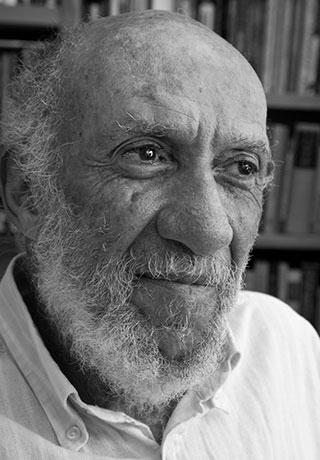

Professor Falk became an adviser to TFF when it was established in 1985.

One Response

  1. Another excellent article. What the past four years have shown has been the fragility of democracy and freedom, even in one of the oldest democracies in the world. It has also been made clear that the so-called system of “checks and balances” that we had taken for granted has failed to stop the onslaught of populism even by a very flawed & inarticulate populist. Due to its overwhelming military power, what happens in the United States affects the rest of the world, and the entire international climate has been made coarser, more dangerous, more unpredictable and more dominated by populist/fascist regimes than ever before, from Brazil, to Hungary, Poland, India, the Persian Gulf states, etc. It is a very sad state of affairs that as the author points out we are only left with a balance of fear: “In the end, the future of the United States, and indirectly the world, rests on whether the fear of fascism exceeds the fear of left liberalism, as the balance plays out given the peculiarities of the electoral college system.” Four more years of this and the world will face a very rude awakening.

Related Posts

By Jan ObergTFF co-founder and director February 11, 2026 PART 3 — ECONOMICS, TRADE & FINANCIAL SOVEREIGNTY A. Trade Measures & Market Signaling Economic pressure can be applied instantly and scaled without violence. Immediate Measures (within a week) Government boycott US goods and services  A very powerful signal which over time will be felt. Targeted tariffs on selected U.S. goods Symbolic but high-visibility sectors send a clear message. Suspend trade facilitation talks A peaceful pause that signals deep concern. Freeze U.S. participation in public procurement – military procurement in particular A nonviolent way to reduce influence. Competition law review of U.S. corporations A legal tool to scrutinise market dominance. Longer-Term Measures EU–Asia–Africa trade corridors Reducing reliance on U.S. markets. European supply chains for critical minerals Strategic autonomy in resource access. European Strategic Trade Authority Monitoring coercive practices globally. Euro-denominated commodity markets Weakening the dollar’s pricing monopoly. The EU must resume contacts and negotiations with Russia, focusing on energy cooperation To...
PART 2 — Diplomacy, Law and Nonviolent Power By Jan ObergTFF co-founder and director January 26, 2026 This is the second of four TFF-created idea portfolios designed to curb the global reach of the United States and, in both the short and long term, help catalyse a worldwide nonviolent resistance to what many observers describe as the Trump administration’s uniquely confrontational, destructive and world-threatening policies. These portfolios outline what governments and citizens across the world can do through dynamic diplomacy, creative initiatives, and strictly nonviolent means. They are typical TFF works in that we do not only tell what the problem is and how bad it will go – as 90+% of all commentators, experts and scholars do – we tell what we think can be done, inviting you to think of what you think you can do. It seems painfully clear to me that the current political dynamics in Washington increasingly resemble the most dangerous...
PART 1 — Media, Culture and Information Sovereignty By Jan ObergTFF co-founder and director January 20, 2026 This is the first of four TFF-created idea portfolios designed to curb the global reach of the United States and, in both the short and long term, help catalyse a worldwide nonviolent resistance to what many observers describe as the Trump administration’s uniquely confrontational, destructive and world-threatening policies. These portfolios outline what governments and citizens across the world can do through dynamic diplomacy, creative initiatives, and strictly nonviolent means. They are typical TFF works in that we do not only tell what the problem is and how bad it will go – as 90+% of all commentators, experts and scholars do – we tell what we think can be done, inviting you to think of what you think you can do. It seems painfully clear to me that the current political dynamics in Washington increasingly resemble the most...

Recent Articles

Tony Robinson October 4, 2026 Violence is easy to recognise when someone is being beaten, shot or killed. It becomes more difficult when nobody is holding a weapon. Poverty, discrimination, exploitation and repression can restrict a human life just as effectively, although they do so in very different ways and with very different consequences. Simply adding more categories to an ever-growing list of forms of violence does not really solve the problem. The more interesting question is what all these different situations have in common and why it makes sense to describe them using the same word. Human beings do not simply react to what happens around them. They remember the past, imagine things that do not yet exist, make plans and undertake projects. Workers organise because they imagine different working conditions; people migrate because they imagine another life somewhere else; social movements emerge because people refuse to accept the...
It’s a matter of principles, courage, vision and pulling together – while the militarist world is falling apart… Peter Langille October 3, 2026 “Here, then, is the problem which we present to you, stark and dreadful and inescapable: Shall we put an end to the human race; or shall mankind renounce war?”The Bertrand Russell—Albert Einstein Manifesto, July 9, 1955 ⁕ The forecast for what’s ahead is worrisome. The sharp rise in armed conflicts over the past three years is adding to what was already the highest level in over seventy years. Genocides, which should be prevented are supported. A shared climate emergency that jeopardises survival is ignored. Diverse polls now suggest that people are war-weary, worried and interested in a more effective United Nations. And, there are viable policy options for a more secure world! Yet governments are doubling-down, betting on more war and investing heavily. If current trends persist,...
Johan Galtung 1930-2024October 2015 Published here on October 3, 2026 Let us focus on Civilization for conflict analysis and remedies. Major forms of disorder use violence; war is state organized violence. The most belligerent states are the United States of America and Israel, both with civilization roots. National Evangelism, the US Protestant Christian civilization– more national than evangelical–justifies US warfare as exceptionalism of a people chosen by God, with a manifest destiny to run the world. Orthodox Judaism justifies Israeli warfare to conquer and expand from Nile to Euphrates as a religious right and duty to the Eternal One. The third most belligerent country, the UK, no longer believes it is God-chosen but chosen by the USA; not quite the same but something. But the root cause of global disorder lies in the Occident–with Islam–seeing itself as the single, universal civilization valid for all at all times, all others being...

TFF on Substack

Discover and subscribe to more peace materials on TFF Substack

Most Popular

Tony Robinson October 4, 2026 Violence is easy to recognise when someone is being beaten, shot or killed. It becomes more difficult when nobody is holding a weapon. Poverty, discrimination, exploitation and repression can restrict a human life just as effectively, although they do so in very different ways and with very different consequences. Simply adding more categories to an ever-growing list of forms of violence does not really solve the problem. The more interesting question is what all these different situations have in common and why it makes sense to describe them using the same word. Human beings do not simply react to what happens around them. They remember the past, imagine things that do not yet exist, make plans and undertake projects. Workers organise because they imagine different working conditions; people migrate because they imagine another life somewhere else; social movements emerge because people refuse to accept the...
It’s a matter of principles, courage, vision and pulling together – while the militarist world is falling apart… Peter Langille October 3, 2026 “Here, then, is the problem which we present to you, stark and dreadful and inescapable: Shall we put an end to the human race; or shall mankind renounce war?”The Bertrand Russell—Albert Einstein Manifesto, July 9, 1955 ⁕ The forecast for what’s ahead is worrisome. The sharp rise in armed conflicts over the past three years is adding to what was already the highest level in over seventy years. Genocides, which should be prevented are supported. A shared climate emergency that jeopardises survival is ignored. Diverse polls now suggest that people are war-weary, worried and interested in a more effective United Nations. And, there are viable policy options for a more secure world! Yet governments are doubling-down, betting on more war and investing heavily. If current trends persist,...
Johan Galtung 1930-2024October 2015 Published here on October 3, 2026 Let us focus on Civilization for conflict analysis and remedies. Major forms of disorder use violence; war is state organized violence. The most belligerent states are the United States of America and Israel, both with civilization roots. National Evangelism, the US Protestant Christian civilization– more national than evangelical–justifies US warfare as exceptionalism of a people chosen by God, with a manifest destiny to run the world. Orthodox Judaism justifies Israeli warfare to conquer and expand from Nile to Euphrates as a religious right and duty to the Eternal One. The third most belligerent country, the UK, no longer believes it is God-chosen but chosen by the USA; not quite the same but something. But the root cause of global disorder lies in the Occident–with Islam–seeing itself as the single, universal civilization valid for all at all times, all others being...
Read More
Living-Peace-Sign-Budapest-copy
Tony Robinson October 4, 2026 Violence is easy to recognise when someone is being beaten, shot or killed. It becomes more difficult when nobody is holding a weapon. Poverty, discrimination, exploitation and repression can restrict a human life just as effectively, although they do so in very different ways and with very different consequences. Simply adding more categories to an ever-growing list of forms of violence does not really solve the problem. The more interesting question is what all these different situations have in common and why it makes sense to describe them using the same word. Human beings do not simply react to what happens around them. They remember the past, imagine things that do not yet exist, make plans and undertake projects. Workers organise because they imagine different working conditions; people migrate because they imagine another life somewhere else; social movements emerge because people refuse to accept the...
b54a1f10-8c65-4f0b-9dd5-4abc0a7d04cc_2659x2659
It’s a matter of principles, courage, vision and pulling together – while the militarist world is falling apart… Peter Langille October 3, 2026 “Here, then, is the problem which we present to you, stark and dreadful and inescapable: Shall we put an end to the human race; or shall mankind renounce war?”The Bertrand Russell—Albert Einstein Manifesto, July 9, 1955 ⁕ The forecast for what’s ahead is worrisome. The sharp rise in armed conflicts over the past three years is adding to what was already the highest level in over seventy years. Genocides, which should be prevented are supported. A shared climate emergency that jeopardises survival is ignored. Diverse polls now suggest that people are war-weary, worried and interested in a more effective United Nations. And, there are viable policy options for a more secure world! Yet governments are doubling-down, betting on more war and investing heavily. If current trends persist,...
010
Johan Galtung 1930-2024October 2015 Published here on October 3, 2026 Let us focus on Civilization for conflict analysis and remedies. Major forms of disorder use violence; war is state organized violence. The most belligerent states are the United States of America and Israel, both with civilization roots. National Evangelism, the US Protestant Christian civilization– more national than evangelical–justifies US warfare as exceptionalism of a people chosen by God, with a manifest destiny to run the world. Orthodox Judaism justifies Israeli warfare to conquer and expand from Nile to Euphrates as a religious right and duty to the Eternal One. The third most belligerent country, the UK, no longer believes it is God-chosen but chosen by the USA; not quite the same but something. But the root cause of global disorder lies in the Occident–with Islam–seeing itself as the single, universal civilization valid for all at all times, all others being...
Screenshot 2026-10-02 011738
Jan ObergPhD, director, The Transnational Foundation for Peace and Future Research, TFFLund, Sweden October 2, 2026 This is my full original manuscript. The Chinese Academy of Social Science, CASS, makes two publications out if it. 1. China’s Five-year plan emphasized the capabilities of basic research and original innovation. It is regarded as the goal of the future social development, which, as required, should be significantly enhanced. Can you comment on the importance of original innovation in research and academic study? I believe it is easier to define “original innovation” in the natural sciences than in social sciences. The breaking points of what constitutes something new, or innovative, are not quite as sharp in the latter. But in both fields it is about opening up something that was closed, unseen, unexplored before – making manifest what was earlier latent. Innovations come in many forms and shapes – naming something that was not...
arctic-circle-map
The agreement is catastrophic both because of what it says and what it doesn’t mention. It reduces further the major asset of security policies: Freedom of action. Jan Oberg TFF director September 25, 2026 A couple of hours before the agreement was signed on September 22, 2026, I published the following 13 hypotheses about what it would most likely contain on TFF Substack (in English). I was wrong on only the first point. Contrary to what Trump had written on his Truth Social platform, it does not appear to come into force immediately. In fact, it turned out to be worse than even I had anticipated. After these hypotheses now come a number of reflections in light of what the agreement actually contains, and does not contain, as well as the way in which it has generally been presented by major media outlets and by the public-service broadcaster DR. My...
girl-5894831_1280
Below are TFF-related media mentions, comments, videos and social media posts published elsewhere but not on this homepage. We happen to catch and list only a fraction. Regarding video comments and debates, we recommend that you go to the TFF Video Channel on Substack where many of them are reproduced. Jan Oberg is a contributor to China Daily – 52 million daily clicks – and Global Times, CGTN and CCTV (the national television), China Investment, Xinhua News Agency and several others. Articles and videos on these media very often multiply into countless Chinese (and Western media) that re-post them from these main media. Thanks to The China Academy, his analyses, interviews and comments are frequently posted on YouTube channels such as Thinkers Forum and Wave Media. These videos are often re-posted on Bilibili (China’s YouTube), the China Content Center on TikTok, and on the Chinese edition of TikTok, Douyin.com. This means reaching hundreds of millions of viewers worldwide over a year. While there are too many to catch on all these...