

PressInfo #210 – The media – strategic considerations – Kosovo Solution Series # 2

Relevant background links for this series here.

The pro-Albanian lobby program in Brussels, Washington, New York and other Western capitals has been up and running for decades now. An advocacy campaign pushing for the independence of Kosovo as the only alternative to bloody conflict and instability has been the primary theme of this campaign, fought through well-established consultants, PR groups, think-tank lobbyists, contacts with key policymakers and the media.

The fight for the agenda-setting and the context of the Kosovo issue has been set by Albanian lobbyists during Tito’s communist Yugoslavia – well before anyone ever heard of a man called Slobodan Milosevic. The quest for the independence of Kosovo has been a long and strategic policy of the Albanian community in Kosovo and abroad at a time when Serb politicians in Belgrade and in Pristina were still loyal to a “dream” of a multi-ethnic Yugoslavia and unable to formulate a sustainable PR counter-attack against Albanian nationalist/separatist demands.

This unbalance between Belgrade and the Kosovo Albanians (but also later Croats and Bosnian Muslims) in the means put into PR advocacy campaigns and lobbying efforts has led to a one-sided media war in the late 1980s and early 1990s. Unable and perhaps uninterested to seek allies and promotion in Western capitals, the official Belgrade lost the media war for the context of the future Yugoslav successor wars even before the first bullet was ever shot: the Serb demands were sidelined and they were portrayed from the outset in a negative context. Serb causes, views and victims became “unworthy” in the eyes of key Western political and media factors.

Serb frustration with Western analysts and media led to a PR self-isolation, even autism in certain periods of the 1990s, thus allowing a vicious circle to develop in which international media bias put more oil on the fire than contributed to a just and long-lasting solution to conflict. No matter how complex the conflict was, no matter the fact that crimes were committed on all sides and a fierce war was fought also by the Kosovo Liberation Army in which atrocities could hardly be avoided, the Kosovo Albanians were simply perceived as only “good guys”, the Serbs as only “bad”.

With the end of the NATO 1999 bombings and the retreat of the Yugoslav army from Kosovo, the Serb capacity to “cause damage” disappeared. The remaining, unarmed Kosovo Serb population became protected by NATO troops and a victim of an orchestrated campaign of ethnic cleansing: killings of Serb peasants in the fields, shootings of Serb children, kidnappings of Serb workers, bombings of Serb houses, terrorist attacks against Serb buses, forceful takeover of Serb apartments, destruction of Serb monasteries and graveyards.

Observers, analysts, some international staff and media promoted the view that this was of course bad but it was a) not as bad as the atrocities committed by the Serb side, b) the international community should coach the Albanian leaders who all came from the killing fields and build confidence with them, and c) turn a blind eye as it was an understandable, however quite deplorable, reaction to what had been done to them by Belgrade.

Still again, and despite a change of regime in Belgrade with the arrival of reformists in power in 2000, the substance of the Western media approach to the situation in Kosovo remained unchanged:

1) Stories about the violence against the remaining 100,000 Serbs and human interest stories about their fate in Kosovo remained rare. The same occurred with the situation of the more than 200,000 Serbs and other non-Albanians who were expelled towards central Serbia and could not return to their homes.

2) Rather, more place was given to bureaucratic, public relations-optimistic statements offered by UN administrators about the “constant progress” in the province.

3) Albanian violence was justified through the formulation called “revenge attacks”.

4) Ethnic persecution became “inter-ethnic conflict”.

5) The division of the northern town of Kosovska Mitrovica – the last remaining urban area were Serbs still live in Kosovo – was seen as the key obstacle to stability instead of the ever-lasting campaign of anti-Serb violence throughout the rest of the province.

6) The orchestrated campaign of “ethnic cleansing”, as NATO Admiral Gregory Johnson called the three days of anti-Serb violence in March 2004, became ultimately seen as a result of “Albanian frustration with the lack of progress towards independence”.

7) There was a clear failure to explain who was behind the anti-Serb attacks. If the international community accepts that there is an orchestrated campaign of violence implicating 52,000 perpetrators/participants, there must be organizers? Who are they, the Western media never asked.

8) There was a lack of explanation of problems in the Albanian society – from the question of organized crime, drug trafficking to the questions of ethnic intolerance. The capacity of the Kosovo Albanian political and paramilitary circles to export violence into neighbouring southern Serbia and Macedonia was rarely examined.

9) The failures of international administrators and peacekeepers in Kosovo were only scarcely analyzed by the academic community and mainstream media.

10) The drawing of the line and the eternal question: “Is this what we fought for?” became practically invisible in most of the Western media reports.

Most of these media spins on the reality of Kosovo were once again indications of a planned and effective advocacy PR campaign by pro-Albanian lobbyists. Western allies who had advocated bombings as the means to create a solution and had invested so much prestige and money in the international missions in Kosovo saw it in their interest that a) this general image was continued and b) that, by and large, the media attention to Kosovo reduced steadily over time. And other issues and hotspots, be it September 11, 2001, other bombings and the war on terror attracted the media’s attention.

Still, the Albanian lobby suffered a blow with the outcome of the US presidential elections: Wesley Clark lost the Democratic nomination race, Richard Holbrooke’s bid to become Secretary of State in the John Kerry administration failed, the hopes of George Soros and the “Albright group” to become the key ideologists of the reborn Clinton-era policy slant towards the Balkans also miserably vanished.

On the other side, the problem remained: Belgrade does not have an effective PR strategy to counteract this impressively well-organized, well-oiled and paid pro-Albanian lobby campaign, nor does it follow a pro-active media approach which could put its objective demands on the table.

Even Belgrade analysts do not agree on whether Serbia has a lobby in Washington and Brussels, let alone whether it is effective. Belgrade is thus left behind again in a disproportionate media battle. Failing to hear Belgrade’s views in the media and among think-tanks and analysts could however lead to a solution that is likely to cause frustration, failure and long-term instability in the region.

It goes without saying that a central underlying problem is that Belgrade hitherto has lacked a unified concept of the future of Kosovo and seems to have little that indicates that it has a pro-active negotiation strategy on which to base such a media policy. Only a few days ago it was announced that such a unified strategy has now been developed; at the time of writing it is not known what its main elements are.

The TFF Kosovo Solution Series

# 1
Why the solution in Kosovo matters to the world

# 2
The media – strategic considerations

# 3
The main preconditions for a sustainable solution to the Kosovo conflict

# 4
The situation as seen from Serbia

# 5
The arguments for quick and total independence are not credible

# 6
What must be Belgrade’s minimum conditions and its media strategy

# 7
Nations and states, sovereignty and self-determination

# 8
Positive scenarios: Turn to the future, look at the broader perspectives

# 9
Many thinkable models for future Kosovo

# 10
Summary: From “Only one solution” towards democracy and peace

NOTE
Relevant background links for this series.

Read also

Jake Lynch, Reporting the World
Reporting Kosovo – violence now proves the stories missed in 1999 were the most important

TFF PressInfo 43, 1999
Kosovo/a – Half Truths About Demography and Ethnic Cleansing

© TFF and the author 2005
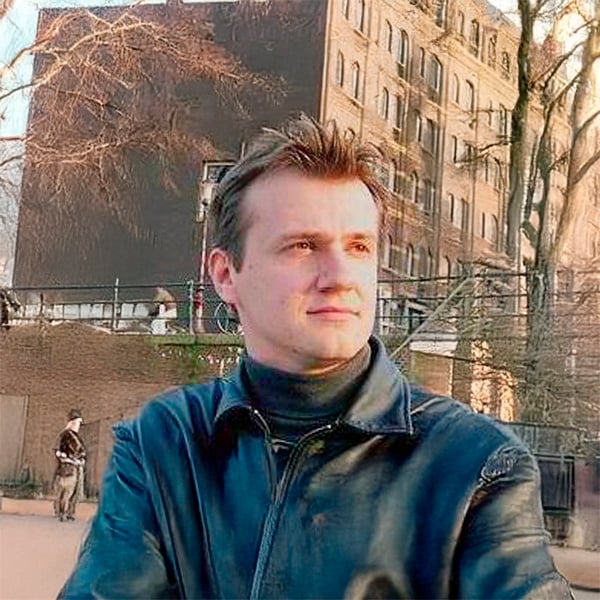
"September 2003 - present: PhD in Journalism and Communications, University of Belgrade. Working on the PhD thesis « Journalistic Responsibility in Crisis Situations : a Case-study Analysis of the Relationship between Media Management and Ethical Reporting ». 1996- 1997: Masters (M.A.) in International Affairs-Conflict Analysis, Carleton University, Ottawa Norman Paterson School of International Affairs, Carleton University, Ottawa. A-level GPA - Defended thesis ""with distinction"": ""Influence of the Media on Preventive Diplomacy: Three Cases from the Yugoslav Conflict"". 1992-1996: Bachelor of Journalism (B.J.) - Highest Honors in Journalism and Political Science, Carleton University, Ottawa"

PhD, Peace & future researcher + ‌Art Photographer, Professor Emeritus and media commentator

Related Posts

Below are TFF-related media mentions, comments, videos and social media posts published elsewhere but not on this homepage. We happen to catch and list only a fraction. Regarding video comments and debates, we recommend that you go to the TFF Video Channel on Substack where many of them are reproduced. Jan Oberg is a contributor to China Daily – 52 million daily clicks – and Global Times, CGTN and CCTV (the national television), China Investment, Xinhua News Agency and several others. Articles and videos on these media very often multiply into countless Chinese (and Western media) that re-post them from these main media. Thanks to The China Academy, his analyses, interviews and comments are frequently posted on YouTube channels such as Thinkers Forum and Wave Media. These videos are often re-posted on Bilibili (China’s YouTube), the China Content Center on TikTok, and on the Chinese edition of TikTok, Douyin.com. This means reaching hundreds of millions of viewers worldwide over a year. While there are too many to catch on all these...
Small and different + among the 10% most active + 9,000 texts + 150 Associates + 60 000 a day — and a stubborn belief that peace is smarter and must be secured by peaceful means. In 2026, the Transnational Foundation for Peace and Future Research (TFF) turns 40. On Monday, October 5, 2026, a new TFF homepage will go live — a new gateway to more than 9,000 articles, analyses, research papers and other contributions produced over four decades of independent peace research. But this is not simply a new website. For four decades, TFF has worked from a simple conviction: peace is smarter than militarism and can be brought about by peaceful means. This is not merely an aspiration. It is the principle expressed in the UN Charter and the Gandhian tradition that has guided our work from the beginning. TFF is a research-based, independent and people-financed foundation....
The agreement is catastrophic both because of what it says and what it doesn’t mention. It reduces further the major asset of security policies: Freedom of action. Jan Oberg TFF director September 25, 2026 A couple of hours before the agreement was signed on September 22, 2026, I published the following 13 hypotheses about what it would most likely contain on TFF Substack (in English). I was wrong on only the first point. Contrary to what Trump had written on his Truth Social platform, it does not appear to come into force immediately. In fact, it turned out to be worse than even I had anticipated. After these hypotheses now come a number of reflections in light of what the agreement actually contains, and does not contain, as well as the way in which it has generally been presented by major media outlets and by the public-service broadcaster DR. My...

Recent Articles

Photo above: Carl Fredrik Reuterswärd’s Non-Violence outside UN Headquarters in New York. Kirill Levin, CC BY-NC-SA 2. Jan Oberg November 3, 2026 I am happy to be published in Horizons which is produced by the Center for International Relations and Sustainable Development, CIRSD, in Belgrade. My contribution brings out a radical re-thinking of what concepts such as defence, security, deterrence – and peace – may mean if we want to create a more peaceful world. It also summarises a few things I have been working with the last few decades. Please read it here Og her er den på dansk, takket være Johnny Baltzersens lynhurtige oversættelse
UNITE-tillid, DREAM-velstand og andre konstruktive komponenter Normally we publish articles in English here. But this is a translation of a very important TFF document that should reach as many as possible in Denmark since this country’s government has been one of the most hardline in Europe and, up till now at least, has refused to use diplomacy and, instead, spent tremendous sums on arming Ukraine with the express goal of defeating Russia. Thus this – unique – article is in Danish. Vi er Johnny Baltzersen og hans Fælles Sikkerhed – Fælles Fremtid på Substack overmåde taknemmelige for at have oversat og publiceret TFF’s 2025-portfølje for fredsidéer med henblik på Ukraines fremtid. Vi håber den nu kan nå mange flere danskere – som også vil sprede den og skabe debat – nu den danske regerings og folketingspartiernes politik på dette område siden 2022 står nu – forudsigeligt – ved vejs ende....
Jan Oberg TFF director October 28, 2026 Exactly one month has now passed since I published my criticism of the introduction to the special issue on Johan Galtung published by the Journal of Global Security Studies, JoGSS, and of Tor Egil Førland’s chapter about Galtung which serves as a preview to his forthcoming biography of Galtung to be published by PRIO. See the original on The Transnational here and the same article on TFF Substack with many general and critical comments and, in particular, the people who decided to withdraw from the biography project in protest. The special issue itself was extraordinary. It was devoted to the intellectual legacy of one of the founders of peace research and contained a number of strong assessments of his personality, scholarship, intellectual trajectory, and public role. Such assessments are, of course, entirely legitimate. No scholar is beyond criticism, and neither was Johan Galtung....

TFF on Substack

Discover and subscribe to more peace materials on TFF Substack

Most Popular

Photo above: Carl Fredrik Reuterswärd’s Non-Violence outside UN Headquarters in New York. Kirill Levin, CC BY-NC-SA 2. Jan Oberg November 3, 2026 I am happy to be published in Horizons which is produced by the Center for International Relations and Sustainable Development, CIRSD, in Belgrade. My contribution brings out a radical re-thinking of what concepts such as defence, security, deterrence – and peace – may mean if we want to create a more peaceful world. It also summarises a few things I have been working with the last few decades. Please read it here Og her er den på dansk, takket være Johnny Baltzersens lynhurtige oversættelse
UNITE-tillid, DREAM-velstand og andre konstruktive komponenter Normally we publish articles in English here. But this is a translation of a very important TFF document that should reach as many as possible in Denmark since this country’s government has been one of the most hardline in Europe and, up till now at least, has refused to use diplomacy and, instead, spent tremendous sums on arming Ukraine with the express goal of defeating Russia. Thus this – unique – article is in Danish. Vi er Johnny Baltzersen og hans Fælles Sikkerhed – Fælles Fremtid på Substack overmåde taknemmelige for at have oversat og publiceret TFF’s 2025-portfølje for fredsidéer med henblik på Ukraines fremtid. Vi håber den nu kan nå mange flere danskere – som også vil sprede den og skabe debat – nu den danske regerings og folketingspartiernes politik på dette område siden 2022 står nu – forudsigeligt – ved vejs ende....
Jan Oberg TFF director October 28, 2026 Exactly one month has now passed since I published my criticism of the introduction to the special issue on Johan Galtung published by the Journal of Global Security Studies, JoGSS, and of Tor Egil Førland’s chapter about Galtung which serves as a preview to his forthcoming biography of Galtung to be published by PRIO. See the original on The Transnational here and the same article on TFF Substack with many general and critical comments and, in particular, the people who decided to withdraw from the biography project in protest. The special issue itself was extraordinary. It was devoted to the intellectual legacy of one of the founders of peace research and contained a number of strong assessments of his personality, scholarship, intellectual trajectory, and public role. Such assessments are, of course, entirely legitimate. No scholar is beyond criticism, and neither was Johan Galtung....
Read More
knotted gun
Photo above: Carl Fredrik Reuterswärd’s Non-Violence outside UN Headquarters in New York. Kirill Levin, CC BY-NC-SA 2. Jan Oberg November 3, 2026 I am happy to be published in Horizons which is produced by the Center for International Relations and Sustainable Development, CIRSD, in Belgrade. My contribution brings out a radical re-thinking of what concepts such as defence, security, deterrence – and peace – may mean if we want to create a more peaceful world. It also summarises a few things I have been working with the last few decades. Please read it here Og her er den på dansk, takket være Johnny Baltzersens lynhurtige oversættelse
TFFPortfolioVign
UNITE-tillid, DREAM-velstand og andre konstruktive komponenter Normally we publish articles in English here. But this is a translation of a very important TFF document that should reach as many as possible in Denmark since this country’s government has been one of the most hardline in Europe and, up till now at least, has refused to use diplomacy and, instead, spent tremendous sums on arming Ukraine with the express goal of defeating Russia. Thus this – unique – article is in Danish. Vi er Johnny Baltzersen og hans Fælles Sikkerhed – Fælles Fremtid på Substack overmåde taknemmelige for at have oversat og publiceret TFF’s 2025-portfølje for fredsidéer med henblik på Ukraines fremtid. Vi håber den nu kan nå mange flere danskere – som også vil sprede den og skabe debat – nu den danske regerings og folketingspartiernes politik på dette område siden 2022 står nu – forudsigeligt – ved vejs ende....
JoGSS-Silent
Jan Oberg TFF director October 28, 2026 Exactly one month has now passed since I published my criticism of the introduction to the special issue on Johan Galtung published by the Journal of Global Security Studies, JoGSS, and of Tor Egil Førland’s chapter about Galtung which serves as a preview to his forthcoming biography of Galtung to be published by PRIO. See the original on The Transnational here and the same article on TFF Substack with many general and critical comments and, in particular, the people who decided to withdraw from the biography project in protest. The special issue itself was extraordinary. It was devoted to the intellectual legacy of one of the founders of peace research and contained a number of strong assessments of his personality, scholarship, intellectual trajectory, and public role. Such assessments are, of course, entirely legitimate. No scholar is beyond criticism, and neither was Johan Galtung....
Screenshot 2026-10-26 115647
An aspect of Iran’s culture and civilisation you’ve probably never heard about. Don’t be surprised if the US and Israel also try to bomb them. Jan ObergTFF director October 26, 2026 Today – under the “USraeli” threat of new “annihilating” bombings – opens the 7th International Conference on Peace and Conflict Resolution at Tehran’s University. As far as I can tell, this is the only permanent, advanced peace research institution in West Asia/the Middle East. Perhaps more countries in that region could be inspired? I mean, how many military “security” institutes and military academies do they have? Many peace research institutes and university departments have been established since the 1950s in the West. They are now all under attack; some have closed down, some have gone mainstream, yet others kept the name but do nothing to research peace and disseminate results or advice; instead, they cooperate with militarism’s platforms such...
Screenshot 2026-10-15 141837
Let’s discuss using AI to create peace – in contrast to boring geopolitics devoid of creative healing and visions. Jan Oberg TFF director October 15, 2026 I asked VEED to create a short video exemplifying how peace is preferable to war, then chose the lady as a template. Simple as that. In less than a minute, it produced this video, which any peace-loving person would appreciate. The only problem is that human intelligence (HI), at least the one that exists among Western decision-makers, isn’t half as moral or smart as AI. I have used AI to dialogue about peace and peace plans, creative conflict resolution and visions of a better future for humankind. It so happens that I am having more stimulating, intelligent, creative and moral discussions with AI than I could possibly have with any EU or NATO leader today. Yes, AI has very problematic and dangerous aspects; used...
girl-5894831_1280
Below are TFF-related media mentions, comments, videos and social media posts published elsewhere but not on this homepage. We happen to catch and list only a fraction. Regarding video comments and debates, we recommend that you go to the TFF Video Channel on Substack where many of them are reproduced. Jan Oberg is a contributor to China Daily – 52 million daily clicks – and Global Times, CGTN and CCTV (the national television), China Investment, Xinhua News Agency and several others. Articles and videos on these media very often multiply into countless Chinese (and Western media) that re-post them from these main media. Thanks to The China Academy, his analyses, interviews and comments are frequently posted on YouTube channels such as Thinkers Forum and Wave Media. These videos are often re-posted on Bilibili (China’s YouTube), the China Content Center on TikTok, and on the Chinese edition of TikTok, Douyin.com. This means reaching hundreds of millions of viewers worldwide over a year. While there are too many to catch on all these...






