By Richard Falk*

• Those who speak on behalf of Israel like to defend Donald Trump’s provocative decision of December 6th to recognize Jerusalem as the capital of Israel with this contention: “Israel is the only state in the world that is not allowed to locate its capital in a national city of its choice.” It seems like an innocent enough proclamation, and even accurate pushback against global double standards, until one considers the political, moral, and legal dimensions of the actual situation.

With the benefit of just a moment’s reflection, a more thoughtful formulation of the issue would be: “Israel is the only state in the world whose government dares to locate its capital in a city located beyond its sovereign borders and subject to superior competing claims.” Granted, Israel has declined to date to define its borders for purposes of international law, presumably to leave room for its own further territorial expansion until the whole of the promised land as understood to comprise biblical Israel is effectively made subject to Israeli sovereign control.

At stake, in particular, is the West Bank, which is known within Israel by its biblical names of Judea and Samaria, signifying Israel’s outlier belief that the ethnic and religious heritage of the Jewish people takes precedence over modern international law.

Further reflection casts additional doubt on this Trump/Netanyahu approach to the status of Jerusalem.

It is helpful to go back at least 70 years to the controversial UN partition proposals set forth in General Assembly Resolution 181. Israel over the years has often congratulated itself on its acceptance of 181, which it contrasts with the Palestinian rejection. Palestinians suffered massive dispossession and expulsion in the war that ensued in 1947, known as the Nakba among Palestinians.

Israel has argued over the years that its acceptance of 181 overrides the grievances attributable to the Nakba, including the denial to Palestinians of any right to return to their homes or place of habitation however deep and authentic their connections with the land and regardless of how persuasive their claims of Palestinian identity happen to be.

What Israelis want the world to forget in the present setting is the UN treatment of Jerusalem that was integral to the 181 approach. Instead, Israel has sold the false story to the world that 181 was exclusively about the division of territory, and thus the bits about Jerusalem contained in the resolution can be ignored without comment, and deserve to be long forgotten.

What the UN actually proposed in GA Res. 181, and what Israel ‘accepted’ in 1947 was that the city of Jerusalem, in deference to its connections with Palestinians and Jewish national identity, should not be under the sovereign control of either people, but internationalized and subject to UN administration. Beyond the difficulty of reconciling Jewish and Palestinian claims to the city, the symbolic and religious significance of Jerusalem to the three monotheistic religions provided a parallel strong rationale for internationalization that has, if anything, further vindicated with the passage of time.

It can be argued by proponents of Trump’s recognition that even the Palestinians and the Arab World (by virtue of the 2002 Arab Peace Initiative) have silently replaced the internationalization of Jerusalem with the so-called ‘two-state solution’ in which the common assumption of both sides is that Jerusalem would be shared in ways that allowed both Israel and Palestine to establish their respective capital within the city limits. Most two-state plans called for the Palestinian capital to be located in East Jerusalem, which Israel has occupied for the past 50 years, that is, ever since the 1967 War.

The clarity of this conviction is what explains the view that the thorny question of the relationship of both Israel and Palestine to the disposition of Jerusalem should be addressed at the last stage of peace negotiations. But suppose that the prospect of genuine peace negotiations is postponed indefinitely, then what? The geopolitical effort to fill this vacuum is undertaken at the expense of UN authority, as well as international law and international morality.

Here again we encounter an awkward split between what Israel claims (as reinforced by U.S. foreign policy) and what international law allows. Israel after the war ended in 1967 immediately asserted that the whole of Jerusalem was ‘the eternal capital’ of the Jewish people.

Tel Aviv went even further. It expanded by Israeli legal decree the area encompassed by the city of Jerusalem, almost doubling its size and incorporating a series of Palestinian communities in the process. Israel acted unilaterally and unlawfully, against unified opposition within the UN, in defiance of world public opinion, and even in the face of rebuke by such a widely respected moral authority figure as Pope Francis.

East Jerusalem, at least, is ‘Occupied Territory’ according to international humanitarian law, and as such is subject to the Geneva Conventions.

The Fourth Geneva Convention governs ‘belligerent occupation,’ and rests on the basic legal norm that an Occupying Power should take no steps, other than those justified by imperative security considerations, to diminish the rights and prospects of a civilian population living under occupation.

In this regard, it is hardly surprising that Israel’s actions designed to obliterate East Jerusalem as a distinct ‘occupied’ territory have met with universal legal and political condemnation within the UN.

For Trump to depart from this international consensus is not only striking heavy blows against the U.S. role as intermediary in any future peace process, but also mindlessly scrapping the two-state approach as the agreed basis of peace without offering an alternative, leaving the impression that whatever reality Israel imposes the United States will accept, giving scant attention to international concerns or Palestinian rights.

Returning to the burning question as to why Israel should be denied the right to locate its capital wherever it wishes, as other states do, it is clarifying to reformulate the Israeli claim: “Does any state have the right to establish its capital in a city that is ‘occupied’ rather than under the exclusive sovereign authority of the territorial government?” This is especially relevant in this instance, given the general agreement within the international community that the Palestinian right of self-determination includes the right to have its national capital both within its territory and in Jerusalem.

Trump’s initiative tries to ease the pain by the confusing accompanying assertion that the final disposition of Jerusalem’s borders is something for the parties to decide as part of final status negotiations, that is, at the end of the diplomatic endgame.

Aside from Israel’s belief that it needs not make further concessions for the sake of peace, a geopolitical assertion of support for Israel’s approach to Jerusalem, especially without the backing of the Arab League, the UN, and the European Union is worse than an empty gesture. It uses an iron fist on behalf of the stronger party, where a minimal respect for law, morality, and justice would counsel giving support for the well-grounded claims of the weaker side, or at least staying neutral.

The harm done by the Trump initiative on recognizing Jerusalem as the capital of Israel, and declared intention to start the process of moving the embassy is impossible to assess fully at this time.

Whether there will be an upsurge in resistance violence, political extremism, anti-American terrorism, and wider warfare is now essentially unknowable, although the stage has been recklessly arranged so that these developments seem more likely to occur than earlier, and if they do, will be treated as outcomes of Trump’s faulty diplomacy.

What is already evident on the basis of the decision itself is the severe damage done to the global and regional leadership reputation of the United States.

As well, the authority of the United Nations has been shown to be no match for geopolitical resolve, and international law and world public opinion have been pushed aside. For the Trump presidency the special relationship with Israel has been enlarged beyond previous outer limits and the part of the Trump base that wanted these policies has been appeased for the moment.

Prospects for a diplomacy based on the equality of rights of Palestinians and Israelis have been reduced to zero, and thus no just end of the Palestinian ordeal can be foreseen.

Overall, it is not a pleasant balance sheet of gains and losses if evaluated from the perspective of American grand strategy in the Middle East, and if the wider regional setting of Iran’s spreading influence is taken into account, the situation looks even worse.


* This post is a slightly modified version of an article published in the global edition of the Italian newspaper, Il Manifesto, on December 8, 2017.
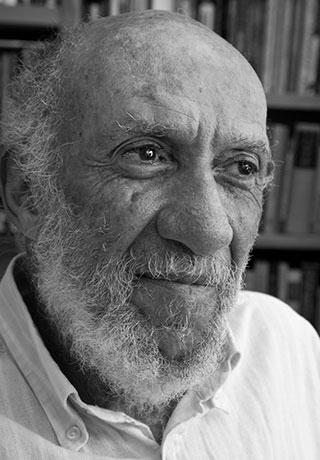

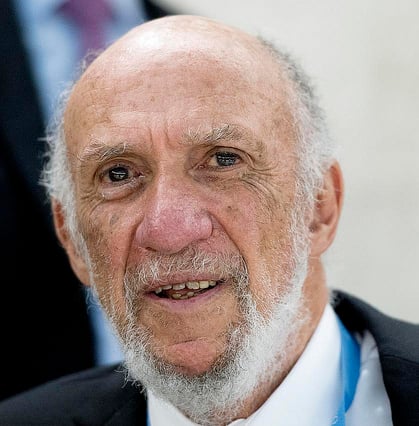
Professor Falk became an adviser to TFF when it was established in 1985.

Related Posts

Photos © TFF 2000 Read PressInfo 90 “Lift the Sanctions and Bring More Aid to Yugoslavia” See Pictures from Belgrade © TFF 2000 Please reprint, copy, archive, quote or re-post this item, but please retain the source.
PART 2 — Diplomacy, Law and Nonviolent Power By Jan ObergTFF co-founder and director January 26, 2026 This is the second of four TFF-created idea portfolios designed to curb the global reach of the United States and, in both the short and long term, help catalyse a worldwide nonviolent resistance to what many observers describe as the Trump administration’s uniquely confrontational, destructive and world-threatening policies. These portfolios outline what governments and citizens across the world can do through dynamic diplomacy, creative initiatives, and strictly nonviolent means. They are typical TFF works in that we do not only tell what the problem is and how bad it will go – as 90+% of all commentators, experts and scholars do – we tell what we think can be done, inviting you to think of what you think you can do. It seems painfully clear to me that the current political dynamics in Washington increasingly resemble the most dangerous...
PART 1 — Media, Culture and Information Sovereignty By Jan ObergTFF co-founder and director January 20, 2026 This is the first of four TFF-created idea portfolios designed to curb the global reach of the United States and, in both the short and long term, help catalyse a worldwide nonviolent resistance to what many observers describe as the Trump administration’s uniquely confrontational, destructive and world-threatening policies. These portfolios outline what governments and citizens across the world can do through dynamic diplomacy, creative initiatives, and strictly nonviolent means. They are typical TFF works in that we do not only tell what the problem is and how bad it will go – as 90+% of all commentators, experts and scholars do – we tell what we think can be done, inviting you to think of what you think you can do. It seems painfully clear to me that the current political dynamics in Washington increasingly resemble the most...

Recent Articles

Tony Robinson October 4, 2026 Violence is easy to recognise when someone is being beaten, shot or killed. It becomes more difficult when nobody is holding a weapon. Poverty, discrimination, exploitation and repression can restrict a human life just as effectively, although they do so in very different ways and with very different consequences. Simply adding more categories to an ever-growing list of forms of violence does not really solve the problem. The more interesting question is what all these different situations have in common and why it makes sense to describe them using the same word. Human beings do not simply react to what happens around them. They remember the past, imagine things that do not yet exist, make plans and undertake projects. Workers organise because they imagine different working conditions; people migrate because they imagine another life somewhere else; social movements emerge because people refuse to accept the...
It’s a matter of principles, courage, vision and pulling together – while the militarist world is falling apart… Peter Langille October 3, 2026 “Here, then, is the problem which we present to you, stark and dreadful and inescapable: Shall we put an end to the human race; or shall mankind renounce war?”The Bertrand Russell—Albert Einstein Manifesto, July 9, 1955 ⁕ The forecast for what’s ahead is worrisome. The sharp rise in armed conflicts over the past three years is adding to what was already the highest level in over seventy years. Genocides, which should be prevented are supported. A shared climate emergency that jeopardises survival is ignored. Diverse polls now suggest that people are war-weary, worried and interested in a more effective United Nations. And, there are viable policy options for a more secure world! Yet governments are doubling-down, betting on more war and investing heavily. If current trends persist,...
Johan Galtung 1930-2024October 2015 Published here on October 3, 2026 Let us focus on Civilization for conflict analysis and remedies. Major forms of disorder use violence; war is state organized violence. The most belligerent states are the United States of America and Israel, both with civilization roots. National Evangelism, the US Protestant Christian civilization– more national than evangelical–justifies US warfare as exceptionalism of a people chosen by God, with a manifest destiny to run the world. Orthodox Judaism justifies Israeli warfare to conquer and expand from Nile to Euphrates as a religious right and duty to the Eternal One. The third most belligerent country, the UK, no longer believes it is God-chosen but chosen by the USA; not quite the same but something. But the root cause of global disorder lies in the Occident–with Islam–seeing itself as the single, universal civilization valid for all at all times, all others being...

TFF on Substack

Discover and subscribe to more peace materials on TFF Substack

Most Popular

Tony Robinson October 4, 2026 Violence is easy to recognise when someone is being beaten, shot or killed. It becomes more difficult when nobody is holding a weapon. Poverty, discrimination, exploitation and repression can restrict a human life just as effectively, although they do so in very different ways and with very different consequences. Simply adding more categories to an ever-growing list of forms of violence does not really solve the problem. The more interesting question is what all these different situations have in common and why it makes sense to describe them using the same word. Human beings do not simply react to what happens around them. They remember the past, imagine things that do not yet exist, make plans and undertake projects. Workers organise because they imagine different working conditions; people migrate because they imagine another life somewhere else; social movements emerge because people refuse to accept the...
It’s a matter of principles, courage, vision and pulling together – while the militarist world is falling apart… Peter Langille October 3, 2026 “Here, then, is the problem which we present to you, stark and dreadful and inescapable: Shall we put an end to the human race; or shall mankind renounce war?”The Bertrand Russell—Albert Einstein Manifesto, July 9, 1955 ⁕ The forecast for what’s ahead is worrisome. The sharp rise in armed conflicts over the past three years is adding to what was already the highest level in over seventy years. Genocides, which should be prevented are supported. A shared climate emergency that jeopardises survival is ignored. Diverse polls now suggest that people are war-weary, worried and interested in a more effective United Nations. And, there are viable policy options for a more secure world! Yet governments are doubling-down, betting on more war and investing heavily. If current trends persist,...
Johan Galtung 1930-2024October 2015 Published here on October 3, 2026 Let us focus on Civilization for conflict analysis and remedies. Major forms of disorder use violence; war is state organized violence. The most belligerent states are the United States of America and Israel, both with civilization roots. National Evangelism, the US Protestant Christian civilization– more national than evangelical–justifies US warfare as exceptionalism of a people chosen by God, with a manifest destiny to run the world. Orthodox Judaism justifies Israeli warfare to conquer and expand from Nile to Euphrates as a religious right and duty to the Eternal One. The third most belligerent country, the UK, no longer believes it is God-chosen but chosen by the USA; not quite the same but something. But the root cause of global disorder lies in the Occident–with Islam–seeing itself as the single, universal civilization valid for all at all times, all others being...
Read More
Living-Peace-Sign-Budapest-copy
Tony Robinson October 4, 2026 Violence is easy to recognise when someone is being beaten, shot or killed. It becomes more difficult when nobody is holding a weapon. Poverty, discrimination, exploitation and repression can restrict a human life just as effectively, although they do so in very different ways and with very different consequences. Simply adding more categories to an ever-growing list of forms of violence does not really solve the problem. The more interesting question is what all these different situations have in common and why it makes sense to describe them using the same word. Human beings do not simply react to what happens around them. They remember the past, imagine things that do not yet exist, make plans and undertake projects. Workers organise because they imagine different working conditions; people migrate because they imagine another life somewhere else; social movements emerge because people refuse to accept the...
b54a1f10-8c65-4f0b-9dd5-4abc0a7d04cc_2659x2659
It’s a matter of principles, courage, vision and pulling together – while the militarist world is falling apart… Peter Langille October 3, 2026 “Here, then, is the problem which we present to you, stark and dreadful and inescapable: Shall we put an end to the human race; or shall mankind renounce war?”The Bertrand Russell—Albert Einstein Manifesto, July 9, 1955 ⁕ The forecast for what’s ahead is worrisome. The sharp rise in armed conflicts over the past three years is adding to what was already the highest level in over seventy years. Genocides, which should be prevented are supported. A shared climate emergency that jeopardises survival is ignored. Diverse polls now suggest that people are war-weary, worried and interested in a more effective United Nations. And, there are viable policy options for a more secure world! Yet governments are doubling-down, betting on more war and investing heavily. If current trends persist,...
010
Johan Galtung 1930-2024October 2015 Published here on October 3, 2026 Let us focus on Civilization for conflict analysis and remedies. Major forms of disorder use violence; war is state organized violence. The most belligerent states are the United States of America and Israel, both with civilization roots. National Evangelism, the US Protestant Christian civilization– more national than evangelical–justifies US warfare as exceptionalism of a people chosen by God, with a manifest destiny to run the world. Orthodox Judaism justifies Israeli warfare to conquer and expand from Nile to Euphrates as a religious right and duty to the Eternal One. The third most belligerent country, the UK, no longer believes it is God-chosen but chosen by the USA; not quite the same but something. But the root cause of global disorder lies in the Occident–with Islam–seeing itself as the single, universal civilization valid for all at all times, all others being...
Screenshot 2026-10-02 011738
Jan ObergPhD, director, The Transnational Foundation for Peace and Future Research, TFFLund, Sweden October 2, 2026 This is my full original manuscript. The Chinese Academy of Social Science, CASS, makes two publications out if it. 1. China’s Five-year plan emphasized the capabilities of basic research and original innovation. It is regarded as the goal of the future social development, which, as required, should be significantly enhanced. Can you comment on the importance of original innovation in research and academic study? I believe it is easier to define “original innovation” in the natural sciences than in social sciences. The breaking points of what constitutes something new, or innovative, are not quite as sharp in the latter. But in both fields it is about opening up something that was closed, unseen, unexplored before – making manifest what was earlier latent. Innovations come in many forms and shapes – naming something that was not...
arctic-circle-map
The agreement is catastrophic both because of what it says and what it doesn’t mention. It reduces further the major asset of security policies: Freedom of action. Jan Oberg TFF director September 25, 2026 A couple of hours before the agreement was signed on September 22, 2026, I published the following 13 hypotheses about what it would most likely contain on TFF Substack (in English). I was wrong on only the first point. Contrary to what Trump had written on his Truth Social platform, it does not appear to come into force immediately. In fact, it turned out to be worse than even I had anticipated. After these hypotheses now come a number of reflections in light of what the agreement actually contains, and does not contain, as well as the way in which it has generally been presented by major media outlets and by the public-service broadcaster DR. My...
girl-5894831_1280
Below are TFF-related media mentions, comments, videos and social media posts published elsewhere but not on this homepage. We happen to catch and list only a fraction. Regarding video comments and debates, we recommend that you go to the TFF Video Channel on Substack where many of them are reproduced. Jan Oberg is a contributor to China Daily – 52 million daily clicks – and Global Times, CGTN and CCTV (the national television), China Investment, Xinhua News Agency and several others. Articles and videos on these media very often multiply into countless Chinese (and Western media) that re-post them from these main media. Thanks to The China Academy, his analyses, interviews and comments are frequently posted on YouTube channels such as Thinkers Forum and Wave Media. These videos are often re-posted on Bilibili (China’s YouTube), the China Content Center on TikTok, and on the Chinese edition of TikTok, Douyin.com. This means reaching hundreds of millions of viewers worldwide over a year. While there are too many to catch on all these...