
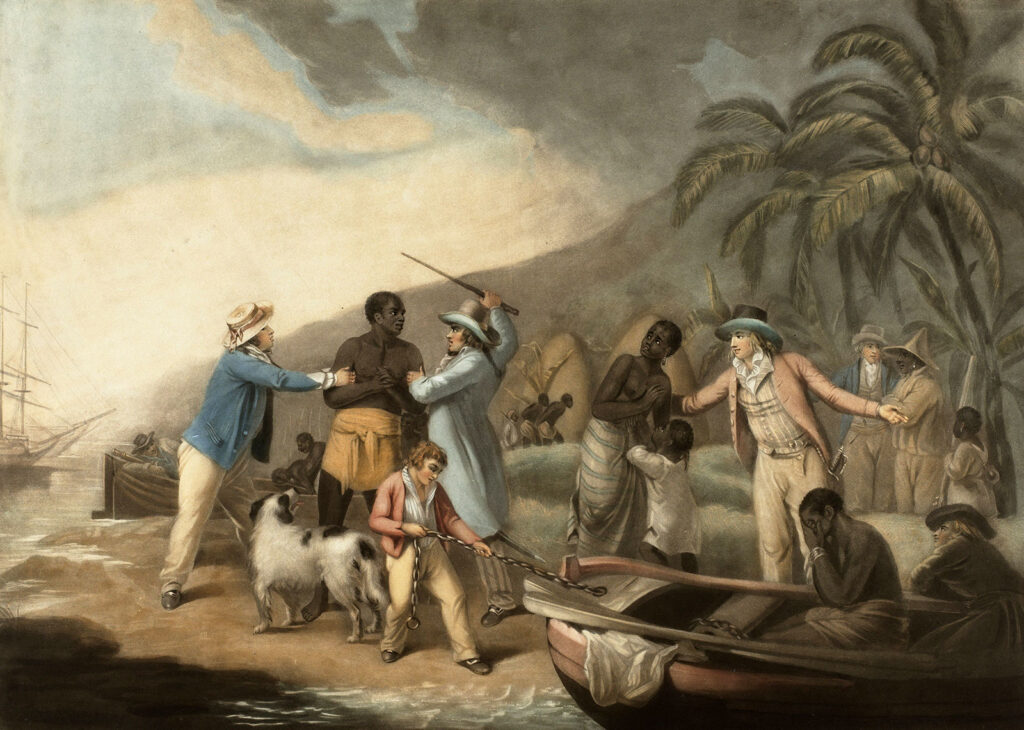
Pulling down statues may make us feel good but will
not eliminate the root causes of racism and discrimination

Farhang Jahanpour
TFF Associate

June 23, 2020

Part Two – Part 1 here

The protests to the cruel killing of George Floyd and many others before him and even some after him have not remained confined to the United States or among black people alone, but have given rise to a global movement for change and an end to racism and discrimination.

Many protestors in the United States have called for the toppling of the statues of Confederate generals and for the names of places and institutions named after them to be changed, while in many European countries demonstrators have called for the toppling of statues of those who are symbols of racism, imperialism and white supremacy.

Clearly, toppling a few statues may give temporary satisfaction to those who have been the victims of racism, but is it the best or a lasting solution?

There is a difference between “feel good politics” and “do good politics”.

What is needed is not to vent our anger against a few statues, but to think of long-term solutions to the phenomenon of racism and discrimination.

When I first arrived in Britain as a young student in 1960, I caught a taxi at the then BOAC terminal in London and asked the driver to take me to an inexpensive hotel. He dropped me in front of the Cromwell Hotel in Cromwell Road, Kensington.

Oliver Cromwell was the leader of the Puritan Movement who led the Parliament’s armies against Charles I during the English Civil War, and signed the warrant for the execution of King Charles I in 1649. On 20 April 1653, he dismissed the Rump Parliament by force, setting up a nominated assembly known as Barebone’s Parliament before being invited to rule as Lord Protector. The Puritans also engaged in a great deal of artistic vandalism, destroying many beautiful religious buildings and artefacts.

This road in London, was actually named after Cromwell’s son who once owned a house there.

Having come from what was then royal Iran and being partly familiar with British history, I found it odd that Cromwell who had tried to abolish the monarchy and who had killed a king would have his name given to a road and a hotel without any government action.

The following day I asked a British friend of mine about why Cromwell’s name had not been erased from all records after the Restoration of the monarchy and why various monuments commemorated him.

He replied: “Because he was a part of British history”.

I found that attitude a much more mature approach compared to the practice of many third world countries where every new regime tries to eliminate the traces of the previous one. This also happened in Iran. The Pahlavi Dynasty (1925-79) that succeeded the Qajar Dynasty (1789-1925) tried to erase or undermine all the achievements of the previous dynasty.

Cities, buildings and roads changed their names to new names associated with the Pahlavis. The ancient city of Urumiyyeh became Rezaiyyeh, named after Reza Shah, Anzali port became Pahlavi port, Tehran’s longest street was called Pahlavi Street, and many statues of both Pahlavi kings were erected all over the place.

The same pattern was followed after the fall of the Pahlavis. One of the first things that the leaders of the Islamic Republic did was to try to erase the monuments and statues of the Pahlavi dynasty. The “hanging judge” Ayatollah Khalkhali led the crowd towards Reza Shah’s mausoleum and raised it to the ground.

The monument that the Shah had built in the middle of Tehran to commemorate Iran’s 2,500 years of monarchy, but most specifically to perpetuate his own name, called Shahyad, changed its name to “Freedom Square”, and Tehran’s longest thoroughfare, the Pahlavi Street, was renamed Valiasr Street (after the so-called Hidden Imam).

No doubt, when the Islamic Republic is replaced with a new regime, new rulers will also try to destroy Khomeini’s huge mausoleum and will change many names associated with the Islamic regime.

The toppling of the monuments associated with an old era may be tempting and may provide some momentary emotional relief, but they also destroy a part of history, and a nation without history is like a tree which has had the roots cut off.

One can easily understand the depth of anger of those who have been the victims of racism in the past or at present, and their desire to remove the statues of some slaver owners or colonialists that remind them of the period of their oppression.

How can one learn about the background of those monsters and not sympathise with those who wish to remove the stain of shame from their cities?

Tens of thousands of mainly peaceful demonstrators took to the streets in different parts of Britain demanding racial justice. In Bristol, demonstrators pulled down the statue of Edward Colston from its pedestal, reminiscent of American soldiers pulling down Saddam Hussein’s statue in Baghdad, and threw it into a canal.

Colston who became a major benefactor to the city of Bristol and whose name honours/shames many streets and buildings, built his enormous fortune on slavery. He transported more than 80,000 African men, women and children across the Atlantic, many of them to their death during transit or in the plantations.

Thousands of demonstrators gathered outside Oriel College in Oxford demanding the removal of the statue of imperialist Cecil Rhodes. Rhodes was an ardent believer in British imperialism who founded the southern African territory which was named Rhodesia after him (renamed later as Zimbabwe when it achieved independence after nearly 70 years as a British colony), and in some ways he was the author of apartheid in South Africa.

His primary motivation in politics was based on his professed belief that the Anglo-Saxon race was “the first race in the world”, adding that “the more of the world we inhabit the better it is for the human race.”[1]

Sadly, such sentiments do not only belong in the past but are repeated in different forms by some arrogant politicians right up to the present time. During his Senate hearing, US Secretary of State Mike Pompeo said that America was not only exceptional but unique. Pompeo, a US Army veteran, addressing The American Legion 101st National Convention on 27 August 2019, boasted: “Americanism means recognising America as ‘an exceptional nation’”.

After referring to the US’s “achievements” in Afghanistan and Venezuela, galvanising international support for sanctions on North Korea and Iran, etc., he told his military audience: “It’s very simple: you have contributed mightily to proud American achievements. By doing so you, your organization, each of you as individuals, is a proud American achievement unto itself.”

He added: “In fact, America itself – the idea of America and her promise – is at the core of everything that you do.”[2]

This is the language of all past imperialists and colonialists who made use of high-sounding ideals to invade and suppress other nations. But no government has acted in a more parochial and racist manner than the administration of which Pompeo is a member.

From banning Muslim immigrants, to savagely separating children from their parents at US borders in the south, selling huge volumes of deadly weapons to dictatorial regimes that are engaged in genocidal wars in Yemen and elsewhere, imposing illegal sanctions on numerous countries, organising clumsy coup attempts against Venezuela and Bolivia, violating international law and granting Jerusalem and parts of the occupied territories to the apartheid Israeli regime, withdrawing from a number of international treaties such as the Paris Climate Accord, the nuclear deal with Iran, the Start Treaty with Russia, undermining various vital UN organisations such as the WHO in the middle of a pandemic, or UNESCO or International Court of Justice, etc. the current US regime has a terrible record hardly matched by any previous administration.

It requires an exceptional, indeed a unique, degree of arrogance and blindness to ignore this unenviable record of aggression, violation of international law and human rights, and talk about US exceptionalism for allegedly spreading freedom and democracy throughout the world. 

Nevertheless, the answer to this and past examples of racism and arrogance is not to engage in acts of demolition, although on 18th June, Oriel College finally promised to remove Rhodes statue. There must be a better way of tackling the root-causes of all that injustice.

In fact, by removing the statues of racists and imperialists one has done them a great favour, because with their removal their memory also fades gradually and people forget about their crimes.

Far better to keep them where they are but add a plaque to them explaining what they did.

A nation that demolishes its history cuts its own roots and dims its memory. In fact, it is impossible to erase the past and pretend that it did not exist. We are the products of our past and we must accept it for good or ill.

As the American novelist William Falkner said: “The past is not dead, it is not even past.” In the words of Iranian poet Omar Khayyam:

The Moving Finger writes; and, having writ,
Moves on: nor all thy Piety nor Wit
Shall lure it back to cancel half a Line,
Nor all thy Tears wash out a Word of it.

We cannot erase the past, but we can admit our past mistakes, learn from them and try to put them right.

Don’t pull down statues, pull down statutes

One of the ways that unjust governments have perpetuated past injustices has been by passing unfair statutes and giving legal legitimacy to their racist behaviour. It’s well past time for changing the laws that discriminate against black and ethnic groups and on the whole the poorer classes of society, and to introduce new legislation. One such area is systemic police reform.

American politicians have been aware of police bias but have done little to address it. As early as 2006, an FBI report revealed that law-enforcement forces had been “infiltrated” by White Supremacists and in fact, it called it an epidemic.[3]

It is appalling that black people are 40 times more likely to be subjected to “Stop and Search” than white people. The rate of death under detention is proportionately much higher for black people than for whites, as is the rate of incarceration.

This means that one of the first steps that needs to be taken is to fundamentally change the culture of policing and make it more accountable.

The issue of violence and the militarisation of the police is closely connected with the issue of America’s growing militarisation abroad. The United States spends nearly as much on its military as the rest of the world combined, and it is by far the largest exporter of deadly weapons. It also has hundreds of bases in way over hundred countries.

In order to reduce this excessive reliance on military force at home and abroad, people should demand massive cuts in the budgets of the Pentagon and the police and instead spend the money on removing economic disparity.

One can think of dozens of other measures that can be taken in the United States and in the West as a whole, which are more effective than pulling down some statues. Those measures would have a permanent effect and would make America and the West much more humane, more equal and more desirable places for their citizens to live.

Farhang Jahanpour is a former professor and dean of the Faculty of Languages at the University of Isfahan, and a former Senior Research Scholar at Harvard.
He is also a TFF Associate and former Board member of the foundation.
For the past 30 years, he has been teaching courses on the Middle East at the Department of Continuing Education and is a member of Kellogg College at the University of Oxford.

Part 1 of ‘George Floyd’s killing and its international repercussions”

Please help TFF remain truly independent here if you benefited from this article


Notes

[1] William Thomas Stead, ed. “The Last Will and Testament of Cecil John Rhodes”, London, 1902, p. 58.

[2] See Steven B. Brooks, Pompeo: Americanism means recognizing America as an ‘exceptional nation’, American Legion, Aug 27, 2019.

[3] “White Supremacist Infiltration of Law Enforcement,” 17 October, 2006.

Photo on top
John Raphael Smith: Slave TradeSlave Trade, print on paper by John Raphael Smith after George Morland, 1762–1812; in the Rijksmuseum, Amsterdam.Courtesy of the Rijksmuseum, Amsterdam (RP-P-1969-83)

The PRIO & ISA Effort to Excommunicate Johan Galtung from Peace Research – And Why It Failed

How Oxford University Press allowed …
Warm Peace: A Theory of Transition from Cold Peace

New pathbreaking theory-of-peace book by …
Militarist Absurd Theatre with Dead Horse Punditry? No. There Are Only Alternatives

Jan ObergTFF director ☮️ When …
The One West

A Civilizational Interpretation of the …

One Response

  1. None of the police forces in the 20 biggest cities in the US, live up to the most basic norm of Human Rights by a study of University of Chicagos Lawschool called “Deadly Discretion: The Failure of Police Use of Force Policies to Deadly Discretion: The Failure of Police Use of Force Policies to Meet Fundamental International Human Rights Law and Meet Fundamental International Human Rights Law and Standards Standards “. Having statues of Confederate Generals all over the Southern States – mainly raised during the period between 1900 – 1930, is based on Southern Mytology of how nice the slavemasters were to their slaves – but they are raised by the Daughters of the Confederacy – a white supremacy group during the years of Jim Crow laws – i order to tell the blacks to keep in line. They must go. What the Brits are doing to their former Imperialistic slavetraders, seems fair – why would you honour people who has committed such atrocities – put them in the British Museum the department for Imperialism with foot notes.

Related Posts

Below are TFF-related media mentions, comments, videos and social media posts published elsewhere but not on this homepage. We happen to catch and list only a fraction. Regarding video comments and debates, we recommend that you go to the TFF Video Channel on Substack where many of them are reproduced. Jan Oberg is a contributor to China Daily – 52 million daily clicks – and Global Times, CGTN and CCTV (the national television), China Investment, Xinhua News Agency and several others. Articles and videos on these media very often multiply into countless Chinese (and Western media) that re-post them from these main media. Thanks to The China Academy, his analyses, interviews and comments are frequently posted on YouTube channels such as Thinkers Forum and Wave Media. These videos are often re-posted on Bilibili (China’s YouTube), the China Content Center on TikTok, and on the Chinese edition of TikTok, Douyin.com. This means reaching hundreds of millions of viewers worldwide over a year. While there are too many to catch on all these...
Jan Oberg TFF director October 13, 2026 According to Alfred Nobel’s will, the Nobel Peace Prize shall be awarded: ”to the person who has done the most or best to advance fellowship among nations, the abolition or reduction of standing armies, and the establishment and promotion of peace congresses.” Further down, he also expresses how the prize for the “champions of peace” shall be decided: “that for champions of peace by a committee of five persons to be selected by the Norwegian Storting. Alfred Nobel’s will is remarkably short and clear. But few seem to have read it. Nobel did not say that the committee itself should consist of members of parliament. He entrusted the Storting with appointing five persons. In principle, it could have selected diplomats, mediators, peace researchers, conflict-resolution specialists, or other individuals with recognised expertise in matters of peace from around the world. Instead, the Storting gradually...
The Quest for Humane Survival Richard Falk Professor emeritus, Princeton UniversityTFF Associate since 1986October 12, 2026 After decades of teaching and writing about international law in academic frameworks that were not institutionally situated within law school environments—at Princeton and the University of California, Santa Barbara—I found myself most receptive to the TWAIL outlook. It has been especially illuminating in clarifying the extent to which international law evolved as a dialogical critique of Europe’s efforts to legitimize its colonial undertakings. In particular, TWAIL has exposed how international law has functioned to legalize the subjugation of Third World peoples, securing conditions for exploitative investment and trade relations, the coercive enforcement of public debts, and an ideology of cultural superiority. TWAIL’s exposure of these economic legacies of colonialism has influenced my understanding of the history and development of international law, broadly conceived, as an ideological project of the Western sub-system of the world...

Recent Articles

Below are TFF-related media mentions, comments, videos and social media posts published elsewhere but not on this homepage. We happen to catch and list only a fraction. Regarding video comments and debates, we recommend that you go to the TFF Video Channel on Substack where many of them are reproduced. Jan Oberg is a contributor to China Daily – 52 million daily clicks – and Global Times, CGTN and CCTV (the national television), China Investment, Xinhua News Agency and several others. Articles and videos on these media very often multiply into countless Chinese (and Western media) that re-post them from these main media. Thanks to The China Academy, his analyses, interviews and comments are frequently posted on YouTube channels such as Thinkers Forum and Wave Media. These videos are often re-posted on Bilibili (China’s YouTube), the China Content Center on TikTok, and on the Chinese edition of TikTok, Douyin.com. This means reaching hundreds of millions of viewers worldwide over a year. While there are too many to catch on all these...
Jan Oberg TFF director October 13, 2026 According to Alfred Nobel’s will, the Nobel Peace Prize shall be awarded: ”to the person who has done the most or best to advance fellowship among nations, the abolition or reduction of standing armies, and the establishment and promotion of peace congresses.” Further down, he also expresses how the prize for the “champions of peace” shall be decided: “that for champions of peace by a committee of five persons to be selected by the Norwegian Storting. Alfred Nobel’s will is remarkably short and clear. But few seem to have read it. Nobel did not say that the committee itself should consist of members of parliament. He entrusted the Storting with appointing five persons. In principle, it could have selected diplomats, mediators, peace researchers, conflict-resolution specialists, or other individuals with recognised expertise in matters of peace from around the world. Instead, the Storting gradually...
The Quest for Humane Survival Richard Falk Professor emeritus, Princeton UniversityTFF Associate since 1986October 12, 2026 After decades of teaching and writing about international law in academic frameworks that were not institutionally situated within law school environments—at Princeton and the University of California, Santa Barbara—I found myself most receptive to the TWAIL outlook. It has been especially illuminating in clarifying the extent to which international law evolved as a dialogical critique of Europe’s efforts to legitimize its colonial undertakings. In particular, TWAIL has exposed how international law has functioned to legalize the subjugation of Third World peoples, securing conditions for exploitative investment and trade relations, the coercive enforcement of public debts, and an ideology of cultural superiority. TWAIL’s exposure of these economic legacies of colonialism has influenced my understanding of the history and development of international law, broadly conceived, as an ideological project of the Western sub-system of the world...

TFF on Substack

Discover and subscribe to more peace materials on TFF Substack

Most Popular

Below are TFF-related media mentions, comments, videos and social media posts published elsewhere but not on this homepage. We happen to catch and list only a fraction. Regarding video comments and debates, we recommend that you go to the TFF Video Channel on Substack where many of them are reproduced. Jan Oberg is a contributor to China Daily – 52 million daily clicks – and Global Times, CGTN and CCTV (the national television), China Investment, Xinhua News Agency and several others. Articles and videos on these media very often multiply into countless Chinese (and Western media) that re-post them from these main media. Thanks to The China Academy, his analyses, interviews and comments are frequently posted on YouTube channels such as Thinkers Forum and Wave Media. These videos are often re-posted on Bilibili (China’s YouTube), the China Content Center on TikTok, and on the Chinese edition of TikTok, Douyin.com. This means reaching hundreds of millions of viewers worldwide over a year. While there are too many to catch on all these...
Jan Oberg TFF director October 13, 2026 According to Alfred Nobel’s will, the Nobel Peace Prize shall be awarded: ”to the person who has done the most or best to advance fellowship among nations, the abolition or reduction of standing armies, and the establishment and promotion of peace congresses.” Further down, he also expresses how the prize for the “champions of peace” shall be decided: “that for champions of peace by a committee of five persons to be selected by the Norwegian Storting. Alfred Nobel’s will is remarkably short and clear. But few seem to have read it. Nobel did not say that the committee itself should consist of members of parliament. He entrusted the Storting with appointing five persons. In principle, it could have selected diplomats, mediators, peace researchers, conflict-resolution specialists, or other individuals with recognised expertise in matters of peace from around the world. Instead, the Storting gradually...
The Quest for Humane Survival Richard Falk Professor emeritus, Princeton UniversityTFF Associate since 1986October 12, 2026 After decades of teaching and writing about international law in academic frameworks that were not institutionally situated within law school environments—at Princeton and the University of California, Santa Barbara—I found myself most receptive to the TWAIL outlook. It has been especially illuminating in clarifying the extent to which international law evolved as a dialogical critique of Europe’s efforts to legitimize its colonial undertakings. In particular, TWAIL has exposed how international law has functioned to legalize the subjugation of Third World peoples, securing conditions for exploitative investment and trade relations, the coercive enforcement of public debts, and an ideology of cultural superiority. TWAIL’s exposure of these economic legacies of colonialism has influenced my understanding of the history and development of international law, broadly conceived, as an ideological project of the Western sub-system of the world...
Read More
girl-5894831_1280
Below are TFF-related media mentions, comments, videos and social media posts published elsewhere but not on this homepage. We happen to catch and list only a fraction. Regarding video comments and debates, we recommend that you go to the TFF Video Channel on Substack where many of them are reproduced. Jan Oberg is a contributor to China Daily – 52 million daily clicks – and Global Times, CGTN and CCTV (the national television), China Investment, Xinhua News Agency and several others. Articles and videos on these media very often multiply into countless Chinese (and Western media) that re-post them from these main media. Thanks to The China Academy, his analyses, interviews and comments are frequently posted on YouTube channels such as Thinkers Forum and Wave Media. These videos are often re-posted on Bilibili (China’s YouTube), the China Content Center on TikTok, and on the Chinese edition of TikTok, Douyin.com. This means reaching hundreds of millions of viewers worldwide over a year. While there are too many to catch on all these...
Nobel-Prize-Plaque
Jan Oberg TFF director October 13, 2026 According to Alfred Nobel’s will, the Nobel Peace Prize shall be awarded: ”to the person who has done the most or best to advance fellowship among nations, the abolition or reduction of standing armies, and the establishment and promotion of peace congresses.” Further down, he also expresses how the prize for the “champions of peace” shall be decided: “that for champions of peace by a committee of five persons to be selected by the Norwegian Storting. Alfred Nobel’s will is remarkably short and clear. But few seem to have read it. Nobel did not say that the committee itself should consist of members of parliament. He entrusted the Storting with appointing five persons. In principle, it could have selected diplomats, mediators, peace researchers, conflict-resolution specialists, or other individuals with recognised expertise in matters of peace from around the world. Instead, the Storting gradually...
law-419057_1280
The Quest for Humane Survival Richard Falk Professor emeritus, Princeton UniversityTFF Associate since 1986October 12, 2026 After decades of teaching and writing about international law in academic frameworks that were not institutionally situated within law school environments—at Princeton and the University of California, Santa Barbara—I found myself most receptive to the TWAIL outlook. It has been especially illuminating in clarifying the extent to which international law evolved as a dialogical critique of Europe’s efforts to legitimize its colonial undertakings. In particular, TWAIL has exposed how international law has functioned to legalize the subjugation of Third World peoples, securing conditions for exploitative investment and trade relations, the coercive enforcement of public debts, and an ideology of cultural superiority. TWAIL’s exposure of these economic legacies of colonialism has influenced my understanding of the history and development of international law, broadly conceived, as an ideological project of the Western sub-system of the world...
images-2
Advocates of nuclear disarmament are regularly dismissed by the champions of nuclear deterrence as naïve and unrealistic, utopian or even irresponsible. Yet this ‘doctrine’ of deterrence, regarded by France as the ‘cornerstone’ of its national security, is based on quasi-religious beliefs, a theory that cannot be proven, risky gambles and fragile assumptions. So much so that one might legitimately ask which side the ‘Care Bears’ are on. Marc FinaudVice-President of Initiatives for Nuclear Disarmament (IDN) October 9, 2026 This article was originally published on Pressenza When it comes to these things being treated as religious concepts, look here. Idealists and realists It was Hubert Védrine, François Mitterrand’s former Foreign Minister, who repeatedly coined the phrase: ‘Europeans are a sort of Care Bears who don’t realise they’re living in Jurassic Park’. He applies this reference to the cartoon for well-behaved children not only to what he regards as weakness or idealism...
8824b09f-33a5-43f9-9fd0-550f28cda24d_1536x1024
What the West Borrowed from Asia and What It Left Behind Jan Krikke October 8, 2026 The article was originally published here In the late 1960s, the musical Hair announced that the Age of Aquarius was dawning. Its opening anthem promised a transformation of human consciousness: an era of peace, harmony and understanding. Half a century later, a familiar echo of that promise is a meditation app offered by your employer. You can find it in the same list of benefits as the pension plan and the gym discount. How did a spiritual revolution become an employee benefit? The answer lies in the history of the movement known as New Age: where it came from, what it borrowed from Asia, and why the meaning of what it borrowed changed in the process. Two definitions will help. New Age is a loose label for a wide range of spiritual practices and...
Screenshot 2026-10-04 210142
Small and different + among the 10% most active + 9,000 texts + 150 Associates + 60 000 a day — and a stubborn belief that peace is smarter and must be secured by peaceful means. In 2026, the Transnational Foundation for Peace and Future Research (TFF) turns 40. On Monday, October 5, 2026, a new TFF homepage will go live — a new gateway to more than 9,000 articles, analyses, research papers and other contributions produced over four decades of independent peace research. But this is not simply a new website. For four decades, TFF has worked from a simple conviction: peace is smarter than militarism and can be brought about by peaceful means. This is not merely an aspiration. It is the principle expressed in the UN Charter and the Gandhian tradition that has guided our work from the beginning. TFF is a research-based, independent and people-financed foundation....




