New pathbreaking theory-of-peace book by Iranian
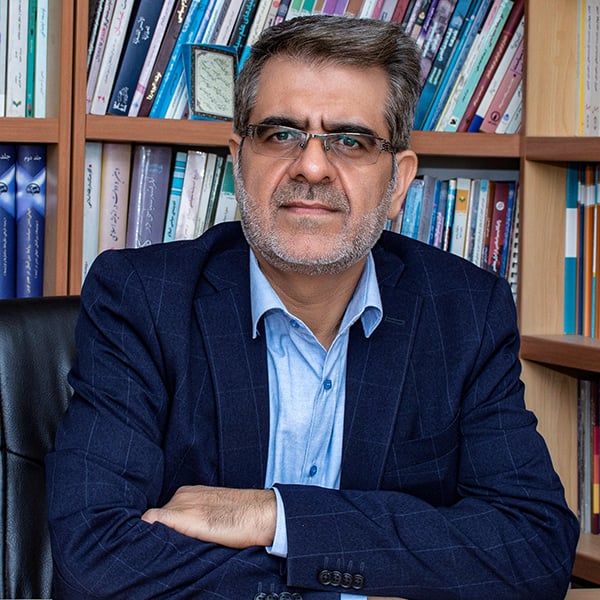
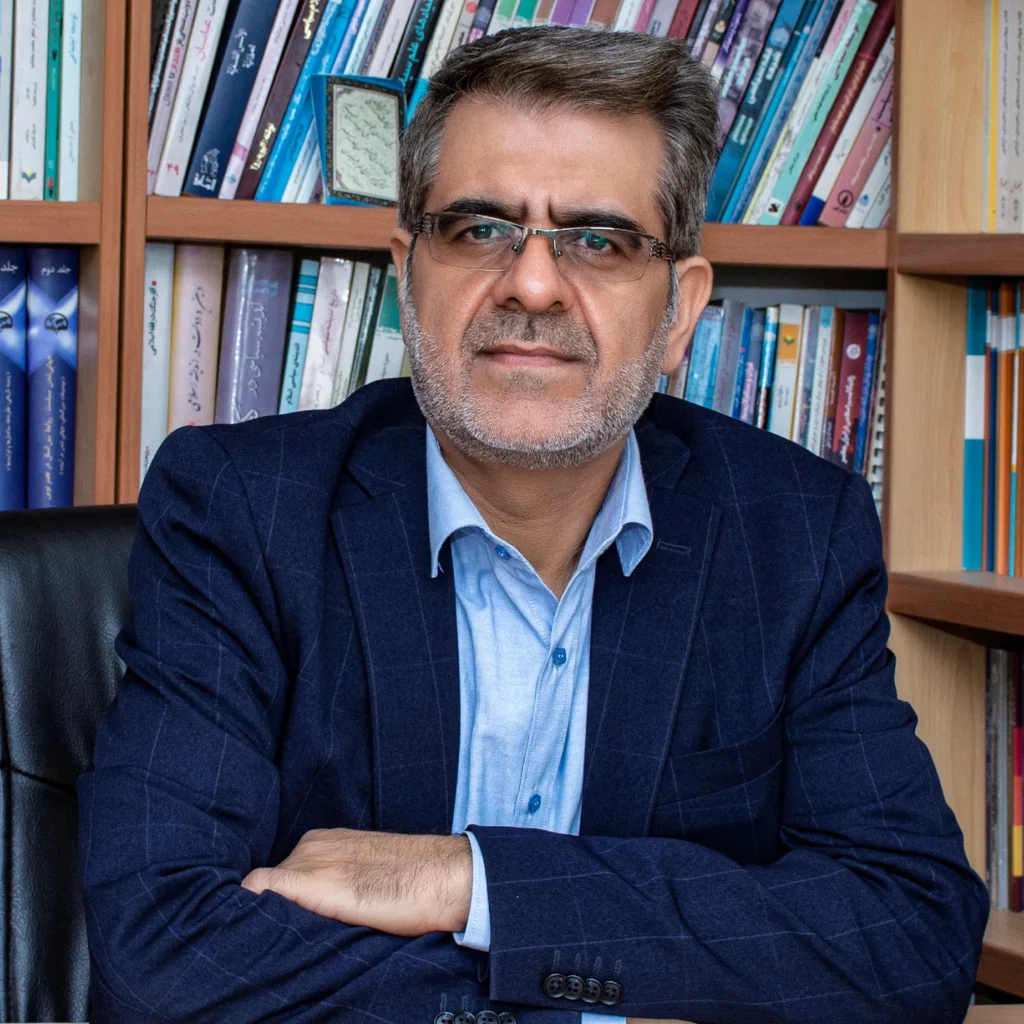
TFF Associate Dr Ali Akbar Alikhani
August 27, 2026
Introduction
Probably very few Westerners know that Tehran has a peace museum and that Tehran University has pioneered academic peace and conflict studies in the Muslim world, where this field is, regrettably, almost non-existent.
Tehran University is the single most developed, academically structured, and conceptually coherent centre for peace and conflict research. Nothing else in the region matches its combination of institutionalisation, curriculum depth, research output, international conferences and conceptual grounding in the broader peace‑research tradition.
Its pioneering leader for more than a decade now is Dr Ali Akbar Alikhani, a TFF Associate since 2023. We met years earlier when I was invited to give a guest lecture on peace versus security theory at the university.
Ali’s new book is just out in Persian, and – remarkably – the summary below is written by a group of his students. I congratulate my dear friend not only on his innovative peace theory developed over more than 500 pages but also on having completed it while his country is the object of US/Israeli aggression.
This pioneering work deserves to reach an English-language publisher as soon as possible.
Jan Oberg
TFF director

Warm Peace: A Theory of Transition from Cold Peace
Warm Peace: A Theory of Transition from Cold Peace is the latest research monograph by Dr Ali Akbar Alikhani, a professor at the University of Tehran and a scholar of peace and conflict resolution studies. Published in Persian by Negah-e Moaser in June 2026, this 580-page volume presents an original theory developed within the Iranian intellectual tradition to address the historical, cultural, and social conditions of Iran and other societies confronting similar challenges.
The book conceptualizes peace along a spectrum whose poles are defined by two contrasting conditions – Cold Peace and Warm Peace – and examines the distinctive features of each. It then develops a theoretical framework for understanding how societies might move from the former toward the latter.
Warm Peace Theory adopts an internally oriented perspective. It investigates the causes and conditions that shape the quality of peace within a society through an explicitly nonpartisan analytical lens. At one extreme lies Cold Peace, a condition marked by multiple forms of silent violence that frequently border on outright aggression. At the other lies Warm Peace, a state in which the structural and cultural underpinnings of peaceful coexistence have become deeply embedded. Each condition produces a distinctive pattern of consequences across virtually every domain of social life, from individual welfare and economic livelihoods to national development and state capacity. As a society moves toward one end of the spectrum, the traits and outcomes associated with that pole become more pronounced, while those of the opposite pole correspondingly diminish.
The central ambition of Warm Peace Theory is threefold.
First, it aims to diagnose the conditions that hold societies captive to Cold Peace. Second, it seeks to define the attributes of Warm Peace as an achievable and desirable social order. Third, it endeavors to articulate the theoretical foundations, guiding principles, and practical strategies necessary to facilitate -and ultimately institutionalize- the transition from Cold Peace to Warm Peace.
The book thus addresses a single overarching research question: What are the causes, defining characteristics, and consequences of Cold Peace, understood as an undesirable state, and of Warm Peace, conceived as a preferable alternative; and through what mechanisms can the passage from one to the other be accomplished and sustained?
The volume is organized into three major parts, each comprising three chapters.
Part One
Part One depicts a society in the grip of Cold Peace. Over three chapters, it examines the defining attributes of this condition, the relationships among its constituent elements, and the consequences that flow both from individual components and from the condition considered as an integrated whole.
To render Cold Peace analytically tangible, the author introduces the Persian suffix -zadegi, roughly translatable as afflictedness or a state of being stricken. He explains that when the related suffix -zadeh (”stricken”) attaches to a noun, it signals that a society or individual has fallen victim to an extraordinary calamity, the source of which is indicated by the root word. Expressions such as flood-stricken, earthquake-stricken, war-torn, plague-stricken, and famine-stricken exemplify this linguistic pattern. Floods, earthquakes, wars, diseases, and similar phenomena are natural or historical realities, each with its own causes and functions. Yet when they overstep their proper bounds—when they invade domains they ought not to enter or escalate beyond permissible limits—they become destructive, generating suffering, disorder, stagnation, and decay. Drawing on this analogy, the author deploys -zadegi to describe those situations in which preoccupation with a particular issue exceeds what might reasonably be considered normal or proportionate, thereby evolving into a persistent source of social dysfunction.
Chapter One of Part One
Chapter One establishes the conceptual architecture of the theory. It defines the principal structures, concepts, components, and micro-level phenomena that give rise to and perpetuate Cold Peace, while clarifying the causal relationships, reciprocal interactions, and feedback mechanisms that bind them together. Beyond mapping the theory’s conceptual building blocks, the chapter also examines the cultural complexities and behavioral dispositions of the actors who reproduce and sustain this condition.
The author classifies the defining features of Cold Peace societies into four broad rubrics: 1) intrinsic concepts and components, comprising thirteen characteristics; 2) incidental concepts and components, comprising nine characteristics; 3) auxiliary concepts and components, comprising seven characteristics; and 4) cultural-personality concepts and components, comprising eight characteristics.
Chapter Two of Part One
Chapter Two turns to the underlying foundations of Cold Peace, scrutinizing two complementary dimensions: the intellectual-epistemological foundations and the cultural-personality foundations of its principal actors. The chapter demonstrates how these two sets of foundations shape perceptions, inform behavior, and ultimately reinforce the structures associated with Cold Peace. In all, the author identifies eleven intellectual-epistemological foundations and thirteen cultural-personality foundations.
Chapter Three of Part One
The final chapter of Part One addresses the consequences of Cold Peace. Building on the conceptual framework elaborated in the preceding chapters, it analyzes the internal dynamics of the theory by tracing how its structures, concepts, and foundational assumptions interact to generate broader social outcomes. In this way, the chapter illustrates the practical operation of the theoretical model.
The author argues that the consequences of Cold Peace extend across six major domains: 1) the political and institutional system; 2) political culture; 3) public culture and civil society; 4) civilizational development; 5) the economy and industry; and 6) the international sphere.
Part Two
Part Two is devoted to the concept of Warm Peace and to portraying a society in which it has been realized. It identifies the principal features and constituent elements of Warm Peace, investigates the causal relationships among them, and analyzes the consequences that flow from individual components as well as from the condition in its entirety.
To conceptualize this condition, the author introduces the Persian suffix -mehvari (”centeredness” or “orientation”), which functions as what he terms an orienting construct. In his account, attaching -mehvar or -mehvari to a concept conveys three interconnected meanings. First, it signals that the concept has become a focal concern for scholars, intellectuals, and the political system alike—in both theory and practice. Second, it indicates that the concept has attained the status of a guiding principle. Third, it implies that forces or conditions incompatible with that principle have been marginalized or surmounted. More broadly, -mehvari denotes a condition in which sustained attention to a particular value is matched by a corresponding commitment to its practical realization.
Chapter One of Part Two
Chapter One constructs the conceptual framework of Warm Peace by defining the structures, concepts, components, and micro-level phenomena that generate and reinforce it. It also elucidates the causal relationships, functional interactions, and mutually reinforcing dynamics among these elements, while examining the cultural-personality traits of the actors who contribute to establishing and maintaining Warm Peace.
The author classifies the principal characteristics of Warm Peace societies into four categories: 1) intrinsic concepts and components, comprising fourteen characteristics; 2) incidental concepts and components, comprising seven characteristics; 3) auxiliary concepts and components, comprising three characteristics; and 4) cultural-personality concepts and components, likewise comprising three characteristics.
Chapter Two of Part Two
Chapter Two examines the intellectual and cultural foundations that underpin Warm Peace. It concentrates on two complementary dimensions: the intellectual-epistemological foundations that shape patterns of thought and judgment, and the cultural-personality foundations that influence the attitudes and conduct of those responsible for creating and sustaining Warm Peace. The chapter further explains the mechanisms through which these foundations contribute to consolidating a peaceful social order. In total, the author identifies six intellectual-epistemological foundations and nine cultural-personality foundations.
Chapter Three of Part Two
Chapter Three demonstrates the practical operation of the Warm Peace framework. It analyzes the theory’s internal dynamics by exploring the interplay among its conceptual structures, constituent elements, and underlying foundations, thereby translating the theoretical model into an operational scheme.
The chapter then examines the systemic and interconnected consequences of Warm Peace across the same six domains addressed in Part One: 1) the political and institutional system; 2) political culture; 3) public culture and civil society; 4) civilizational development; 5) the economy and industry; and 6) the international sphere. Through this analysis, the author shows how the institutionalization of Warm Peace reshapes each of these domains, reinforcing the stability of the broader social order.
Part Three
Part Three shifts from conceptual analysis toward normative and practical inquiry. Building on the philosophical foundations established in the preceding parts, it seeks to identify the foundations, guiding principles, and practical strategies required to move a society from Cold Peace to Warm Peace—and to secure the long-term institutionalization of that transition.
This part argues that a sustainable transition can succeed only if it accommodates the legitimate interests of all major stakeholders. Accordingly, it advances a set of theoretical foundations and practical recommendations designed to persuade competing social and political actors that accepting limited short-term compromises under conditions of Cold Peace can, in the end, yield broader, more durable, and more equitable gains through Warm Peace.
Although normative considerations permeate the entire book, they become especially prominent in this section. Here the theory moves beyond diagnosis and conceptual clarification to offer a concrete framework for political and institutional transformation.
Chapter One of Part Three
Chapter One examines the normative foundations of the transition to Warm Peace. The discussion is organized around four complementary sets of foundations: 1) rights-oriented foundations; 2) realist foundations; 3) interest-oriented foundations; and 4) elite-oriented foundations. Together, these perspectives furnish the philosophical basis on which the proposed transition rests.
Chapter Two of Part Three
Chapter Two develops the normative principles that should govern the transition from Cold Peace to Warm Peace. The author argues that the conditions associated with Warm Peace ultimately serve the interests of all members of society, irrespective of their ideological commitments, beliefs, or political preferences. Even those actors who derive advantages from the persistence of Cold Peace, he contends, would find their interests more fully realized under the conditions established by Warm Peace.
On this basis, the chapter formulates a series of principles intended to guide societies beyond Cold Peace toward a more stable and inclusive social order.
Chapter Three of Part Three
The final chapter adopts an explicitly practical orientation. It presents seven broad categories of strategy for transforming the political and administrative system, facilitating the transition to Warm Peace, and overcoming the structural conditions that perpetuate underdevelopment.
These strategies include: 1) foundational strategies for assessing the competence of public officials and institutional actors; 2) foundational structural strategies; 3) comprehensive legal strategies; 4) civic and public-participation strategies; 5) policy-making strategies; 6) educational, pedagogical, and cultural strategies; and 7) epistemological strategies directed at political leadership.
In Place of a Conclusion
Rather than ending with a conventional conclusion, the book closes with an extended synthetic discussion in which the author distinguishes among three successive societal conditions. Together, these conditions provide a dynamic framework for understanding both the obstacles to and the prospects for the transition from Cold Peace to Warm Peace.
The first is the semi-natural condition, which corresponds to Cold Peace. In this state, society has moved beyond the Hobbesian state of nature -or what the author describes as a primitive tribal order- but has not yet attained the higher level of social and political development required for a peaceful and flourishing modern society. Although this condition benefits certain individuals and groups, its social, political, and economic costs are borne primarily by the broader population and by the country’s intellectual elite. Since different actors occupy different positions within this order and derive unequal benefits from it, any successful transition requires a careful understanding of their respective roles, interests, and capacities for influence.
The second is the semi-desirable condition, an intermediate stage representing the transition from Cold Peace to Warm Peace. The author characterizes this period as a zone of transition, during which society begins to disengage from the structures and dynamics of Cold Peace and gradually moves toward the institutional foundations of Warm Peace. Progress through this transitional phase is neither linear nor assured; advances are frequently accompanied by setbacks and fluctuations.
According to the author, successful passage through this stage depends on the ability of peace-oriented political elites to overcome the resistance of entrenched actors whose interests are tied to the persistence of Cold Peace, and to dismantle the structural barriers that sustain the existing order. Should these efforts fail, the transition itself is likely to collapse, producing what the author describes as a failed transition or even a stillbirth, in which the process of transformation is interrupted before a stable new order can emerge.
The third is the desirable condition, in which society successfully moves beyond the transitional phase and enters a mature stage of Warm Peace. At this juncture, sustained investment in intellectual, cultural, artistic, legal, and institutional infrastructure becomes essential. As these foundations gradually take root, Warm Peace evolves from a provisional achievement into a durable social condition.
The author describes this final stage as one of settledness—an institutionalized, multidimensional form of Warm Peace sustained by multiple mutually reinforcing foundations. Once this level of institutional consolidation has been achieved, a return to Cold Peace becomes significantly more difficult.
Classification and Diagrammatic Model
The concluding section broadens the theoretical framework by proposing a classification of peace according to its underlying foundations. The author distinguishes thirteen ideal types: knowledge-based peace, virtue-based peace, ethics-based peace, culture-based peace, religion-based peace, denomination-based peace, development-based peace, contract-based peace, threat-based peace, interest-based peace, personality-based peace, ethnicity-based peace, and multi-foundation peace.
The book also addresses the question of institutional authority: which actors are responsible for assessing a society’s position along the Cold Peace–Warm Peace continuum, and for facilitating movement toward the desirable condition? The discussion culminates in a comprehensive diagrammatic model that illustrates the proposed pathway from Cold Peace to Warm Peace.
Appendices
The volume concludes with five appendices, each of which is referenced extensively throughout the text and serves to complement the theoretical discussions presented in the main chapters.
☮️
About the Author
Ali Akbar Alikhani is Professor of Political Thought at the University of Tehran and a leading Iranian scholar in the field of peace and conflict resolution studies. In 2018, he established the Permanent Secretariat of the International Conference on Peace and Conflict Resolution at the University of Tehran, and has since organized six consecutive International Conferences on Peace and Conflict Resolution.
He is also the founder of the University’s doctoral program in Peace and Conflict Resolution Studies. Over the course of his academic career, he has published more than twenty scholarly articles and several scholarly books on peace studies, and about 120 articles and 15 books on Islamic political thought and related fields.
Ali is also a TFF Associate and dear friend of the founders.
☮️