US Empire decline

Category

Year

Author / Contributor

Region

Sort by

Showing 1-10 of 385 stories

shutterstock_1158237289
Credit: amagnawa1092/Shutterstock Andrew J. Bacevich February 1, 2020 A new essay casts doubt on the China threat as promulgated by our nation’s ruling elite. Writing in the journal Palladium, Richard Hanania has produced the first must-read essay of 2021. A research fellow at Columbia University’s Saltzman Institute of War and Peace Studies, Hanania is part of an emerging generation of young scholars who reject the increasingly dubious verities of the Cold War and post-Cold War eras. Their arrival comes not a moment too soon. Originally published by The American Conservative on January 4, 2021 The title of Hanania’s piece is “China’s Real Threat is to America’s Ruling Ideology.” In this context, ideology refers not only to a belief system – liberal democratic capitalism, in our case – but also to a theory of history. Hanania’s real subject is delusion: Washington’s insistence despite abundant evidence to the contrary that the American way of life defines the...
Xi
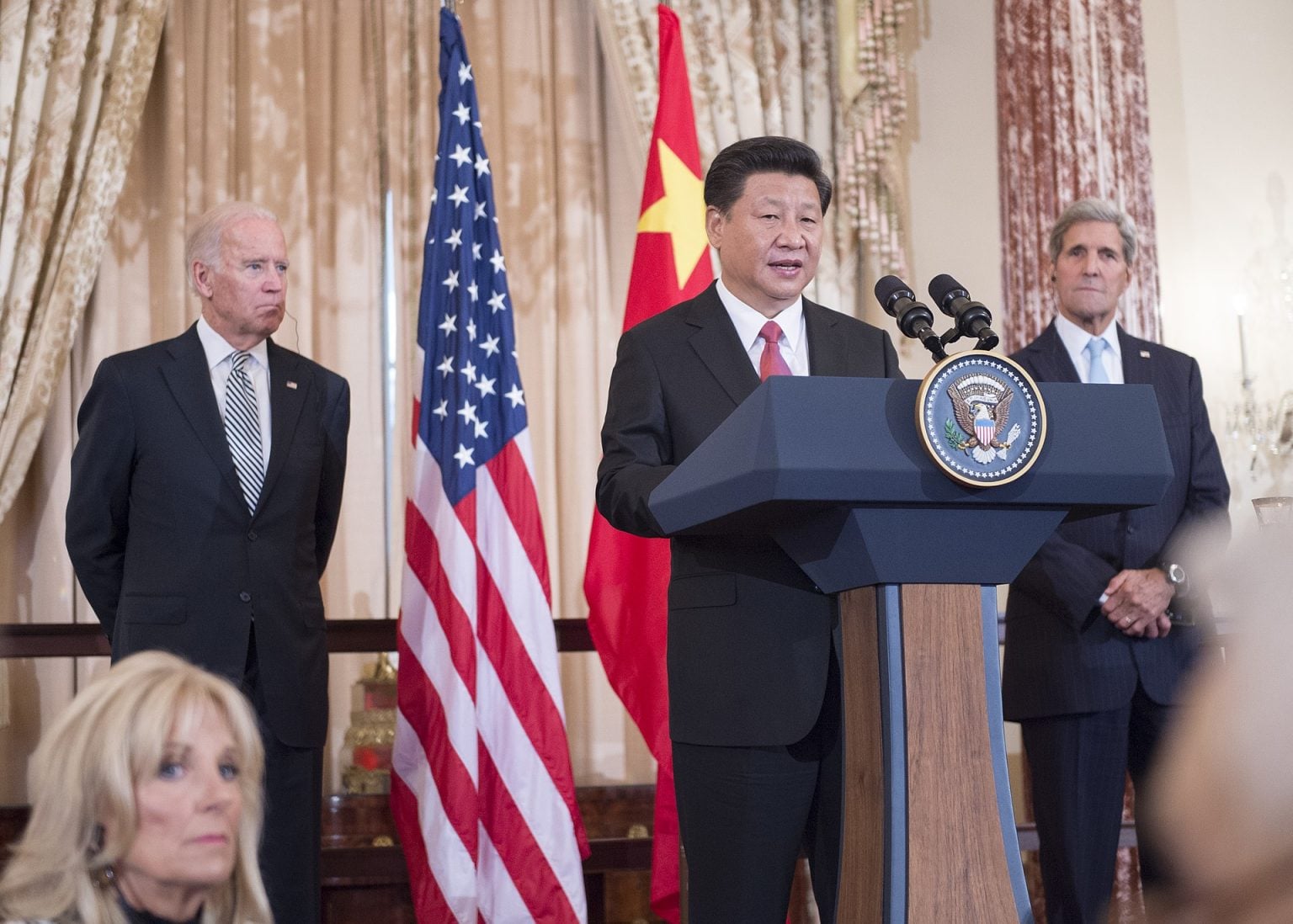
U.S. Department of State/Chinese President Xi Delivers Remarks at a State Luncheon in His Honor at the State Department December 29, 2020 Richard Hanania Across the political spectrum, there is widespread agreement that America must get serious about the threat posed by China. As the Trump administration comes to a close, the State Department has just released a document called ‘The Elements of the China Challenge’. A distillation of conventional wisdom among national security experts and government officials, it argues that the U.S. needs a concerted effort to push back against Beijing. On its first page, the document tells us that “the Chinese Communist Party (CCP) has triggered a new era of great-power competition.” If there was a major intellectual thread running through Trump’s foreign policy, or at least that of the people he appointed, it was that confronting China was the national security issue of our time. America during...
China
By Gordon Dumoulin TFF Associate in Beijing December 14, 2020 When numbers do not add up anymore, people turn to faith… I couldn’t suppress the feeling of a sense of a religious undertone when I went through the following report of more than 70 pages, released a little while ago by the US Secretary of State: The Elements of the China Challenge. It’s a 10-step blueprint for confronting the ‘China Challenge’ or maybe better phrased the 10 Commandments to counter the severe threat of China to the current world order – ‘the free world’. A senior administration official told the Washington Examiner that “over the coming weeks, the Trump administration will continue to expand the depth and breadth of the historic actions it has taken over the past four years to protect the vital interests of the United States and its allies countering Beijing’s predatory and coercive behaviors”. Originally published at Gordon...
PutinxiRou
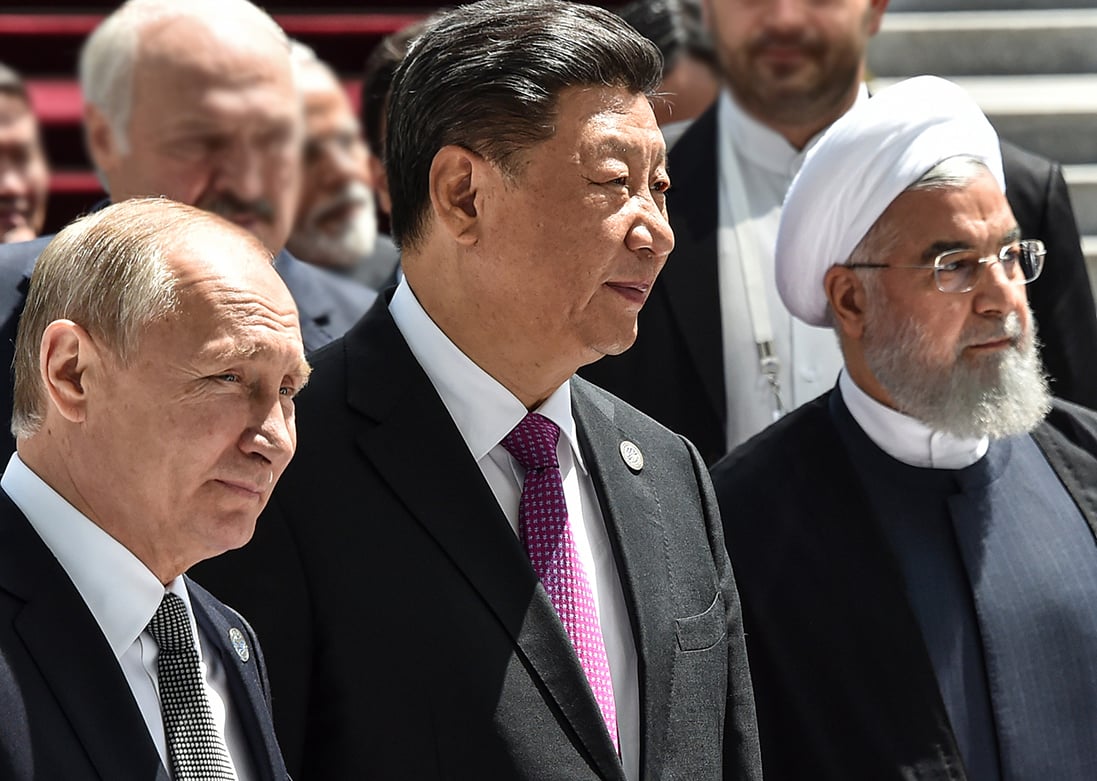
Photo credit: Flickr/ Nick Taylor By Seyed Hossein Mousavian December 12, 2020 Over the past few months, Iran  has been working with China on a sweeping long-term political, economic, and security agreement that would facilitate hundreds of billions of dollars of investments in the Iranian economy. It is also pursuing a long-term partnership with Russia. Politicians in Tehran see the agreements as a necessary means of combating U.S. hegemony and hostility. Iran’s new policy of a “Pivot to the East” involves cultivating strong economic, political, military, and security ties with the giants of the Asian continent, namely, China and Russia. This policy has gained all the more credibility among Iranian officials after the United States’ ill-advised move to withdraw from the Joint Comprehensive Plan of Action (JCPOA, colloquially known as the Iran nuclear deal) and pursue a “maximum pressure” strategy. Originally published at The Diplomat The JCPOA was an international agreement between Iran and...
US-EU-China
TFF Associate Not a day goes by without China appearing in Western news or social media. Almost exclusively with negative reports of human rights violations in Xinjiang or the security law in Hong Kong, government propaganda, or serious concerns that China and its communism will take over the world. Many reports and opinions from Western think tanks and researchers have been published this year about what is happening in China and how China should be approached or dealt with. The contents range from high vigilance to direct attacks in which China is labeled as a serious threat to the future of the “free world”. These pieces are widely reported in the media and often taken over by politicians for their China policy in a considerable number of Western governments. Alternative reports with different sounds or perspectives are snowed under or beaten down. As a result, the perception of China in...
innovation
Caleb Watney Resident fellow at the R Street Institute November 24, 2020 Universities are in trouble and the influx of brainpower from overseas is shrinking. The long-term consequences could be disastrous. Earlier this month, Immigration and Customs Enforcement announced that international students attending universities that switch to online-only courses in the fall would be required to leave the United States. By threatening student visas, the Trump administration, which has been pushing to reopen businesses and schools despite the continuing pandemic, was widely seen as pressuring colleges to resume in-person classes. If implemented, the visa policy could have driven away thousands of brilliant minds—the brainpower that, for decades, has proved essential to entrepreneurship and technological innovation in the United States. Originally published by The Atlantic, July 19, 2020 In the end, immigration officials backed down amid legal challenges, but some damage was already done: The administration had added to the uncertainty...

conspir
Ignas Kalpokas November 19th, 2020 In A Lot of People Are Saying: The New Conspiracism and the Assault on Democracy, Russell Muirhead and Nancy L. Rosenblum identify and outline the emergence of a new type of conspiracist thinking in our contemporary moment, showing it to pose a fundamental threat to democratic functioning. While questioning whether the book ascribes too much intentionality to those engaging in ‘the new conspiracism’, this is nonetheless a timely and important conceptualisation, writes Ignas Kalpokas.  A Lot of People Are Saying: The New Conspiracism and the Assault on Democracy. Russell Muirhead and Nancy L. Rosenblum. Princeton University Press. 2019. Originally posted on LSE’s blog “Impact of Social Science” July 7, 2020 During the past few years at least, there has been a growing discourse on the ‘end’ or ‘crisis’ of democracy. Not least among the concerns leading to such dire insights is the emergence of conspiratorial, fake news or post-truth campaigning as...
biden
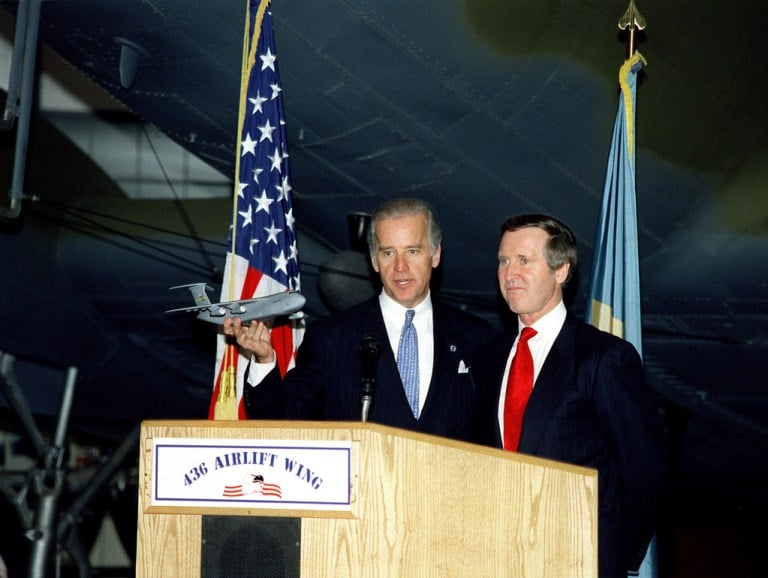
Delaware Senator Joseph Biden presents Secretary of “Defense” William Cohen with a model C5 aircraft at a luncheon in Sec. Cohen’s honor during his visit to Dover Air Force Base on Wednesday, December 15, 1999. 15 November, 2020 In June 2019, Joe Biden promised wealthy so-called donors that nothing would fundamentally change. At this moment hundreds of millions of people — from those shooting off fireworks to those ranting as though they will soon shoot up public places in their MAGA hats — seem convinced that everything will fundamentally change. Biden was wrong. Everybody else is right. Either everything will change for the better or one or both of the twin dangers of environmental and nuclear apocalypse will change everything for the worse. What should someone who cares about ending war think? How can we get from the euphoria of electing a warmonger to mobilizing people to end war? How...
US-VOTE-TRUMP
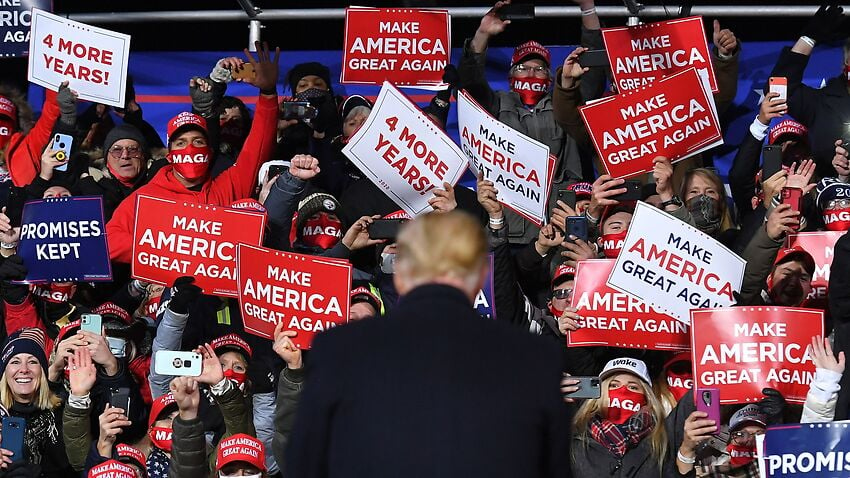
Photo credit: Donald Trump at a rally in Montoursville, Pennsylvania. Source: AFP/Getty Images/sbs.com The Frankfurt School on the appeal of authoritarianism – and how to counteract it. By Charles H. Clavey* November 5, 2020 A number of recent books have put the methods of the social sciences in the service of understanding Trump, his movement, and his enablers, from Russell Muirhead and Nancy Rosenblum’s A Lot of People Are Saying (2019) to Jennifer Mercieca’s Demagogue for President (2020). But it may be equally constructive to examine the older works of social science and theory upon which these new studies, at least implicitly, rest. On this list would be canonical sociological studies such as Max Weber’s Economy and Society (1922) and historical essays such as Richard Hofstadter’s “The Paranoid Style in American Politics” (1964) as well as the radically interdisciplinary projects undertaken by the researchers and theorists who comprised the Frankfurt School—Max Horkheimer, Theodor Adorno, and Herbert...
weyant
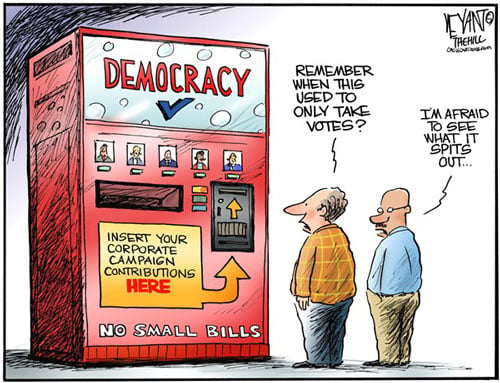
Peter Isackson November 10, 2020 The chaos of this year’s election may well be enough to dispel all remaining illusions about American democracy. A functioning democracy requires an educated, informed population that understands its role in the processes that define how the democratic nation is governed. Ordinary citizens have two opportunities for actively participating in those processes. They can run for office or help those who are running for office get elected. And they can vote. Most people settle for voting. Actually, in the best of years, only slightly more than the majority of eligible voters actually vote. American democracy has never fired on all its cylinders. Originally posted on Fair Observer on October 14, 2020. The failure of half of Americans to participate is surprising because America has sedulously made the effort to educate its future voters. From day one, every schoolchild in the United States learns not only...
We-suffer-through-todays-a-difficult-complicated-and-partially-obfuscated-time
This paper was written in 2015. Republished here on the occasion of Galtung’s 90th birthday, October 24, 2020. It was originally published at TMS, Transcend Media Service 1.  Definitions and Hypotheses: An Overview Definition: An empire is a transborder Center-Periphery system, in macro-space and in macro-time, with a culture legitimizing a structure of unequal exchange between center and periphery: Empires have different profiles. The US Empire has a complete configuration, articulated in a statement by a Pentagon planner: “The de facto role of the United States Armed Forces will be to keep the world safe for our economy and open to our cultural assault. To those ends, we will do a fair amount of killing”. (1) In other words, direct violence to protect structural violence legitimized by cultural violence. (2) The Center is the continental USA and the Periphery much of the world.  Like any system it has a life-cycle reminiscent of an organism, with...
bog-by-Edward
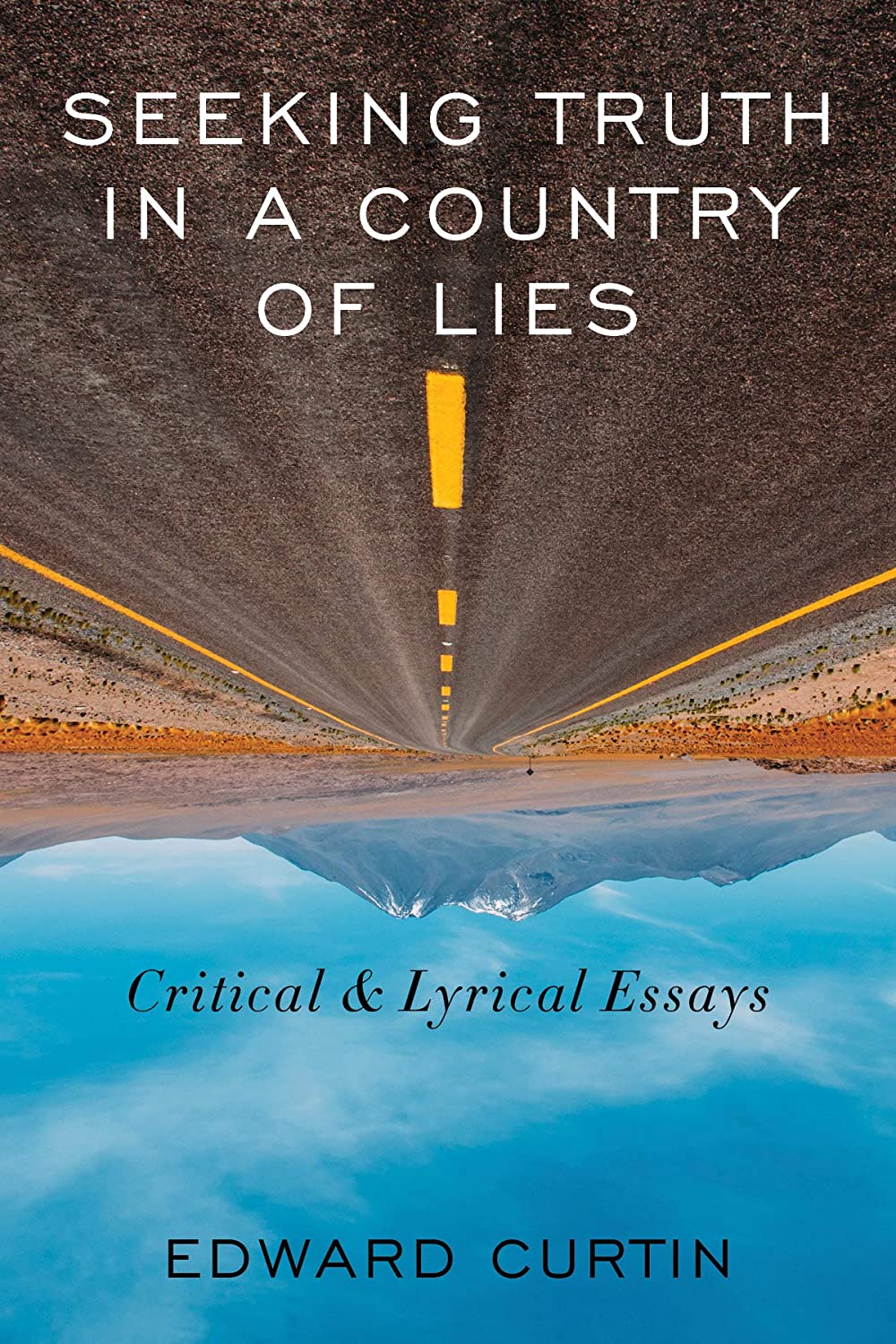
John Steppling October 7, 2020 Some books demand slower reading than others. Ed Curtin’s new book is such a case. But then this assemblage of essays, many published elsewhere, is a corrective to the growing intoxication with technology, with the surveillance and the policing it is being used for, and to what Jonathan Crary wrote about in 24/7, a world where an artificial speed (or hurriedness) is layered over daily life: “Sleep is an uncompromising interruption of the theft of time from us by capitalism.” A corrective to the de-humanizing assault of capitalism. Originally published at Off Guardian This is a book that draws attention to what Curtin references (via James Douglass) as the *unspeakable* — the US capitalist order of crimes, from assassination to the continuing assault on the poor and marginalized. It is appropriate that the first chapter begins with a quote from Harold Pinter’s Noble Prize speech....
Categories

Year

Author / Contributor

Region