United States – Empire and domestic

Category

Year

Author / Contributor

Region

Sort by

Showing 1-10 of 477 stories

Screenshot
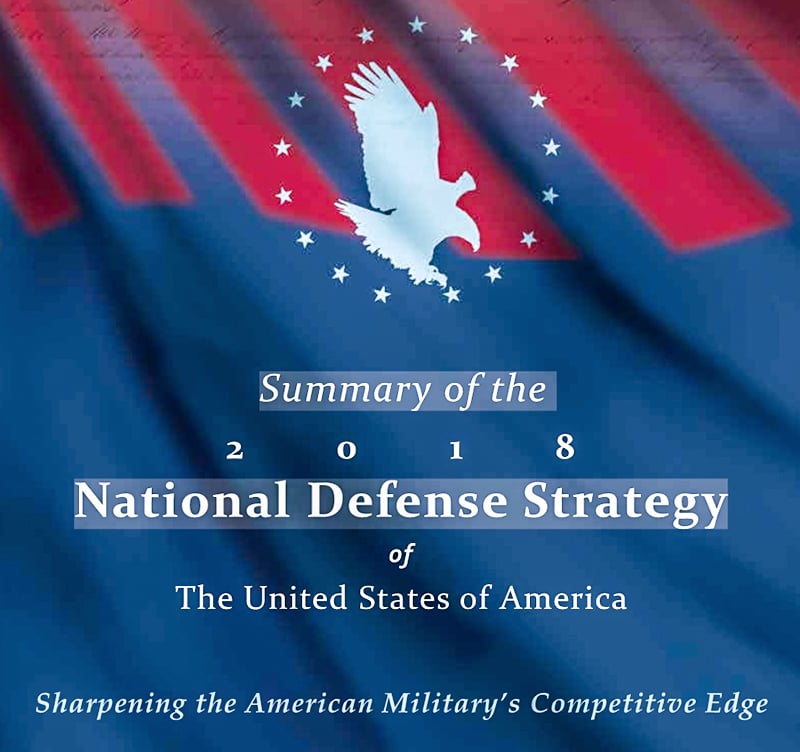
    Excerpts from Summary of the 2018 National Defense Strategy of the United States of America: “For decades the United States has enjoyed uncontested or dominant superiority in every operating domain. We could generally deploy our forces when we wanted, assemble them where we wanted, and operate how we wanted. Today, every domain is contested air, land, sea, space, and cyberspace.” In plain words: An admission of two things, namely that the US considers it right, or natural, to dominate the entire world and do what it pleases. And that it’s relative power is decreasing. • 
”Challenges to the U.S. military advantage represent another shift in the global security environment. Our network of alliances and partnerships remain the backbone of global security. China and Russia are now undermining the international order from within the system by exploiting its benefits while simultaneously undercutting its principles and ‘rules of the road.’...
FarhangOld
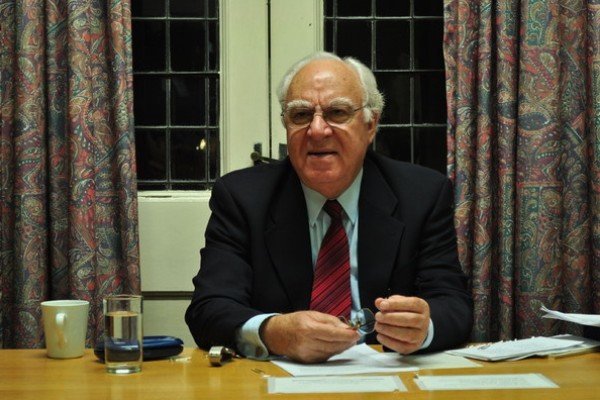
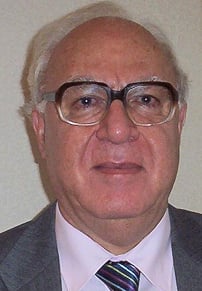
By Javad Heirannia, The Tehran Times January 24, 2018   TEHRAN – Professor Farhang Jahanpour, part-time tutor on the Middle East in the Department of Continuing Education at the University of Oxford, tells the Tehran Times that “President Trump’s recent speech on Iran was the most belligerent speech by any U.S. president about Iran since the Iranian revolution.” “As everybody knows, the Joint Comprehensive Plan of Action (JCPOA) was not a bilateral agreement between Iran and the United States,” Jahanpour tells the Tehran Times in an exclusive interview. Following is the full text of the interview:   Q: President Trump has decertified the JCPOA. How important is this decision for the survival of the nuclear agreement? A: President Trump’s recent speech on Iran was the most belligerent speech by any U.S. president about Iran since the Iranian revolution. However, its importance for undermining the nuclear agreement should not be exaggerated....
C-Span
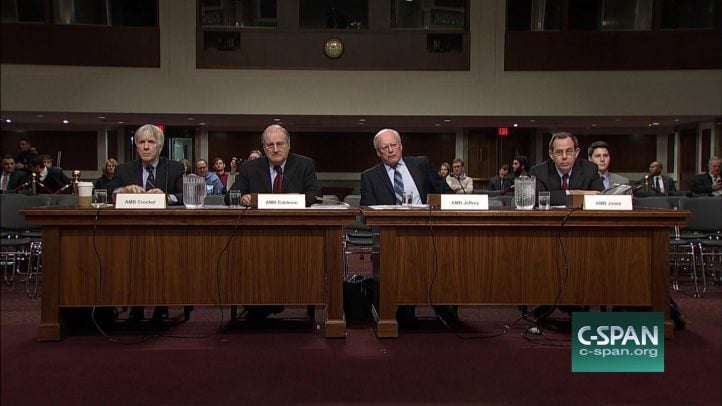
The U.S. foreign policy elite still wants the Middle East for its oil and its strategic location. By Edward Hunt, January 19, 2018. Originally published by Foreign Policy In Focus here • In recent testimony before the Senate Armed Services Committee, four former U.S. diplomats provided remarkably candid commentary on recent U.S. involvement in the Middle East, revealing a number of the most closely guarded secrets of U.S. diplomacy. The four former diplomats emphasized the importance of the region’s oil, spoke critically about the weaknesses of U.S. strategy, made a number of crude comments about U.S. partners, displayed little concern about ongoing violence, and called for more “discipline” throughout the region. One of the former diplomats, James Jeffrey, criticized the Obama administration for withdrawing U.S. forces from Iraq in 2011 rather than going through with a secret deal to maintain a secret network of military bases in the country. Even...
ChatGPT Image 9 jun 2026, 11_11_33
  • Last week, the American secretary of defence, Jim Mattis, declared a new era: “There has been a return of great power competition……great power competition – not terrorism- is now the primary focus of US security”. In the new national defence strategy document China and Russia are singled out as “adversaries”. Although the US is now spending on defence three times as much as China (1.7% of its GNP as against America’s 3.3%), Mattis is worried that the US’s military advantage over its adversary has eroded “in every domain of warfare”. The military, he said, “was coping with “inadequate resources” and he called for Congress to appropriate it more billions of dollars. Pro Mattis/Trump analysts are arguing that China could be set on replacing the US as the hegemon of East Asia and will then start projecting military power into other regions, even the West. They claim that military...
1-2
Women from around the world cross the DMZ – De-Militarized Zone – border between North and South Korea in 2015. To the left TFF Associate Mairead Maguire. Reported here by the Daily Mail.   By Samuel S. Kim* Abstract The often-used description in the American mainstream media and geopolitical literature of “North Korea’s nuclear aggression” is misleading. I argue in the first section that Pyongyang’s nuclear strategy has been significantly shaped by the perceived U.S. nuclear existential threat since the early 1950s, portending a quest for a self-reliant nuclear deterrent for the DPRK (the Democratic People’s Republic of Korea). The shifting role and impact of U.S.-China competition in the course of the first and second U.S.-DPRK nuclear standoffs is explored as background for examining, in the second section, an intensified nuclear confrontation in the first half of 2017. The concluding section considers common-security engagement in charting an alternative pathway toward...
map_fa12ed9c2c07a838f8f9b76c947ace37.nbcnews-ux-2880-1000
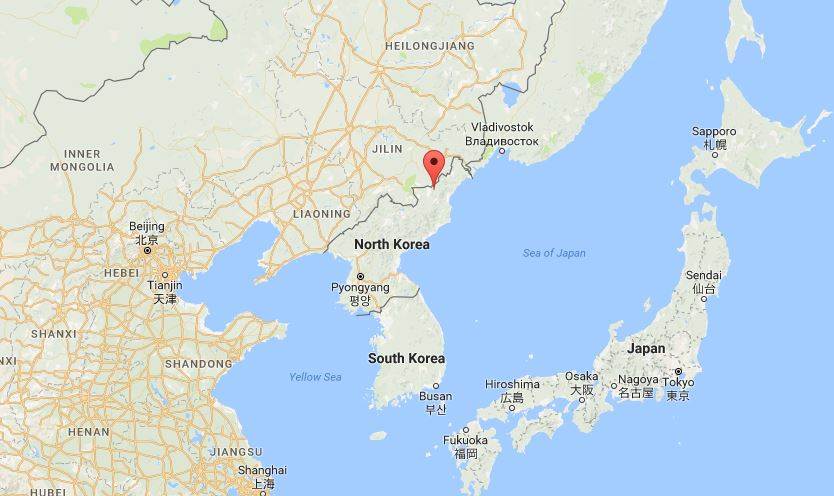
  -2018, the risk of nuclear war has surfaced more or less permanently in the media – the catchword being “North Korea” and the media being Western. It’s all been seen from the West’s point of view, nobody pointing out, for instance, that North Korea’s military expenditures are around 1% of those of the United States. And President Trump found it appropriate to talk about his bigger nuclear button – in response to a pretty pathetic statement from Kim Jong-un about having his on his desk in front of him all the time. In short, an extremely a-symmetric conflict with North Korea, for all practical purposes, seeing enemies and no reliable friends all around it and therefore in need of one tool which it has learned from others that it can be good to have when you are alone and you’re the weaker: nuclear weapons. In 2010, the New York...
Pentagon
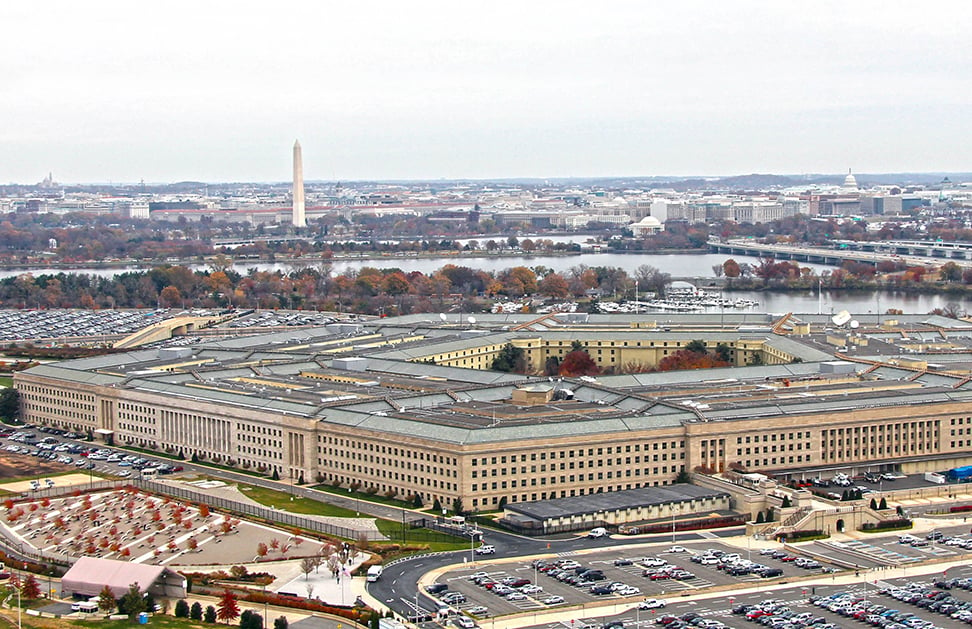
  By Jan Oberg On January 16, 2018, David E. Sanger and William J. Broad of the New York Times reported that “A newly drafted United States nuclear strategy that has been sent to President Trump for approval would permit the use of nuclear weapons to respond to a wide range of devastating but non-nuclear attacks on American infrastructure, including what current and former government officials described as the most crippling kind of cyberattacks. For decades, American presidents have threatened “first use” of nuclear weapons against enemies in only very narrow and limited circumstances, such as in response to the use of biological weapons against the United States. But the new document is the first to expand that to include attempts to destroy wide-reaching infrastructure, like a country’s power grid or communications, that would be most vulnerable to cyberweapons. (JO italics) The draft document, called the Nuclear Posture Review, was...
IranFlag
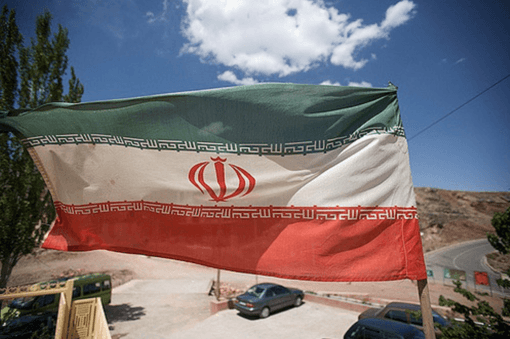
By Mike Whitney January 16, 2018   The Trump administration has settled on a plan for sabotaging the Iranian Nuclear deal that does not explicitly violate the terms of the agreement. Trump will continue to suspend sanctions, as is required under the terms of the deal, but at the same time, he will warn that if the agreement isn’t changed to meet his specific demands,  he will terminate it unilaterally. “If at any time I judge that such an agreement is not within reach, I will withdraw from the deal immediately,” Trump said. We can expect Trump to continue to issue these same threats in the months ahead as it helps to maximize the uncertainty as to whether the agreement will survive or not. As a businessman and investor,  Trump  knows that uncertainly is nearly as effective as sanctions when it comes to dampening foreign investment in the country’s businesses...
fjahanpour
By Javad Heiranni The Tehran Times, January 14, 2018 TEHRAN – Professor Farhang Jahanpour, part-time tutor on the Middle East in the Department of Continuing Education at the University of Oxford, tells the Tehran Times that “It should be remembered that a greater part of the statement released by President Trump is for domestic consumption, and also it is a face-saving formula to persuade his base that he has remained firm in his decision.” “The nuclear agreement does not prohibit the development of ballistic missiles by Iran,” Jahanpour tells the Tehran Times in an exclusive interview. He also adds that “The Security Council Resolution that confirmed the deal, in an annex “calls on Iran” to refrain from manufacturing ballistic missiles, but it has been made clear that it is not a binding requirement.” Originally published by The Tehran Times here Following is the full text of the interview:   Q:...
Mogherini
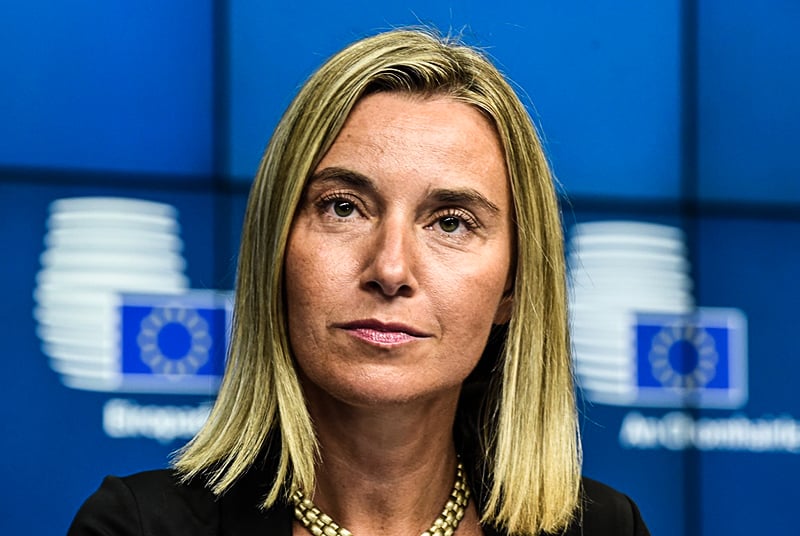
 Photo: The European Union’s High Representative for Foreign Affairs and Security Policy Federica Mogherini     By Peter Jenkins January 13, 2018 • It is with some reluctance that I write about President Donald Trump’s latest statement on Iran, because the statement is so full of half-truths, untruths, and logical fallacies that it is bad for one’s blood pressure to have to dwell on it for any length of time. I will try to limit damage to my constitution by focussing on just a few of the statement’s most disturbing features. The statement reveals a shocking attitude towards the European allies of the United States. For months these allies have been telling the Trump administration that the July 2015 Joint Comprehensive Plan of Action (JCPOA) is a satisfactory and useful nuclear non-proliferation instrument, and that they attach the highest importance to preserving it. President Trump’s statement does not just ignore...
GrahamFuller
By Graham Fuller • With the emergence of demonstrations and rioting in various Iranian cities earlier this month, Washington’s neoconservatives and interventionist/ imperial-minded “liberals” have been given a new lease on life in promoting their aspirations for “regime change” in Tehran. Indeed, of the three current potential global flashpoints—North Korea, Russian borderlands, and Iran in the Gulf—Iran arguably presents the most likely situation to actually turn into war. Originally published on LobeLog and Graham Fuller’s blog   The other two regions, Russia and Korea, pose such potentially appalling nuclear dangers that, rhetoric aside, one would hope will seriously deter national leadership from contemplating. War with Iran, on the other hand, presents no such nuclear threats. It is therefore perhaps the more dangerous situation since conflict with Iran is therefore quite “thinkable” and could potentially drag in Saudi Arabia, Qatar, Syria, Iraq, Russia, Turkey, and of course the supreme fomenter of...

Imagen-thumbnail-The-Transnational
  By Jan Oberg A few comments in advance of President Trump’s speech on January 11 concerning the nuclear deal, JCPOA, with Iran and why it would be stupid of him to isolate the US by violating the agreement’s letter and spirit. Iran’s response will also be very important and here it is essential to build on the goodwill of the world rather than risking giving the US a pretext for more Iranophobia and future military action. January 10, 2018 on PressTV.    
Categories

Year

Author / Contributor

Region