United States – Empire and domestic

Category

Year

Author / Contributor

Region

Sort by

Showing 1-10 of 477 stories

bog-by-Edward
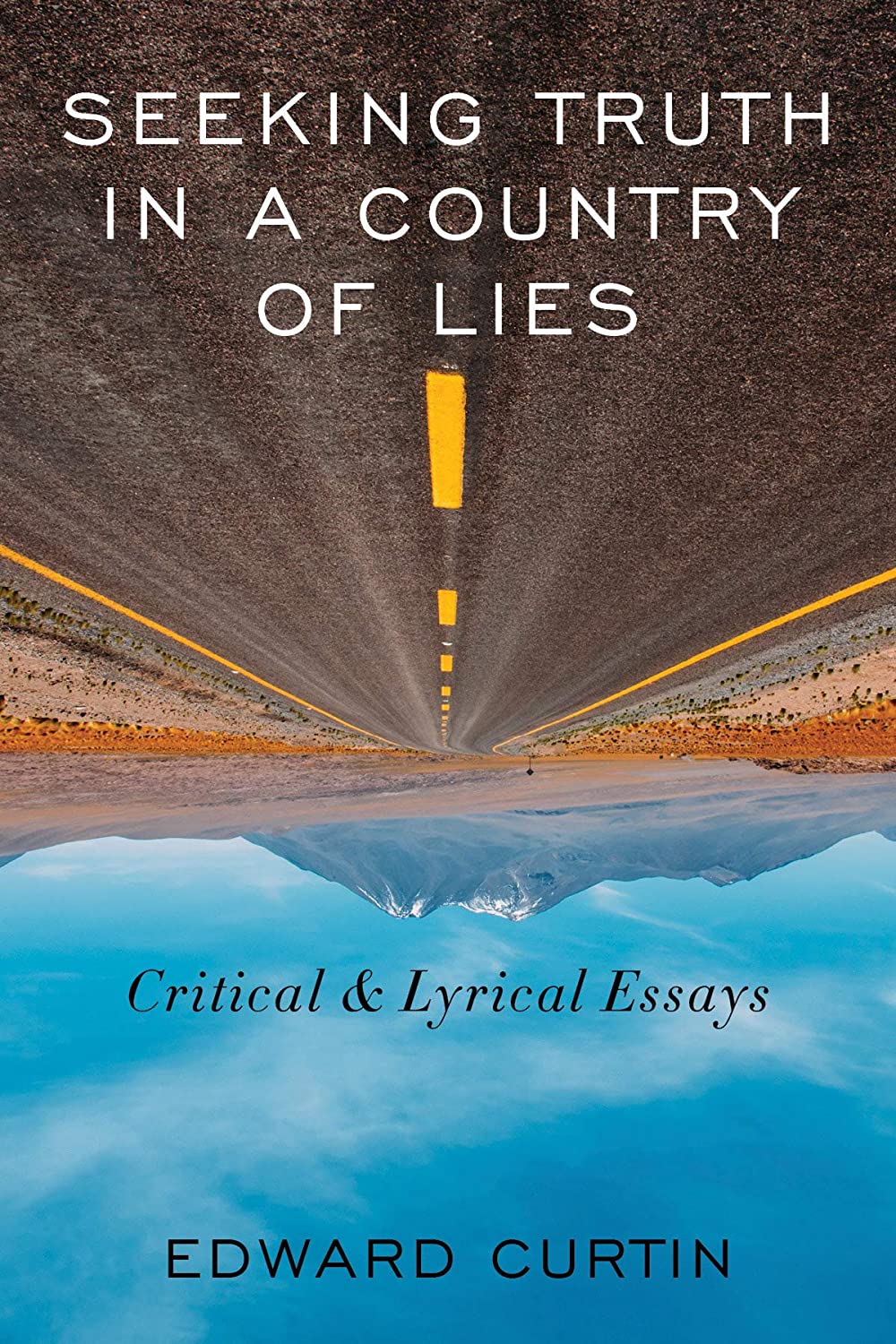
John Steppling October 7, 2020 Some books demand slower reading than others. Ed Curtin’s new book is such a case. But then this assemblage of essays, many published elsewhere, is a corrective to the growing intoxication with technology, with the surveillance and the policing it is being used for, and to what Jonathan Crary wrote about in 24/7, a world where an artificial speed (or hurriedness) is layered over daily life: “Sleep is an uncompromising interruption of the theft of time from us by capitalism.” A corrective to the de-humanizing assault of capitalism. Originally published at Off Guardian This is a book that draws attention to what Curtin references (via James Douglass) as the *unspeakable* — the US capitalist order of crimes, from assassination to the continuing assault on the poor and marginalized. It is appropriate that the first chapter begins with a quote from Harold Pinter’s Noble Prize speech....
1Stephen_Cohen_RT
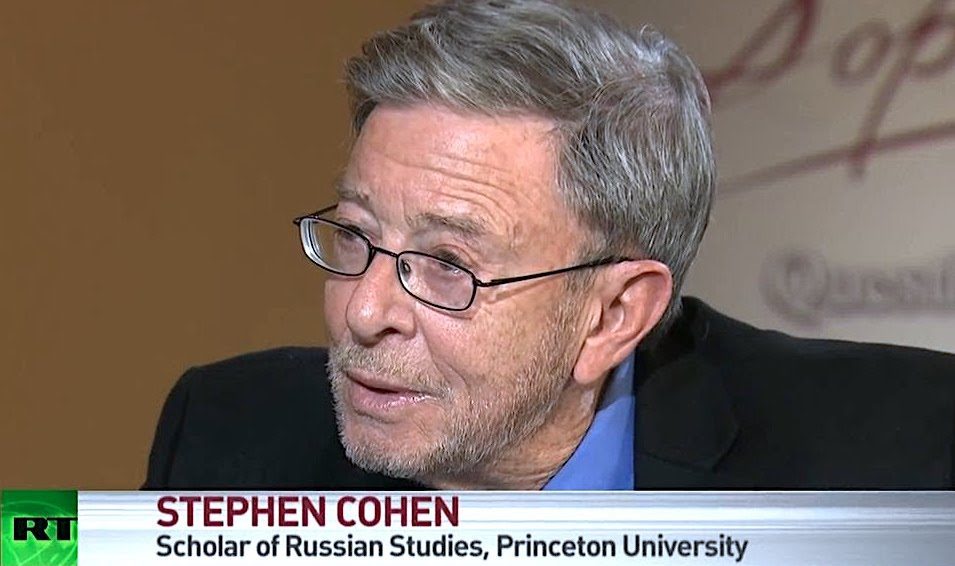
Collected Stephen Frand Cohen was an American scholar of Russian studies. His academic work concentrated on modern Russian history since the Bolshevik Revolution and Russia’s relationship with the United States. Cohen was a contributing editor to The Nation magazine, published and partially owned by his wife Katrina vanden Heuvel. Cohen was a founding director of the reestablished American Committee for East–West Accord which was revived in 2015. Wikipedia Born Stephen Frand Cohen, November 25, 1938, Indianapolis, Indiana, U.S.Died on September 18, 2020, New York City, U.S. Considering him one of the most important, knowledgeable and wise voices, TFF is proud to have printed some of his articles and interviews here at The Transnational. Here his many contributions to The Nation. Katrina vanden Heuvel – “My Steve” The New York Times obituary Bill Bradley, in The National InterestA man who knew Russia: A tribute to Stephen F. Cohen War with Russia?...
ChinaTroops-Moscow
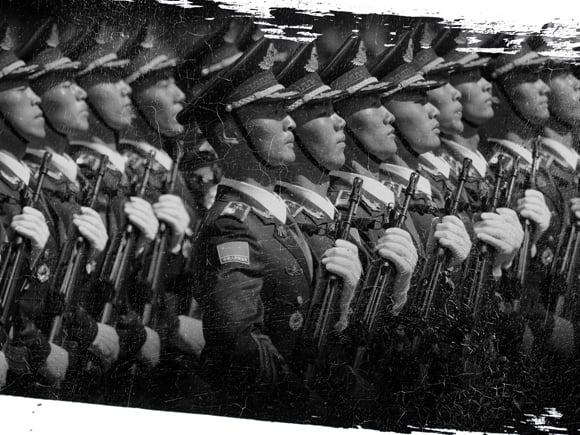
New cold war? Chinese soldiers march in Moscow on Victory Day, 24th June 2020 © PAVEL GOLOVKIN/​POOL/​EPA-EFE/​ After the long stand-off against communism, victory seemed as total as it was sudden. But the west has since fractured and is now losing prestige and influence – does the reversal expose a moral defeat? Anatol Lieven in the British Prospect Magazine August 31, 2020 We post you this because it is quite extraordinary that a magazine such as Prospect would bring an analysis this devastating for Western policies since the end of the Cold War. Click to read it here as PDF. The authorAnatol Lieven is a professor at Georgetown University in Qatar and the author among other books of America Right or Wrong: An Anatomy of American Nationalism and (with John Hulsman), Ethical Realism: A Vision for America’s Role in the World If you benefitted from this article, please show it...
1_atg_ksH8jkR-IHlmFodAzQ
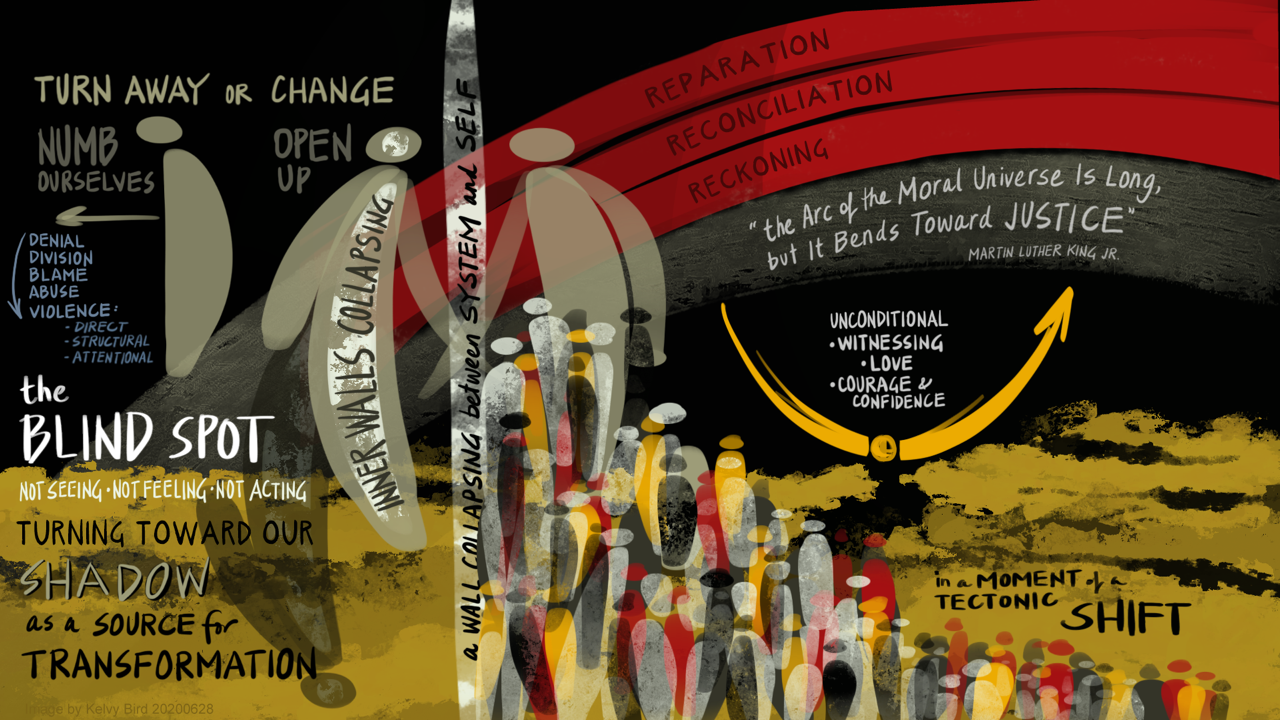
Fig. 1: From the Collapse of the Berlin Wall in 1989 to the Collapse of Our Inner Walls in 2020. Image by Kelvy Bird By Otto Scharmer October 3, 2020 We are living in a moment of tectonic shift in society. Something changed when we all watched the same images — 8 minutes and 46 seconds — the killing of George Floyd. During that unbearable experience, something broke down and broke open in our hearts, in how we relate to one another, and in how we want to live together. Originally published Medium.com/@ottoscharmer From the collapse of the Berlin Wall in 1989… When the Berlin Wall collapsed in 1989, we witnessed the end of the 20th-century Cold War era. A wall collapsed between two conflicting social systems: capitalism and socialism. Today we see a different type of wall collapsing: not a wall between systems, but between system and self — a wall that has kept...
USEmpire-Fall-kopia
Image from Wikileaks Jan Oberg September 30, 2020 The unique, dominating position of the United States in the post-1945 world is well-known. It maintains this position thanks to both a very large historical goodwill capital and former glory in the eyes of generations around the world – and thanks to rampant militarism and imperialism that has destroyed the good ‘America’ that it used to be. The world’s major division the next few years will be this: Are you on the side of continued US global dominance or do you want to see a new multipolar world with more balance and the US in the role of a partner among equals? In my view, the US no longer has the capacity to lead itself effectively and find solutions to its own multi-dimensional crisis be it the economy, democracy, climate change, warfare addiction, social polarization, racism and on top of it all...
Skaermbillede-2020-09-27-133259
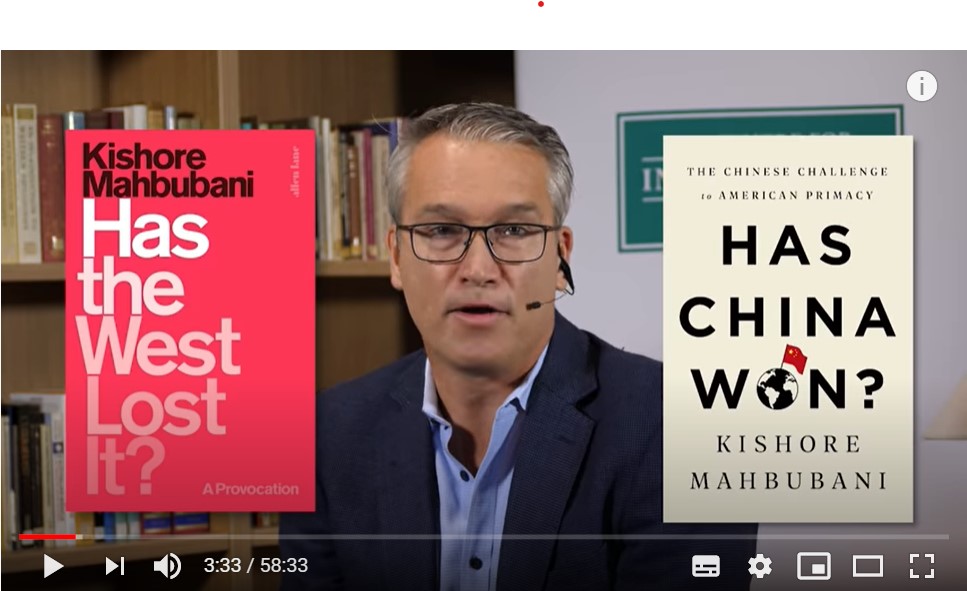
Tom Switzer September 25, 2020 CIS Executive Director, Tom Switzer interviews John Mearsheimer and Kishore Mahubani to ask Has China Won? At a time when tensions are running high, CIS Executive Director Tom Switzer asked Has China Won? Our debate between John Mearsheimer and Kishore Mahbubani, two of the world’s leading foreign policy intellectuals. Covid-19 has greatly raised tensions between China and the West. Washington and its allies express outrage at the Communist regime’s opacity concerning the outbreak of the coronavirus. Meanwhile, fears are growing that a pandemic that began in the Chinese city of Wuhan may end by increasing Beijing’s international influence and power. Kishore Mahbubani is author of Has China Won? The Chinese Challenge to American Primacy (just out, PublicAffairs) A former Singaporean ambassador to the United Nations (twice), he was the founding dean of the Lee Kuan Yew School of Public Policy. He was a guest of...
Obama_Biden_and_Clinton_in_the_Oval_Office
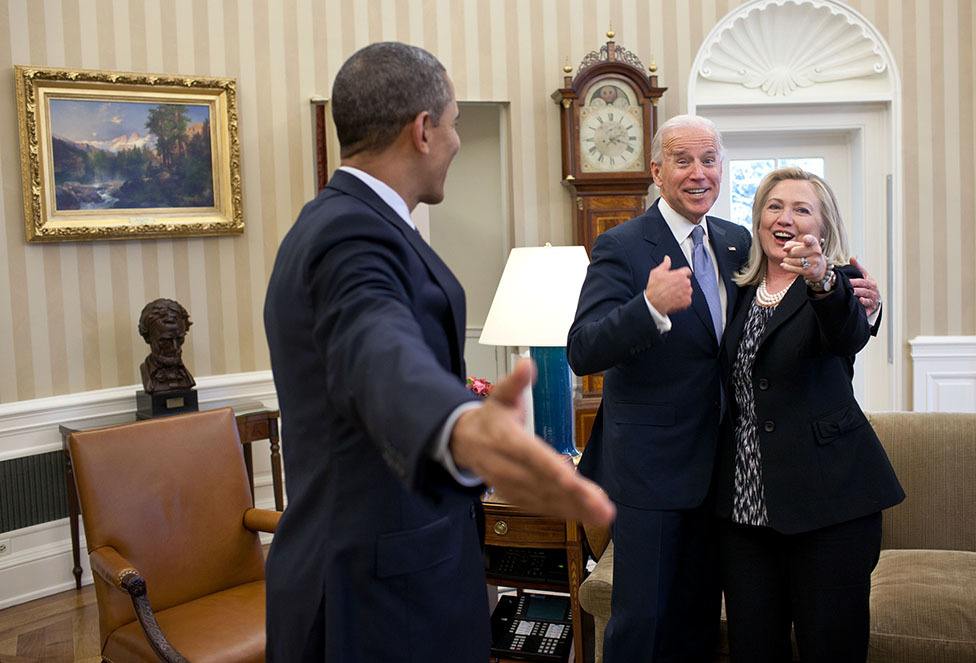
Photograph Source: Pete Souza, White House Official Photograph – CC BY 2.0 Eric Draitser September 15, 2020 The scorching desert sun streams through narrow slats in the tiny window. A mouse scurries across the cracked concrete floor, the scuttling of its tiny feet drowned out by the sound of distant voices speaking in Arabic. Their chatter is in a western Libyan dialect distinctive from the eastern dialect favored in Benghazi. Somewhere off in the distance, beyond the shimmering desert horizon, is Tripoli, the jewel of Africa now reduced to perpetual war. But here, in this cell in a dank old warehouse in Bani Walid, there are no smugglers, no rapists, no thieves or murderers. There are simply Africans captured by traffickers as they made their way from Nigeria, Cameroon, Chad, Eritrea, or other disparate parts of the continent seeking a life free of war and poverty, the rotten fruit of Anglo-American...
demonstration
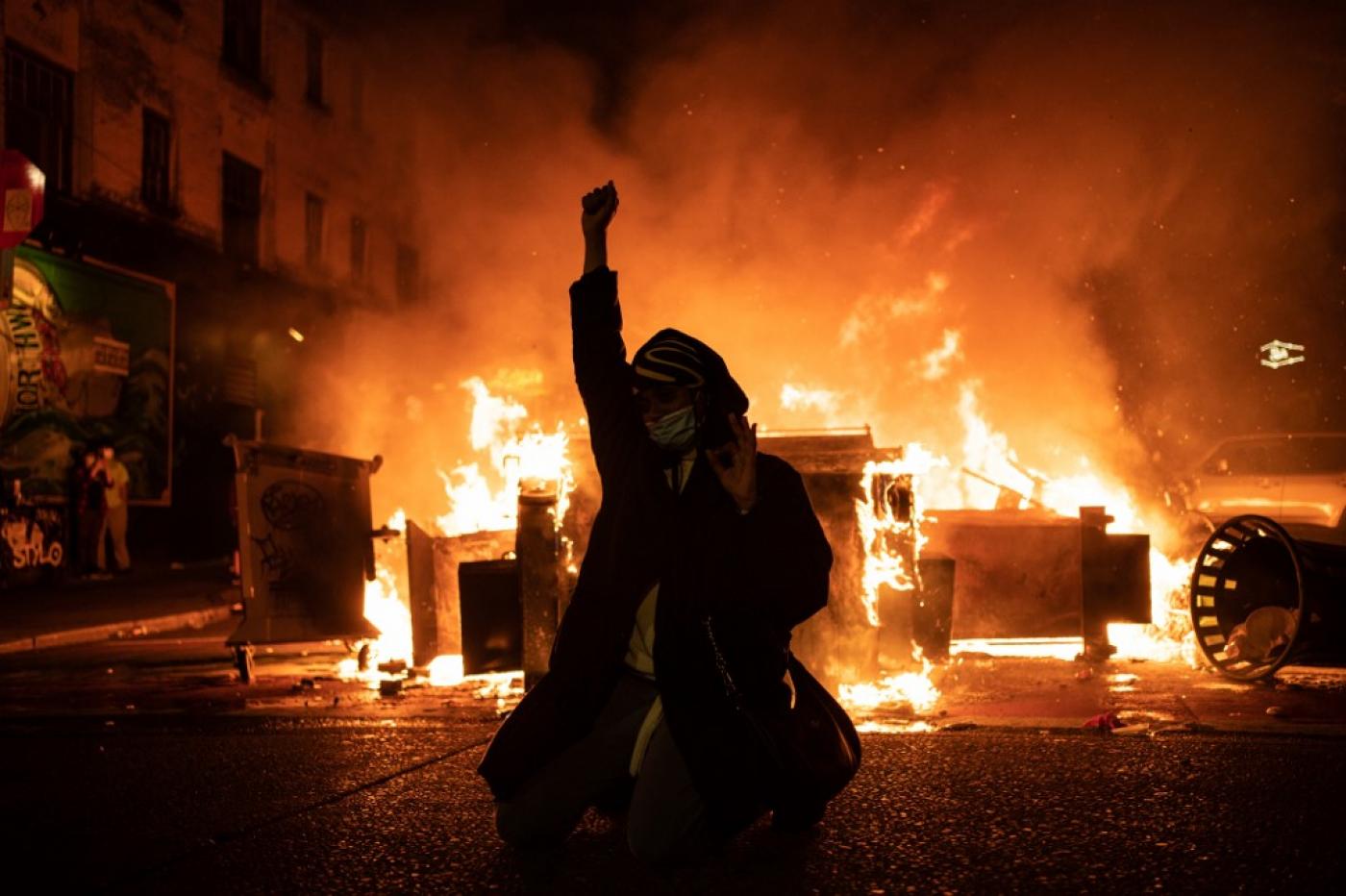
A demonstrator raises a fist after clashes with police in the US city of Seattle on 8 June (AFP) As calls for racial justice reverberate across the country, the field of American Studies requires a radical rethink – namely, the active engagement of people around the globe at the receiving end of US militarism.  By Hamid Dabashi September 15, 2020 “The majority lives in the perpetual practice of self-applause, and there are certain truths which the Americans can only learn from strangers or from experience.”  – Alexis de Tocqueville, Democracy in America “Americans are the unhappiest they’ve been in 50 years,” according to recent polls. “It’s been a rough year for the American psyche.”    The deeply troubling presidency of Donald Trump has led to severe consequences of the coronavirus pandemic in the US, where the per-capita mortality rate is among the highest in the world, exacerbated by claustrophobic despair over lockdowns and social distancing, alongside...
Imagen-thumbnail-The-Transnational
Chris Hedges September 4, 2020 Chris Hedges discusses “Ghost Riders of the Baghdad: Soldiers, Civilians, and the Myth of the Surge,” with author Danny Sjursen, combat veteran and West Point. It’s RT’s “On Contact”. If you want to know more about Sjursen, here is his SceptialVet homepage. Originally posted on Scheerpost’s website on August 17, 2020. Please help TFF remain truly independent by contributing if you benefited from this article Chris Hedges is a Pulitzer Prize–winning journalist who was a foreign correspondent for fifteen years for The New York Times, where he served as the Middle East Bureau Chief and Balkan Bureau Chief for the paper. He previously worked overseas for The Dallas Morning News, The Christian Science Monitor, and NPR. He is the host of the Emmy Award-nominated RT America show On Contact. He has written 12 books, including the New York Times best-seller “Days of Destruction, Days of Revolt” (2012), which he co-authored with the cartoonist Joe...
ac1e892e16eb46e99283484a04b21c97
Designer: Yu Jiansu at CGTN.com Martin Powers September 4, 2020 Ann Arbor (Special to Informed Comment) – On the left, there is widespread agreement that Trump’s immigration policies are informed by white supremacist doctrines. His travel ban on Middle Eastern nations was racially charged, not to mention restricting aid to Puerto Ricans ravaged by a hurricane. Combined with the utter absence of sympathy for families of murdered Americans, it would appear that race connects the dots in this administration’s policy puzzle, yet Trump-team’s hysterical China-bashing is often accepted as a legitimate response to an existential threat. Can we be certain that race plays no part in that drama? Originally posted on Informed Comment on August 29, 2020. Many recognize crude name-calling, like “Kung-flu,” as racist, but apart from that, a common give-away is contempt for outstanding performance by members of supposedly inferior groups. Kamala Harris is too “ambitious” (for a...
Scheerpost
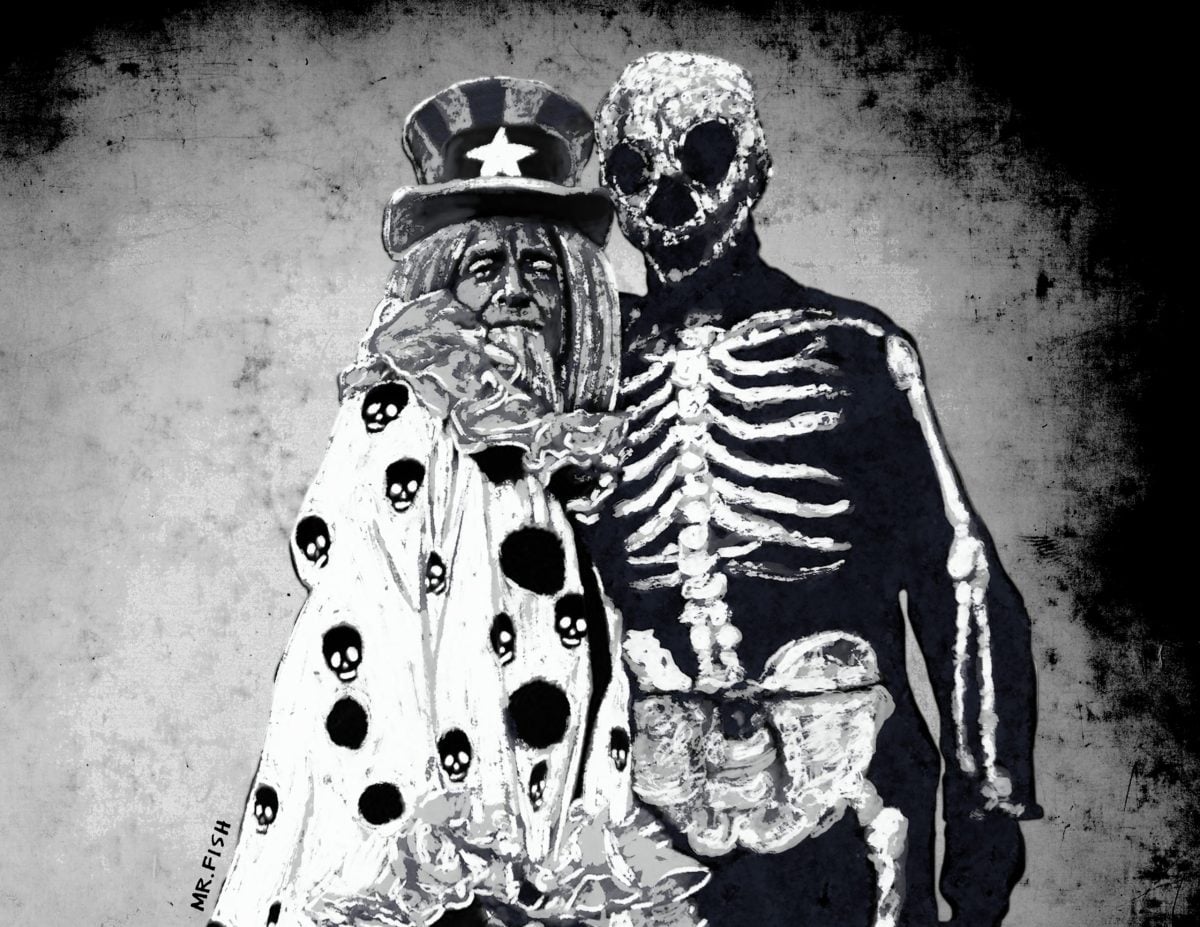
(Photo: Art by Mr. Fish/Original to Scheerpost) Regardless of the outcome, the election will not stop the rise of hypernationalism, crisis cults and other signs of an empire’s terminal decline. By Chris Hedges September 1, 2020 The terminal decline of the United States will not be solved by elections. The political rot and depravity will continue to eat away at the soul of the nation, spawning what anthropologists call crisis cults — movements led by demagogues that prey on an unbearable psychological and financial distress. These crisis cults, already well established among followers of the Christian Right and Donald Trump, peddle magical thinking and an infantilism that promises — in exchange for all autonomy — prosperity, a return to a mythical past, order and security. The dark yearnings among the white working class for vengeance and moral renewal through violence, the unchecked greed and corruption of the corporate oligarchs and...
09ce516bc31f26f3f53fad75792422c9
Patrick Lawrence September 1, 2020 Diana Johnstone’s newly-published memoir offers an incisive, gritty, politically alert, and expansive account of post-war Europe, reports Patrick Lawrence in this interview with the author.  Originally posted on Consortium New’s on May 17, 2020 Diana Johnstone first sojourned in Paris during the early postwar years, as France and the rest of Europe were coming back to life—and as America set out to build an empire amid the Cold War frenzies of the McCarthy years. Nearly seven decades later, Johnstone’s place among the distinguished Europe correspondents of our time lies beyond dispute. A Minnesota native, she is a French citoyen now and remains a Parisienne. “If I must claim a label,” Johnstone, 89, writes in her just-published personal and political memoir, “it would be that of an independent truth-seeker.”   Circle in the Darkness (Clarity Press)—Johnstone takes the title from Einstein—is a moving, incisive, gritty, politically alert, and always humane account...

Categories

Year

Author / Contributor

Region