United States – Empire and domestic

Category

Year

Author / Contributor

Region

Sort by

Showing 1-10 of 477 stories

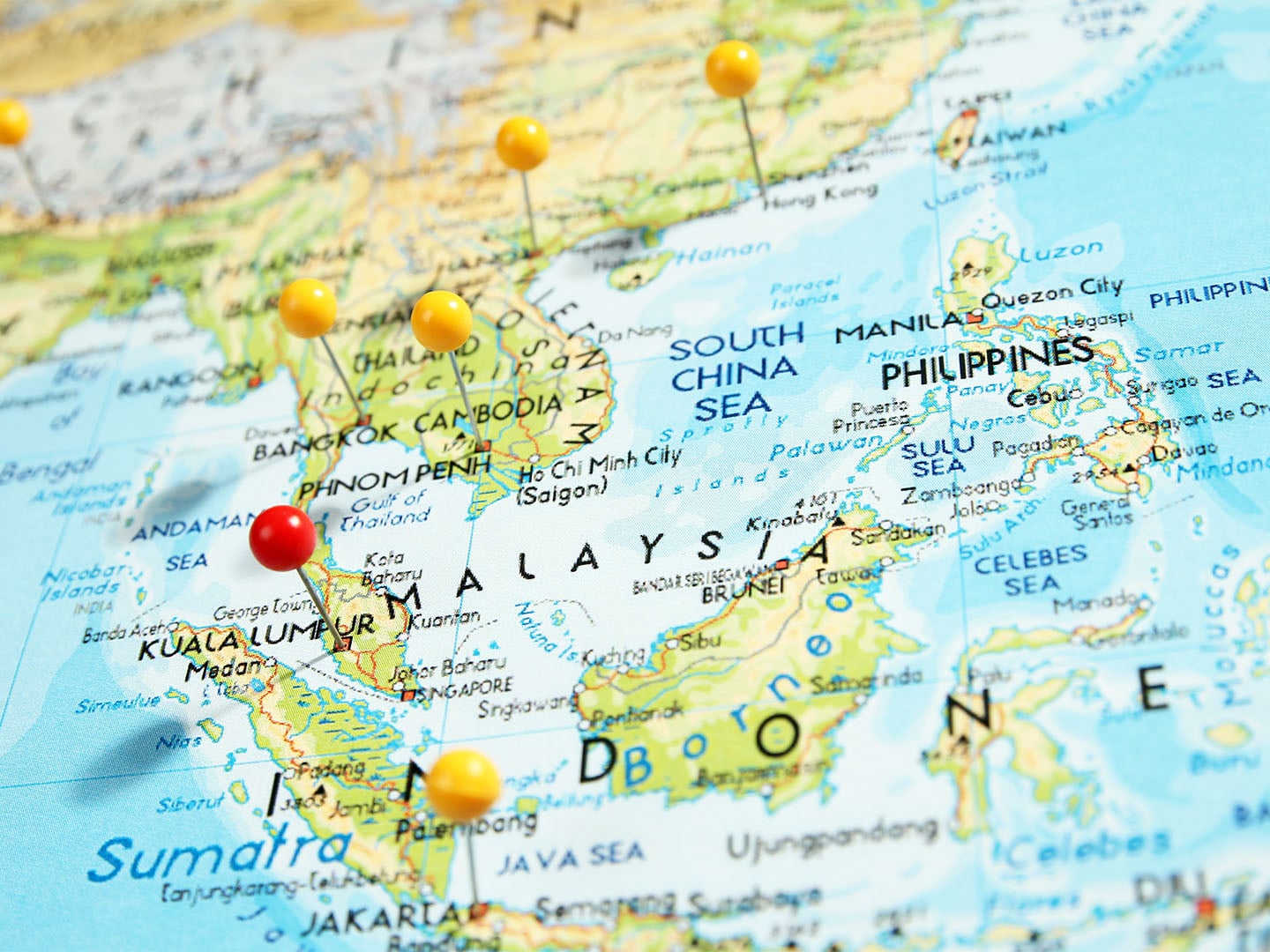
SE_Asia_Map_1440x1080
Photo credit: uschinadialogue.georgetown.edu Tom Engelhardt June 10, 2021 Let me start with my friend and the boat. Admittedly, they might not seem to have anything to do with each other. The boat, a guided-missile destroyer named the USS Curtis Wilbur, reportedly passed through the Straits of Taiwan and into the South China Sea, skirting the Paracel Islands that China has claimed as its own. It represented yet another Biden-era challenge to the planet’s rising power from its falling one. My friend was thousands of miles away on the West Coast of the United States, well vaccinated and going nowhere in Covid-stricken but improving America. Published at juancole.com & Tomdispatch.com 06.07.2021 As it happens, she’s slightly younger than me, but still getting up there, and we were chatting on the phone about our world, about the all-too-early first wildfire near Los Angeles, the intensifying mega-drought across the West and Southwest, the increasing nightmare of hurricane season in the Atlantic and so on. We...
China-vs-USA-soft_power-eurasia_news_online
Photo credit: eurasia-news-online.com Tom Fowdy June 2, 2021 A US-led world order is still preferred by more countries than a Chinese one, says a new survey. However, disillusionment with Washington has risen across the globe due to its military adventurism and handling of Covid. One of the dominant themes of the 21st century has been the return of ‘great power’ politics. The contest for global supremacy between the United States and China. This battle heated up under Donald Trump, and has continued under Joe Biden. Both are eager to restore US primacy against the perceived challenge from Beijing. Originally published at eurasia-news-online.com But what do other countries make of it all? Do they prefer an American-led world order, or a Chinese one? Or is the answer more complex, with both countries having appealing qualities? A comprehensive new survey from the Eurasia Group Foundation, ‘Modeling Democracy’ delivers some fascinating insights, with people in...
us-china-relations
About a Senate bill enshrining a zero-sum approach to Beijing that will surely set us on a course of escalation. Michael D. Swaine June 14, 2021 This is the first installment in a multi-part Responsible Statecraft series on the Strategic Competition Act (S. 1169), a bill under consideration that would effectively constitute a declaration of cold war on China by the U.S. Congress. We begin with an overview of the bill’s framing of the threat China poses to the United States and other nations and what to do about it. It will be followed by separate essays delving into greater detail analyzing the inaccurate assessments and policy changes suggested in several critical areas: Taiwan, the South China Sea maritime disputes, North Korea, educational exchanges, influence operations, and the Belt and Road Initiative. Originally published at responsiblestatecraft.org The Strategic Competition Act, recently approved by the Senate Foreign Relations Committee, constitutes a de...
resized_272427-daniel-ellsberg-0119_69-24152_t800
The famed source of the Pentagon Papers, Daniel Ellsberg, has made another unauthorized disclosure — and wants to be prosecuted for it. By Charlie SavagePublished May 22, 2021 • Updated May 23, 2021 • 阅读简体中文版閱讀繁體中文版 WASHINGTON — When Communist Chinese forces began shelling islands controlled by Taiwan in 1958, the United States rushed to back up its ally with military force — including drawing up plans to carry out nuclear strikes on mainland China, according to an apparently still-classified document that sheds new light on how dangerous that crisis was. American military leaders pushed for a first-use nuclear strike on China, accepting the risk that the Soviet Union would retaliate in kind on behalf of its ally and millions of people would die, dozens of pages from a classified 1966 study of the confrontation show. The government censored those pages when it declassified the study for public release. The document...
norinf3-1024x534-1
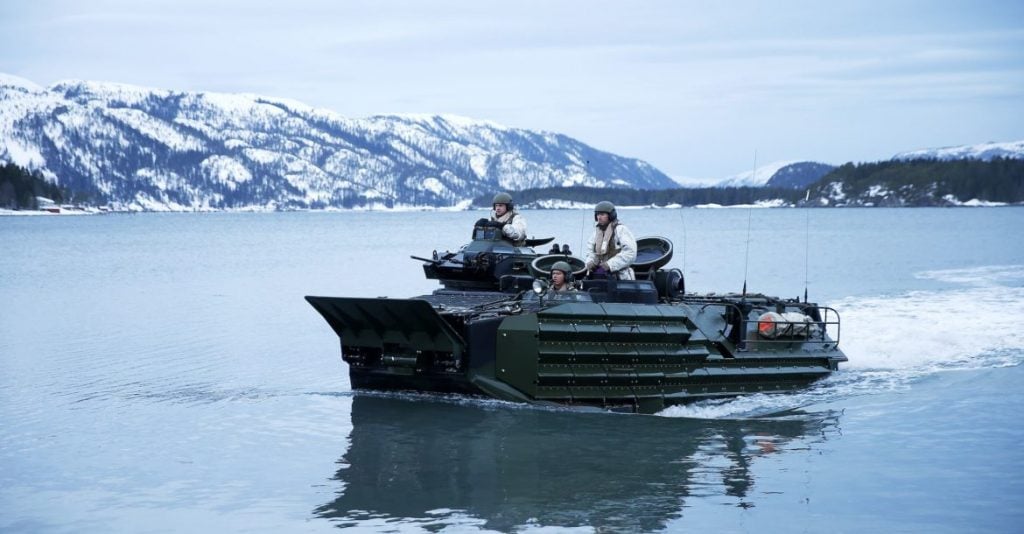
US Marines participating in the Cold Response 2016 exercise (Torbjørn Kjosvold/Norwegian Armed Forces) Fredrik S. Heffermehl May 31, 2021 USS “Stoltenberg” – Norway, now the newest US aircraft carrier Some years back Norwegian foreign minister Thorvald Stoltenberg took wise steps to reduce confrontation with Russia through a Barents Council for civilian cooperation. This was in prolongation of a long Labour tradition initiated by the legendary prime minister Einar Gerhardsen, who started a policy of low tension with the neighbouring Soviet Union: No foreign bases, restraint with military exercises in the North, no nuclear weapons in Norway or our waters. Last week Stoltenberg´s son, Jens Stoltenberg, now leader of NATO, dishonoured a high-level meeting for civilian corporation in the Arctic Council in Reykjavik by NATO holding a large navy manoeuvre in that part of the Atlantic. Many countries participated in the tension-building provocation, that has become standard Norwegian policy in later...
israel_violence
Kenny Stancil May 13, 2021 A group of anti-war veterans said President Joe Biden’s spending priorities indicate that he thinks “preserving apartheid is more important than fighting climate change. As Israel continues its deadly assault on Palestinians throughout the occupied territories, a new analysis released Monday night shows that if congressional lawmakers in the U.S. approve the federal budget unveiled last month by President Joe Biden, the nation would give $1.3 billion more to the Israeli military than to the global climate response. Although Biden has yet to release his official budget request for FY2022, he shared a preview, which was heavily criticized by progressives. Originally published by Common Dreams on May 11, 2021 In his analysis, Stephen Semler, co-founder of the Security Policy Reform Institute, cited two excerpts from the White House’s spending proposal (pdf): As Semler explained: “‘Fully funds U.S. commitments to… Israel’ includes giving the apartheid state $3.8 billion in annual military aid – $3.3 billion in ‘base’ bilateral security assistance...
RichardFalk-Books
May 23, 2021 Richard Falk, TFF Associate Prefatory Note: The post below is a slightly modified version of Policy Paper #4 RESPONDING TO CHINESE VIOLATIONS OF HUMAN RIGHTS, published previously on the website of the Committee for a Sane China Policy. It reflects my view that the protection of human rights is being geopolitically manipulated to mobilize public support for an anti-Chinese foreign policy in the West that risks generating a dangerous geopolitical confrontation. Such a confrontation is costly, amounts to war-mongering, and diverts U.S. attention from self-scrutiny and global peacebuilding. Whether a second cold war is already underway is a matter of interpretation, but even those reluctant to reach such a depressing assessment would have to acknowledge that unless there are strong efforts made to support what I would call ‘inclusive global multipolarity,’ the drift toward such a dismal near-term future will become inevitable. The need to sound the alarm...
china-sep2020-845x550-1-720x469-1
Image by Stock File Madison Tang and Jodie Evans May 23, 2021 U.S. President Joe Biden’s budget proposal for the next fiscal year was recently announced, and it requests $715 billion for his first Pentagon budget, 1.6 percent more than the $704 billion enacted under Trump’s administration. The outline states that the primary justification for this increase in military spending is to counter the threat of China, and identifies China as the U.S.’s “top challenge.” Within the proposal is an endorsement of U.S. Indo-Pacific Command head Admiral Philip Davidson’s request for $4.7 billion for the “Pacific Deterrence Initiative,” which will increase U.S. military capabilities in Guam and the surrounding region. The Indo-Pacific Command is also requesting $27 billion in additional spending between 2022 and 2027 to build a network of precision-strike missiles along the islands surrounding Beijing. This article was originally published at Pressenza The U.S.’s unilateral aggression toward China—in...
Janssen
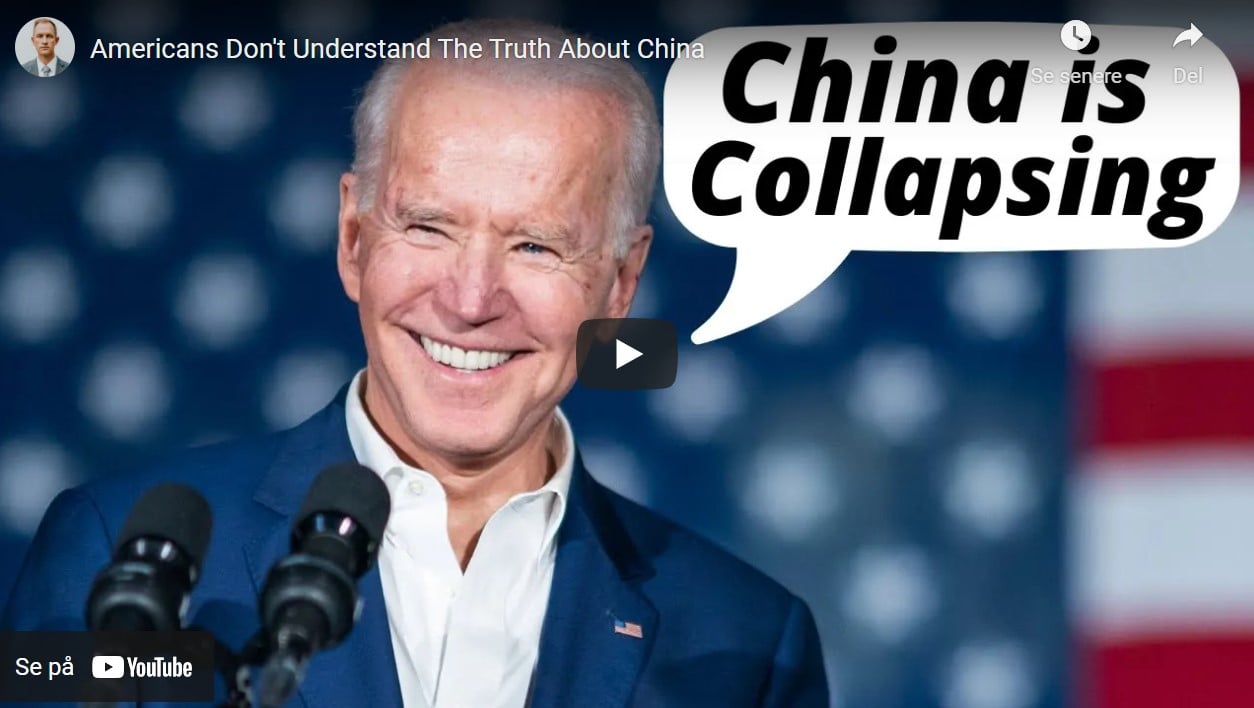
Cyrus Janssen May 19, 2021 Many Americans view China in a completely wrong way. They only view it from the eyes of an American. But how does a Chinese person view China? Is China a threat to the USA? Is China going to overtake the US? In today’s video I break down my thoughts on the America’s foreign policy towards China and reveal the truth about China. This video was posted at Cyrus Janssens Youtube Channel, May 14. 2021 About the author: Cyrus Janssen is an American Expat that has lived in Shanghai, Hong Kong, and Vancouver over the past 14 years. He is passionate about showing a true insight into China and loves sharing about his travels around the world. Here is his amazing YouTube Channel with 137 000 subscribers. A great example of citizens’ media/reporting – much better informed and free than many Western mainstream media reporters. Please...
Aggression-1024x533-1
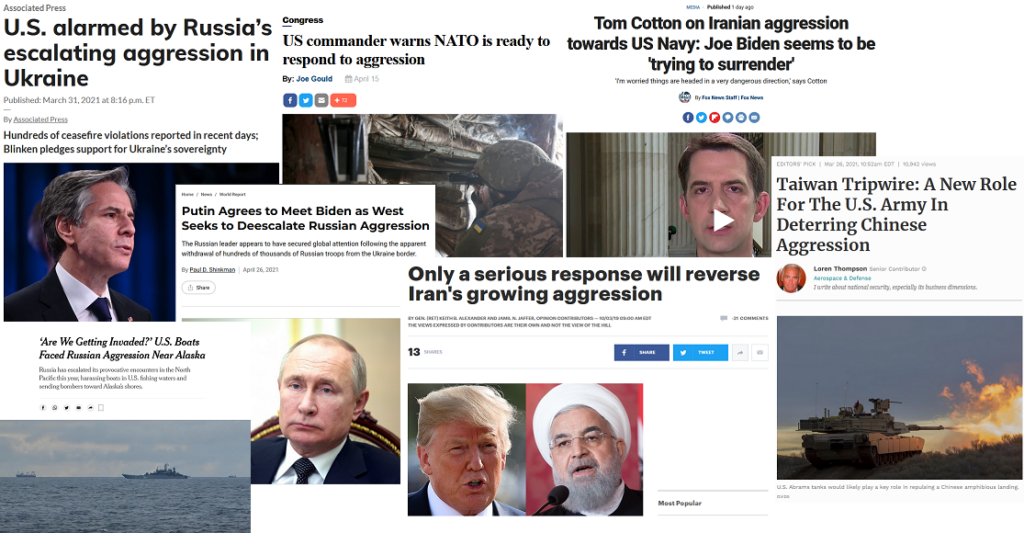
Alan Macleod May 17, 2021 Aggression, in international politics, is commonly defined as the use of armed force against another sovereign state, not justified by self-defense or international authority. Any state being described as aggressive in foreign or international reporting, therefore, is almost by definition in the wrong. Originally posted on FAIR.org, April 30, 2021 It’s a word that seems easy to apply to the United States, which launched 81 foreign interventions between 1946 and 2000 alone. In the 21st century, the United States has attacked, invaded or occupied the sovereign states of Afghanistan, Iraq, Libya, Syria, Pakistan, Yemen and Somalia. Despite the US record, Western corporate media overwhelmingly reserve the word “aggression” for official enemy nations—whether or not it’s warranted. In contrast, US behavior is almost never categorized as aggressive, thereby giving readers a misleading picture of the world. Perhaps the most notable internationally aggressive act in recent memory...

peace-force
William Astore May 6, 2021 Introduction to the article Once upon a time, the Europeans had the copyright on naming lengthy wars: the Hundred Years’ War, the Eighty Years’ War, the Thirty Years’ War. I suspect, however, that it’s past time for the U.S. to enter that competition. After all, soon after we arrive at September 11, 2021, barring a genuine surprise, this country will have been fighting its twenty-first-century wars unsuccessfully for two decades. In other words, the conflict launched as the Global War on Terror in the days after the 9/11 attacks (the one that then-Secretary of Defense Donald Rumsfeld imagined targeting terror networks in up to 60 countries) has never either faintly succeeded or ended. It’s only spread to ever newer realms of death and disaster in distant lands (while bouncing back on this country in ever stranger ways), even as trillions and trillions of taxpayer dollars went down the drain. Shouldn’t the increasingly riven citizens of...
a1b62101-68d3-4692-b219-f8f4b8228226
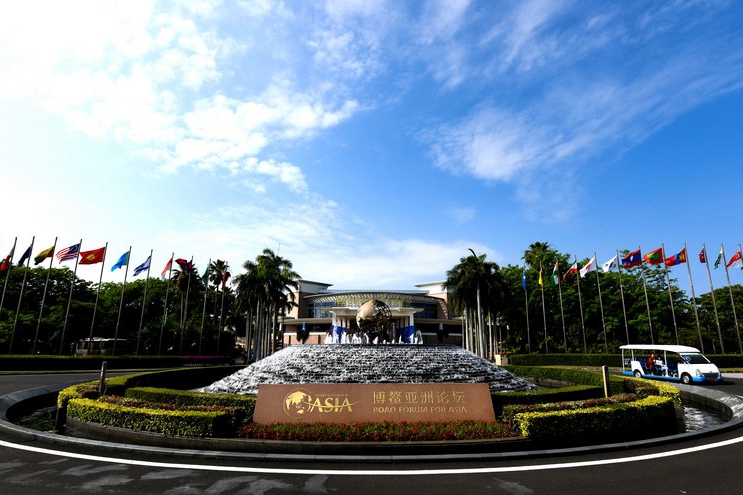
Photo taken on April 17, 2021 shows the Boao Forum for Asia International Conference Center in Boao Town, South China’s Hainan province. [Photo/Xinhua] Tom Fowdy April 28, 2021 At the Boao Forum for Asia, a regional summit for government, business and academia typically hosted in Hainan province, China said that it does not seek hegemony and that it does not strive to displace the United States, only seeking fairness and justice in the international system. This came amid the Western mainstream media repeatedly framing Washington and Beijing as being in a competition for global dominance. Unfortunately, this view is shared by many politicians in the United States increasingly depicting China as a threat and a strategic competitor – espousing the language of the Cold War. Originally published at china.org.cn What is hegemony? In international relations, a hegemon is a state that wields so much undisputed power that has almost complete...
Categories

Year

Author / Contributor

Region