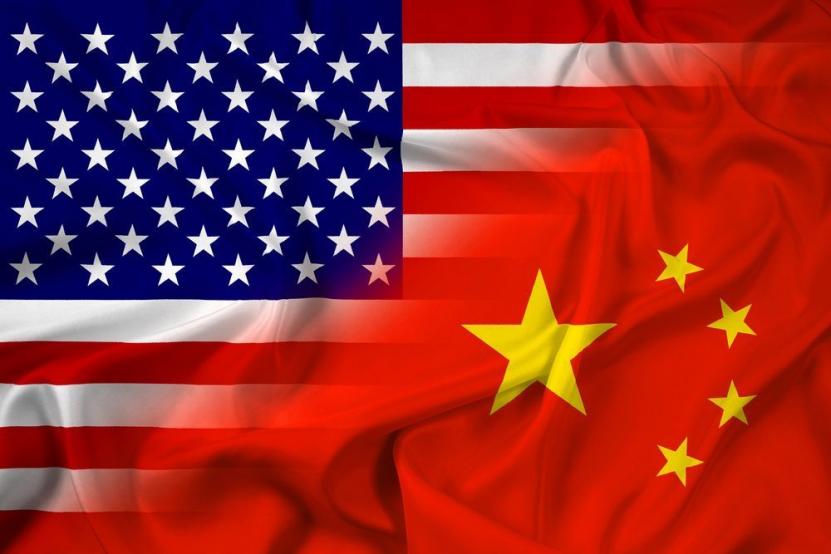

The US ‘Strategic Competition Act’ is a dangerous declaration of Cold War on China

About a Senate bill enshrining a zero-sum approach to Beijing that will surely set us on a course of escalation.

Michael D. Swaine

June 14, 2021

This is the first installment in a multi-part Responsible Statecraft series on the Strategic Competition Act (S. 1169), a bill under consideration that would effectively constitute a declaration of cold war on China by the U.S. Congress. We begin with an overview of the bill’s framing of the threat China poses to the United States and other nations and what to do about it. It will be followed by separate essays delving into greater detail analyzing the inaccurate assessments and policy changes suggested in several critical areas: Taiwan, the South China Sea maritime disputes, North Korea, educational exchanges, influence operations, and the Belt and Road Initiative.

Originally published at responsiblestatecraft.org

The Strategic Competition Act, recently approved by the Senate Foreign Relations Committee, constitutes a de facto declaration of a cold war with the People’s Republic of China. Co-sponsored by Chairman Robert Menendez and Ranking Member James Risch, the legislation was introduced on April 15 and replaced with a much lengthier version previously unavailable to the public at the committee markup on April 21. 

Senate Majority Leader Chuck Schumer flagged the bill as a priority opportunity for a rare bipartisan win, which could be folded into another bipartisan bill led by Schumer and Sen. Todd Young.

But this bipartisanship is dependent on the dangerous notion that a zero-sum, comprehensive, and systematic strategic competition with China ought to be the organizing principle for the domestic, foreign, and defense policies of the United States government and, if possible, other nations as well.

To justify such a singular focus, the SCA — with scant attention to evidence — depicts China as the most serious current and future threat to American, allied, and global interests in diverse realms, from social and political order to economic growth, global norms, and military security.

So, forget the dire threats posed by climate change, pandemics, global financial disruptions, and Washington’s overreliance on military instruments and underinvestment in diplomacy in its foreign policy. Apparently these all take a back seat to China as the defining threat of the age.

In each section, the bill echoes the most extreme demonization rhetoric on China found in Washington today. It presents Beijing as a ruthless aggressor committed to achieving dominance and undermining democratic (and virtually all other) nations through every possible means.

In contrast, the United States and its allies and partners are depicted as largely innocent victims of Chinese predations, as if the well-established security dilemma between nations plays no role whatsoever in the deepening Sino.-U.S. confrontation.

That phenomenon, abundantly evident in the interactions between Beijing and Washington, posits a vicious circle of aggressive moves and countermoves resulting from efforts by each side to strengthen its security.

In some areas, such as with regard to Taiwan and North Korea, the bill also demands changes in U.S. foreign policy that violate the constitutional prerogatives of the Executive Branch to manage the conduct of diplomacy with other nations.

Nowhere in the entire bill is there anything other than a passing reference to the obvious need to maintain cooperative — or at the very least non-confrontational — relations with Beijing in order to address many of the common threats mentioned above.

Moreover, throughout the document, U.S. security and well-being are seen as resulting purely from deterrence or counter-balancing efforts toward Beijing involving the buildup of American military, economic, and technological power.

The bill does not mention the need to also reassure Beijing that America’s new strengths will not be used to threaten China’s most vital interests.

Without such reassurance, as part of a larger dialogue with Beijing designed to clarify red lines and create understandings on volatile issues such as Taiwan, the many policy changes in the bill will simply lead to more threatening Chinese counter-moves in a never-ending escalatory rivalry. 

The intellectual framework for the bill’s unvaryingly hostile stance toward China is contained in its so-called introductory “findings.” With few exceptions, it is replete with breathless, categorical statements about Chinese policies and actions that are largely detached from the factual record. 

For example, the bill asserts that the PRC is committed to becoming “the” leading world power in pursuit of its own objectives “regardless of other countries’ interests.” Of course, China, like other powerful nations, seeks to expand its influence in order to promote its interests, and at times it does so in ways that do not pay due regard to other states’ interests.

But it also exhibits a normal willingness to bargain with other states in order to seek negotiated outcomes that include both give and take — as evident in a range of trade agreements and other deals China has negotiated with the United States and other countries in recent years. 

The findings of the bill also portray Beijing as seeking to overturn the entire global order and co-opt multinational institutions to serve solely authoritarian ends, a claim that oversimplifies the complex ways in which China seeks to support, revise, and supplement global institutions in ways that can both coincide and clash with U.S. interests. 

The bill further asserts that the “PRC uses state-directed industrial policies in anticompetitive ways to ensure the dominance of PRC companies,” ignoring the fact that the U.S. has been moving in precisely the same direction for years — most notably, through proposed investments under the abovementioned Schumer-Young Endless Frontier Act. 

Finally, it states without qualification that the policies of the PRC “will put at risk the future peace, prosperity, and freedom of the international community.” The irony is that by essentially denying the possibility of coexistence with China, this cold war-style assumption about China undermines the ability of the two sides to manage their economic and military competition in ways that prevent such outcomes. 

While no doubt reflecting some legitimate concern over the threats and challenges that China does in fact pose to the United States, the extreme, over-the-top quality of the SCA’s take on China in many areas also reflects to some extent the U.S. search for a foreign threat to blame for America’s faltering economic growth, and to validate the resulting insecurity and frustration felt by Americans.

The demonization of China, expressed on both sides of the political aisle, also serves as a convenient tool for strengthening the bipartisanship desired by many politicians and ordinary citizens.

In its simplistic and exaggerated depiction of the threats China poses to the United States and the world, its neglect of other more serious threats, its almost exclusively zero-sum (and in some instances dangerous) policy recommendations, and its constitutional overreach in places, the Strategic Competition Act epitomizes the worst errors of the new Washington “consensus” on what a rising China supposedly means for the United States and the world.

Presenting the China challenge in such stark, hostile ways and offering such extreme policy solutions will further reinforce concern among U.S. allies and friends that the United States is committed to pursuing a win-or-lose cold war with China, thus reducing the chances of much-needed collaboration with them.

It will also close off the possibility of more nuanced U.S. policies designed to strengthen our ability to engage meaningfully with China where possible while defending our most vital interests. 

Members of Congress and the Biden administration should reject both the demonizing language of the SCA and its most excessive, self-damaging proposals.

They should instead present a more balanced, fact-based approach to China that reflects not only the threats and challenges, but also the opportunities that Beijing’s rise presents to the United States and other nations. The SCA might offer an opportunity for bipartisanship in Washington.

But it certainly does not serve U.S. interests.

Originally published at responsiblestatecraft.org

About the author

Michael D. Swaine, director of QI’s East Asia program, is one of the most prominent American scholars of Chinese security studies. He comes to QI from Carnegie Endowment for International Peace, where he worked for nearly twenty years as a senior fellow specializing in Chinese defense and foreign policy, U.S.-China relations, and East Asian international relations. Swaine served as a senior policy analyst at the RAND Corporation.

Swaine has authored and edited more than a dozen books and monographs, including Remaining Aligned on the Challenges Facing Taiwan (with Ryo Sahashi; 2019), Conflict and Cooperation in the Asia-Pacific Region: A Strategic Net Assessment (with Nicholas Eberstadt et al; 2015) and many journal articles and book chapters.

Swaine is directing, along with Iain Johnston of Harvard University, a multi-year crisis prevention project with Chinese partners. He also advises the U.S. government on Asian security issues.

Swaine received his doctorate in government from Harvard University and his bachelor’s degree from George Washington University.

Related Posts

Jan Oberg May 15, 2026 Go to this Fox News page and scroll the whole way down: President Donald Trump tells the world that his meeting with President Xi Jinping yielded a lot of very concrete political and economic results – of course, only where the Chinese side, according to him, agreed with him. He does not mention the Taiwan issue, but Secretary of State, Marco Rubio, says that it did not feature prominently in their talks and that the US policy on Taiwan has not changed. Then go to China Daily – or Global Times – and you will see that for the Chinese it is framework, principles, structure of cooperation etc. that matters – all embedded in the overall idea of “constructive bilateral relationship of strategic stability.” Nowhere is any concrete agreement or deal – all that Trump refers to – mentioned. At the general level, this gives you insights into the very different social...
Jan Oberg, TFF director April 9, 2026 I was recently invited to have a good, long talk about the world – and, of course, about peace too – with Boris Malagurski on his Weight of Chains Channel on YouTube. It was a real joy and seems to have been greatly appreciated by the viewers too. Mr Malagurski and I shall of course be grateful if you share this conversation in your circles – of course, only if you like what you see and hear 😉☮️ And remember that this one – like hundreds of others with TFF Associates – can be enjoyed at our TFF Video Collection.
A friendly quarrel while we agree that the US sanctions are a weapon of mass destruction and kill more people than wars do. And that we must talk much more about sanctions than we have so far. Jan Oberg, TFF director March 16, 2026 John Mearsheimer recently stated that U.S. sanctions murdered around 38 million people between 1971 and 2021 – see the video below. It is a dramatic figure, and it has spread quickly because it captures, in one sentence, the enormous human cost of modern sanctions. I share his concern about the destructive effects of economic coercion. But the specific number he cites — and the way he attributes it — deserves a friendly academic clarification. The figure comes from a 2023 Lancet Global Health article estimating the mortality effects of unilateral U.S. and EU sanctions over the past half‑century. This is the first point where Mearsheimer’s shorthand diverges from the text: the study...

Recent Articles

Tony Robinson October 4, 2026 Violence is easy to recognise when someone is being beaten, shot or killed. It becomes more difficult when nobody is holding a weapon. Poverty, discrimination, exploitation and repression can restrict a human life just as effectively, although they do so in very different ways and with very different consequences. Simply adding more categories to an ever-growing list of forms of violence does not really solve the problem. The more interesting question is what all these different situations have in common and why it makes sense to describe them using the same word. Human beings do not simply react to what happens around them. They remember the past, imagine things that do not yet exist, make plans and undertake projects. Workers organise because they imagine different working conditions; people migrate because they imagine another life somewhere else; social movements emerge because people refuse to accept the...
It’s a matter of principles, courage, vision and pulling together – while the militarist world is falling apart… Peter Langille October 3, 2026 “Here, then, is the problem which we present to you, stark and dreadful and inescapable: Shall we put an end to the human race; or shall mankind renounce war?”The Bertrand Russell—Albert Einstein Manifesto, July 9, 1955 ⁕ The forecast for what’s ahead is worrisome. The sharp rise in armed conflicts over the past three years is adding to what was already the highest level in over seventy years. Genocides, which should be prevented are supported. A shared climate emergency that jeopardises survival is ignored. Diverse polls now suggest that people are war-weary, worried and interested in a more effective United Nations. And, there are viable policy options for a more secure world! Yet governments are doubling-down, betting on more war and investing heavily. If current trends persist,...
Johan Galtung 1930-2024October 2015 Published here on October 3, 2026 Let us focus on Civilization for conflict analysis and remedies. Major forms of disorder use violence; war is state organized violence. The most belligerent states are the United States of America and Israel, both with civilization roots. National Evangelism, the US Protestant Christian civilization– more national than evangelical–justifies US warfare as exceptionalism of a people chosen by God, with a manifest destiny to run the world. Orthodox Judaism justifies Israeli warfare to conquer and expand from Nile to Euphrates as a religious right and duty to the Eternal One. The third most belligerent country, the UK, no longer believes it is God-chosen but chosen by the USA; not quite the same but something. But the root cause of global disorder lies in the Occident–with Islam–seeing itself as the single, universal civilization valid for all at all times, all others being...

TFF on Substack

Discover and subscribe to more peace materials on TFF Substack

Most Popular

Tony Robinson October 4, 2026 Violence is easy to recognise when someone is being beaten, shot or killed. It becomes more difficult when nobody is holding a weapon. Poverty, discrimination, exploitation and repression can restrict a human life just as effectively, although they do so in very different ways and with very different consequences. Simply adding more categories to an ever-growing list of forms of violence does not really solve the problem. The more interesting question is what all these different situations have in common and why it makes sense to describe them using the same word. Human beings do not simply react to what happens around them. They remember the past, imagine things that do not yet exist, make plans and undertake projects. Workers organise because they imagine different working conditions; people migrate because they imagine another life somewhere else; social movements emerge because people refuse to accept the...
It’s a matter of principles, courage, vision and pulling together – while the militarist world is falling apart… Peter Langille October 3, 2026 “Here, then, is the problem which we present to you, stark and dreadful and inescapable: Shall we put an end to the human race; or shall mankind renounce war?”The Bertrand Russell—Albert Einstein Manifesto, July 9, 1955 ⁕ The forecast for what’s ahead is worrisome. The sharp rise in armed conflicts over the past three years is adding to what was already the highest level in over seventy years. Genocides, which should be prevented are supported. A shared climate emergency that jeopardises survival is ignored. Diverse polls now suggest that people are war-weary, worried and interested in a more effective United Nations. And, there are viable policy options for a more secure world! Yet governments are doubling-down, betting on more war and investing heavily. If current trends persist,...
Johan Galtung 1930-2024October 2015 Published here on October 3, 2026 Let us focus on Civilization for conflict analysis and remedies. Major forms of disorder use violence; war is state organized violence. The most belligerent states are the United States of America and Israel, both with civilization roots. National Evangelism, the US Protestant Christian civilization– more national than evangelical–justifies US warfare as exceptionalism of a people chosen by God, with a manifest destiny to run the world. Orthodox Judaism justifies Israeli warfare to conquer and expand from Nile to Euphrates as a religious right and duty to the Eternal One. The third most belligerent country, the UK, no longer believes it is God-chosen but chosen by the USA; not quite the same but something. But the root cause of global disorder lies in the Occident–with Islam–seeing itself as the single, universal civilization valid for all at all times, all others being...
Read More
Living-Peace-Sign-Budapest-copy
Tony Robinson October 4, 2026 Violence is easy to recognise when someone is being beaten, shot or killed. It becomes more difficult when nobody is holding a weapon. Poverty, discrimination, exploitation and repression can restrict a human life just as effectively, although they do so in very different ways and with very different consequences. Simply adding more categories to an ever-growing list of forms of violence does not really solve the problem. The more interesting question is what all these different situations have in common and why it makes sense to describe them using the same word. Human beings do not simply react to what happens around them. They remember the past, imagine things that do not yet exist, make plans and undertake projects. Workers organise because they imagine different working conditions; people migrate because they imagine another life somewhere else; social movements emerge because people refuse to accept the...
b54a1f10-8c65-4f0b-9dd5-4abc0a7d04cc_2659x2659
It’s a matter of principles, courage, vision and pulling together – while the militarist world is falling apart… Peter Langille October 3, 2026 “Here, then, is the problem which we present to you, stark and dreadful and inescapable: Shall we put an end to the human race; or shall mankind renounce war?”The Bertrand Russell—Albert Einstein Manifesto, July 9, 1955 ⁕ The forecast for what’s ahead is worrisome. The sharp rise in armed conflicts over the past three years is adding to what was already the highest level in over seventy years. Genocides, which should be prevented are supported. A shared climate emergency that jeopardises survival is ignored. Diverse polls now suggest that people are war-weary, worried and interested in a more effective United Nations. And, there are viable policy options for a more secure world! Yet governments are doubling-down, betting on more war and investing heavily. If current trends persist,...
010
Johan Galtung 1930-2024October 2015 Published here on October 3, 2026 Let us focus on Civilization for conflict analysis and remedies. Major forms of disorder use violence; war is state organized violence. The most belligerent states are the United States of America and Israel, both with civilization roots. National Evangelism, the US Protestant Christian civilization– more national than evangelical–justifies US warfare as exceptionalism of a people chosen by God, with a manifest destiny to run the world. Orthodox Judaism justifies Israeli warfare to conquer and expand from Nile to Euphrates as a religious right and duty to the Eternal One. The third most belligerent country, the UK, no longer believes it is God-chosen but chosen by the USA; not quite the same but something. But the root cause of global disorder lies in the Occident–with Islam–seeing itself as the single, universal civilization valid for all at all times, all others being...
Screenshot 2026-10-02 011738
Jan ObergPhD, director, The Transnational Foundation for Peace and Future Research, TFFLund, Sweden October 2, 2026 This is my full original manuscript. The Chinese Academy of Social Science, CASS, makes two publications out if it. 1. China’s Five-year plan emphasized the capabilities of basic research and original innovation. It is regarded as the goal of the future social development, which, as required, should be significantly enhanced. Can you comment on the importance of original innovation in research and academic study? I believe it is easier to define “original innovation” in the natural sciences than in social sciences. The breaking points of what constitutes something new, or innovative, are not quite as sharp in the latter. But in both fields it is about opening up something that was closed, unseen, unexplored before – making manifest what was earlier latent. Innovations come in many forms and shapes – naming something that was not...
arctic-circle-map
The agreement is catastrophic both because of what it says and what it doesn’t mention. It reduces further the major asset of security policies: Freedom of action. Jan Oberg TFF director September 25, 2026 A couple of hours before the agreement was signed on September 22, 2026, I published the following 13 hypotheses about what it would most likely contain on TFF Substack (in English). I was wrong on only the first point. Contrary to what Trump had written on his Truth Social platform, it does not appear to come into force immediately. In fact, it turned out to be worse than even I had anticipated. After these hypotheses now come a number of reflections in light of what the agreement actually contains, and does not contain, as well as the way in which it has generally been presented by major media outlets and by the public-service broadcaster DR. My...
girl-5894831_1280
Below are TFF-related media mentions, comments, videos and social media posts published elsewhere but not on this homepage. We happen to catch and list only a fraction. Regarding video comments and debates, we recommend that you go to the TFF Video Channel on Substack where many of them are reproduced. Jan Oberg is a contributor to China Daily – 52 million daily clicks – and Global Times, CGTN and CCTV (the national television), China Investment, Xinhua News Agency and several others. Articles and videos on these media very often multiply into countless Chinese (and Western media) that re-post them from these main media. Thanks to The China Academy, his analyses, interviews and comments are frequently posted on YouTube channels such as Thinkers Forum and Wave Media. These videos are often re-posted on Bilibili (China’s YouTube), the China Content Center on TikTok, and on the Chinese edition of TikTok, Douyin.com. This means reaching hundreds of millions of viewers worldwide over a year. While there are too many to catch on all these...