TFF Blog

The roll-down menus give you access to (almost) everything TFF Associates have produced since end of 2017 – their writings and videos, their media comment, broadcasts, essays and poetry.

The Treasures of their writings 2006-2012 can be found here.

And all that we published by them 2012-2017 is here.

Time to explore and see how world developments were processed over the years by one of the finest communities of genuine peace intellectuals and practitioners.
 

Category

Year

Author / Contributor

Region

Sort by

Showing 1-10 of 773 stories

LoudAnd
By Jan Oberg • Interview on “Loud & Clear” of Radio Sputnik, New York, January 22, 2018   Other posts about this issue Jan Oberg, The 2018 US National Defence Stratgey In Plain Words: Tragi-Comic! Defence News  
ChatGPT Image 9 jun 2026, 11_11_33
  • Last week, the American secretary of defence, Jim Mattis, declared a new era: “There has been a return of great power competition……great power competition – not terrorism- is now the primary focus of US security”. In the new national defence strategy document China and Russia are singled out as “adversaries”. Although the US is now spending on defence three times as much as China (1.7% of its GNP as against America’s 3.3%), Mattis is worried that the US’s military advantage over its adversary has eroded “in every domain of warfare”. The military, he said, “was coping with “inadequate resources” and he called for Congress to appropriate it more billions of dollars. Pro Mattis/Trump analysts are arguing that China could be set on replacing the US as the hegemon of East Asia and will then start projecting military power into other regions, even the West. They claim that military...
Tillerson
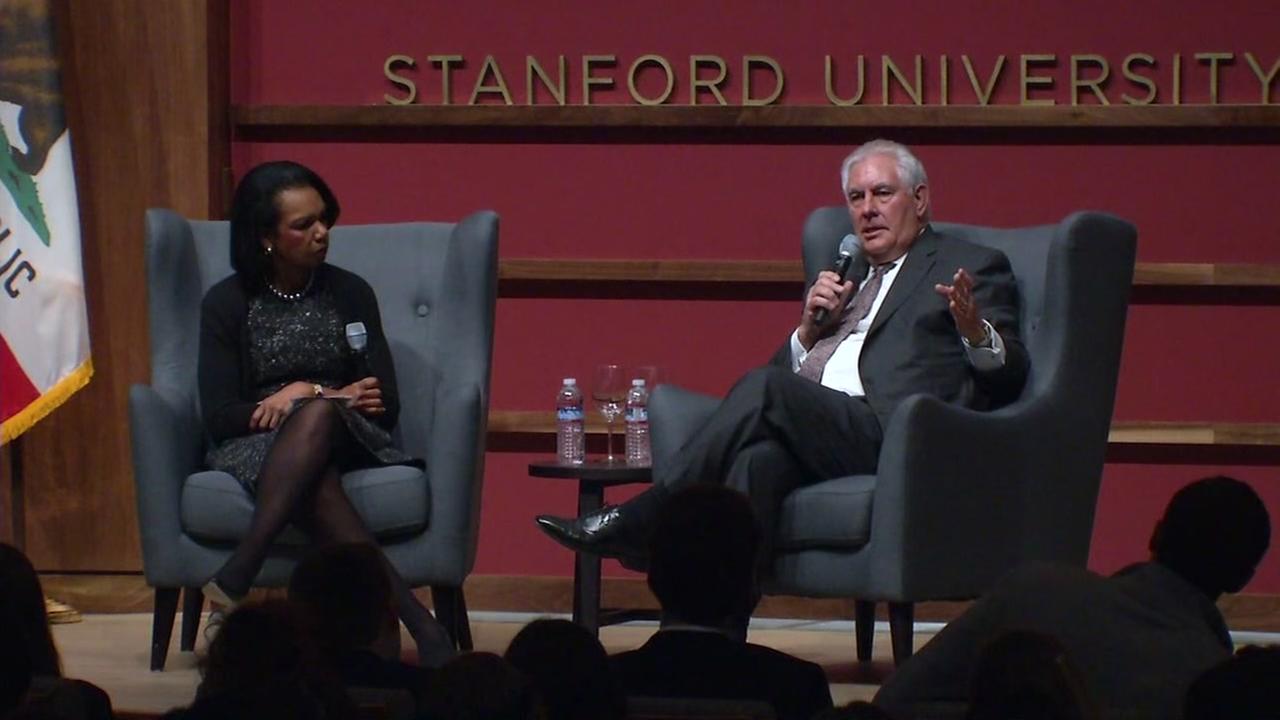
Most media covering the speech that US Secretary of State, Rex Tillerson, gave at the Hoover Institution on January 17, 2018 merely points out that he said that the United States would stay in Syria – open-ended – in the future and until President Bashar al-Assad has left the scene. Read the full speech here. Reuters even twists it all to mean that the US is now more patient about Assad’s removal. Before I continue it is a significant sign of the Western crisis, including moral and legal decay, that it raises few eyebrows – and none in NATO circles – that a top official of the leader of the Western world: a) expresses no regrets about anything done so far in this conflict or in the larger Middle East, b) states clearly that it will continue what must in legal terms be characterized as foreign military aggression and presence...
johangaltung
Foreword to Michael Haas’ Book What is that American Diplomacy, after US bombing killed 3,5 million in Pyongyang in 1952 and the US Army killed 3 million in Vietnam from 1961 (Kennedy) to 30 Apr 1975 (Ford)?  Softer? This very rich, well researched book by Michael Haas–a senior, major US political scientist–gives detailed “softer” empirical, factual answers in Part II.  Indeed, highly recommended. In this foreword, however, I will explore US deep culture implications for US foreign policy, close to “American Diplomacy”. The US self-image as successor to Israel as MFN – most favored nation – by God, with Chosen People-Promised Land, CPPL, status, is from 1620, on Mayflower. Since about Year 70 Israel clearly no longer enjoyed CPPL status; that was under King David and under King Solomon. The position as CPPL was empty, may those with credentials apply. Puritan Pilgrims from East Anglia via Leiden in Holland, did,...
IranColoured
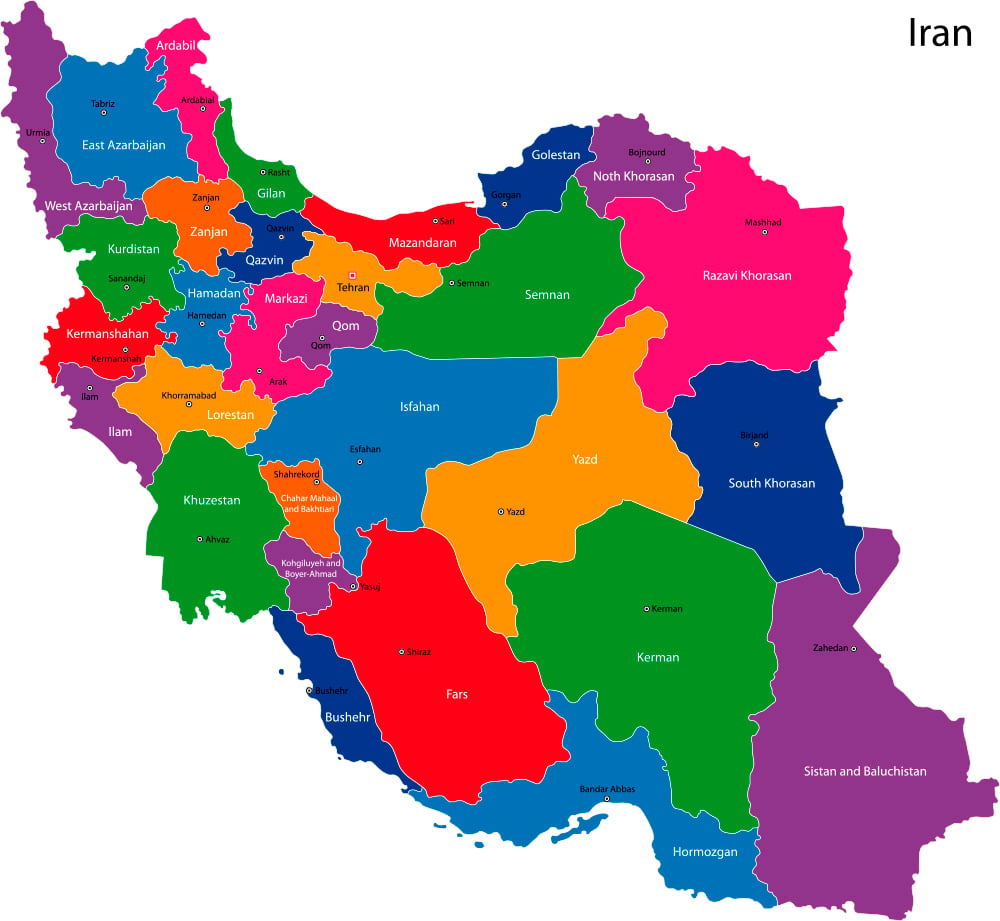
/01/16/the-islamic-republic-of-hysteria-iran-middle-east-trump/”>Stephen M. Walt’s “The Islamic Republic of Hysteria” published in Foreign Policy on January 16, 2018 is the one you should choose. Here is how Walt’s starts out – “In October, the White House announced that moving forward, the official U.S. policy is aimed at “neutralizing Iran’s destabilizing influence and constraining its aggression.” … “Yet this ongoing full-court press against Iran makes little sense because it is nowhere close to being a regional hegemon. If anything, the willingness of pundits and politicians to embrace this alarmist fantasy says more about the cavalier nature of U.S. strategic discourse than it does about the actual challenge Iran may pose.” And here is Walt’s conclusion – “The bottom line is that an all-out campaign to counter an Iranian hegemon is unnecessary. Unfortunately, there is little reason to think the Trump administration will recognize this and adopt the sensible course outlined here. If it...
cropped-davidindc-1-e1516137163905
By David Swanson Remarks at Peace and Justice Studies Association Conference in Birmingham, Alabama, October 28, 2017. Thank you for inviting me. Can everyone who thinks that war is never, and can never be, justified please raise your hand. Thank you. Now if you think every war is always justified. Thank you. And finally all the moderates holding the balanced subtle middle ground: some wars are justified. Thank you. You may not be surprised to hear that this room is not typical of this country. Typical is for absolutely everyone to pile into that last group. The relationship between peace and war is clearly not understood by the U.S. public as along the lines of that between alive and dead. Peace and war are things people imagine can coexist. In Virginia, where I live, a school board member once said he would support recognizing the international day of peace as...
fjahanpour
By Javad Heiranni The Tehran Times, January 14, 2018 TEHRAN – Professor Farhang Jahanpour, part-time tutor on the Middle East in the Department of Continuing Education at the University of Oxford, tells the Tehran Times that “It should be remembered that a greater part of the statement released by President Trump is for domestic consumption, and also it is a face-saving formula to persuade his base that he has remained firm in his decision.” “The nuclear agreement does not prohibit the development of ballistic missiles by Iran,” Jahanpour tells the Tehran Times in an exclusive interview. He also adds that “The Security Council Resolution that confirmed the deal, in an annex “calls on Iran” to refrain from manufacturing ballistic missiles, but it has been made clear that it is not a binding requirement.” Originally published by The Tehran Times here Following is the full text of the interview:   Q:...
ChatGPT Image 9 jun 2026, 11_11_33
  Is democracy in decline? If you talk about the quality of democracy the answer is clearly yes. The US, the world’s first and most important democracy- although at the beginning a limited democracy for white men only – is in trouble. President Donald Trump has brought old problems to the surface – the money that buys candidates and policies, gerrymandering, an increasingly polarised electorate and a deadlocked Congress. He has added his own negatives – misusing his power to threaten his opponent, Hilary Clinton, with jail, waging a war against the media and attempting to make it clear that he has the sole power to use nuclear weapons and that he will use them against North Korea, even if North Korea has not used its. If we talk about quantity the report issued today by the American organisation, Freedom House, that has monitored the rise and fall of democracy...
MichelChossudovsky
  • What is now unfolding in both North America and Western Europe is fake social activism, controlled and funded by the corporate establishment. This manipulated process precludes the formation of a real mass movement against war, racism and social injustice.   The anti-war movement is dead. The war on Syria is tagged as “a civil war”. The war on Yemen is also portrayed as a civil war.  While the bombing is by Saudi Arabia, the insidious role of the US is downplayed or casually ignored. “The US is not directly involved so there is no need for us to wage an anti-war campaign”. (paraphrase) In turn, dissent has become compartmentalized. Separate “issue oriented” protest movements (e.g. environment, anti-globalization, peace, women’s rights, LGBT) are encouraged and generously funded as opposed to a cohesive mass movement against global capitalism. This mosaic was already prevalent in the counter G7 summits and People’s Summits of the 1990s...
RichardFalk
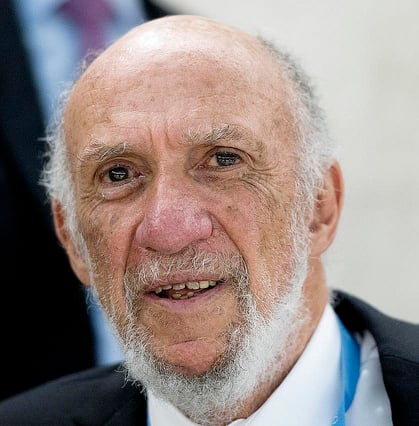
  By Richard Falk This post is a modified version of an article published in Middle East Eye on Jan. 1, 2018. It contends that the proper priority for genuine advocates of peace between Israelis and Palestinians should be centered around apartheid rather than be devoted to reviving an Oslo style ‘peace process’ (always a sham) or proclaiming the goal of an independent and sovereign Palestine as attainable without first dismantling the apartheid structures that subjugate the Palestinian people as a whole so as to maintain the Zionist insistence on Israel as the state of the Jewish people (rather than providing a homeland within a normal and legitimate state based on ethnic and religious equality, human rights, and secular principles.   Originally published on the “Global Justice in the 21st Century” blog   Despite all appearances to the contrary, those in the West who do not want to join the premature...
1
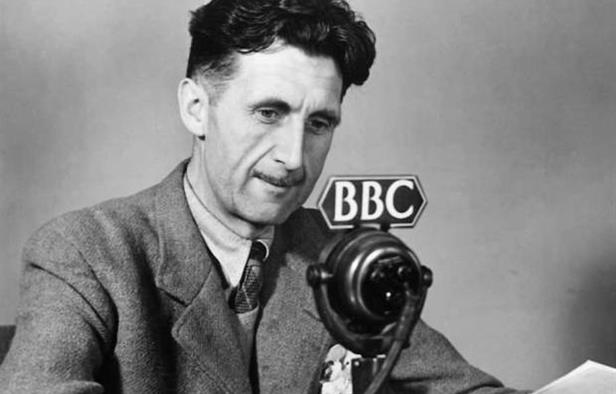
Introduction This is a collection of biographical sketches showing people whose wise voices from the past can help to guide us today. All of the women and men, brief glimpses of whose lives and ideas are portrayed here, gave a high place to compassion. None of them was a slave to greed. We need their voices today! A Lower-Upper Middle Class Family and Education Eric Arthur Blair (1903-1950), better known by his pen name George Orwell, was the great-grandson of Charles Blair, a wealthy country gentleman, and Lady Mary Fane, daughter of the Earl of Westmorland. Over the generations that separated Eric Blair from his great-grandparents, some of the gentility remained but most of the wealth disappeared, and he described his family as being “lower-upper middle class”. Eric Blair was born in British India where his father was working, but when he was one year old his mother took the...
Imagen-thumbnail-The-Transnational-1
• “Free elections and free markets” represent “the single sustainable model for national success”. So declared the US National Security Strategy published by the Administration of George W Bush in 2002. It’s a document better known for the novelty of its proposed variation on the traditional UN provision for the legal use of force: the concept of pre-emptive self-defence. You don’t have to join many dots to infer that countries which deviate from this path of righteousness risk being regarded as security threats, and, the document continues: “As a matter of common sense and self-defense, America will act against such emerging threats before they are fully formed”. Is it heresy against free-market fundamentalism that has put one regime after another in the firing line, in the period since? Even before Bush took office, the US and allies went to war over Kosovo, in ‘Operation Allied Force’, the bombing of Yugoslavia...
Categories

Year

Author / Contributor

Region