
Introduction

This is a collection of biographical sketches showing people whose wise voices from the past can help to guide us today. All of the women and men, brief glimpses of whose lives and ideas are portrayed here, gave a high place to compassion. None of them was a slave to greed. We need their voices today!

A Lower-Upper Middle Class Family and Education

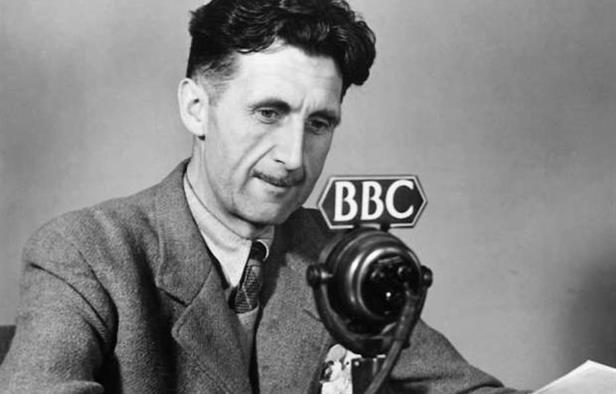
Eric Arthur Blair (1903-1950), better known by his pen name George Orwell, was the great-grandson of Charles Blair, a wealthy country gentleman, and Lady Mary Fane, daughter of the Earl of Westmorland. Over the generations that separated Eric Blair from his great-grandparents, some of the gentility remained but most of the wealth disappeared, and he described his family as being “lower-upper middle class”.

Eric Blair was born in British India where his father was working, but when he was one year old his mother took the family to England. Eric attended a Catholic boarding school called St. Cyprians, where his work in history and his writing won him scholarships to both Wellington and Eton. He attended both schools, because at first there was no place available at Eton.

Burmese Days

While at Eton, Eric Blair paid more attention to extra-curricular activities than to his studies, and his family, who could not afford to send him to university without a scholarship, decided that he would never win owe. Instead of attending a university, Eric Blair joined the Imperial Police. He chose Burma, where his maternal grandmother was still living.

After serving several years in Burma in positions of increasing responsibility, Orwell became seriously ill in 1927, and he was allowed to return to England. By this time, he had become disillusioned with colonialism. He now saw it as a system whereby the soldiers held the poor Indian of Burmese citizen down, while the merchant went through his pockets. Orwell described his experiences as a colonial police officer in his book, “Burmese Days.”

Down and Out in Paris and London (1933)

After Orwell returned from Burma, he became interested in the lives of very poor people in Europe. On a visit to Paris, he experienced the theft of all his money. He could have written to his guardian in England to ask for help, but instead he decided to find out for himself what it was like to be completely destitute. Returning to London, he later continued his personal experiment with extreme poverty.

After living at the extreme lower edge of society for several years, Orwell described his experiences in “Down and Out in Paris and London”. Orwell’s descriptions are so vivid and his sense of humor so sharp that the book is both riveting and enjoyable to read. Other excellent books by Orwell describing not quite so extreme poverty include “Keep the Aspidistra Flying” (1936), and “The road to Wigan Pier” (1937).

Homage to Catalonia (1938)

This book describes Orwell’s experiences during the Spanish Civil War. He served as a soldier in the unsuccessful struggle to prevent Franco’s fascist army from overthrowing the elected government.
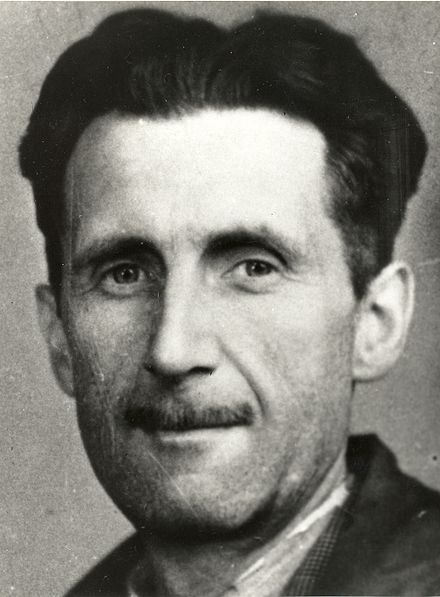
George Orwell

Animal Farm (1945)

This brilliant satiric and allegorical novella reflects Orwell’s disillusionment with Russia’s post-revolutionary government under Stalin. Orwell saw Stalinism as a brutal dictatorship. In his essay “Why I Write” (1946) Orwell says that “Animal Farm” is the first book in which he tried “to fuse political purpose and artistic purpose into one whole”.

At the start of  “Animal Farm” an old boar called Major (Marx and/or Lenin ?) teaches the animals to sing “Beasts of England” (the “Internationale”?). Orwell describes the tune as being halfway between “La Cucaratcha” and “My Darling Clementine”. Here are the words of the song:

 “Beasts of England, Beasts of Ireland,
Beasts of every land and clime,
Hearken to my joyful tidings
Of the Golden future time.

“Soon or late the day is coming,
Tyrant Man shall be o’erthrown,    
And the fruitful fields of England
Shall be trod by beasts alone.

“Rings shall vanish from our noses,
And the harness from our back,
Bit and spur shall rust forever,
Cruel whips no more shall crack.

“Riches more than mind can picture,
Wheat and barley, oats and hay,
Clover, beans, and mangel-wurzels
Shall be ours upon that day.

“Bright will shine the fields of England,
Purer shall its waters be,
Sweeter yet shall blow its breezes
On the day that sets us free.

“For that day we all must labour,
Though we die before it break;
Cows and horses, geese and turkeys,
All must toil for freedom’s sake.

“Beasts of England, Beasts of Ireland,
Beasts of every land and clime,
Hearken well, and spread my tidings
Of the Golden future time.”

After a successful revolution by the animals, Farmer Jones is expelled, and the Seven Principles of Animalism are established, the most important of which is:

“All animals are equal.”

The pigs, being (as they say themselves) the most intelligent of the animals, gradually take over the running of the farm. Meetings of all the animals are replaced by meetings of the pigs. The faithful hardworking old horse, Boxer, is sold to the gluemaking knacker in order to buy whisky for the pigs. The first principle of Animalism is replaced by:

“All animals are equal, but some animals are more equal than others.”

Finally, the pigs start to carry whips and to walk on two legs. They become indistinguishable from humans.

“Animal Farm”, published at the start of the Cold War, was a great commercial success, and it was translated into many languages.

Nineteen Eighty-Four (1949)

George Orwell’s famous dystopian novel “Nineteen Eighty-four” (often published as “1984”) has changed the English language and added new words, for example  “Orwellian”,

“doublethink”, “thoughtcrime”, “Big Brother”, “newspeak”, “nonperson” and “memory hole”. Like “Animal Farm”, it expresses Orwell’s deep dislike of Stalin’s brutal dictatorship. However, the novel also so aptly describes recent conditions in the United States and elsewhere that today it has hit the top of the best-seller lists.

The novel follows the life of Winston Smith, who lives in Airstrip One (formerly known as Great Britain). Airstrip One is part of the superstete Ociania, which is perpetually at war with two other superstates. Pictures of the ruler of Ociania, Big Brother, are everywhere and a cult of personality surrounds him, although he may not even exist.

Winston Smith belongs to the Outer Party, and he works in the Ministry of Truth (Minitruth), where his job is to rewrite history so that it will conform to the constantly-changing doctrines of the Inner Party, He changes written records, alters photographs, and converts people who are out of favour to “nonpersons” by destroying every record of their existence. Winston is good at his job, but he gradually come to detest the whole system. This, of course is a “thoughtcrime”.

Another worker in the Ministry of Truth is Julia, who runs Minitruth’s novel-writing machines. She hands Winston a note telling him that she is in love with him. Winston finds out that Julia shares his detestation of the system, and an affair blossoms between them. The meet in a rented room in a proletarian district where they believe they will be free from survelience.

Later Winston is approached by O’Brian, a member of the Inner Party who is believed by Winston to be a member of the Brotherhood, a secret society that opposes the Party. Winston and Julia tell O’Brian of their detestation of the whole system. But O’Brian is not a member of the Brotherhood. He is actually a member of the Thought Police. Winston and Julia are arrested and tortured to such an extent that they finally betray each other.

Winston is tortured again and again. Simultaneously he is brainwashed to such an extent that he becomes a believer in the system, and can be sent back into society. The new, brainwashed Winston believes wholeheartedly in the doctrines of the Party, and he has finally learned to love Big Brother.

During the writing of “Nineteen Eighty-four”, Orwell was very ill with tuberculosis, and he died soon afterwards from the disease.

Some Quotations from “1984 – Nineteen Eighty-Four”

“Now I will tell you the answer to my question. It is this. The Party seeks power entirely for its own sake. We are not interested in the good of others; we are interested solely in power, pure power. What pure power means you will understand presently. We are different from the oligarchies of the past in that we know what we are doing. All the others, even those who resembled ourselves, were cowards and hypocrites.

The German Nazis and the Russian Communists came very close to us in their methods, but they never had the courage to recognize their own motives. They pretended, perhaps they even believed, that they had seized power unwillingly and for a limited time, and that just around the corner there lay a paradise where human beings would be free and equal. We are not like that. We know that no one ever seizes power with the intention of relinquishing it. Power is not a means; it is an end. One does not establish a dictatorship in order to safeguard a revolution; one makes the revolution in order to establish the dictatorship. The object of persecution is persecution. The object of torture is torture. The object of power is power. Now you begin to understand me.”

“War is peace.
Freedom is slavery.
Ignorance is strength.”

Politics and the English Language, and Other Essays

George Orwell was a perceptive and prolific essayist. Here is a link to some of his essays that have been made available by Project Gutenberg.

A Few Things That George Orwell Said:

“Actions are held to be good or bad, not on their own merits, but according to who does them. There is almost no kind of outrage -torture, imprisonment without trial, assassination, the bombing of civilians – which does not change its moral color when it is committed by ‘our’ side. The nationalist not only does not disapprove of atrocities committed by his own side, he has a remarkable capacity for not even hearing about them.”

“The essence of oligarchical rule is not father-to-son inheritance, but the persistence of a certain world-view and a certain way of life … A ruling group is a ruling group so long as it can nominate its successors… Who wields power is not important, provided that the hierarchical structure remains always the same.”

“In a time of deceit telling the truth is a revolutionary act.”

“The creatures outside looked from pig to man, and from man to pig, and from pig to man again; but already it was impossible to say which was which.”

“The most effective way to destroy people is to deny and obliterate their own understanding of their history.”

“If you want a picture of the future, imagine a boot stamping on a human face forever.”

“But if thought corrupts language, language can also corrupt thought.”

“If liberty means anything at all, it means the right to tell people what they do not want to hear.

“Doublethink means the power of holding two contradictory beliefs in one’s mind simultaneously, and accepting both of them.”

“Until they became conscious they will never rebel, and until after they have rebelled they cannot become conscious.”

“The essence of being human is that one does not seek perfection.”

“Being in a minority, even in a minority of one, did not make you mad. There was truth and there was untruth, and if you clung to the truth even against the whole world, you were not mad.”

“The great enemy of clear language is insincerity.”

“To see what is in front of one’s nose requires a constant struggle.”

“Advertising is the rattling of a stick inside a swill bucket.”

“War is a way of shattering to pieces, or pouring into the stratosphere, or sinking in the depths of the sea, materials which might otherwise be used to make the masses too comfortable, and hence, in the long run, too intelligent.”

Originally published by the Transcend Media Service here.
Related Posts

Below are TFF-related media mentions, comments, videos and social media posts published elsewhere but not on this homepage. We happen to catch and list only a fraction. Regarding video comments and debates, we recommend that you go to the TFF Video Channel on Substack where many of them are reproduced. Jan Oberg is a contributor to China Daily – 52 million daily clicks – and Global Times, CGTN and CCTV (the national television), China Investment, Xinhua News Agency and several others. Articles and videos on these media very often multiply into countless Chinese (and Western media) that re-post them from these main media. Thanks to The China Academy, his analyses, interviews and comments are frequently posted on YouTube channels such as Thinkers Forum and Wave Media. These videos are often re-posted on Bilibili (China’s YouTube), the China Content Center on TikTok, and on the Chinese edition of TikTok, Douyin.com. This means reaching hundreds of millions of viewers worldwide over a year. While there are too many to catch on all these...
Jan Oberg TFF director October 13, 2026 According to Alfred Nobel’s will, the Nobel Peace Prize shall be awarded: ”to the person who has done the most or best to advance fellowship among nations, the abolition or reduction of standing armies, and the establishment and promotion of peace congresses.” Further down, he also expresses how the prize for the “champions of peace” shall be decided: “that for champions of peace by a committee of five persons to be selected by the Norwegian Storting. Alfred Nobel’s will is remarkably short and clear. But few seem to have read it. Nobel did not say that the committee itself should consist of members of parliament. He entrusted the Storting with appointing five persons. In principle, it could have selected diplomats, mediators, peace researchers, conflict-resolution specialists, or other individuals with recognised expertise in matters of peace from around the world. Instead, the Storting gradually...
The Quest for Humane Survival Richard Falk Professor emeritus, Princeton UniversityTFF Associate since 1986October 12, 2026 After decades of teaching and writing about international law in academic frameworks that were not institutionally situated within law school environments—at Princeton and the University of California, Santa Barbara—I found myself most receptive to the TWAIL outlook. It has been especially illuminating in clarifying the extent to which international law evolved as a dialogical critique of Europe’s efforts to legitimize its colonial undertakings. In particular, TWAIL has exposed how international law has functioned to legalize the subjugation of Third World peoples, securing conditions for exploitative investment and trade relations, the coercive enforcement of public debts, and an ideology of cultural superiority. TWAIL’s exposure of these economic legacies of colonialism has influenced my understanding of the history and development of international law, broadly conceived, as an ideological project of the Western sub-system of the world...

Recent Articles

Below are TFF-related media mentions, comments, videos and social media posts published elsewhere but not on this homepage. We happen to catch and list only a fraction. Regarding video comments and debates, we recommend that you go to the TFF Video Channel on Substack where many of them are reproduced. Jan Oberg is a contributor to China Daily – 52 million daily clicks – and Global Times, CGTN and CCTV (the national television), China Investment, Xinhua News Agency and several others. Articles and videos on these media very often multiply into countless Chinese (and Western media) that re-post them from these main media. Thanks to The China Academy, his analyses, interviews and comments are frequently posted on YouTube channels such as Thinkers Forum and Wave Media. These videos are often re-posted on Bilibili (China’s YouTube), the China Content Center on TikTok, and on the Chinese edition of TikTok, Douyin.com. This means reaching hundreds of millions of viewers worldwide over a year. While there are too many to catch on all these...
Jan Oberg TFF director October 13, 2026 According to Alfred Nobel’s will, the Nobel Peace Prize shall be awarded: ”to the person who has done the most or best to advance fellowship among nations, the abolition or reduction of standing armies, and the establishment and promotion of peace congresses.” Further down, he also expresses how the prize for the “champions of peace” shall be decided: “that for champions of peace by a committee of five persons to be selected by the Norwegian Storting. Alfred Nobel’s will is remarkably short and clear. But few seem to have read it. Nobel did not say that the committee itself should consist of members of parliament. He entrusted the Storting with appointing five persons. In principle, it could have selected diplomats, mediators, peace researchers, conflict-resolution specialists, or other individuals with recognised expertise in matters of peace from around the world. Instead, the Storting gradually...
The Quest for Humane Survival Richard Falk Professor emeritus, Princeton UniversityTFF Associate since 1986October 12, 2026 After decades of teaching and writing about international law in academic frameworks that were not institutionally situated within law school environments—at Princeton and the University of California, Santa Barbara—I found myself most receptive to the TWAIL outlook. It has been especially illuminating in clarifying the extent to which international law evolved as a dialogical critique of Europe’s efforts to legitimize its colonial undertakings. In particular, TWAIL has exposed how international law has functioned to legalize the subjugation of Third World peoples, securing conditions for exploitative investment and trade relations, the coercive enforcement of public debts, and an ideology of cultural superiority. TWAIL’s exposure of these economic legacies of colonialism has influenced my understanding of the history and development of international law, broadly conceived, as an ideological project of the Western sub-system of the world...

TFF on Substack

Discover and subscribe to more peace materials on TFF Substack

Most Popular

Below are TFF-related media mentions, comments, videos and social media posts published elsewhere but not on this homepage. We happen to catch and list only a fraction. Regarding video comments and debates, we recommend that you go to the TFF Video Channel on Substack where many of them are reproduced. Jan Oberg is a contributor to China Daily – 52 million daily clicks – and Global Times, CGTN and CCTV (the national television), China Investment, Xinhua News Agency and several others. Articles and videos on these media very often multiply into countless Chinese (and Western media) that re-post them from these main media. Thanks to The China Academy, his analyses, interviews and comments are frequently posted on YouTube channels such as Thinkers Forum and Wave Media. These videos are often re-posted on Bilibili (China’s YouTube), the China Content Center on TikTok, and on the Chinese edition of TikTok, Douyin.com. This means reaching hundreds of millions of viewers worldwide over a year. While there are too many to catch on all these...
Jan Oberg TFF director October 13, 2026 According to Alfred Nobel’s will, the Nobel Peace Prize shall be awarded: ”to the person who has done the most or best to advance fellowship among nations, the abolition or reduction of standing armies, and the establishment and promotion of peace congresses.” Further down, he also expresses how the prize for the “champions of peace” shall be decided: “that for champions of peace by a committee of five persons to be selected by the Norwegian Storting. Alfred Nobel’s will is remarkably short and clear. But few seem to have read it. Nobel did not say that the committee itself should consist of members of parliament. He entrusted the Storting with appointing five persons. In principle, it could have selected diplomats, mediators, peace researchers, conflict-resolution specialists, or other individuals with recognised expertise in matters of peace from around the world. Instead, the Storting gradually...
The Quest for Humane Survival Richard Falk Professor emeritus, Princeton UniversityTFF Associate since 1986October 12, 2026 After decades of teaching and writing about international law in academic frameworks that were not institutionally situated within law school environments—at Princeton and the University of California, Santa Barbara—I found myself most receptive to the TWAIL outlook. It has been especially illuminating in clarifying the extent to which international law evolved as a dialogical critique of Europe’s efforts to legitimize its colonial undertakings. In particular, TWAIL has exposed how international law has functioned to legalize the subjugation of Third World peoples, securing conditions for exploitative investment and trade relations, the coercive enforcement of public debts, and an ideology of cultural superiority. TWAIL’s exposure of these economic legacies of colonialism has influenced my understanding of the history and development of international law, broadly conceived, as an ideological project of the Western sub-system of the world...
Read More
girl-5894831_1280
Below are TFF-related media mentions, comments, videos and social media posts published elsewhere but not on this homepage. We happen to catch and list only a fraction. Regarding video comments and debates, we recommend that you go to the TFF Video Channel on Substack where many of them are reproduced. Jan Oberg is a contributor to China Daily – 52 million daily clicks – and Global Times, CGTN and CCTV (the national television), China Investment, Xinhua News Agency and several others. Articles and videos on these media very often multiply into countless Chinese (and Western media) that re-post them from these main media. Thanks to The China Academy, his analyses, interviews and comments are frequently posted on YouTube channels such as Thinkers Forum and Wave Media. These videos are often re-posted on Bilibili (China’s YouTube), the China Content Center on TikTok, and on the Chinese edition of TikTok, Douyin.com. This means reaching hundreds of millions of viewers worldwide over a year. While there are too many to catch on all these...
Nobel-Prize-Plaque
Jan Oberg TFF director October 13, 2026 According to Alfred Nobel’s will, the Nobel Peace Prize shall be awarded: ”to the person who has done the most or best to advance fellowship among nations, the abolition or reduction of standing armies, and the establishment and promotion of peace congresses.” Further down, he also expresses how the prize for the “champions of peace” shall be decided: “that for champions of peace by a committee of five persons to be selected by the Norwegian Storting. Alfred Nobel’s will is remarkably short and clear. But few seem to have read it. Nobel did not say that the committee itself should consist of members of parliament. He entrusted the Storting with appointing five persons. In principle, it could have selected diplomats, mediators, peace researchers, conflict-resolution specialists, or other individuals with recognised expertise in matters of peace from around the world. Instead, the Storting gradually...
law-419057_1280
The Quest for Humane Survival Richard Falk Professor emeritus, Princeton UniversityTFF Associate since 1986October 12, 2026 After decades of teaching and writing about international law in academic frameworks that were not institutionally situated within law school environments—at Princeton and the University of California, Santa Barbara—I found myself most receptive to the TWAIL outlook. It has been especially illuminating in clarifying the extent to which international law evolved as a dialogical critique of Europe’s efforts to legitimize its colonial undertakings. In particular, TWAIL has exposed how international law has functioned to legalize the subjugation of Third World peoples, securing conditions for exploitative investment and trade relations, the coercive enforcement of public debts, and an ideology of cultural superiority. TWAIL’s exposure of these economic legacies of colonialism has influenced my understanding of the history and development of international law, broadly conceived, as an ideological project of the Western sub-system of the world...
images-2
Advocates of nuclear disarmament are regularly dismissed by the champions of nuclear deterrence as naïve and unrealistic, utopian or even irresponsible. Yet this ‘doctrine’ of deterrence, regarded by France as the ‘cornerstone’ of its national security, is based on quasi-religious beliefs, a theory that cannot be proven, risky gambles and fragile assumptions. So much so that one might legitimately ask which side the ‘Care Bears’ are on. Marc FinaudVice-President of Initiatives for Nuclear Disarmament (IDN) October 9, 2026 This article was originally published on Pressenza When it comes to these things being treated as religious concepts, look here. Idealists and realists It was Hubert Védrine, François Mitterrand’s former Foreign Minister, who repeatedly coined the phrase: ‘Europeans are a sort of Care Bears who don’t realise they’re living in Jurassic Park’. He applies this reference to the cartoon for well-behaved children not only to what he regards as weakness or idealism...
8824b09f-33a5-43f9-9fd0-550f28cda24d_1536x1024
What the West Borrowed from Asia and What It Left Behind Jan Krikke October 8, 2026 The article was originally published here In the late 1960s, the musical Hair announced that the Age of Aquarius was dawning. Its opening anthem promised a transformation of human consciousness: an era of peace, harmony and understanding. Half a century later, a familiar echo of that promise is a meditation app offered by your employer. You can find it in the same list of benefits as the pension plan and the gym discount. How did a spiritual revolution become an employee benefit? The answer lies in the history of the movement known as New Age: where it came from, what it borrowed from Asia, and why the meaning of what it borrowed changed in the process. Two definitions will help. New Age is a loose label for a wide range of spiritual practices and...
Screenshot 2026-10-04 210142
Small and different + among the 10% most active + 9,000 texts + 150 Associates + 60 000 a day — and a stubborn belief that peace is smarter and must be secured by peaceful means. In 2026, the Transnational Foundation for Peace and Future Research (TFF) turns 40. On Monday, October 5, 2026, a new TFF homepage will go live — a new gateway to more than 9,000 articles, analyses, research papers and other contributions produced over four decades of independent peace research. But this is not simply a new website. For four decades, TFF has worked from a simple conviction: peace is smarter than militarism and can be brought about by peaceful means. This is not merely an aspiration. It is the principle expressed in the UN Charter and the Gandhian tradition that has guided our work from the beginning. TFF is a research-based, independent and people-financed foundation....





