Racism

Category

Year

Author / Contributor

Region

Sort by

Showing 1-10 of 91 stories

MLK50
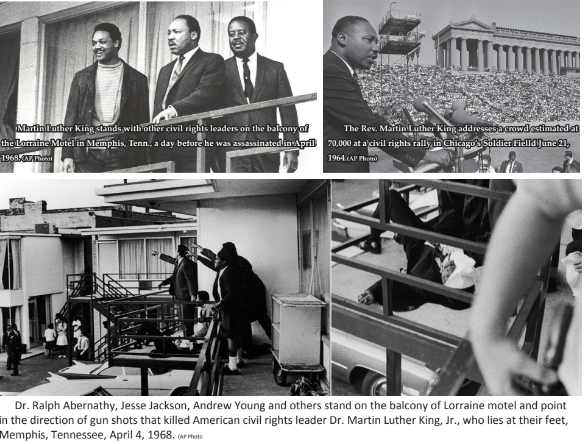
Edward Curtin April 13, 2021 “I don’t believe in death without resurrection. If they kill me, I will rise again in the Salvadorian people…”  – Archbishop Oscar Romero, martyred, 24 March 1980 Whether we are aware of it or not, we live by stories. We live by others’ stories while we tell our lives by how we live.  Our actions tell our stories. Then when we die, others tell our stories as they wish. This is the spiritual thread that links the meanings of our lives.  It is the way we pass over to other lives and return to our own. But without truth, we end up in the wrong place, living the wrong stories. And don’t the stories of certain special people inspire us to carry on their legacies because their spirits are far stronger than death? Their courage contagious? Their witness the triumph of life over death? Love over hate? Don’t they challenge...
RichardFalk
TFF Associate and friend over decades, Richard Falk, last year turned 90. Read more about him here – and use the search engine to find lots of his writings. The latest we’ve published is on championing lost causes... Eric Walberg March 10, 2021 Writing this memoir has been as much about discovering my story, that is, myself as it is about telling it. That’s Falk’s version of Socrates’ ‘the unexamined life is not worth living.’ Or should I say, Forrest Gump’s? Falk’s life reads like a storybook, starting with meeting Supreme Court judges with his father at age 9 in 1939, making friends with Claudette Colbert, Zsa Zsa Gabor, Liz Taylor (long story) at age 15, befriending and befoeing many of the dramatis personae of the Cold War throughout his long and productive life, finally landing on the shores of democratic socialism as the US charges towards the (literal) finish line. Falk came...
Martin-Luther-King-1515787257
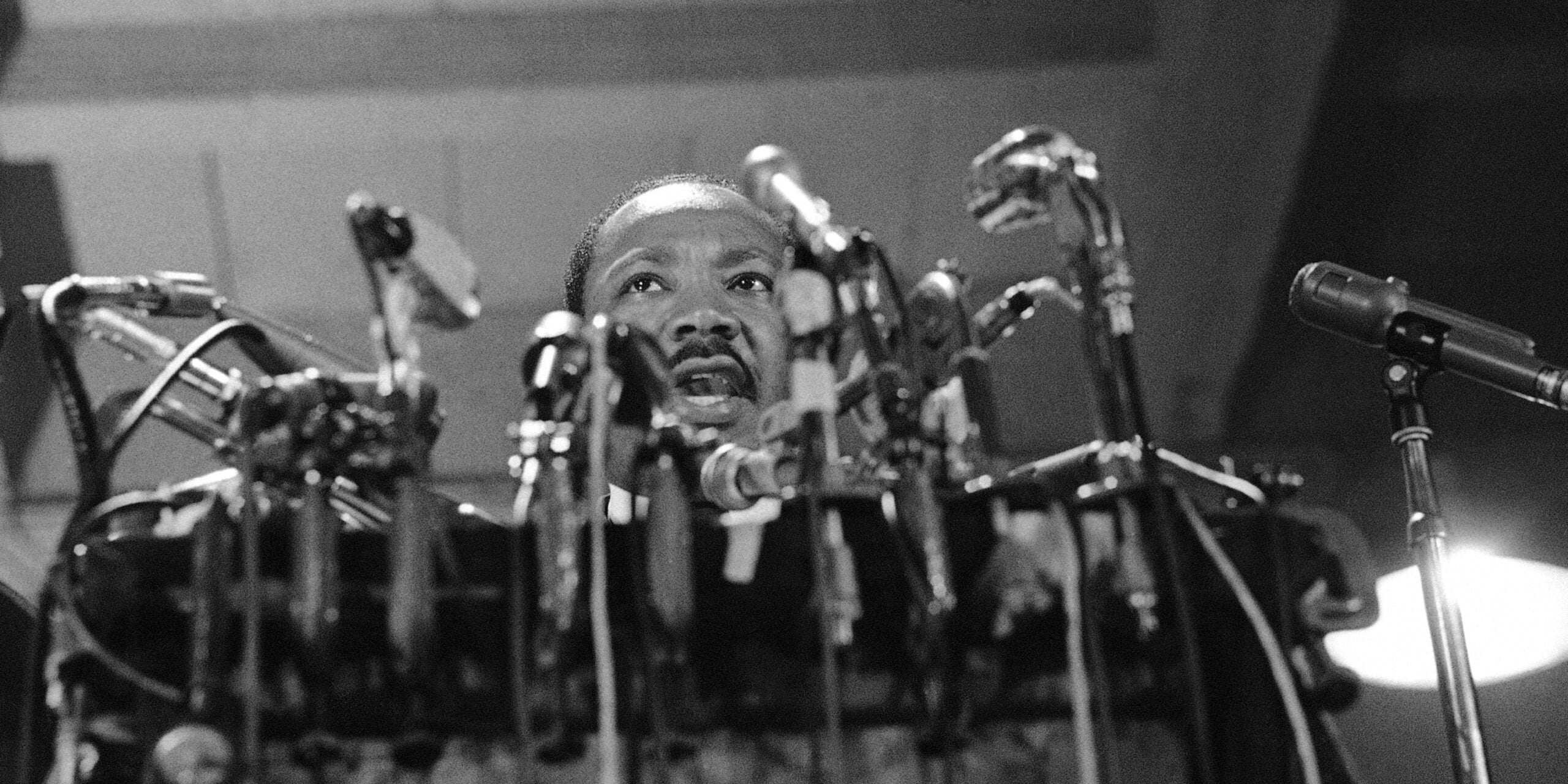
Dr. Martin Luther King, head of the Southern Christian Leadership Conference (SCLC), delivers his speech that opened the National Conference for New Politico Convention in Chicago, Sept. 1, 1967. King, facing a battery of microphones, called for an end to the Vietnam fighting. February 22, 2021 Zaid Jilani Martin Luther King Jr. was much more radical than he is often portrayed. IN 1999, The polling agency Gallup set out to determine the individual American’s most admired in the 20th century. Mother Teresa came in first, with 49 percent of Americans putting her at the top; the Rev. Dr. Martin Luther King Jr. ranked second, with 34 percent placing him on the same list. But, the polling agency would later write, “King was far from universally revered during his lifetime.” Originally published by The Intercept They noted that in 1966, 63 percent of Americans held a negative view of the civil rights leader, while...

echo-grid-BefmnpXPZ80-unsplash
Dr. Gary G. Kohls February 9, 2021 A half-century ago, The New York Times accused Martin Luther King Jr. of “slander” for decrying the Vietnam War and The Washington Post detected “unsupported fantasies” in his speech, recalled more favourably by Gary G. Kohls. Originally published on Jan. 19, 2014; slightly edited for the time element. Originally posted on Consortium News on January 19, 2021 Martin Luther King Jr.’s Riverside Church speech was titled “Beyond Vietnam: A Time to Break Silence.” It was delivered exactly one year before his April 4, 1968 assassination in Memphis. In the speech, King declared, “A nation that continues year after year to spend more money on military defense than on programs of social uplift is approaching spiritual death.” The people who heard that speech recognized it as one of the most powerful speeches ever given articulating the immorality of the Vietnam War and its destructive impact...
arrest
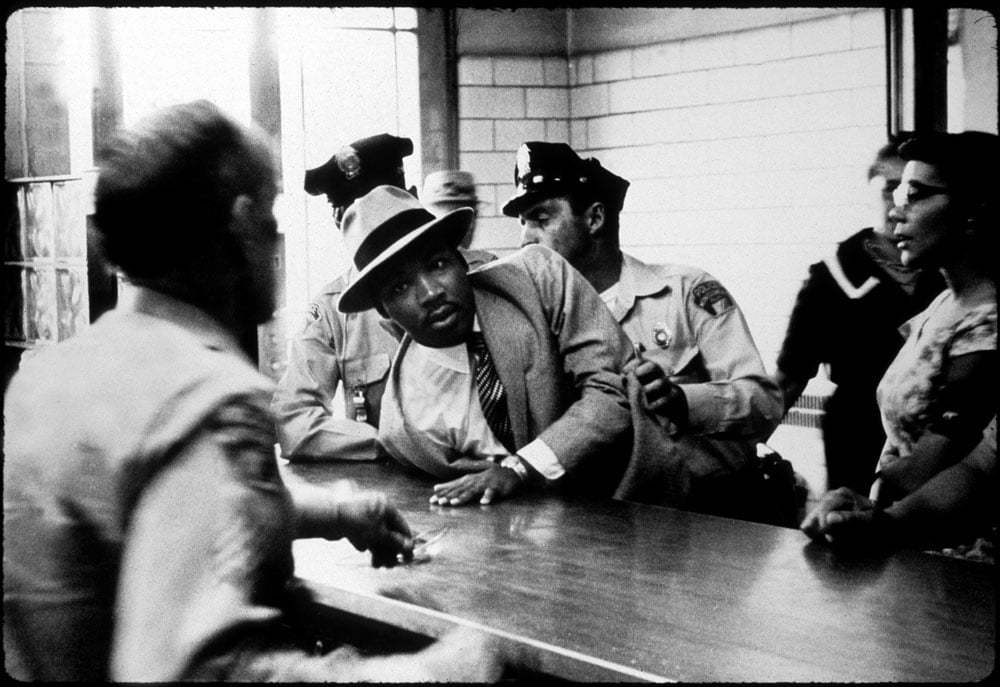
Kazu Haga February 9, 2021 Nonviolence is not simply the absence of violence, but about taking a proactive stand against violence and injustice, and working to repair the harm. Originally posted on Waging NonViolence on January 16, 2020 The following is an edited version of a chapter from Kazu Haga’s new book, “Healing Resistance: A Radically Different Response to Harm,” published with permission from Parallax Press. In Kingian Nonviolence, a philosophy developed out of the teachings of Martin Luther King Jr., there is a distinction made between nonviolence spelled with a hyphen, and nonviolence spelled without a hyphen. “Non-violence” is essentially two words: “without” “violence.” When spelled this way, it only describes the absence of violence. As long as I am “not being violent,” I am practicing non-violence. And that is the biggest misunderstanding of nonviolence that exists. I live in one of the most diverse neighborhoods in Oakland, with an equal mix of...
Sergi-Delgado-artwork-865x577-1
Pankaj Mishra January 13, 2020 It’s time to abandon the intellectual narcissism of cold war Western liberalism. In Radical Hope: Ethics in the Face of Cultural Devastation (2006), Jonathan Lear writes of the intellectual trauma of the Crow Indians. Forced to move in the mid-nineteenth century from a nomadic to a settled existence, they catastrophically lost not only their immemorial world but also “the conceptual resources” to understand their past and present. The problem for a Crow Indian, Lear writes, wasn’t just that “my way of life has come to an end.” It was that “I no longer have the concepts with which to understand myself or the world…. I have no idea what is going on.” It is no exaggeration to say that many in the Anglo-American intelligentsia today resemble the Crow Indians, after being successively blindsided by far-right insurgencies, an uncontainable pandemic, and political revolts by disenfranchised minorities. For nearly three decades...
US-EU-China
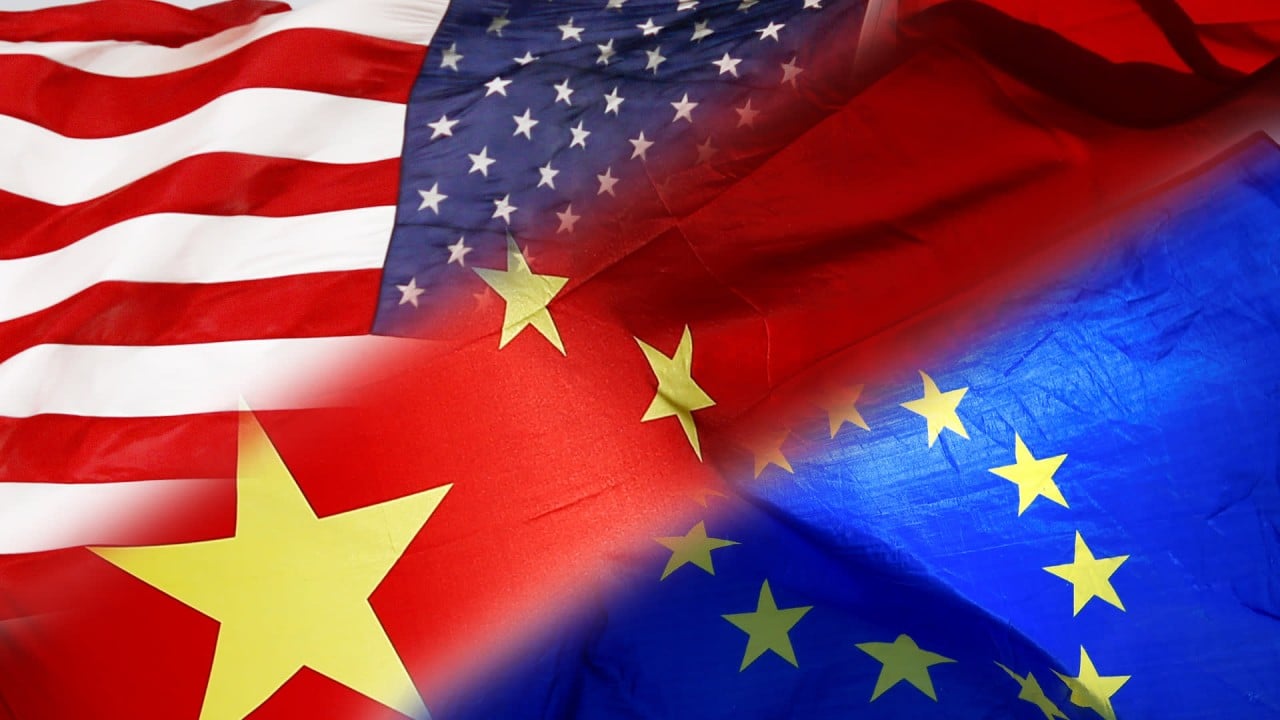
TFF Associate Not a day goes by without China appearing in Western news or social media. Almost exclusively with negative reports of human rights violations in Xinjiang or the security law in Hong Kong, government propaganda, or serious concerns that China and its communism will take over the world. Many reports and opinions from Western think tanks and researchers have been published this year about what is happening in China and how China should be approached or dealt with. The contents range from high vigilance to direct attacks in which China is labeled as a serious threat to the future of the “free world”. These pieces are widely reported in the media and often taken over by politicians for their China policy in a considerable number of Western governments. Alternative reports with different sounds or perspectives are snowed under or beaten down. As a result, the perception of China in...
1_atg_ksH8jkR-IHlmFodAzQ
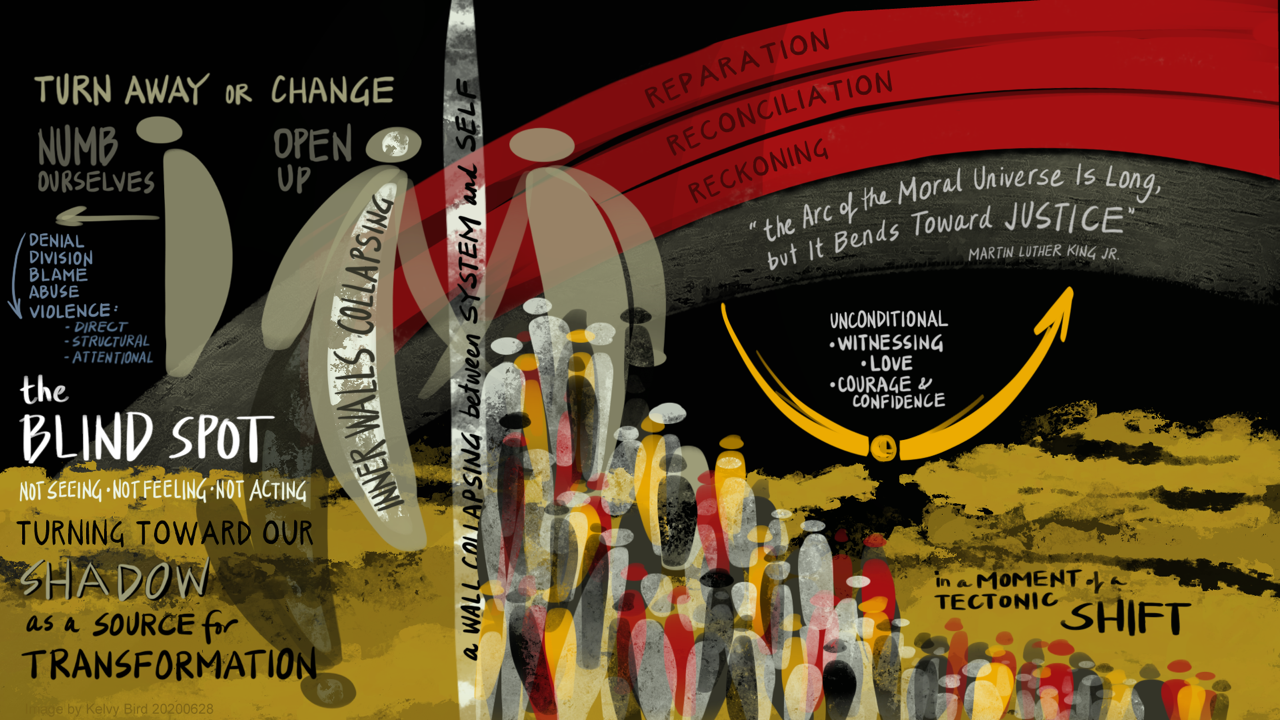
Fig. 1: From the Collapse of the Berlin Wall in 1989 to the Collapse of Our Inner Walls in 2020. Image by Kelvy Bird By Otto Scharmer October 3, 2020 We are living in a moment of tectonic shift in society. Something changed when we all watched the same images — 8 minutes and 46 seconds — the killing of George Floyd. During that unbearable experience, something broke down and broke open in our hearts, in how we relate to one another, and in how we want to live together. Originally published Medium.com/@ottoscharmer From the collapse of the Berlin Wall in 1989… When the Berlin Wall collapsed in 1989, we witnessed the end of the 20th-century Cold War era. A wall collapsed between two conflicting social systems: capitalism and socialism. Today we see a different type of wall collapsing: not a wall between systems, but between system and self — a wall that has kept...
We-suffer-through-todays-a-difficult-complicated-and-partially-obfuscated-time
Photo: We suffer through today’s difficult, complicated and partially obfuscated time (Photo credit: wsimag.com) By Ellyn Kaschak October 3, 2020 It is hard to know where things began when we are already in the middle of it all. This is especially so as we suffer through today’s difficult, complicated and partially obfuscated time. Originally published at Wall Street International Perhaps the beginning occurred in 1865 when the American Civil War was officially declared ended, but continued to seethe in less organized ways. Maybe the declaration by the American government in the 1950’s that Italians, Irish and Jewish people were now suddenly and irrevocably considered to be White is part of it. Perhaps some more seeds were planted during the presidency of Ronald Reagan or carefully cultivated as a backlash to the first presidency of a Black man, Barack Obama. The causes of and connections to the current multiple crises are...
demonstration
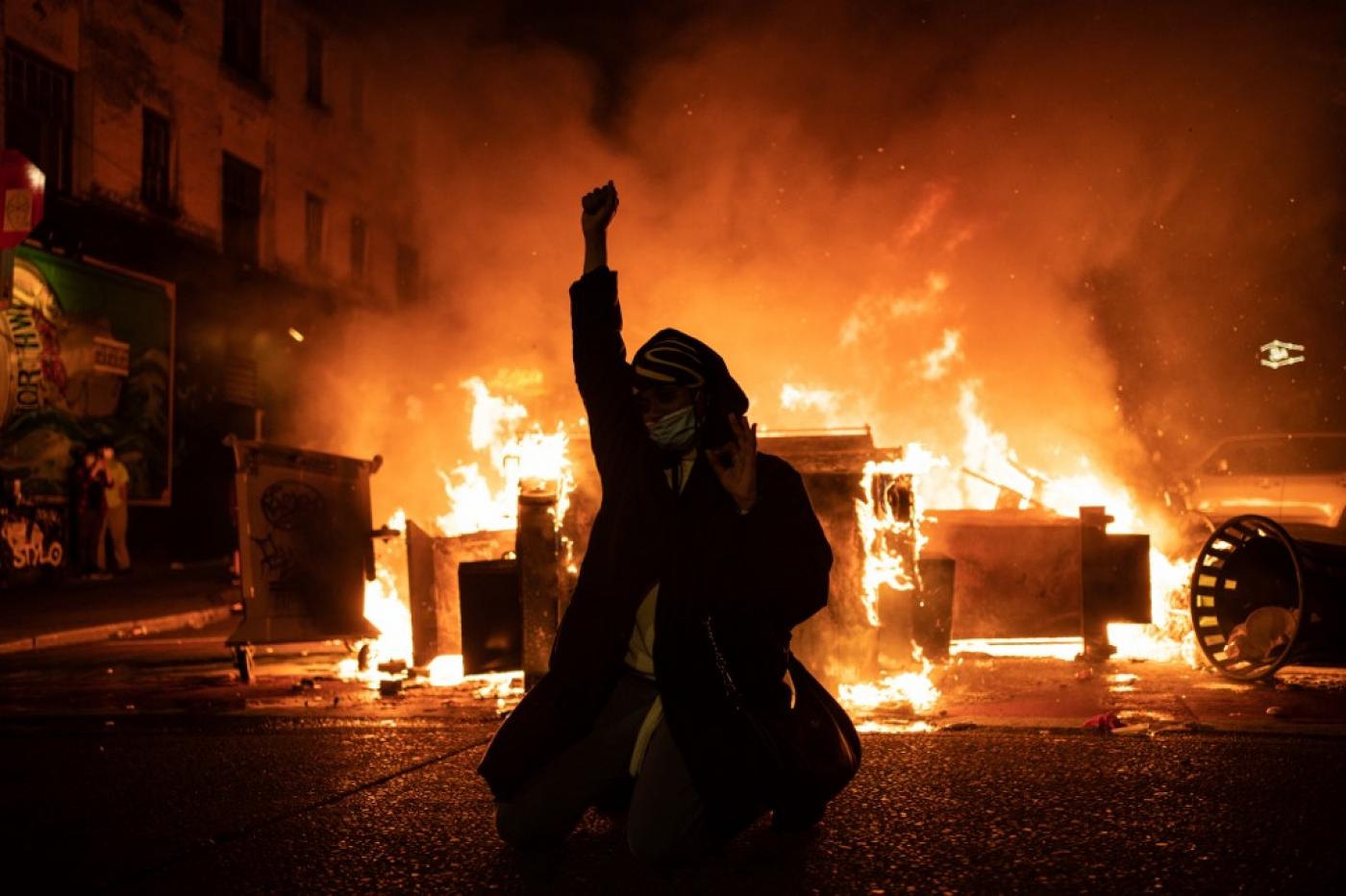
A demonstrator raises a fist after clashes with police in the US city of Seattle on 8 June (AFP) As calls for racial justice reverberate across the country, the field of American Studies requires a radical rethink – namely, the active engagement of people around the globe at the receiving end of US militarism.  By Hamid Dabashi September 15, 2020 “The majority lives in the perpetual practice of self-applause, and there are certain truths which the Americans can only learn from strangers or from experience.”  – Alexis de Tocqueville, Democracy in America “Americans are the unhappiest they’ve been in 50 years,” according to recent polls. “It’s been a rough year for the American psyche.”    The deeply troubling presidency of Donald Trump has led to severe consequences of the coronavirus pandemic in the US, where the per-capita mortality rate is among the highest in the world, exacerbated by claustrophobic despair over lockdowns and social distancing, alongside...
Scheerpost
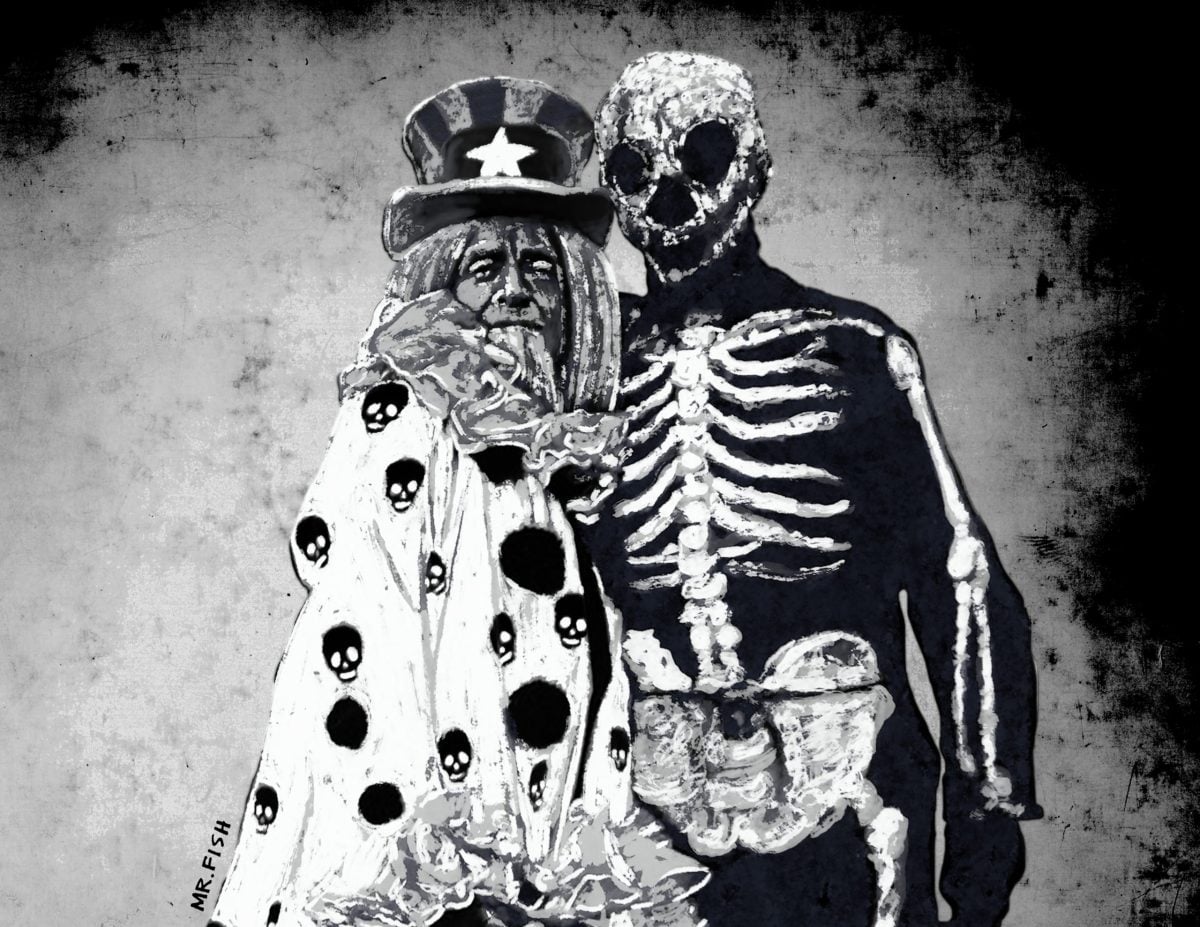
(Photo: Art by Mr. Fish/Original to Scheerpost) Regardless of the outcome, the election will not stop the rise of hypernationalism, crisis cults and other signs of an empire’s terminal decline. By Chris Hedges September 1, 2020 The terminal decline of the United States will not be solved by elections. The political rot and depravity will continue to eat away at the soul of the nation, spawning what anthropologists call crisis cults — movements led by demagogues that prey on an unbearable psychological and financial distress. These crisis cults, already well established among followers of the Christian Right and Donald Trump, peddle magical thinking and an infantilism that promises — in exchange for all autonomy — prosperity, a return to a mythical past, order and security. The dark yearnings among the white working class for vengeance and moral renewal through violence, the unchecked greed and corruption of the corporate oligarchs and...
USFall
John W. Whitehead June 29, 2020 “In this difficult day, in this difficult time for the United States, it is perhaps well to ask what kind of a nation we are and what direction we want to move in. [Y]ou can be filled with bitterness, with hatred, and a desire for revenge. We can move in that direction as a country, in great polarization…filled with hatred toward one another. Or we can make an effort, as Martin Luther King did, to understand and to comprehend, and to replace that violence, that stain of bloodshed that has spread across our land, with an effort to understand with compassion and love… What we need in the United States is not division; what we need in the United States is not hatred; what we need in the United States is not violence or lawlessness; but love and wisdom, and compassion toward one another,...
Categories

Year

Author / Contributor

Region