proposals

Category

Year

Author / Contributor

Region

Sort by

Showing 1-10 of 300 stories

farhangjahanpour
By Farhang Jahanpour The “framework document” (1) agreed by US Secretary of State John Kerry and Russian Foreign Minister Sergei Lavrov in Geneva on Saturday 14 September has averted an imminent crisis and has provided hope for the eventual resolution of the Syrian civil war by peaceful means. The document stipulates that Syria must provide a full inventory of its stockpile within a week, all production equipment being destroyed by November, and all weapons being removed from Syria or destroyed by mid-2014. This certainly is a positive development compared to the alternative that entailed a military attack on Syria with all its unpredictable consequences. Both Russia and Iran played the leading role in persuading the Syrian President Bashar Asad to get rid of his chemical weapons. President Barack Obama and President Vladimir Putin welcomed the agreement. China, France, the UK, the UN and NATO have also expressed satisfaction at the...
ObergPhoto2cmB-W-3
– Eller: Sådan har vi svigtet Syrien Publiceret 13 september 2013 på Ræson online Af Jan Øberg, docent Hvis det er fred, verden vil have, er det et ynkeligt spil vi har set, mener fredsforskeren Jan Øberg, medstifter og direktør for den Transnationale Stiftelse for Freds- og Fremtidsforskning i Lund – www.transnational.org Gad vide hvor mange mislykkede krige vi endnu skal igennem før især politikere og medier opdager det indlysende faktum at der findes et temmeligt bredt spektrum af handlingsmuligheder mellem at gøre ingenting og at smadre et land når konflikter dukker op? Det spektrum hedder konflikthåndtering og tilhører et fagområde der undervises i rundt om på verdens universiteter. Det kræver at FNs medlemsstater etablerer ”styrker” af uddannede konfliktanalytikere, facilitatorer, mæglere, områdeeksperter, forhandlere og forsoningsterapeuter, der kan rykke ud endnu hurtigere end de kan sende krydsermissiler og F-16 fly. For at dette spektrum kan blive inddraget forudsættes endvidere at regeringer...
ObergPhoto2cmB-W-3
Summary The Transnational Foundation for Peace and Future Research (TFF), founded on September 12, 1985 – today 28 years ago – is nominated for the Nobel Peace Prize 2013 and so are three TFF Associates: • Richard Falk, professor in international law at Santa Barbara and Princeton, the UN S-G’s envoy for the Occupied Territories;• David Krieger, founder (1982) and president of The Nuclear Age Foundation devoted to nuclear abolition;• Jan Oberg, co-founder and director of TFF. Background World renown expert on the Nobel Peace Prize, Norwegian lawyer Fredrik Heffermehl*, says: – Nobel dedicated his prize to “the “champions of peace” (not to “peace” in general). Not that many of those we know from open sources are nominated this year are qualified, but a select few are eligible, like the American Professor Richard Falk, Norwegian Ambassador Gunnar Garbo, American David Krieger of the Nuclear Age Peace Foundation, the former Director...
ChatGPT Image 9 jun 2026, 11_11_33
/10/jonathanpower2.jpg”> In 1776 Adam Smith published his “Wealth of Nations” which has guided economists and political thinkers ever since. It marks the start of the Industrial Revolution that began in England and then spread throughout most of the world. That was 237 years ago. It is not that long ago – only 4 life-spans or so, the time of your great, great, great, grandparents. Where will we be 237 years hence? Presumably just as today we listen to Mozart, born 257 years ago, and watch or read Shakespeare, born 439 years ago – they have survived all changing tastes and spread well outside their original orbit of European culture to countries as varied as Japan, China, Argentina, Tanzania and South Korea – we can be sure that generations to come will have much the same cultural interests. In all likelihood in 2250 we will probably still enjoy tastes picked up...
johangaltung
Kuala Lumpur: Perdana Global Peace Foundation, 25 August 2013: “Global Peace Efforts: What Went Wrong & What Next?” The TRANSCEND NGO Mediation Network just turned 20, and our experience is clear: a good peace proposal quite often works. To mention some out of 30 positive experiences: we have had a hand in launching peace studies and peace journalism; improving race relations in Charlottesville, VA; in ending the Cold War through bridge-building between Norway and Poland, the idea of a Conference for Security and Cooperation in Europe and nonviolence; in improving North-South relations through South-South cooperation and then relinking with North on a basis of equity–this from the early 1960s. Later on there have been contributions to peace on the Korean peninsula (first unify the nation, then perhaps the countries), the Kurdish issue (a Kurdistan as a confederation of human rights-based autonomies in the four countries), ending the longest war in...
johangaltung
 Civilization: there are six sources of inspiration today, vying for the attention of a humanity looking for goals and means. Two of them are Western secular, liberal and Marxist, defining to a large extent the USA and the former Soviet Union, but not identical with them. Two of them are Oriental amalgams of civilizations, the Japanese Shinto-Confucian-Buddhist civilization, trying to be Western liberal, and the Chinese Daoist-Confucian-Buddhist civilization with strong elements of Western liberal and Western Marxist. And two of them are in-between: the Islamic and the Buddhist civilizations.[i] Dialogue: it simply has to happen.
johangaltung
Speech held in the Senate, Rome Your Excellencies, Foreign Affairs, Defense, EU… SYSTEMS: A Reorientation [1] Transarmament: States use armies for defense, and for offense, for wars. Si vis pacem, para bellum, peace through security tries to cover both; but offensive military threatens, provokes arms races, even wars. Si vis pacem para pacem, security through peace is not disarmament leaving regions, states and local level defense-less; rather, it identifies conflicts and traumas underlying violence in order to solve them, builds peaceful state relations, and defensive defense “just in case”. [2] Nonalignment: Solidarity and help to victims of aggression should be based on the merits of the case, not by alliance membership. This implies NATO and EU transarmament to regional defensive defense, and UN world collective defense under representative military command. [3] Being useful to other countries: having developed positive relations such that others want to enhance, not destroy the country....

johangaltung
“The Secrets to Finland’s Success with School—and Everything”, The Atlantic (11-Jul-2013), has many messages to a US readership from that particular welfare state. One of them is a school system which ranks as one of the world’s best with no standard testing or South-/and East!/Asian “cramming”; limiting student testing to a necessary minimum; there is less emphasis on competition. And another, closely related, Finns have an incredible equality and very little poverty; an extremely low child-poverty rate. The two points are related. The article, written by Olga Khazan, wisely points to smallness and high homogeneity as two factors underlying the “success”, also known to the other Nordic countries. However, as pointed out, there are “sizeable Swedish and Russian-speaking communities – the former ruling the country till 1809, the latter on till the Russian 1917 revolution–took time to even it out. What the article has not picked up is the closeness...
johangaltung
Keynote Speech, World Futures Studies Federation 40th anniversary – Bucuresti, România Future studies, like peace-development-environment studies, is an inter-disciplinary, inter-national effort to get a grip on key issues; divided into preferred futures–utopias–whose?; predicted futures–forecasting–who does it for whom?; and future practice–scenarios bending the predicted toward the preferred–by and for whom? The title of Ravi Morey’s Looking Backward: 2050-2013 catches future studies in a nutshell: exploring intermediate stages between a fully democratic world government and our 2013 present. The road may pass through a bankrupt USA bailed out by a democratic China in 2025. Some may argue that is already happening, with China – more democratic than the West knows – being creditor No. 1, and the USA – more bankrupt than the USA admits – debtor No. 1; Nos. 1 and 190 among 190 countries. Like in 1967, in Oslo, for the predecessor organization Mankind 2000 this keynote is on...
Heela
As a student in peace studies, any initiative to curb violence through peaceful means is a subject of interest for me. But yesterday, the news that the U.S. government has agreed to engage directly in peace talks with the Taliban caught my attention for three reasons in particular: 1) Who are the actors participating in the negotiations – is the U.S. an actor in the peace talks, a negotiator, a mediator or all the above? 2) What are the roles of the Afghan government and the people of Afghanistan in this transition? 3) Why was the U.S.’ willingness to negotiate met with an attack on U.S. soldiers by the Taliban, putting the group’s long awaited objectives to negotiate with the U.S. directly in jeopardy? While analyzing the current situation surrounding the reconciliation process in Afghanistan and peace talks with the Taliban, instead of feeling optimistic for potential peace in my...
johangaltung
A few years ago the two countries were the leaders in mental anxiety in the Americas. Both had good reasons: the longest lasting violence in any contemporary country; in Colombia from 1949 with some interruption, then on again from 1964 with FARC, the famous guerilla. And for the USA the conviction that Evil is around every corner, domestic and global; better have the arms to handle those bad guys. In both, structural violence as unequal distribution of economic wealth and control of economic assets are among the world’s highest. There is a difference, though: one country submits its problem to third party mediation,
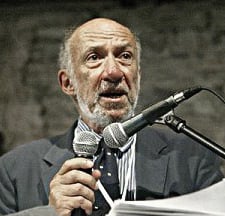
richardfalk
To the extent that diplomacy solves international problems it depends on the satisfaction of the political preconditions that must be met for negotiations between sovereign states to reach sustainable and benevolent results. To clarify the point, in situations where there is a clear winner and loser, political preconditions are irrelevant, as the winner can dictate the terms, either imposing them as was done after World War II in response to the unconditional surrender of Germany and Japan, or offering proposals on a ‘take it or leave it’ basis. This is what Israel has attempted to do over the course of the twenty years that the Oslo Framework, the Roadmap, and the Quartet, have provided the ground rules for diplomacy with respect to Israel/Palestine negotiations.
Categories

Year

Author / Contributor

Region