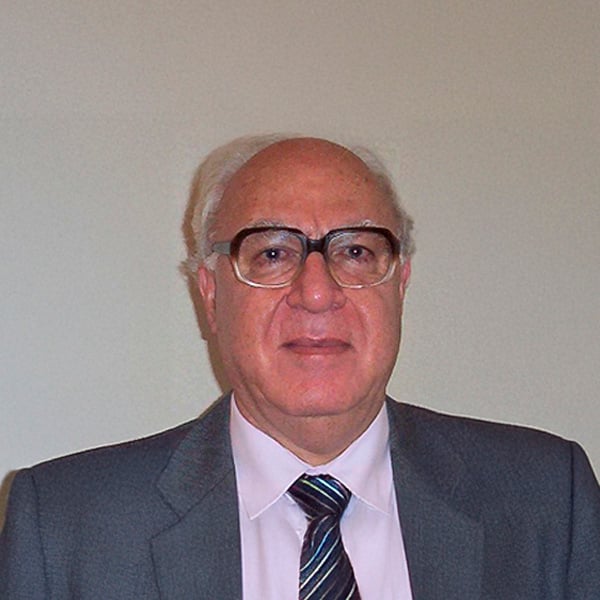
By Farhang Jahanpour

The “framework document” (1) agreed by US Secretary of State John Kerry and Russian Foreign Minister Sergei Lavrov in Geneva on Saturday 14 September has averted an imminent crisis and has provided hope for the eventual resolution of the Syrian civil war by peaceful means. The document stipulates that Syria must provide a full inventory of its stockpile within a week, all production equipment being destroyed by November, and all weapons being removed from Syria or destroyed by mid-2014. This certainly is a positive development compared to the alternative that entailed a military attack on Syria with all its unpredictable consequences.
Both Russia and Iran played the leading role in persuading the Syrian President Bashar Asad to get rid of his chemical weapons. President Barack Obama and President Vladimir Putin welcomed the agreement. China, France, the UK, the UN and NATO have also expressed satisfaction at the agreement. This agreement has clearly a number of winners and losers.
The Winners of the Kerry-Lavrov Agreement
1- Clearly, the greatest winner has been the cause of peace and common sense. In 2007 when running for office, the then candidate Obama said that the President “does not have power under the Constitution to unilaterally authorize a military attack in a situation that does not involve stopping an actual or imminent threat to the nation.” (2) Yet now, President Obama was insisting that he had the authority to attack Syria even without Congressional approval. However, a military attack, even if it had received the approval of the Congress, which seemed unlikely, would have been illegal, would have compounded the problems, and would have portrayed the United States as an aggressive country.
The Kerry-Lavrov accord has changed the pattern of behavior inherited by the Bush Administration of unilateral wars and has allowed diplomatic alternatives to be pursued. It has shown that the overwhelming majority of American people, and people all over the world, who had opposed the war by large margins have managed to force their government and their Congress to give up military solutions and stop interfering in other countries’ affairs. People throughout the world, including the United States, are sick and tired of war, especially wars of choice when their countries are not under imminent danger.
2- The second biggest winner has been President Obama. Whether by luck or by design, his initial tough policy of the threat of force, followed by turning the issue over to Congress and starting a nationwide debate, and finally forcing Syria to give up her chemical weapons have boosted President Obama’s stature as a cool, intelligent and brave leader who left himself open, for the cause of peace, to attack by the neocons, as we have already seen from the attacks by the likes of John McCain and Lindsey Graham. Despite the Obama administration’s supposedly “high confidence” regarding Syrian guilt, a dozen former U.S. military and intelligence officials warned President Obama that they were receiving information that undercut the official version. (3)
Even assuming that the Syrian government had been responsible for that awful act, the United States is not entitled to take the law into its own hands and attack a sovereign state without Security Council approval. President Obama was looking increasingly isolated as Russia, China, the European Union, the BRICS nations and Pope Francis opposed his military intervention in Syria. The Framework Document has saved President Obama from a trap that a number of neocons, including some within his own administration, had set for him.
Millions of people both inside and outside the United States had pinned their hopes on President Obama as a transformative president who had promised to work for change and for a reversal of the unilateral policies of the former administration. However, Obama’s domestic and foreign policies have disappointed many at home and abroad. The continuing drone attacks, the continuing war in Afghanistan, the continued use of Guantanamo Bay, lately the revelations about the NSA snooping on all its citizens, draconian measures against the whistle-blowers who had revealed those illegal acts, and finally the real prospect of another devastating war in the Middle East, would have totally shredded President Obama’s reputation as the champion of international law and as a man of peace.
To be fair to him, a lot of those problems were not of his making. He had inherited Afghanistan, Guantanamo, drone attacks and even the NSA surveillance from the Bush Administration. Furthermore, he is under a great deal of pressure from diehard neocons in both parties, but many were disappointed that he did not push hard enough against those forces and did not explain his philosophy clearly to the American people. Yet, the events of the past few days have again renewed hope in President Obama’s ability to bring about real change before the end of his second term.
3- The third biggest winner has been the cause of international cooperation. The attempts by some right-wing American politicians to pursue the dream of a unipolar world, thus marginalizing the UN, and other great powers including Russia and China have cost America dear in the past few years and would have crippled America further if they had not been stopped. If the complex problems of the modern world are to be tackled, we surely need cooperation among major powers, as well as Europe as a whole and not just Britain and France, which were the two countries that had been pushing strongly for military action. The vote in the British Parliament put an end to British participation in the war, and although President Francois Hollande had called on the French Parliament to debate the issue, he did not allow them to have a vote. Given the strong opposition of the French public to a military attack on Syria, the French Parliament should have also voted and rejected any illegal military attack.
The Losers
The biggest losers are the militant jihadists and their Saudi and Qatari backers who wanted to bring down a government, not at the ballot box, but with a campaign of terror, a defeat that they richly deserve. No matter how the Syrian civil war started, there is no doubt that the opposition to the government has turned extremely violent and extremely radicalized. They want to replace a largely secular government with a fundamentalist state, much worse than the system that was established under the Taliban in Afghanistan. When America came across such fanatics either in Iraq, or Afghanistan or Yemen or Somalia, she described them as Al-Qaeda terrorists and eliminated them with drones, but due to its hostility towards the Syrian government, the West has been helping and arming the same terrorists.
Some Arab countries, such as Saudi Arabia and Qatar, in their geopolitical contest with Iran, have turned the crisis into a sectarian conflict, which has already spread to many neighboring countries. There have been violent clashes in Lebanon, and in Iraq nearly 1,000 people are killed every month, mainly as the result of Sunni militants that wish to replace the Shi’a-led government of Nuri al-Maliki. If not checked, this conflict will spread to the whole of the Middle East and beyond, and will destabilize the region for many years or decades to come. The defeat of the jihadists in Syria might ease some of the tension in the rest of the Middle East and might lead to some regional agreement that would bring the countries together, rather than tear them apart.
The collapse of the established government in Syria will create a vacuum that will be filled by the most violent elements, and may indeed result in an unimaginable genocide and ultimate partition of Syria.
Possible pitfalls
However, there are also a number of pitfalls that must be avoided:
1- The first pitfall is that the agreement may only be regarded as a stopgap, paving the way for military action at a later stage. Obama has warned Syria of the “consequences” if the Syrian government fails to comply with the framework deal and destroy its chemical weapons in time. He has said that he reserves the right to launch an attack if America decides that Syria has violated the deal, and US officials have said that the president reserves the right to act without the agreement of the UN. It should be made clear that he has no such right.
2- The second problem would be if America artificially sets a short time for the elimination of chemical weapons in Syria. Russia and the US have agreed on an assessment that the Syrian government possesses 1,000 tons of chemical agents and precursors, according to a US official. The US believes that they are located in 45 sites, all in government hands, although Russia does not agree on the number of sites. The removal and destruction of such quantities of chemical weapons in such a short time is extremely difficult if not impossible. “This situation has no precedent,” said Amy E. Smithson, an expert on chemical weapons at the James Martin Center for Nonproliferation Studies. “They are cramming what would probably be five or six years’ worth of work into a period of several months, and they are undertaking this in an extremely difficult security environment due to the ongoing civil war.” (4)
It should be borne in mind that the US and Russia are the two countries with the largest stocks of chemical and biological weapons. In 1997 the US agreed to decommission the 31,000 tons of Sarin, VX, mustard gas and other agents it possessed within 10 years. So far, she has failed to stick to that timetable, and after asking for a number of extensions, in 2012 she claimed that they would be gone by 2021.5
3- The third pitfall is that, if a large number of claims by various sources are to be believed, the rebels have gained access to chemical weapons, and there is no provision in the agreement to deal with that dangerous problem.6 The least that needs to be done is to thoroughly investigate the claims regarding the possession and use of chemical weapons by the rebels, and if they are found to be reliable, both the rebels and the countries that have supplied them with those weapons should be pursued vigorously to make sure that all those weapons are destroyed. It should also be borne in mind that in addition to Syria that has now joined the Chemical Weapons Convention, Israel, Angola, Burma, Egypt, North Korea and South Sudan also remain outside the group. It is essential that they should also be required to get rid of such weapons.
4- The fourth pitfall is that now that Syria has agreed to join the Chemical Weapons Convention, the West and the regional backers of the rebels will continue to arm them in order to prolong the civil war. The use of chemical weapons is certainly a heinous act that has to be condemned, but already more than 100,000 Syrians have been killed as the result of the fighting between the government and the rebels. What is needed is to put pressure on both sides, so that the rebels do not feel that they have the upper hand and that their actions will go unnoticed, and thus they can intensify their attacks.
What needs to be done
Now, after the partial resolution of the Syrian crisis by peaceful means, it is time for the international community, especially President Obama, to concentrate all their energies on a new long-term peaceful strategy in four main areas:
1- Organize a conference to settle the Syrian civil war. The conference needs to be inclusive and in addition to the West and Russia and the backers of the rebels should also include Iran that has played a constructive role in encouraging Bashar Asad to give up his chemical weapons. The Americans have been adamant that Iran could not take part in the Geneva-II conference. For the sake of the Syrian people and for the sake of peace and security in the Middle East, it is incumbent upon everyone to set such partisan feelings aside and to bring together all those who can play a positive role in bringing peace and stability to the Middle East.
2- To push harder for a viable and just Arab-Israeli settlement and allow millions of stateless Palestinians to have a state of their own or be absorbed into a democratic Israel. Everybody admits that the Arab-Israeli conflict is a major source of tension and violence in the Middle East, but no one is prepared to take real and tangible steps to resolve that conflict. Every few years, whenever there is a major crisis in the Middle East, there is some half-hearted talk of holding a conference or bringing the two sides to the negotiating table, but as soon as the crisis is over the Peace Process too comes to a crushing halt. What is needed is a serious attempt by the UN, with the full participation of Russia and the European Union, to settle that conflict within a realistic timeframe. Otherwise, the conflict between the two sides and instability in the rest of the Middle East will continue.
3- With the removal of Syrian chemical weapons, it is time to restart the Helsinki Conference that was to be held at the end of last year and that was cancelled as the result of the US objection to establish a nuclear-free zone in the Middle East. If the Israelis are sincere that an Iranian nuclear bomb poses an existential threat to them, it certainly makes sense for them to join in the endeavor to get rid of those weapons from the Middle East as a whole. Israel has overwhelming conventional superiority over all her neighbors, as well as receiving the total support of the only remaining superpower, and does not really need to rely on those inhumane weapons. The elimination of such weapons would make Israel and all the rest of the Middle East more secure.
4- Restore relations with Iran and establish new security arrangements in the Middle East. Many people believe that the Western campaign in Syria has been really aimed at isolating and weakening Iran, so that she would not pose a threat to Israel. Certainly all US officials, whenever talking about Syria, have linked it with Iran. Just today (15 September 2013), in an exclusive interview with George Stephanopoulos, President Obama said that “the nuclear issue is a far larger issue for us than the chemical weapons issue” and that “my suspicion is that the Iranians recognize they– they shouldn’t draw a lesson that we haven’t struck– to think we won’t strike Iran.7 On the other hand, what is– what– they should draw from this lesson is that there is the potential of resolving these issues diplomatically.” At a time when a new government in Iran is trying to strike a new chord and establish better relations with the United States, it is time for the US to give up the talk of “all options are on the table” and try to engage Iran in a new security arrangement in the Middle East. Such a policy would make Israel more secure than demonizing and confronting Iran.
If President Obama can achieve these goals he will go down as one of the greatest US presidents and will richly deserve his Nobel Peace Prize.
Footnotes
1. Framework for the Elimination of Syrian Chemical Weapons.
2. See “Little international support for military action on Syria”, Boston Globe, August 31, 2013.
3. See “Obama Warned on Syrian Intel”
4. See “U.S. and Russia Reach Deal to Destroy Syria’s Chemical Arms”, New York Times, 14 September 2013.
5. See, George Mombiot, Obama’s rogue state tramples over every law it demands others uphold, The Guardian, 9 September 2013.
6. See “US-Israeli False Flag Gas Attack Unravels”, Information Clearing House.
7. See “This Week Transcript: President Barack Obama” 15 September 2013.
Farhang Jahanpour is a TFF Associate and a tutor in the Department of Continuing Education at the University of Oxford.