
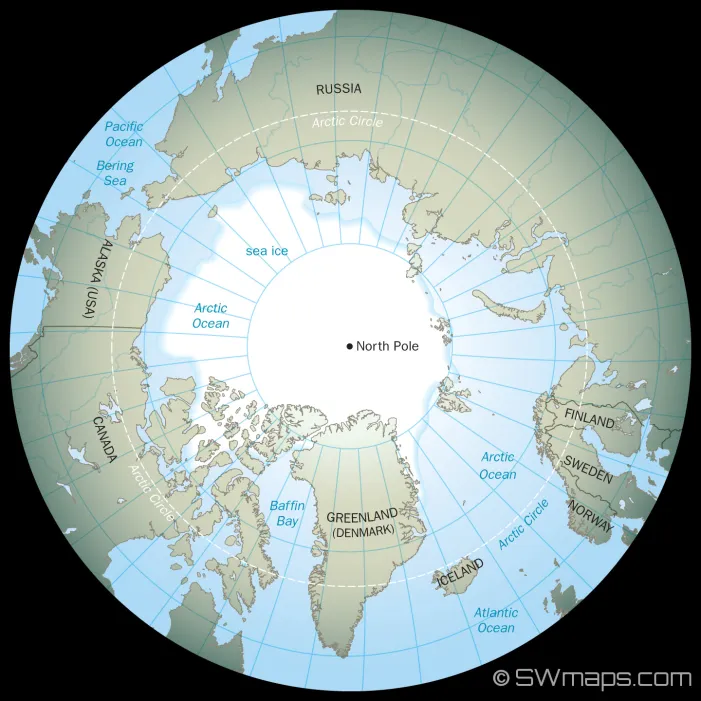
A New Perspective and Blueprint: A Demilitarised Arctic for the Common Good — and Why It Is Rational

This is not another geopolitical commentary on the Arctic. It is a visionary peace proposal that can save the region from militarised rivalry and ecological ruin. A blueprint for shared security, sustainable development, and human dignity — benefitting Greenland, the Arctic, and the rest of us.

Jan Oberg

TFF director

Lund, Sweden, February 17, 2026

I. Four Principles for a New Arctic Vision

The Arctic is often framed as a cold arena of rivalry — a place where great powers test each other’s resolve. But this worldview is outdated, unimaginative, and ultimately self‑defeating. The Arctic is not a vacuum waiting to be militarised; it is a living region, a climate stabiliser, and a cultural homeland whose future will shape the future of humanity. If we begin from that understanding, a far more rational Arctic order becomes possible — one that is peaceful, cooperative, and centred on the people who actually live there.

This vision rests on four practical principles. None of them is utopian. All of them are grounded in common sense, human dignity, and long‑term strategic thinking.

1. The Greenlanders Must Stand at the Centre of Any Arctic Vision

Greenland is not a strategic prize; it is a society with its own civilisation, its own knowledge systems, and its own right to shape the region’s future. Any Arctic governance model that sidelines the Greenlanders is doomed to fail. Their ecological knowledge, cultural continuity, and lived experience of the ice make them indispensable partners in any sustainable future. This is not naïve — it is the only realistic foundation for legitimate Arctic governance.

Empowerment becomes the most effective form of legitimacy.

2. Cooperation Reduces the Need for Militarisation — and Saves Enormous Resources

Militarisation in the Arctic is not a sign of strength; it is a symptom of distrust. Russia, with by far the longest Arctic coastline, is an indispensable actor. China, though not an Arctic state, is a global scientific and economic presence whose engagement in the region is inevitable. The United States, the Nordic countries, Canada, and others all have legitimate interests. But legitimacy can’t be based on rivalry. Interests do not mean intimidation. And influence isn’t about militarisation. There are more intelligent approaches.

Ice‑capable destroyers, nuclear submarines, hardened bases, and satellite surveillance systems are among the most expensive military assets on Earth. Every krone, dollar, ruble, or yuan spent on Arctic militarisation is money not spent on climate adaptation, education, health, renewable energy, or the wellbeing of Arctic communities. When states share data, coordinate policies, and build joint institutions, the perceived need for military posturing naturally declines — and so do the costs. This is not naïve — it is an intelligent, sustainable strategy.

Cooperation becomes the most effective — and the most economical — form of disarmament.

3. Sustainable Use of Arctic Resources Should Benefit Humanity, Not Only the Armed and Powerful

The Arctic’s minerals, fisheries, shipping routes, and scientific knowledge are globally significant. To treat them as spoils for those with the largest fleets is not only unjust; it is irrational. A civilised international order uses resources wisely, protects fragile ecosystems, and distributes benefits fairly. Sustainable development is a planetary necessity – that militarist power politics makes impossible. And when done cooperatively, it can serve all of humanity, not just those who can project force. Those who now think “oh, how naive” have no idea about how to otherwise prevent ecological collapse and geopolitical conflict.

Sustainability becomes the most effective form of prosperity.

4. The United Nations Should Serve as Custodian of Peace and Shared Stewardship

The Arctic is too important — ecologically, climatically, culturally — to be governed by big but not ‘great’ powers’ fragmented national interests. The United Nations provides the legitimacy, continuity, and normative framework needed to anchor a peaceful Arctic order. A UN‑recognised Arctic Peace and Sustainability Zone would embed demilitarisation, indigenous rights, scientific cooperation, and sustainable development in a global framework that transcends short‑term tensions. Shared stewardship becomes the most effective form of security.

If these four principles are accepted — and they are neither unrealistic nor naive — then a new question emerges: What would an Arctic governance system look like if it were built on legitimacy, cooperation, sustainability, and shared stewardship? The answer is a blueprint for a demilitarised Arctic, jointly governed, scientifically grounded, ecologically protected, and centred on the people who call it home.

II. A Practical Blueprint for a Peaceful Arctic Future

1. A Demilitarised Arctic: Security Through Cooperation

A peaceful Arctic begins with the establishment of an Arctic Demilitarised Zone — a region where military assets, bases, and exercises are gradually phased out and replaced with civilian, scientific, and humanitarian functions. This does not diminish national sovereignty; it simply recognises that the Arctic’s most pressing threats are not military in nature. Melting ice, extreme weather, collapsing ecosystems, and unpredictable sea routes cannot be deterred by submarines or fighter jets.

A demilitarised Arctic would reduce tensions between major powers, prevent accidents and escalation, and protect fragile ecosystems. It would also free enormous financial resources currently tied up in polar‑ready military systems. Verification would rely on satellite monitoring, open data, and periodic inspections — ideally under UN auspices. The Arctic would become a symbol of what cooperative security looks like in the 21st century: not the absence of sovereignty, but the presence of trust.

The US insistence on a ‘Golden Dome’ – and Greenland as vital for the US to control – is one big destabiliser because it aims at enabling the US to destroy Russia or China and (hope to) shoot down retaliatory second-strike missiles from either. This lowers the threshold for the US starting a nuclear war because its decision-makers may hope it can start and win a nuclear war without cost. The solution to this – terror-based – philosophy is a new agreement between the US and Russia about reducing and finally abolishing nuclear weapons. It is not to further militarise Greenland.

2. A New Governance Architecture: The Arctic Cooperation Council

The Arctic Council, while valuable, is no longer sufficient. It was never designed to handle today’s geopolitical tensions or the accelerating climate crisis. A new Arctic Cooperation Council would build on the strengths of the existing Council while correcting its weaknesses. It would be inclusive, transparent, and capable of making binding decisions in areas where cooperation is essential.

Greenlandic authorities and indigenous peoples would be full co‑decision makers. Arctic states, observer states, and scientific organisations would participate in a structure that uses qualified majority voting, clear mandates, and indigenous veto rights on cultural and ecological matters. Its remit would include environmental protection, sustainable resource management, shipping regulation, scientific cooperation, emergency response, and dealing with conflict to prevent violence. This is not a supranational authority; it is a place where states and peoples coordinate policies, resolve disputes, and build trust.

3. Greenland as a Special Responsibility Zone

Greenland is the moral and strategic heart of the Arctic. Its people have endured centuries of colonialism, strategic exploitation, and geopolitical pressure. A peaceful Arctic future must therefore include a Greenland Partnership Compact, anchored in the UN system, that guarantees full respect for Greenlandic self‑determination and protects the island from coercive diplomacy. The Compact would ensure that Greenland retains priority access to revenues from local resources and receives sustained investment in education, health, cultural preservation, and sustainable infrastructure.

Greenland would also host a UN Arctic Peace Centre — a hub for research, diplomacy, and Indigenous knowledge. This approach recognises that Greenland is not a passive object of international interest but an active subject with its own aspirations.

4. Sustainable Resource Use: A Civilised Alternative to Extraction Rivalry

The Arctic’s resources must be used wisely, sparingly, and for the benefit of all. This requires strict ecological thresholds, Indigenous consent, transparent impact assessments, and shared revenue mechanisms. It requires clean shipping corridors, slow‑steaming regulations, and the designation of large protected areas — Arctic Peace Parks — that safeguard biodiversity and cultural heritage. This is responsible development, the only kind that makes sense in a region whose ecological health affects the entire planet.

5. The UN as Custodian: Completing UNCLOS

The United Nations would anchor the entire system through a suite of new instruments: a UN Arctic Demilitarisation Treaty, a UN Arctic Commons Charter, a UN‑Greenland Partnership Compact, a UN Sustainable Resource Convention for the Arctic, and a UN Arctic Mobility and Knowledge Accord.

These instruments would not replace the UN Convention on the Law of the Sea (UNCLOS). On the contrary, they would complete it. UNCLOS provides the legal foundation for maritime zones, navigation rights, and resource claims. But it does not address demilitarisation, Indigenous rights, cooperative governance, or sustainable development. The UN framework proposed here would fill those gaps while fully respecting UNCLOS principles. In this way, the Arctic becomes not a legal vacuum but a region where international law is strengthened, clarified, and modernised.

III. Conclusion: A More Rational, Civilised, and Visionary Arctic Future

The Arctic is not destined to become a militarised arena of suspicion and strategic posturing. That path is simply intellectually lazy and unimaginative. What this blueprint demonstrates is that a different Arctic future is not only possible but profoundly more rational. It is more cost‑effective, more stabilising, more respectful of the people who live there, and far more beneficial to humanity than anything conceived through the narrow lens of transactional geopolitics.

This vision recognises the realities of the 21st century. Russia’s vast Arctic coastline makes it indispensable. China’s scientific and economic presence makes it inevitable. The United States, the Nordic countries, Canada, and others all have legitimate interests.

This is not naïve. What is naïve is believing that more bases, more submarines, and more strategic signalling will somehow produce peace, development and cooperation – all of which are dealy needed. What is naïve is assuming that the Arctic can be militarised without consequence, or that the climate crisis can be managed through deterrence.

What is naïve is imagining that the future can be secured by repeating the – bad – habits of the past.

Politics, at its best, is the art of imagining what does not yet exist and then building the institutions that make it real. It is the ability to include others in a shared horizon of development and security. It is the courage to say: we can do better than rivalry, better than fear, better than the logic of the strongest.

This blueprint is an invitation to return to that deeper meaning of politics—the politics of vision, responsibility, and common purpose—of thinking globally and locally instead of only nationally.

And it is no coincidence that such a proposal arises from the traditions of peace research and future studies. These fields have always insisted that security is not the absence of war but the presence of cooperation about the realisation of society’s potentials. That the future is not predetermined but shaped by choices; that humanity advances when it replaces domination with dialogue and competition with creativity.

The Arctic, perhaps more than any other region, calls for this kind of thinking — thinking that is rigorous, long‑term, interdisciplinary, and grounded in respect for the lived realities of local communities. How else to develop peace and security?

The question is not whether this vision is too ambitious. The Arctic and the world can not afford anything less. A militarised Arctic offers only instability, resource waste, and ecological destruction. All involved ‘big’ powers must rethink and think out of their common militarist box.

A cooperative, demilitarised, UN‑anchored Arctic offers stability, sustainability, and shared benefit for us all. The Arctic is a brilliant opportunity to think in new ways and shape a more civilised future. There Are Many Alternatives (TAMA), and this proposal is not the only one. But the present bullying build-up to visionless raw exploitation with military power projection and nuclearism, however, can not be one of them.

The world needs visions, images of a better future and constructive-creative thinking to realise that better world. TFF welcomes your constructive ideas and visions, because we cannot drive toward a better, more desirable place with our eyes fixed on the rearview mirror.

Peace & future researcher + ‌Art Photographer

Related Posts

Tony Robinson October 4, 2026 Violence is easy to recognise when someone is being beaten, shot or killed. It becomes more difficult when nobody is holding a weapon. Poverty, discrimination, exploitation and repression can restrict a human life just as effectively, although they do so in very different ways and with very different consequences. Simply adding more categories to an ever-growing list of forms of violence does not really solve the problem. The more interesting question is what all these different situations have in common and why it makes sense to describe them using the same word. Human beings do not simply react to what happens around them. They remember the past, imagine things that do not yet exist, make plans and undertake projects. Workers organise because they imagine different working conditions; people migrate because they imagine another life somewhere else; social movements emerge because people refuse to accept the...
It’s a matter of principles, courage, vision and pulling together – while the militarist world is falling apart… Peter Langille October 3, 2026 “Here, then, is the problem which we present to you, stark and dreadful and inescapable: Shall we put an end to the human race; or shall mankind renounce war?”The Bertrand Russell—Albert Einstein Manifesto, July 9, 1955 ⁕ The forecast for what’s ahead is worrisome. The sharp rise in armed conflicts over the past three years is adding to what was already the highest level in over seventy years. Genocides, which should be prevented are supported. A shared climate emergency that jeopardises survival is ignored. Diverse polls now suggest that people are war-weary, worried and interested in a more effective United Nations. And, there are viable policy options for a more secure world! Yet governments are doubling-down, betting on more war and investing heavily. If current trends persist,...
Johan Galtung 1930-2024October 2015 Published here on October 3, 2026 Let us focus on Civilization for conflict analysis and remedies. Major forms of disorder use violence; war is state organized violence. The most belligerent states are the United States of America and Israel, both with civilization roots. National Evangelism, the US Protestant Christian civilization– more national than evangelical–justifies US warfare as exceptionalism of a people chosen by God, with a manifest destiny to run the world. Orthodox Judaism justifies Israeli warfare to conquer and expand from Nile to Euphrates as a religious right and duty to the Eternal One. The third most belligerent country, the UK, no longer believes it is God-chosen but chosen by the USA; not quite the same but something. But the root cause of global disorder lies in the Occident–with Islam–seeing itself as the single, universal civilization valid for all at all times, all others being...

Recent Articles

Tony Robinson October 4, 2026 Violence is easy to recognise when someone is being beaten, shot or killed. It becomes more difficult when nobody is holding a weapon. Poverty, discrimination, exploitation and repression can restrict a human life just as effectively, although they do so in very different ways and with very different consequences. Simply adding more categories to an ever-growing list of forms of violence does not really solve the problem. The more interesting question is what all these different situations have in common and why it makes sense to describe them using the same word. Human beings do not simply react to what happens around them. They remember the past, imagine things that do not yet exist, make plans and undertake projects. Workers organise because they imagine different working conditions; people migrate because they imagine another life somewhere else; social movements emerge because people refuse to accept the...
It’s a matter of principles, courage, vision and pulling together – while the militarist world is falling apart… Peter Langille October 3, 2026 “Here, then, is the problem which we present to you, stark and dreadful and inescapable: Shall we put an end to the human race; or shall mankind renounce war?”The Bertrand Russell—Albert Einstein Manifesto, July 9, 1955 ⁕ The forecast for what’s ahead is worrisome. The sharp rise in armed conflicts over the past three years is adding to what was already the highest level in over seventy years. Genocides, which should be prevented are supported. A shared climate emergency that jeopardises survival is ignored. Diverse polls now suggest that people are war-weary, worried and interested in a more effective United Nations. And, there are viable policy options for a more secure world! Yet governments are doubling-down, betting on more war and investing heavily. If current trends persist,...
Johan Galtung 1930-2024October 2015 Published here on October 3, 2026 Let us focus on Civilization for conflict analysis and remedies. Major forms of disorder use violence; war is state organized violence. The most belligerent states are the United States of America and Israel, both with civilization roots. National Evangelism, the US Protestant Christian civilization– more national than evangelical–justifies US warfare as exceptionalism of a people chosen by God, with a manifest destiny to run the world. Orthodox Judaism justifies Israeli warfare to conquer and expand from Nile to Euphrates as a religious right and duty to the Eternal One. The third most belligerent country, the UK, no longer believes it is God-chosen but chosen by the USA; not quite the same but something. But the root cause of global disorder lies in the Occident–with Islam–seeing itself as the single, universal civilization valid for all at all times, all others being...

TFF on Substack

Discover and subscribe to more peace materials on TFF Substack

Most Popular

Tony Robinson October 4, 2026 Violence is easy to recognise when someone is being beaten, shot or killed. It becomes more difficult when nobody is holding a weapon. Poverty, discrimination, exploitation and repression can restrict a human life just as effectively, although they do so in very different ways and with very different consequences. Simply adding more categories to an ever-growing list of forms of violence does not really solve the problem. The more interesting question is what all these different situations have in common and why it makes sense to describe them using the same word. Human beings do not simply react to what happens around them. They remember the past, imagine things that do not yet exist, make plans and undertake projects. Workers organise because they imagine different working conditions; people migrate because they imagine another life somewhere else; social movements emerge because people refuse to accept the...
It’s a matter of principles, courage, vision and pulling together – while the militarist world is falling apart… Peter Langille October 3, 2026 “Here, then, is the problem which we present to you, stark and dreadful and inescapable: Shall we put an end to the human race; or shall mankind renounce war?”The Bertrand Russell—Albert Einstein Manifesto, July 9, 1955 ⁕ The forecast for what’s ahead is worrisome. The sharp rise in armed conflicts over the past three years is adding to what was already the highest level in over seventy years. Genocides, which should be prevented are supported. A shared climate emergency that jeopardises survival is ignored. Diverse polls now suggest that people are war-weary, worried and interested in a more effective United Nations. And, there are viable policy options for a more secure world! Yet governments are doubling-down, betting on more war and investing heavily. If current trends persist,...
Johan Galtung 1930-2024October 2015 Published here on October 3, 2026 Let us focus on Civilization for conflict analysis and remedies. Major forms of disorder use violence; war is state organized violence. The most belligerent states are the United States of America and Israel, both with civilization roots. National Evangelism, the US Protestant Christian civilization– more national than evangelical–justifies US warfare as exceptionalism of a people chosen by God, with a manifest destiny to run the world. Orthodox Judaism justifies Israeli warfare to conquer and expand from Nile to Euphrates as a religious right and duty to the Eternal One. The third most belligerent country, the UK, no longer believes it is God-chosen but chosen by the USA; not quite the same but something. But the root cause of global disorder lies in the Occident–with Islam–seeing itself as the single, universal civilization valid for all at all times, all others being...
Read More
Living-Peace-Sign-Budapest-copy
Tony Robinson October 4, 2026 Violence is easy to recognise when someone is being beaten, shot or killed. It becomes more difficult when nobody is holding a weapon. Poverty, discrimination, exploitation and repression can restrict a human life just as effectively, although they do so in very different ways and with very different consequences. Simply adding more categories to an ever-growing list of forms of violence does not really solve the problem. The more interesting question is what all these different situations have in common and why it makes sense to describe them using the same word. Human beings do not simply react to what happens around them. They remember the past, imagine things that do not yet exist, make plans and undertake projects. Workers organise because they imagine different working conditions; people migrate because they imagine another life somewhere else; social movements emerge because people refuse to accept the...
b54a1f10-8c65-4f0b-9dd5-4abc0a7d04cc_2659x2659
It’s a matter of principles, courage, vision and pulling together – while the militarist world is falling apart… Peter Langille October 3, 2026 “Here, then, is the problem which we present to you, stark and dreadful and inescapable: Shall we put an end to the human race; or shall mankind renounce war?”The Bertrand Russell—Albert Einstein Manifesto, July 9, 1955 ⁕ The forecast for what’s ahead is worrisome. The sharp rise in armed conflicts over the past three years is adding to what was already the highest level in over seventy years. Genocides, which should be prevented are supported. A shared climate emergency that jeopardises survival is ignored. Diverse polls now suggest that people are war-weary, worried and interested in a more effective United Nations. And, there are viable policy options for a more secure world! Yet governments are doubling-down, betting on more war and investing heavily. If current trends persist,...
010
Johan Galtung 1930-2024October 2015 Published here on October 3, 2026 Let us focus on Civilization for conflict analysis and remedies. Major forms of disorder use violence; war is state organized violence. The most belligerent states are the United States of America and Israel, both with civilization roots. National Evangelism, the US Protestant Christian civilization– more national than evangelical–justifies US warfare as exceptionalism of a people chosen by God, with a manifest destiny to run the world. Orthodox Judaism justifies Israeli warfare to conquer and expand from Nile to Euphrates as a religious right and duty to the Eternal One. The third most belligerent country, the UK, no longer believes it is God-chosen but chosen by the USA; not quite the same but something. But the root cause of global disorder lies in the Occident–with Islam–seeing itself as the single, universal civilization valid for all at all times, all others being...
Screenshot 2026-10-02 011738
Jan ObergPhD, director, The Transnational Foundation for Peace and Future Research, TFFLund, Sweden October 2, 2026 This is my full original manuscript. The Chinese Academy of Social Science, CASS, makes two publications out if it. 1. China’s Five-year plan emphasized the capabilities of basic research and original innovation. It is regarded as the goal of the future social development, which, as required, should be significantly enhanced. Can you comment on the importance of original innovation in research and academic study? I believe it is easier to define “original innovation” in the natural sciences than in social sciences. The breaking points of what constitutes something new, or innovative, are not quite as sharp in the latter. But in both fields it is about opening up something that was closed, unseen, unexplored before – making manifest what was earlier latent. Innovations come in many forms and shapes – naming something that was not...
arctic-circle-map
The agreement is catastrophic both because of what it says and what it doesn’t mention. It reduces further the major asset of security policies: Freedom of action. Jan Oberg TFF director September 25, 2026 A couple of hours before the agreement was signed on September 22, 2026, I published the following 13 hypotheses about what it would most likely contain on TFF Substack (in English). I was wrong on only the first point. Contrary to what Trump had written on his Truth Social platform, it does not appear to come into force immediately. In fact, it turned out to be worse than even I had anticipated. After these hypotheses now come a number of reflections in light of what the agreement actually contains, and does not contain, as well as the way in which it has generally been presented by major media outlets and by the public-service broadcaster DR. My...
girl-5894831_1280
Below are TFF-related media mentions, comments, videos and social media posts published elsewhere but not on this homepage. We happen to catch and list only a fraction. Regarding video comments and debates, we recommend that you go to the TFF Video Channel on Substack where many of them are reproduced. Jan Oberg is a contributor to China Daily – 52 million daily clicks – and Global Times, CGTN and CCTV (the national television), China Investment, Xinhua News Agency and several others. Articles and videos on these media very often multiply into countless Chinese (and Western media) that re-post them from these main media. Thanks to The China Academy, his analyses, interviews and comments are frequently posted on YouTube channels such as Thinkers Forum and Wave Media. These videos are often re-posted on Bilibili (China’s YouTube), the China Content Center on TikTok, and on the Chinese edition of TikTok, Douyin.com. This means reaching hundreds of millions of viewers worldwide over a year. While there are too many to catch on all these...




