Politics

Category

Year

Author / Contributor

Region

Sort by

Showing 1-10 of 136 stories

od960_logo@2x
By Edmund Fawcett Originally published by Open Democracy on April 7, 2018 here on   Unlike the hard right I have not conjured up an imaginary Other, but identified a genuine adversary in a struggle over democratic liberalism that is already engaged.   28 March 2018, Germany, Berlin: Olaf Scholz, Federal Minister of Finance (SPD), and German Chancellor Angela Merkel (CDU) attend a cabinet meeting at the Federal Chancellery. Gregor Fischer/Press Association. All rights reserved. To fix the topic, recall 18 months of recent electoral shocks, in reverse order. Last autumn in Germany’s national elections, the Alternative für Deutschland broke out from the fringes and won 94 seats in the federal parliament, a seventh of the total. Not since the early 1950s has Germany’s hard right won national representation and never in such strength. A year ago, Marine Le Pen at the head of the National Front advanced to the...
RichardFalk
As demagogic leaders with popular approval or at least acquiescence dominate the political process of several important ‘democratic’ states questions need to be asked about the core or indispensable content of democracy. Other states seek the imprimatur of ‘democracy’ but limit drastically the choices open to the citizenry or proclaim themselves ‘a Jewish state’ or ‘an Islamic Republic,’ and are more accurately regarded as an ‘technocracy or ‘theocracy.’ The legitimating impact of being a democracy should be based on something more objective than the language of self-identification, that is, claiming that we are a democracy because we describe our governing arrangements as a democracy, nothing more, nothing less. Procedural and Republican Democracy The idea of ‘free elections’ is certainly a prerequisite. It is not possible to think of a political system as democratic if it does not allow its citizens to choose without fear or interference among a wide range of candidates...
richard-falk-cropped-internal
New book by TFF Associate, Richard Falk, on the Vietnam War Revisiting the Vietnam War And International Law: Views and Interpretations of Richard Falk Editor Stefan Andersson Cambridge University Press, 2017 (US $ 157) Paperback UK £ 28 here Why the Legal and Political Debate on the Vietnam War Still Matters Introduction There has been recently a revival of interest in the Vietnam War, perhaps most notably as a result of the quite extraordinary 10-episode Ken Burns & Lynn Novick’s ten-part, eighteen hour documentary film as aired on PBS, which although somewhat ideologically slanted toward an American audience has much illuminating footage, especially bearing on various Vietnamese perceptions of the war experience. I would also call attention to a series of articles by Matthew Stevenson describing his recent visit to Vietnam – “Why Vietnam Still Matters: An American Reckoning” – which combines acute journalistic observation with impressive commentary on the...
decline
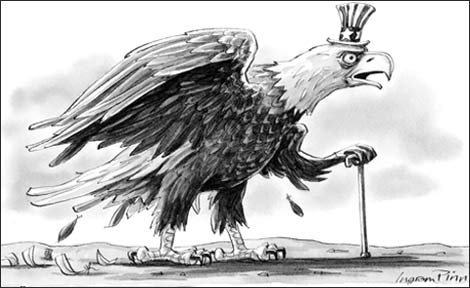
  By Richard Falk Prefatory Note With apologies for this long post, which attempts to situate the struggle for an ethically and ecologically viable political future for the United States and the world in the overheated preoccupation with Trump and Trumpism, which is itself a distraction from the species challenges confronting the whole of humanity at the present time. Many of us, and I include myself, have allowed the side show to become the main attraction, which is itself a reason for struggle against the enveloping darkness.   The Psycho-Politics of Geopolitical Depression It should not be all about Trump, although his election in 2016 as U.S. president is symptomatic of a menacing national tailspin. This downward political drift in the United States, not only imperils Americans, but threatens the world with multiple catastrophes, the most worrisome of which involves Trump’s double embrace of nuclearism and climate denialism. Unfortunately at...
ChatGPT Image 9 jun 2026, 11_11_33
  Is democracy in decline? If you talk about the quality of democracy the answer is clearly yes. The US, the world’s first and most important democracy- although at the beginning a limited democracy for white men only – is in trouble. President Donald Trump has brought old problems to the surface – the money that buys candidates and policies, gerrymandering, an increasingly polarised electorate and a deadlocked Congress. He has added his own negatives – misusing his power to threaten his opponent, Hilary Clinton, with jail, waging a war against the media and attempting to make it clear that he has the sole power to use nuclear weapons and that he will use them against North Korea, even if North Korea has not used its. If we talk about quantity the report issued today by the American organisation, Freedom House, that has monitored the rise and fall of democracy...
Imagen-thumbnail-The-Transnational
Shock. It’s a word that has come up a lot since November – for obvious reasons.I’ve spent a lot of time thinking about shock. Ten years ago, I published “The Shock Doctrine,” an investigation that spanned four decades from Pinochet’s U.S.-backed coup in 1970s Chile to Hurricane Katrina in 2005. I noticed a brutal and recurring tactic by right wing governments. After a shocking event – a war, coup, terrorist attack, market crash or natural disaster – exploit the public’s disorientation. Suspend democracy. Push through radical “free market” policies that enrich the 1 percent at the expense of the poor and middle class. The Trump administration is creating chaos. Daily. Of course many of the scandals are the result of the president’s ignorance and blunders – not some nefarious strategy. But there is also no doubt that some savvy people around Trump are using the daily shocks as cover to...
ObergPhoto2cmB-W
  By Jan Oberg • Message sent to Facebook in response to its blocking attempt and change of algorithm, both serious restricting my freedom of communication.   Blocking personal messages to friends Yesterday it was my birthday and roughly 500 people sent me thoughts, pictures and good wishes – also for the international peace issues I work for every day. Today I send a thank-you message to everyone of them (as replies to their messages on my profile, not through Messenger of on their profiles) – with a link to the new platform outside Facebook that we have felt was necessary to build – for the reasons I explain below. Here is the text of that standard message: “Thank you so much for remembering me ! 🙂 May I urge you to visit TFF’s new peace portal and magazine: / – look around and use Get the News on top...
print-logo-1
By Juan Cole Fascism as a political ideology is difficult to define, in part because it usually contains a big dose of populism, and the content of populism differs from people to people Via juancole.com In my view Mussolini’s fascism in Italy is a fair exemplar of the phenomenon. One characteristic fascist societies have in common is social hierarchy. Men are better than women, they hold. Men are entitled. Some ethnicity is better than all the other ethnicities. White people are entitled (even if some white supremacists in Anglo-Saxon societies wouldn’t consider Mussolini’s Italians or Franco’s Spanish to be “white.” Hitler put off an alliance with Italy because he was still hoping he could get the white British to join him and they seemed to him a superior race). A corollary is that some ethnicities are sick or polluting to society and need to be eliminated, made to emigrate or...
1
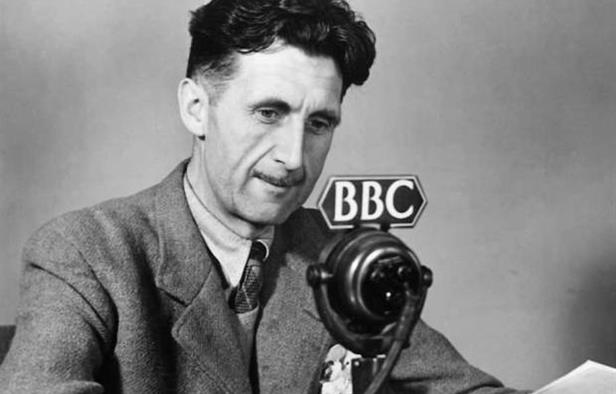
Introduction This is a collection of biographical sketches showing people whose wise voices from the past can help to guide us today. All of the women and men, brief glimpses of whose lives and ideas are portrayed here, gave a high place to compassion. None of them was a slave to greed. We need their voices today! A Lower-Upper Middle Class Family and Education Eric Arthur Blair (1903-1950), better known by his pen name George Orwell, was the great-grandson of Charles Blair, a wealthy country gentleman, and Lady Mary Fane, daughter of the Earl of Westmorland. Over the generations that separated Eric Blair from his great-grandparents, some of the gentility remained but most of the wealth disappeared, and he described his family as being “lower-upper middle class”. Eric Blair was born in British India where his father was working, but when he was one year old his mother took the...
RichardFalk
By Richard Falk • Prefatory Note -This post addresses the need for dialogue with the political, economic, and cultural ‘other,’ that is, those multitudes acutely alienated from and angry with secular globalism and the Enlightenment legacy often equated with ‘modernity’ and ‘modernization.’ At the core is a search for closure on the nature of reality as well as feelings about equity (given many dimensions of inequality) and ethical innovation (revisionist approaches to gender, sexuality, marriage). Does reason or faith or tradition provide greater closure? Can the Thomistic grand synthesis of the 13th Century be repeated under 21st Century condition in the rough waters of controversy generated by Trump and Trumpism? Is this too Western a way of putting the problem? I write as an American, but there are many parallels in other countries. The first step is to admit being out of touch with the ferment below the surface. A...
John-Scales-Avery-2
Portrait of a TFF Associate • John Scales Avery is a theoretical chemist at the University of Copenhagen. He is noted for his books and research publications in quantum chemistry, thermodynamics, evolution, and history of science. His 2003 book Information Theory and Evolution set forth the view that the phenomenon of life, including its origin, evolution, as well as human cultural evolution, has its background situated in the fields of thermodynamics, statistical mechanics, and information theory. Since 1990 he has been the Chairman of the Danish National Group of Pugwash Conferences on Science and World Affairs. Between 2004 and 2015 he also served as Chairman of the Danish Peace Academy. He founded the Journal of Bioenergetics and Biomembranes, and was for many years its Managing Editor. He also served as Technical Advisor to the World Health Organization, Regional Office for Europe (1988-1997). A complete list of books and many of...
savio-small1
By Roberto Savio Human Wrongs Watch • Rome, Dec 27, 2017 – On 20 December, Europe’s 28 Ministers of Environment met in Brussels, to discuss the plan for reducing emissions prepared by the Commission, to comply with the Paris Agreement on climate change. Well, it is now clear that we have lost the battle in keeping the planet as we have known it. Now, of course, this can be considered a personal opinion of mine, devoid of objectivity. Via human-wrongs-watch.net Therefore, I will bring a lot of data, history and facts, to make it concrete. Data and facts have good value: they focus any debate, while ideas do not. So those who do not like facts, please stop reading here. You will escape a boring article, as probably all of mine are, because I am not looking to entertain, but to create awareness. If you stop reading, you will also...

Categories

Year

Author / Contributor

Region