Peace

Various aspects of and approaches to this “essentially contested” concept.

And various ways of thinking across cultures.

Stuff here is both theoretical and practical – with an emphasis on the former.

We thought that a slightly blurred image of a sunset – the far horizon – could illustrate these endeavours.

The moment we think we know exactly what peace is, it isn’t.

It’s a never-ending process … exploration.

But peace is not just the absence of war and other types of violence.

It is something essential and substantial in and of itself.

Category

Year

Author / Contributor

Region

Sort by

Showing 1-10 of 889 stories

181022_r33055
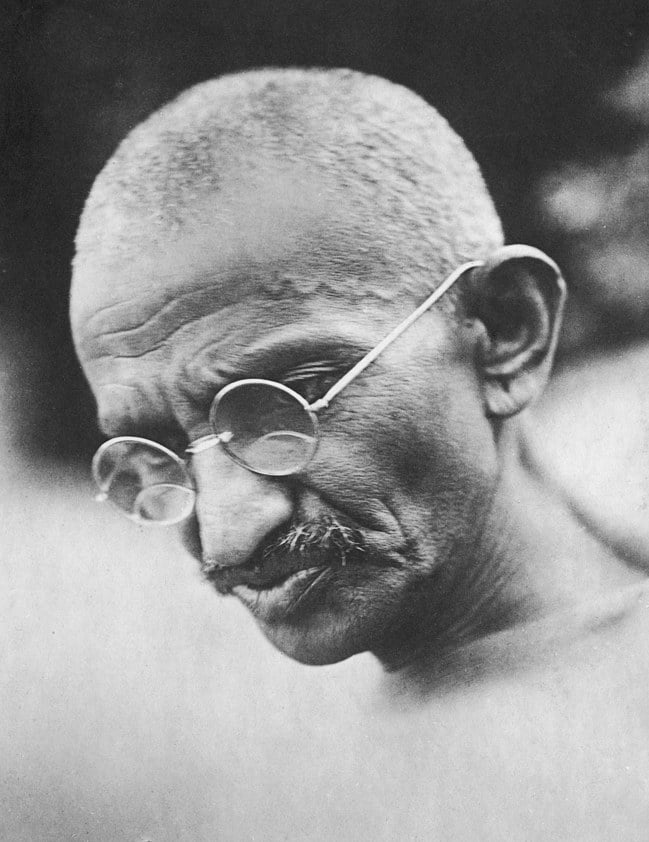
The icon’s legacy is no longer secure, but he anticipated much about our current political moment By Pankaj Mishra January 11, 2019 In 2015, in South Africa, where Mohandas Gandhi lived from 1893 to 1914, a statue of him was defaced by protesters. The following year, the University of Ghana agreed to remove Gandhi’s statue from its campus, after an online campaign with the (misspelled) hashtag #Ghandimustfall charged the Indian leader with racism against black Africans. Compared with other recent targets of political iconoclasts—stalwarts of the Confederacy and Cecil Rhodes—Gandhi seems an unlikely symbol of racial arrogance. Nelson Mandela claimed that Gandhi’s tactics offered “the best hope for future race relations”; Martin Luther King, Jr., held Gandhi up as a model; decades before that, black activists such as Adam Clayton Powell, Sr., and Benjamin Mays were enthralled by the phenomenon of an Indian leading people of color in the campaign...
JakeLynch
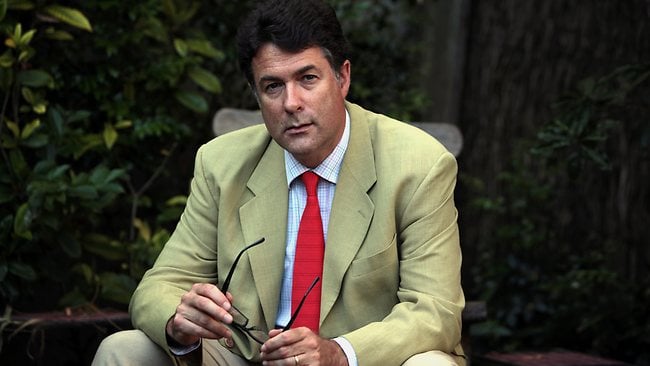
Dr Jake Lynch, former BBC newsreader, political correspondent for Sky News and Sydney correspondent for the Independent, is the director of the Centre for Peace and Conflict Studies at the University of Sydney and one of the most published authors in the field of Peace Journalism. His debut novel, Blood on the Stone: An Oxford Detective Story of the 17th Century, is published by Unbound Books. Jake has spent 20 years developing and researching Peace Journalism, in theory and practice. He is the author of seven books and over 50 refereed articles and book chapters. His work in this field was recognised with the award of the 2017 Luxembourg Peace Prize, by the Schengen Peace Foundation. He served for two years as Secretary General of the International Peace Research Association, having organised its biennial global conference in Sydney, in 2010. Before taking up an academic post, Jake enjoyed a 17-year...
Global-Challenges
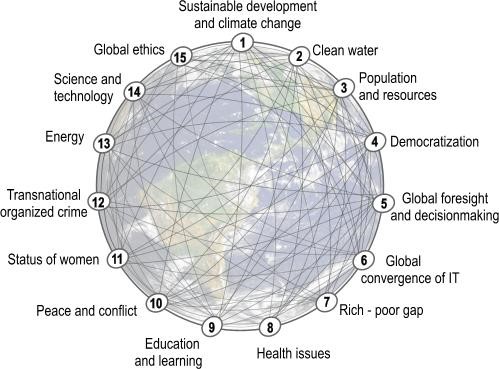
New networking by NGOs and individuals Three main challenges to humanity’s survival We are handing to the new generations three overriding dangers to the health and maybe survival of the entire human population: 1. Nuclear war. 2. Climate changes, and 3. Increasing class differences. This last danger, the consequences of the increasing economic differences, is a subject too political for this presentation, but I am of the opinion that if we do not stop the increasing social injustice it will be even more difficult to save the planet. Working against nuclear war “Nuclear war is the greatest danger to the health and survival of mankind”, according to the World Health Organization. Since 1981 I have worked with the organization International Physicians for the Prevention of Nuclear War, IPPNW. We believed that if we could just make people understand the consequences of nuclear war, understand that nuclear war might be the...
ChatGPT Image 9 jun 2026, 11_11_33
The general election has been postponed yet again. Will this country, the largest and potentially the richest in Africa, ever escape from its continuous dictatorship, and its propensity to civil war? It’s not so long ago that Susan Rice, then the US’s Ambassador to the United Nations, was talking about the Congo as the site of “Africa’s First World War”. Has the UN at long last really pacified this country that has been continuously in a state of unrest since the Belgian colonisers, after effectively looting the country, fled in 1960, turning the country over to a hastily improvised African government? Today we can say that the fighting that has consumed the Congo is within sight of being over, apart from some localized violence in Kivus and Kasai provinces. But, given the history of the most turbulent of all African countries, we should say, let’s wait and see. Nevertheless, it...
compassionquotes2
I have to admit that the most unforgiving relationship I hold is the one with the media. This may not come as a surprise as one doesn’t need to look further than a front page of any media platform to see that the media has become an increasingly hostile and contradictory arena. We seem to be living in times of linguistic austerity and compassion depravity. We are faced with more and more undeniable evidence that the media is creating an increasing social divide and psychological crisis in our society today. Sadly, this is not something new. If one learns from history and observes the present carefully, it is evident that the media has a critical role in perpetuating and exaggerating conflict. For example, the media has had a single role as a dividing factor and driving force in triggering and perpetuating the Yugoslav wars in the Balkans, by using ethnic...
human-rights-day
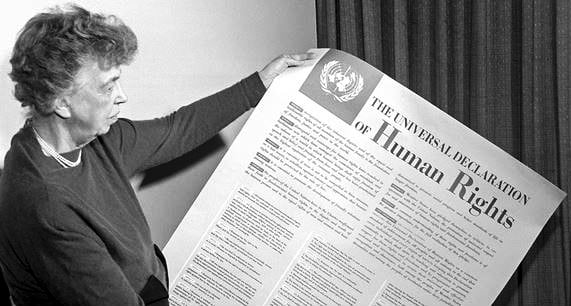
Today the Universal Declaration of Human Rights turns 70. All reason to celebrate. Without the norms embedded in this extremely important document, humankind would be much worse off. Because normativity is important even though it is only words. It enables us to make those who violate human rights accountable. And that is, in general terms, an extremely important aspect of the UN and its Charter. So too the norm expressed in its Article 1 – that peace shall be established by peaceful means and only when all such means have been tried an found in vain, can the UN member states take to violent means. As a last resort. That said, the only two problems I have with the human rights philosophy and concept are: One could also formulate it this way: Human beings have duties vis-a-vis those whose rights are not embedded in any declaration, i.e. other living creatures,...
bigOriginal-1
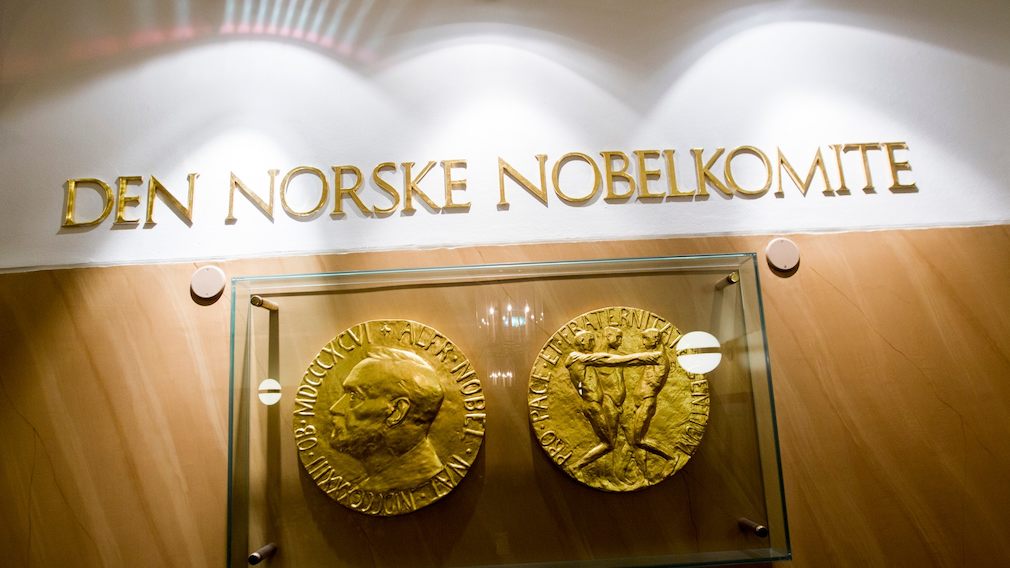
Det norska stortinget är på väg att göra fredspriset till sin egendom, med fri tolkningsrätt. Ledamöterna tycks inte ha förstått sin roll: när det gäller fredspriset ska man inte agera som parlament utan som ett underordnat organ till en svensk privat stiftelse. För att värna Nobels arv måste Nobelstiftelsen nu hitta en annan lösning, skriver Tomas Magnusson. Kulmen på fredsprisets förfall nåddes tisdagen den 27 november när det norska stortinget behandlade nya regler för den norska prisutdelande Nobelkommittén, och därvid avvisade ett förslag om att kandidater till kommittén bör ha ”kunskap om, och stödja fredsarbete och nedrustning, så som det definierades av Alfred Nobel”. Läs hela artikeln på Dagens Nyheter den 9:e december 2018 Foto: Vegard Wivestad Grøtt/TT
ICHIfundText
This small Chinese fund, soon a foundation, has been established as a result of mutual thinking by the founders. We believe that there is a common ground between all cultures and it is important to build on that instead of on the differences. Out of the four founders, it is Ms Liu Jian from Beijing and Thore Vestby from Oslo who are running this philanthropic undertaking. Over the last two years, they have carried out a series of small projects helping young people from China to meet their counterparts in the West. And vice versa. “We believe that before they are “destroyed” by the adult world, structure and life, they can develop friendship, knowledge and inspiration across national and cultural borders”, says Ms Liu. “We believe that some of them will come into situations later in their professional lives were this early established atmosphere of understanding can be beneficial for...
Skaermbillede-4
Photocredit: nousnatobases.org   By Mairead Maguire, Nobel Peace Laureate and TFF Associate Presented at the International Conference against US/NATO Military Bases, 16-18 Nov 2018, Dublin, Ireland. November 27, 2018   Dear Friends, It is good to be here with you all. I would like to thank the organizers for inviting me to address the conference. Firstly I thank you all for your work for peace. It is good that we will have an opportunity in the next few days to get to know each other and together discuss what kind of a world we want to live in? There will be many different perspectives on this and the way forward, but let us agree to respect each other and to engage in deep listening and conversation no matter how hard and where the dialogue might take us! Originally published at transcend.org Let us be encouraged by the fact that we have made...
ChatGPT Image 9 jun 2026, 11_11_33
  At last a book that attacks the “Blob” and holes it below the water line. Whether it can sink it is another matter. I’m talking about a book published last week by the Harvard professor of international affairs, Stephen Walt, “The Hell of Good Intentions”. The “Blob” is a wonderful word conjured up by President Barack Obama’s deputy National Security Advisor, Ben Rhodes. It means the group of congressmen, generals, industrialists, academics and journalists who specialize in foreign policy and have an influence promoting what Walt calls “Liberal Hegemony”. This, he defines, as the default setting for US foreign policy by the ingrown foreign policy establishment. “Open-ended efforts to remake the world in America’s image gives them plenty to do, appeals to its members’ self-regard and maximizes their status and power”. It’s a full employment policy (by those who were thrown out of work at the end of the...
ChatGPT Image 9 jun 2026, 11_11_33
  “Suppose aliens existed, and that some had been watching our planet for its entire forty-five million centuries, what would they have seen? Over most of that vast time-span, Earth’s appearance altered very gradually. Continents drifted; ice-cover waxed and waned; successive species emerged, evolved and became extinct. But just in a tiny sliver of Earth’s history – the last hundred centuries – the patterns of vegetation altered much faster than before. This signaled the start of agriculture – and then urbanization.” We are at the very end of that “sliver”. So begins a new book by Martin Rees, Britain’s Astronomer Royal, “On the Future: Prospects for Humanity”. There is much in this short, very readable, book – the disturbing, sometimes positive, sometimes negative, future of biotech, artificial intelligence, global warming, medicine, ageing, communications, nuclear energy, weapons development, sustainability, agricultural research, poverty and employment, but its centerpiece is astronomy. Over the...
18932770_401
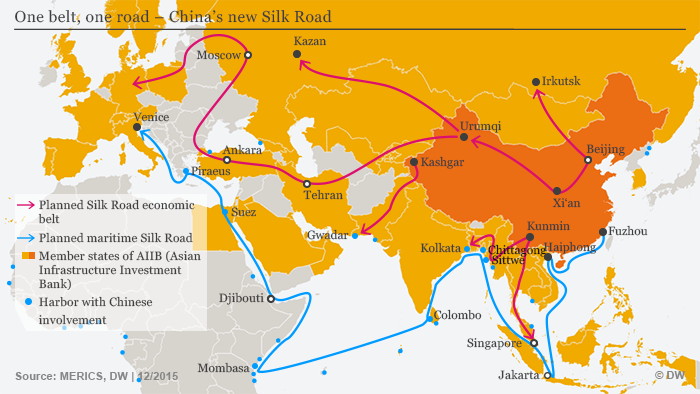
(May 11- 24 November). Oberg’s project is called SPAR – Silk Peace Art Road. It focuses on the new China-initiated Silk Road BRI – culture, people, ways of living and high-tech. (BRI = Belt and Road Initiative). He will take pictures at different places, gather objects and utilize his archive photos from Shanghai to Venice – China, Myanmar, Kazakhstan, Iran, Somalia, Syria, Venice, etc. And he will seek cooperation with local artists and art institutions as part of a peace cultural dialogue along the road. This will result in three-dimensional installation of 4-5 meters in Venice which – with multimedia but mostly photography – will focus on the progress of the Orient and the decline of the Occident – a vision about a possible, better and more peaceful future. – ”In times of fake, negativity and fear, the Silk Road project (Belt and Road Initiative, BRI), is the most constructive...
Categories

Year

Author / Contributor

Region