Nuclear

Category

Year

Author / Contributor

Region

Sort by

Showing 1-10 of 379 stories

decline-and-fall-of-the-american-empire
(Photo credit: iai.tv) By Tom Engelhardt February 1, 2021 We’re now living in an age of opacity, as Rudy Giuliani pointed out in a courtroom recently. Here was the exchange: “‘In the plaintiffs’ counties, they were denied the opportunity to have an unobstructed observation and ensure opacity,’ Giuliani said. ‘I’m not quite sure I know what opacity means. It probably means you can see, right?’ “‘It means you can’t,’ said U.S. District Judge Matthew Brann. “‘Big words, your honor,’ Giuliani said.” Big words indeed! And he couldn’t have been more on the mark, whether he knew it or not. Thanks in part to him and to the president he’s represented so avidly, even as hair dye or mascara dripped down his face, we find ourselves in an era in which, to steal a biblical phrase from Swedish film director Ingmar Bergman, all of us see as if “through a glass darkly.” Originally published...

Orust
SummaryOn top of all the global problems we must solve as soon as possible comes the Corona. This statement argues that the priorities of the world are – well, perverse; everything the UN does amounts to 3% of the global military expenditures.TFF’s Board suggests that all countries reduce their military by 50% immediately. That would save about US$ 1000 billion. And that that huge sum should be re-allocated to solve the problems we had and the socio-economic consequences of the Corona pandemic. That would also – finally – be a step to prove that governments are willing to implement a policy for true disarmament and move towards human and common security for the common good.In a civilised world, this should be common sense. If you do not want to read the whole argument, just scroll down and sign this statement. “We’ve likely only seen the beginnings of the worldwide economic...
PM-JO
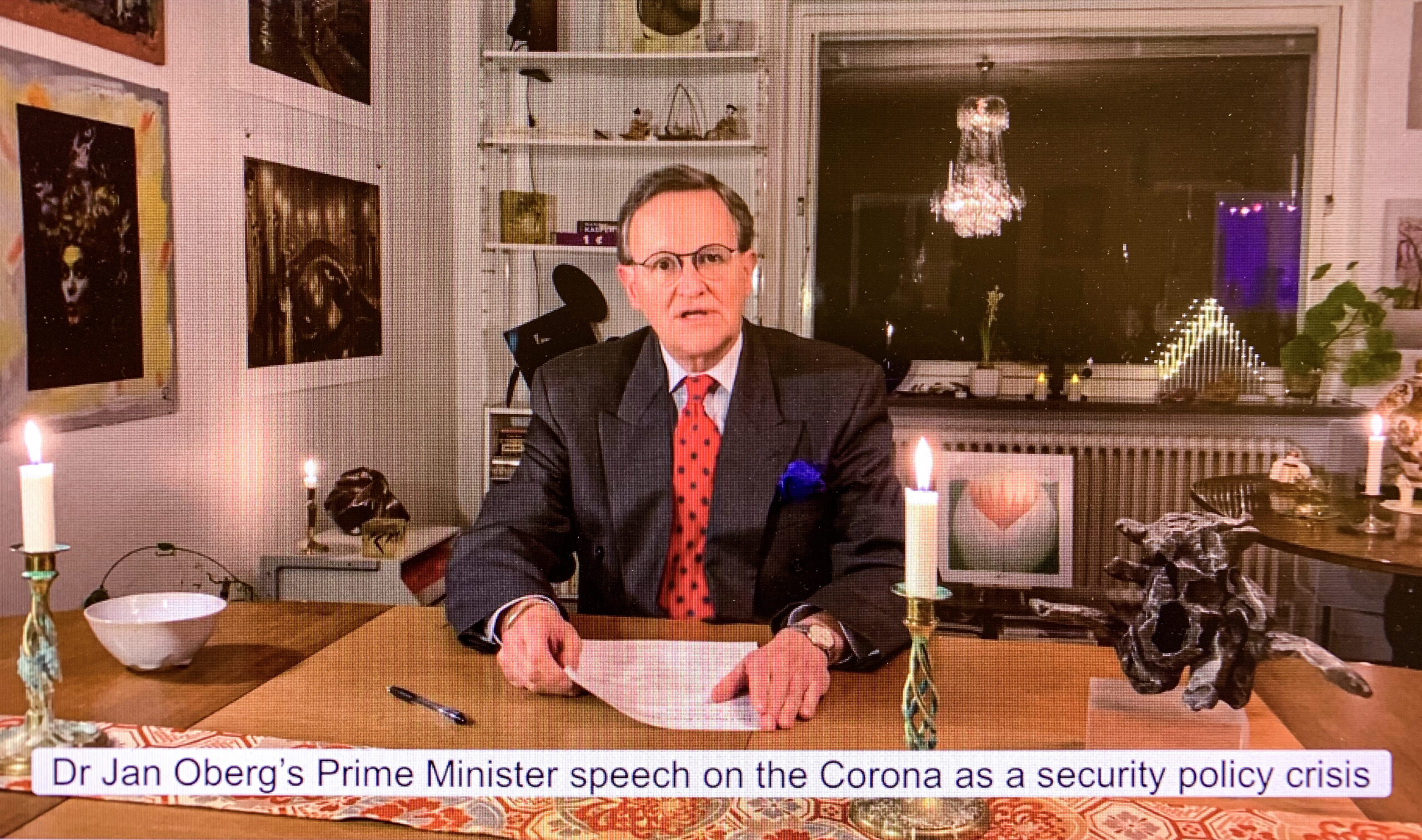
Or your government leader’s Coronavirus speech that was never given. Do not believe the future will be better before you hear leaders say something like this… The speech can be seen as part of TFF’s Campaign “Convert Military Expenditures to Global Problem-Solving”. See and listen to the speech by clicking on Vimeo above, or read the transcript below. Fellow Citizens, good evening Tonight, I want to share with you the main lessons my government and I have drawn from the Coronavirus crisis – a crisis which has caused so much suffering and so many deaths. And a crisis that will take very long time for our economy to recover from. That lesson – and my central message to you tonight – is that your suffering has been caused by our failed security policies. Only, secondarily, is this a crisis of our health system. Therefore, I want to extend my most...
201802
Karin Utas Carlsson December 1, 2020 The purpose of this article is to highlight the thoughts of peace researcher John W. Burton put forward towards the end of the last century. He is seen as the father of Human Needs Theory, a way of thinking behind the concept of human security, increasingly in focus in today’s debate. According to peace researcher Jan Öberg, the term human security was first used in a research report by him in 1978. Öberg analyses the concept and writes its history (Öberg, 20-05-28). This is a line of thought very different from the established defence and foreign policy, based on power politics. I strongly believe that the world would be less violent and a much better place for most of us if we used constructive methods of conflict resolution, including promoting peace. As we shall see, Human Needs Theory provides a theoretical framework for achieving...
Nuclear-Weapons-Ban
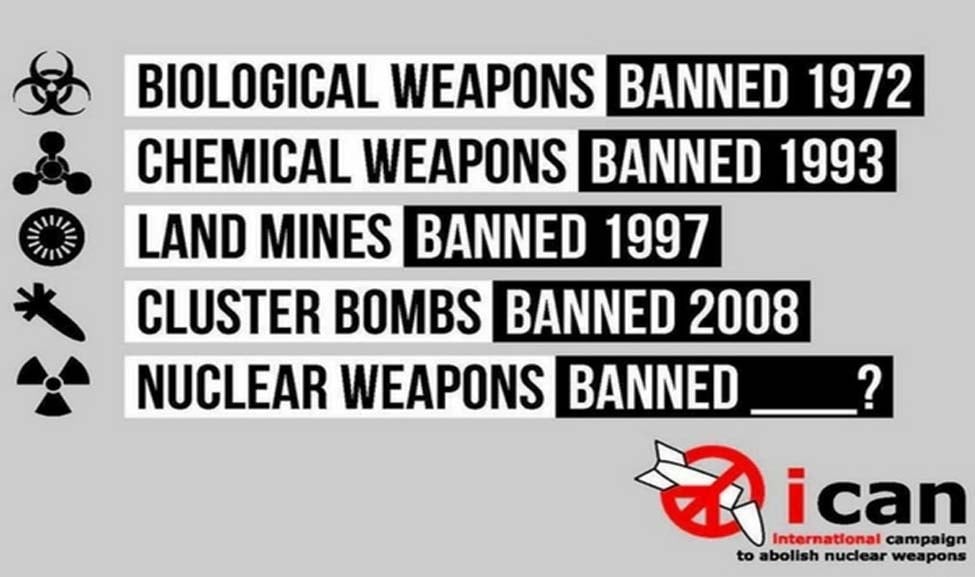
On the 7th UN Day – two days ago – the 50th UN member, Honduras, ratified the Nuclear Weapon Ban Treaty – or the Treaty On the Prohibition Of Nuclear Weapons (TPNW). It’s a milestone in the global struggle to make nuclear weapons a parenthesis in human history. We have much to thank millions of peace workers for as well as, of course, ICAN (International Campaign to Abolish Nuclear Weapons) – winner of the Nobel Peace Prize 2017. It’s well-known to most that Iran has been harassed for years – you may say for not having nuclear weapons and for having signed the Nuclear Non-Proliferation Treaty and votes in favour of adopting the TPNW; Israel which is a nuclear country has not signed any relevant treaty and obstructs the ongoing work of Middle Eastern UN members to secure that the region of the Middle East will become a nuclear-free zone....
Peace-Sign-HD-Background-620x349
20. oktober 2020 Det er nok så tænkeligt at du aldrig har hørt om Arne Nielsen Hansen – men han er en uhyre interessant og mangfoldig nordjyde på 81 år. Du kan læse mere om ham hér. Jeg vil gerne fortælle dig at Arne er en af Danmarks mest betydende mediepersonligheder – igennem flere år end de fleste – en fremstående humanist og landets eneste freds- og global-journalist (læg mærke til kombinationen). Og så sidder han på en lokal-radio – den i Frederikshavn. Han er primus motor bag den righoldige side, Flygtninge og Fred, hvor han producerer alt materiale selv. Og det handler om et bredt spektrum – udover flygtninge og fred også demokrati, klima, miljø og menneskerettigheder. Og han har gjor det i over 20 år. Sådan hér ser manden med de levende, nysgerrige øjne ud. Han er et meget beskedent menneske og ville sikkert helst have sig frabedt...
futurism_landing_depero
Introduction Below is a long interview from Konrad Stachnio with Richard Falk – TFF Associate – on a wide-ranging set of questions, which stretched by knowledge past its breaking point, especially in assessing where the technological innovations on the horizons will lead us.It is one of 17 conversations published by Clarity Press under the title, Civilization in Overdrive: Conversations at the Edge of the Human Future.Preface by Stachnio after interview.The book is recommended strongly.It can be ordered here Originally published on Richard Falks blog on September 12, 2020 Civilization in Overdrive, edited by Konrad Stachnio “If a digital Fukuyama tells the world that ‘the end of history’ has been reached, he should be scorned this time around.” KONRAD STACHNIO: Do you know what is the role of the so-called Black Budget in building the power of the USA as a global security state? RICHARD FALK: It is not possible for someone without access...
2014-10-29-Peace
Jan Oberg August 6, 2020 It is natural and human to commemorate what happened in Hiroshima and Nagasaki. But these stories, films and photos from back then must never come to serve as a museum for just a historical event. It would also be fairly naive – now 75 years later – to believe that showing such images of the destruction and listening to Hibakushas (survivors) will help abolish the nukes of today. They’ve been seen too many times to make such an impact on today’s people; there is a certain psychic numbing and a mass denial of the fact that “it could happen this afternoon too.” 1) If they had such a – desirable deterrent – effect, nuclear weapons would be gone long ago. While of course Hiroshima and Nagasaki and their victims must never be forgotten, it’s extremely important that Hiroshima and Nagasaki Days are used to focus...
96f258eb81837d6ccb7088f100f6aebd
May 25, 2020 Dr. Lawrence Wittner Decades ago, when I began teaching international history, I used to ask students if they thought it was possible for nations to end their fighting of wars against one another. Their responses varied. But the more pessimistic conclusions were sometimes tempered by the contention that, if the world’s nations faced a common foe, such as an invasion from another planet, this would finally pull them together. Originally published on Counterpunch on April 14, 2020 here I was reminded of this on March 23, when the UN Secretary-General, António Guterres, called for “an immediate global ceasefire.” The time had come, he said, to “end the sickness of war and fight the disease that is ravaging our world.” A UN summary noted that the Secretary-General had “urged warring parties across the world to lay down their weapons in support of the bigger battle against COVID-19: the...
ObergComment_OnSite
On March 21 this year, Bulletin of the Atomic Scientists (BAS) published an article headlined Coronavirus in Russia: How Putin’s disinformation efforts could backfire at home and written by Judy Twigg, professor of political science at Virginia Commonwealth University. Take a look and get a sense of its quality, balance and bias. Having read it, I submitted the following comment underneath: I’m dismayed by this article. While there is no doubt that Russia is (mis)using information, this sort of thing must be seen as a tool, or weapon, in a conflict – a conflict Russia has with the 29-member NATO alliance. It is normal praxis for such high-ranking, respected and reliable media as yours to not talk about “the other” side’s weapons but looking at armament dynamics on both (or all) sides of a conflict formation. Just pointing fingers at one and keep quiet about the other side risks to...
urmedium
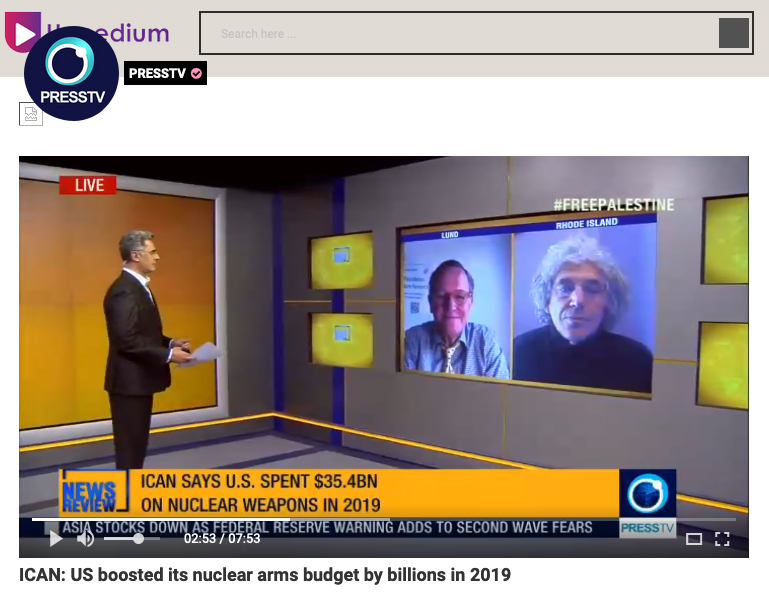
ICAN: The US boosted its nuclear arms budget A record $73 billion spent on nukes in 2019 – says ICAN. Nuclear-armed states spent a record $73 billion on nuclear weapons in 2019, a nearly 10% increase from 2018, and the US accounted for almost half of the spending, a new report states. Please find a short conversation about that at PressTV’s Channel at Urmedium.
soldiersnature
By Judith Deutsch March 10, 2020 The world situation is much worse than generally acknowledged. This December, the coinciding meetings of NATO and of the climate change Conference of the Parties (COP25) were barely reported, much less analyzed, even though the delegates held the fate of humanity in their hands. To some degree, both meetings are secret, and their unelected delegates are not accountable to the public. COP has met far from the ‘maddening crowd’ ever since the large protests at Copenhagen COP15. NATO provides credibility, flexibility, and anonymity in equal doses and shields member states from legal and political accountability. NATO policy is not to reveal which member state participated in a military operation.(1) NATO countries refuse to sign the nuclear ban treaty and now legitimize a nuclear-weapons first strike. To judge by the results delegates in both organizations chose to ignore both science and the human situation. Originally...
Categories

Year

Author / Contributor

Region