
Nukes are not only history: Discuss this on August 6 and 9 and all other days

Jan Oberg

August 6, 2020

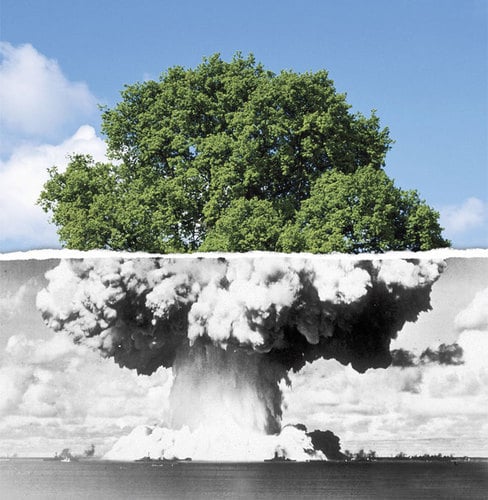
It is natural and human to commemorate what happened in Hiroshima and Nagasaki. But these stories, films and photos from back then must never come to serve as a museum for just a historical event.

It would also be fairly naive – now 75 years later – to believe that showing such images of the destruction and listening to Hibakushas (survivors) will help abolish the nukes of today. They’ve been seen too many times to make such an impact on today’s people; there is a certain psychic numbing and a mass denial of the fact that “it could happen this afternoon too.” 1)

If they had such a – desirable deterrent – effect, nuclear weapons would be gone long ago.

While of course Hiroshima and Nagasaki and their victims must never be forgotten, it’s extremely important that Hiroshima and Nagasaki Days are used to focus on today’s nuclear weapons and nuclearism – the assumptions, values, thinking, beliefs and (non)ethics surrounding nuclear weapons.

Here are some examples of what would be relevant – in the contemporary world – to discuss. And of course not only these two days but every day (numbers not indicating priorities):

  1. Nuclear weapons are terrorist weapons. States which possess nuclear weapons and people who argue in favour of their continued existence build on a central feature of terrorism’s philosophy: that it is right to kill scores of innocent civilians to achieve a political goal. Remember, we used to talk about the “balance of terror”. So, why talk so much about ISIS and so little about nuclear terrorism?
  2. Deterrence means to use if… There exist no nuclear weapons that are not meant to be used. It’s pure nonsense to say that nuclear weapons are there to never be used. If two parties know for sure that the other will never under any circumstances use them (also not reactive, second strike back), there would be no deterrence.
  3. Nukes are incompatible with democracy. These weapons have never been accepted by any people through a referendum or other democratic measures. They’ve been imposed by a few on the rest of us. And there exists no opinion poll that proves that any citizens’s majority would like their country to have them or be ‘defended’ by them.
  4. These weapons violate the letter and spirit of international law, including the UN Charter. Here is the famous 1996 statement by the International Court of Justice: The UN Charter states both that war should be abolished (preamble), that peace shall be established by peaceful means (Article 1) and that it is prohibited even to threaten other states (Article 2).
  5. Nukes are unethical. There can be no kind of goal or purpose whatsoever that legitimizes the killing of – likely – millions of people and afterwards make parts of the world or all of it uninhabitable. Also, the tendency in the US Nuclear Posture Review to treat (smaller) nuclear weapons as though they were conventional weapons and thereby reducing the nuclear threshold, is as de-stabilizing as unethical. So too is the doctrine, therefore, of First Use and use of nuclear weapons against conventional threats and even cyber-attacks.
    And, certainly, no human being, or small group, should ever be given the power – the very tempting power – to decide the future of all humankind, not to speak of ending it.
    The power of nuclear weapons should compel us to humility and an ethics of care.
  6. Nuclear weapons cause terrible conflicts even when not used. The US argued that Saddam Hussein had them and that he shouldn’t. The West has been in conflict with Iran which also does not have these weapons for which reason it’s been constantly threatened with war and the object of suffocating sanctions, embargo, demonisation, and more.
  7. How come everybody talks about climate issues while the entire peace discourse has been eradicated – and links between the two hardly ever made?
  8. Who controls the media, critical research, education and the public discussion to such an extent that the far majority of humanity completely ignore this everyday challenge to our very survival? How come people are in denial, accept or engage so little in this? While black lives certainly matter – nuclear weapons threaten all life and are weapons of omnicide.
  9. Focus on the non-nuclear countries that have decided by constitution or political decision to never acquire nuclear weapons – like Sweden, Austria, Kazakhstan, South Africa, to mention some. The positive list is much longer than the negative. And focus on the Treaty On The Prohibition of Nuclear Weapons (TPNW) what 122 UN member states voted for in 2017 and 40 states have ratified as of July 2020.
  10. Focus on the MIMAC – the Military-Industrial-Media-Academic Complex that consists of small elites in these sectors plus government leaders – a few thousand who administer the nuclear weapons only to serve their own interests in power and wealth and in total contempt for humanity’s safety, security and wellbeing. Enormous resources are so much needed to solve urgent global problems – but wasted in development of even more and more sophisticated nukes and doctrines.
  11. Discuss why “disarmament and arms control” was never effective and how the nuclear “haves” have systematically undermined – violated – the Non-Proliferation Treaty and use sanctions, boycotts, diplomatic isolation, and marginalisation against these few arrogant actors.
  12. These weapons are compatible with dictatorship and Nazi values – using them physically or as a threat is fully compatible with the Nazi values of utter contempt for those who are considered weaker. In this perspective, nuclear weapons embody a particular global racist attitude: “We can do to them what we want because they are lower/weaker/inferior compared with us…” – or “We can have these weapons because we are responsible, noble and civilized – but others are not at our level and should therefore never acquire these weapons…”
  13. Finally, imagine how much safer and beautiful the world would be if it was completely nuclear weapons-free. And discuss strategies to get there, not just campaign and slogans…

We need to revolutionize politics, including peace activism – to re-think why we haven’t gotten rid of these weapons. You know, humanity decided to end – or at least look down upon – absolute cannibalism, absolute monarchy, slavery, child labour, rape – and even smoking. Why on earth have we not, long ago, done the same to nuclear weapons?

As Danish philosopher, designer, poet and visionary, Piet Hein, has stated: “It is Co-Existence or No-Existence”. 2)

It is indeed time to abolish nuclear weapons before they blow up our world by a mad human act, human or technical failure. You and I should refuse to live under the regime of nuclear terrorism.

That’s how we can turn Hiroshima and Nagasaki into a contemporary opportunity more than a historical memory. And how the victims and the tremendous suffering could achieve true recognition and meaning.

If you found this relevant and want TFF to continue to do our best for peace, send us the equivalent of a cup of coffee…

Notes

  1. It is true that a political crisis would take some time to develop but the world is generally unaware of all the human and technical failures there have been over the years in the nuclear weapons sector and remarkably under-reported by virtually all media.
  2. More about this remarkable multithinker here and here.

Recommended articles and videos

More than 200 articles concerning nuclear weapons on The Transnational, see here.

And see in particular, TFF Associate Farhang Jahanpour’s excellent historical analysis from 2015, Hiroshima and the Dangers of a New Cold War.

The TFF Videoteque archive.

Today’s conversation between Robert Kelley and Jan Oberg on Iranian PressTV.

Peace & future researcher + ‌Art Photographer

One Response

  1. Thank you Kelly and Öberg for your contribution commemorating the atomic massacres in Hiroshima and Nagasaki

Related Posts

Below are TFF-related media mentions, comments, videos and social media posts published elsewhere but not on this homepage. We happen to catch and list only a fraction. Regarding video comments and debates, we recommend that you go to the TFF Video Channel on Substack where many of them are reproduced. Jan Oberg is a contributor to China Daily – 52 million daily clicks – and Global Times, CGTN and CCTV (the national television), China Investment, Xinhua News Agency and several others. Articles and videos on these media very often multiply into countless Chinese (and Western media) that re-post them from these main media. Thanks to The China Academy, his analyses, interviews and comments are frequently posted on YouTube channels such as Thinkers Forum and Wave Media. These videos are often re-posted on Bilibili (China’s YouTube), the China Content Center on TikTok, and on the Chinese edition of TikTok, Douyin.com. This means reaching hundreds of millions of viewers worldwide over a year. While there are too many to catch on all these...
Jan Oberg TFF director October 13, 2026 According to Alfred Nobel’s will, the Nobel Peace Prize shall be awarded: ”to the person who has done the most or best to advance fellowship among nations, the abolition or reduction of standing armies, and the establishment and promotion of peace congresses.” Further down, he also expresses how the prize for the “champions of peace” shall be decided: “that for champions of peace by a committee of five persons to be selected by the Norwegian Storting. Alfred Nobel’s will is remarkably short and clear. But few seem to have read it. Nobel did not say that the committee itself should consist of members of parliament. He entrusted the Storting with appointing five persons. In principle, it could have selected diplomats, mediators, peace researchers, conflict-resolution specialists, or other individuals with recognised expertise in matters of peace from around the world. Instead, the Storting gradually...
The Quest for Humane Survival Richard Falk Professor emeritus, Princeton UniversityTFF Associate since 1986October 12, 2026 After decades of teaching and writing about international law in academic frameworks that were not institutionally situated within law school environments—at Princeton and the University of California, Santa Barbara—I found myself most receptive to the TWAIL outlook. It has been especially illuminating in clarifying the extent to which international law evolved as a dialogical critique of Europe’s efforts to legitimize its colonial undertakings. In particular, TWAIL has exposed how international law has functioned to legalize the subjugation of Third World peoples, securing conditions for exploitative investment and trade relations, the coercive enforcement of public debts, and an ideology of cultural superiority. TWAIL’s exposure of these economic legacies of colonialism has influenced my understanding of the history and development of international law, broadly conceived, as an ideological project of the Western sub-system of the world...

Recent Articles

Below are TFF-related media mentions, comments, videos and social media posts published elsewhere but not on this homepage. We happen to catch and list only a fraction. Regarding video comments and debates, we recommend that you go to the TFF Video Channel on Substack where many of them are reproduced. Jan Oberg is a contributor to China Daily – 52 million daily clicks – and Global Times, CGTN and CCTV (the national television), China Investment, Xinhua News Agency and several others. Articles and videos on these media very often multiply into countless Chinese (and Western media) that re-post them from these main media. Thanks to The China Academy, his analyses, interviews and comments are frequently posted on YouTube channels such as Thinkers Forum and Wave Media. These videos are often re-posted on Bilibili (China’s YouTube), the China Content Center on TikTok, and on the Chinese edition of TikTok, Douyin.com. This means reaching hundreds of millions of viewers worldwide over a year. While there are too many to catch on all these...
Jan Oberg TFF director October 13, 2026 According to Alfred Nobel’s will, the Nobel Peace Prize shall be awarded: ”to the person who has done the most or best to advance fellowship among nations, the abolition or reduction of standing armies, and the establishment and promotion of peace congresses.” Further down, he also expresses how the prize for the “champions of peace” shall be decided: “that for champions of peace by a committee of five persons to be selected by the Norwegian Storting. Alfred Nobel’s will is remarkably short and clear. But few seem to have read it. Nobel did not say that the committee itself should consist of members of parliament. He entrusted the Storting with appointing five persons. In principle, it could have selected diplomats, mediators, peace researchers, conflict-resolution specialists, or other individuals with recognised expertise in matters of peace from around the world. Instead, the Storting gradually...
The Quest for Humane Survival Richard Falk Professor emeritus, Princeton UniversityTFF Associate since 1986October 12, 2026 After decades of teaching and writing about international law in academic frameworks that were not institutionally situated within law school environments—at Princeton and the University of California, Santa Barbara—I found myself most receptive to the TWAIL outlook. It has been especially illuminating in clarifying the extent to which international law evolved as a dialogical critique of Europe’s efforts to legitimize its colonial undertakings. In particular, TWAIL has exposed how international law has functioned to legalize the subjugation of Third World peoples, securing conditions for exploitative investment and trade relations, the coercive enforcement of public debts, and an ideology of cultural superiority. TWAIL’s exposure of these economic legacies of colonialism has influenced my understanding of the history and development of international law, broadly conceived, as an ideological project of the Western sub-system of the world...

TFF on Substack

Discover and subscribe to more peace materials on TFF Substack

Most Popular

Below are TFF-related media mentions, comments, videos and social media posts published elsewhere but not on this homepage. We happen to catch and list only a fraction. Regarding video comments and debates, we recommend that you go to the TFF Video Channel on Substack where many of them are reproduced. Jan Oberg is a contributor to China Daily – 52 million daily clicks – and Global Times, CGTN and CCTV (the national television), China Investment, Xinhua News Agency and several others. Articles and videos on these media very often multiply into countless Chinese (and Western media) that re-post them from these main media. Thanks to The China Academy, his analyses, interviews and comments are frequently posted on YouTube channels such as Thinkers Forum and Wave Media. These videos are often re-posted on Bilibili (China’s YouTube), the China Content Center on TikTok, and on the Chinese edition of TikTok, Douyin.com. This means reaching hundreds of millions of viewers worldwide over a year. While there are too many to catch on all these...
Jan Oberg TFF director October 13, 2026 According to Alfred Nobel’s will, the Nobel Peace Prize shall be awarded: ”to the person who has done the most or best to advance fellowship among nations, the abolition or reduction of standing armies, and the establishment and promotion of peace congresses.” Further down, he also expresses how the prize for the “champions of peace” shall be decided: “that for champions of peace by a committee of five persons to be selected by the Norwegian Storting. Alfred Nobel’s will is remarkably short and clear. But few seem to have read it. Nobel did not say that the committee itself should consist of members of parliament. He entrusted the Storting with appointing five persons. In principle, it could have selected diplomats, mediators, peace researchers, conflict-resolution specialists, or other individuals with recognised expertise in matters of peace from around the world. Instead, the Storting gradually...
The Quest for Humane Survival Richard Falk Professor emeritus, Princeton UniversityTFF Associate since 1986October 12, 2026 After decades of teaching and writing about international law in academic frameworks that were not institutionally situated within law school environments—at Princeton and the University of California, Santa Barbara—I found myself most receptive to the TWAIL outlook. It has been especially illuminating in clarifying the extent to which international law evolved as a dialogical critique of Europe’s efforts to legitimize its colonial undertakings. In particular, TWAIL has exposed how international law has functioned to legalize the subjugation of Third World peoples, securing conditions for exploitative investment and trade relations, the coercive enforcement of public debts, and an ideology of cultural superiority. TWAIL’s exposure of these economic legacies of colonialism has influenced my understanding of the history and development of international law, broadly conceived, as an ideological project of the Western sub-system of the world...
Read More
girl-5894831_1280
Below are TFF-related media mentions, comments, videos and social media posts published elsewhere but not on this homepage. We happen to catch and list only a fraction. Regarding video comments and debates, we recommend that you go to the TFF Video Channel on Substack where many of them are reproduced. Jan Oberg is a contributor to China Daily – 52 million daily clicks – and Global Times, CGTN and CCTV (the national television), China Investment, Xinhua News Agency and several others. Articles and videos on these media very often multiply into countless Chinese (and Western media) that re-post them from these main media. Thanks to The China Academy, his analyses, interviews and comments are frequently posted on YouTube channels such as Thinkers Forum and Wave Media. These videos are often re-posted on Bilibili (China’s YouTube), the China Content Center on TikTok, and on the Chinese edition of TikTok, Douyin.com. This means reaching hundreds of millions of viewers worldwide over a year. While there are too many to catch on all these...
Nobel-Prize-Plaque
Jan Oberg TFF director October 13, 2026 According to Alfred Nobel’s will, the Nobel Peace Prize shall be awarded: ”to the person who has done the most or best to advance fellowship among nations, the abolition or reduction of standing armies, and the establishment and promotion of peace congresses.” Further down, he also expresses how the prize for the “champions of peace” shall be decided: “that for champions of peace by a committee of five persons to be selected by the Norwegian Storting. Alfred Nobel’s will is remarkably short and clear. But few seem to have read it. Nobel did not say that the committee itself should consist of members of parliament. He entrusted the Storting with appointing five persons. In principle, it could have selected diplomats, mediators, peace researchers, conflict-resolution specialists, or other individuals with recognised expertise in matters of peace from around the world. Instead, the Storting gradually...
law-419057_1280
The Quest for Humane Survival Richard Falk Professor emeritus, Princeton UniversityTFF Associate since 1986October 12, 2026 After decades of teaching and writing about international law in academic frameworks that were not institutionally situated within law school environments—at Princeton and the University of California, Santa Barbara—I found myself most receptive to the TWAIL outlook. It has been especially illuminating in clarifying the extent to which international law evolved as a dialogical critique of Europe’s efforts to legitimize its colonial undertakings. In particular, TWAIL has exposed how international law has functioned to legalize the subjugation of Third World peoples, securing conditions for exploitative investment and trade relations, the coercive enforcement of public debts, and an ideology of cultural superiority. TWAIL’s exposure of these economic legacies of colonialism has influenced my understanding of the history and development of international law, broadly conceived, as an ideological project of the Western sub-system of the world...
images-2
Advocates of nuclear disarmament are regularly dismissed by the champions of nuclear deterrence as naïve and unrealistic, utopian or even irresponsible. Yet this ‘doctrine’ of deterrence, regarded by France as the ‘cornerstone’ of its national security, is based on quasi-religious beliefs, a theory that cannot be proven, risky gambles and fragile assumptions. So much so that one might legitimately ask which side the ‘Care Bears’ are on. Marc FinaudVice-President of Initiatives for Nuclear Disarmament (IDN) October 9, 2026 This article was originally published on Pressenza When it comes to these things being treated as religious concepts, look here. Idealists and realists It was Hubert Védrine, François Mitterrand’s former Foreign Minister, who repeatedly coined the phrase: ‘Europeans are a sort of Care Bears who don’t realise they’re living in Jurassic Park’. He applies this reference to the cartoon for well-behaved children not only to what he regards as weakness or idealism...
8824b09f-33a5-43f9-9fd0-550f28cda24d_1536x1024
What the West Borrowed from Asia and What It Left Behind Jan Krikke October 8, 2026 The article was originally published here In the late 1960s, the musical Hair announced that the Age of Aquarius was dawning. Its opening anthem promised a transformation of human consciousness: an era of peace, harmony and understanding. Half a century later, a familiar echo of that promise is a meditation app offered by your employer. You can find it in the same list of benefits as the pension plan and the gym discount. How did a spiritual revolution become an employee benefit? The answer lies in the history of the movement known as New Age: where it came from, what it borrowed from Asia, and why the meaning of what it borrowed changed in the process. Two definitions will help. New Age is a loose label for a wide range of spiritual practices and...
Screenshot 2026-10-04 210142
Small and different + among the 10% most active + 9,000 texts + 150 Associates + 60 000 a day — and a stubborn belief that peace is smarter and must be secured by peaceful means. In 2026, the Transnational Foundation for Peace and Future Research (TFF) turns 40. On Monday, October 5, 2026, a new TFF homepage will go live — a new gateway to more than 9,000 articles, analyses, research papers and other contributions produced over four decades of independent peace research. But this is not simply a new website. For four decades, TFF has worked from a simple conviction: peace is smarter than militarism and can be brought about by peaceful means. This is not merely an aspiration. It is the principle expressed in the UN Charter and the Gandhian tradition that has guided our work from the beginning. TFF is a research-based, independent and people-financed foundation....






