Nuclearism – philosophy

Category

Year

Author / Contributor

Region

Sort by

Showing 1-10 of 62 stories

PI470
  TFF PressInfo # 470 Lund, Sweden – July 27, 2018 Forgive us for saying it but the coverage of the Putin-Trump meeting in the mainstream press has been painful to witness – the US media in particular. Navel-gazing in the extreme and turning the Presidential Summit meeting about their relations and international affairs into a US domestic policy affair. The Western media questions -also the so-called respected media – matched the rest in their narrow-minded tabloid attitude – one super fool believing he could get Putin to talk about what he “has” on Trump concerning alleged prostitute hiring in Moscow years ago – prestitutes about prostitutes! Write to tff@transnational.live and get TFF PressInfo from now on – it’s free because TFF is free And – which your free press has hardly mentioned – one journalist, Sam Husseini, who intended to ask about nuclear disarmament was forcefully ejected from the...
Screenshot
  • On July 6, 2018 there was a meeting in Vienna concerning the JCPOA, or the Iran nuclear deal, and how to handle it after the U.S. withdrawal from the deal and the U.S. attempts to isolate Iran further and suffocate its 85 million people even more by trying to prevent it from selling its oil and simultaneously have Saudi Arabia increase its production. The participants were China, Russia, Germany, France and the UK and the meeting was chaired by the EU foreign policy chief, Federica Mogherini. Here is a PressTV report about it. And here is the EU’s document that was produced at the meeting. According to TFF director, Jan Oberg, the major problems with this is that the EU, Russia and China have known for many months that President Trump would withdraw from the deal and also has an almost personal hate of the country and of...

ChatGPT Image 9 jun 2026, 11_51_46
  By Gunnar Westberg June 21, 2018 The North Korea – USA nuclear crisis should teach us several lessons regarding nuclear weapons: 1. Nuclear weapons do not prevent nuclear proliferation. In 1970, the nuclear weapon states accepted the Nuclear Non-Proliferation Treaty, NPT. In this treaty, they agree to negotiate the complete disarmament of their own nuclear weapons. They have – equally completely – disregarded this pledge and insist that they must retain nuclear weapons in order to prevent other countries from acquiring them. The North Korea example shows us that this does not work.   2. Nuclear weapons are contagious. The nuclear weapons states also insist, contrary to their pledge in the NPT, that they must keep their nukes “for their own security”. This provides an excuse for other states to acquire them. A small country such as North Korea, DPRK, has stronger reasons to build nuclear weapons than a...
Screenshot
  June 19, 2018 • The Bulletin of the Atomic Scientists is the leading information sources on a series of issues related to nuclear weapons, technologies, issues and doctrines. In conjunction with the Kim/Trump meeting in Singapore, the Bulletin produced this video conversation with Siegfried Hecker who is probably the American who knows most about North Korea’s nuclear programs and problems. On the link you can find a lot of other background resources related to this particular issue. One of several points Hecker makes is that the U.S. must change its approach to the whole issue and try to also work with others, such as Russia – which has a lot of knowledge and experience.     It’s about 27 minutes and, regrettably, the words of this world expert has been listened to by a few hundred (as of mid-June 2018) when thousands upon thousands ought to listen very very carefully....
KazakhstanNuclear
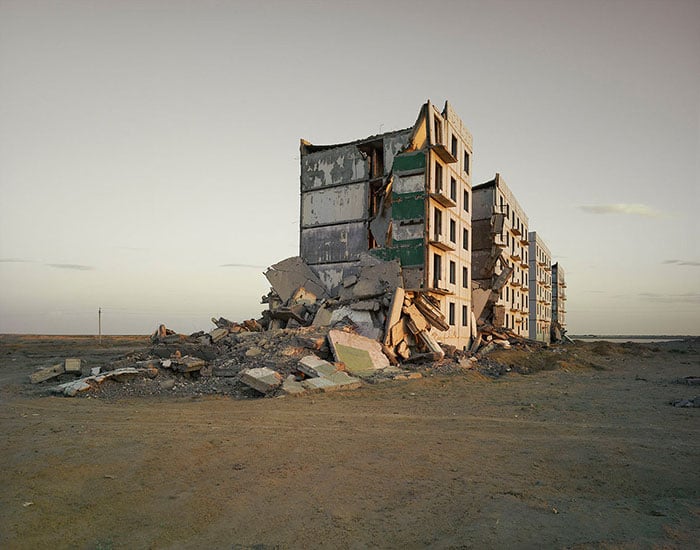
Photo by Nadav Kander   By Marzhan Nurzhan The CTBTO Youth Group (CYG) holds its second international conference in Kazakh capital city Astana from August 28-30, 2018. The author is a CYG member from Kazakhstan, a convener of Abolition 2000 Youth Network and a PNND Coordinator for CIS countries. This article first appeared in The Astana Times on May 29, 2018 with the title ‘Kazakhstan’s Nuclear Legacy and Importance of CTBTO’. It is being reproduced with the author’s permission. – The Editor.   PRAGUE (IDN) – I am coming from Kazakhstan, the country which inherited around 1,500 nuclear weapons from the Soviet Union making it the 4th biggest nuclear arsenal in the world at the time. For almost half a century, from 1949 until 1989, the Soviet Union conducted 456 nuclear tests above and underground at the Semipalatinsk Nuclear Test Site, known also as Semey polygon, in the eastern part...
alalam_635740300385614847_25f_4x3-990x557
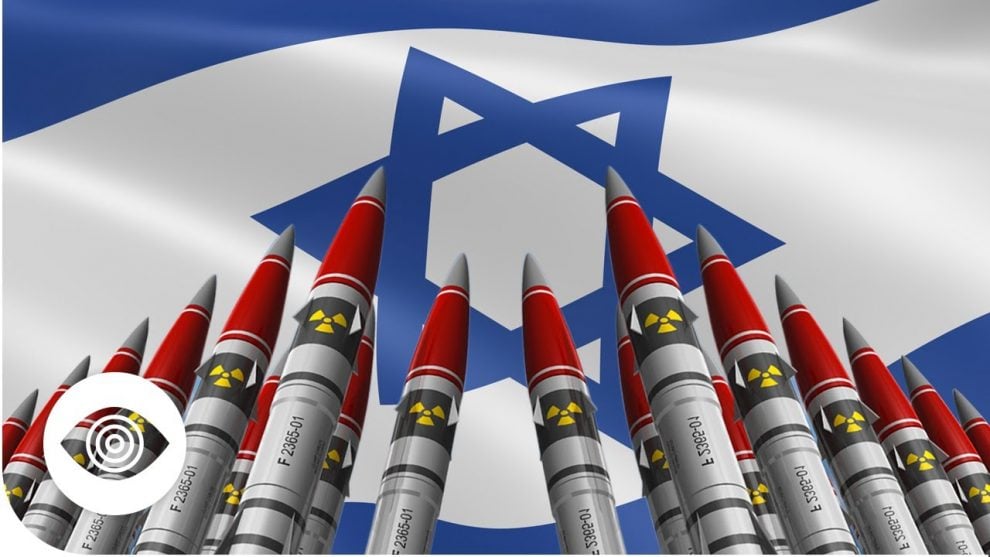
By John Buell May 7, 2018 Recently there was an extraordinary moment on corporate TV. Late last month CNN’s Chris Cuomo asked Israel Prime Minister Benjamin Netanyahu: “Does Israel have nuclear capabilities and nuclear weapons, yes or no?” Netanyahu responded evasively, claiming: “we’ve always been the first to say we wouldn’t introduce it so we haven’t introduced it.” After Cuomo continued to press for a “yes or no answer,” Netanyahu said, “That’s as good an answer as you’re going to get.” As The Intercept’s Glenn Greenwald noted in response to the exchange between Cuomo and Netanyahu, “Kudos to @ChrisCuomo for pressing Netanyahu on that little uncomfortable fact that is typically ignored: the only country in the Middle East with a proven, clandestine nuclear weapons stockpile is . . . Israel. And the rogue state refuses to join the NPT.” Originally published by Informed Comment on May 7, 2018, here While...
b0eedfc8574df27573797d54acb9f9512602e4c4
Image credit below   Introduction TFF believes it is of utmost importance to abolish nuclear weapons. While some may maintain that the risk that nuclear weapons will be used is small, others will argue that the consequences – no matter the risk – would be catastrophic beyond imagination and morally unacceptable and that no political goal can legitimate their use. Therefore, its an imperative to educate ourselves about these things – the media in generally having abdicated their responsibility to provide public education about this and other controversial themes. No matter what knowledge and opinion each of us has, there is no doubt that the risk of nuclear weapons use has increased in 2017-2018 due to a series of developments and political statements that must be judged to be grossly irresponsible and could, whether intended or not, lead to catastrophic misinterpretations, fear and panic reactions. If you use the Search...
hiroshima
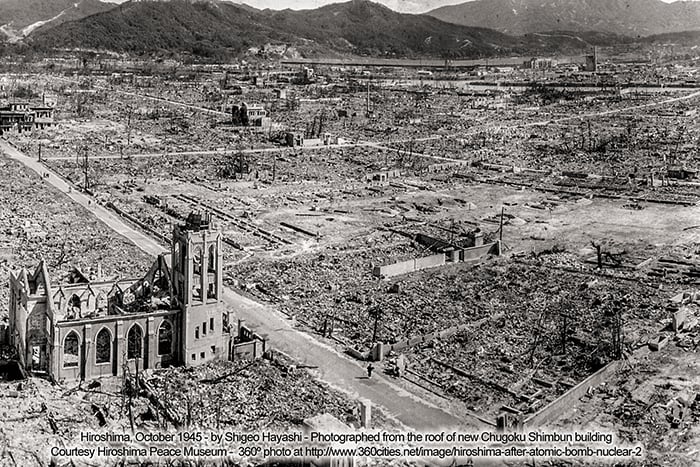
  Paul Rogers   8 February 2018   The what, when, where of nuclear danger – and the good news about dispelling it.   In the past couple of weeks, the details of the new United States nuclear posture have been published, Trump has delivered a belligerent state-of-the-union address and, most significant of all, the authoritative Bulletin of the Atomic Scientists has moved the minute hand of the Doomsday Clock to two minutes to midnight. Originally published at openDemocracy   This is the closest the clock has been to “doomsday” since the US and Soviet Union started testing immensely destructive H-bombs in the early 1950s. Now, after thirty years of an apparent easing of nuclear tensions since the end of the cold war, fear of nuclear war is real and pressing. In recent months I’ve written some specific pieces on the nuclear issue for openDemocracy, mostly related to North Korea...
Screenshot
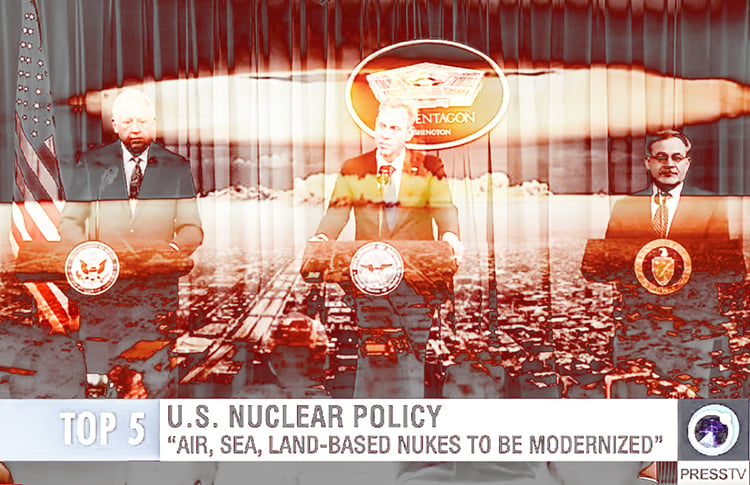
  By Jan Oberg Commenting on PressTV – also on how the Western mainstream press that publishes any piece of hysteria about Russia and China keep virtually silent about this and also the equally dangerous US National Defence Strategy that appeared a few days before this. Photo collage above © Jan Oberg 2018        
512px-Doomsday_clock_2_minutes.svg_
By Paul Rogers 30 January 2018 Summary North Korea and Russia may be the focus of contemporary Western fears of imminent nuclear-armed conflict but development and deployment of “useable” nuclear weapons has been a constant throughout the atomic age and by all nuclear-armed states. Current revision of the United States’ declared nuclear posture is only the most visible manifestation of adjustments to all the main nuclear arsenals, with the UK at the vanguard of deploying technologies potentially calibrated for pre-emptive rather than retaliatory strike.   Introduction The August 2017 briefing in this series, Limited Nuclear Wars – Myth and Reality, focused on the common misconception that nuclear weapons exist as ultimate deterrents against catastrophic attack and that by maintaining the ability to retaliate they therefore deter the initial aggression. Some of the emphasis of the briefing was on the UK’s position following the Prime Minister’s firm declaration to Parliament that...
Pentagon
  By Jan Oberg On January 16, 2018, David E. Sanger and William J. Broad of the New York Times reported that “A newly drafted United States nuclear strategy that has been sent to President Trump for approval would permit the use of nuclear weapons to respond to a wide range of devastating but non-nuclear attacks on American infrastructure, including what current and former government officials described as the most crippling kind of cyberattacks. For decades, American presidents have threatened “first use” of nuclear weapons against enemies in only very narrow and limited circumstances, such as in response to the use of biological weapons against the United States. But the new document is the first to expand that to include attempts to destroy wide-reaching infrastructure, like a country’s power grid or communications, that would be most vulnerable to cyberweapons. (JO italics) The draft document, called the Nuclear Posture Review, was...
5a4d47fc1c0000220068e6f8
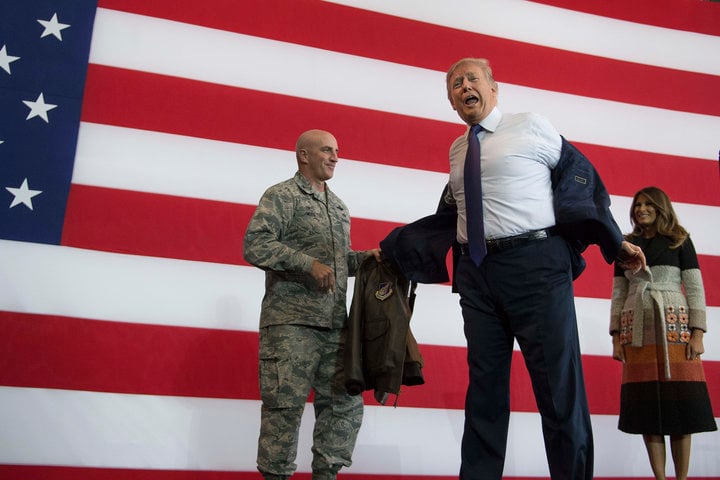
His first Nuclear Posture Review: more nukes, more posturing. By Ashley Feinberg Photo: Jim Watson via Getty Images President Donald Trump at Yokota Air Base in Tokyo on Nov. 5.   In his first year in office, President Barack Obama gave a landmark address in Prague in which he famously affirmed “clearly and with conviction America’s commitment to seek the peace and security of a world without nuclear weapons.” The commitment to total nuclear disarmament was a major departure from the George W. Bush administration — the first time, in fact, that the United States had declared a nuclear-free world a major policy goal.   The original is published at Huffington Post on January 11th, 2018 – and there you will also be able to read the whole Nuclear Posture Review   Now, eight years later, it’s the Trump administration’s turn to lay out its nuclear weapons policy. And according to a pre-decisional draft of...
Categories

Year

Author / Contributor

Region