Globalisation – Nationalism

Category

Year

Author / Contributor

Region

Sort by

Showing 1-10 of 31 stories

berlin-wall-fall
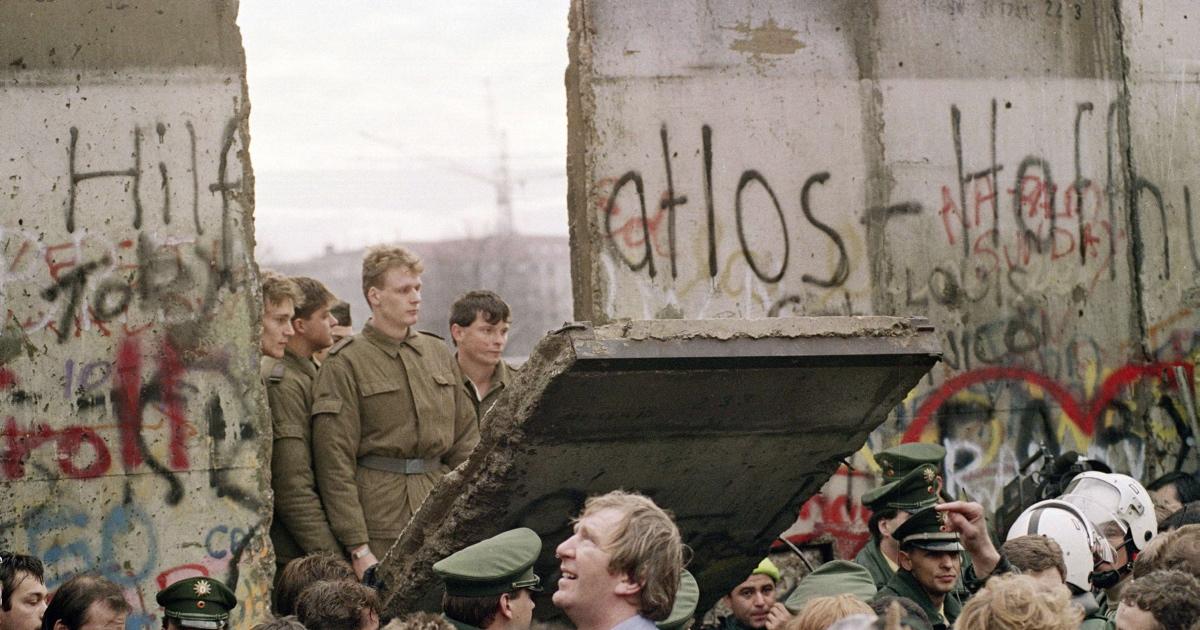
Photo: Gerard Malie/AFP/Ritzau Scanpix Posing the Question Such a question seems little more than a provocation until the effects of the interval between the fall of the Berlin Wall and the present are critically examined in relation to their principal effects. On closer inspection, I am not quite prepared, although almost so, to say that the peoples of the world lost ground as a result of the collapse of the Soviet Union and emergence of the United States as the so-called ‘sole surviving superpower.’ Generally, it was rather automatically assumed almost never challenged, that the outcome of the Cold War was a victory for liberal values, including human rights, political democracy, economic growth, and certainly world peace. There was the added popular view that since democracies supposedly do not go to war against each other, and if Communism was discredited on both ideological and materialist grounds, then democracy would spread...
sustainable-development-and-the-earth-charter-23-728
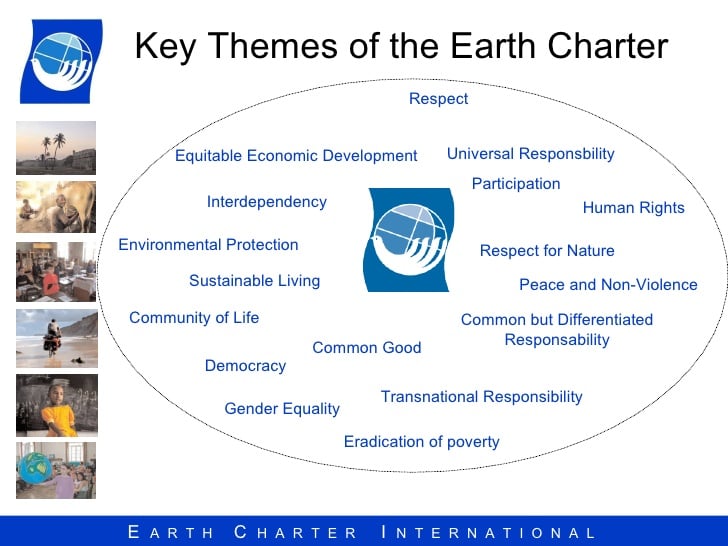
Prefatory Note: The following essay will appear as a chapter in Peter Burden & Klaus Bosselmann, eds., The Future of Global Ethics (Edward Elgar, 2018),  with the title: Revisiting the Earth Charter 20 Years Later: A Response to Ron Engel Ron Engel has articulated an insider review of the Earth Charter so thoughtfully, urbanely, and persuasively that my initial temptation was to restrict my response to a single word: ‘Amen!’ Yet I am familiar enough with the academic ways of gathering diverse voices to explore a topic or to evaluate the scholarship of a distinguished author, as to discard my one-word option. At the same time, it would be misleading if I didn’t praise Ron Engel for putting so many elusive issues before us in such a lucid and compelling manner as to make my efforts at dialogue feel a bit forced, given the high level of agreement. Originally posted on...
ChurchWindow
By Chas W. Freeman, Jr October 9, 2019 There is currently a good deal of hysteria here in Washington about something called “authoritarianism” allegedly taking the offensive against democratic systems of government.  A century ago, imperialists, colonialists, fascists and communists did indeed articulate theories about their superiority to democracy and seek to impose autocratic systems of government on others.  In World War II and the Cold War, ideology played almost as large a role as geopolitics. Originally posted on Consortium News on October 4, 2019 here Today there are plenty of countries in the grips of autocratic regimes, but there are none propagandizing on behalf of autocracy or “authoritarianism.”  The international appeal of authoritarian systems of government, if any, derives from the extent to which they deliver prosperity and domestic tranquility to their citizens.  In the case of China, this is considerable – vastly superior so far to democratic India,...
global-climate-strike-protesters-1200x853
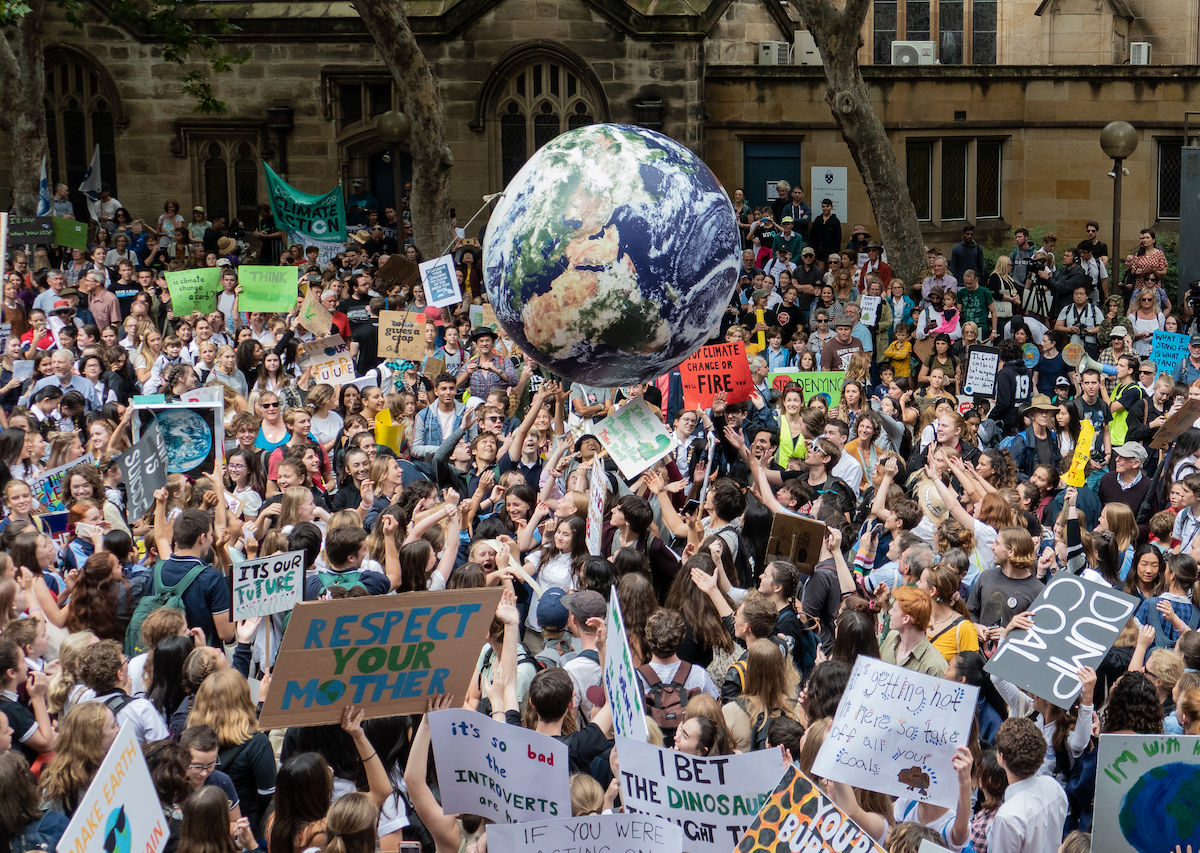
Prefatory Note: The post below of my remarks at the opening session of the Maker Majlis Conference, College of Islamic Studies, Hamed Bin Khalif University (HBKU) in Doha, Qatar on 22 Sept 2019. The theme of the three-day conference was on the role of youth in furthering the UN process associated with the 17 Sustainable Development Goals, SDGs (as further clarified by 169 targets), ambitiously set to be achieved by 2030. The massive Global Climate Strike on 20 September seemed to have similar intentions to conference, that is, how to explain and  overcome the absence of political will on the part of the governments of the world, none more lacking in this respect than the U.S. Government, with respect to the ecological agenda of the world, with particular consideration of climate change threats and harms. This civil society challenge from below, transnationally and inspired and organized by youth, offers us...
neoliberalism-101-neoliberalism-is-a-form-of-capitalism-in-which-26584797
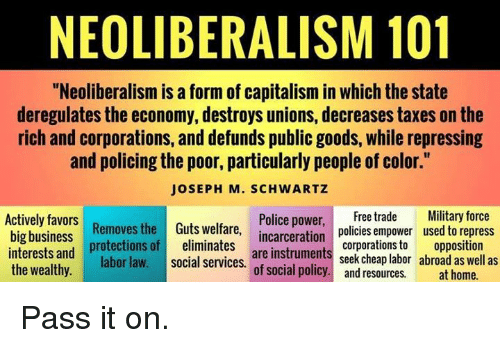
By Ellen Brown September 1, 2019 When the Federal Reserve cut interest rates on July 31st for the first time in more than a decade, commentators were asking why. According to official data, the economy was rebounding, unemployment was below 4%, and GDP growth was above 3%. If anything, by the Fed’s own reasoning, it should have been raising rates. Originally posted Ellen Brown’s official website on August 9, 2019 here The explanation of market pundits was that we’re in a trade war and a currency war. Other central banks were cutting their rates and the Fed had to follow suit, in order to prevent the dollar from becoming overvalued relative to other currencies. The theory is that a cheaper dollar will make American products more attractive on foreign markets, helping our manufacturing and labor bases. Over the weekend, President Trump followed the rate cuts by threatening to impose a new 10% tariff on $300...
cropped-120302-asylum-seekers
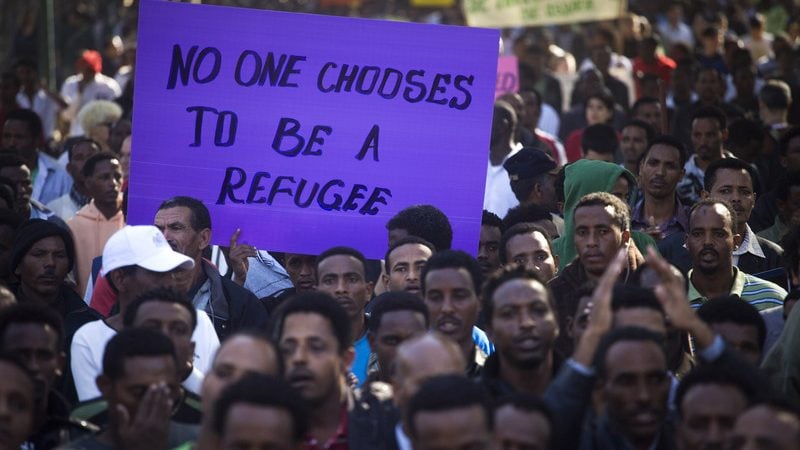
Somebody once said that courage is when you do something today you wouldn’t dare doing yesterday. That is why I decided to express my opinion whereas normally I would choose – wisely – to restrain my lips. Have you ever had an opportunity to speak with your friends about migrants and mass immigration? Especially with your international friends living in different parts of the world and changing their residence like migrating birds? How do you explain your views if they differ from the usual, dominating or politically correct one? Or, how do you actually explain that you are against immigration without risking being categorized as a racist? During my latest visit to Switzerland, while conversing with a friend about many topics including politics, somehow we started discussing immigration. My friend’s opinion was that Swiss people may seem cold and distant, but in reality they are very open-minded and friendly to...
The-enlargement-of-NATO-1949-2018_cropped_3x2
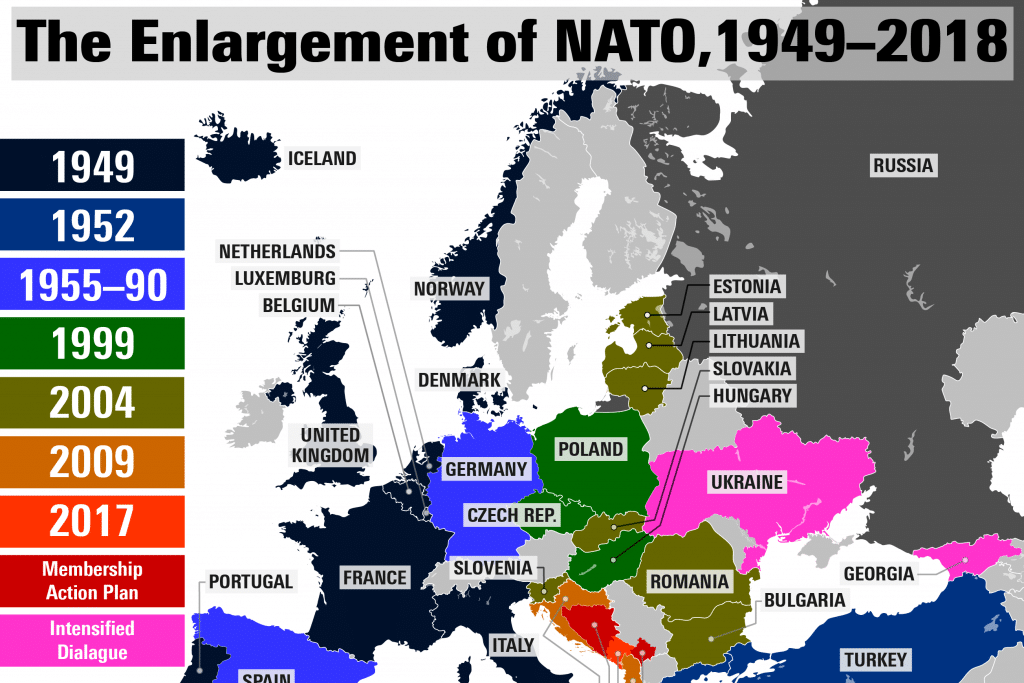
By Gordon M. Hahn July 25, 2019 NATO expansion has contributed to the causal matrix of two wars: the 2008 Georgian-South Ossetiyan/Russian Five-Day War and the ongoing Donbass civil war. The West’s April 2008 promise that both Georgia and Ukraine will become NATO members encouraged Georgian nationalism and Saakashvili’s war in South Ossetiya and consequently led to Georgia’s de facto loss of its South Ossetiyan as well as Abkhaziyan territories. Originally published on Gordon M. Hahn homepage – while Poroshenko was still president. Similarly, NATO expansion encouraged the rise of ultranationalism in Ukraine, especially western Ukraine, and the ultra-nationalist-led February 2014 Maidan revolt, leading to Ukraine’s loss of Crimea and civil war in eastern Ukraine’s Donbass regions of Donetsk and Luhansk. NATO expansion now is poised to help re-start the Donbass civil war or spark a larger Ukrainian civil war (and/or similar conflicts involving Moldova and its breakaway republic of...
DSC_8592
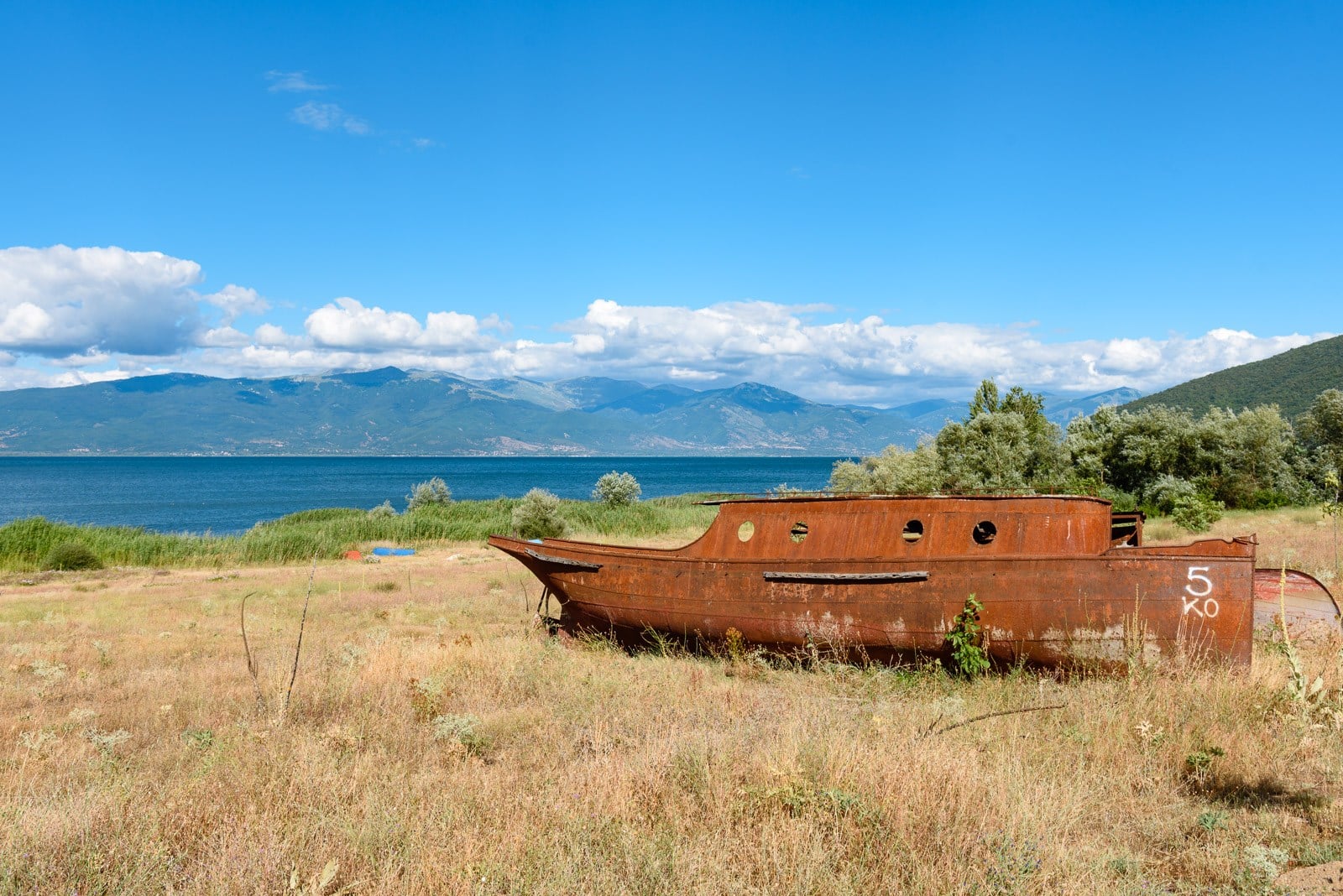
Lake Prespa in Macedonia Abstract The Prespa Agreement (PA) between Athens and Skopje was meant to be a final solution to the ‘name issue’. Yet the dispute has never been only about the state name, which is proved by the 20-pages long text. A plethora of other provisions is to be implemented erga omnes (internationally and domestically). Despite the insistence of the external mediators that the name dispute has never concerned the issues of ethnicity, nationality, culture, and language, these issues indeed appear to be simultaneously central as well as the Achilles heel of the deal. This paper does not deal with conceptual and theoretical aspects of ethnicity and nationality; yet its focus is on the fact that the Agreement indeed regulates identity issues, i.e. it represents a legal intervention in spheres pertaining to both ethnicity and national identity with implications for each. The basic premise is that instead of...
71de2133-5ae9-45ef-80a0-c1b5d0bb5ec0
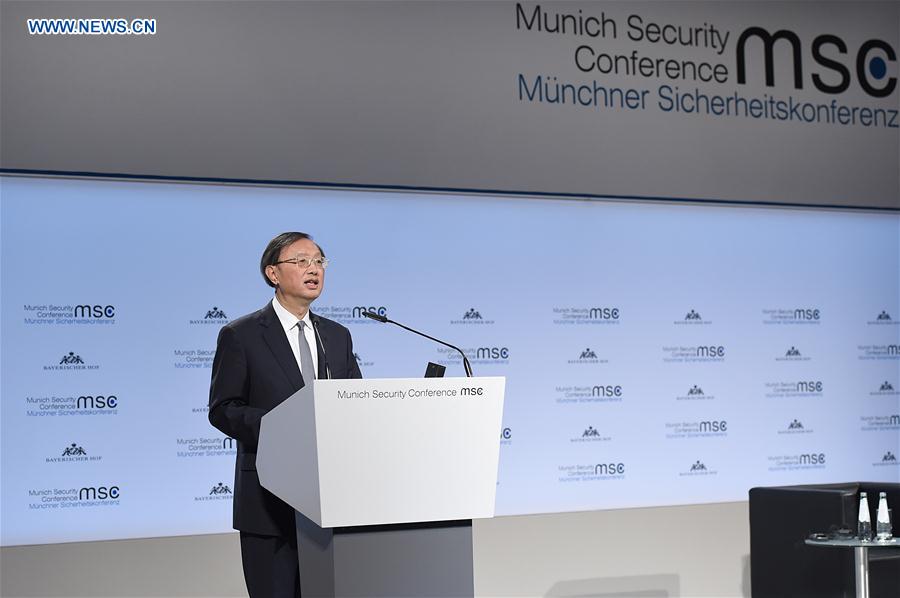
“Working for a Community with a Shared Future for Mankind by Promoting International Cooperation and Multilateralism” By Yang Jiechi February 18, 2019 MUNICH, Germany, Feb. 16 (Xinhua) – Yang Jiechi, a member of the Political Bureau of the Communist Party of China (CPC) Central Committee, Director of the Office of the Central Commission for Foreign Affairs, delivered China’s keynote speech on February 16, 2019 at the 55th Munich Security Conference. Italics added by The Transnational for pedagogical, easier-read reasons. This is the English translated version of the speech reprinted from China Org. cn here: Mr. Wolfgang Ischinger, Chairman of the Munich Security Conference, Ladies and Gentlemen, It is my great pleasure to join you at this year’s Munich Security Conference (MSC). As a global forum on security policy, the MSC provides an important platform for people around the world to express views and share insights on major issues concerning world...
3943
Photograph: Bloomberg via Getty Images The world’s 26 richest people now own as much as poorest 50%. It creates huge problems, misery and conflicts. And it is caused by the West’s version of capitalism and is neither sustainable nor morally defensible, says Jan Oberg. By Oxfam  21 January 2019 Billionaire fortunes increased by 12 percent last year – or $2.5 billion a day – while the 3.8 billion people who make up the poorest half of humanity saw their wealth decline by 11 percent, reveals a new report from Oxfam today. The report is being launched as political and business leaders gather for the World Economic Forum in Davos, Switzerland. ‘Public Good or Private Wealth’ shows the growing gap between rich and poor is undermining the fight against poverty, damaging our economies and fuelling public anger across the globe.  It reveals how governments are exacerbating inequality by underfunding public services, such as healthcare and...
JeffSachs
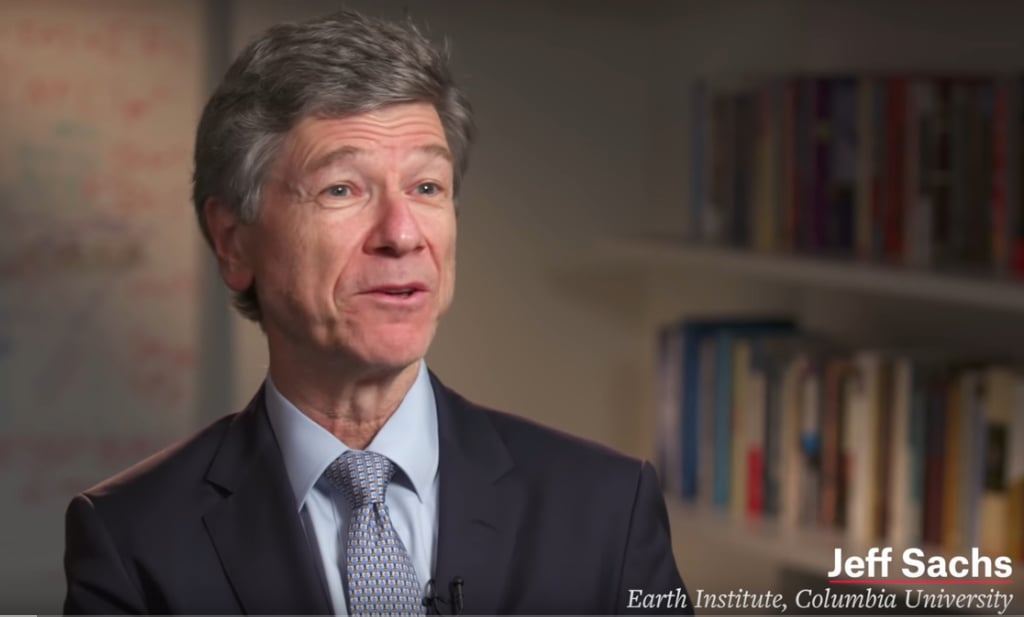
January 19, 2019 “The naive and dangerous idea that the U.S. is exceptional has made us a danger to ourselves.” Jeffrey Sachs sits down with Rob Johnson to discuss his new book, A New Foreign Policy: Beyond American Exceptionalism, Columbia University Press, 2018.
FOREIGN201809041714000403314906740
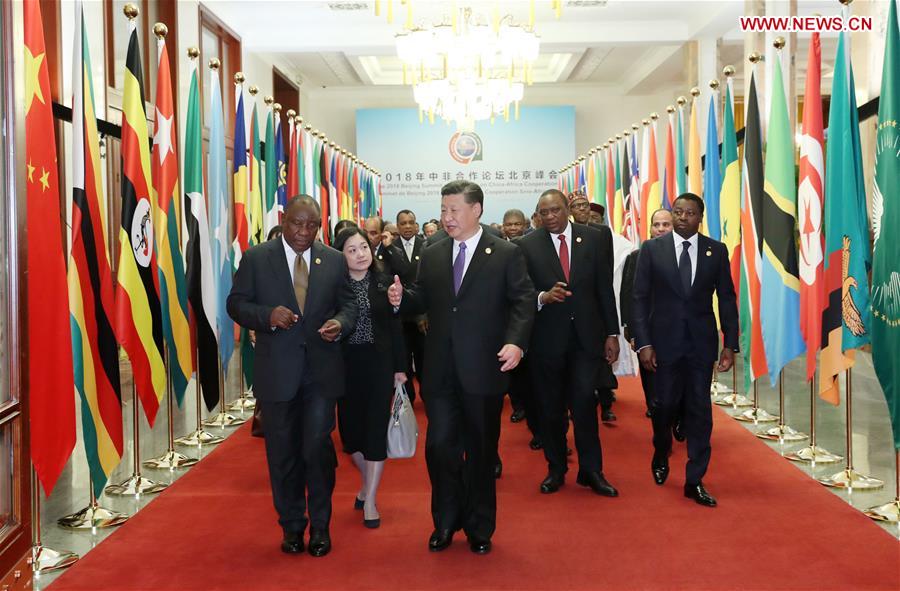
Chinese President Xi Jinping and foreign leaders attending the Beijing Summit of the Forum on China-Africa Cooperation (FOCAC) head for the venue of the summit’s opening ceremony at the Great Hall of the People in Beijing, capital of China, Sept. 3, 2018. (Xinhua/Pang Xinglei)   By Curtis Stone People’s Daily Online September 4, 2018   The 2018 Beijing Summit of the Forum on China-Africa Cooperation kicked off on Monday. At the opening ceremony, President Xi Jinping delivered an important speech that drew a warm round of applause from the audience. Xi said China will implement eight major initiatives with African countries in the next three years and beyond, covering fields such as industrial promotion, infrastructure connectivity, trade facilitation, and green development.   Originally published by The People’s Daily Online on September 4, 2018, here   In his speech, President Xi said China values sincerity, friendship, and equality in pursuing cooperation,...

Categories

Year

Author / Contributor

Region