Essays

Category

Year

Author / Contributor

Region

Sort by

Showing 1-10 of 106 stories

DSC_8592
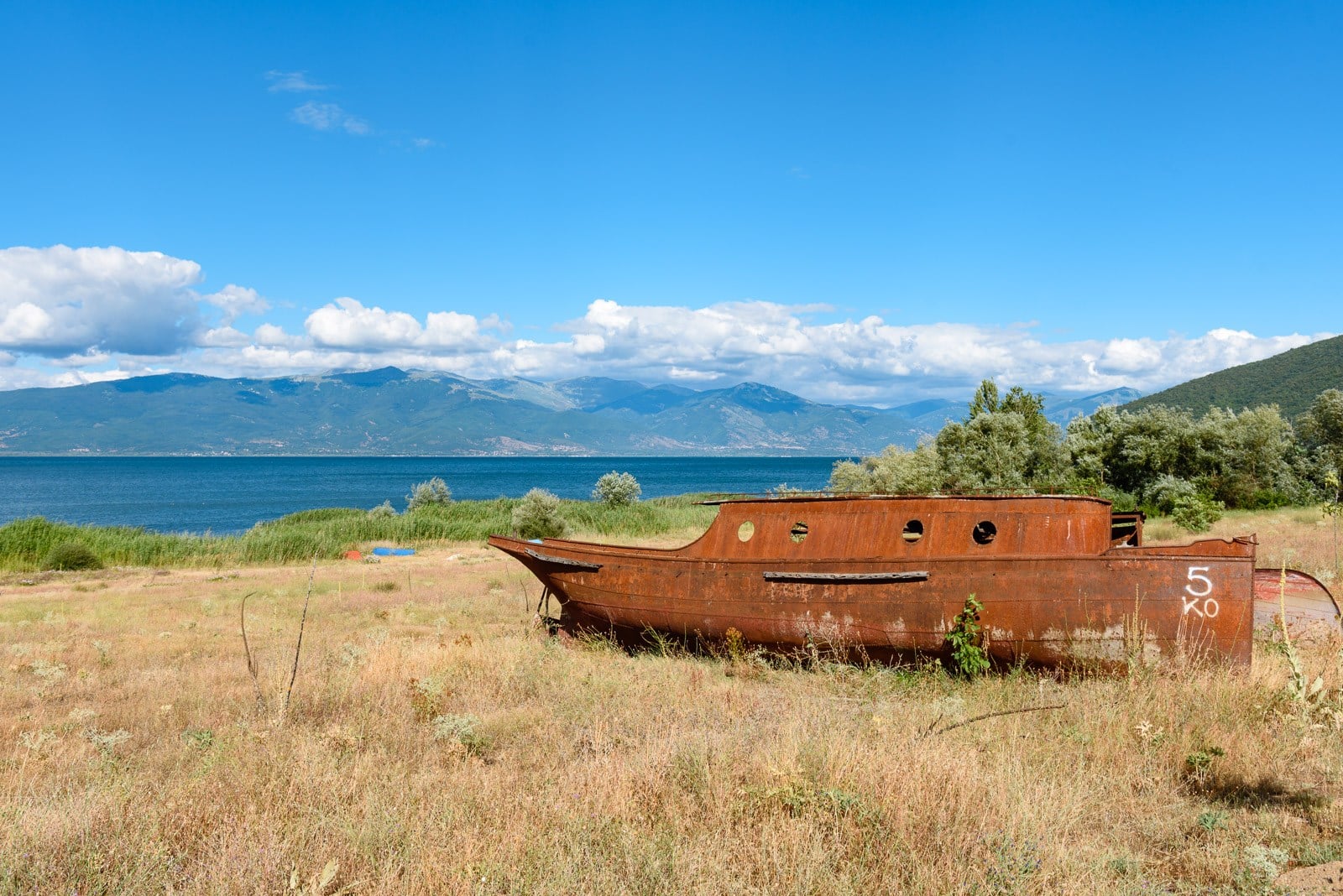
Lake Prespa in Macedonia Abstract The Prespa Agreement (PA) between Athens and Skopje was meant to be a final solution to the ‘name issue’. Yet the dispute has never been only about the state name, which is proved by the 20-pages long text. A plethora of other provisions is to be implemented erga omnes (internationally and domestically). Despite the insistence of the external mediators that the name dispute has never concerned the issues of ethnicity, nationality, culture, and language, these issues indeed appear to be simultaneously central as well as the Achilles heel of the deal. This paper does not deal with conceptual and theoretical aspects of ethnicity and nationality; yet its focus is on the fact that the Agreement indeed regulates identity issues, i.e. it represents a legal intervention in spheres pertaining to both ethnicity and national identity with implications for each. The basic premise is that instead of...
decline
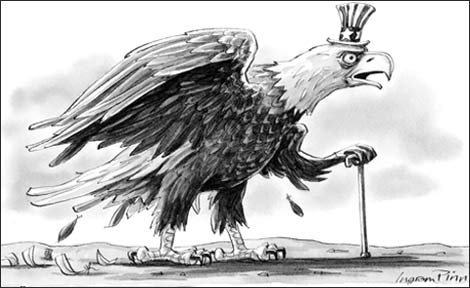
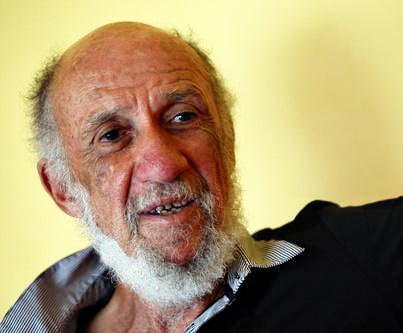
  By Richard Falk Prefatory Note With apologies for this long post, which attempts to situate the struggle for an ethically and ecologically viable political future for the United States and the world in the overheated preoccupation with Trump and Trumpism, which is itself a distraction from the species challenges confronting the whole of humanity at the present time. Many of us, and I include myself, have allowed the side show to become the main attraction, which is itself a reason for struggle against the enveloping darkness.   The Psycho-Politics of Geopolitical Depression It should not be all about Trump, although his election in 2016 as U.S. president is symptomatic of a menacing national tailspin. This downward political drift in the United States, not only imperils Americans, but threatens the world with multiple catastrophes, the most worrisome of which involves Trump’s double embrace of nuclearism and climate denialism. Unfortunately at...
APT-cu-desen-si-scris-UPDATE-CU-IC
Dear story lover! I’m a peace-building practitioner and I have just launched a storytelling-for-peace platform.  I translate integral peace education themes into stories for both children and parents to practice together – for harmonious relationships within the web of life. With two forthcoming books that bring peace education issues at family level, I need support to raise the profile of my work. Two of the forthcoming, illustrated storybooks are available for free to a group of advance readers who can assist with the launches on Amazon.com in May and June 2018. Now, please click on these links to download the new e-books for free: Queen Rain, King Wind – The Practice of Heart Gardening Anagrania’s Challenge – Turning Conflict into Opportunity (Whole Nutrition Series) Enjoy the stories and stay tuned to hear about the upcoming launches where any small contribution will be very much appreciated. Spreading an educational message takes community...
earth-as-an-exploding-bomb-720x510
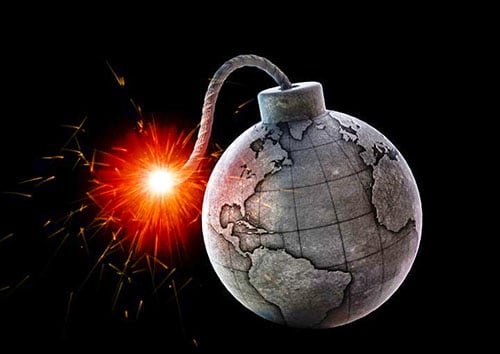
By William Bowles • Before I began this essay I read through some of my past forays that mentioned climate change and capitalism, the first I think, being in 2006 where I opined in a piece on the ‘War on Terror’: Perhaps the impending climate catastrophe as well as the genocidal actions of the US will force us to finally start thinking and acting ‘outside of the box’ but without a clear idea of where we are heading or how to get there, currently the situation looks dire. — WOT is to be done? 2 November, 2006 In the intervening years, things have gotten even more dire on pretty much every front. It appears that the world’s political and business elite are even more entrenched inside their box. Except, we do know what has to be done, so why, in the face of the obvious, do we not act to forestall catastrophe? Original posted...
1
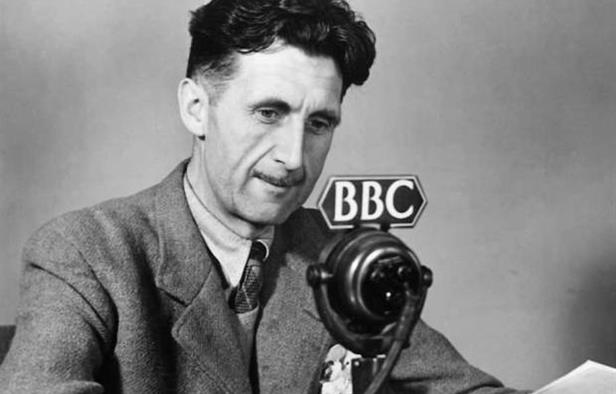
Introduction This is a collection of biographical sketches showing people whose wise voices from the past can help to guide us today. All of the women and men, brief glimpses of whose lives and ideas are portrayed here, gave a high place to compassion. None of them was a slave to greed. We need their voices today! A Lower-Upper Middle Class Family and Education Eric Arthur Blair (1903-1950), better known by his pen name George Orwell, was the great-grandson of Charles Blair, a wealthy country gentleman, and Lady Mary Fane, daughter of the Earl of Westmorland. Over the generations that separated Eric Blair from his great-grandparents, some of the gentility remained but most of the wealth disappeared, and he described his family as being “lower-upper middle class”. Eric Blair was born in British India where his father was working, but when he was one year old his mother took the...
John-Scales-Avery-2
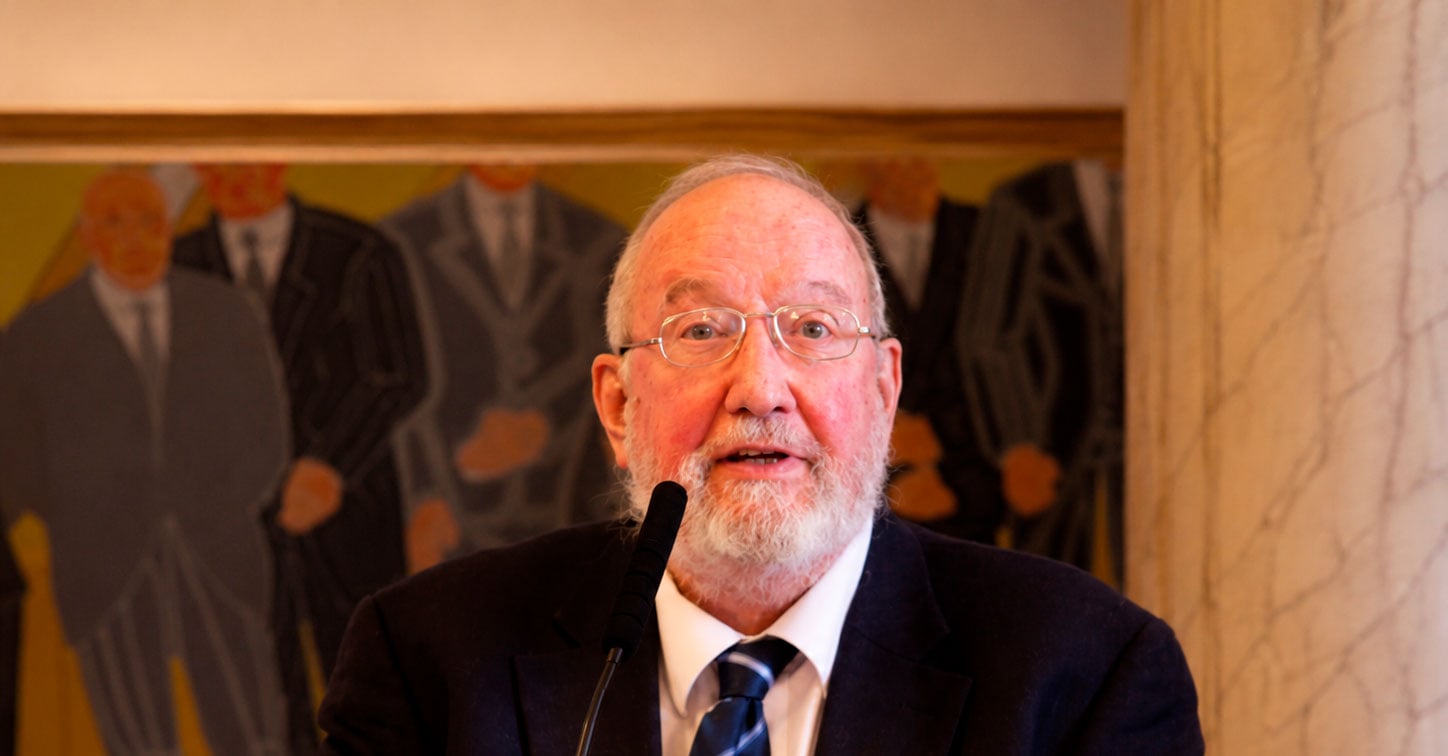
Portrait of a TFF Associate • John Scales Avery is a theoretical chemist at the University of Copenhagen. He is noted for his books and research publications in quantum chemistry, thermodynamics, evolution, and history of science. His 2003 book Information Theory and Evolution set forth the view that the phenomenon of life, including its origin, evolution, as well as human cultural evolution, has its background situated in the fields of thermodynamics, statistical mechanics, and information theory. Since 1990 he has been the Chairman of the Danish National Group of Pugwash Conferences on Science and World Affairs. Between 2004 and 2015 he also served as Chairman of the Danish Peace Academy. He founded the Journal of Bioenergetics and Biomembranes, and was for many years its Managing Editor. He also served as Technical Advisor to the World Health Organization, Regional Office for Europe (1988-1997). A complete list of books and many of...
davidloy2017
By David Loy Via huffingtonpost.com • What is money? We use it every day, so we must understand how it works… or do we? Perhaps our familiarity keeps us from appreciating just how strange money actually is – and how it uses us. What is a dollar bill? A piece of paper. You can’t eat it, ride in it, or sleep on it. The same is true of digits in bank accounts. In and of itself, money is literally worthless, in effect nothing. Yet money is also the most valuable thing in the world, because we have collectively decided to make it so. It is our socially agreed, and legally enforced, symbol of value. The anthropologist Weston LaBarre called it a psychosis that has become normal, “an institutionalized dream that everyone is having at once.” A dream that sometimes turns into a nightmare. – – – Needless to say, there...
RichardFalk20141
Lunch alone in a trattoria in the San Lorenzo neighbourhood of Rome, which is neither fashionable nor touristic. Noisy with students and young people at night, local places to hang out, some occupied spaces. What struck me – in contrast to the U.S, Germany, even France, where I have recently been – is that Italy, and specifically Rome, is a deep culture that works for its working and middle classes, or put less structurally, for ‘ordinary people.’ Of course, this is an impression, but for me a rather convincing one, and harmonious with a morning cappuccino and croissant at a vibrant bar around the corner from a friend’s apartment where we are staying for a couple of days. At the trattoria, there were about ten tables in the dining area. At one nearby, two men were playing a card game for small amounts of money with classical Italian faces, aged...

ChatGPT Image 9 jun 2026, 11_11_33
. Ex-president Bill Clinton has long worn a hearing aid because in his youth he enjoyed loud music. Noise can make us ill – not just hearing loss (as I have from starting a dance club for Caribbean youth in an abandoned factory in London), but also high blood pressure, disturbed sleep and even heart disease. An article in a German trade union newspaper claimed that “noise sickness” tops the industrial ailment list. Noise is a pollutant. It produces a large amount of stress and strain for bodies and minds already taxed by a high-pressured economic system. Noise is the silent political issue that grates on many people’s nerves. In a poll 45% of the German population said they believe that protection against noise is more important than building new roads. Tens of thousands of people who live near London’s Heathrow airport have for years managed to stymie successive government...
RichardFalk20141
We are living amid contradictions whether we like it or not, driving expectations about the future toward opposite extremes. Increasingly plausible are fears that the ‘sixth extinction’ will encompass the human species, or at least, throw human society back to a technology of sticks and stones, with a habitat limited to caves and forests. This dark vision is countered by gene-editing designer promises of virtual immortality and super-wise beings programming super-intelligent machines, enabling a life of leisure, luxury, and security for all. Whether the reality of such a scientistic future would be also dark is a matter of conjecture, but from a survival perspective, it offers an optimistic scenario. On political levels, a similar set of polar scenarios are gaining ground in the moral imagination, producing national leaders who seem comfortable embracing an apocalyptic telos without a second thought. The peoples of the world, entrapped in a predatory phase of...
RichardFalk20141
Prefatory Note The text below is drawn from a talk given at the Spring Festival of the Arts in Beirut, Lebanon on 15 June 2017. Comments welcome. How can we understand the present unfolding world order, with special reference to its relevance for developments in the Middle East? In my view a fundamental reversal of political expectations has taken place that calls for a new assessment of what is going on, and where the region and the world seem to be heading. Twenty-five years ago there were three widely held beliefs about future trends on a global level: the assured preeminence of the United States; the continuing globalization of the world economy; and the expanding democratization of national governance arrangements. It was also assumed that these trends were more or less descriptive of regional realities, including the Middle East. Each of these trends that seemed so descriptive 25 years ago...
johangaltung
Wikipedia has much to offer under “aging”. Highly recommended are the 10 points by the world’s oldest living man, 114, Walter Breuning. However, older persons, like me at 86, know their own aging best. Less trouble with “oxidant stress” as a major cause, having used anti-oxidants based on blueberry skin – no chemicals – for decades. 20,000 blood stem cells renew my blood, but they are dying. Problematic. Rule no. 1: Keep mind and body active; maintain a good nutrition. Obvious to counteract aging. However, equally important: Rule no. 2: Be open to the positive sides and advantages of aging. Bertrand Russell’s “On Being 90” in the Observer dispenses with the disadvantages as obvious, in favor of his advantage: the overview. At the age of 5 he sat on the knee of a man who had fought Napoleon at Waterloo in 1815. The longer the lives we have lived, the...
Categories

Year

Author / Contributor

Region