Economics

Category

Year

Author / Contributor

Region

Sort by

Showing 1-10 of 97 stories

seddelpresse
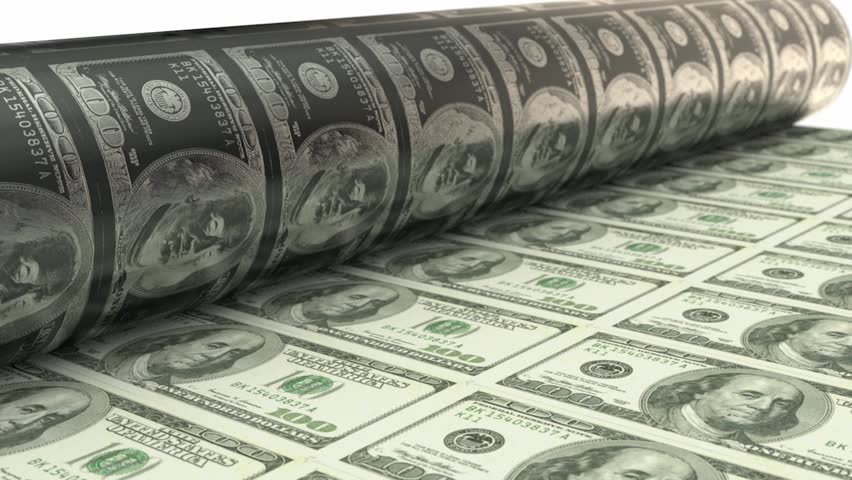
Today the money meme rules our lives and social interactions in most societies on Earth. How did this happen? I studied all the economics textbooks of every perspective from the Austrian “laissez-faire” market fundamentalists to Adam Smith’s Wealth of Nations, (1776) and his earlier Theory of Moral Sentiments, (1759), as well as Karl Marx, who claimed not to be an economist. From Karl Polanyi’s broader views, I learned that trading was innate in human behavior and how indigenous peoples in the South Pacific traded shells in their canoe travels and visits among these islands in “Primitive, Archaic and Modern Economics, (1968). In Polanyi’s “The Great Transformation”, (1944), I learned how traditional societies and local market norms in communitarian village life were over-ruled by legislation in the British parliament which created national markets and facilitated global trade and colonial exploitation as these markets expanded. I was fortunate to know Polanyi personally...
Inequality-3
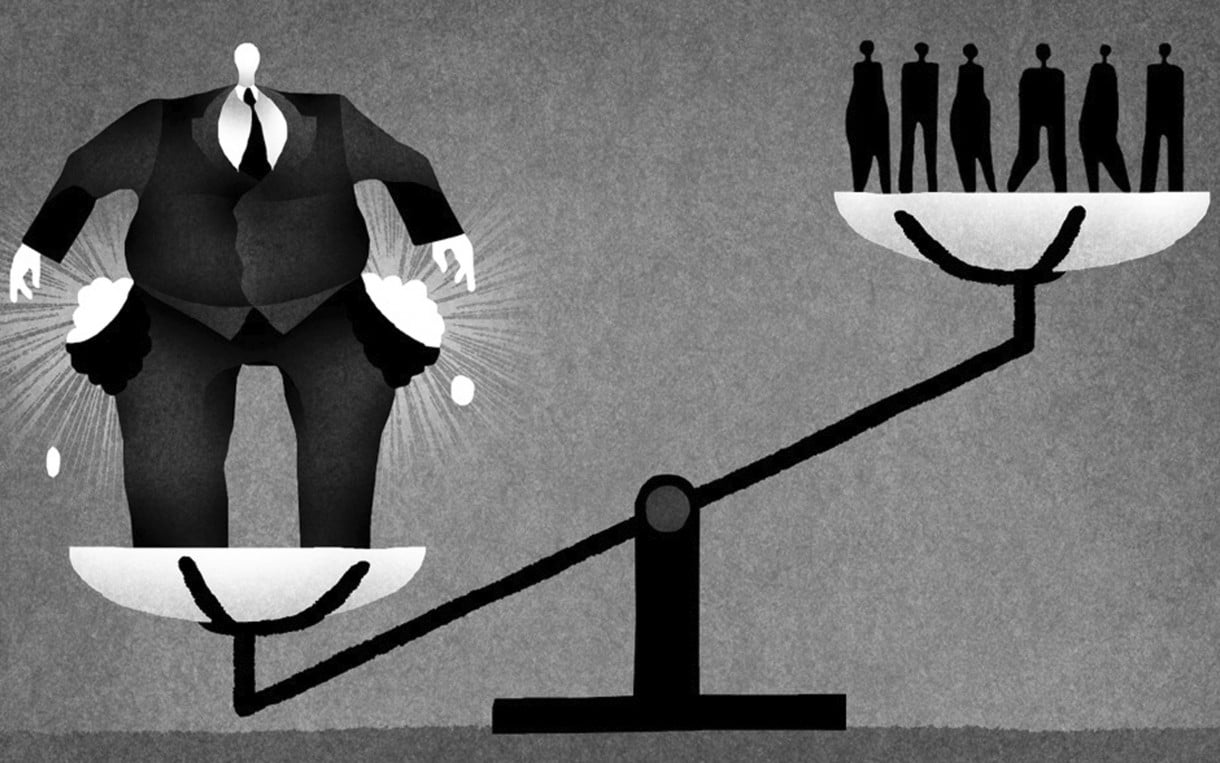
A new freely downloadable book I would like to announce the publication of a new book, which discusses the question of how oligarchs maintain their grasp on an excessive share of wealth and power when, as Shelley pointed out, the have-nots are many, while the power-holders are few. Please click to access “Ye Are Many They Are Few” The Peterloo Massacre Rise, like lions after slumberIn unvanquishable number!Shake your chains to earth like dewWhich in sleep had fallen on you:Ye are many, they are few! Percy Bysshe Shelley wrote his poem “The Masque of Anarchy”, from which the above quotation is taken, in response to the Peterloo Massacre, which took place at St. Peter’s field in Manchester on the 16th of August 1819. Cavalry soldiers of the government charged a crowd of 60,000 citizens who were peacefully assembled to ask for better representation in Parliament. They were suffering from unemployment...
Scheerpost
(Photo: Art by Mr. Fish/Original to Scheerpost) Regardless of the outcome, the election will not stop the rise of hypernationalism, crisis cults and other signs of an empire’s terminal decline. By Chris Hedges September 1, 2020 The terminal decline of the United States will not be solved by elections. The political rot and depravity will continue to eat away at the soul of the nation, spawning what anthropologists call crisis cults — movements led by demagogues that prey on an unbearable psychological and financial distress. These crisis cults, already well established among followers of the Christian Right and Donald Trump, peddle magical thinking and an infantilism that promises — in exchange for all autonomy — prosperity, a return to a mythical past, order and security. The dark yearnings among the white working class for vengeance and moral renewal through violence, the unchecked greed and corruption of the corporate oligarchs and...
ObergComment_OnSite
Some may remember way back when US President Obama said that the US had now isolated Iran. The only problem was that on the very same day, some 130 leaders from the Non-Aligned Movement, NAM, were meeting in Tehran. The more the US withdraws from international treaties, imposes sanctions, threatens wars and otherwise antagonizes the rest of the world, the more that rest will search – and find – new partners and create a future world order that is not Western- or US-dominated. That’s what Iran is now doing. After sanctions since 1979, verbal harassment, a broken JCPOA (nuclear deal), accusations of being the world’s leading supporter of terrorism, maximal pressure policies, threat of massive war, bombings, liquidation of a top government representative, infiltrations and much else – why on earth should the leaders in Tehran (no matter what you may think about them and their policies) continue to seek...

us-china-relations
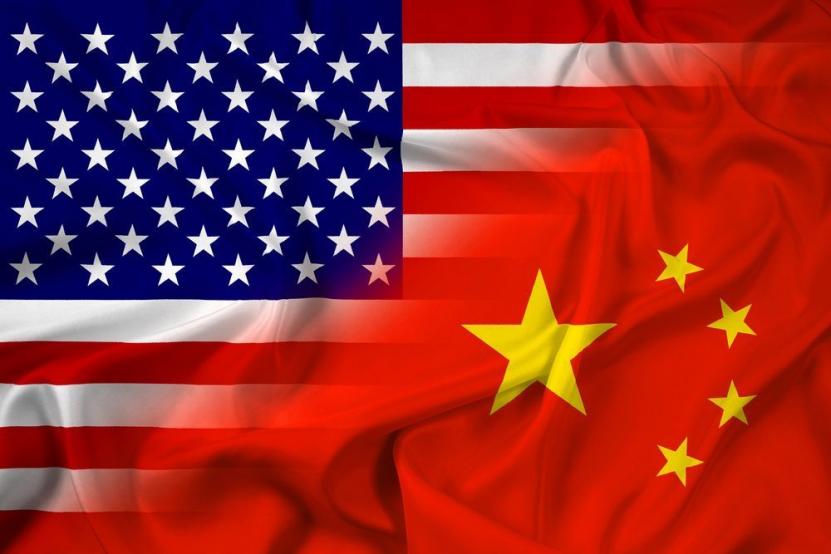
Ambassador Chas W. Freeman, Jr. (USFS, Ret.) Senior Fellow, Watson Institute for International and Public Affairs, Brown University Washington, DC  29 November 2018 Ladies and Gentlemen: You have asked me to say a few words about China’s rise and its role in the post-American world.  There is a lot of nonsense being voiced on this topic at present.  It’s timely to address it.  I played a minor part in the original opening of China to the West.  Somewhat like Leonard Zelig or Forrest Gump in other contexts, over the course of fifty years as China returned to wealth and power, I was often on or in the scene.   I am happy to share some impressions with you. Originally posted on Chas W. Freeman, Jr.’s personal blog on November 29, 2018 here After serving in India, working to keep China out of the United Nations, and studying Chinese in Taiwan, I...
ChatGPT Image 9 jun 2026, 11_11_33
s came Thatcherism and Reaganism. Their governments set about a heavy-handed pruning of the social welfare safety net. Poverty rose dramatically. Fortunately for their people, the governments of the rest of Europe, by and large, did not emulate the Anglo-Saxons. President Bill Clinton and Prime Minister Tony Blair in the late 1990s introduced what they said was the “Third Way” – something between naked capitalism and over-demanding socialism. Clinton tried but failed, to fashion a fairer health system, although, paradoxically, he cut welfare payments for the poorest in the mistaken belief that this would drive the poor to find jobs (Later he admitted his mistake). In Britain, the child poverty rate plummeted. Then came the Great Recession of 2008. This indeed was the result of wicked capitalism. The crash of the big New York bank Lehman Brothers triggered a tsunami of bankruptcies, unemployment and increased poverty across the world. The...
ChatGPT Image 9 jun 2026, 11_11_33
and 2016 the average income of the bottom 50% of earners in the world nearly doubled. Direct interventions like building more schools, clinics and hospitals, countering child mortality and deadly diseases, feeding the hungry when famine or floods decimate vast areas, spreading the use of vaccinations and contraception, and preventing malaria have had the most impact. Over the long-term economic growth is important if development is to proceed without foreign aid. Growth does produce more of the wherewithal for government social and development programs – if a government so decides. But we cannot rely just on growth to improve peoples’ lives. China and India have both had periods of high growth, but now are slowing. Is this inevitable or is it, as in China, just a maturing of the economy? This export-led economy can’t grow its exports faster than the world economy is growing. In India, after a 30 year...
cover_sanctions_0
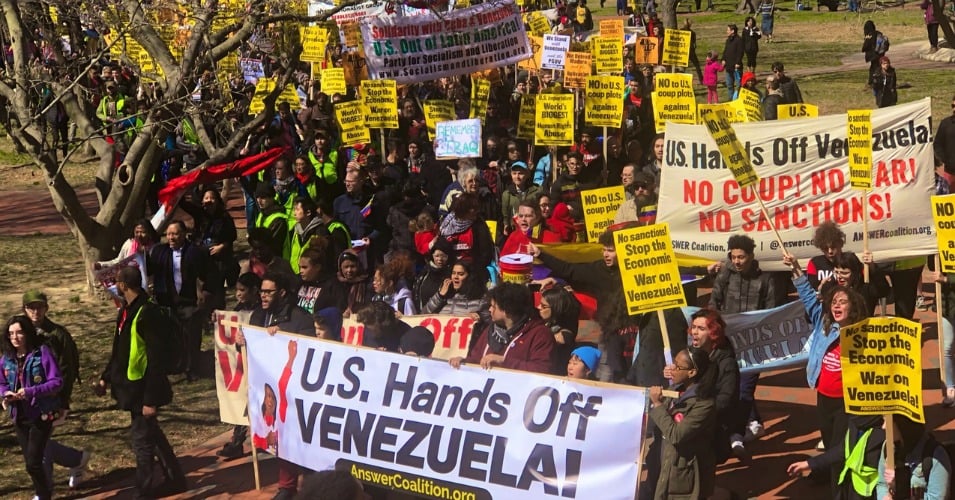
By Kevin Zeese and Margaret Flowers February 10, 2020 The US is currently attacking one-third of the planet’s population with 8,000 economic sanctions, ongoing acts of war against 39 nations. “Their intent is to shrink the economy and cause chronic shortages and hyperinflation while ensuring a lack of access to finance to pay for essentials.” Originally posted in the Black Agenda Report, January 15, 2020 The United States is relying more heavily on illegal unilateral coercive measures (also known as economic sanctions) in place of war or as part of its build-up to war. In fact, economic sanctions are an act of war that kills tens of thousands of people each year through financial strangulation. An economic blockade places a country under siege. A recent example is the increase in economic measures being imposed against Iran, which many viewed as more acceptable than a military attack. In response to Iran...
the-new-confessions-of-an-economic-hit-man-5370946-1-638
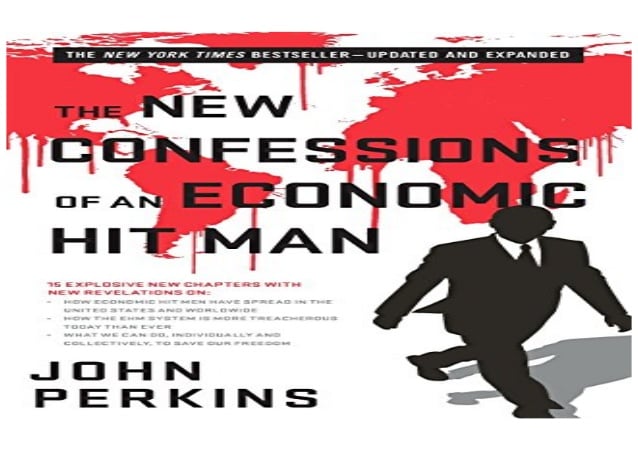
By John Perkins February 08, 2020 John Perkins describes the methods he used to bribe and threaten the heads of state of countries on four continents in order to create a global empire and he reveals how the leaders who did not “play the game” were assassinated or overthrown. He brings us up to date about the way the economic hit man system has spread from developing countries to the US, Europe, and the rest of the world and offers a strategy for turning this around. “Each of us,” he says, “can participate in this exciting revolution. We can transform a system that is consuming itself into extinction into one that is sustainable and regenerative.” This video was originally posted on TEDx Talks Youtube Channel on June 24, 2016, here If you think this type of critical analysis by a person who really knows is important… John Perkins’ books, including...
ChatGPT Image 9 jun 2026, 11_11_33
Can we be happier? All of us probably experience grave unhappiness at some point in our lives- a bereavement of someone close, a job loss, a bad illness, a vindictive boss, a drop in income or status, a loss of love for or from one’s partner, even a divorce, a standard of living when ends can hardly be met. Every reader can add their own woes to this list. Yet the world as a whole does appear to be getting happier, except in a few countries where war or fighting has taken over- Syria, Iraq, Afghanistan, Burundi and Sudan, for example. Indeed the lessening of war is one reason for rising happiness around the world. Another is the rapid decline in infant and maternal mortality- don’t ever think that a big Indian or African family today or a 19th century European family doesn’t or didn’t feel immense pain if a...
ChatGPT Image 9 jun 2026, 11_11_33
. In 2019 we are still furiously debating the value of free trade. The Nobel economics laureate Paul Krugman argues that the trade barriers that President Donald Trump has raised against China are counterproductive. All it has done is to trigger retaliation. Farmers who export soya and wheat to China have lost out heavily. The old, uncompetitive, industrial sector of America, has not been revived and the American consumer has faced rising prices. Yesterday a report published by the Federal Reserve (the US central bank) said the same thing. Students have long been taught by their economics professors that even if a country is poorer than its trading partner it’s still sensible to trade with it. Trade will lift both boats. It pays the richer country to concentrate on making and exporting what it does best. Then it wants to import cheaply what it is not so good at. This...
Mahatma-gandhiquote
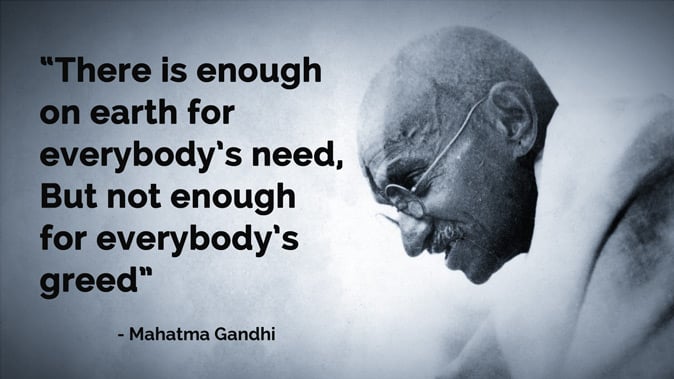
By David Cortright December 11, 2019 Last month I was invited by the Indian Permanent Mission to the United Nations to give a presentation on the International Day of Nonviolence, which was also the 150th anniversary of Gandhi’s birth. Below is the full text of my remarks, which were delivered at the United Nations headquarters in New York. Originally posted on Davidcortright.net on November 9, 2019 here In the remarks, I identified three aspects of Gandhian thought and action that are directly relevant to the challenge of protecting the environment and preventing climate disruption. At the end of my presentation, I added a brief comment on the situation in Kashmir, which seemed necessary to include in an event organized by the Indian government. “Gandhi’s message is highly relevant to today’s global climate crisis. I emphasize here three of his most important themes: simplicity, equity and nonviolence. Simplicity Gandhi became the “greatest...
Categories

Year

Author / Contributor

Region