Economics

Category

Year

Author / Contributor

Region

Sort by

Showing 1-10 of 97 stories

China-transformation_of_capitalism-Eurasia-News
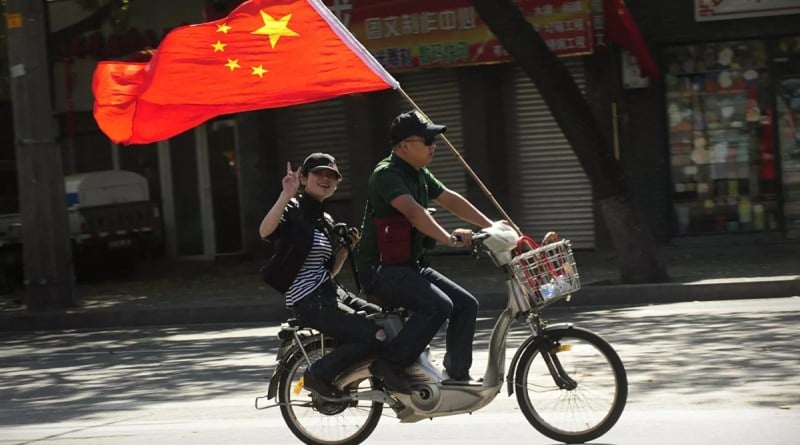
Eurasia News October 9, 2021 Is a new “cultural revolution” starting in China? For many days in the Celestial Empire, they have been discussing the article “Everyone can feel that a deep transformation is taking place” – about the new course of Xi Jinping . Here is the most striking quote from it: If we continue to have to rely on big capitalists as the main force in the fight against imperialism and hegemonism, or we continue to cooperate with the American industry of ‘mass entertainment’, our youth will lose their strong and courageous energy, and we will suffer the same collapse. like the Soviet Union, even before we get a real attack. The publication appeared on WeChat on August 28 on the personal blog of Li Guangman. He is a little-known journalist and former editor-in-chief of a small newspaper. But in the following days, the text was reprinted by various state media, including the People’s Daily...
Tapi-pipeline-1024x768-1
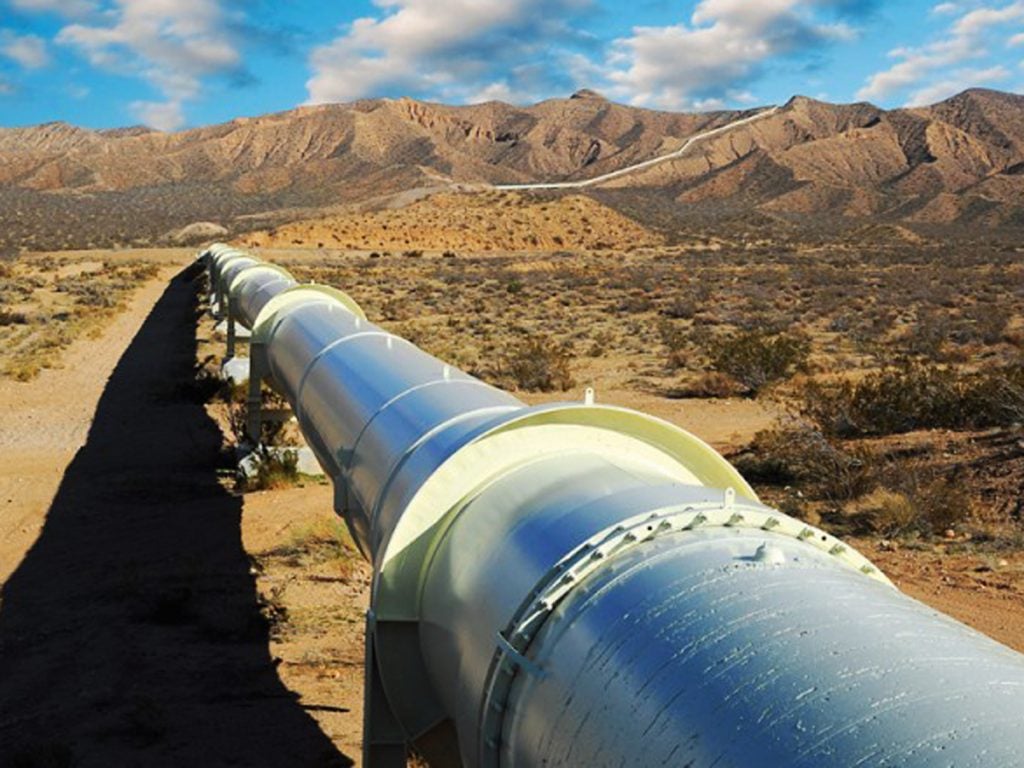
Pepe Escobar August 24, 2021 At one point last week, the price of a barrel of crude oil — which had risen as high as $147 last July and, with the global economic meltdown, hit a low of $32 in 2009 — rebounded above $51. Prices at the local gas pump are expected to rise as well in the coming weeks. However, given a worldwide falloff in oil use, these price jumps may not hold for long. Still, cheap or not, oil and natural gas (as well as coal) are what drives global civilization, and that’s clearly not going to change any time soon. Originally posted on Tom Dispatch on March 24, 2009 That, in turn, means the major powers are going to be no less eager to secure key energy reserves and control the flow of energy in bust times as they were in boom times, which is where Pepe Escobar comes in. In a...
R2103B_DU
Rana Mitter and Elsbeth Johnson August 23, 2021 Many people have wrongly assumed that political freedom would follow new economic freedoms in China and that its economic growth would have to be built on the same foundations as in the West. The authors suggest that those assumptions are rooted in three essentially false beliefs about modern China: (1) Economics and democracy are two sides of the same coin; (2) authoritarian political systems can’t be legitimate; and (3) the Chinese live, work, and invest like Westerners. But at every point since 1949 the Chinese Communist Party—central to the institutions, society, and daily experiences that shape all Chinese people—has stressed the importance of Chinese history and of Marxist-Leninist doctrine. Until Western companies and politicians understand this and revise their views, they will continue to get China wrong. Originally appeared in the May-June 2021 Harvard Business Review here When we first traveled to China, in the early...
Mahatma-gandhiquote
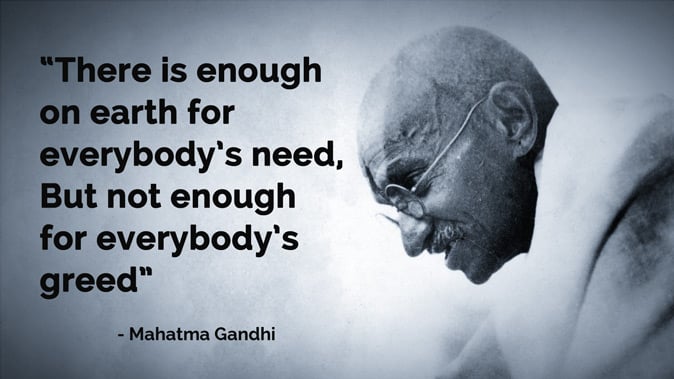
 Raghav Kaushik May 19, 2021 Gandhi is not well-known for his views on the environment. Indeed, in his vast output, there is little explicit mention of the environment. Yet, in Gandhi’s views, one finds a lot that is relevant to environmentalism. Like most great thinkers, Gandhi’s views are flawed; however we learn a lot by studying his views critically. Let us begin by examining Gandhi’s views on materialism and consumerism. In his lecture on economic and moral progress delivered in 1916, he offers one of the most searing critiques of materialism: “This land of ours was once, we are told, the abode of the gods. It is not possible to conceive gods inhabiting a land which is made hideous by the smoke and the din of mill chimneys and factories and whose roadways are traversed by rushing engines dragging numerous cars crowded with men mostly who know not what they...
itp-cra-china-march2017
The world’s rising powerhouse In 1986 on returning for my first 3-week visit to China, I wrote an article, “China: Key Player in a New World Game” in The Futurist, December 1986. I had been invited by China’s State Council at the recommendation of my good friends, Alvin and Heidi Toffler, best-selling authors of Future Shock (1970), who both had, and still, have a big following in China. This surprise invitation was to speak at “The First International Conference on Creativity”, co-sponsored by the United Nations Education & Scientific Cooperation Organization (UNESCO), along with Edward de Bono of Britain and US psychologist/philosopher Jean Houston, author of The Possible Human (1982). Mystified, I called the phone number in China of Professor Xu, the convenor at Shanghai-based Jiaotong University, and asked why I had been invited to this event, all expenses paid. Professor Xu replied in perfect English, “In China, you are a great scholar and your...

johnavery
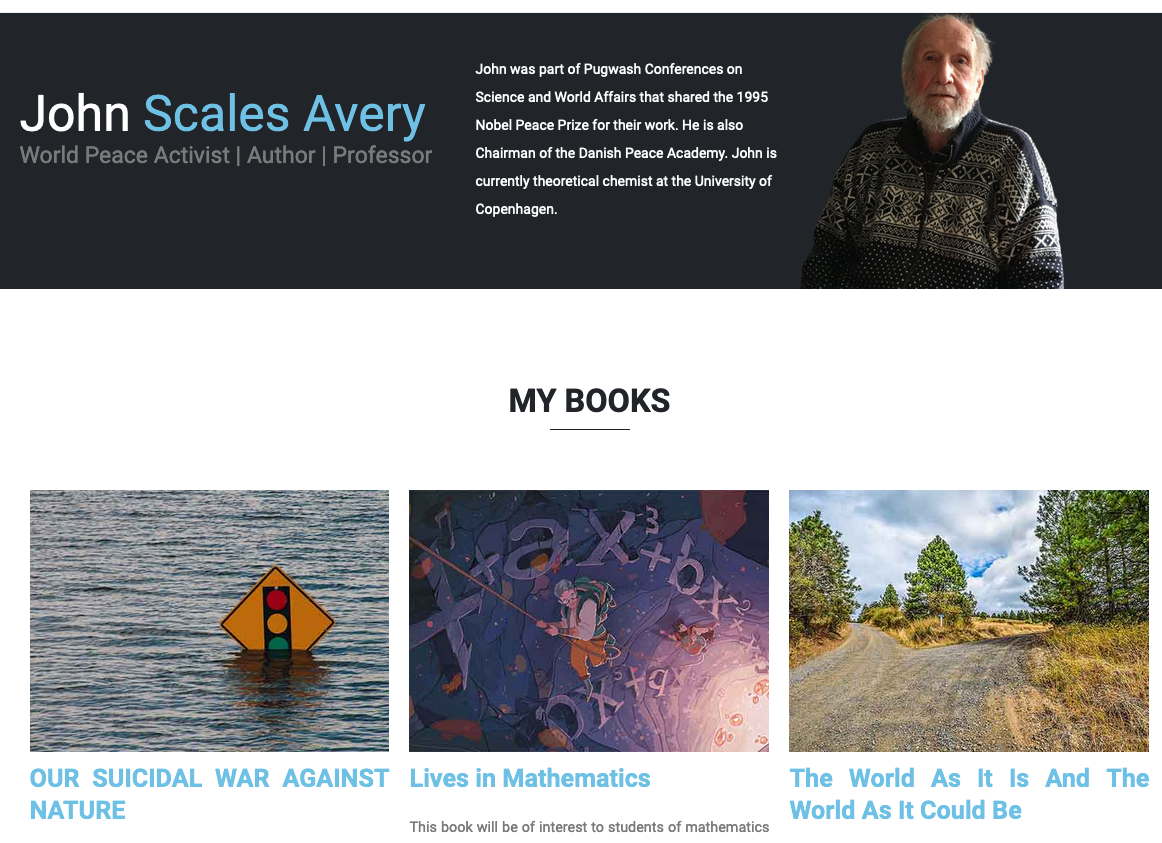
A new report, published on 14 March, 2021, in the Royal Swedish Academy of Sciences’ journal Ambio, points out that humanity is hurtling towards destruction unless we have the collective wisdom to change course quickly. The Ambio article was written as part of the preparation of a meeting of Nobel Prize winners to discuss the state of the planet. The virtual meeting will be held on April 26-28, 2021. We Must Achieve a Steady-State Economic System A steady-state economic system is necessary because neither population growth nor economic growth can continue indefinitely on a finite earth. No one can maintain that exponential industrial growth is sustainable in the long run except by refusing to look more than a short  distance into the future. Of course, it is necessary to distinguish between industrial growth, and growth of culture and knowledge, which can and should continue to grow. Qualitative improvements in human society are possible and...
AdobeStock_142976117
Image: Adobe Stock / XY March 23, 2021 Jedediah Britton-Purdy, Amy Kapczynski, David Singh Grewal If we are to emerge from this era of crisis, we need legal thinking that operates on fundamentally different presumptions. We live in an era of intersecting crises—some new, some old but newly visible. At the time of writing, the COVID-19 pandemic has already caused nearly 500,000 deaths in the United States alone, with many more deaths on the horizon in the coming months. Since its arrival in the United States, the virus has intersected with and magnified long-neglected problems—radical disparities in access to healthcare and the fulfillment of basic needs that disproportionately impact communities of color and working-class Americans, alongside a crisis of care for the young, elderly, and sick that stretches families and communities to the breaking point. Originally published at Bostonreview These crises arise from the chronic failure of political institutions to respond...
albert-einstein-05-1170x670-1
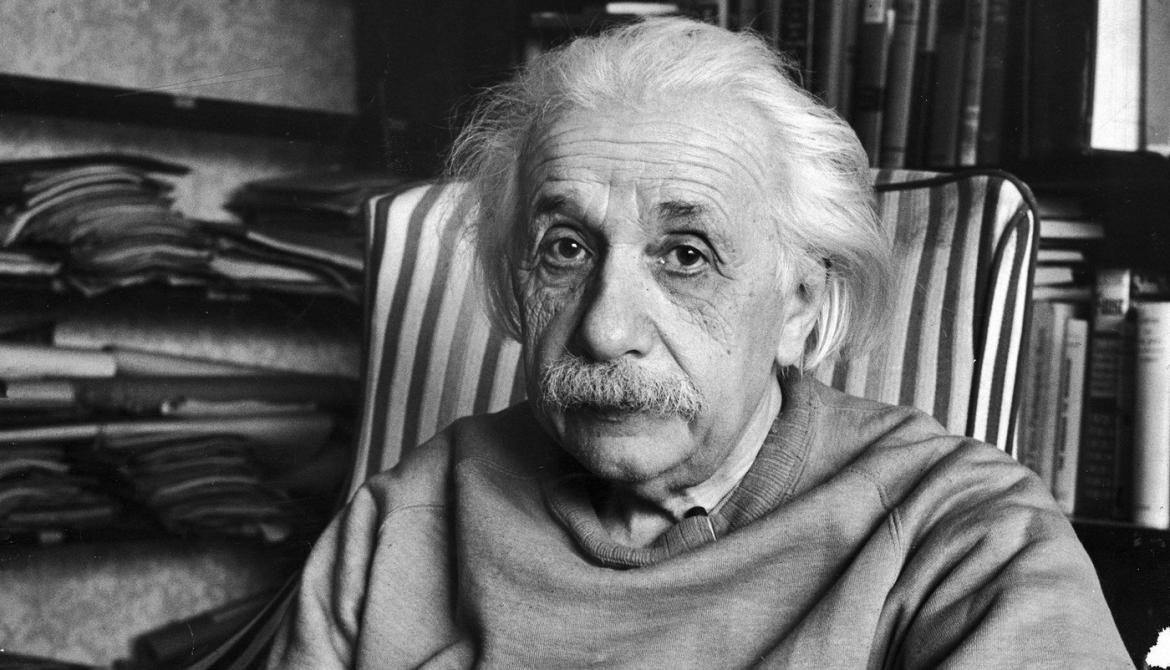
Albert Einstein February 27, 2021 (Originally published in May 1949) Is it advisable for one who is not an expert on economic and social issues to express views on the subject of socialism? I believe for a number of reasons that it is. Let us first consider the question from the point of view of scientific knowledge. It might appear that there are no essential methodological differences between astronomy and economics: scientists in both fields attempt to discover laws of general acceptability for a circumscribed group of phenomena in order to make the interconnection of these phenomena as clearly understandable as possible. Originally published by Monthly Review But in reality such methodological differences do exist. The discovery of general laws in the field of economics is made difficult by the circumstance that observed economic phenomena are often affected by many factors which are very hard to evaluate separately. In addition,...
branding-un
February 15, 2021 By Mona Ali Khalil By all accounts, 2020 has been a terrible year so far — but is it worse than 1920? In 1920, World War I, which killed 16 million people, had just ended. The two-year influenza pandemic that followed killed 50 million more. In 2020, the Covid-19 pandemic has already killed more than one million people and infected more than 40 million with infections surging worldwide. Originally published at Passblue With 20/20 hindsight, the 20th century was a terrible one. It heralded two world wars that together took more than 85 million lives. The collapse of the Ottoman Empire ushered in an era of British and French colonialism that led to deadly decolonization and national liberation battles in Latin America, Africa and Asia. It was a century of genocides — including the Holocaust in Europe — which was the worst and most remembered — as well...
ethiopia-experienced_
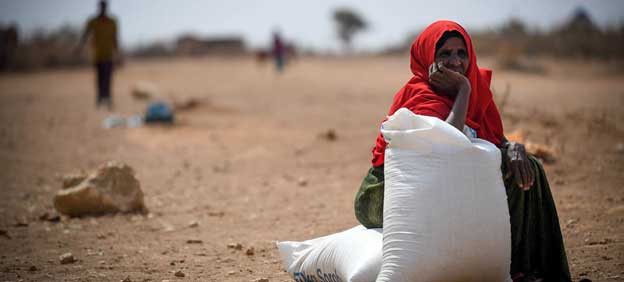
In 2019, Ethiopia experienced the fifth-worst food crisis worldwide. Credit: FAO/IFAD/WFP/Michael Tewelde By Thalif Deen December 14, 2020 UNITED NATIONS, Nov 27 2020 (IPS) – The numbers are staggering— as reflected in the ongoing coronavirus pandemic which has triggered a new round of food shortages, famine and starvation. According to the Rome-based World Food Programme (WFP) 690 million people do not have enough to eat. while 130 million additional people risk being pushed to the brink of starvation by the end of the year. “Hunger is an outrage in a world of plenty. An empty stomach is a gaping hole in the heart of a society,” Secretary-General Antonio Guterres said last week pointing out that famine is looming in several countries. Originally published at Humans Wrong Watch Striking a personal note, Guterres said he could have never imagined that hunger would rise again during his time in office as Secretary-General....
millions-of-new-poor
Photo credit: wsimag.com By Roberto Savio December 5, 2020 The recent meeting of the G20 – scheduled to take place in Riyadh but held virtually due to the Coronavirus pandemic – has been an eloquent example of how the world is drifting, in a crisis of leadership. It was, in a sense, a showcase. Everybody had to accept the view that the host of the meeting, the ailing King Salman of Saudi Arabia, was accompanied on TV screens by his apparent heir, Prince Mohamed bin Salman, who is clearly the mastermind of the brutal assassination, dismembering and disappearance of the body of dissident Saudi journalist Jamal Khashoggi. Originally published at the Wall Street International Mohamed bin Salman got away with it, also because of the support of Donald Trump who, in his video intervention said, among other pearls, that nobody in US history had done as much as he had...
herbert-marcuse
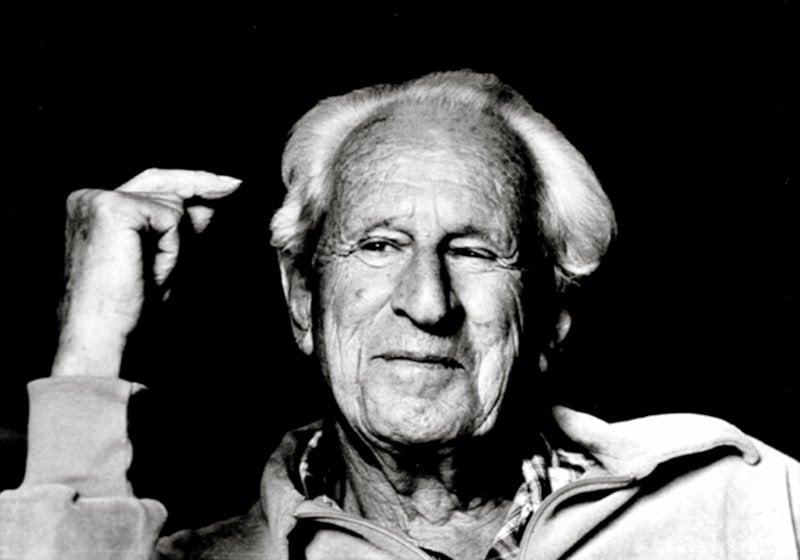
Fifty years later, One-Dimensional Man looks more prescient than its author could have imagined. Ronald Aronson November 23, 2020 When Herbert Marcuse’s One-Dimensional Man appeared fifty years ago, it was a revelation. To many of us who were becoming the New Left, Marcuse reflected and explained our own feeling of suffocation, our alienation from an increasingly totalitarian universe that trumpeted its freedom at every moment. We had grown up in it, we had encountered it in Allen Ginsberg’s Howl; but until One-Dimensional Man, we could scarcely understand, let alone describe, it. A student of Marcuse’s, I wrote at the time in Radical America that the book was “a major step in our breaking out of that closing universe. By naming it, by helping us to get conscious of it, by conveying its overwhelming power, [Marcuse] helped us to define ourselves in opposition to it—total opposition.” Originally published af Boston Review He spoke to a deep sense of...
Categories

Year

Author / Contributor

Region