Democracy – local

Category

Year

Author / Contributor

Region

Sort by

Showing 1-10 of 193 stories

richardfalk
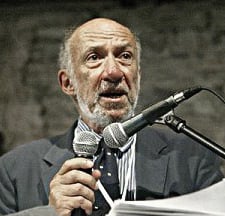
“Have we agreed to so many wars that we can’t Escape from silence?…” Robert Bly, “Call and Answer” In my understanding silence is passivity as a way of being. Silence can be much more than the avoidance of speech and utterance, and is most poignantly expressed through evasions of body, heart, and soul. Despite the frustrations and defeats of the period, America was different during the years of the Vietnam War and the civil rights movement. It was then that alienated gun-wielders assassinated those among us who were sounding the clearest calls for justice and sending messages of hope. In a perverse reaction, Washington’s custodians of our insecurity went to work, and the sad result is this deafening silence! I have long felt that most American ‘citizens’ increasingly behave as ‘subjects,’ blithely acting as if a love of country is exhibited more by obedience than conscience. In my view the...
gunnarwestberg
Av Gunnar Westberg Marshallöarnas utrikesminister Tony de Brum berättade vid den pågående förberedelsekommitténs möte (Prep Com) i FNs-högkvarter i New York, den 28 april till 9 maj 2014 om avtalet mot kärnvapen, NPT, i New York, om sina upplevelser av kärnvapenprov: Jag har varit vittne till kärnvapenexplosioner och mina minnen från Lipiep-atollen i norra Marshallöarna är starka. Jag bodde där som pojke under de 12 åren som kärnvapenproven pågick. Jag minns det bländande vita ljuset från Bravo-sprängningen på Bikini-atollen år 1954, tusen gånger starkare än den över Hiroshima. Marshallöarna utsattes för 67 kärnvapenprov mellan 1946 och 1958, motsvarande 1,6 Hiroshima-sprängningar varje dag I tolv år. Följderna finns kvar hos oss som en börda som ingen nation, ingen befolkning, skulle behöva bära. Marshallöarna förvaltades vid tiden för kärnvapensprängningarna av USA under FN-mandat. Nu är landet självständigt med namnet Republiken Marshallöarna, som omfattar ett stort antal öar med en befolkning av totalt...
johangaltung
On the table are some old clippings mainly from that remarkable paper; in my mind the International Herald Tribune, IHT, from 1857 and a part of my reality for about fifty years. Maybe an addiction? Hard to live without. The recent name change to International New York Times was understandable but too specific geographically, not global. The Honolulu papers, well located, are often more global. Why homage? Not for the news coverage; usually the news “fit to print”. The news that do not contradict too openly the world views carried by US and Israeli foreign policies, even if this has improved considerably recently. Nor for the editorials, they are usually on the same line and also, sorry, frankly, often boring. No, the homage is for the articles, essays even, at a very high level in what is after all a newspaper, a paper with news. Those essays often carry discourses...

ObergPhoto2cmB-W-3
Av Jan Öberg Dr.hc., direktör för TFF 4 maj 2014 Eliten i Sverige är mer lojal mot Nato, USA och EU än mot sitt folk • Under de senaste 25-30 åren har Sveriges militära, säkerhets- och utrikespolitiska elit vridit Sveriges politik 180 grader. • Dessa grundläggande förändringar inleddes av den socialdemokratiska regeringen under Göran Persson och utrikesminister Anna Lindh och har genomförts praktiskt taget utan offentlig debatt. • Omsvängningen till interventionism, militarism och USA/Nato på alla områden har planerats gradvis, i smyg och ohederligt – kort sagt på ett sätt som är ovärdigt en demokrati. • Denna elit är mer lojal mot Bryssel och Washington än mot svenskarna. • Om din bild av Sverige är att det är ett progressivt, förnyande och fredsfrämjande land med global inställning som försvarar folkrätten så är den – tråkigt nog – föråldrad. Hur Sverige har förändrats Sverige är inte längre neutralt och det är...
richardfalk
In this short essay, my attempt will be to articulate a conception of a world order premised on nonviolent geopolitics, as well as to consider some obstacles to its realization. By focusing on the interplay of “law” and “geopolitics” the intention is to consider the role played both by normative traditions of law and morality and the “geopolitical” orientation that continue to guide dominant political actors on the global stage. Such an approach challenges the major premise of realism that security, leadership, stability, and influence in the 21st century continue to rest primarily on military power, or what is sometimes described as “hard power” capabilities. [1] From such a perspective international law plays a marginal role, useful for challenging the behavior of adversaries, but not to be relied upon in calculating the national interest of one’s own country. As such, the principal contribution of international law, aside from its utility...
Imagen-thumbnail-The-Transnational-1
Business and Peace are not mutually exclusive. Business does play a crucial role in society. More so, business impacts and depends upon its surrounding. It impacts the social well-being of people and planet, whether intentionally or unintentionally, both locally and globally through the chosen ways of operation and production. Equally, does business play a key role in contributing to economic development, peace and stability in the areas where it operates. Business provides jobs and revenue to local markets; sets examples of sustainable business practices and can provide support for various social programs through strategic social investment. In short, business is an inherent aspect of our society, and therefore, if we are striving for a more peaceful and sustainable world, for-profit private enterprises are the most crucial actors in achieving this goal.
ChatGPT Image 9 jun 2026, 11_11_33
/10/jonathanpower2.jpg”> E.M. Forster, the English novelist, wrote in his “Passage to India” of India “swelling here, shrinking there, like some low, indestructible, form of life”. But the India of today is a totally different place from 1920. Economic growth was tiny in British times (even though a large network of railways and schools were built). Since independence in 1947 infant mortality has dropped to one fourth of what it used to be and longevity has more than doubled. Economic growth has increased since the 1960s from around 3% a year – the so-called “Hindu growth rate” – to a high of 10% – the peak achievement of the present Congress government of Prime Minister Manmohan Singh and party president, Sonia Gandhi. Why then is the opposition leader of the BJP, Narendra Modi, who has a repugnant reputation when it comes to dealing with India’s Muslims, set for victory? Admittedly, as...
richardfalk
There is no more reliable guardian of entrenched conventional wisdom than The Economist. And so when its cover proclaims ‘the new world order,’ and removes any ambiguity from its intentions, by its portrayal of Putin as a shirtless tank commander with menacing features. No such iconography accompanied the last notable invocation of the phrase ‘new world order’ by George H. W. Bush in mobilizing support for a forcible response to the Iraqi invasion and annexation of Kuwait in 1990, the dirty work of Saddam Hussein.
ObergPhoto2cmB-W-3
/10/janoberg.jpg”> Lund, Sweden March 16, 2014 Of course it is illegal and of course it will be rigged, that referendum in Crimea today. And of course it is a ploy and comes only in the wake of Russia’s (read Putin’s) unprovoked aggression, used as a pretext to build a new Greater Russia. That is, if you browse the mainstream Western media the last week and on this Sunday morning. Referendum means referring an issue back to the people. It is – or should be – an important instrument in democracies. And it’s a much better instrument than war and other violence to settle complex conflicts. Generally, citizens-decided conflict-resolution is likely to last longer and help healing wounds of the past than any type of solution imposed by outside actors. In Switzerland citizens go and vote on all kinds of issues on many a Sunday throughout the year. Sweden has used...
ObergPhoto2cmB-W-3
“We don’t see things as they are but as we are” – Anais Nin /10/janoberg.jpg”> Lund, Sweden – March 5, 2014 How can we begin to understand the events in Ukraine? Who are the conflict parties and elements? Here is a quick checklist of 13, just a selection: 1. Ukraine – government (earlier/present), opposition (split), people (19 ethnic groups + Ukrainians abroad). Crimea with its diversity and Ukraine’s relations to neighbours – enough for a doctoral dissertation. 2. Russia – the Commonwealth of Independent States, the Customs Union of Belarus, Kazakhstan and Russia and Russia’s more or less strong partners such as Syria. 3. Europe – the EU and European non-EU countries such as e.g. Turkey 4. The United States – the world’s only empire, with a foreign policy establishment in Washington deeply split in neo-conservatives on the one hand and Obama and the rest on the other. 5. China...
MC-cover-final-684x1024
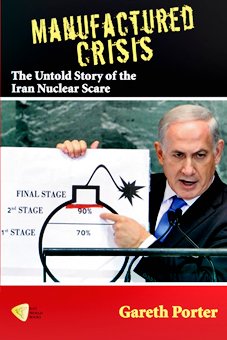
By Farhang Jahanpour As Iran and the world powers resume nuclear talks in Vienna with the hope of reaching a comprehensive agreement over Iran’s nuclear program by mid-July, the Israelis and their lobbyists in Washington are intensifying their efforts to scuttle the talks. In addition to all the efforts in the US Congress to impose additional sanctions on Iran, thus bringing the talks to a premature end, there are indications that Israel and her friends are continuing with various acts of sabotage against Iranian nuclear facilities. In 2010, the so-called Stuxnet virus temporarily disrupted the operation of thousands of Iranian centrifuges. At least five Iranian nuclear scientists have been assassinated. Iran has also said that it has discovered tiny timed explosives planted on centrifuges but has disabled them before they could go off. On Monday 17 March 2014, Iran said that an alleged attempt to sabotage one of its nuclear...
johangaltung
Islamabad, Ministry of Foreign Affairs Your Excellencies, The basic point is that Pakistan will not get that commodity called “peace” in Kashmir, Afghanistan and Central Asia by pursuing the ends and means of Washington and some local elites only. For peace to blossom the goals of other parties also have to be considered; and they are many. The logic of the political games pursued today presupposes some kind of victory or domination of “our side”: neither feasible nor desirable for peace. Hence, the need for some visions for peace politics is Kashmir, Afghanistan and Central Asia for tomorrow or the day after, with the hope that they can be useful when you have come to the end of the road with current policies. Nothing of this is easy; and without visions even impossible. The fairly detailed, non-dogmatic vision appended (below) was my acceptance speech of the 2011 Abdul Ghaffar Khan...
Categories

Year

Author / Contributor

Region